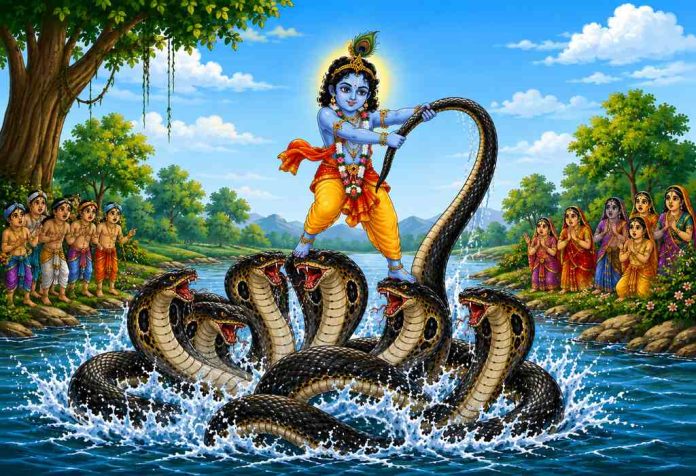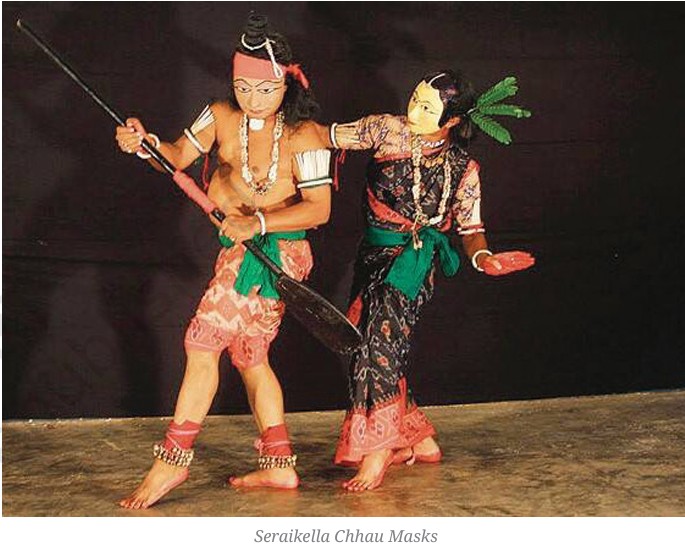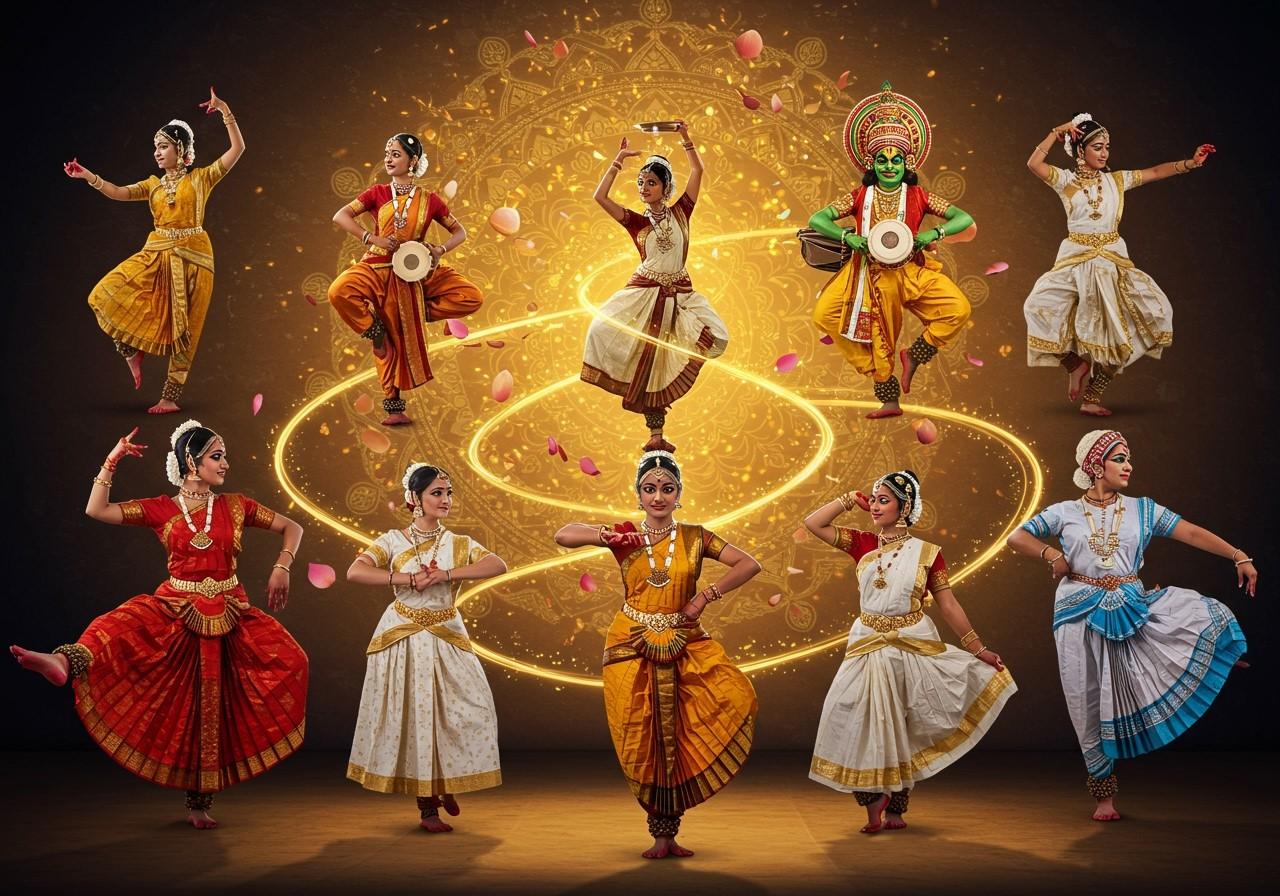

Emotions have always played a very important role in our lives. Since time immemorial, we have tried to understand the depth of what, why and how emotions exist in our lives.
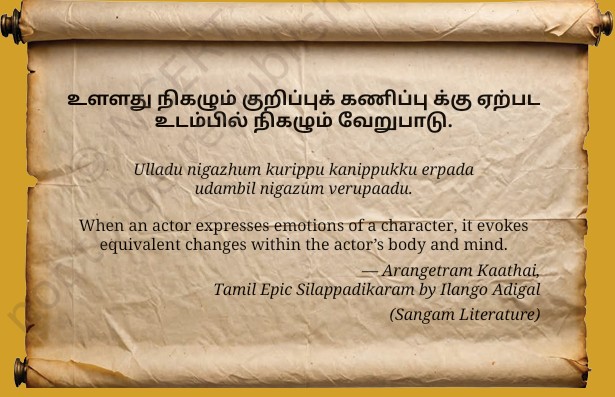
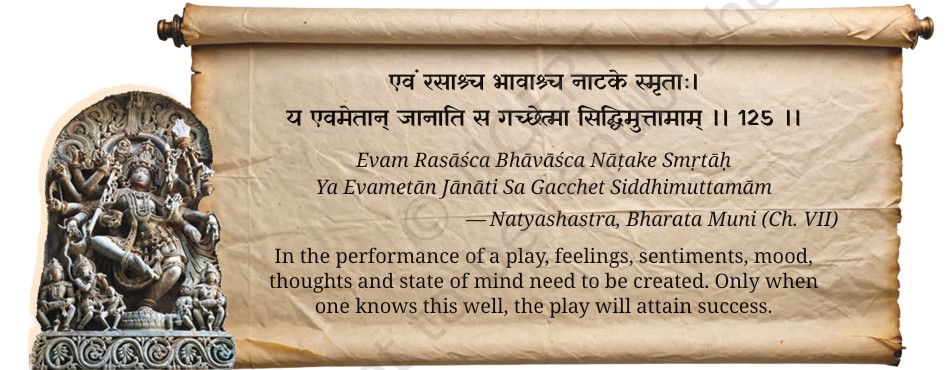
As this Sanskrit line from Bharata’s Natyashastra says —
INTRODUCTION TO EMOTIONS
Understanding Emotions is an important part of theatre and performing arts. Emotions help us understand ourselves, connect with others, and bring characters to life. In theatre, performers communicate feelings through facial expressions, voice, gestures, body language, posture, and movement.
Learning about emotions helps students become more expressive, confident, observant, and empathetic performers.
Emotions are central to both theatre and real life.
As per Bharata Muni’s Natyashaatra, to make any performance successful, the actor must express emotions deeply and genuinely.
Theatre helps in :
1. Building empathy
2. Understanding people
3. Expressing feelings effectively
What Are Emotions?
Emotions are feelings or responses that arise from our experiences, thoughts, and situations. They influence the way we think, behave, communicate, and respond to the world around us.
Some common emotions include:
- Happiness
- Sadness
- Anger
- Fear
- Surprise
- Love
- Excitement
- Courage
- Wonder
- Peace
Key terms Recap from Grade 6
- Bhava : The inner emotional state or mindset.
- Rasa : The emotional flavour or essence experienced by the audience, created from Bhava.
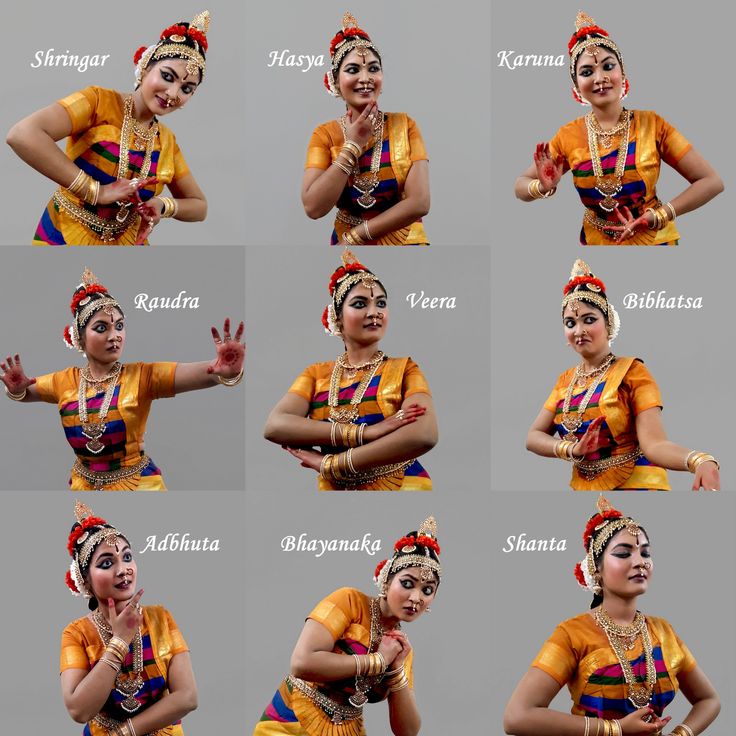
- Navarasa : Nine core emotions in Indian performing arts:
Shringara ( Love ), Hasya ( Laughter), Karuna ( Compassion),
Raudra ( Anger), Veera ( Courage), Bhayanaka (Fear), Bibhatsa
( Disgust), Adbhuta ( Wonder), Shanta ( Peace).
- Tragedy & Comedy : Introduced through Greek perspective.
- Games like Hot Seat and Activities like mask- making were used to explore emotions creatively.
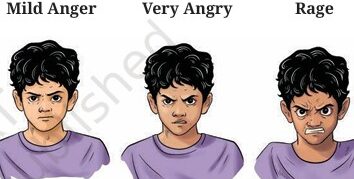
Understanding Emotional Intensity
Emotions can be expressed in different levels or intensities.
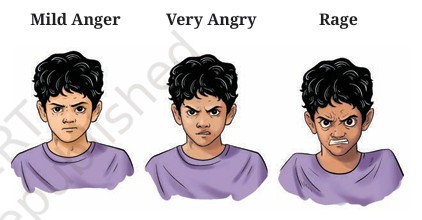
Example:
Raudra ( Anger)
Level 1 : Mild irritation
Level 2 : Very Angry
Level 3 : Rage
Activity 1.1 Emotional Corners
- Students go to corners labelled with Rasas and express that emotion using:
i. Speech
ii. Facial expressions
iii. Body language
- Then, the same emotions are expressed without voice or only with voice to understand variation.
- Example: Levels of Happiness
- Immediate joy-ice cream
- Personal achievement – winning a prize
- Emotional connection – helping a friend
- Ultimate goodness – helping society ( donating books)
Exploring Expression Styles
- Same emotion can be shown in many different ways.
- Example:
FEAR
- Style 1 : Closing eyes tightly
- Style 2 : Opening eyes wide
Acting Styles
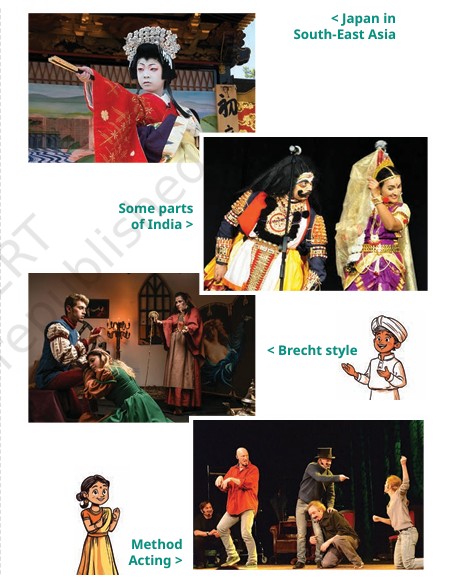
- Two major acting styles introduced by Bharata Muni:
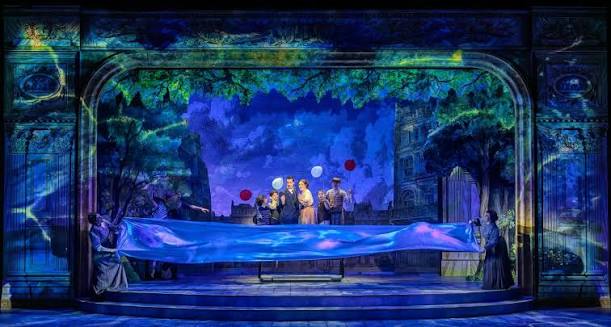
1. Lokadharmi ( Realistic Style)
Perform like in real life. Actions, expressions, costume are all natural
and resemble reality. It appears like the situation is naturally happening
on stage and not acting.
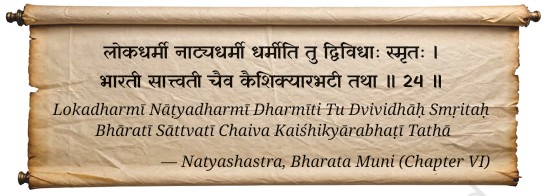
Meaning: Practice of representation (dharmi) in a dramatic performance is twofold: Lokadharmi or realistic and Natyadharmi or theatrical.
- Natural and life- like acting
- Simple costume, realistic emotions, relatable behaviour
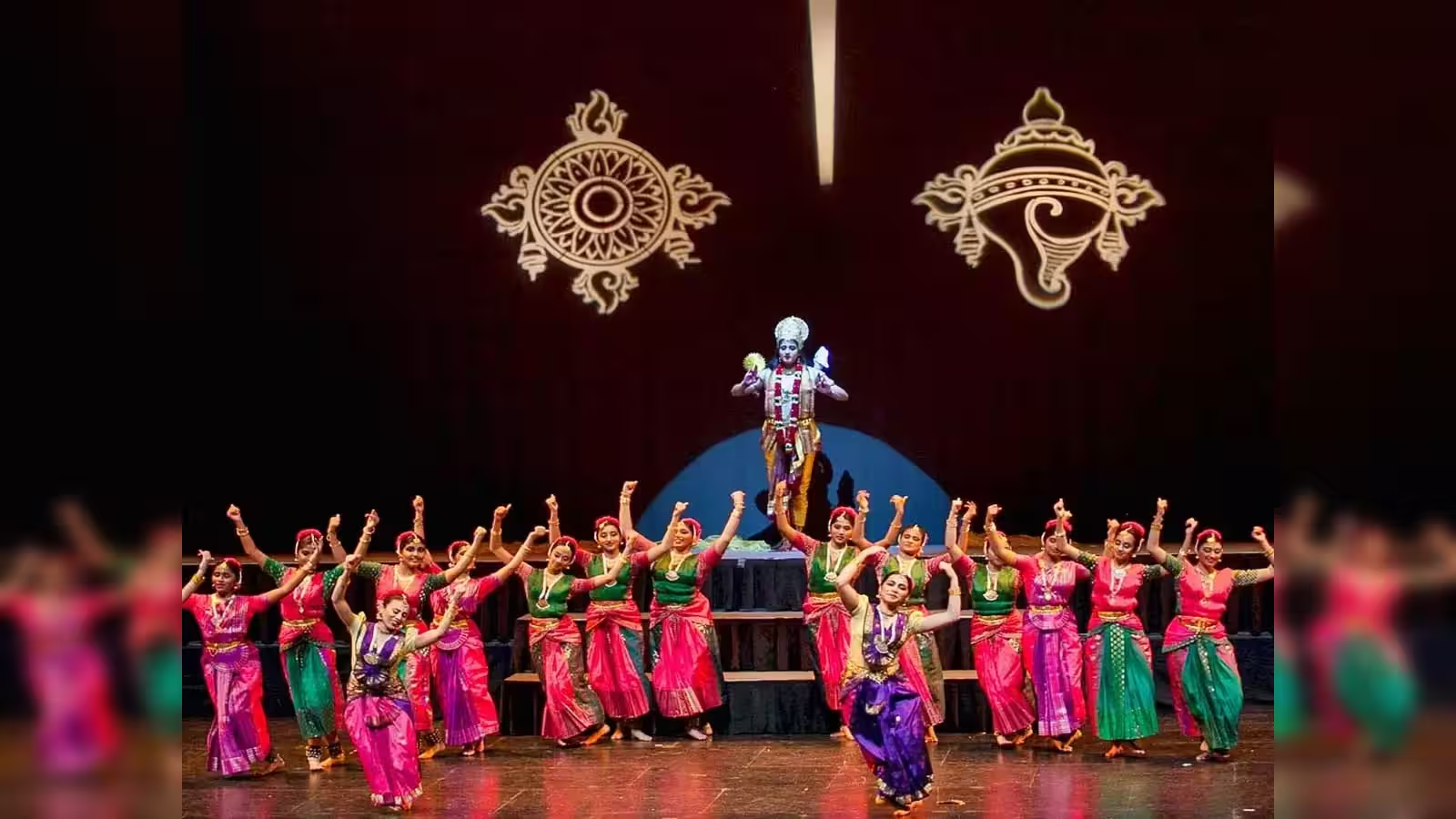
2. Natyadharmi ( Stylised/Theatrical)
Bigger, exaggerated movement, over-the-top expressions, loud voice,
elaborate bright costume and make up, lots of jewellery, and accessories
- Exaggerated actions, makeup, dramatic expressions
- Rich costume, stylised movements
Activity 1.2: Pick Your Style!
Students act out written scenarios in either realistic or stylised way ( or both ).
Emotions in Ancient Architecture
The uniqueness of Indian culture is that — though such heritage sculptures are ancient, but they are still relevant and apply to everyday life.
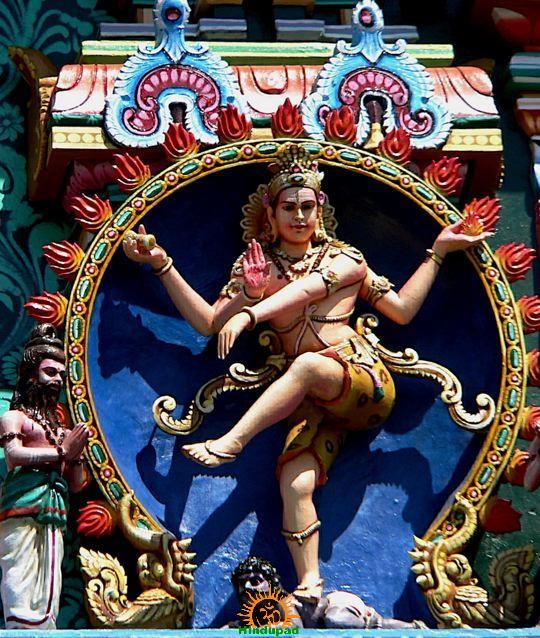
Indian architecture, with its breathtaking sculptures, serves as a timeless gallery of human emotion, depicting the essence of Navarasas in stone. Every part of the country has these sculptures in different styles that also represent the dynasty and its history. Each building, temple and sculpture has a unique story to tell. The sculptures depicting emotions have stories that have more emotions hidden within them. Here are some of them.
- Temples and sculptures in India display deep emotional content through art.
Examples:
1. Chennakeshava temple, Belur ( Karnataka )
The Chennakeshava Temple is a magnificent example of medieval Indian temple architecture and sculpture. Located at Belur in Karnataka, the temple was built during the Hoysala period and is renowned for its intricate carvings, detailed sculptures, and remarkable craftsmanship. It is dedicated to Chennakeshava, a form of Lord Vishnu.
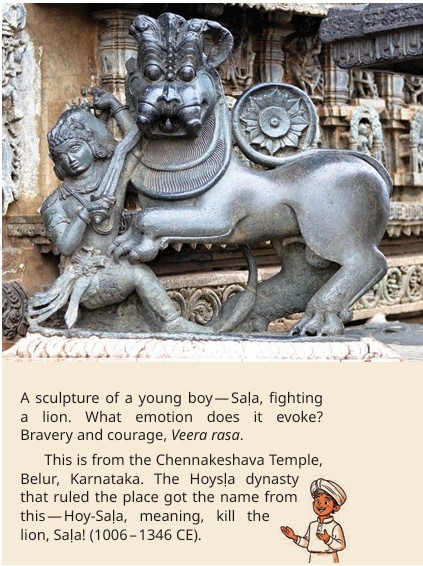
- Boy fighting lion = Veera Rasa ( bravery )
2. Brihadeeshwara Temple, Tanjavur ( Tamil Nadu )
The Brihadeeshwara Temple, also known as the Brihadisvara Temple, is one of the most remarkable achievements of Indian temple architecture. Located in Thanjavur, Tamil Nadu, the temple was built during the reign of Chola king Rajaraja I in the early 11th century. Dedicated to Lord Shiva, it is celebrated for its monumental scale, sophisticated architecture, stone sculptures, paintings, and artistic heritage.
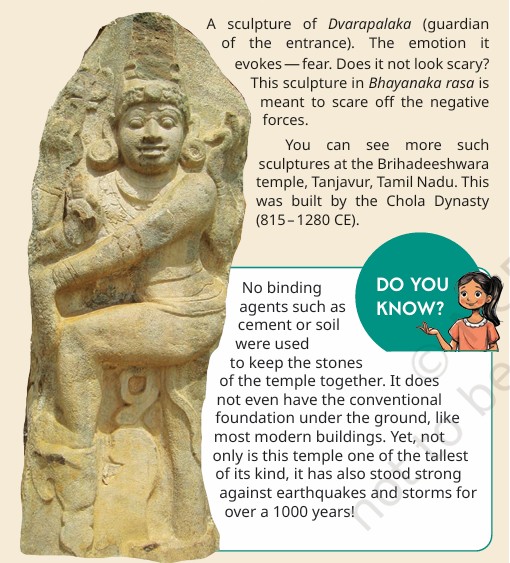
- Dvarapalaka statue = Bhayanaka Rasa (fear)
3. Elephanta Caves, Maharashtra
The Elephanta Caves are a remarkable group of rock-cut monuments located on Elephanta Island in Maharashtra, near Mumbai. They are famous for their monumental sculptures, especially representations of Shiva, and are an important example of India’s ancient rock-cut artistic tradition.
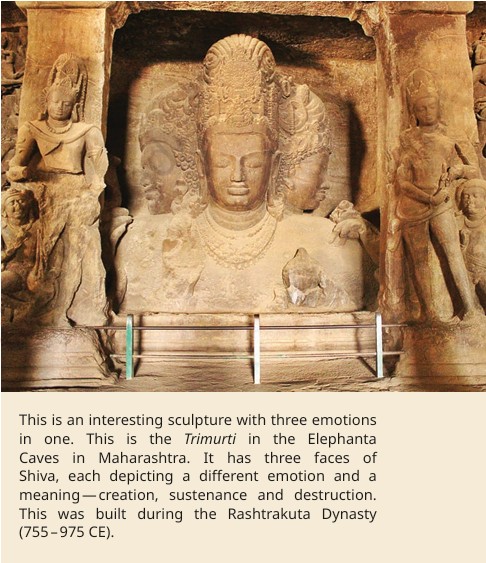
- Trimurti sculpture = Three emotions in one – creation, sustenance, destruction
Story of Dedication : Jakanachari
Master craftsman Jakaṇachārī, was ordered by the Hoysaḷa King, Nṛipa Haya to build a grand temple. His dedication to work was such that he left home and immersed himself in making sculptures. It is said that he chose each stone after a blessing from God.
He had stayed away from home for so many years that he didn’t know anything about his family. One day, a young artist joined his team and immediately spotted a major flaw in one of the stone statues.
A flaw by Jakaṇachārī was unheard of as he was a perfectionist. But a test was conducted and a cavity was found in the navel part of the sculpture, where a frog was living! This was a huge blow on the great artist’s work. As promised, he cut off his hands as he considered himself incapable of the God’s work he was assigned.
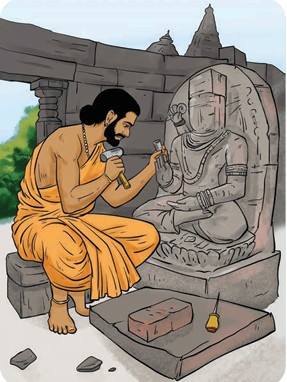
It was later discovered that the young boy was none other than the artist’s son Daṅkaṇāchāri! Hearing this, Jakaṇachārī felt proud and thankful for such a blessing of a dedicated expert son. He later took over to complete the temple work. It is also said that God blessed him to regain his hands and the father-son duo completed the temple in Belur, Karnataka.
We still look up to these works in awe. Do you think any of today’s buildings match the kind of detailing and artistic work done in those days? It was all possible only through the dedication, commitment and persistence of thousands of artists.
- A perfectionist sculptor cut off his hands when a flaw was found in his statue.
- The flaw was pointed out by his own son unknowingly.
- The story highlights dedication, humility, and emotional depth of artists.
Emotional Intelligence through Theatre
Emotional Intelligence through Theatre explores how theatrical activities can help students understand, manage, and express emotions while developing empathy and stronger communication skills. Theatre provides a safe and creative environment where students can explore different characters, situations, perspectives, and emotional experiences through acting, role-play, facial expressions, voice, movement, and storytelling.
It involves important skills such as:
- Self-awareness – recognizing one’s own emotions.
- Self-management – responding to emotions thoughtfully.
- Empathy – understanding how others may feel.
- Social awareness – noticing emotions and reactions in others.
- Relationship skills – communicating and working positively with others.
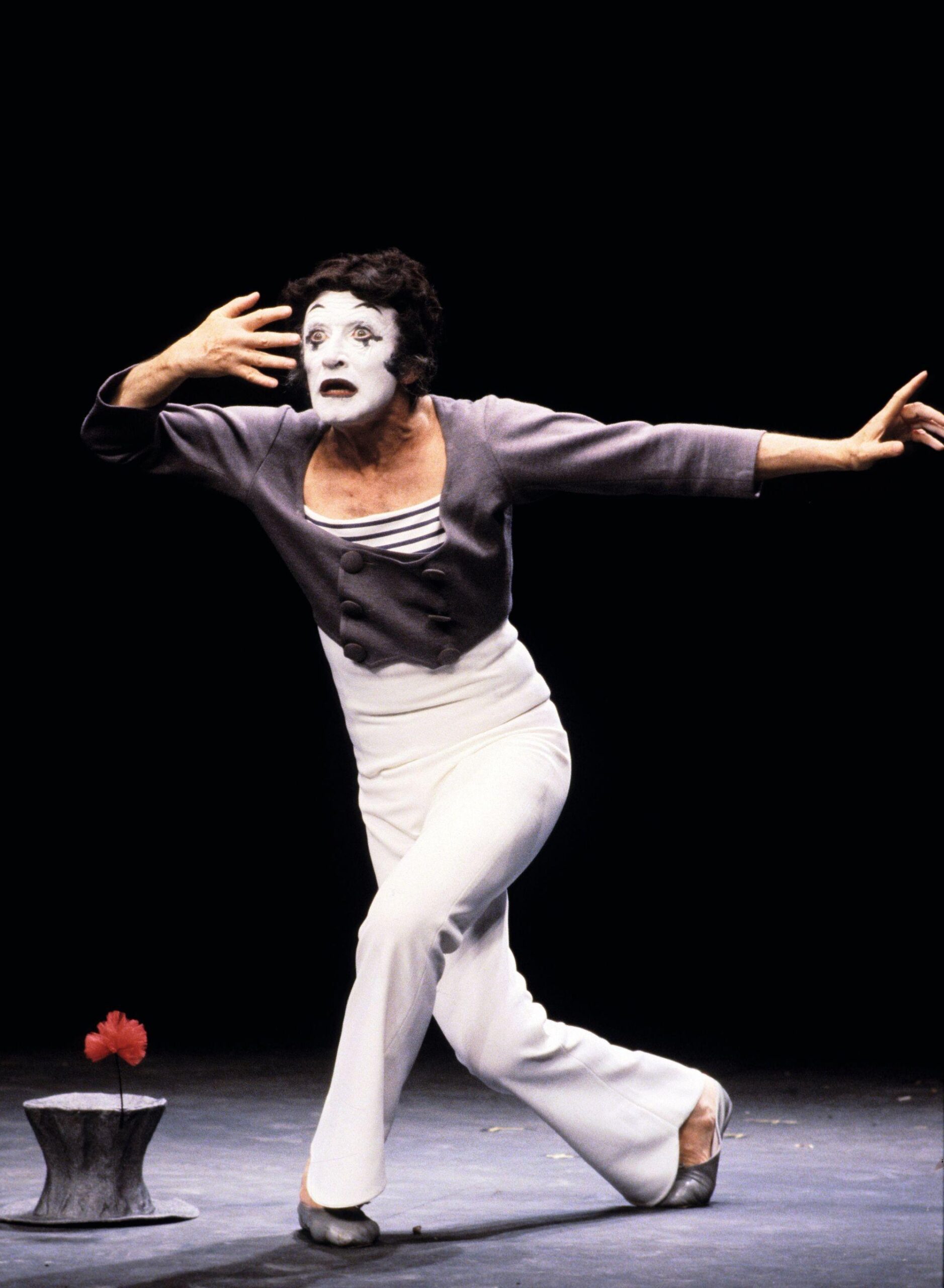
Emotions in Theatre are essential for bringing characters, stories, and performances to life. Theatre allows performers to communicate feelings not only through dialogue but also through facial expressions, voice, gestures, body language, movement, and silence. Understanding emotions helps actors create believable characters and allows audiences to connect with the story.
- Theatre is not just acting; it teaches:
- Empathy
- Emotional control and expression
- Acceptance of different emotional experiences
- Games like Emotional corners show how:
- Each person feels emotions differently
- All emotions are valid and deserve expression
Key Takeways
- Emotions exist in various intensities and forms.
- Expression can be natural or theatrical.
- Emotions are not just personal; they’re embedded in our culture, art, and even ancient temples.
- Real- life emotional intelligence is enhanced through theatre.
Conclusion
Understanding Emotions is at the heart of meaningful theatre and creative expression. When students learn to recognize, understand, and express emotions through facial expressions, voice, gestures, movement, posture, and silence, they are not simply learning to act—they are learning to communicate human experiences. The concepts of Rasa and Bhava deepen this understanding by showing how emotions expressed by a performer can create an emotional experience for the audience. Exploring emotions therefore helps students become more expressive, empathetic, confident, observant, and imaginative, while enabling them to create performances that are authentic, engaging, and emotionally meaningful.