
INTRODUCTION
Raga and Tala (Taal) are two fundamental concepts of Indian classical music. Together, they provide the melodic and rhythmic framework for a musical performance.
Raga
A Raga is a structured melodic framework based on a particular selection and arrangement of musical notes. It provides rules and possibilities for creating melodies and expressing different moods and emotions.
Key features of a raga include:
- Swaras (notes) used in the raga
- Characteristic melodic movements
- Aroha — ascending movement of notes
- Avaroha — descending movement of notes
- Important or prominent notes
- A particular mood or emotional character
Different ragas are traditionally associated with particular moods, seasons, times of day, or occasions.
Tala (Taal)
Tala is the rhythmic framework of Indian music. It organizes beats into repeating cycles.
A tala consists of a fixed number of matras (beats) arranged into a repeating cycle. Musicians use tala to maintain rhythm and coordinate with singers and instrumentalists.
Important elements include:
- Matra — an individual beat
- Vibhag — a section within a rhythmic cycle
- Sam — the first and most important beat of the cycle
- Khali — a section marked by a wave or lighter gesture
- Repeating rhythmic patterns
Examples of commonly known talas include Teentaal (16 beats), Dadra (6 beats), and Keharwa (8 beats).
Raga and Tala Together
In a classical performance:
Raga → provides the melodic framework
Tala → provides the rhythmic framework
The interaction between melody and rhythm allows musicians to improvise and create expressive performances while following the structure of the chosen raga and tala.
Every year, we build on our understanding of both styles of Indian Classical Music — Carnatic and Hindustani. This year, we will explore more compositions, Ragas and Talas/Taals.
See how you can draw connections between the two styles of classical music, and between classical music and other styles of music that you listen to.
NOTES :
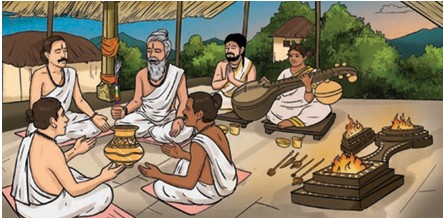
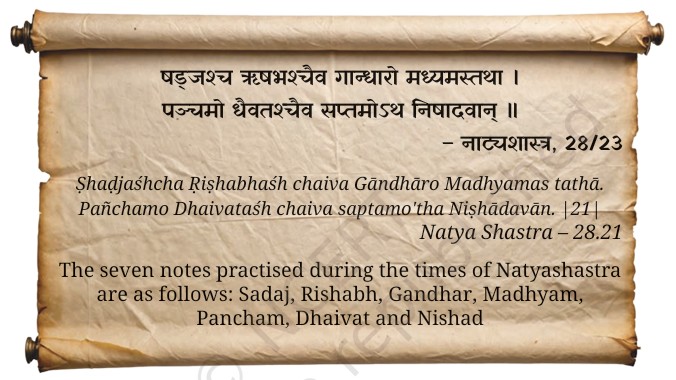
The notes of Indian Classical Music evolved from the ritual chanting of the Samaveda. Initially, the Vedas were chanted with three notes, namely, Udatta (normal or medium tone), Anudatta (not raised, or lower note) and Svarita (raised pitch or higher). These gradually evolved into the seven notes (sapta swara) that we use in music.
1. CARNATIC MUSIC
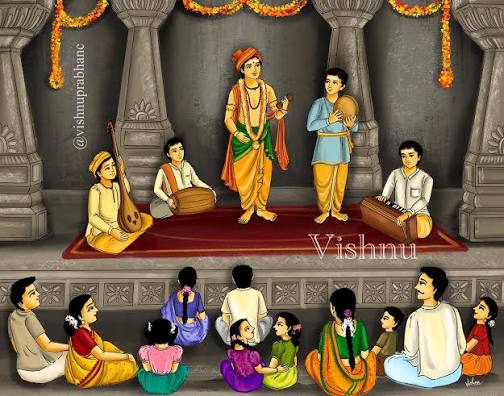
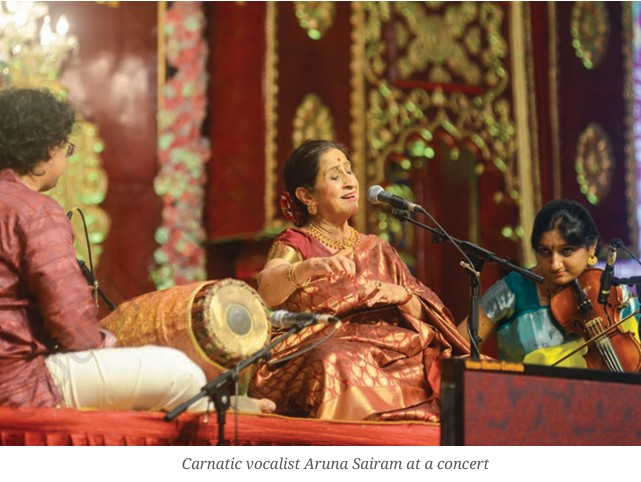
Carnatic Music is one of the two major traditions of Indian classical music, the other being Hindustani music. It developed mainly in South India and is known for its rich melodic structures, rhythmic patterns, compositions, and devotional themes.
Carnatic music is the classical music tradition of South India. It is one of the two major traditions of Indian classical music, the other being Hindustani music of North India. Carnatic music is especially associated with Tamil Nadu, Karnataka, Andhra Pradesh, Telangana and Kerala.
Important Composers
Some of the most influential composers include the Carnatic Trinity:
- Tyagaraja
- Muthuswami Dikshitar
- Syama Sastri
Other important composers include Purandara Dasa, often called the “Father of Carnatic Music,” and Annamacharya.
Common Instruments
- Veena
- Mridangam
- Violin
- Flute
- Ghatam
- Kanjira
- Tambura/Tanpura
Vocal Music
Carnatic music places a strong emphasis on vocal performance, even when instruments are being played. Many compositions include devotional and philosophical themes, often using languages such as Telugu, Sanskrit, Kannada, Tamil, and Malayalam.
Carnatic Music and Dance
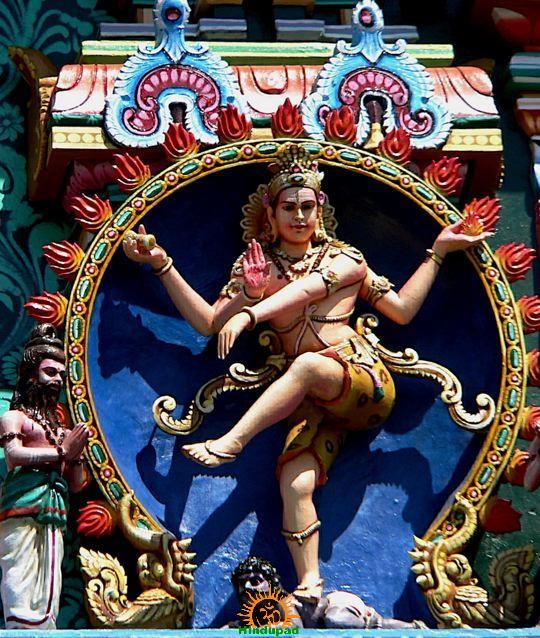
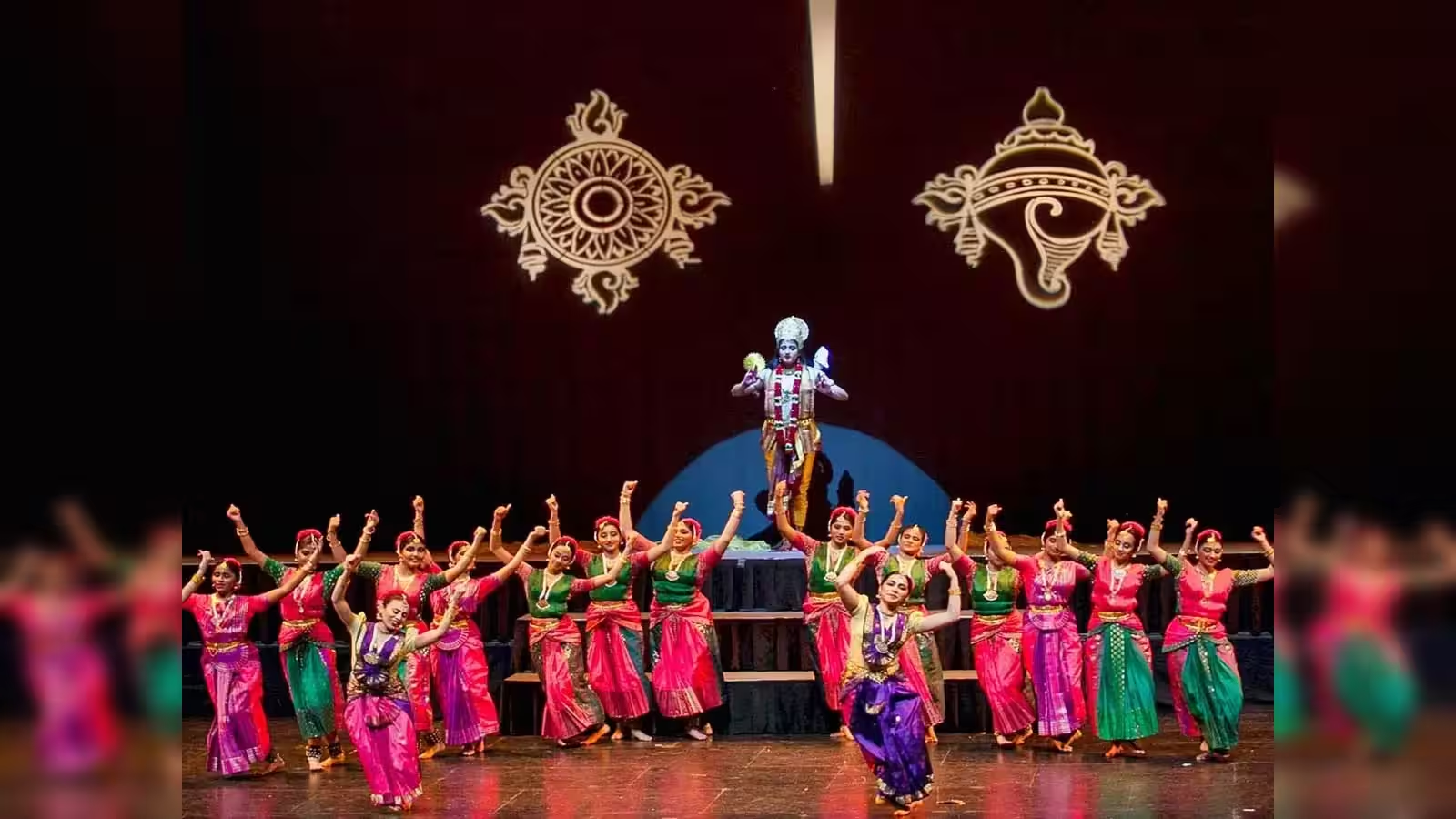
Carnatic music is also closely connected with South Indian classical dance traditions such as Bharatanatyam, where music supports rhythm, expression, and storytelling.
Sapta Tala Alankaras
The Sapta tala alankaras are a well-known set of vocal exercises used to build vocal strength while also helping students understand talas in Carnatic music.
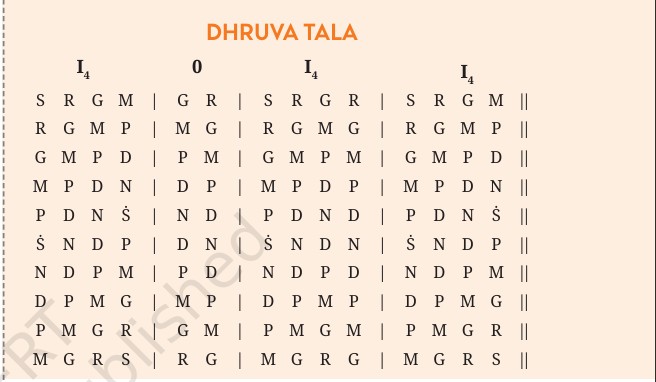
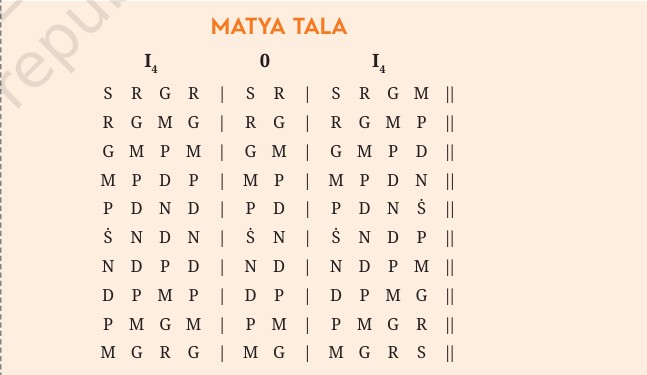
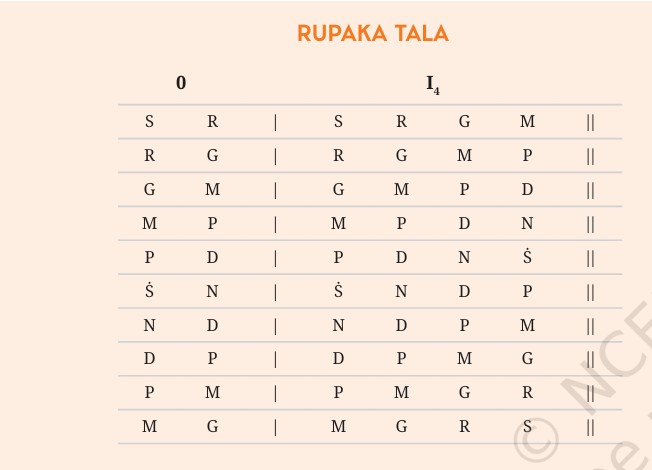
CARNATIC TALAS There are seven main talas in Carnatic Music.
1. Dhruva
2. Matya
3. Rupaka
4. Jhampa
5. Triputa
6. Ata
7. Eka
Each tala is built from three units called angas:
| Anga | Action | Notation Symbol |
| Laghu | Clap followed by finger counts | I |
| Drutam | Clap followed by a wave of the hand | O |
| Anudrutam | A single beat | U |
Key Fact :
The number of beats within a Laghu is called its Jathi. At the introductory level, each laghu is counted as having four beats.
Talas like Dhruva, Matya, and Rupaka are practised by singing sargam patterns while simultaneously keeping the tala with claps, waves, and finger counts- helping a student feel the rhythm cycle in their body, not just hear it.
SWARAJATI
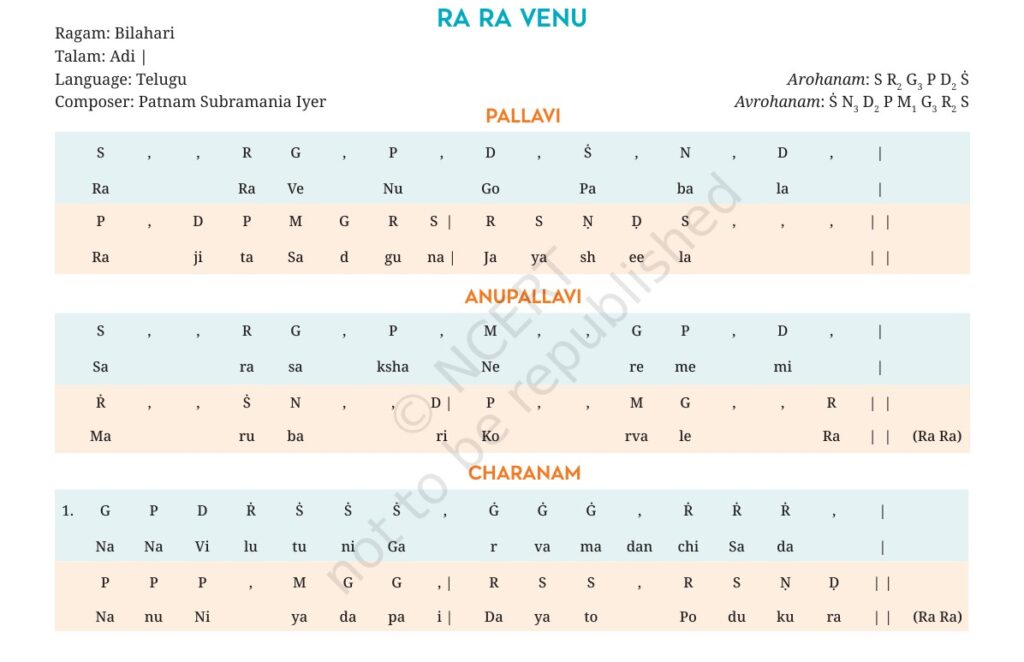
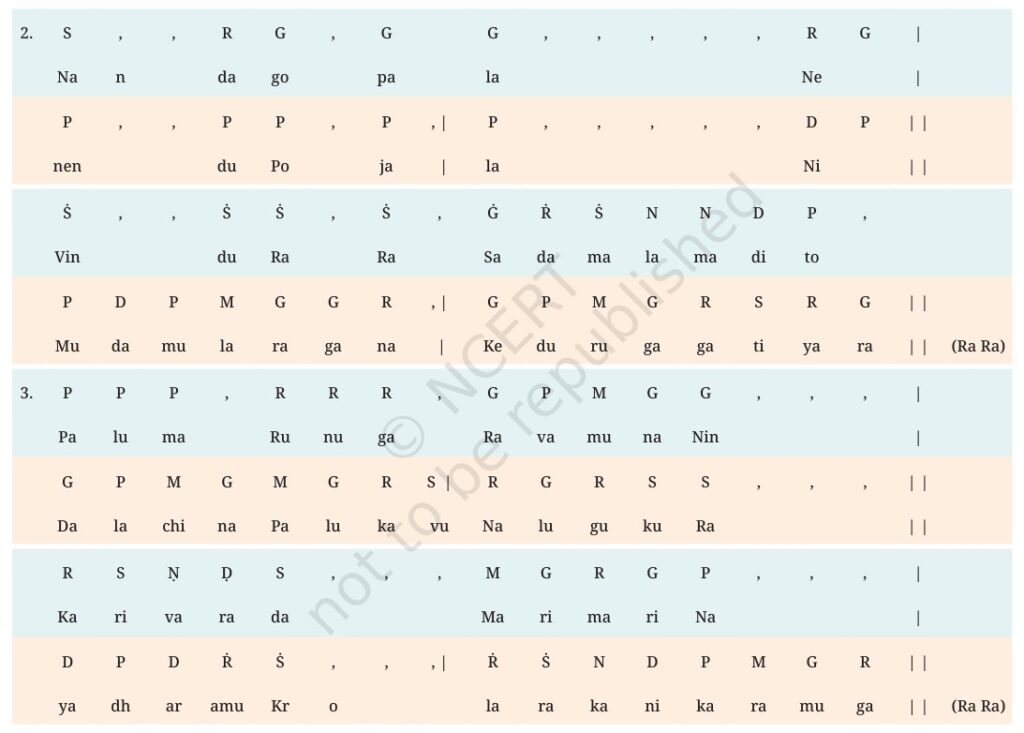
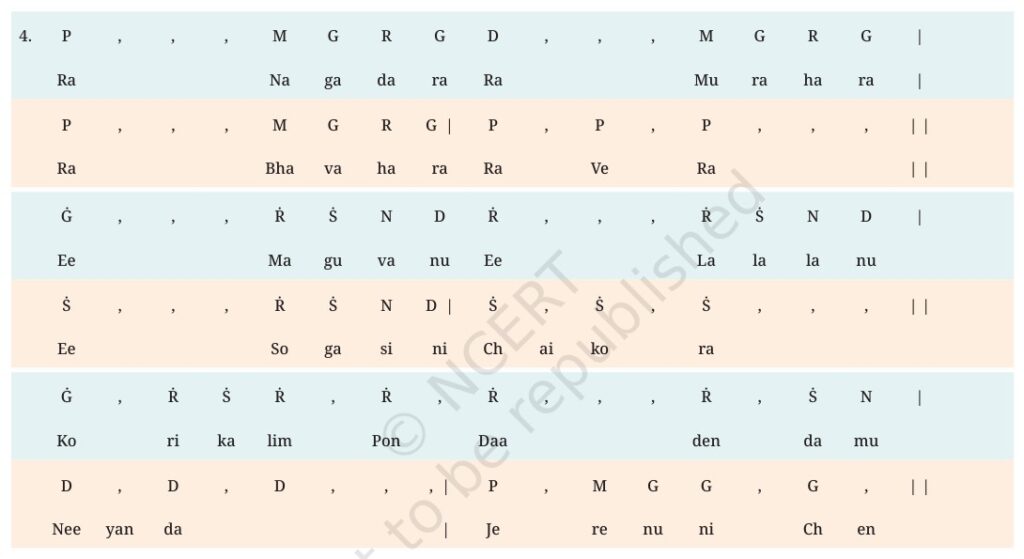
Swarajati is a traditional Carnatic music composition that combines swara passages (musical notes) with lyrics (sahitya). It is an important form for students learning the fundamentals of Carnatic music.
Important concept A swarajati is an old and important form in Carnatic music, made up of swaras and sometimes lyrics. It usually three parts:
- Pallavi – The refrain or chorus
- Anupallavi – A short section that follows the pallavi
- Charanam – One or more verses
Before singing a Swarajati, students first sing its Arohana ( ascending scale ) and Avarohana ( descending scale). Many swarajatis, such as compositions set in Adi Tala, follow a rhythm cycle of 8 beats.
Features of Swarajati
- It is generally based on a particular raga.
- It uses swara patterns and rhythmic structures.
- It may contain lyrics, often expressing devotion or other emotions.
- It helps students develop pitch, rhythm and musical control.
- It is often learned after simpler compositions such as geethams.
Key Features
- Swara: Uses musical notes such as Sa, Ri, Ga, Ma, Pa, Da, Ni.
- Sahitya: Includes lyrical passages, often devotional or expressive.
- Tala: Set to a specific rhythmic cycle.
- Raga: Composed in a particular raga.
- Structure: Usually contains sections that combine swaras and lyrics in a systematic way.
- Learning Tool: Helps students develop pitch, rhythm, voice control, and familiarity with ragas and talas.
Importance
Swarajati serves as a bridge between simpler exercises and more elaborate Carnatic compositions. It helps learners understand how melody, rhythm, lyrics, and musical expression work together.
RA RA VENU
2. HINDUSTANI MUSIC
Hindustani Music is one of the two major traditions of Indian classical music, the other being Carnatic music. It developed mainly in North and Central India and has a rich tradition of melody, rhythm, improvisation, and artistic expression.
Hindustani music is an important part of India’s cultural heritage. It develops patience, concentration and creativity while preserving centuries-old musical traditions. Performances can express a wide range of emotions, from peace and devotion to joy and excitement.
Instruments
Common instruments associated with Hindustani music include:
- Sitar
- Sarod
- Tabla
- Bansuri
- Santoor
- Sarangi
- Tanpura
- Harmonium
Vocal Styles
Important vocal traditions include:
- Dhrupad — an ancient and highly structured vocal tradition.
- Khayal — known for creativity and improvisation.
- Thumri — expressive and often focused on romantic or devotional themes.
- Tarana — uses rhythmic syllables and focuses strongly on musical patterns.
Importance
Hindustani music combines discipline and creativity. While musicians follow the structure of a raga and tala, they also have considerable freedom to improvise and express emotions.
Taal/Tala
Hindustani music also has its own system of tales, each recited using rhythmic syllables called bols, marked with claps ( bhari) and a wave of the hand ( khali).
| Tala | Number of Units (Matras) | Nature |
| Jhaptala | 10 Matras | Recited using bols like Dhee, Naa, Tee, arranged in a 2+3+2+3 pattern |
| Rupak | 7 Matras | Recited using bols like Tee, Naa, Dhee, arranged in a 3+2+2 pattern |
| Ektaal | 12 Matras | Recited using bols like Dhin, Dhage, Tirkit, Tu, Naa, kat, Taa, Dhi, arranged in a 2+2+2+2+2 pattern |
Each tala’s matras are marked with symbols – x for the first ( and most important ) beat called sam, numbers for claps, and 0 for the khali (empty/ wave ) beat – helping performers keep the rhythm cycle accurately.
Ragas
The Hindustani music system is based on 12 notes in total:
Seven shuddha ( natural ) swaras – Sa, Re, Ga, ma, pa, Dha, Ni
Four komal ( Flat ) swaras – Re, Ga, Dha, Ni
One teevra ( Sharp ) swara – Ma
Samay Chakra ( The time Theory of Hindustani Ragas )
Classical music is regarded as a Dharohar – a treasure passed down through generations. Ragas are believed to express specific emotions and create particular moods, and a special feature of Hindustani music is that different ragas are traditionaaly sung at different times of day, since a pattern of notes is believed to sound most effective when performed at its associated time.
- Raga Bhairav – traditionally sung in the early morning
- Raga Yaman – Traditionally sung in the evening
Samay Chakra means the cycle or theory of time. In Hindustani classical music, it refers to the traditional idea that particular ragas are best performed at particular times of the day or night.
The concept is based on the belief that the mood and character of a raga can connect naturally with the atmosphere and emotions associated with a particular time.
The Eight Prahars
The day and night are traditionally divided into eight Prahars, with each Prahar lasting approximately three hours.
| Time | Prahar | Raga Examples |
| Early morning | 4–7 AM | Bhairav, Ahir Bhairav |
| Morning | 7–10 AM | Bilawal, Deshkar |
| Late morning | 10 AM–1 PM | Sarang family |
| Afternoon | 1–4 PM | Bhimpalasi, Patdeep |
| Late afternoon/evening | 4–7 PM | Puriya, Marwa |
| Evening | 7–10 PM | Yaman, Kedar |
| Late night | 10 PM–1 AM | Malkauns, Darbari Kanada |
| Early night/late night | 1–4 AM | Sohini, Paraj |
Raga Mala Painting
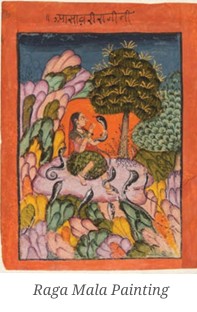
Raga Mala paintings are traditional indian artworks that visually depict the mood and imagery associated with a particular raga.
Ragamala Painting means “Garland of Ragas.” It is a traditional Indian painting tradition in which ragas and raginis are represented through visual scenes, characters, emotions, seasons, times of day, and poetic imagery.
Main Features
- Raga as a Visual Theme: Each painting represents a particular raga or ragini.
- Mood and Emotion: Paintings show the emotional character or rasa associated with the music.
- Nature: Gardens, forests, rivers, clouds, birds, flowers, and seasons are often included.
- Characters: Lovers, musicians, kings, ascetics, and other figures may represent the mood of a raga.
- Time and Season: Some ragas are traditionally associated with particular times of the day or seasons, which can be reflected in the artwork.
- Poetry and Music: The paintings connect visual art, poetry, music, and emotion.
Examples
A Ragamala painting may portray a raga through a scene of:
- A musician performing in a royal court
- A woman waiting for her beloved
- A couple meeting during the monsoon
- A person surrounded by nature at dawn or dusk
Importance
Ragamala paintings demonstrate how music can be transformed into visual art. Instead of hearing a raga, the viewer experiences its mood and ideas through colour, characters, nature, composition, and symbolism.
Raga Bhairavi – A Closer look
Raga Bhairavi is a widely performed Hindustani raga, traditionally sung in the early morning. Its structure includes:
| Element | Descrition |
| Thaat | Bhairavi ( the parent scale of the raga ) |
| Aroh ( Ascending ) | Uses all seven notes in order going upward |
| Avroh ( Descending ) | Uses all seven notes in order coming downward |
| Jati | Sampoorna- Sampoorna ( uses all 7 notes in both ascent and descent) |
| Komal Swars | Re, Ga, Dha, Ni are sung in their flat ( komal) form |
| Vadi Swar | Madhyam ( the most important note of the raga) |
| Samvadi Swar | Shadaj ( the most important note) |
| Singing Time | Early morning |
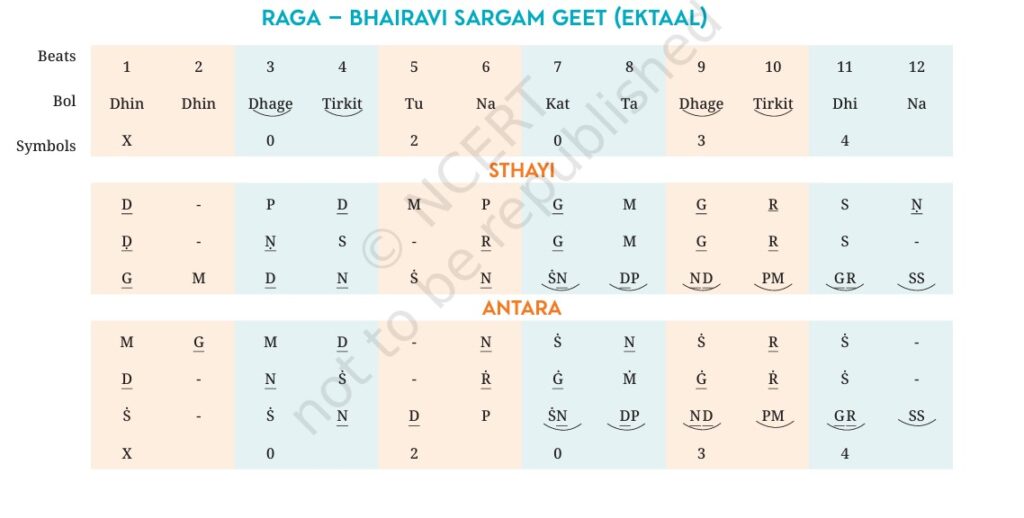
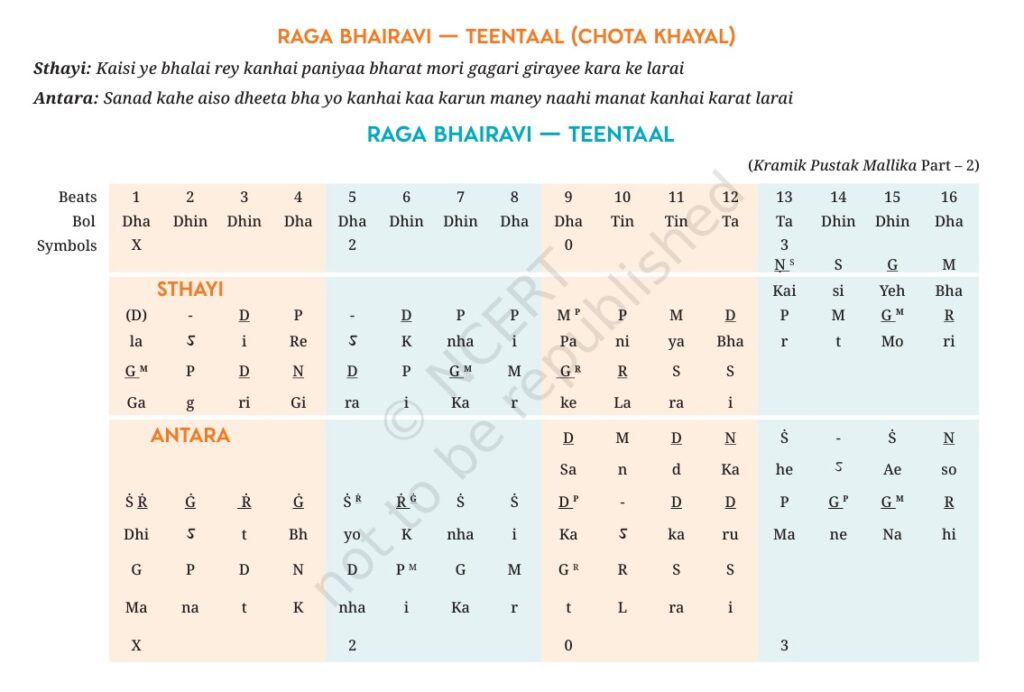
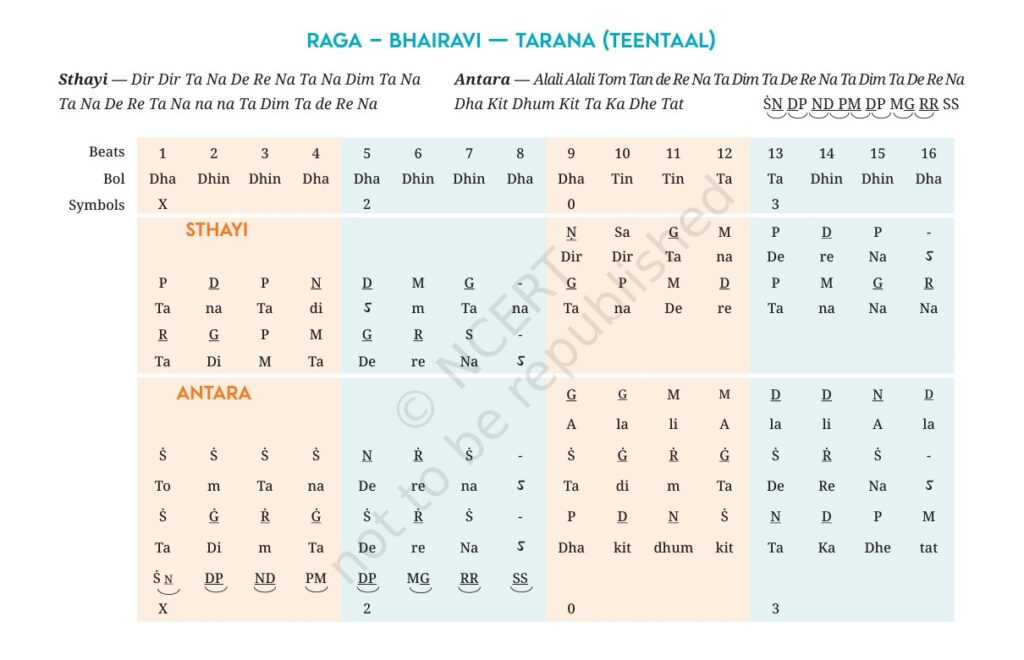
Raga bhairavi is performed in multiple musical forms, including a sargam geet ( a composition sung using note names), a chota khayal ( a short classical vocal form set to a tala such as Teentaal), and a tarana ( a fast- paced composition using rhythmic syllables instead of words). Each of these forms is set to a specific tala, most commonly Ektaal or Teentaal, showing how the same raga can be explored in many different musical styles.
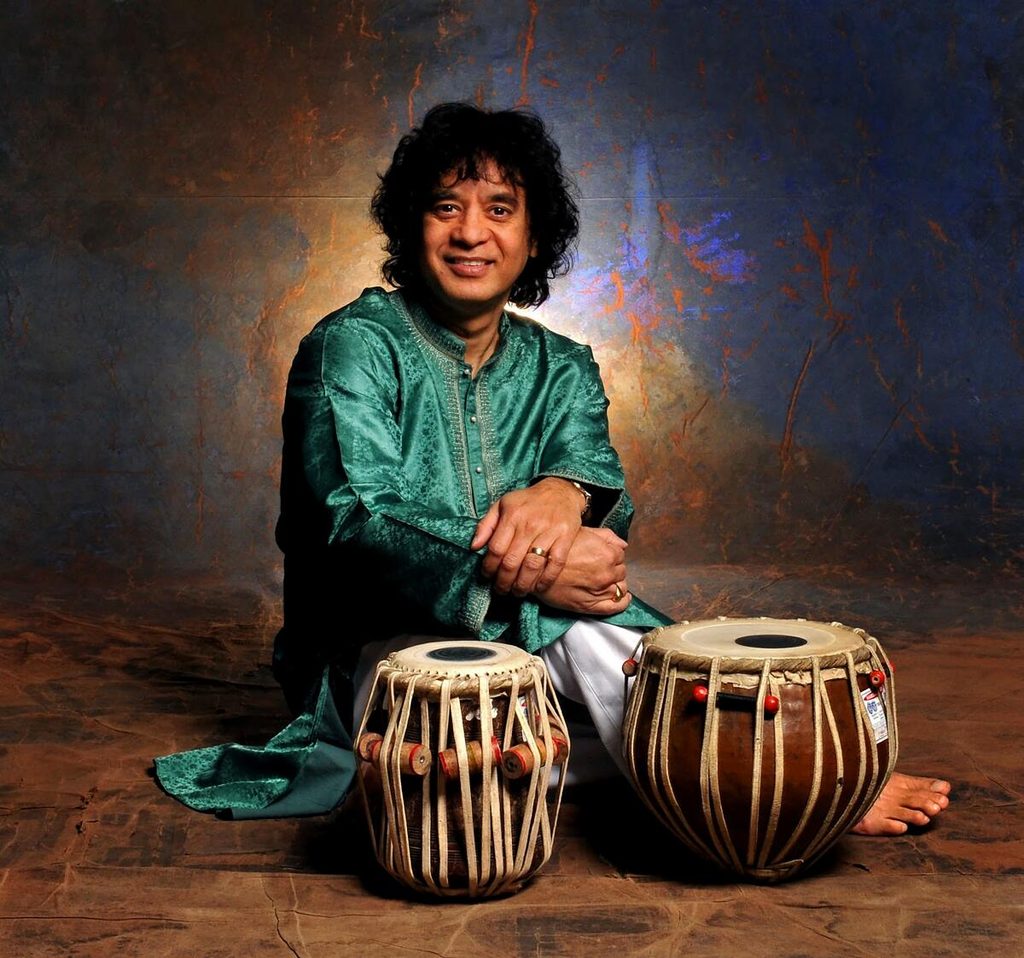
USTAD ZAKIR HUSSAIN (1951–2024)
Zakir Hussain was one of India’s most celebrated table maestros. Son of the well- known table player Ustad Alla Rakha, he began learning from a very young age, performed at concerts by the age of seven, and was touring internationally by the age of twelve.
- He performed across many formats- from accompanying legendary musicians like Pandit Ravi Shankar to solo table concerts.
- He was a founding member of the pioneering world music band Shaki, touring with them for decades.
- He collaborated with musicians from zround the world and performed at many prestigious venues.
- He received numerous honours, including the Padma Vibhushan, the Sangeet Natak Akademi Award, and three Grammy Awards.
Early Life
Zakir Hussain was born on 9 March 1951 in Mumbai, Maharashtra. He was the eldest son of the legendary tabla player Ustad Alla Rakha. He began learning tabla from his father at a very young age and received intensive training in the Punjab gharana tradition.
The Tabla
The tabla is a pair of hand-played drums used extensively in Hindustani classical music.
- The smaller drum is called the dayan.
- The larger drum is called the bayan.
- Different combinations of finger and hand strokes produce a wide variety of sounds.
- Tabla players use rhythmic patterns called taal.
Zakir Hussain became famous for his extraordinary control over these rhythms and his highly expressive playing style.
Contribution to Music
Zakir Hussain made important contributions to both Indian classical music and international music. He:
- Popularised the tabla among audiences around the world.
- Performed with leading Indian classical musicians.
- Collaborated with international musicians and explored fusion music.
- Helped introduce Indian rhythmic traditions to new audiences.
- Inspired younger generations of percussionists.
He was particularly admired for combining traditional Indian rhythm with innovation and improvisation.
Major Awards
Zakir Hussain received several prestigious honours during his career, including:
- Padma Shri – 1988
- Padma Bhushan – 2002
- Padma Vibhushan – 2023
- Sangeet Natak Akademi Award
- Multiple Grammy Awards, including three Grammy wins at the 66th Grammy Awards in 2024.
His Musical Legacy
Zakir Hussain demonstrated that traditional Indian instruments could connect with audiences across cultures. His collaborations showed that different musical traditions could come together while still respecting their individual identities.
His music is an excellent example of how rhythm can communicate emotion, energy and creativity without relying only on words.
Points to Remember
- The seven notes of India music trace back to the Natyashastra and evolved from three vedic tones- Udatta, Anudatta, and Svarita.
- Carnatic music has seven main talas – Dhruva, Matya, Rupaka, Jhampa, Triputa, Ata, and Eka.
- Each Carnatic tala is built from three angas – laghu, Drutam, and Anudrutam.
- A swarajati consists of a pallavi, Anupallavi, and one or more charanams.
- Hindustani talas include Jhaptala ( 10 matras ), Rupak ( 7 matras ), and Ektaal ( 12 matras ), each recited using specific bols.
- The Hindustani system has 12 notes – 7 shuddha, 4 komal, and 1 teevra swara.
- The samya chakra theory links specific ragas to specific ragas to specific times of day, such as raga Bhairav ( morning) and raga Yaman ( evening ).
- Raga Bhairavi is defined by its that, aroh-avroh, vadi-samvadi swars, and early morning singing time.
- Ustad Zakir Hussain was a legendary table player who took Indian classical percussion to the global stage.
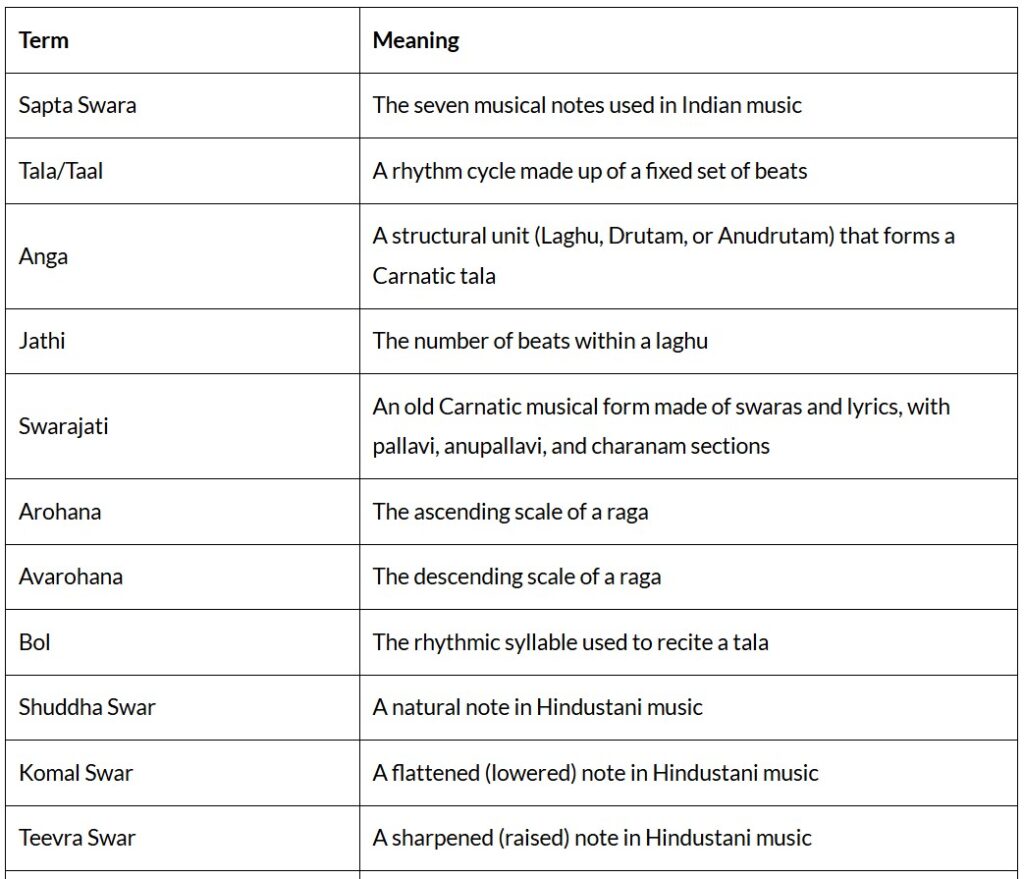
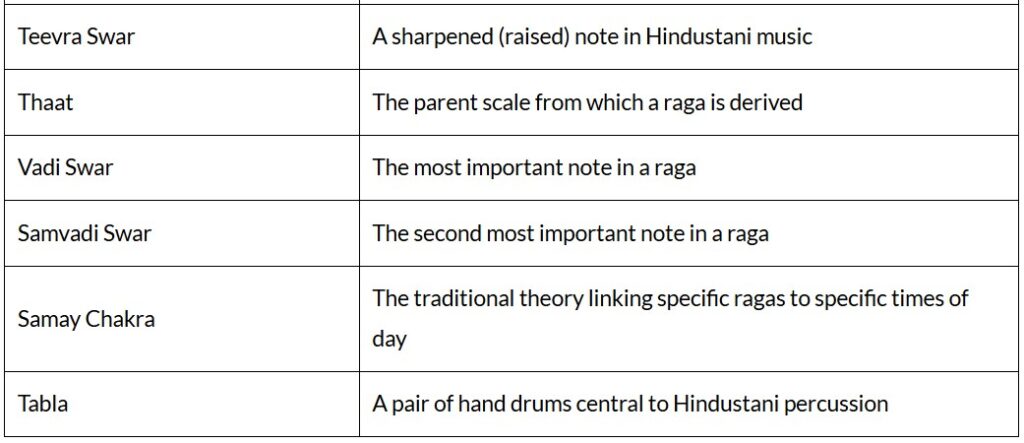
GLOSSARY
Conclusion
Ragas and Talas are essential foundations of Indian classical music. A Raga provides the melodic framework through the arrangement and movement of swaras, while Tala provides the rhythmic framework through a repeating cycle of beats.
Together, they create a balance between melody and rhythm, allowing musicians to express emotions, develop musical ideas, and improvise while maintaining a clear structure. Different ragas can create different moods, while different talas provide distinctive rhythmic patterns and energy.
Understanding Ragas and Talas helps us appreciate the discipline, creativity, expression, and cultural richness of Indian classical music. They also show how melody and rhythm work together to transform individual notes and beats into a meaningful musical experience.