
Introductions
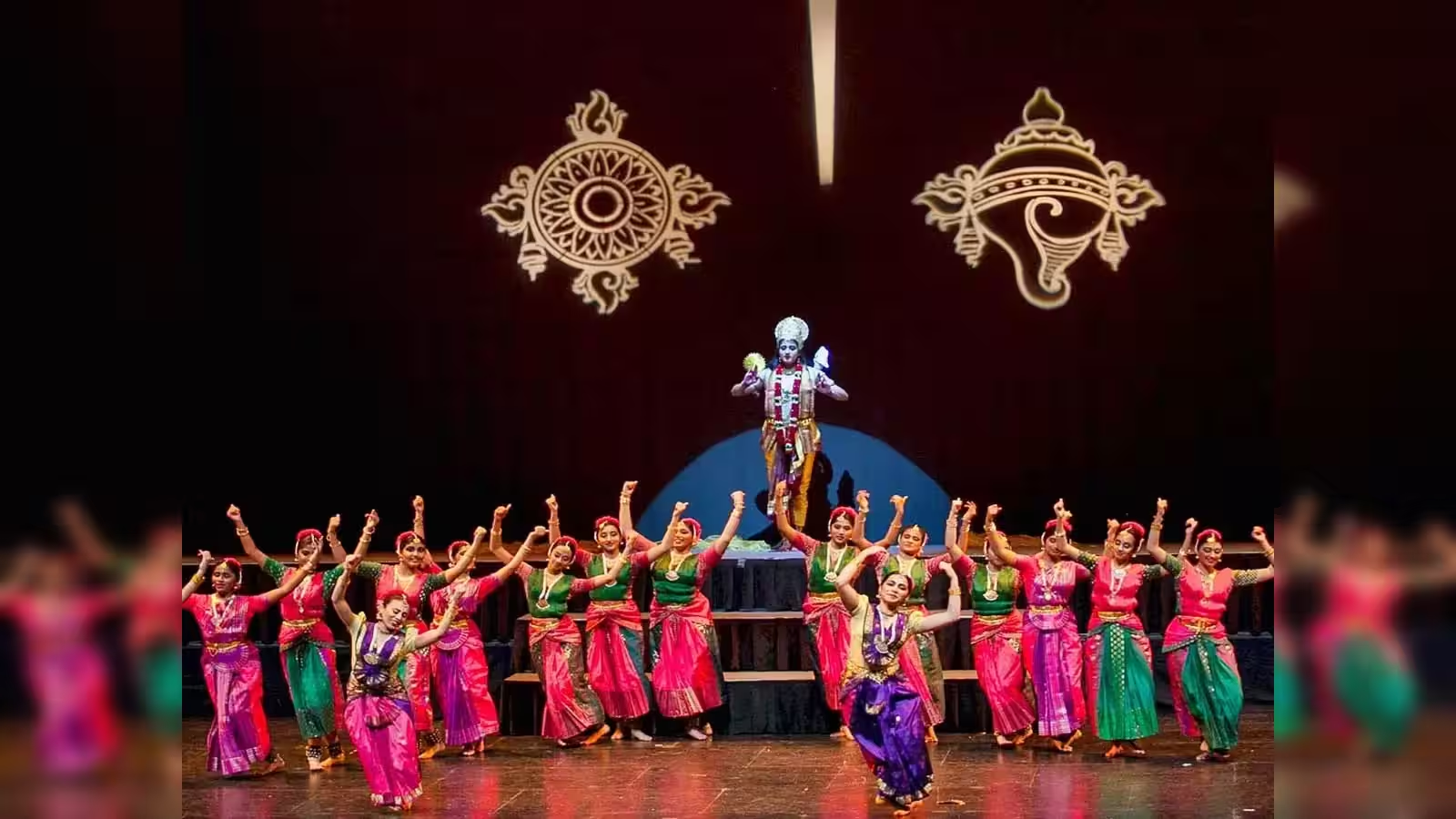
Dance vocabulary and techniques are the basic movements, terms, positions and skills that help dancers understand and perform dance effectively. Dance is not only about moving the body; it is also about using rhythm, posture, balance, gestures, expressions, space and coordination to communicate ideas and emotions.
Learning dance vocabulary helps students understand important concepts such as Nritta, Nritya and Natya, hastas, footwork, jumps, spins, poses and body shapes. Techniques such as balance, flexibility, strength, coordination, synchronisation and control allow dancers to perform movements with greater accuracy and confidence.
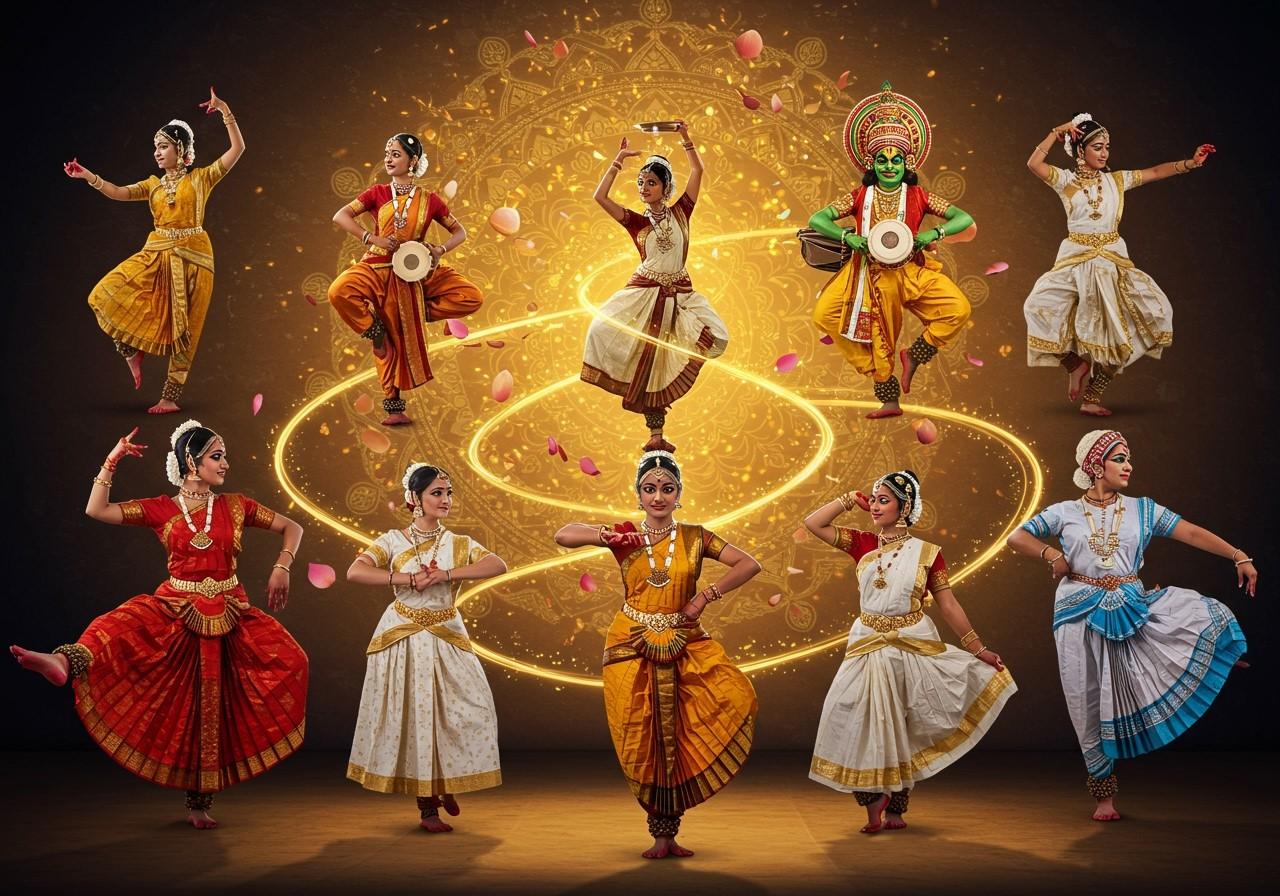
Different dance traditions have their own vocabulary and techniques. Indian classical dances use specialised movements, hand gestures, facial expressions and rhythmic patterns that have developed through centuries of artistic practice. Studying these elements helps learners appreciate the connection between dance, music, theatre, sculpture and cultural heritage.
Dance vocabulary and techniques refer to the special movements, positions, gestures, expressions and terms used by dancers to perform and communicate effectively. Learning dance vocabulary helps performers understand body movement, rhythm, space, direction and expression.
Nritta, Nritya and Natya
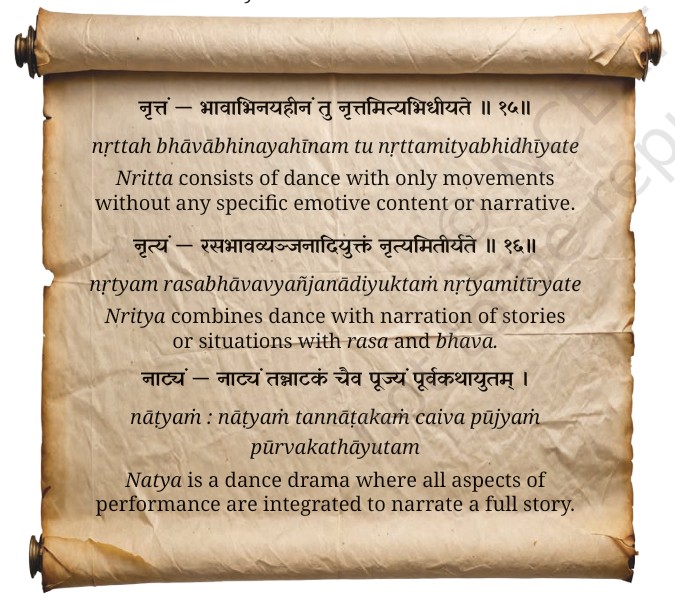
Nritta, Nritya and Natya are three important aspects of Indian classical dance. They represent pure movement, expressive dance and dramatic storytelling.
1. Nritta — Pure Dance
Nritta refers to pure dance movements performed mainly for their rhythmic and aesthetic beauty. The movements do not necessarily communicate a specific story, character or literal meaning.
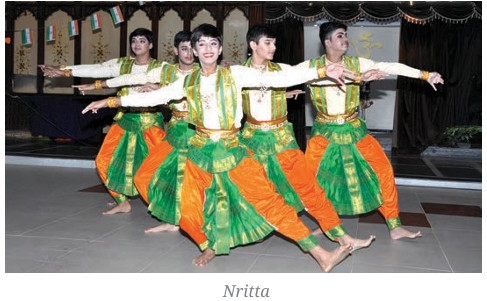
ACTIVITY 11.1 : BASIC STEPS AND RHYTHMS — NRITTA
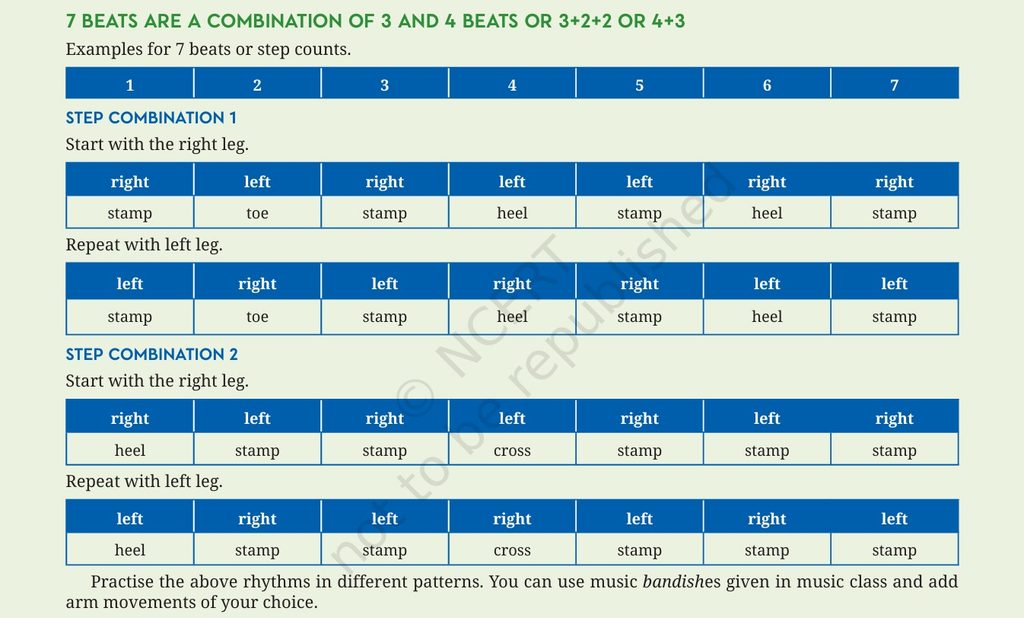
You have been learning steps and rhythm in your earlier grades, now try some different rhythmic beats, i.e., 5, 6 and 7 beats. Add some permutations and combinations to this. Look at the images drawn below. They are combinations of steps exploring different beats. Do you wish to try your own combinations with various rhythms. Different ways the feet can be used are shown below —
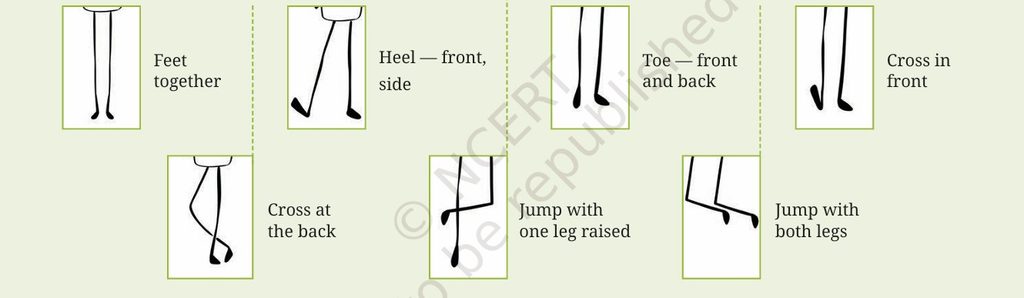
You will use these foot positions and movements to build your dance.
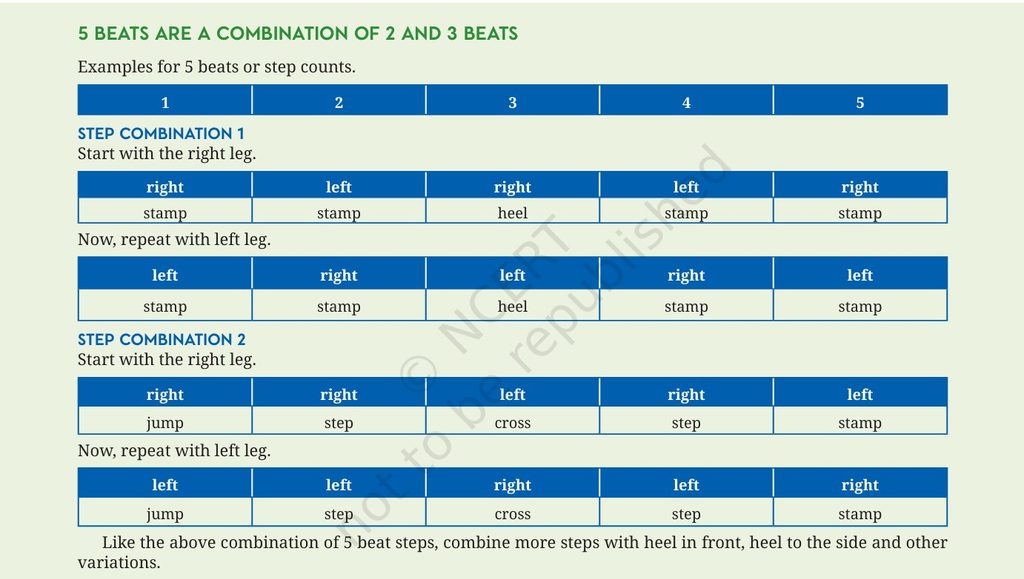
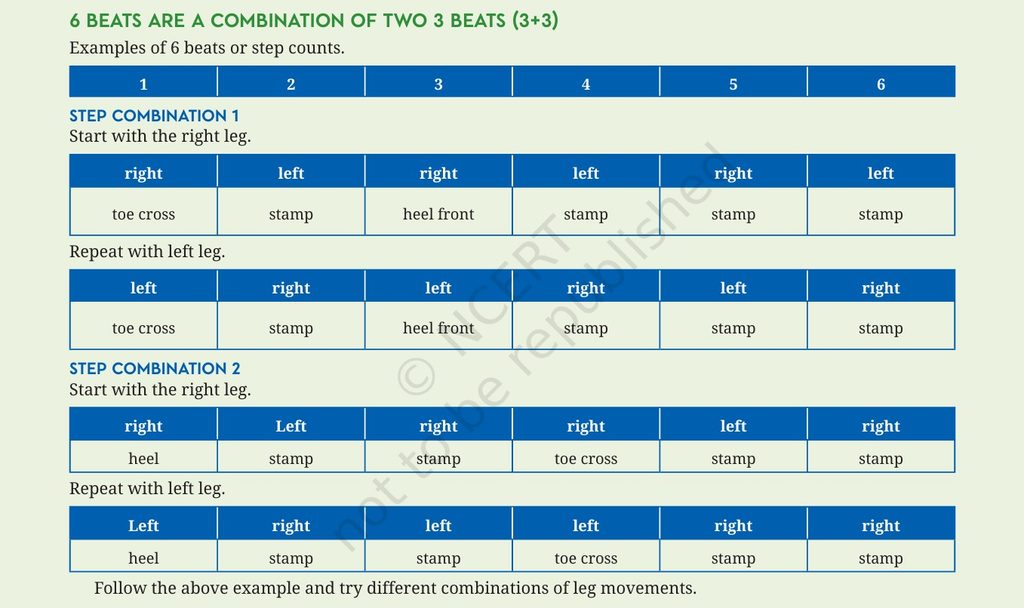
2. Nritya
In Kriti, Grade 6, you started with a shloka from the Abhinaya Darpana, that gave the concept of the use of hand gestures. This is connected to narration and concentration of the mind in bhava to evoke rasa for a successful performance. Let us recap the shloka and its meaning to present your nritya.
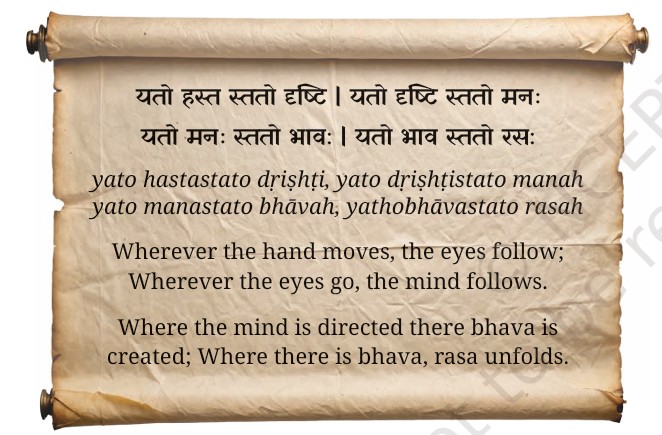
Can you relate this to the description of nritya given earlier?
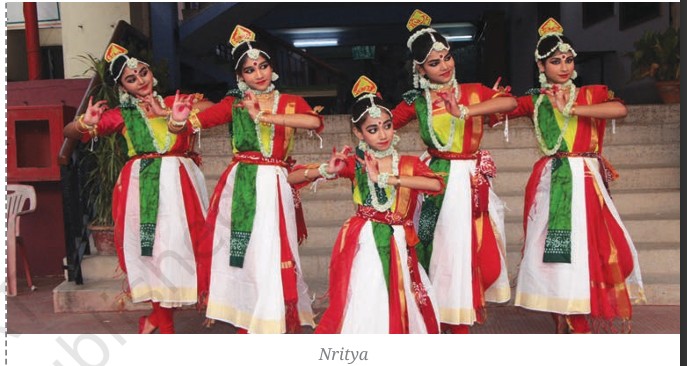
Conversation using Hasta
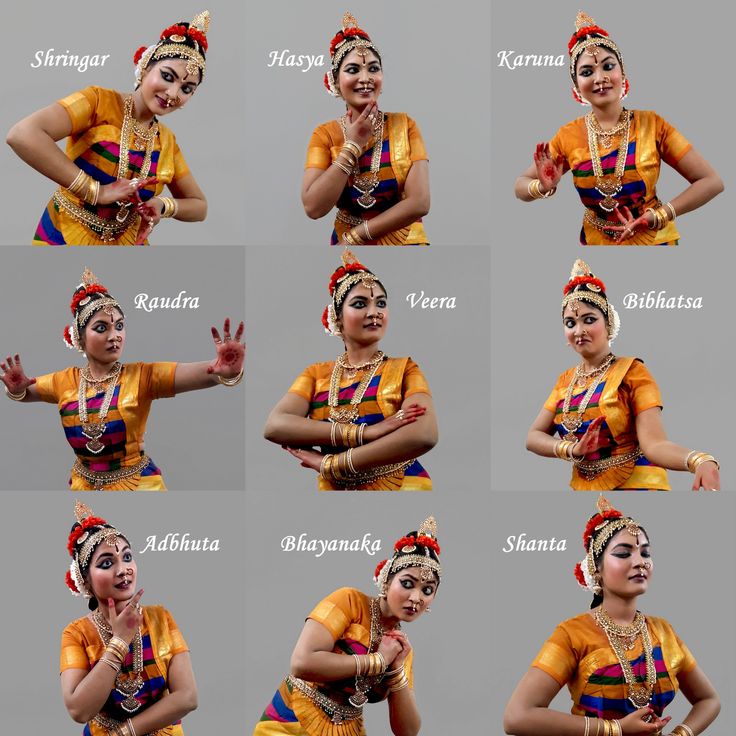
Hasta refers to the use of hand gestures in Indian classical dance to communicate ideas, objects, actions, emotions and stories. A dancer can use different hand gestures along with facial expressions and body movements to create a silent conversation with the audience.
In Chapter 1, you learnt how hastas were skillfully used in sculptures to convey expressions and communicate specific messages. These hastas play a vital role in portraying emotions, and narratives in visual and symbolic ways.
You are familiar with the usages of asamyuta hastas which you have done earlier.
Note: Please refer to the Kriti, Grade 6 for asamyuta hasta usage.
What is a Hasta?
A hasta is a meaningful position or movement of the hand. In Indian classical dance, hand gestures are used as a visual language.
Why Hastas Are Important
Hastas help dancers:
- Communicate without speech
- Tell stories
- Represent objects and actions
- Express emotions
- Show relationships between characters
- Make performances visually interesting
- Connect movement with meaning
Hasta and Abhinaya
Hastas are an important part of abhinaya, the expressive aspect of Indian performance. However, a hand gesture by itself may not always communicate the complete meaning. The dancer combines the hasta with facial expression, eye movement, posture and context.
ACTIVITY 11.2
Now, explore the various ways you can use samyuta hastas.
Here are some samyuta hastas with various uses.
Samyuta Hastas
Samyuta Hastas are double-hand gestures used in Indian classical dance. The word Samyuta means “joined” or “combined.” In these gestures, both hands are used together to communicate different objects, actions, ideas, emotions and situations.
What Are Samyuta Hastas?
In Indian classical dance, hand gestures are broadly discussed as:
- Asamyuta Hasta — single-hand gestures
- Samyuta Hasta — double-hand gestures
Samyuta Hastas are especially useful for storytelling and expressive dance, because two hands working together can create more complex meanings.
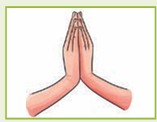
1. Anjali
Uses – Namaskar, prayer, salutation
2. Karkata
Uses – • Gathering of people
• Show belly
• Twist and stretch the limbs
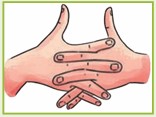
3. Pushpaputa
Uses – • Offer flowers
• Drink water
• Receive things
• Perform aarti
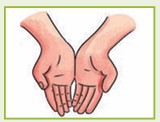
4. Shakata
Uses – • Anger
• Demon
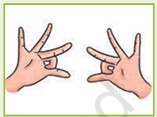
5. Shankha
Uses – • Blow conch shell
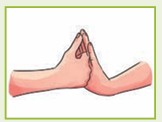
6. Pasha
Uses • Disagreement
• Tight knot
• Chain
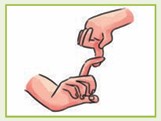
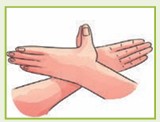
7. Kilaka
Uses • Friendship
• Affection
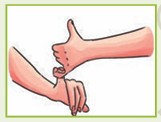
8. Samputa
Uses • Hide object
• Rolling dice
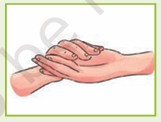
9. Matsya
Uses • Fish
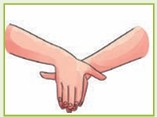
10. Garuda
Uses • Eagle
• Bird
ACTIVITY 11.3
Now, converse in the class using spelling — asamyuta and samyuta hastas (Refer to your asamyuta hasta usages from Kriti, Grade 6).
Demonstrate a meaningful sentence using both asamyuta and samyuta hastas in front of your friends, and let them guess its meaning.
Asamyuta Hastas
Asamyuta Hastas are single-hand gestures used in Indian classical dance. The word “Asamyuta” means “not joined” or “separate.” Unlike Samyuta Hastas, which use both hands together, Asamyuta Hastas are formed using one hand at a time.
Try short phrases first like:
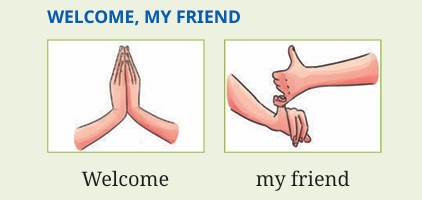
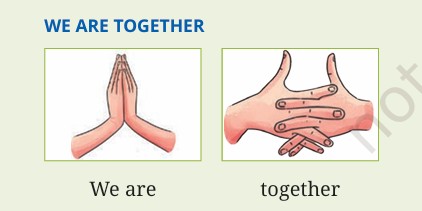
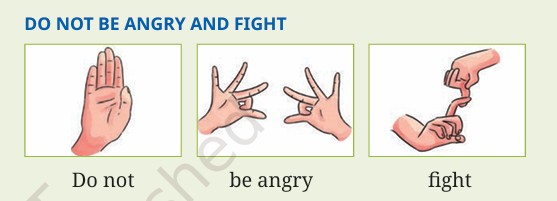
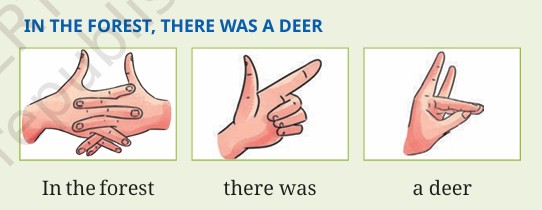
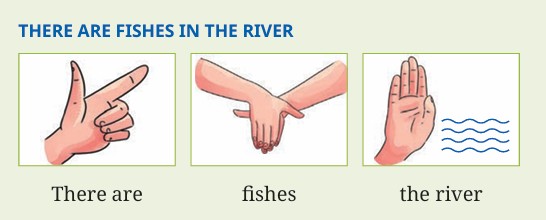
Jumps and Pirouettes (spins)
Jumps and pirouettes (spins) are dynamic dance movements that add energy, rhythm, height, rotation and visual beauty to a performance. They require physical strength, balance, coordination, concentration and proper technique. These movements are found in many dance traditions, although their names and methods vary from one style to another.
Jumps in Dance
A jump is a movement in which the dancer temporarily leaves the floor and returns with control. Jumps allow dancers to explore height, space and dynamic energy.
Main Stages of a Jump
1. Preparation
The dancer prepares the body by establishing a stable posture and bending the knees appropriately.
2. Take-off
The dancer pushes against the floor using the legs and feet.
3. Airborne Position
The dancer creates a controlled body shape while in the air.
4. Landing
The dancer returns to the floor with control and proper alignment.
Types of Jumps
Depending on the dance style and choreography, jumps may be:
- Vertical jumps — moving mainly upward
- Travelling jumps — moving across the floor
- Small rhythmic jumps — performed repeatedly with music
- Large dramatic jumps — used for energy and dramatic effect
- Turning jumps — combining jumping with rotation
Jumps in Indian Dance
Indian classical dance forms use their own distinctive jumping movements. Bharatanatyam, Kathakali and Kuchipudi, for example, include energetic movements involving elevation and dynamic changes of body position.
Pirouettes and Spins
A spin is a rotational movement in which the dancer turns around a central axis. A pirouette is a specific turning technique associated particularly with ballet, usually performed on one supporting leg.
Indian classical dance traditions have their own turning techniques. Kathak, for example, is particularly famous for chakkars, or rhythmic spins.
Main Elements of a Spin
Preparation → Initiation → Rotation → Control → Finish
Important Skills
- Balance — keeps the dancer stable
- Alignment — helps maintain efficient body position
- Core control — supports the torso
- Coordination — connects the arms, legs and body
- Focus — helps maintain orientation
- Rhythm — connects the turn with music
- Spatial awareness — helps control direction and position
Jumps and Spins with Rhythm
Both movements can be closely connected with tala and laya.
A dancer may coordinate movements with a rhythmic cycle:
Beat → Preparation → Jump → Landing → Next movement
Similarly:
Beat → Preparation → Spin → Finish → Next movement
The exact timing depends on the choreography and dance tradition.
Jumps and Spins in Indian Classical Dance
Bharatanatyam
Uses energetic movements, jumps and turns within its traditional movement vocabulary. Precision, posture and rhythm are important.
Kathak
Known especially for rhythmic chakkars and intricate footwork. Turns are often closely integrated with the tala.
Kathakali
Uses powerful and dramatic physical movements. Dynamic actions can help portray strength, conflict and dramatic energy.
Kuchipudi
Combines graceful and energetic movements, including turns and dynamic actions.
Jumps, Spins and Body Shapes
Jumps and spins connect strongly with the idea of “My Body in Various Shapes.”
During a jump, the dancer creates a temporary shape in the air. During a spin, the body continuously changes its position and direction.
Dance can create:
- Straight lines
- Curves
- Angles
- Circles
- Open shapes
- Closed shapes
- Symmetrical forms
- Asymmetrical forms
Thus, the dancer’s body becomes a form of moving visual art.
Difference Between Jumps and Spins
| Jumps | Pirouettes / Spins |
| Body leaves the floor | Body rotates around an axis |
| Explore height and space | Explore rotation and direction |
| Require powerful take-off | Require controlled rotation |
| Landing is important | Balanced finishing position is important |
| Create temporary shapes in the air | Create circular movement |
| Can express energy and excitement | Can express energy, rhythm and elegance |
In how many ways can you jump and spin in dance?
Jumps, utplavana, pirouettes and bhramaris (spins) play an important role in a dance performance. The execution of jumps and pirouettes is another unit of dance vocabulary, which can be used in pure dance or to enhance emotive content.
Both jumps and pirouettes can be performed in rhythm with music beats, enhancing the overall impact of a dance. In a dance with stories, it can be without rhythm.
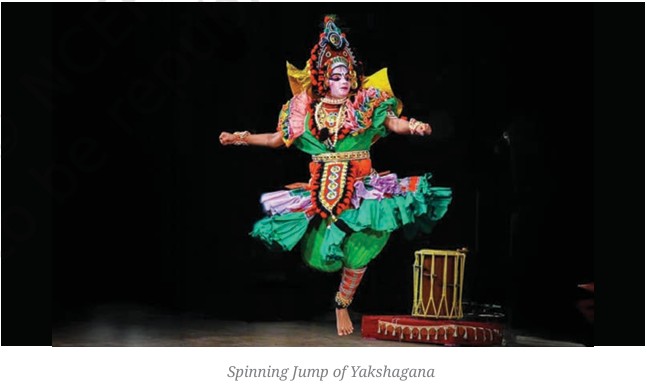
ACTIVITY 11.4: ENHANCING MY DANCE WITH JUMPS AND SPINS
You might have jumped and spun around while playing, dancing or engaging in everyday activities. Below are some examples of jumps and spins.
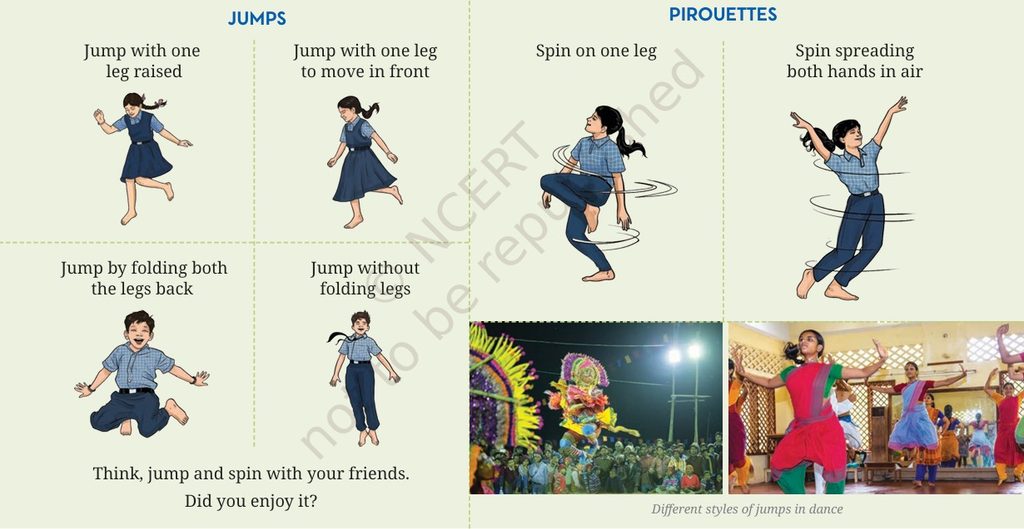
Animal Jumps and Pirouettes
Observe how different animals perform jumps and pirouettes in their natural movements.s
Animal jumps and pirouettes are creative dance movements inspired by the movements, postures, energy and behaviour of animals. Dancers observe how animals jump, leap, turn, run and change direction, and then transform those observations into expressive movements.
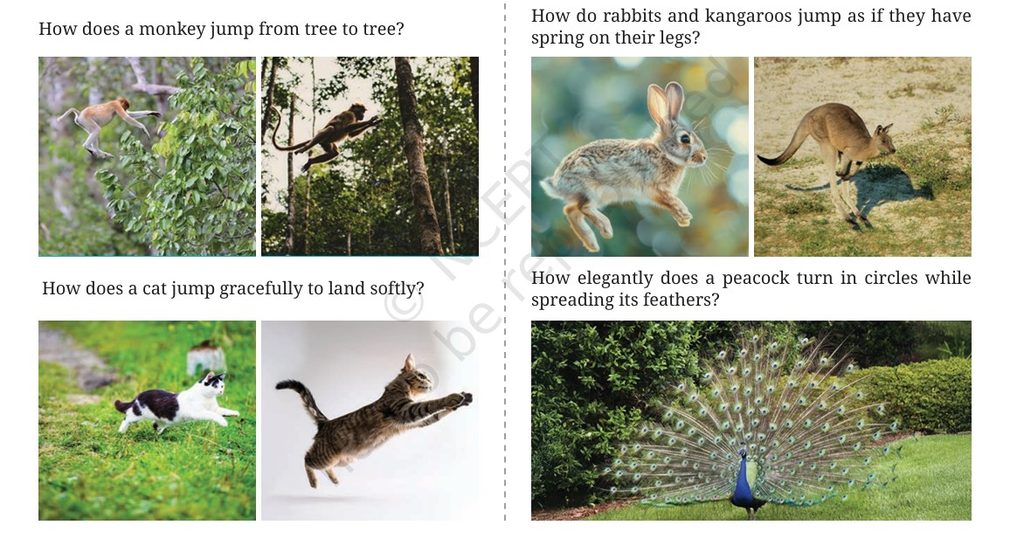
This activity helps students explore imagination, body control, rhythm, space and creativity.
1. What Are Animal Jumps?
Animal jumps are dance movements that imitate or are inspired by the way animals leap, hop or spring.
Examples include:
- Frog jump — a low, springing jump with bent knees
- Rabbit jump — small repeated hops
- Deer leap — a long, graceful leap
- Kangaroo jump — energetic repeated jumps
- Bird leap — a light jump with expressive arm movements
- Tiger jump — a strong, powerful leap
The aim is not to copy an animal exactly but to understand its energy and movement quality.
2. Animal-Inspired Spins
Animals can also inspire turning movements.
For example:
Butterfly Spin
The arms can move gently like wings while the dancer performs a controlled turn.
Bird Turn
The dancer uses open arm positions and changes direction smoothly.
Cat Turn
A dancer can create a controlled, quiet turn inspired by the alert and graceful movement of a cat.
Peacock Turn
The dancer can use expressive arms and an upright posture to suggest the beauty of a peacock.
3. Movement Qualities
Animal-inspired dance allows students to explore different qualities of movement.
| Animal | Movement Quality |
| Frog | Bouncy and low |
| Rabbit | Light and quick |
| Deer | Graceful and flowing |
| Tiger | Strong and powerful |
| Bird | Light and expansive |
| Elephant | Heavy and steady |
| Cat | Quiet and controlled |
| Peacock | Proud and expressive |
4. Animal Jumps and Rhythm
Animal movements can be performed according to different rhythms and tempos.
For example:
Slow rhythm → Elephant-inspired movement
Medium rhythm → Deer-inspired movement
Fast rhythm → Rabbit-inspired movement
The dancer learns that changing the rhythm can completely change the quality and character of a movement.
5. Animal Jumps and Pirouettes Activity
Step 1: Choose an Animal
Select an animal such as a frog, deer, bird, rabbit or tiger.
Step 2: Observe Its Movement
Think about:
- How does it move?
- Does it jump or walk?
- Is it fast or slow?
- Is its movement powerful or gentle?
- How does it change direction?
Step 3: Create a Jump
Turn the animal’s movement into a simple dance jump.
Step 4: Create a Spin
Develop a safe turning movement inspired by the animal.
Step 5: Add Rhythm
Perform the movement to a simple beat.
Step 6: Perform
Present the movement to classmates and allow them to guess the animal.
6. Example: Deer
A deer can inspire a light and graceful leap.
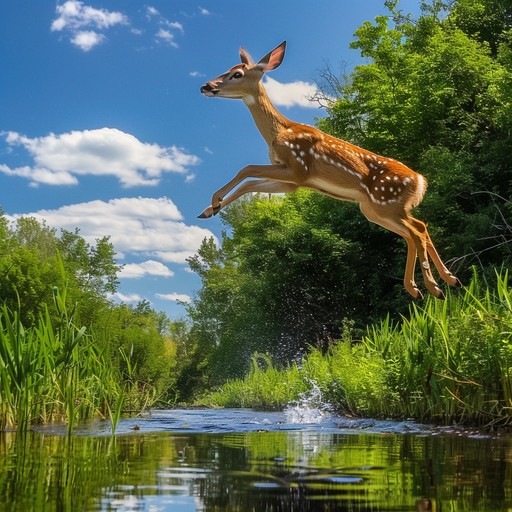
The dancer may:
- Begin in a balanced position.
- Take a few light steps.
- Perform a gentle travelling jump.
- Extend the arms to create a sense of openness.
- Land softly.
- Finish with a controlled turn.
This creates the feeling of a deer moving through a forest.
There are some important pirouettes & Spins :-
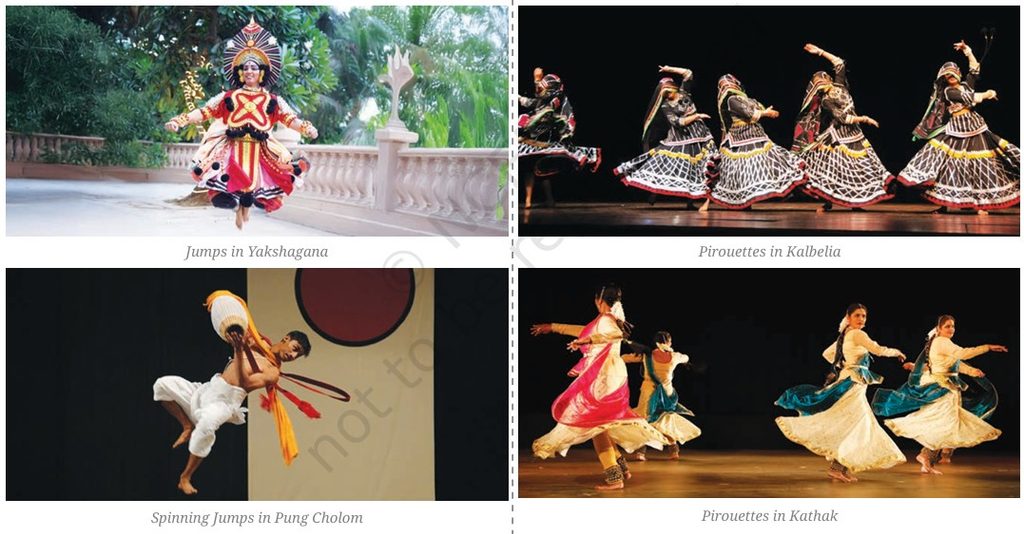
These movements are an integral part of our folk, traditional and classical dance forms. In Karnataka’s Yakshagana, the artist performs pirouettes while standing on knees, often executing them multiple times. Kalbelia, a traditional dance from Rajasthan is performed in a circular motion while taking pirouettes in a circular path. In the Pung Cholom dance of Manipur, the drummers jump and spin holding a drum. Kathak, the classical dance form of northern India is characterised by the spins the dancer executes.
1. Yakshagana :-
Jumps are an energetic and dramatic part of Yakshagana, the traditional dance-drama of Karnataka. Unlike ballet jumps, Yakshagana’s jumping movements are closely connected with its powerful acting style, rhythmic footwork, characterisation and dramatic storytelling.
What Are Jumps in Yakshagana?
Yakshagana performers use dynamic jumps, leaps and energetic body movements to create a strong stage presence. These movements can be used during dramatic scenes, entrances, confrontations and rhythmic passages.
The movements are performed in coordination with the music, percussion and dramatic action.
Main Features
1. Powerful Movement
Yakshagana is known for its energetic physical vocabulary. Jumps may be performed with strong leg movements and expressive arms to make the character appear powerful.
2. Rhythmic Coordination
The dancer coordinates jumping movements with the Chande, Maddale and other musical elements.
The percussion gives the performer rhythmic cues and helps create dramatic intensity.
3. Characterisation
Movement quality can help distinguish characters.
For example:
- A heroic character may use strong, confident movements.
- A powerful or warrior-like character may use forceful jumps and energetic actions.
- A comic character may use exaggerated movements for entertainment.
The exact movement depends on the role and performance tradition.
4. Dramatic Effect
A sudden jump can make an entrance or dramatic moment more exciting. It can communicate strength, anger, excitement or supernatural energy, depending on the context.
2. Kalbelia :-
Kalbelia is a traditional folk dance of Rajasthan known for its fluid, graceful and energetic movements. Turning and spinning movements are among its most visually attractive features. Although the term pirouette comes from ballet, Kalbelia dancers perform their own traditional folk-style spins and turns, rather than ballet pirouettes.
What Are Spins in Kalbelia?
In Kalbelia, dancers use rapid turns, circular movements and graceful rotations as part of the choreography. These movements are often combined with flexible body movements, expressive arms and rhythmic footwork.
The spinning movement becomes especially beautiful because of the dancer’s flowing black skirt, which spreads and moves around the body during rotation.
Main Features of Kalbelia Spins
1. Graceful Rotation
The dancer rotates the body while maintaining a controlled and flowing posture. The movement often appears smooth rather than rigid.
2. Fluid Body Movement
Kalbelia is recognised for movements that can suggest the flowing motion of a snake. The dancer may combine turns with gentle bending and curving movements.
3. Rhythmic Footwork
The feet maintain the rhythm while the upper body and arms contribute to the expressive quality of the movement.
4. Flowing Costume
The dancer’s colourful, decorated costume expands outward during a turn, creating a beautiful circular pattern.
5. Expression
Spins are not performed only for technical display. They are integrated with the overall mood, rhythm and presentation of the dance.
3. Pung Cholom :-
Spinning jumps in Pung Cholom are dynamic movements that combine jumping, turning, drumming, rhythm and balance. Pung Cholom is a traditional drum-dance tradition of Manipur, in which performers play the pung while dancing. The combination of physical movement and live drumming makes the form particularly demanding and visually powerful.
What Are Spinning Jumps?
A spinning jump combines two movements:
- Jump — the dancer leaves the floor.
- Spin — the body rotates while airborne or as part of the movement sequence.
In Pung Cholom, dynamic jumps and turns can be incorporated into the performance while the dancer continues to maintain the rhythmic relationship with the pung.
4. Kathak :-
In Kathak, turning movements are traditionally known as Chakkars. They are among the most recognisable and visually beautiful elements of Kathak. While the term pirouette is mainly associated with ballet, Kathak has its own distinctive technique of turning that is closely connected with rhythm, footwork, balance and grace.
Conclusion
Dance vocabulary and techniques provide the foundation for expressive and confident movement. By learning different steps, gestures, rhythms, body positions, jumps, spins and expressive techniques, dancers develop better control over their bodies and learn to communicate through movement.
Regular practice helps transform basic movements into graceful, rhythmic and meaningful performances. Understanding dance vocabulary also allows students to appreciate the diversity of Indian and global dance traditions.