
Introduction
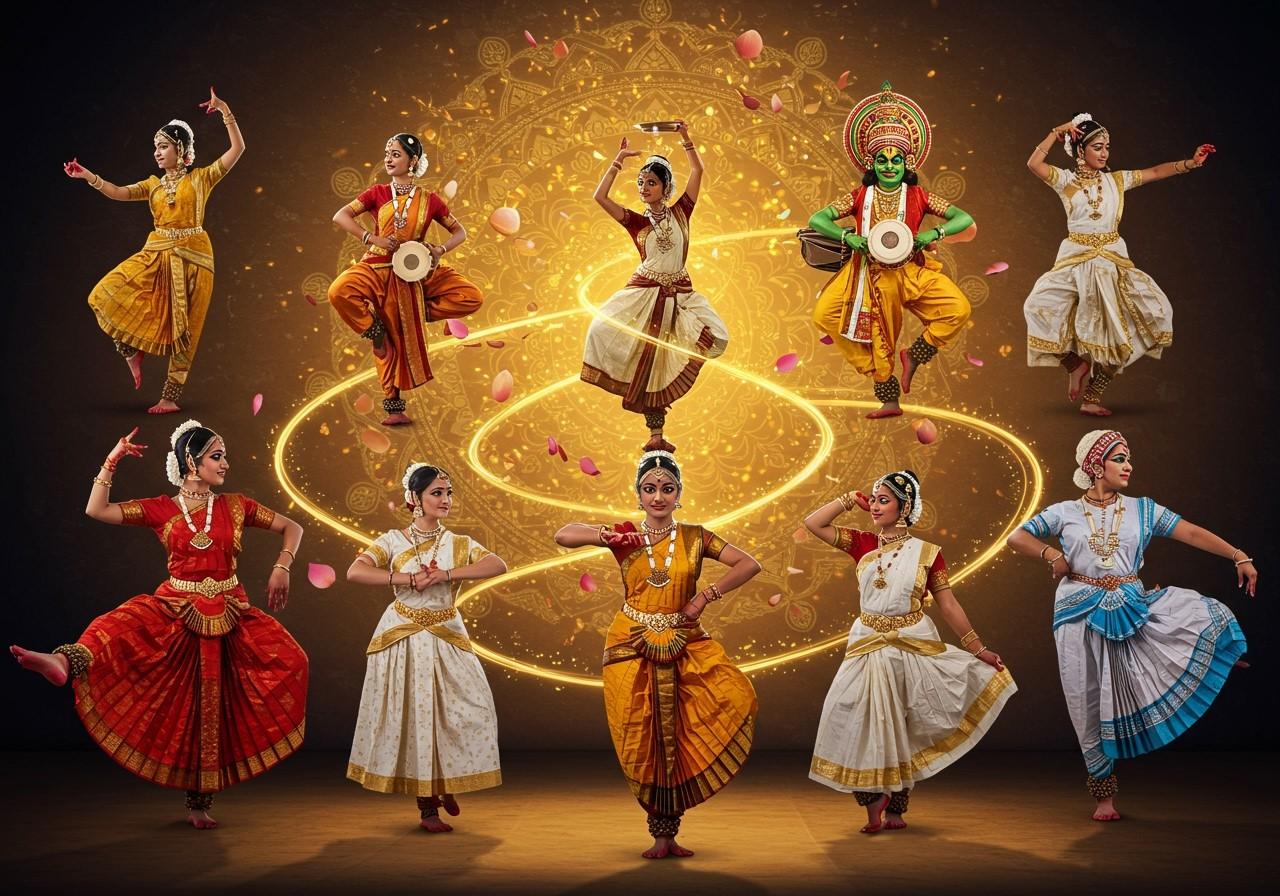
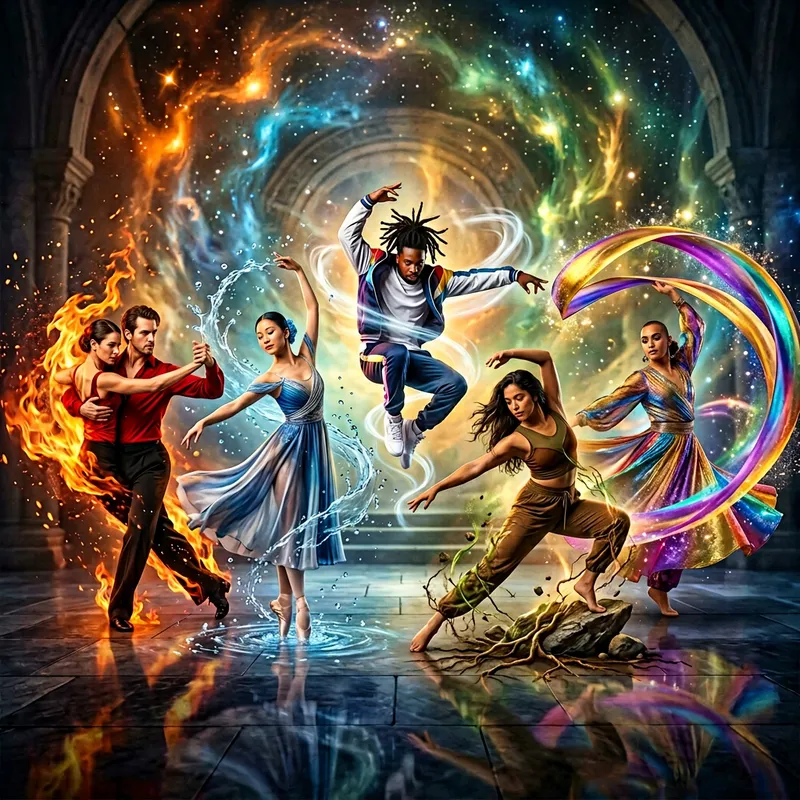
Breaking Barriers with Dance explores how dance can overcome differences and bring people together through movement, rhythm, creativity, and self-expression. Dance does not always require spoken language; movements can communicate emotions, ideas, stories, and experiences across cultural and social boundaries. It provides an opportunity for people of different backgrounds, abilities, and experiences to participate, express themselves, and connect with others.
Definition
Breaking Barriers with Dance means using dance as a form of creative expression and communication to overcome social, cultural, physical, linguistic, and emotional differences and encourage inclusion and understanding.
Bhakti movement
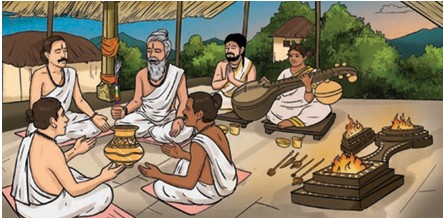
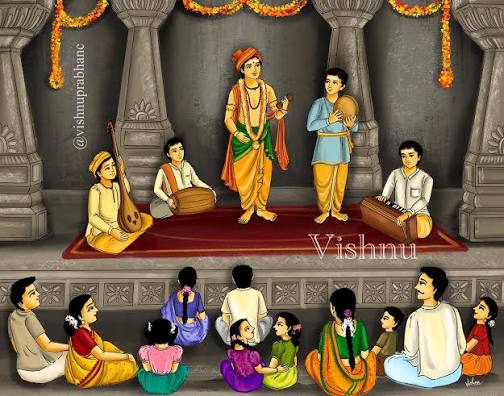
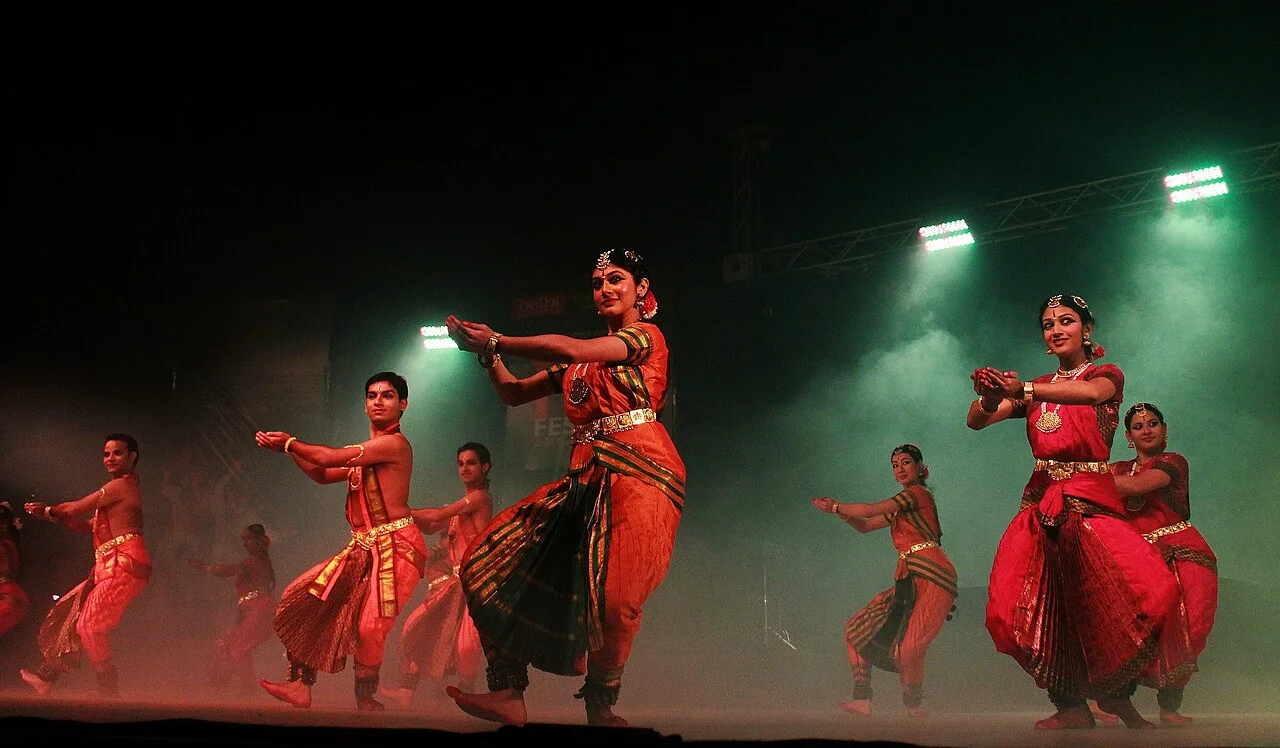
Bhakti movement, starting around the sixth or seventh century AD influenced the development of regional classical dance forms which expand the roots of our present day classical dances.
In the bhakti period, dancers became part of the pooja rituals inside the temple. The Devadasis and Tevadichhis of Southern India and the Maharis of Odisha directly served the deity inside the temple.
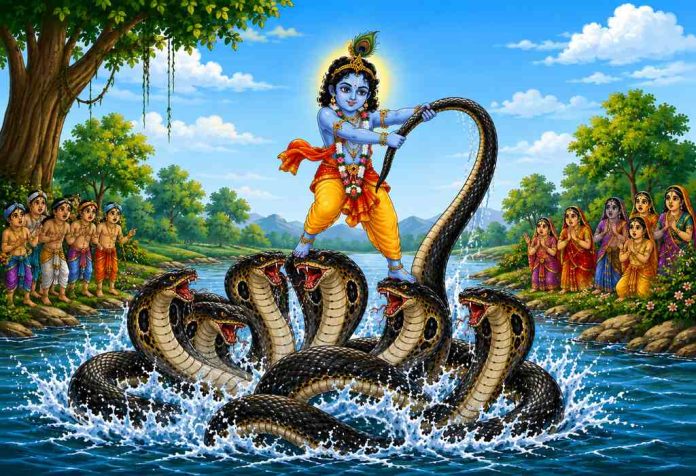
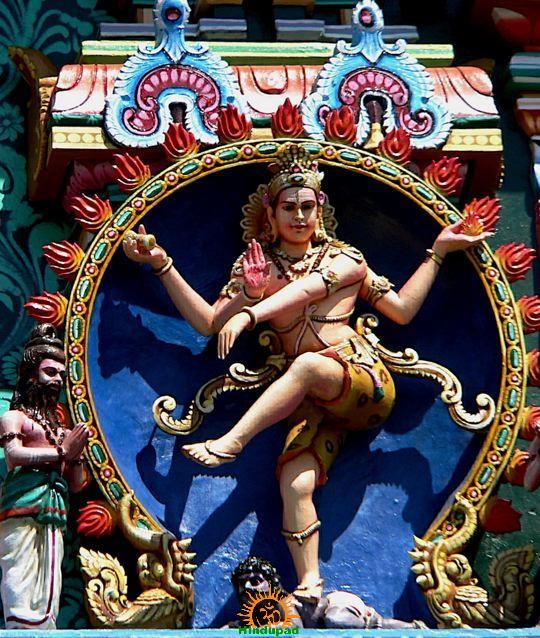
The 64 rituals are performed through ritualistic dance in the Sattaras of Assam and the Bhagavatars in the South. The Kathakars of the North sang and enacted the stories in praise of Lord Shiva’s tandava to enhance the moral values of the people.
The concept of bhakti movements was easy for the common people to understand.
Examples
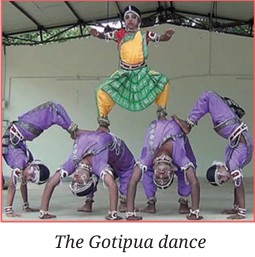
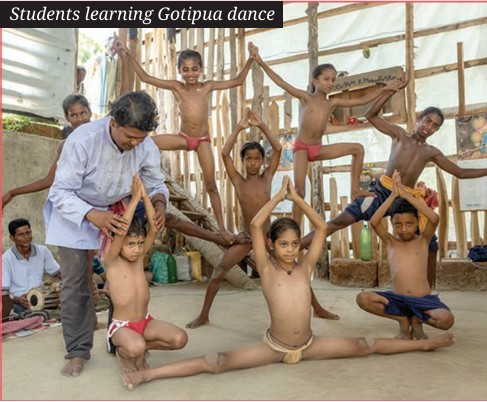
The Gotipua Dance
Watch a video (YouTube) of the Gotipua dance which originated in Odisha.
The Maharis performed this inside the temple in praise of Lord Jagannatha and the Gotipuas where the young boys danced for the public.
Here, the young boys dress up as girls and perform dances combined with acrobatic movements.
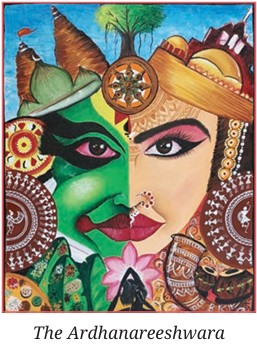
The Ardhanareeshwara Dance In the painting, you can see Lord Shiva and Goddess Parvathi on a single face with dance make-up.
How Dance Breaks Barriers
1. Breaking Language Barriers
Dance communicates through movement, allowing people to connect even when they speak different languages.
2. Connecting Different Cultures
Learning dances from different communities helps people understand and appreciate their traditions and cultural expressions.
3. Encouraging Inclusion
Dance can provide opportunities for people with different abilities and experiences to participate creatively.
4. Building Confidence
Performing and practicing dance can help individuals overcome shyness and develop confidence.
5. Creating Unity
Group dance requires cooperation, listening, timing, and teamwork, helping participants build stronger connections.
1: Watch Videos of Unique Loka Nritya
Definition
Lok Nritya means traditional or folk dance performed by communities to express their culture, customs, celebrations, stories, emotions, and way of life.
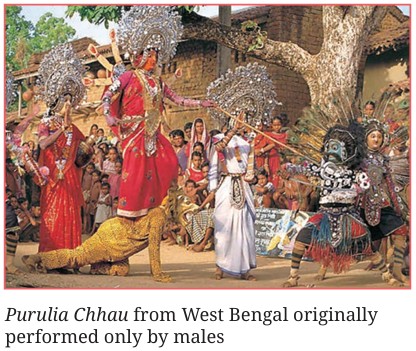
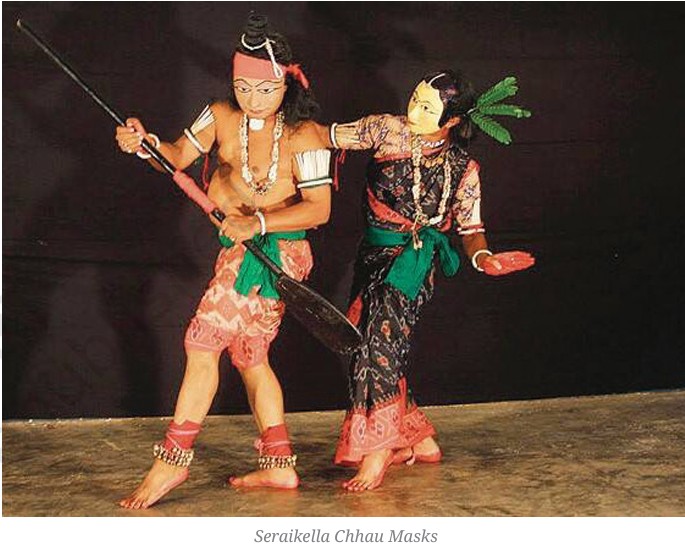
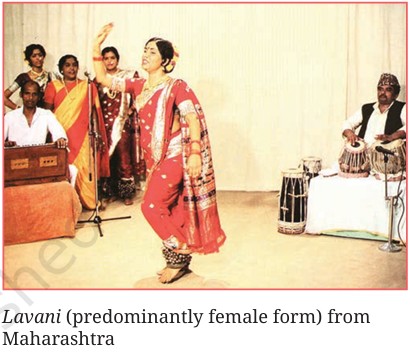
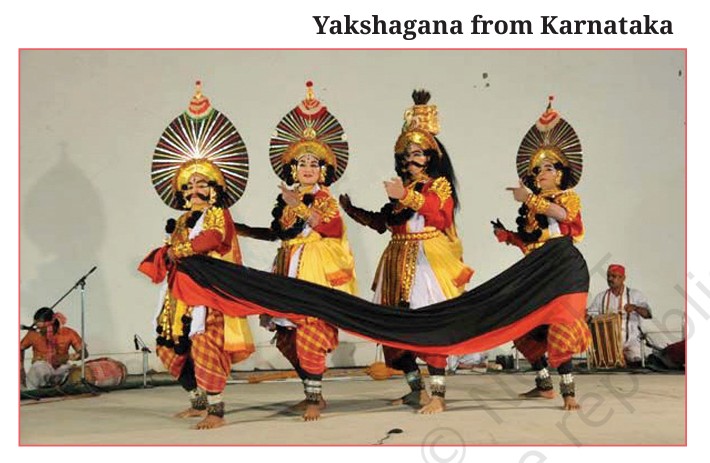
Now, you can try the steps of both Lavni and Chhau. The dances like Mohiniyattam (earlier performed only by women), Kathakali and Yakshagana (earlier performed by only men) have undergone a drastic transformation by removing the gender constraints in modern times.
It’s important to note that in dance, these stances and gaits are not strictly limited by gender. Dancers often blend elements from various styles to create their own unique expression, breaking traditional gender norms.
Now, you have come to a stage where you have to learn the steps of the dance forms in your region.
Examples of Indian Lok Nritya
India has numerous folk-dance traditions. Some examples include:
- Garba – Gujarat
- Bihu – Assam
- Ghoomar – Rajasthan
- Bhangra – Punjab
- Lavani – Maharashtra
- Chhau – Eastern India
- Dandiya Raas – Gujarat
- Nati – Himachal Pradesh
- Rouf – Kashmir
- Karma Dance – Central and Eastern India
- Jhumar – Several regions of North and Eastern India
Each tradition has its own movements, music, costumes, and cultural significance.
2: Stepping for Loka Nritya
Stepping for Lok Nritya focuses on learning and practicing the basic footwork and movement patterns used in Indian folk dances. Lok Nritya, or folk dance, reflects the traditions, celebrations, lifestyles, and cultural identity of different communities. Footwork is an important part of these dances because it creates rhythm, supports group coordination, and connects body movements with music.
Let us practice the tried out steps with the required bents, in vigorous or gentle movements.
Lavni and Bhangra, both dance forms can be practiced by girls and boys.
Explore the arm and hand gestures used in these dances.
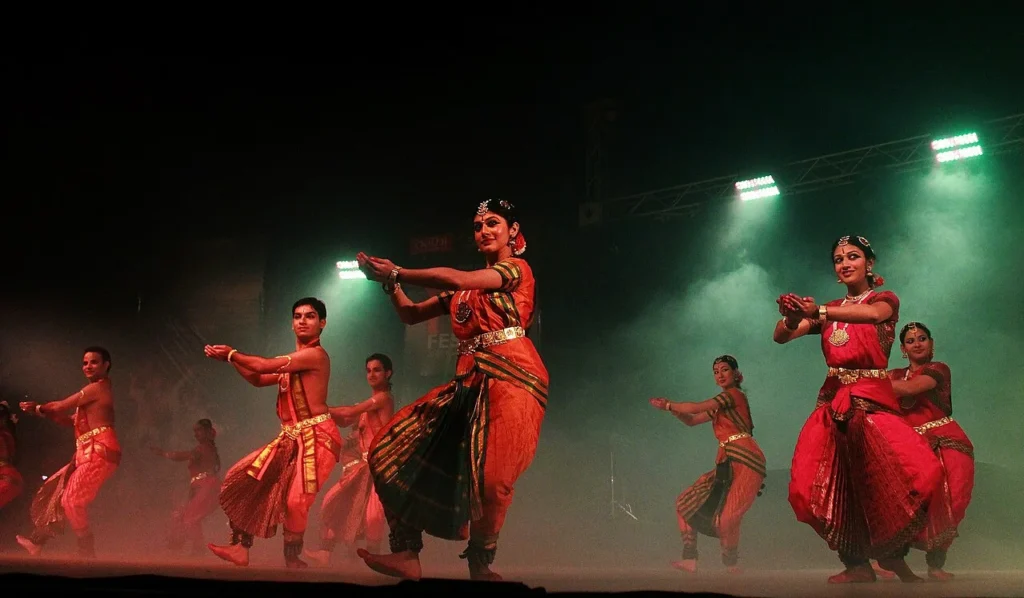
Examples of Lok Nritya and Their Movement Styles
1. Bihu
2. Garba
3. Bhangra
4. Ghoomar
5. Lavani
6. Chhau
Dance as a Form of Expression
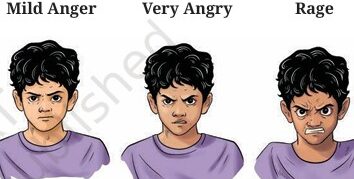
Dance allows performers to express emotions such as:
- Happiness
- Sadness
- Love
- Hope
- Excitement
- Strength
- Peace
- Freedom
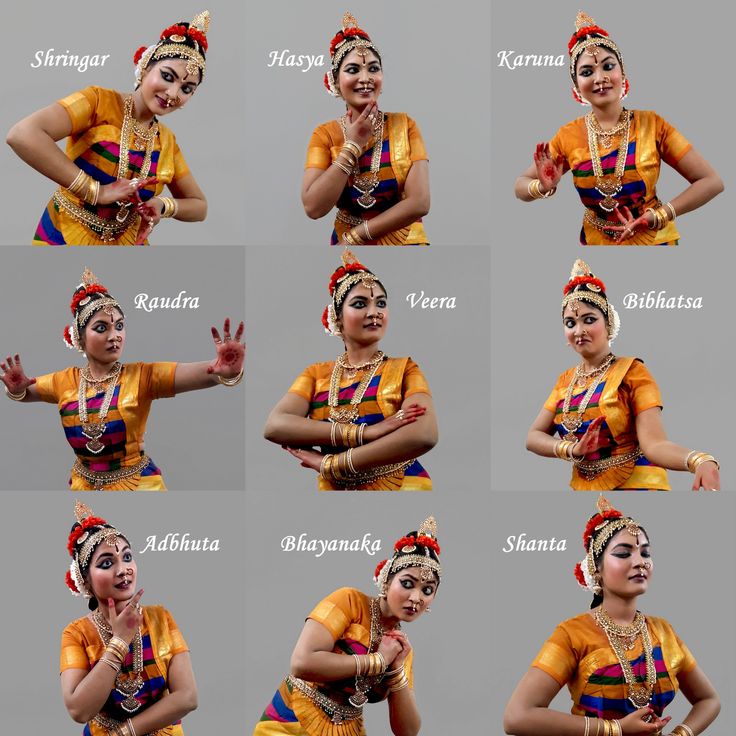
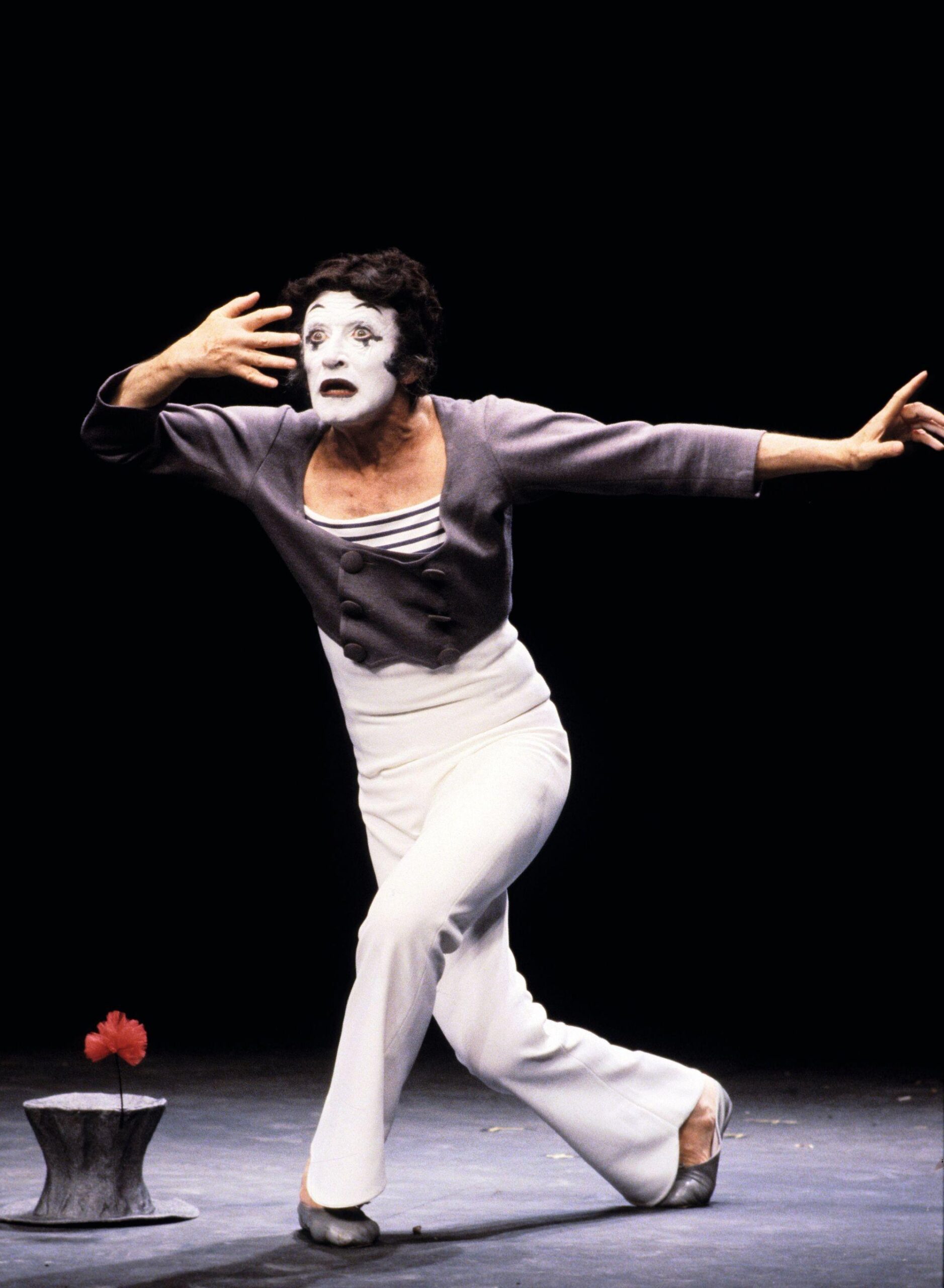
Body movements, facial expressions, gestures, rhythm, and space can communicate ideas without spoken words.
3: Project Work
Jogati Manjamma is a path breaking personality who has influenced the development of the Jogati Dance in Karnataka by breaking the barriers of gender identity.
Find out more about her and present a project work with her pictures.
Frame of the project — inspiring story from childhood (if any), learning experiences, achievements and associations.
Dance, Shapes and Tala
Mathematics and dance complement each other.
We can demonstrate geometrical shapes through dance. Dancing involves geometrical postures and movements in mathematical rhythm. We can use different geometrical patterns for formations in a choreography. Rhythm and beat are simply arithmetical patterns.
Try these out in the next activity.
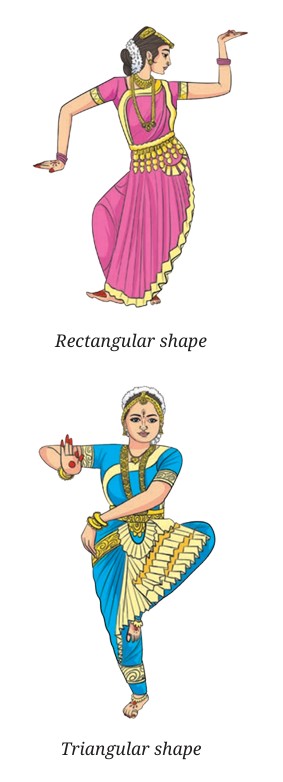
4: Dance and Geometrical Shapes
Dance and Geometrical Shapes explores the connection between dance movements and geometric patterns. Dancers use space to create different shapes, lines, formations, and pathways while performing. Circles, triangles, squares, straight lines, curves, and other geometric patterns can be created through individual and group movements. This connection makes dance both an artistic and educational activity.
How many different geometrical shapes can be performed in a dance?
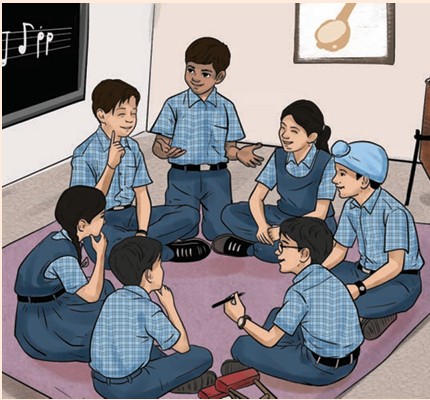
Triangles, circles, squares, rectangles, etc., can be formed by using your hands, arms and legs. Discuss in the class and try out some geometrical movements.
Dance and Spatial Awareness
Space is an important element of dance. Dancers need to understand:
- Direction
- Distance
- Level
- Pathway
- Position
- Formation
- Personal space
- General space
Understanding these concepts helps dancers move safely and create organized formations.
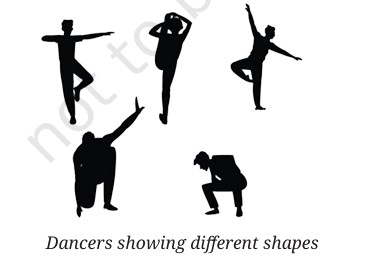
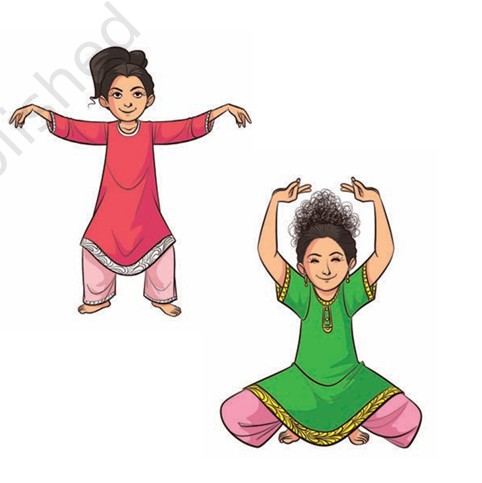
Examples of Geometrical Patterns in Dance
A choreographer can arrange dancers in:
- Lines
- Circles
- Triangles
- Squares
- Diagonal formations
- Zigzag patterns
- Spirals
- Symmetrical formations
These formations can change throughout a performance according to the music and choreography.
5: Rhythmic Geometry
Rhythmic Geometry is the use of geometric shapes, patterns, pathways, and repeated movements in coordination with rhythm and music.
Now, combine all the elements of the previous activity (arms, hands, legs) and examine the different geometrical shapes while adding another element of rhythm.
Talas are different permutations and combinations of rhythmic units.
Make groups and try different arithmetic rhythm combinations to create various geometrical patterns or formations.
Examples 2 beats + 2 beats = 4 beats 2 beats + 3 beats = 5 beats 2 beats + 4 beats = 6 beats 3 beats + 3 beats = 6 beats 3 beats + 4 beats = 7 beats.
Rhythm and Movement
A repeated movement can create a visual rhythm just as repeated beats create musical rhythm. For example, dancers may perform three steps forward, turn, and repeat the pattern. The repetition creates both a rhythmic and geometric structure.
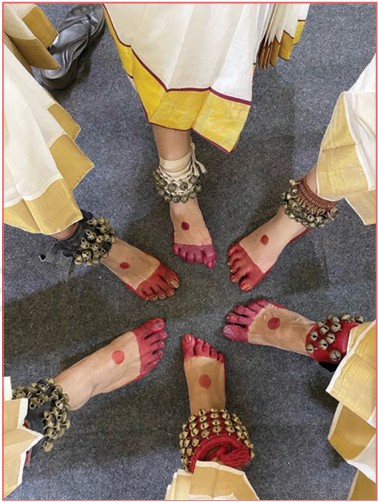
Go through such movements and discuss in the class, how such movements relate to the said action.
Benefits of Breaking Barriers Through Dance
- Promotes friendship and unity.
- Encourages respect for diversity.
- Builds confidence.
- Develops teamwork.
- Improves communication.
- Encourages creativity.
- Supports cultural understanding.
- Provides a positive form of self-expression.
Conclusion
Breaking Barriers with Dance demonstrates the powerful ability of movement to connect people beyond language, culture, background, and differences. Through rhythm, expression, cooperation, and creativity, dance can promote inclusion, confidence, understanding, and unity. When people dance together, they discover that differences do not have to separate us—they can become part of a richer and more meaningful shared experience.