
Introduction
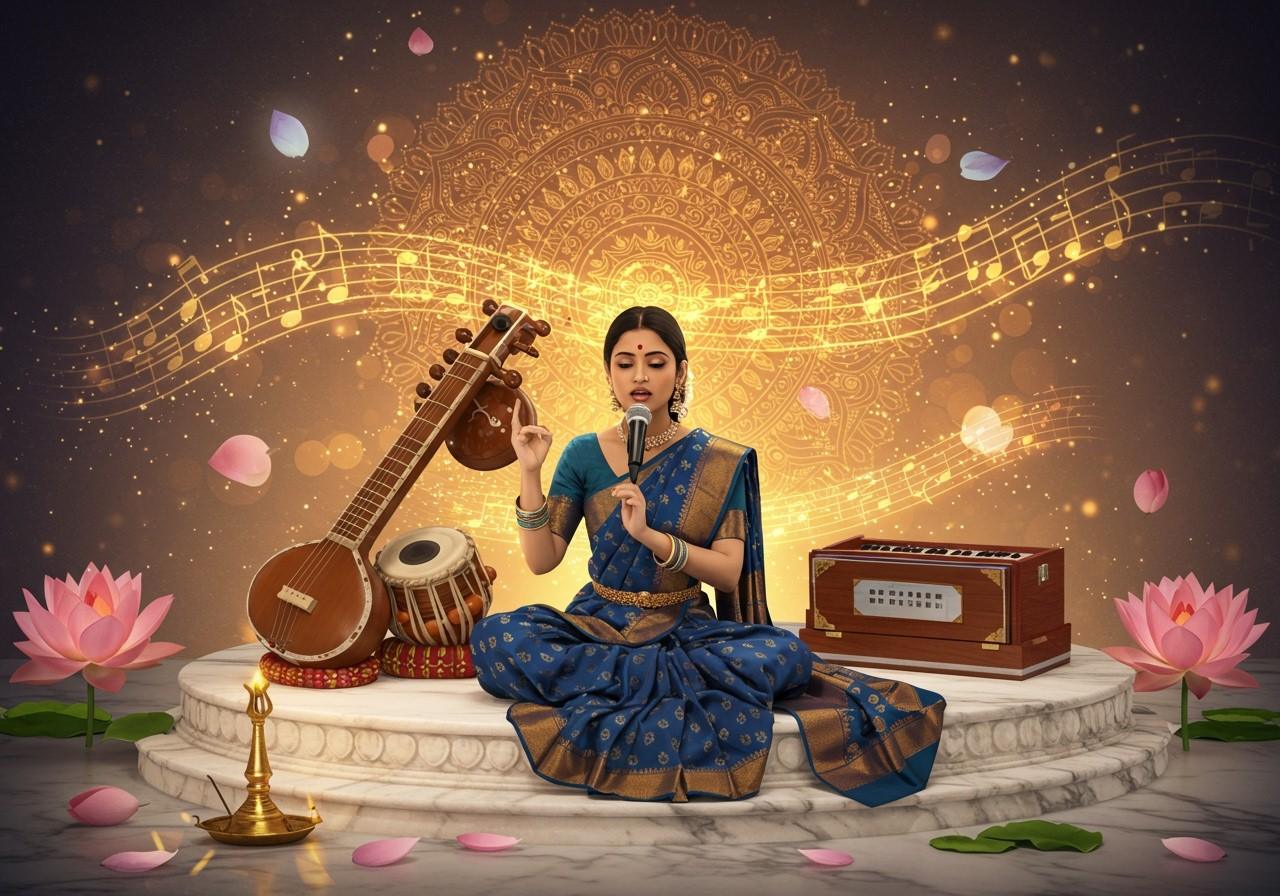
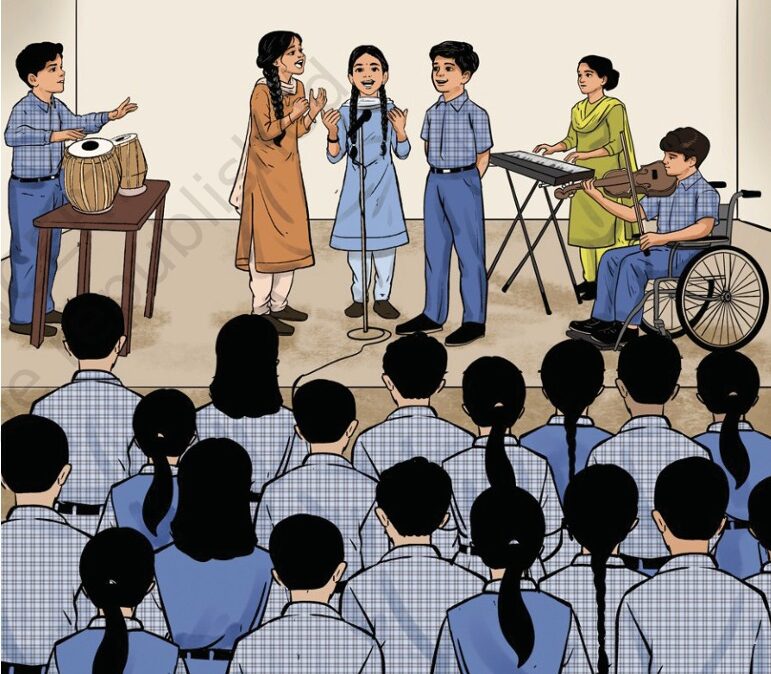
Music is a powerful form of art that has a strong influence on human emotions and feelings. Different types of music can make people feel happy, calm, excited, relaxed, energetic, or even emotional. Through rhythm, melody, harmony, and lyrics, music helps individuals express their thoughts and emotions in unique ways. It is an important part of daily life, culture, and personal experiences.
Definition
Music and Your Emotions refers to the relationship between music and human feelings, where different sounds, rhythms, and melodies affect a person’s mood, emotions, and behavior.
Objective: Listening to musical pieces to understand how they influence the moods and emotions,
Note to the Teachers
The Malayalam song given here is an example to let students understand that music can convey emotions through melody and rhythm, even if the lyrics are in a language that students may not understand. You can play a song in a language that is unfamiliar to the students, to illustrate this point. and learning to express your thoughts and feelings through musical elements.
How Music Affects Emotions
- Happy music can create feelings of joy and excitement.
- Soft and slow music can help people feel calm and relaxed.
- Energetic music can increase motivation and enthusiasm.
- Emotional music can evoke memories and deep feelings.
- Inspirational music can boost confidence and positivity.
Elements of Music That Influence Emotions
1. Rhythm
The pattern of beats in music can affect energy levels and mood.
2. Melody
A pleasant melody can create feelings of happiness, comfort, or sadness.
3. Tempo
Fast tempos often create excitement, while slow tempos promote relaxation.
4. Harmony
The combination of musical notes can produce different emotional effects.
5. Lyrics
Words in songs help communicate emotions, stories, and messages.
Benefits of Music on Emotions
- Reduces stress and anxiety.
- Improves mood and emotional well-being.
- Enhances concentration and focus.
- Encourages self-expression.
- Promotes relaxation and mental peace.
- Strengthens emotional connections and memories.
Music in Everyday Life
People listen to music while:
- Studying
- Exercising
- Traveling
- Celebrating festivals
- Relaxing at home
- Spending time with friends and family
Importance of Music
- Helps express emotions that are difficult to describe with words.
- Brings people together across cultures and communities.
- Supports emotional and mental health.
- Encourages creativity and artistic appreciation.
1: Listen to this Song
Language: Malayalam
Kuttanadan Punjayile
Kochu Penne Kuyilale
Kottu Venam Kuzhal Venam, Kurava Venam
Kuttanadan Punjayile , Thithai Thaka
Theithei Thom
Kochupenne Kuyilale, Thiti Thara Thei
Thom
Kottu Venam Kuzhal Venam, Kurava Venam
(O … Thithithara Thithithai Thithai
Thaka Thei Thom) × 4
Varavel Kanaaru Venam Kodi
Thoranangal Venam
Vijayashree Laali Tharayi Varunnu
Njangal
(O … Thithithara Thithithai Thithai
Thaka Thei Thom) × 4
Karutha Chiraku Vachu Thithai Thaka
Thei Thei Thom
Arayanna Kilipole Thitithara Thei Thom
Karutha Chiraku Vechor Arayanna
Kilipole
Kuthichu Kuthichu Payum Kuthira Pole
(O … Thithithara Thithithai Thithai
Thaka Thei Thei Thom) × 4
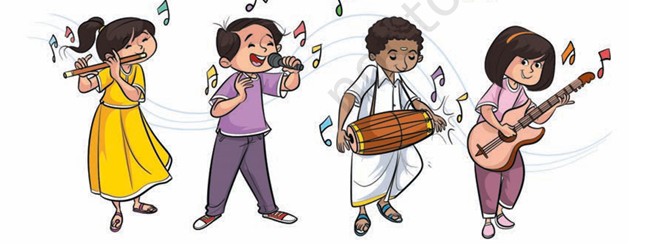
2: Music and Our Memories
Music has the power to influence our thoughts and emotions. Listening and creating music can bring us joy.
A song can trigger memories of past events and the people who were part of them. This is known as music evoked memory!
Sing the Tracks
Listen to the different types of music played along the advertisements, and make a playlist in this book or on your computer.
Ask your parents and grandparents about their favourite song from their childhood. What memories do they associate with these songs?
3: Listen and Feel
We are surrounded by various types of music from dawn till dusk. Consider your feelings when you hear different types of musical sounds. Recall the sounds of the shehnai, nadhaswaram, dhol, damru, edaikka or a melodious song — what do you feel while listening to these melodies? Do they make you happy, inspire you to dance, instil a sense of peace that you want to enjoy in silence or compel you to sing along? These feelings that come to life while hearing these melodious sounds are called emotions. Emotion is a natural trait inherent in all humans. Let us experience the same by listening to some instrumental music! What did you feel while listening to the musical pieces? Write down your emotions.
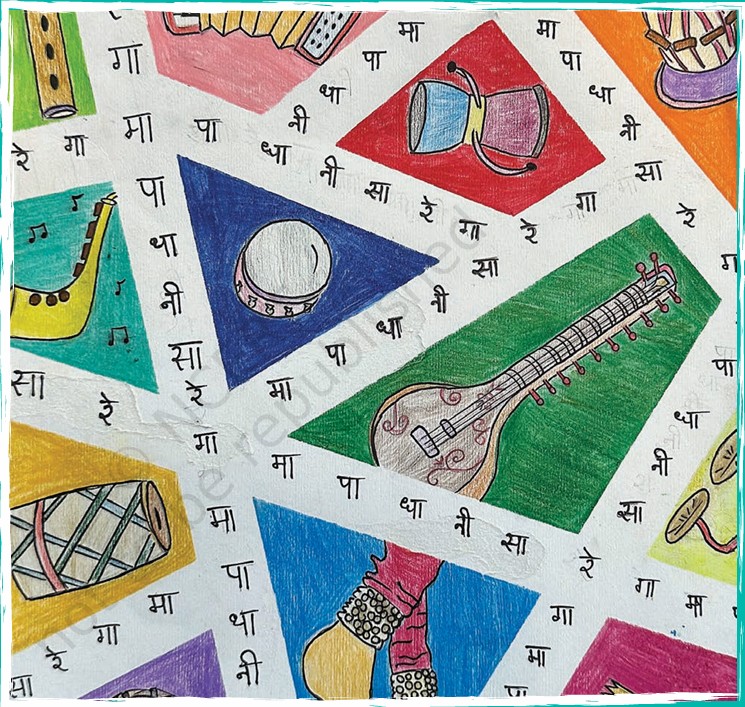
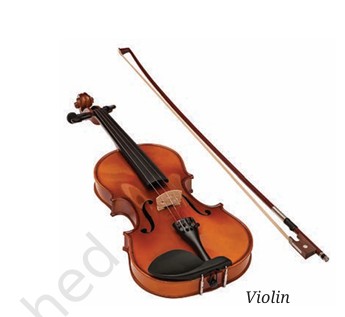
All the musical pieces here were played using the same instrument, a violin. Similar to how your voice can convey various emotions and dynamics — happiness, loudness, and sadness, softness — an instrument has the capacity to evoke diverse emotions through different sounds. You heard the sound of a violin. Now, try to listen to other musical instruments popularly played in our country. Like the flute, sitar, shehnai, tabla, etc., and try to understand how different sounds and tunes evoke diverse emotions.
4: Drawing Music
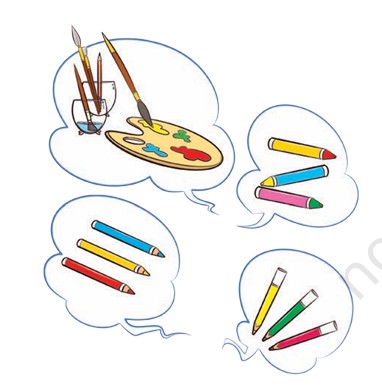
Each piece of music tells a story as we have been discussing till now. Now, let us try this; listen to a piece of music and represent it through your own art. You may draw and colour, using colour pencils, pens or paint. Give your drawing a caption or title.
5: Express your Emotions Through Music
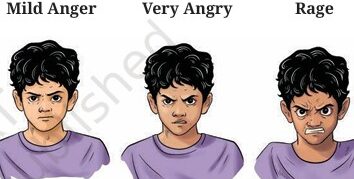
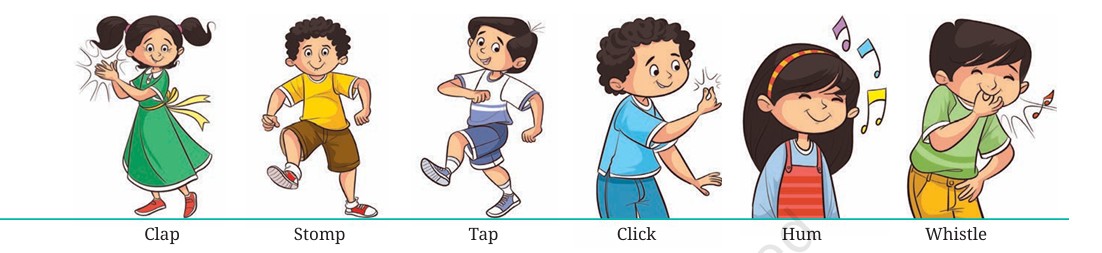
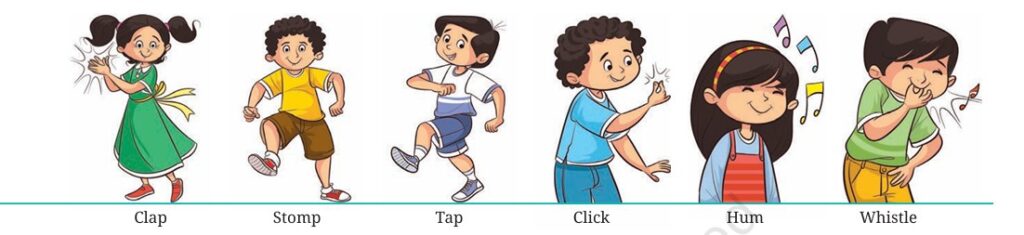
Can you use your body to express any emotion through music without words? When you are angry, what do you do? When you are happy, what do you do? When you are sad, what do you do? You can use your voice or body percussion (claps, stomp, snap, breath) to express these emotions.

Extended Activity
Narrate a regional folk story or stories from the Jataka tales and Panchatantra. Intersperse the narration with musical elements or songs that will help bring the story alive!
6: Learn about Musical Elements
Pitch and Dynamics
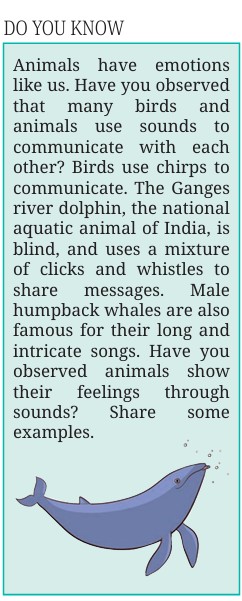
Have you ever noticed how you use different pitches and volume when you are happy, angry or sad? Pitch and dynamics are used to communicate emotions. Pitch tells us how high or low the note is and dynamics tells us how loud or soft a piece of music is.
Rhythm
Rhythm is everywhere. Have you ever listened to your heart beat? Note how your walking rhythm is different from that of your grandparents? In music, rhythm is the pattern that has symmetrical beats, played with a song.
The Swara Song
Watch the video and sing the ‘Swara Song’. This song is set to ragam shankarabharanam or raga bilawal. Pay attention to the variations in pitch while singing the song. Use your hands to keep the rhythm.
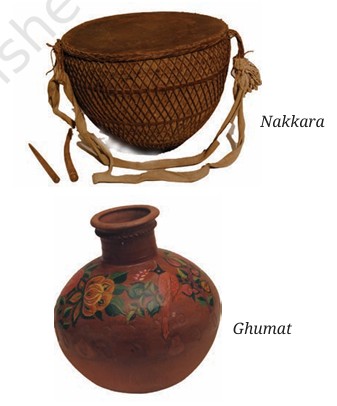
The two instruments have different pitches. Nakkara has a loud volume while Ghumat has a deep resonance.
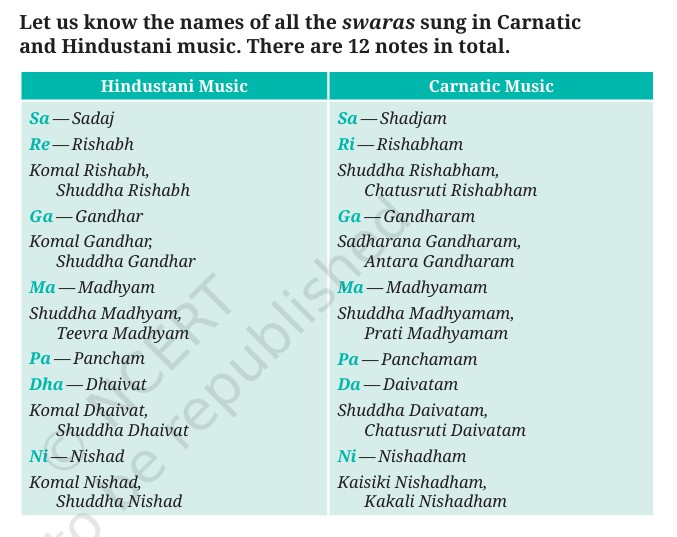
Film songs, bhajan, regional songs, folk music, melodic instrumental music are all created with musical notes — S, R, G, M, P, D, N. All compositions or songs are created with these notes. Indian music has many genres including classical music such as Hindustani and Carnatic, as well as genres such as folk, semi classical, devotional, patriotic and film music.
7: Vocal Warmups
Vocal warmups are simple exercises performed before singing or speaking to prepare the voice for better performance. Just as athletes warm up their muscles before physical activity, singers warm up their vocal cords to improve flexibility, control, and vocal quality. Regular vocal warmups help produce a clear, strong, and healthy voice while reducing the risk of vocal strain.
Definition
Vocal warmups are a series of breathing, humming, and vocal exercises that prepare the voice for singing or speaking by improving vocal flexibility, tone, and control.
Vocal Warmups
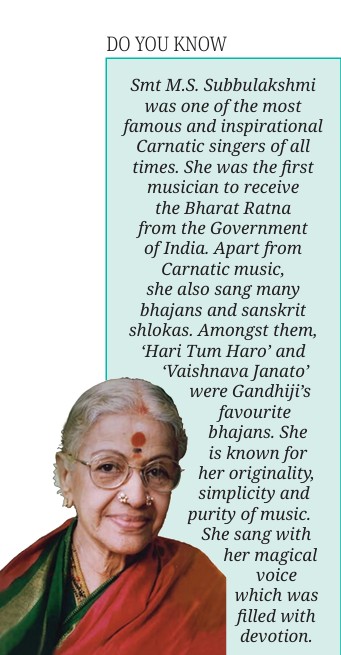
The pattern of notes below is known as alankar or sargam. Alankar means ornamentation or decoration. Just like jewellery is designed with gold and different arrangements of precious stones, the seven notes in music are arranged in patterns to create a melody that is pleasing and aesthetic. All music has to be pleasing to the ears, i.e., sruti madhur.


8: Medley
A medley is a musical composition or performance that combines parts of two or more different songs or musical pieces into one continuous presentation. Instead of performing each song separately, the performer smoothly transitions from one piece to another, creating a seamless and engaging musical experience. Medleys are popular in concerts, school performances, cultural programs, and stage shows because they showcase a variety of melodies, rhythms, and styles in a single performance.
A medley is a musical arrangement that blends sections of multiple songs or tunes into one continuous performance without long pauses between them.

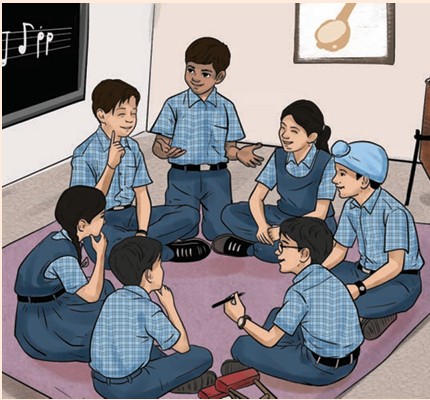
A medley is a mix, or combination of different songs or tunes played together as one piece of music. Let us have fun. 1. Identify the mood that each song tries to convey. Even if you don’t know the language, do the musical elements help convey a certain emotion? 2. What does the rhythm in each of these pieces convey? 3. Identify the musical elements in each of the songs.

Let’s Learn to Sing a Medley
Learn the medley or a few songs in it. The class can be divided into groups with each group presenting one piece of the medley. This medley is a string of celebratory songs from different parts of India. Move, sway and keep the rhythm when singing these fun songs!
9: Let’s Play Games on Dynamics, Melody and Rhythm
These games are designed to help students achieve the objectives given. Teachers are encouraged to think and design their own games that reflect the local music cultures.
Activity I:
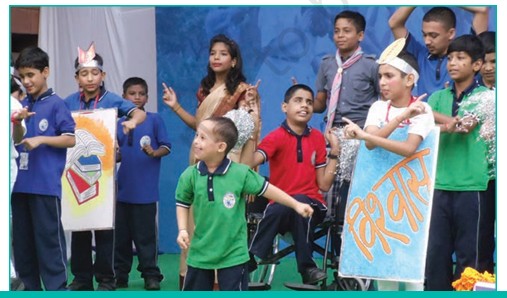
Identifying the Voice (tone, texture, style). One student should be blind folded and the other student can sing a song that is known or taught in the class. The blind folded student should be able to identify the student who sang it.
Activity II:
Identifying the song based on the melody. Select any student to hum a song that is known or taught in the class. By listening to the tune other children in the class should be able to identify the song.
Activity III: Rhythm Game:
Students in groups of 3, 4, 5, 7, 9 in numbers can pronounce their names as below.
Group of three students will be given names Ta, Ki, Ta and the group name should be ‘Tishra’.
Group of four students will be given names Dh, Ge, Naa, Tee and the group name should be ‘Chaturashra’.
Group of five students will be given names Ta, Ka, Ta, Ki, Ta and the group name should be ‘Khanda’.
Group of seven students will be given names Ti, Ti, Naa, Dhee, Naa, Dhee, Naa and the group name should be ‘Mishra’.
Group of nine students will be given names Ta, Ka, Di, Mi, Ta, Ka, Ta, Ki, Ta and the group name should be ‘Sankeerna’.
Conclusion
Music and emotions are closely connected. Music has the ability to influence feelings, create memories, and improve overall well-being. Whether it brings joy, relaxation, motivation, or comfort, music plays an important role in helping people understand and express their emotions. Through its universal language, music enriches human life and creates meaningful emotional experiences.