
Introduction
Indian music is one of the world’s oldest and richest musical traditions. Two of its most important concepts are Taal (or Talam) and Raga (or Ragam). Together, they form an important foundation of Indian classical music. Taal/Talam provides the rhythmic framework of a musical performance, while Raga/Ragam provides the melodic framework. Understanding these two concepts helps learners appreciate the structure, beauty, and expressive nature of Indian music.
What is Taal or Talam?
Taal in Hindustani music and Talam in Carnatic music refer to a rhythmic cycle used to organize beats in Indian music. It provides a repeating pattern of beats that guides singers and instrumentalists during a performance.
A taal is not simply a beat or a fixed tempo. It consists of an organized cycle containing a specific number of beats and different rhythmic divisions.
Taal in Hindustani Classical Music
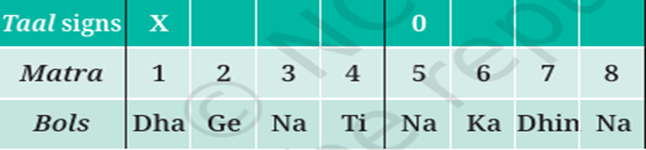
Keharva Taal
Matra: 8 Tali: on 1 matra
Vibhag : 2 Khali: on 5 matra
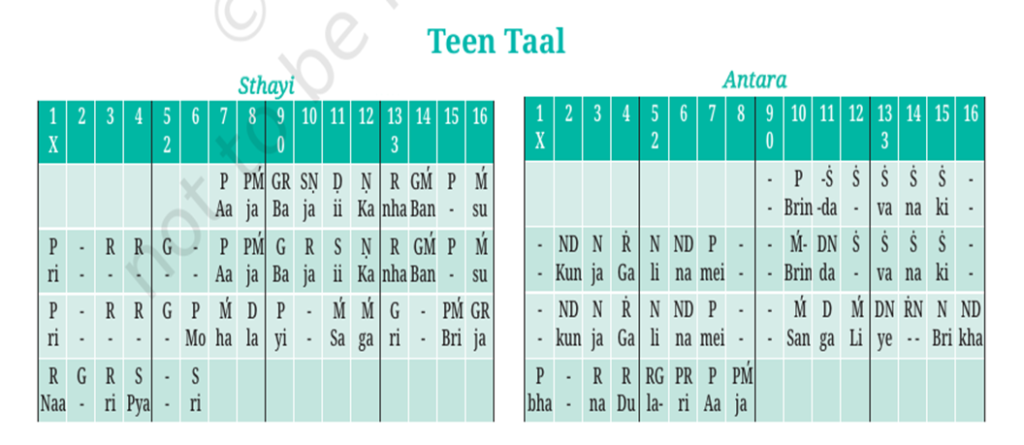
Teen Taal
Matra: 16 Tali: on 1, 5, 13 matra
Vibhag: 4 Khali: on 9 matra

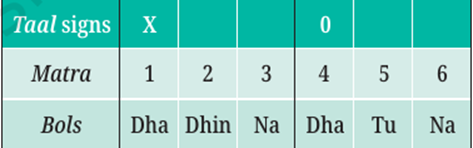
Dadra Taal
Matra: 6 Tali: on 1 matra
Vibhag : 2 Khali: on 4 matra
Objective: Understand the concept of raga and rhythm in North and South Indian classical music.
Important Features of Taal/Talam
- Provides the rhythmic structure of a composition.
- Consists of a repeating cycle of beats.
- Helps musicians maintain rhythm and timing.
- Can be performed at different speeds.
- Is accompanied by rhythmic instruments such as tabla, pakhawaj, mridangam, and others.
- Supports both vocal and instrumental performances.
Examples of Taal
Some well-known Hindustani taals include:
- Teentaal – 16 beats
- Dadra – 6 beats
- Keherwa – 8 beats
- Jhaptaal – 10 beats
- Ektaal – 12 beats
- Rupak – 7 beats
Talam in Carnatic Music
Carnatic music uses the term Talam for its rhythmic system. Some commonly used talams include:
- Adi Talam
- Rupaka Talam
- Triputa Talam
- Jhampa Talam
- Ata Talam
- Eka Talam
Talam is an essential part of Carnatic compositions and performances and is closely connected with rhythmic patterns and hand gestures used for keeping time.
Talam in Carnatic Music
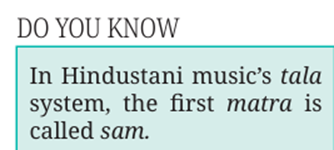
In Carnatic music, talam is used to keep the beat. Each talam has a fixed number of beats and is repeated. This is known as talam cycle or avartanam. The parts of a talam are known as angams. The three angams are:
Laghu — This is a clap followed by counting of fingers. It can be 3, 4, 5, 7 or 9 beats. It is represented as | followed by the number of beats (as subscript).
When the laghu has three beats, we call it tishra jaati.
When the laghu has four beats, we call it chaturashra jaati.
When the laghu has five beats, we call it hhanda jaati.
When the laghu has seven beats, we call it mishra jaati.
When the laghu has nine beats, we call it sankeerna jaati.
Dhrutam — This is a clap followed by the wave of the hand. It has two beats. It is represented as O.
Anudhrutam — This is just a clap. It has one beat and is represented as U and it is less used in comparison to the above two. Let us see how the laghu and dhrutam are presented in the form of tala.
Rupaka Talam — This talam has one dhrutam followed by one laghu. The chaturashra jaati rupaka talam therefore, is a cycle of six beats (4 + 2). It is represented as O |4 .
Adi Talam — This talam has one laghu followed by two dhrutams. It is a cycle of eight beats (4 + 2 + 2). It is represented as |4 O O.
Ragas in Indian Music
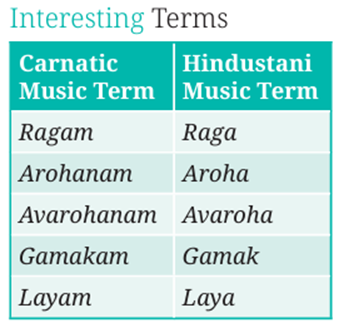
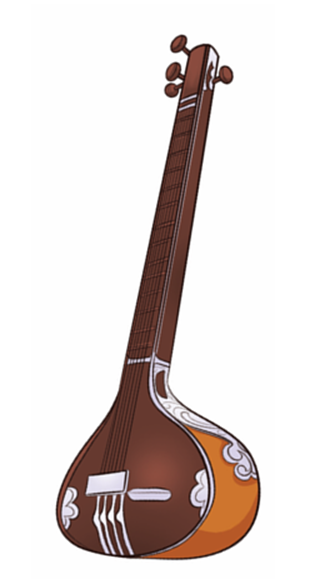
There are two different styles of classical music in India — Carnatic or South Indian classical music, and Hindustani or North Indian classical music. The swaras in each style have been explained to you in the earlier pages. Carnatic music uses instruments like the veena, violin, flute, nadaswaram, mridangam, ghatam, kanjira and morsing. The compositions are usually in the Sanskrit, Telugu, Kannada, Malayalam and Tamil languages. Hindustani music uses instruments like the tanpura, sitar, sarod, sarangi, santoor, tabla, and pakhawaj. Songs are composed usually in Hindi, Sanskrit, and Brijbhasha. Watch videos to understand raga and tala. Raga is based on a scale. Every scale has notes (swaras) in ascending (arohana) and descending (avarohana) order. Imagine a staircase made of swaras! The notes in the scale change according to the raga.
What is Raga or Ragam?
Raga in Hindustani music and Ragam in Carnatic music refers to a melodic framework used to create and develop musical compositions and improvisations. A raga is more than a simple musical scale. It has characteristic patterns, movements between notes, important notes, and rules that give it a distinctive musical personality.
Ragas are used to express different moods, emotions, and musical ideas.
Important Features of Raga/Ragam
- Provides the melodic framework of Indian music.
- Uses selected musical notes in particular ways.
- Has characteristic ascending and descending movements.
- Contains important notes and melodic phrases.
- Allows musicians to improvise within its framework.
- Helps create a particular mood or emotional atmosphere.
Examples of Ragas
Some well-known Indian classical ragas include:
- Raga Yaman
- Raga Bhairav
- Raga Bhupali
- Raga Darbari Kanada
- Raga Malkauns
- Raga Kafi
- Raga Todi
- Raga Desh
In Carnatic music, examples include:
- Mohanam
- Kalyani
- Bhairavi
- Shankarabharanam
- Todi
- Hamsadhwani
Difference Between Taal/Talam and Raga/Ragam
| Feature | Taal / Talam | Raga / Ragam |
| Main function | Rhythm | Melody |
| Organizes | Beats and time cycles | Notes and melodic patterns |
| Focus | Rhythm and timing | Melody and expression |
| Performed through | Rhythmic patterns | Melodic phrases |
| Examples | Teentaal, Dadra, Adi Talam | Yaman, Bhairav, Kalyani |
| Main instruments | Tabla, Mridangam, Pakhawaj | Sitar, Veena, Flute, Violin |
| Purpose | Provides rhythmic foundation | Provides melodic identity |
Relationship Between Raga and Taal
Raga and Taal work together during an Indian classical music performance. The Raga provides the melodic and emotional framework, while the Taal provides the rhythmic framework. A vocalist or instrumentalist develops the melody according to the chosen raga, while the accompanying percussionist maintains the taal.
For example, a singer may perform a composition in Raga Yaman while the tabla player maintains Teentaal. The melody and rhythm interact to create a complete musical performance.
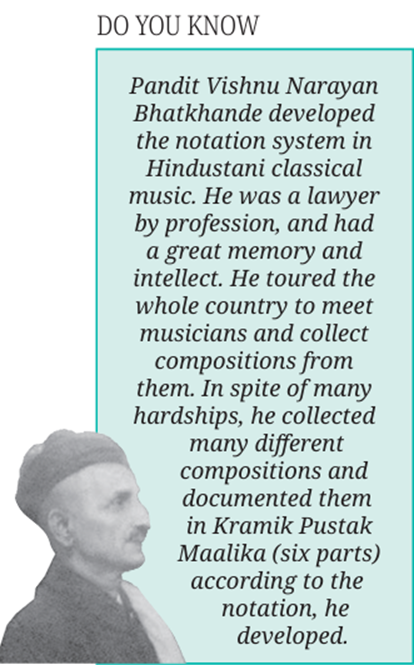
Notation Scheme
When writing the notes in the higher octave (taar saptak), the notes are represented by a dot on top like this, Ṡ. The notes in the lower octave (mandra saptak) are represented by a dot below like this, Ṇ. The notes in the middle octave (madhya saptak) are represented by just the swara like this, S.
Jaatis of Raga
Let us know another interesting terminology used for a specific set of notes in ragas. If a raga has five notes it is known as audav jaati. If a raga has six notes it is known as shadav Jaati. If a raga has seven notes it is known as sampoorna jaati.
Activity 1: Raga Bhoop
The raga bhoop has the following notes:
Aroha/Arohana: S R G P D S
Avaroha/Avarohana: Ṡ D P G R S
The raga hamsadhwani has the following notes:
Aroha/Arohana: S R G P N S
Avaroha/Avarohana: Ṡ N P G R S
If you decorate a scale by using gamakas (ornamentations), repeating certain notes, and playing special phrases, it can become a raga. Each raga is ornamented with important notes and special phrases.
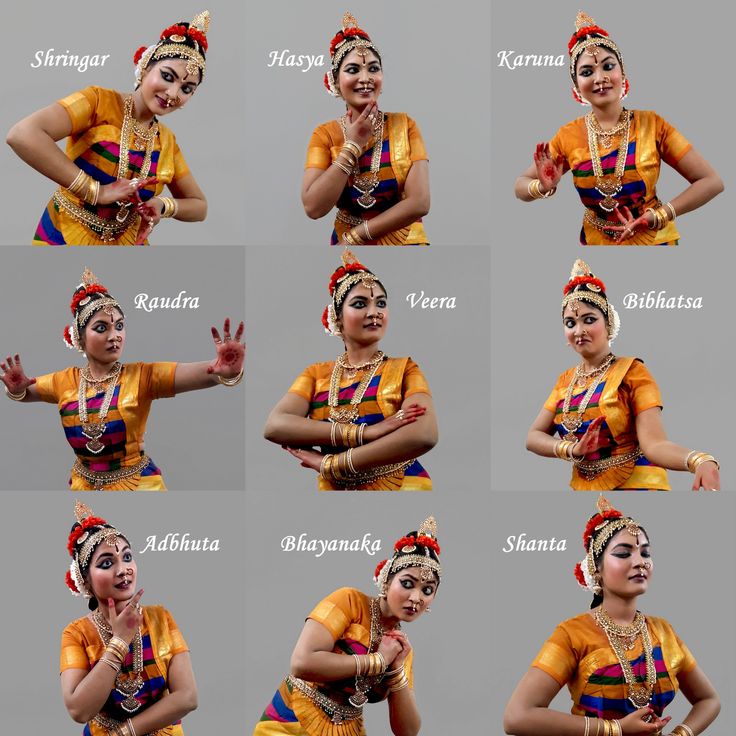
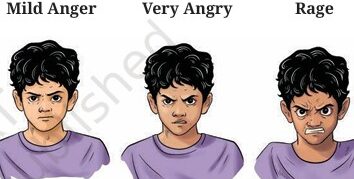
Raga in Sanskrit means something that colours the mind. Every raga evokes certain emotional responses in the mind. This is called rasa.
Watch the video on raga and rasa to understand more about ragas and their moods!
In Indian classical music, composition refers to the structured arrangement of musical elements such as melody (raga), rhythm (tala), and lyrics (if any). Compositions in Indian classical music are typically called bandish in Hindustani classical music and kritis in Carnatic classical music.
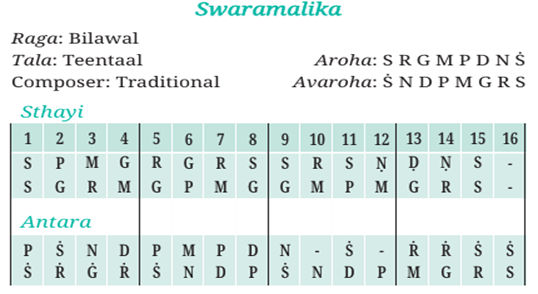
Activity 2: Learn a Swaramalika in Raga Bilawal
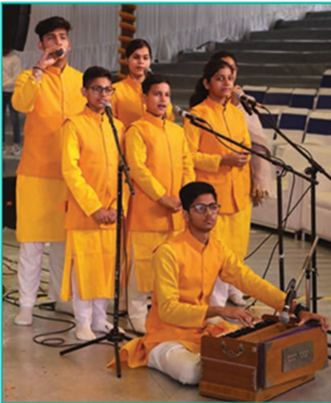
A composition sung in a sargam (swaras) is called a swarmalika. The swarmalika can be composed using different ragas. Listen to the swaramalika in raga bilawal, set to teentaal.
Activity 3: Learn a Bandish in Raga Yaman
Watch this video to learn a bandish in Raga Yaman.
The aroha or ascending notes in raga yaman are, N R G Ḿ D N Ṡ.
The avaroha or descending notes in raga yaman are, Ṡ N D P Ḿ G R S.
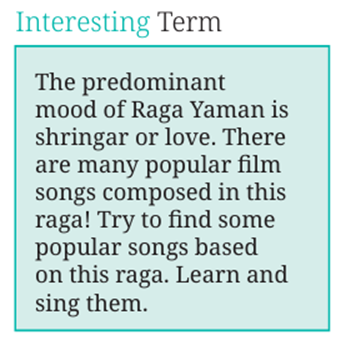
Note that the M is higher than the regular M that you have sung before. This small shift in one note alters the mood of the song!
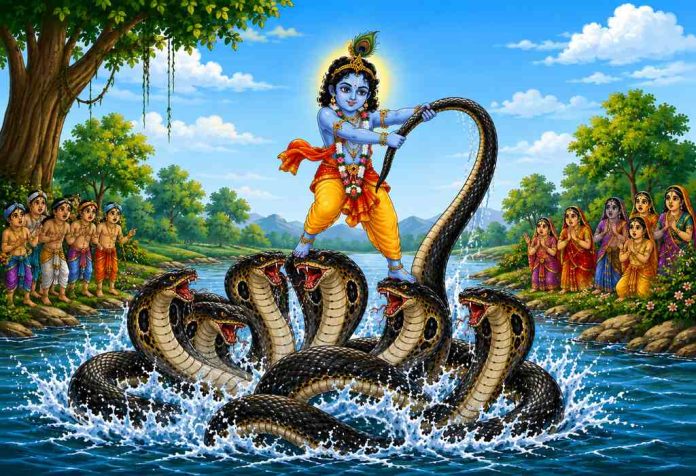
The song describes Lord Krishna playing the flute and the gopikas of Vrindavan dancing to its melody.
Raga Yaman
Chhota Khayal — Kanha Bansuri
Sthayi
Aaj Bajaaii Kanha Bansuri
Moha Layi Sagari Brija Naari Pyari
Antara
Brindavana Ki Kunja Galina Mei
Sanga Brikhabhaana Dulaari Pyari
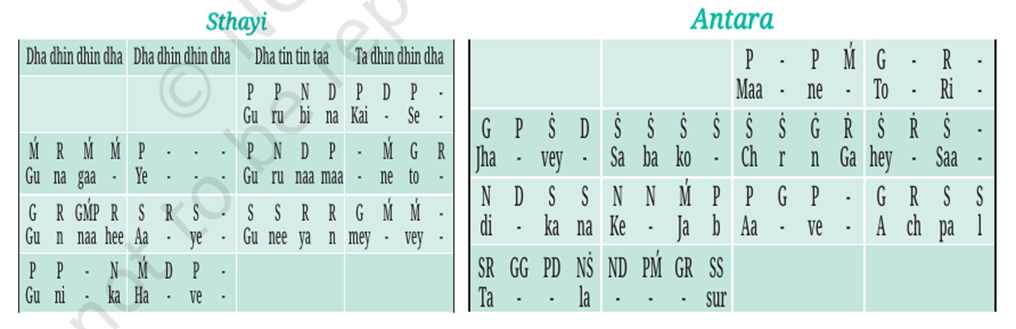
Learn a Bandish on Guru in Raga Yaman (Kramik Pustak Maalika — Part I)
Sthayi
Guru Bin Kaise Gun Gaaye, Guru Naa Maaney To Gun Naahi Aaye Guniyan Mey Vey Guni Kahavey
Antara
Maaney To Rijhavey Sabko Charan Gahe Saadikan Ke Jab Aavey Achapal Taal Sur
Taal – Teentaal
Activity 4: Learn a Geetam in Ragam Kalyani
Listen to the audio to learn the swaras (notes) and the sahitya (lyrics) of the geetam in Ragam Kalyani. A geetam is a composition in Carnatic classical music, in praise of a God or a Goddess. This geetam is composed in the ragam kalyani and is set to triputa tala. Triputa tala is a seven beat rhythmic cycle divided as 3+2+2. The notes in Kalyani are the same as the notes in Shankarabharanam, except for M. The M in Kalyani is higher.
Lyrics
Kamala Jaadala
Vimala Sunayana
Karivarada Karunaambudhe
Karuna Sharade Kamalaakaanta
Keshi Narakaasura Vibhedana
Varada Velaapura Surottama
Karuna Sharadhe Kamalaakaanta
This song is about Lord Vishnu who is the protector of the universe.
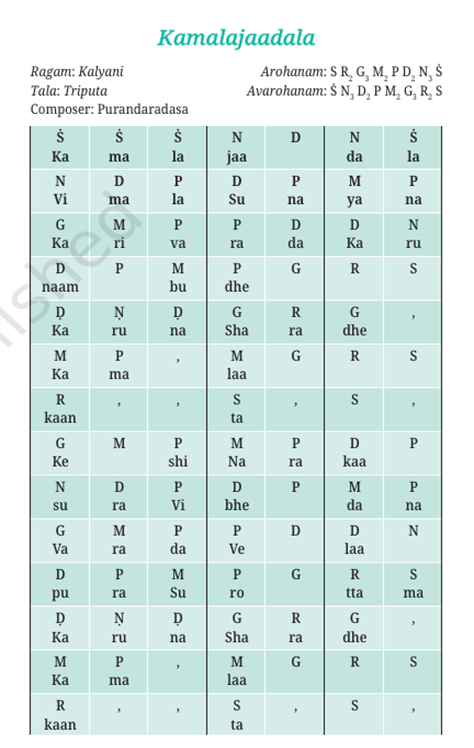
This song describes his compassion and glory.
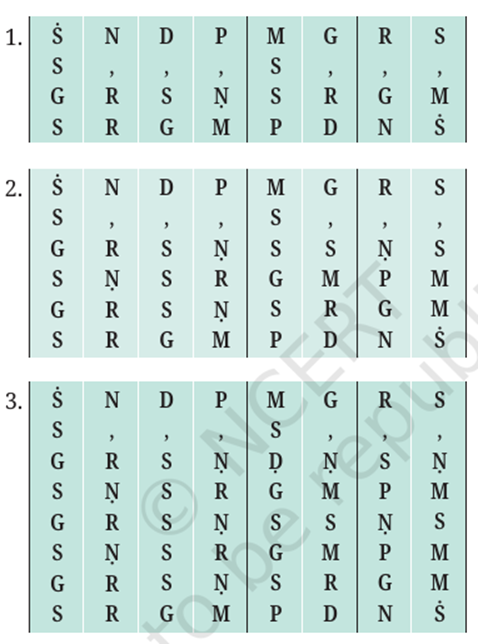
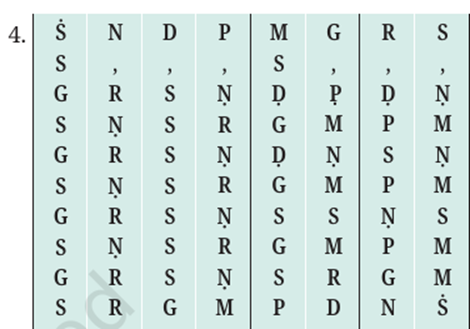
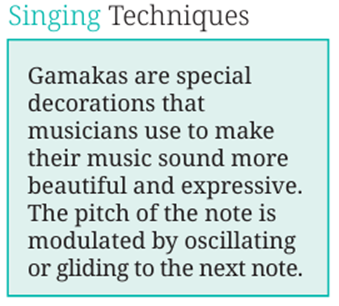
Here are some vocal warm-ups in Ragam Kalyani. Listen to them and practise.
Importance in Indian Music
Raga and Taal are fundamental to both Hindustani and Carnatic classical music. They help musicians organize their performances while still allowing considerable creativity and improvisation. Students who learn these concepts develop a better understanding of melody, rhythm, timing, musical expression, and the rich traditions of Indian classical music.
Educational Importance
Learning Raga and Taal/Talam helps students:
- Understand the basic structure of Indian music.
- Develop a sense of rhythm and timing.
- Recognize different melodic patterns.
- Improve listening skills.
- Develop musical memory.
- Appreciate Indian cultural traditions.
- Build a foundation for learning singing or instruments.
Notes: Built using a specific selection of notes (swaras) chosen from the seven basic tones (Sa, Re, Ga, Ma, Pa, Dha, Ni).
Conclusion
Taal or Talam and Raga or Ragam are two essential pillars of Indian music. Raga provides the melodic framework through which musicians express musical ideas and emotions, while Taal or Talam provides the rhythmic cycle that gives structure and movement to the performance. Although they have different functions, they work together to create the distinctive beauty and depth of Indian classical music. Learning both concepts provides students with a strong foundation for understanding, performing, and appreciating India’s rich musical heritage.