
Introduction
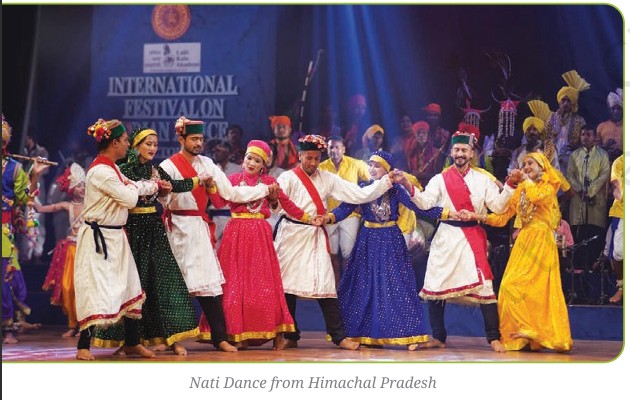
Arts of the People, With the People, for the People means creating and enjoying art together as a community. It celebrates people’s culture, traditions, creativity, and participation while using art to bring people together and benefit society.
Art has been an important part of human life since prehistoric times. It connects people across generations by preserving their thoughts, feelings, experiences, and cultural traditions. Every artwork and handmade object tells a story about the people who created it and the society in which they lived. Over time, changes in materials, tools, technology, social values, and lifestyles have influenced the ways artists think, create, and express their ideas.
Art is also an essential part of our everyday lives. From the clothes we wear and the fabrics we use to the paper decorations and objects in our homes, creativity can be found all around us. Ordinary materials such as thread, paper, and cloth can be transformed into beautiful and meaningful objects through imagination, skill, and traditional techniques.
In this chapter, students will explore a variety of art and craft practices and learn how different materials are used to create unique designs and artistic objects. They will discover the techniques involved in these crafts and understand how artists combine creativity, patience, precision, and dedication in their work. They will also learn to appreciate the cultural importance of traditional crafts and the efforts of artisans who have preserved these valuable art forms over generations.
Ultimately, exploring these artistic practices helps students develop creativity, observation, and practical skills while deepening their understanding of art and cultural heritage. It reminds us that even simple everyday materials can become extraordinary creations when guided by imagination and artistic skill.
Activity 18.1: Tie And Link
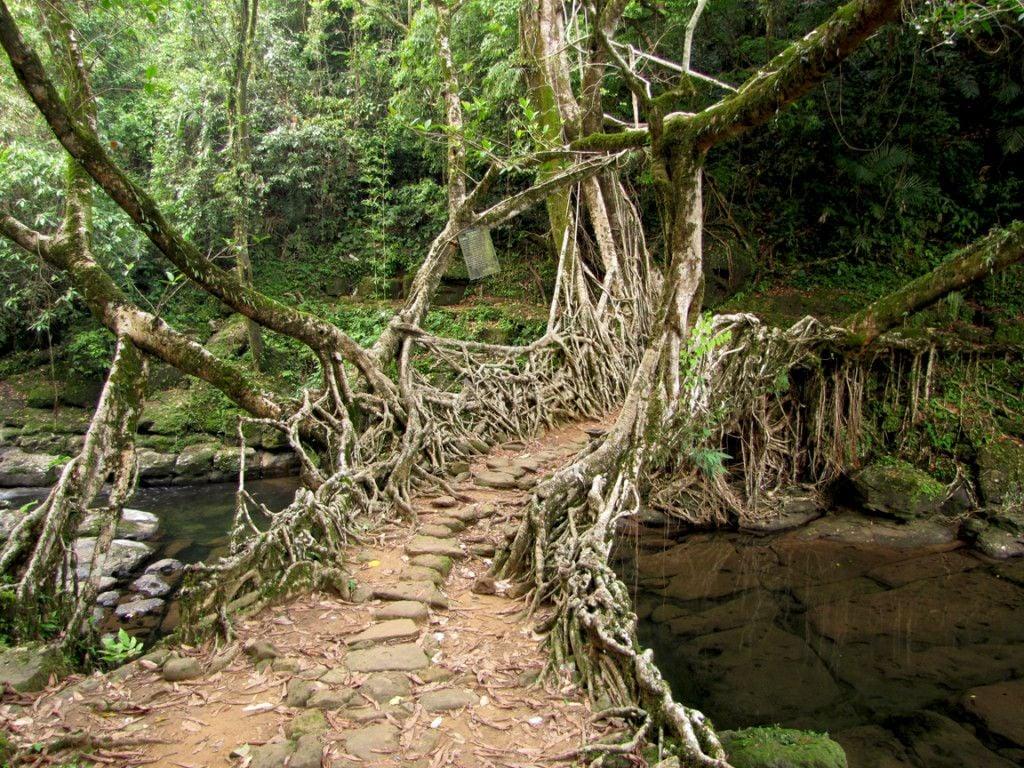
Nature is full of fascinating networks that connect all living beings. The roots of plants and trees play an important role in sustaining life. Although most roots grow underground, some trees, such as the banyan, develop aerial roots that grow from their branches. In Meghalaya, the strong aerial roots of the Indian rubber tree (Ficus elastica) are carefully guided by local communities to create remarkable living root bridges across streams and rivers. These bridges take many years to develop, and their roots are gently twisted, tied, and supported until they form strong structures. As the roots continue to grow, the bridges become stronger over time.
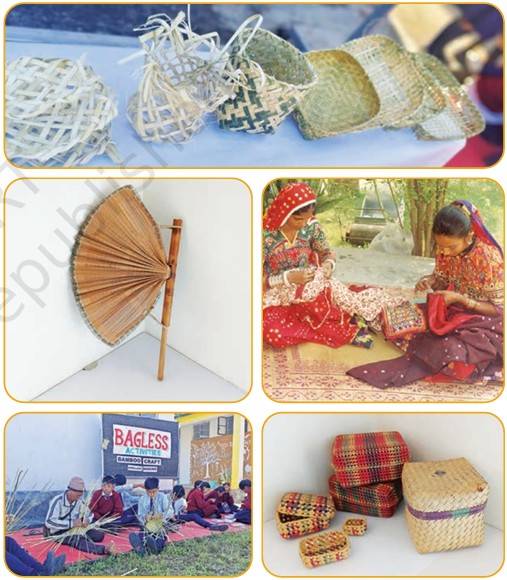
Inspired by nature, people have developed various techniques to connect, shape, and transform materials into useful and beautiful objects. Twisting, tying, knotting, crocheting, knitting, and weaving are traditional techniques practised by artisans across India. These methods are used to create everyday objects such as baskets, handloom fabrics, fans, ropes, and charpoys. Each technique requires skill, patience, creativity, and an understanding of the materials being used.
These crafts demonstrate how simple materials can be transformed into practical objects through human imagination and traditional knowledge. They also reflect the cultural heritage of communities that have preserved these skills across generations.
In this activity, students can collect ropes made from cotton, jute, or other locally available natural fibres and use techniques such as tying, twisting, and knotting to create a small artwork. This hands-on experience encourages experimentation, develops fine motor skills, and helps students appreciate the connection between nature, creativity, and traditional craftsmanship.
I.) Living Root Bridges of Meghalaya
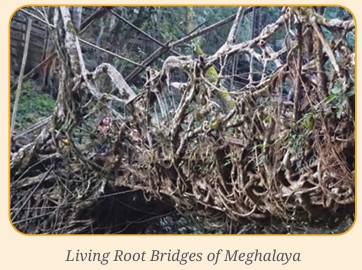
The Living Root Bridges of Meghalaya are remarkable examples of how people can work with nature to create strong and useful structures. Found in the northeastern Indian state of Meghalaya, these bridges are traditionally developed by Khasi and Jaintia communities using the aerial roots of the Indian rubber tree (Ficus elastica).
The roots are carefully guided across streams and rivers, often with the help of bamboo frameworks or hollow tree trunks. As the roots grow, they are gently directed, twisted, and woven together to form a network. This process takes many years, but the resulting bridges can become stronger as the roots mature and intertwine.
Unlike conventional bridges made from concrete or steel, living root bridges are made from growing plant material. They reflect the traditional knowledge, patience, and ingenuity of local communities. The famous Double Decker Living Root Bridge near Nongriat village is an outstanding example of this remarkable practice.
These bridges demonstrate the close relationship between humans and the natural environment. They also connect with traditional art and craft techniques such as tying, linking, twisting, knotting, and weaving. By studying living root bridges, students can learn how natural forms inspire creative solutions and how locally available materials can be used to meet everyday needs.
Living root bridges are not only pathways across rivers; they are also living examples of cultural heritage, sustainable design, and human cooperation with nature.
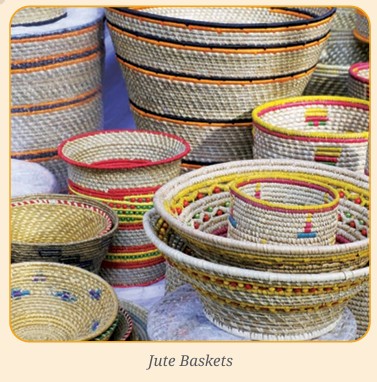
II.) Jute Baskets
Jute baskets are handmade objects created using natural fibres obtained from the jute plant. They are strong, flexible, and useful for everyday purposes. Artisans use techniques such as weaving, twisting, knotting, and tying to make baskets of different shapes and sizes.
These baskets are used to store fruits, vegetables, clothes, toys, and other household items. Their natural colour and texture give them an attractive appearance. Jute basket-making requires patience, creativity, and skill.
As jute is a renewable natural material, these baskets can also support environmentally friendly living and help preserve traditional Indian craftsmanship.
Learn the Art of Knotting
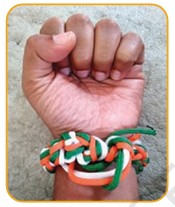
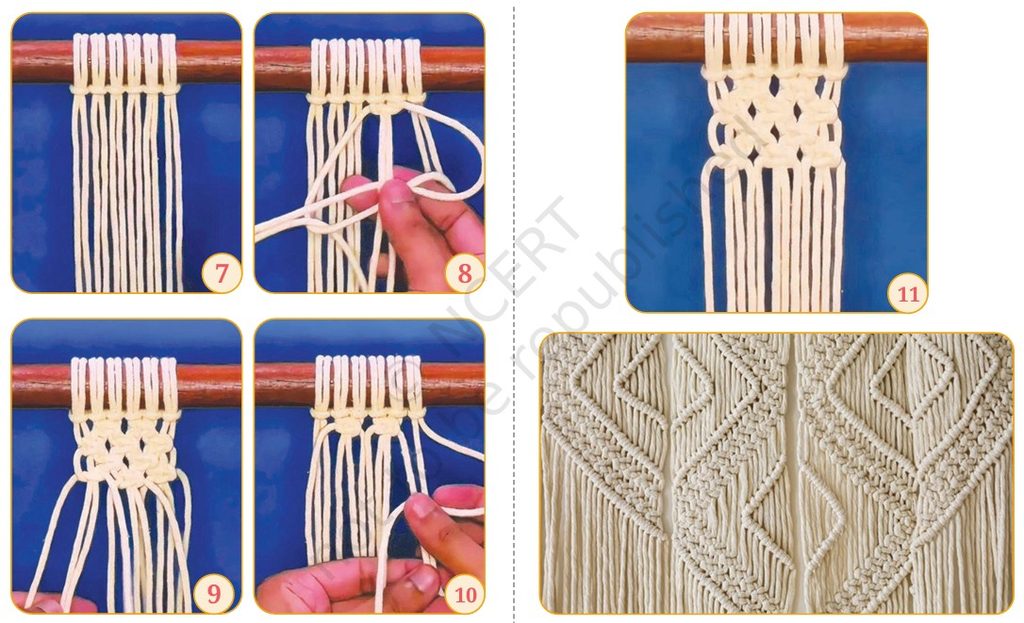
Knotting is a creative craft technique used to join, secure, and decorate threads or cords. It is practised in many traditional arts and crafts to create useful and beautiful objects. In this activity, students will work in small groups to learn basic knots by following the given steps. Since some knots may be difficult to understand at first, students can help and guide one another throughout the process.
Using colourful threads, cotton cords, or other suitable materials, students can create a friendship band, wristband, or rakhi. They can also add colourful beads, decorative elements, or the colours of the Indian national flag to make their creations special.
This activity encourages creativity, patience, teamwork, and fine motor skills. Students will learn how simple knots can be combined to create attractive designs. The finished bands or rakhis can be sent to Indian soldiers as a gesture of gratitude, respect, and appreciation for their dedication and service to the nation.
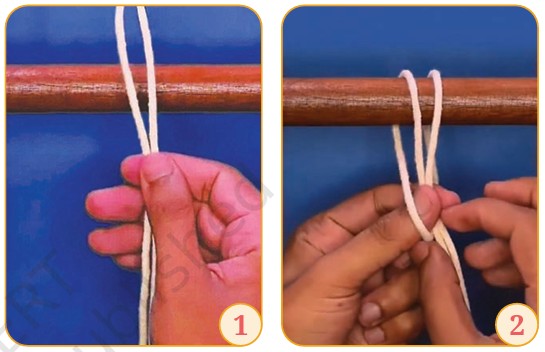
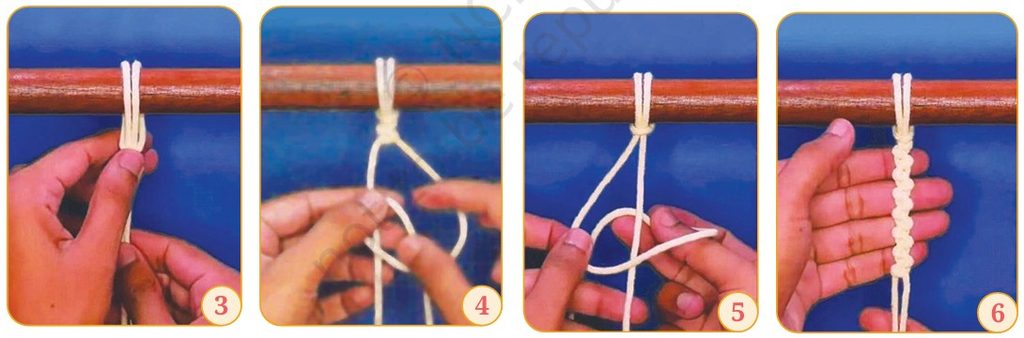
Work in groups and continue through Step 11 to create larger pieces like wall hangings, torans, and so on.
Activity 18.2: Patch And Match : Exploring the Art of Fabric Patching
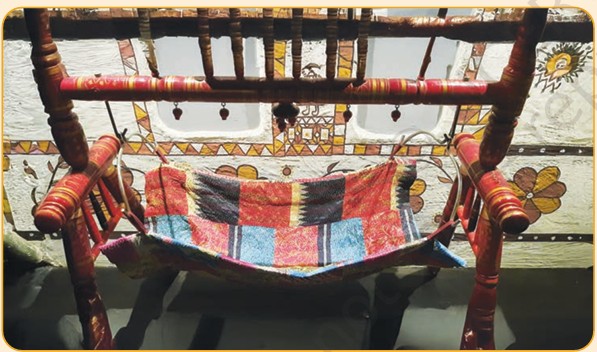
Patching is a creative art technique in which small pieces of fabric are joined together to repair, decorate, or create beautiful designs. It is a traditional craft practised in different parts of India, where artisans use colourful cloth pieces, patterns, and stitching techniques to transform leftover fabrics into useful and attractive objects.
In this activity, students can explore how different pieces of cloth can be arranged, matched, and stitched together to create unique patterns. They can experiment with colours, shapes, textures, and designs to make decorative artwork, bags, wall hangings, cushion covers, or other useful items. By combining contrasting and complementary fabrics, students can express their creativity and develop an understanding of visual harmony.
Patch and Match encourages students to reuse fabric scraps instead of throwing them away. It develops patience, observation, hand-eye coordination, and problem-solving skills while introducing the importance of sustainable art and traditional craftsmanship. Through this activity, students discover how simple pieces of fabric can become meaningful creations when combined with imagination and care.
Learn to Sew Patches
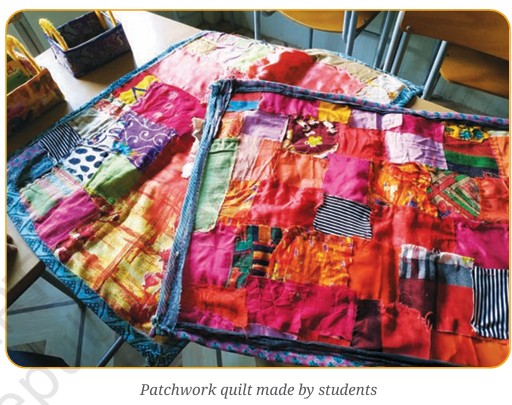
Patchwork is a traditional art and craft technique in which small pieces of fabric are joined together to create beautiful patterns and useful objects. In this activity, students will learn to reuse old clothes and leftover fabric to make a small patchwork quilt. Working in groups encourages cooperation, creativity, and the sharing of ideas.
Steps to Create a Patchwork Quilt
- Collect Fabric: Gather old, unused fabric pieces from your homes and school.
- Prepare the Base: Select a large piece of cloth measuring at least 30 cm × 30 cm.
- Cut the Patches: Cut the collected fabrics into squares or rectangles approximately 5–6 cm in size.
- Arrange the Design: Spread the base fabric and arrange the smaller pieces in an attractive pattern using different colours and textures.
- Sew the Patches: Join the smaller pieces along their edges by stitching on the reverse side so the seams are hidden when turned over.
- Attach the Patchwork: Place the joined patchwork on the base cloth and secure it with rows of running stitches. Use coloured threads to create decorative lines and patterns.
- Finish the Edges: Fold and stitch the edges neatly or cover them with another strip of fabric.
Through this activity, students develop sewing skills, patience, creativity, and an appreciation for sustainable crafts. Reusing old fabric also reduces waste and transforms discarded materials into something beautiful and useful.
Note on safety: Take precautions while using sharp objects like the scissors and needles. Use a sponge or a dedicated piece of thick cloth to store your needles so that they do not get misplaced and cause harm to others.
Activity 18.3: Pulp And Paint
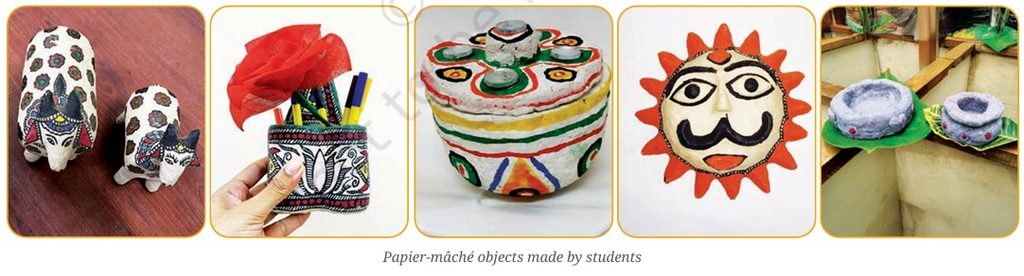
Thousands of newspapers are printed every day. After reading them, people often discard or reuse them as packaging material, paper bags, and other useful items. When soft paper, such as newspapers and tissue paper, is mixed with water and glue, it becomes a strong, workable material.
Papier-mâché is an artistic technique in which this mixture is moulded into three-dimensional objects. These objects are inspired by the artist’s surroundings, traditions, and culture. They are then decorated and painted using locally available pigments and colours.
Although artists use the same basic papier-mâché technique, the motifs, patterns, and designs differ from region to region, reflecting local artistic traditions. This craft transforms everyday materials into beautiful works of art.
Papier-mâché is practised in many parts of India, and its techniques and designs may have spread through trade, travel, migration, cultural exchanges, and interactions among artisans.
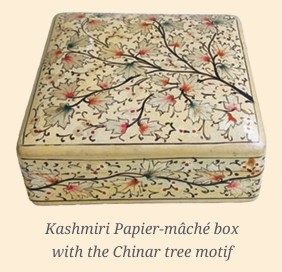
I ) Kashmiri Papier-mâché box with the Chinar tree motif:
A Kashmiri Papier-mâché box with the Chinar tree motif is a beautiful example of the traditional handicrafts of Kashmir. Papier-mâché is an artistic technique in which paper pulp or layers of paper are mixed with glue, shaped into objects, dried, and decorated with colourful designs. Skilled Kashmiri artisans use this technique to create decorative boxes, bowls, trays, and other beautiful objects.
The Chinar tree is an important symbol of Kashmir, known for its broad leaves and stunning autumn colours. Its leaves are a popular motif in Kashmiri art and handicrafts. Artists carefully paint Chinar leaves, flowers, birds, and intricate patterns on these boxes using fine brushes and vibrant colours. The detailed designs often feature beautiful combinations of red, green, blue, gold, and other shades.
Creating a papier-mâché box requires patience, creativity, and great attention to detail. After the surface is prepared, artisans apply decorative patterns and a protective finish to enhance its beauty and durability. These boxes are commonly used to store jewellery, small keepsakes, and other precious items.
Kashmiri papier-mâché reflects the region’s rich cultural heritage and the artistic skills passed down through generations. It also demonstrates how ordinary materials, such as waste paper, can be transformed into elegant and valuable works of art.
Learn to Make Papier-mâché
Papier-mâché is a creative art technique that transforms waste paper into beautiful three-dimensional objects. Work in small groups and follow these steps to make your own papier-mâché artwork.
Step 1: Cut old newspapers into small pieces or thin strips and soak them in water for a few days in a large container.
Step 2: Remove the soaked paper and squeeze out the excess water.
Step 3: Crush, mash, or grind the paper into a soft pulp. You can use a mortar and pestle to grind it by hand.
Step 4: Add a little glue to the paper pulp and mix thoroughly until it forms a workable mixture.
Step 5: Choose a small bowl or another shallow object as a mould. Apply a thin layer of petroleum jelly or another suitable release agent to its outer surface.
Step 6: Turn the mould upside down and cover its outer surface with overlapping strips of damp newspaper. Apply the paper pulp evenly over the strips to create a firm layer. Allow it to dry completely for a few days.
Step 7: Once the artwork is completely dry, gently remove the mould without damaging the shape.
Step 8: Smooth the surface with fine sandpaper, if needed, and decorate your papier-mâché artwork with colours, patterns, and creative designs.
Learning Outcome: This activity develops creativity, patience, and fine motor skills while teaching students how to reuse waste paper to create attractive works of art.
Conclusion:
Arts of the People, With the People, for the People highlights the importance of traditional art forms in preserving cultural heritage, expressing community identity, and bringing people together.
Folk art, music, dance, theatre, handicrafts, and other creative practices reflect the lives, beliefs, customs, and experiences of people from different regions. These art forms are passed down through generations and continue to evolve with changing times.
When communities participate in creating, practising, and sharing art, they keep their traditions alive while encouraging creativity and cooperation. Supporting local artists and artisans also helps preserve traditional skills and provides opportunities for future generations.
Art is not limited to museums, galleries, or stages; it lives in our homes, festivals, celebrations, and everyday activities. By respecting and participating in our cultural traditions, we can celebrate India’s diversity, strengthen community bonds, and ensure that the arts remain a meaningful part of our lives.