
Introduction
Dance is a constantly evolving art form that connects tradition with creativity and new ideas. While traditional dance forms preserve cultural knowledge and heritage, dancers and choreographers continue to explore new movements, technologies, themes, and ways of presenting dance to contemporary audiences.
Innovation encourages artists to experiment with movement, music, costumes, stage design, digital media, and new forms of collaboration. These creative approaches can give traditional ideas new meanings while opening possibilities for fresh forms of artistic expression.
Inclusivity reminds us that dance is for everyone. People of different ages, abilities, backgrounds, cultures, and experiences can participate in dance. Inclusive dance practices create opportunities for people with disabilities and others who may face barriers to participation. By adapting movements, spaces, music, or methods of teaching, dance can become more accessible and welcoming.
Dance can also be a powerful way of inspiring change. Artists can use movement and performance to explore important themes such as equality, environmental awareness, peace, identity, health, and social responsibility. Dance can encourage audiences to think, feel, question, and look at the world from different perspectives.
Through innovation, inclusivity, and creative expression, dance can preserve the past while responding to the present and imagining the future. It shows us that art can bring people together, challenge ideas, celebrate diversity, and inspire positive change in society.
1. Innovation in Dance
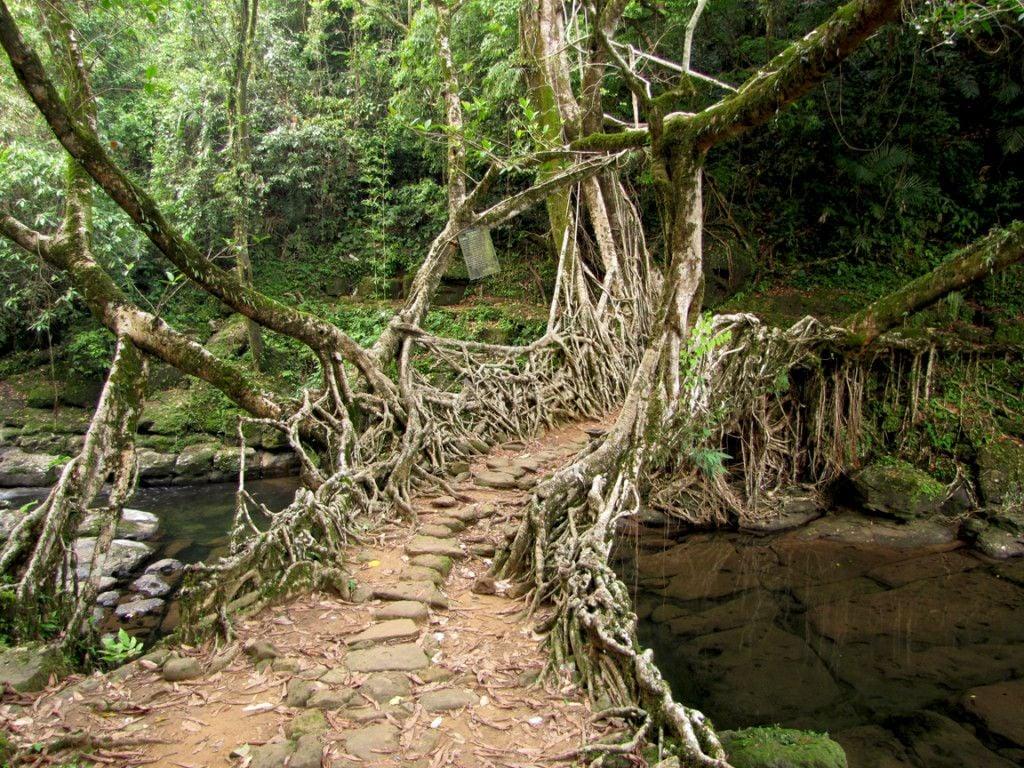
The deeper the roots of a tree, the higher its branches can reach. In the same way, the deeper your knowledge and understanding of dance traditions, the greater your ability to create, experiment, and innovate.
Look around you and you will find movement and rhythm everywhere. The flutter of birds, the quivering of leaves, the swaying of grass, the sweeping of a broom, or the rhythmic movement of picking tea leaves—all contain interesting patterns of movement. Any everyday activity can become a source of inspiration for creating new dance movements.
Choose an activity from your surroundings and observe it carefully. Notice its rhythm, speed, direction, repetition, energy, and flow. Now try to transform these observations into your own dance movements using the techniques, postures, gestures, rhythms, and expressions you have learnt.
Every dancer has the potential to bring new ideas and innovation to dance. A strong foundation in dance, combined with observation, personal experiences, imagination, and original thoughts, can give a dancer’s movements a distinctive quality.
Innovation does not always mean abandoning tradition. It can mean exploring familiar movements in new ways while respecting the knowledge and principles of the dance form. When tradition becomes the foundation for creativity, dancers can develop new and meaningful forms of expression.
i.) Integration of Other Allied Forms
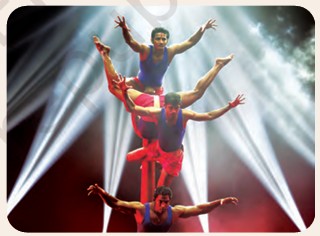
A step ahead in innovation in dance is the inclusion of other allied forms, such as martial arts. India has a rich heritage of traditional sports and martial arts traditions that include carefully developed movement sequences, postures, footwork, jumps, and rhythmic actions as part of their training.
Over time, many artists have creatively incorporated these movement sequences into dance, creating new possibilities for movement, expression, and choreography. Such integration allows dancers to explore different qualities of energy, strength, speed, balance, and coordination.
You have already learnt about Chhau, a dance tradition that has developed connections with the martial art tradition of Phari Khanda. Its energetic movements, strong body positions, jumps, and combat-inspired actions demonstrate how martial arts can contribute to the movement vocabulary of dance.
The integration of allied forms shows how dancers can draw inspiration from different physical practices and cultural traditions while developing innovative and expressive forms of dance.
You will now learn about two other forms of martial arts, which are being creatively used in present-day development of dance.
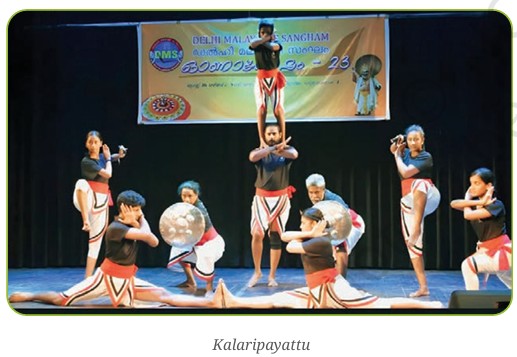
a.) Kalaripayattu
Kalaripayattu is a traditional martial art from Kerala and is widely regarded as one of the oldest martial arts traditions in the world. According to traditional legend, its origins are associated with Parashurama, the revered sage who is believed in some traditions to have created the land of Kerala.
Some modern research and historical interpretations connect the development of Kalaripayattu with the Sangam period (approximately 600–300 BCE), although its exact historical origins are debated.
Kalaripayattu developed primarily as a system of combat and self-defence. Its training includes carefully coordinated movements that develop strength, flexibility, balance, agility, speed, concentration, and body control. Traditional practice is also associated with knowledge of marma, important points of the body discussed in Indian medical traditions, including Ayurveda.
A distinctive feature of Kalaripayattu is its use of animal-inspired stances and movements. Practitioners imitate qualities and movements associated with animals such as the lion, elephant, horse, and snake. These dynamic movement patterns have also inspired artists and choreographers who incorporate martial-arts vocabulary into contemporary dance.
Kalaripayattu therefore provides an interesting example of how martial arts, body awareness, movement, and dance can come together to create innovative forms of artistic expression.
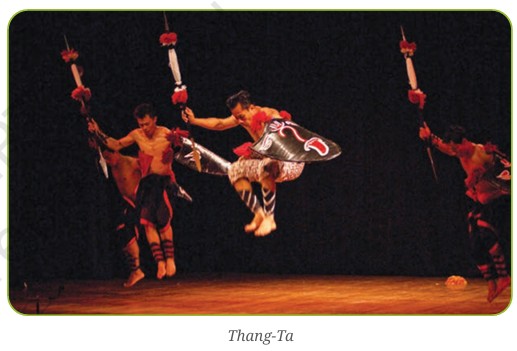
b.) Thang-Ta
Thang-Ta is a traditional martial art from Manipur. The name is derived from thang, meaning sword, and ta, meaning spear, and is often described as the “art of sword and spear.”
Thang-Ta combines martial techniques, body movements, breath control, and rhythmic actions. Its practice aims to harmonise the practitioner’s inner energy with external physical movements. Carefully coordinated movements, controlled breathing, footwork, postures, and weapon techniques are used to develop strength, agility, balance, concentration, and body control.
Thang-Ta also has ritual and cultural dimensions and is closely connected with the traditions of the Meitei community of Manipur. Traditional accounts associate many movement practices of the Meitei people with this martial tradition, reflecting its cultural significance.
The dynamic movements of Thang-Ta provide rich possibilities for dance innovation and choreography. Its rhythmic footwork, changes in direction, controlled gestures, and energetic actions can inspire dancers to explore new movement patterns.
Thus, Thang-Ta demonstrates how martial arts, breath, rhythm, cultural traditions, and movement can come together and contribute to innovative forms of dance expression.
Activity: Explore Martial Arts Movements
Try to practise one or two simple movements from the martial arts traditions discussed above. Learn the movements from a visiting practitioner or practise them under the guidance and supervision of your teacher, using the demonstration provided through the QR code.
Pay attention to the posture, footwork, balance, breathing, rhythm, and coordination involved in each movement. Do not attempt advanced techniques or weapon movements without proper training and supervision.
After practising, discuss how these movements could be adapted creatively for dance while respecting their original martial-arts tradition.
Examples of Innovation
Many dance artists and choreographers have experimented with traditional dance forms to tell contemporary stories and present ideas related to the world around us. You have already learnt about two pioneers who contributed to the development of modern dance in India in Grade 7.
Continuing from that learning, there are many other dance practitioners and institutions that have played an important role in developing innovative choreographies. They have explored creative movements, new themes, contemporary ideas, and traditional dance vocabulary to present stories and situations relevant to the present day.
Innovation in dance does not necessarily mean leaving tradition behind. Instead, artists can draw upon the techniques, movements, rhythms, gestures, and expressive vocabulary of traditional dance forms and reinterpret them in new contexts. In this way, traditional knowledge becomes a foundation for creating fresh and meaningful artistic expressions.
The following are a few among the many artists who have made significant contributions to creative choreography and the development of innovative dance practices in India. Each of these artists has been honoured with the Sangeet Natak Akademi Award for Creative Choreography, recognising their contribution to the field of dance.
Their work demonstrates how tradition, creativity, experimentation, and contemporary ideas can come together to expand the possibilities of dance.
Narendra Sharma
Narendra Sharmaexpanded his horizons and carved a niche for himself in developing creative dance.
One of the senior-most students of Uday Shankar, his many choreographies and dance dramas reflected socially relevant contemporary situations. He is known to create a healthy free dance movement for children, in which his efforts have shown substantial success with the institutionalisation of dance education.
He produced over 40 original fabulous works, including notable productions like Kamayani (1970), Wolf-Boy (1977), Antim Adhyaya (1985), and Gandhi (2007). These works were acclaimed for their innovative themes and choreographic excellence.
Acharya Parvatikumar
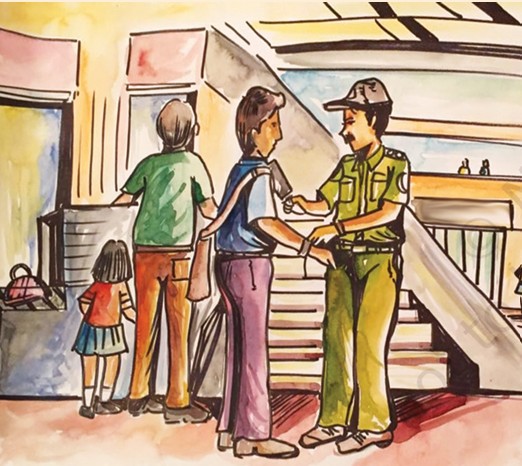
Acharya Parvatikumar was a pioneering dance choreographer for dance dramas like ‘Discovery of India, Rhythm of Culture, and Dekh Teri Bambai’ where he seamlessly integrated various Indian dance styles and showed contemporary concepts using traditional dance forms, for example, creating a scene of the Dabbawalas taking deliveries around the city using kathak footwork, showing the chase between police and thief using the game of ‘hu-tu-tu’.
On the traditional dance front, he was the only dance Guru to have researched and choreographed the Marathi compositions of Raja Sarfoji II of the Bhosale Dynasty in Bharatanatyam.
He also bridged the gap between theory and practice by choreographing the dance text Abhinaya Darpanam into an audio-visual form.
Chandralekha
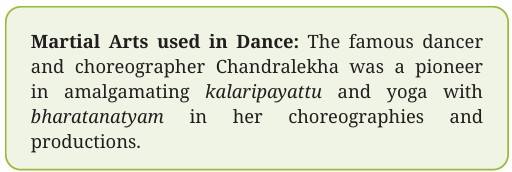
Chandralekha was one of the earliest dancers who dramatically brought changes in traditional forms and synchronised various Indian dance, yoga and kalaripayattu with philosophy, and literature also. In her production Angika, she presented traditional Bharatanatyam vocabulary of dance based on the principles of Abhinaya Darpana and integrated Kalaripayattu with it.
Lilavati was based on Bhaskacharya’s mathematics treatise which she choreographed in dance using numbers, nature and imagination. Prana was based on yoga and breath in dance. She has also worked with modern dancers and actors from the West in experimental productions.
She has made films on dance and written on the subject. Among her films are The Myth of Woman (1976) and Hasta (1984).
Kumudini Lakhia
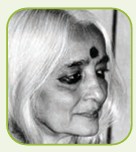
Kumudini Lakhia, the famous kathak dancer, was one of the pioneers in bringing a fresh outlook to a form. She was a pioneering kathak dancer and choreographer who revolutionised the traditional solo format of kathak by introducing group choreography and contemporary themes.
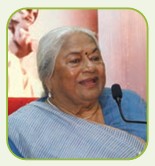
Going beyond the traditional repertoire, she asked, “Where do I go from here?”. Thus, her first groundbreaking choreography, Atah Kim, was born.
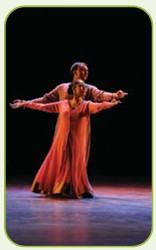
Other creative dance productions were Dhabkar (Pulse), The Coat, Feathered Cloth (Hagoromo) among many others. Her dance choreographies integrated the abstract and narratives, often addressing contemporary themes.
ACTIVITY : DANCE THE NOW
Choose a current theme related to a socially relevant issue, such as environmental protection, cleanliness, climate change, water conservation, or equality. Develop your own creative dance to communicate your chosen message.
Use innovative movements, facial expressions, gestures, rhythm, music, and formations to represent the issue and inspire positive change. You may draw inspiration from traditional dance movements and adapt them to express contemporary ideas.
Work individually or in groups to plan your choreography. Select suitable music that supports your theme and helps communicate your message clearly.
Song suggestion: Swachh Bharat song.
Present your dance to the class and discuss how dance can raise awareness, encourage responsibility, and inspire people to take positive action.
2. Inclusivity in Dance
Inclusivity in dance is an important part of creating a society where everyone has the opportunity to participate, learn, perform, and express themselves through movement.
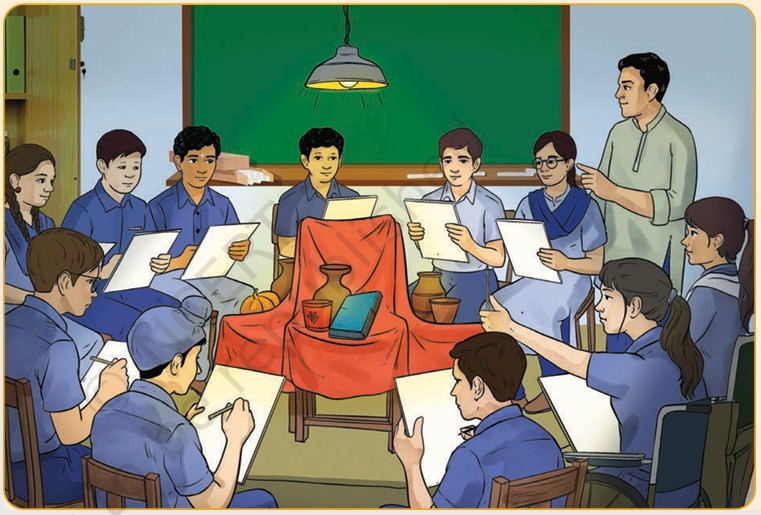
Today, many dancers and choreographers are creating performances that are accessible to people of different ages, abilities, and backgrounds, including people with disabilities. Dance teachers adapt movements, teaching methods, and activities to suit individual needs, helping everyone experience the joy of dance without unnecessary barriers or inhibitions. Performances by dancers with disabilities are also increasingly visible on national television and other important platforms, demonstrating that creativity and artistic expression are not limited by physical ability.
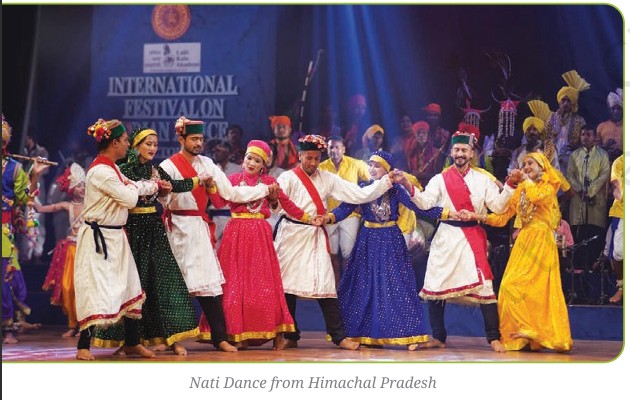
Dance also encourages gender equality. Although some dance traditions were historically performed mainly by men or women, many have gradually opened opportunities for performers of all genders. In numerous folk traditions, men and women dance together, celebrating community, cooperation, and shared cultural identity.
The beauty of dance lies in its ability to bring people together, celebrate differences, and create a sense of belonging. Inclusive dance encourages us to respect individual abilities, challenge stereotypes, and recognise the unique contribution every dancer can make.
Think and Reflect: What does inclusivity mean to you? How can dance help ensure that everyone feels welcome, respected, and valued?
ACTIVITY : DANCE FOR ALL
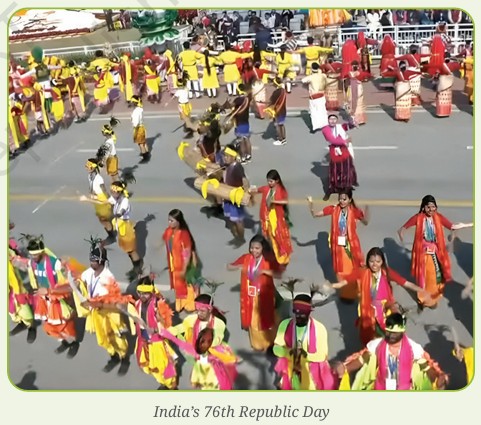
On 26 January 2025, India celebrated its 76th Republic Day with a remarkable cultural event on Kartavya Path in New Delhi. The Ministry of Culture brought together more than 5,000 folk and tribal artists from different parts of the country. The performance set a Guinness World Record, highlighting the power of dance to unite people through cultural expression.
This historic celebration showcased India’s rich cultural diversity through traditional dances, music, colourful costumes, and artistic expressions. Artists from various regional and tribal communities shared the same stage, presenting their unique traditions and movement styles. Their performances demonstrated how dance can bring people together beyond differences of language, culture, region, and background.
The event was more than a record-breaking achievement; it was a powerful symbol of inclusivity, unity, and cultural pride. By providing a common platform for artists from different communities, it highlighted the importance of respecting diverse traditions and creating equal opportunities for participation. Every performance contributed to the larger celebration, showing that each community has a valuable place in India’s cultural heritage.
Folk and tribal dances preserve the stories, beliefs, customs, and experiences of communities. Presenting these traditions together helps younger generations understand and appreciate the country’s cultural richness. It also encourages mutual respect and strengthens a sense of belonging.
Dance for All reminds us that dance belongs to everyone, regardless of their age, gender, ability, language, or cultural background. It encourages equal participation, celebrates individual talents, and creates opportunities for people to connect through movement and rhythm.
This celebration teaches us that our differences make our culture richer. When people dance together, they express the beautiful spirit of unity in diversity and show how art can build understanding, respect, and togetherness in society.
ACTIVITY : INSPIRING CHANGE
Dance is more than an art form; it is a powerful way to inspire positive change in society. Through creative movements, gestures, expressions, music, and storytelling, dancers can communicate important messages about environmental protection, cleanliness, equality, peace, cultural diversity, and social responsibility.
Dance performances can raise awareness, encourage people to think about social issues, and motivate them to take meaningful action. Choreographers often combine traditional dance movements with contemporary themes to make their performances relevant to today’s world.
Dance can also challenge stereotypes, promote inclusivity, and give a voice to people whose experiences may otherwise go unnoticed. By bringing people together through shared artistic experiences, dance builds understanding, empathy, cooperation, and respect for different perspectives. Whether performed on a stage, in a school, or within a community, dance has the potential to touch hearts and influence attitudes.
When creativity meets a meaningful purpose, dance becomes a powerful medium for inspiring awareness, encouraging positive action, and creating a more inclusive and compassionate society.
Dance Empowers
Dance has played an important role in inspiring people, raising awareness, and encouraging social change. During India’s freedom movement, songs, music, and dance helped unite people, strengthen patriotic feelings, and inspire collective action. Even today, dance is used to communicate important messages about issues such as gender discrimination, environmental protection, climate change, and social equality. Through expressive movements and storytelling, dancers can present complex issues in ways that encourage audiences to think, reflect, and engage in meaningful conversations.
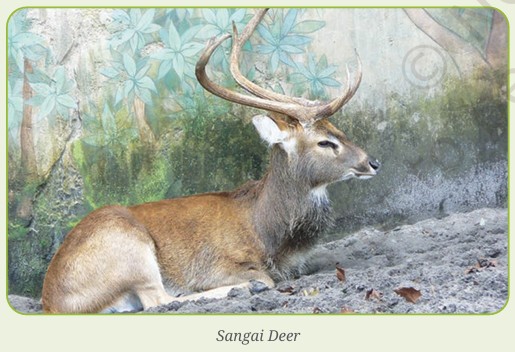
An example is Keibul Lamjao, a dance production presented by the Jawaharlal Nehru Manipur Dance Academy (JNMDA) in Imphal in 1985. Based on a script by M. K. Binodini Devi, the production highlighted environmental concerns and the conservation of the Sangai deer, an endangered deer associated with Manipur’s Keibul Lamjao National Park. The Sangai is an important symbol of Manipur’s natural heritage, and its survival depends on protecting its unique habitat.
This example demonstrates how dance can go beyond entertainment to communicate messages about nature, conservation, and social responsibility. By combining artistic expression with meaningful themes, dancers can inspire audiences to appreciate their environment and recognise the importance of protecting endangered species.
Thus, dance empowers people by giving them a creative way to express ideas, raise awareness, and encourage positive change in society.
Inspiring Change Through Dance
Dance encourages you to think differently, explore new ideas, and look at the world with greater compassion, empathy, and love. Through creative movements, gestures, expressions, and storytelling, you can share your thoughts and feelings with others and draw attention to issues that matter. Your dance can promote equality, inclusivity, environmental protection, peace, kindness, and respect for all living beings. It can challenge stereotypes, celebrate diversity, and encourage people to work together for a better future.
Think and Reflect: What change would you like to inspire through your dance? Choose an issue that matters to you and create a short dance performance to communicate your message. Think about how your movements, music, expressions, and gestures can help your audience understand your ideas and feel motivated to take positive action. Remember, even a simple dance can communicate a powerful message and inspire meaningful change.
Innovative Choreography
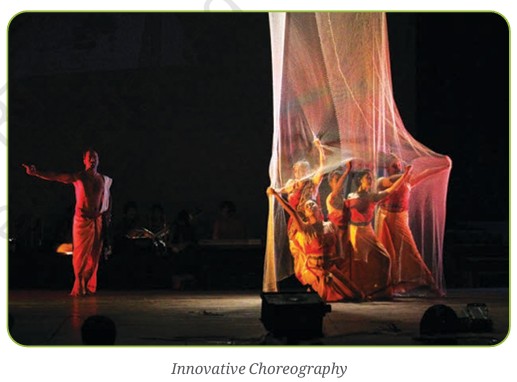
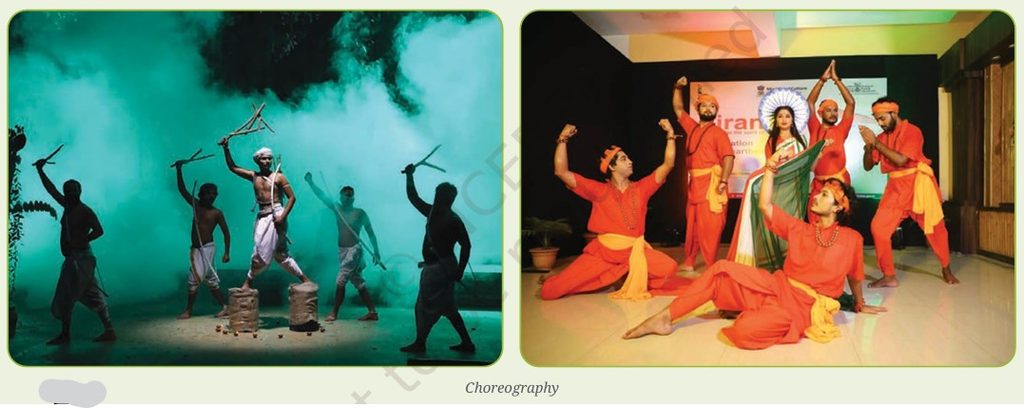
Innovative choreography involves creating new and imaginative dance compositions by exploring fresh ideas, movements, themes, and ways of presenting a performance. It combines a strong understanding of traditional dance techniques with creativity, experimentation, observation, and original thinking. Choreographers may draw inspiration from nature, everyday activities, social issues, literature, technology, martial arts, and different cultural traditions to develop unique movement patterns.
Innovation does not always mean creating something entirely new. It can also involve reinterpreting traditional movements in a contemporary context or combining different art forms to communicate a meaningful message. Changes in rhythm, speed, direction, levels, formations, music, costumes, and stage arrangements can make a choreography more engaging and expressive.
Innovative choreography also encourages dancers to think beyond familiar steps and explore how movement can communicate ideas, emotions, and stories. For example, the movement of birds, the flow of water, the rhythm of machinery, or the daily activities of people can inspire original dance sequences.
Through innovative choreography, dancers develop imagination, problem-solving skills, teamwork, and artistic confidence. It allows them to respect their cultural roots while exploring new possibilities and responding to the changing world around them. In this way, choreography becomes a powerful means of combining tradition, creativity, and meaningful expression.
Activity : Dance Beyond Gender: Narthaki Nataraj
Narthaki Nataraj is a renowned Indian transgender woman and Bharatanatyam dancer from Tamil Nadu. She has dedicated her life to learning, performing, and promoting Bharatanatyam, one of India’s major classical dance forms.
Narthaki received extensive training under the distinguished Bharatanatyam guru K. P. Kittappa Pillai and became known for her mastery of traditional techniques, expressive movements, rhythmic footwork, and abhinaya, the art of communicating emotions through facial expressions and gestures.
Despite facing social prejudice and challenges, she continued to pursue her passion for dance and established herself as a respected performer and teacher. Her achievements demonstrate the importance of determination, artistic excellence, and equal opportunities in the performing arts.
In 2019, Narthaki Nataraj received the Padma Shri, becoming the first transgender woman to receive this prestigious civilian honour. She has also received the Sangeet Natak Akademi Award for 2011 in recognition of her contribution to Bharatanatyam.
Narthaki’s journey inspires people to challenge gender stereotypes and recognise talent beyond gender identity. Her achievements show that dedication, creativity, and hard work can help artists overcome barriers and contribute meaningfully to India’s cultural heritage.
Conclusion: Narthaki Nataraj reminds us that dance belongs to everyone. Her life and work encourage us to respect diversity, promote inclusivity, and create opportunities for people of all genders to learn, perform, and express themselves through dance.
Conclusion
Innovation, inclusivity, and inspiring change are important aspects of dance in today’s world. Dance is a living art form that connects traditional knowledge with new ideas, allowing dancers and choreographers to explore creative movements, experiment with different art forms, and present contemporary stories. By drawing inspiration from nature, martial arts, everyday activities, and social issues, artists can develop innovative choreographies while respecting their cultural roots.
Inclusivity reminds us that dance belongs to everyone, regardless of age, gender, physical ability, background, or identity. When dancers receive equal opportunities to learn, perform, and express themselves, dance becomes a space where diversity is celebrated and individual talents are valued. Inclusive dance practices help break barriers, challenge stereotypes, and promote mutual respect.
Dance can also become a powerful medium for inspiring positive social change. Through expressive movements, music, gestures, and storytelling, performers can raise awareness about environmental protection, gender equality, cultural diversity, peace, and other important issues. A meaningful dance performance can encourage audiences to think differently, develop empathy, and take responsibility for the world around them.
Ultimately, dance is more than entertainment or physical movement. It is a means of communication, creativity, and connection that brings people together. By combining tradition with innovation, celebrating diversity through inclusion, and using artistic expression to inspire change, we can help create a more compassionate, respectful, and harmonious society. Dance empowers us to express our ideas, appreciate differences, and imagine a better future for everyone.