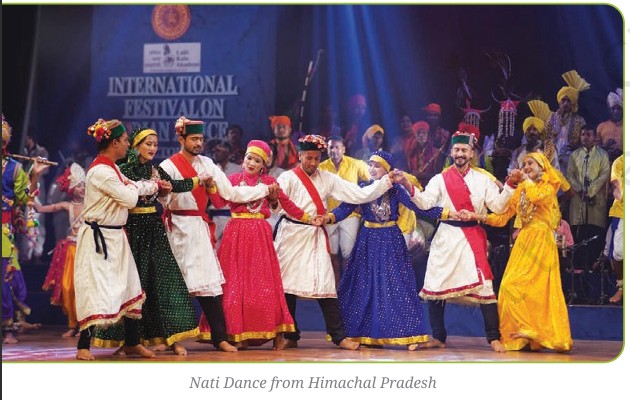

Introduction
Symbols and metaphors are important elements of theatre that help communicate ideas, emotions, and meanings beyond spoken dialogue. In a stage performance, every element, including lighting, props, costumes, set design, music, and background sounds, can convey a message to the audience.
For example, a red scarf may symbolise love, courage, or danger, while a dim light may create a feeling of sadness, mystery, or fear. Similarly, a broken chair might represent loss or difficult circumstances, and gentle music may express peace and happiness. These elements help the audience understand the characters, atmosphere, and deeper meaning of a story.
Therefore, every member of a theatre team must carefully select and arrange stage elements according to the purpose of the performance. By using symbols and metaphors creatively, theatre artists can make their performances more expressive, engaging, and meaningful.
Stage Set Before Performance Begins
A stage set is the arrangement of scenery, furniture, props, and other objects on the stage before a performance begins. It helps establish the setting, time, and atmosphere of the story. For example, a table and chairs may represent a classroom, while trees and plants can create the appearance of a forest.
The colours, lighting, and placement of objects can also communicate emotions and ideas to the audience. A carefully designed stage set makes the performance more realistic, attractive, and meaningful.
It is important for the theatre team to ensure that every element supports the story and helps the audience understand the action even before the actors begin speaking.
Symbolism and Metaphors in Theatre:
Symbolism in Theatre
Symbolism in theatre is the use of objects, actions, colours, sounds, or movements to represent deeper meanings, emotions, and ideas beyond their literal meaning.
It helps performers communicate messages to the audience without relying only on dialogue.
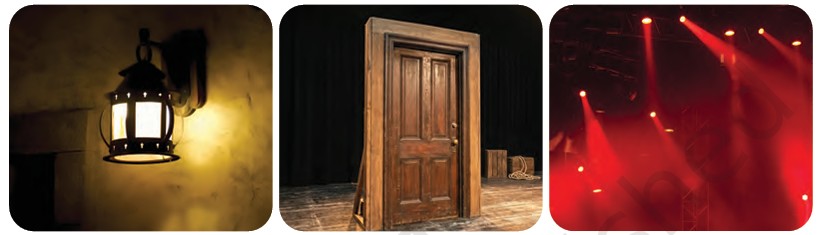
For example, a lamp may symbolise hope and knowledge, a white flag may represent peace, and a red rose may express love and affection. Similarly, a closed door can represent fear or a new opportunity, while dark lighting may suggest sadness, danger, or mystery.
Sunrise can symbolise a new beginning, and falling leaves may represent change or the passing of time.
Thunder and lightning can create a sense of fear or approaching danger. Through these symbols, theatre artists can express complex feelings and ideas in a creative way. Symbolism makes performances more meaningful, engaging, and memorable while encouraging audiences to think deeply about the story and its message.
For example:
- A single lamp on stage might symbolise hope.
- A closed door might symbolise fear or opportunity.
- A red light could symbolise passion or energy.
Metaphors in Theatre
Metaphors in theatre are creative devices used by playwrights to compare two different things or ideas to express deeper meanings, emotions, or messages. They help audiences understand a character’s feelings, experiences, and situations through imaginative comparisons.
For example, describing life as a journey can represent personal growth and the challenges people face. A character walking in circles may symbolise confusion or feeling trapped, while a torn costume may represent a broken identity or emotional struggle.
Similarly, a storm on stage may represent inner conflict, anger, or difficult times in a character’s life. Metaphors can be expressed through dialogue, actions, movements, costumes, lighting, and stage design. They make theatrical performances more expressive, imaginative, and meaningful by allowing stories to communicate ideas beyond their literal meaning.
For example:
- A character walking in circles might be a metaphor for confusion or being trapped.
- A torn costume might be a metaphor for a broken identity.
Metaphors help the story speak in images, not just words.
Why are they necessary:
Symbolism and metaphors are necessary in theatre because they help performances go beyond simple dialogue and become emotionally powerful, visually expressive, and meaningful.
They allow theatre artists to communicate deeper ideas, emotions, and messages through objects, colours, actions, movements, and stage designs. These techniques encourage audiences to use their imagination, understand hidden meanings, and connect emotionally with the characters.
They also make storytelling more creative and memorable, even when only a few props or simple stage settings are available. They allow:
- Deeper Meaning: Symbols allow the audience to understand hidden ideas and messages without explaining them directly. They encourage viewers to think, use their imagination, and interpret the meaning in their own way. This makes the theatrical experience more meaningful, engaging, and memorable.
- Emotional Connection: Symbolism and metaphors help express deep emotions such as fear, love, sadness, and loss that words alone may not fully communicate. Through gestures, colours, music, and stage images, performers can connect with the audience’s feelings and imagination, making the performance more powerful and touching.
- Creativity on Stage: Theatre often uses limited sets, props, and materials. Symbolism allows a single object, colour, or movement to represent different ideas and emotions. For example, a lamp can symbolise hope or knowledge, while a closed door can represent fear, mystery, or a new opportunity. This encourages theatre artists to use their imagination and make storytelling more creative, flexible, and meaningful.
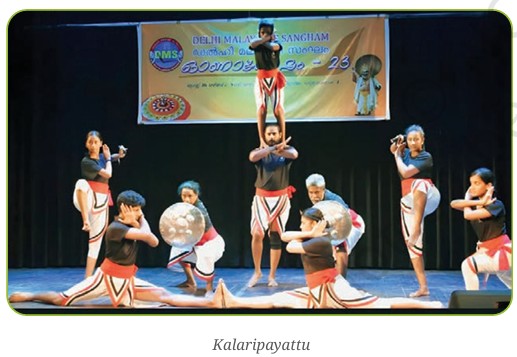
- Cultural Expression: Symbolism plays an important role in Indian theatre traditions such as Kathakali and Yakshagana. In these art forms, gestures, facial expressions, colours, and costumes communicate emotions, represent characters, and convey stories. These symbolic elements reflect India’s rich cultural heritage and help preserve traditional artistic practices for future generations.
- Visual Impact: Symbolic images create powerful visual impressions that remain in the audience’s memory long after a performance ends. For example, a candle going out may symbolise the end of hope or life, while a character giving a flower to another person may represent forgiveness, peace, or love. Such images make theatrical performances more meaningful, emotional, and memorable.
Symbolism and metaphors transform theatre into a powerful language of images, emotions, and ideas. They help performers communicate deeper meanings beyond words, allowing audiences to connect with characters and understand the message of a story. These techniques make performances more creative, expressive, meaningful, and unforgettable. To understand their importance,
Let us explore the different elements of theatre, such as costumes, props, lighting, music, gestures, and stage design, and discover how each element can represent symbols and metaphors in a performance.
Symbolism Using Colour:
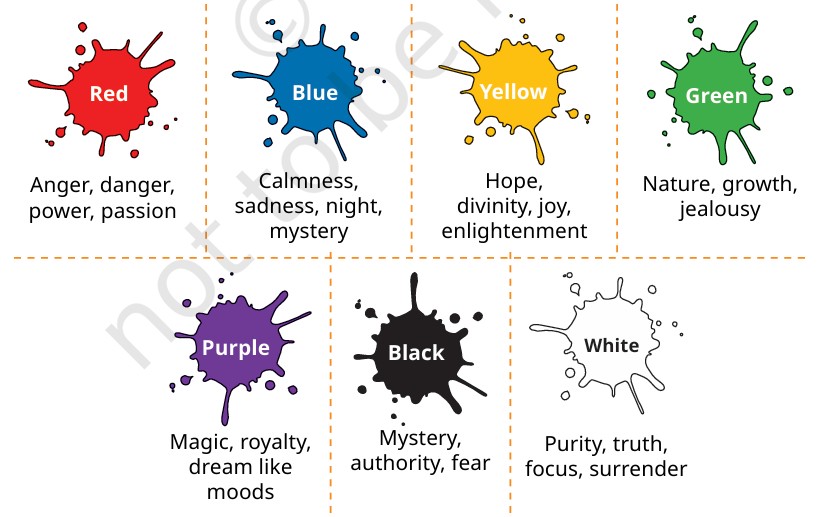
Colour is one of the most noticeable elements in theatre because it attracts the human eye and has a strong impact on the mind and emotions. It helps create the mood, express feelings, and communicate deeper meanings to the audience. Different colours can represent different ideas; for example, red may symbolise love, passion, or danger, while blue can suggest peace, sadness, or calmness.
Therefore, careful attention must be given to the choice of colours in stage lighting, costumes, set design, and make-up. The appropriate use of colour makes a performance more attractive, expressive, and meaningful, helping the audience understand the characters, atmosphere, and message of the story.
Colours of the Rasas as per the Nāṭyaśāstra:
In Indian classical theatre, the Nāṭyaśāstra, attributed to Bharata Muni, explains the concept of Navarasa, or the nine principal aesthetic emotions. Each rasa is associated with a traditional colour that helps represent its emotional quality. These colours may be reflected through costumes, make-up, lighting, and stage design to help communicate feelings and create the appropriate atmosphere during a performance.
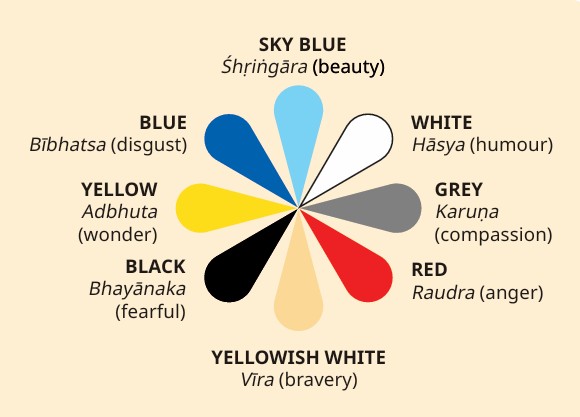
Colours of the rasas as per Nāṭyaśhāstra
Scene Work
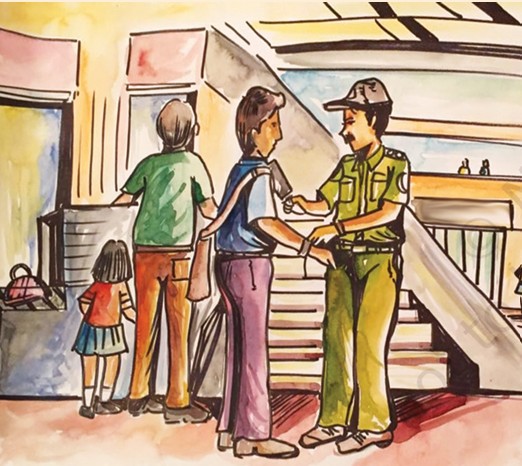
In this activity, you will explore how to represent two different situations on stage. First, read each situation carefully and understand its context, characters, emotions, and purpose. Throughout this chapter, you will gradually develop each scene by working on different elements of theatre, such as costumes, props, lighting, colours, make-up, gestures, and stage design. You may also add new details based on your imagination and creativity, even if they are not mentioned in the original situations. Record your designs, ideas, sketches, and observations in your journal. This activity will help you develop your creative thinking, teamwork, and practical understanding of theatre.
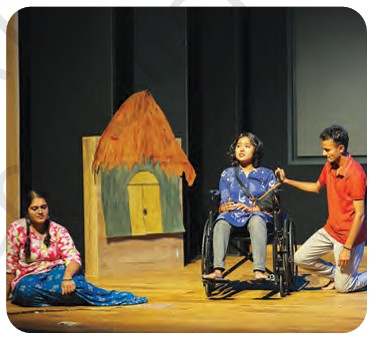
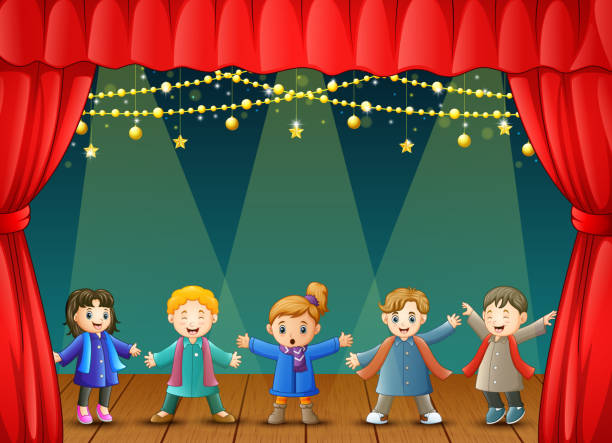
Scene performed by students
Symbolism Using Music
Music is a powerful element of theatre that influences how the audience experiences and interprets a scene. Background sounds, musical instruments, rhythms, and melodies can suggest a character’s personality, create a particular atmosphere, and communicate emotions without the need for words. For example, the sound of a snake hissing when a character enters the stage may make the audience perceive the character as dangerous or threatening. In contrast, a soothing flute melody may suggest that the character is peaceful, gentle, and friendly.
Musical symbolism is not limited to individual characters. The instruments and melodies chosen for a play can establish its overall mood and convey deeper meanings. Some musical associations develop from regional cultures and traditions, while others may be influenced by common human responses to sounds, rhythm, and pitch. The Nāṭyaśāstra also discusses the relationship between musical notes, known as swaras, and the rasas, or aesthetic emotions, they can evoke. Through the thoughtful use of music, theatre artists can strengthen the emotional impact of a scene and help the audience connect more deeply with the performance.
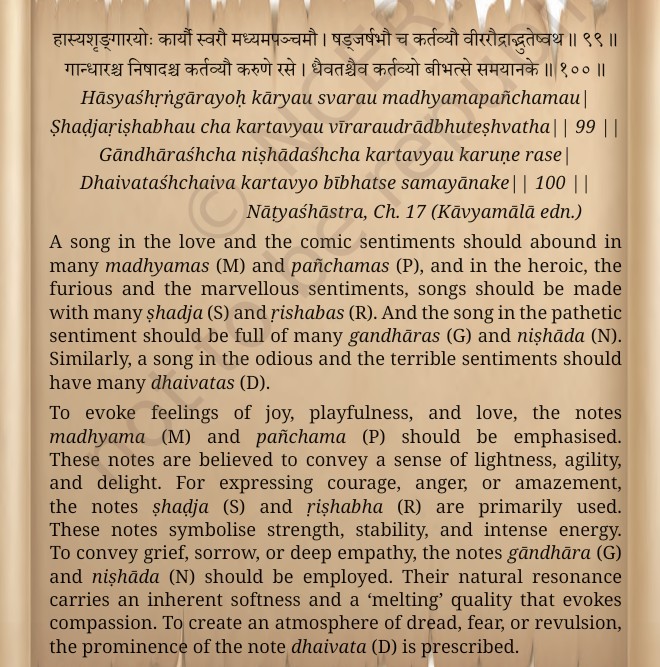
| Musical notes (Svara) | Rasa evoked |
| M, P | Hāsya, Śhṛiṅgāra |
| S, R | Vīra, Raudra, Bhayānaka, Adhbuta |
| G, N | Karuṇa |
| D | Bībhatsa |
The use of svaras (musical notes) to evoke a particular rasa may differ from the descriptions given in the Nāṭyaśāstra.
Musical interpretations can change over time depending on how music is composed, the instruments used, the cultural background, and how the audience perceives a scene.
Therefore, theatre artists can experiment with different notes, rhythms, melodies, and sounds to express the desired emotion. Let us explore our own creative ideas and discover how music can effectively evoke different rasas and make a theatrical performance more expressive and engaging.
Symbolism Using Costumes:
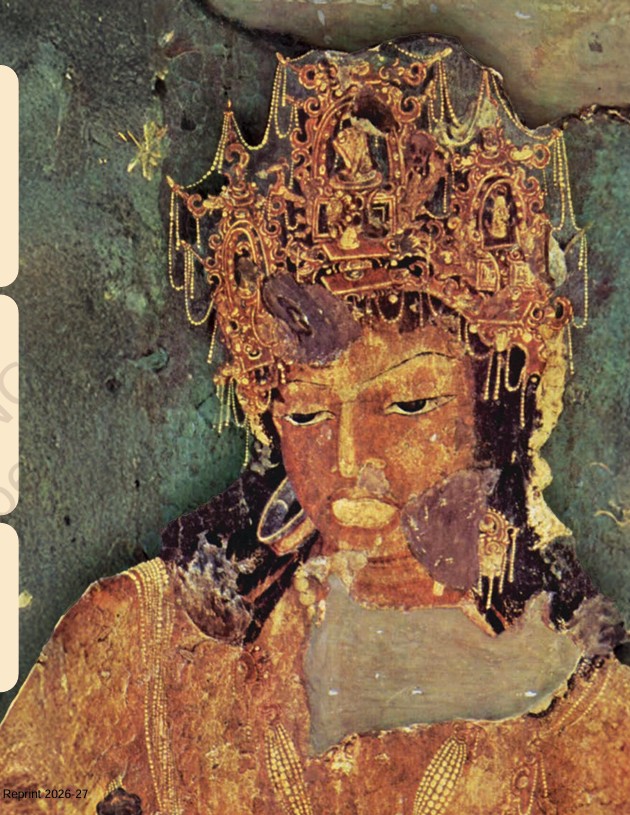
Costumes help the audience understand the world in which a story takes place. They can reveal the time period, country, culture, social background, and lifestyle of the characters. For example, traditional Indian clothing may indicate a particular cultural setting, while royal robes may suggest that a character belongs to a royal family. Similarly, uniforms can represent a specific profession, and historical costumes can help establish the period in which the story is set. Thus, costumes provide important visual clues that make the setting and characters easier for the audience to understand.
- Style and texture: Heavy, rich fabrics may suggest royalty; simple cotton indicates humility or innocence. Flowing costumes can show softness or dream-like qualities while sharp, structured lines suggest rigidity.
- Transformation through costume: A change in costume (or even an added layer) often symbolises a character’s internal change or a shift in the story.
Example: Imagine a character entering and leaving his house several times during a play. The first time, he wears loose cotton clothes, suggesting warm weather. The second time, he wears a raincoat, indicating rainy conditions. The third time, he wears woollen clothes and gloves, suggesting cold weather. These changes in costume symbolise changing weather conditions and the passage of time. The audience can understand that time has passed and the season or weather has changed without the need for dialogue or explanation.
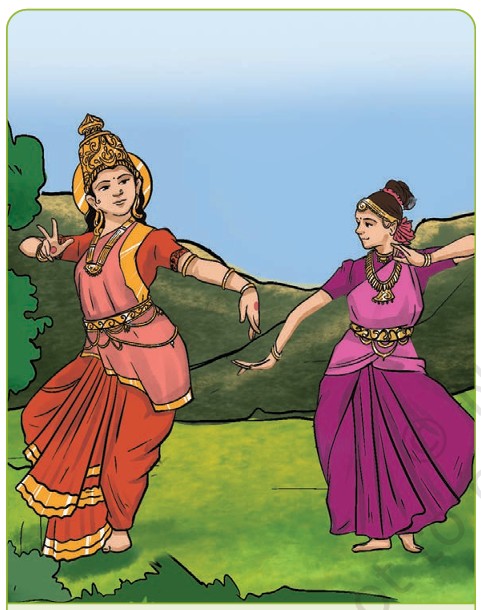
Symbolism Using Costumes:
This costume may symbolise nature, forests, growth, and the close relationship between humans and the environment. The green leaves suggest freshness, life, and renewal. Depending on the story, the character might represent a forest spirit, a nature goddess, or a guardian of the environment. This example demonstrates how costumes can communicate a character’s identity and deeper meaning without using words.
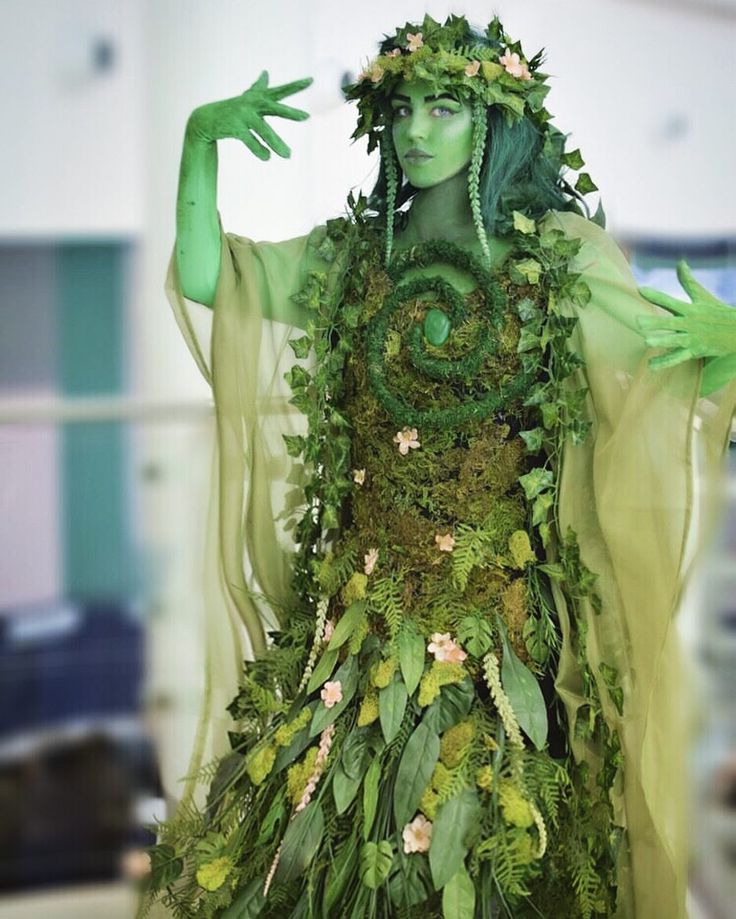
Symbolising the environment
Symbolism Using Make-up:
Make-up is an important element of theatre that helps communicate a character’s identity, personality, emotions, and role in a story. The colours, patterns, and styles used in make-up can represent different meanings and help the audience understand a character without relying only on dialogue.
For example, dark make-up may suggest mystery, fear, or a threatening character, while bright colours can express joy, energy, or a divine presence. In traditional Indian theatre forms such as Kathakali, elaborate facial make-up and colours help identify different types of characters and their qualities.
Make-up can also transform an actor into an elderly person, a mythical being, an animal, or a supernatural character. Thus, symbolic make-up makes performances more expressive, visually engaging, and meaningful.
Age and experience: While wrinkles or grey shading can show wisdom or burden, smooth, bright make-up may represent youth or innocence.
Cultural or traditional symbols: Certain markings or motifs represent identity, heritage, or spiritual qualities.
Abstract Make-up: Make-up can express themes like chaos, harmony, duality (for example, half of the face painted differently).
Example: A character narrating the journey of her life entering and exiting from time to time. Every time she re-enters the stage, her hair are whiter and ageing lines are deeper. Hair and the lines are symbolic of the passage of time.

Symbolism in Sets and Props:
Sets and props help create the setting and express deeper meanings in theatre. For example, a locked door may symbolise mystery, a broken chair may represent a damaged relationship, and a growing plant may symbolise hope and new beginnings. These elements make performances more expressive and meaningful.
Sets :
Scale and space A huge empty stage may symbolise loneliness or powerlessness. A cluttered set can show confusion, chaos, or mental overwhelm.
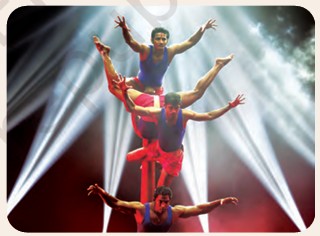
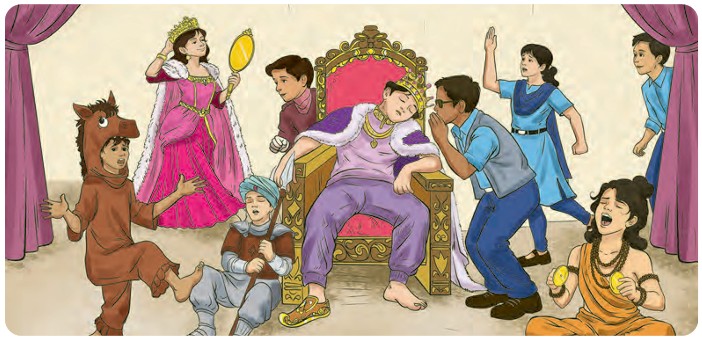
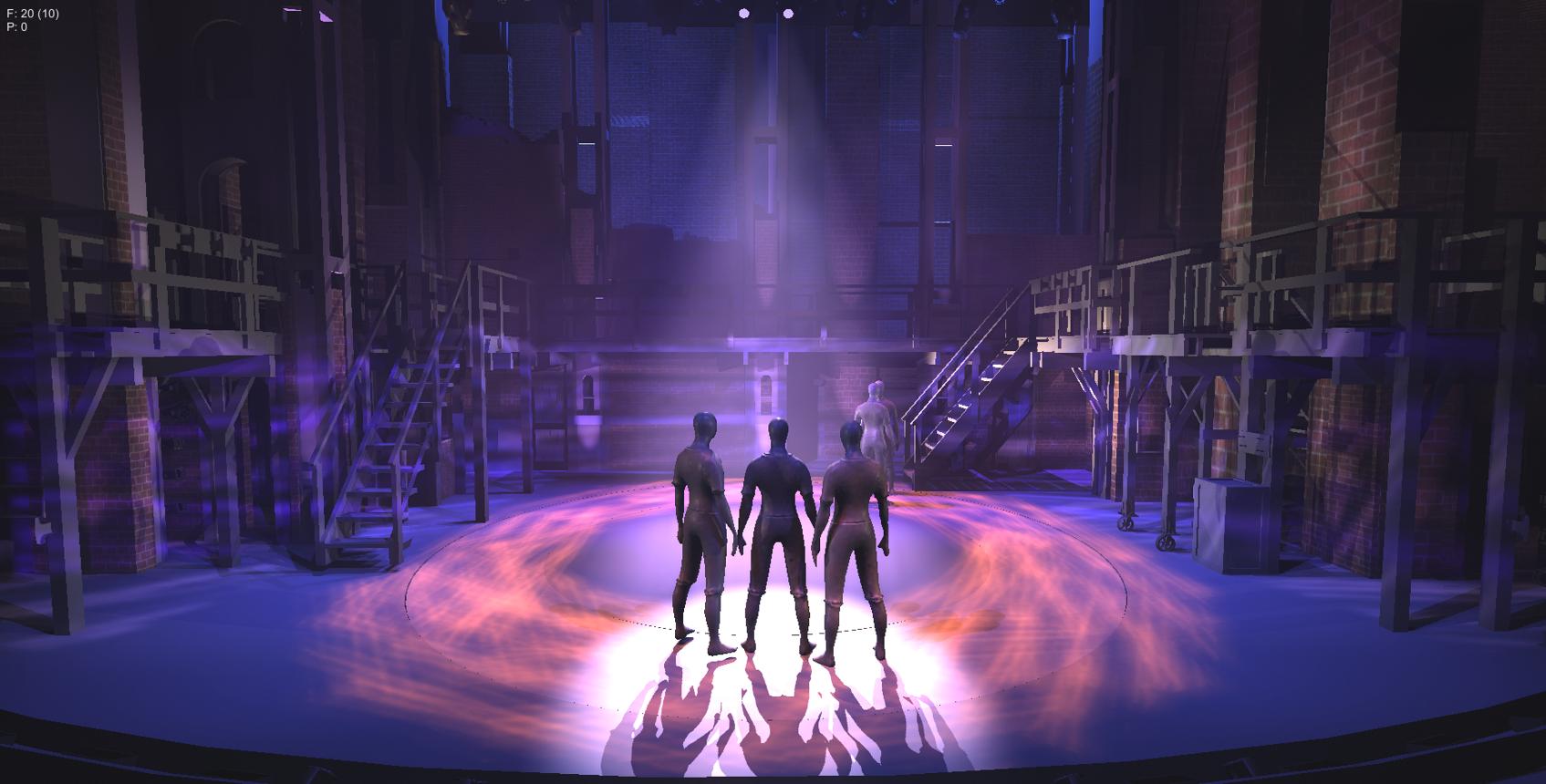
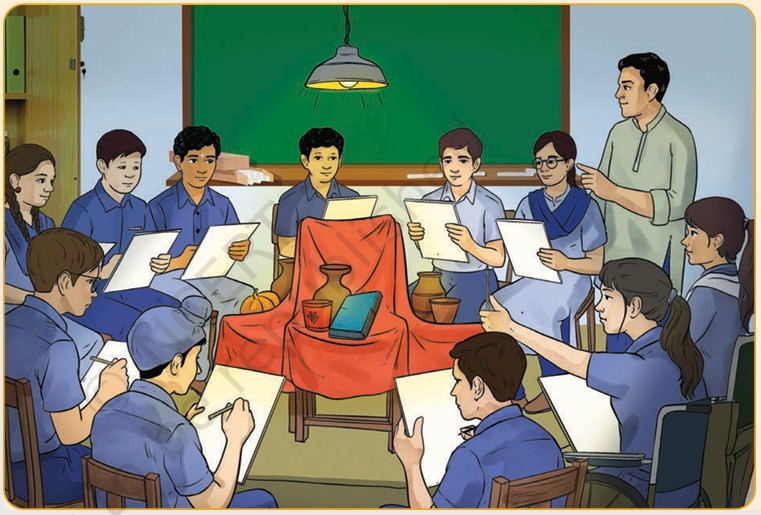
Levels: Higher platforms symbolise authority, aspiration, or dominance. Lower levels show vulnerability or submission (Refer to Fig. 3.1 in the beginning of the chapter).
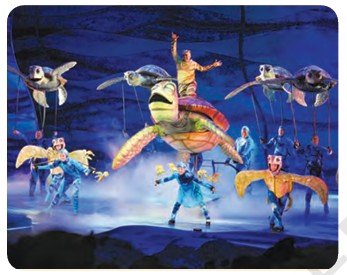
Props:
Symbolic objects: A broken mirror may symbolise inner conflict. A key might represent freedom, secrets, or opportunity.
Repeated props: If an object appears multiple times, it becomes a motif carrying deeper meaning.
Metaphorical use: Props can stand in for emotions — an empty chair representing loss, a rope representing connection or constraint.
Example: A character walks into a store, barehanded and comes out wearing a luxurious looking watch. Now, the watch has become a symbol of power and status. Similarly a broom, basket, spear, colour of costumes, furniture can all symbolise different situations or moods.
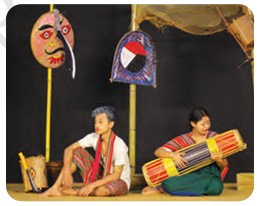
When props become characters in the play
Symbolism Using Light:
Lighting in theatre does more than illuminate the stage; it guides the audience’s attention and communicates emotions, moods, and hidden meanings. For example, bright light may symbolise happiness or hope, while dim or dark lighting can suggest sadness, fear, or mystery. By changing the colour, intensity, and direction of light, theatre artists can create atmosphere, highlight important moments, and make a performance more expressive and meaningful.
Intensity (brightness)
How bright or dim the light is affects the mood.
- Bright light: Clarity, revelation, happiness
- Dim light: Fear, secrecy, confusion, suspense
- Sudden blackouts: Shock, transitions, dramatic endings
Direction and angles
‘Where’ the light comes from changes the symbolic meaning.
- Footlight: Fear, supernatural effects
- Backlight: Mystery, silhouette, inner struggle
- Front light: Honesty, clear emotions, openness
Shadows
It is one of the strongest symbols in theatre.
- Long shadows: Fear, loneliness, internal conflict
- Soft shadows: Memory, nostalgia
- No shadows: Honesty, clarity, safety
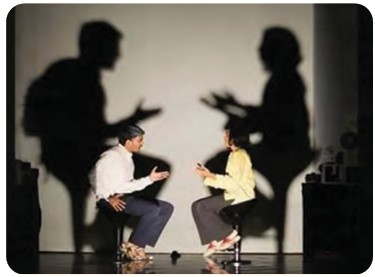
A play of shadows
What do you think it means?
The scene can convey several meanings depending on how the audience interprets the dance or combat and the highlighted ancestral photograph.
1. Family Conflict: The two characters may be fighting over a family property or an old dispute, while the photograph represents their ancestors and family traditions.
2. Battle Between Good and Evil: The dance or combat may symbolise the struggle between good and evil, with the ancestor’s photograph representing wisdom and justice.
3. Struggle Between Tradition and Modernity: The characters may represent traditional values and modern ideas, while the photograph symbolises the influence of the past on the present.
4. Honour and Responsibility: The characters may be fighting to protect their family’s honour, inspired by the legacy of their ancestors.
5. Inner Conflict: The combat may represent a character’s internal struggle between personal desires and family expectations.
6. Ancestral Blessings: The spotlight on the photograph may suggest that the ancestors are watching over the characters and guiding their actions.
7. Revenge and Justice: The characters may be involved in an old family rivalry, and the photograph may remind them of a past injustice that needs to be resolved.
8. The Power of the Past: The scene may show how past events, family memories, and inherited beliefs continue to influence people’s present lives.
These are only a few possible interpretations. The lighting, movements, expressions, and position of the photograph can change the meaning of the scene and encourage the audience to imagine different stories.
Designing Abstract Concepts for the Stage:
1. AI-Based Robot: Say No to Plastic
- Costume: A silver or green robot costume decorated with recycling symbols and pictures of trees.
- Props: A reusable cloth bag, a plastic bottle, and a sign saying “Reduce Plastic, Save Earth.”
- Make-up: Metallic face paint with green leaf patterns to represent technology working for nature.
- Movement: The robot can collect plastic waste, show reusable alternatives, and encourage people to protect the environment.
2. Talking Book: Problems of Youth and Gadgets
- Costume: A large book-shaped costume with colourful pages and words such as “Dreams,” “Health,” and “Knowledge.”
- Props: A mobile phone, a pair of spectacles, and pages showing the effects of excessive gadget use.
- Make-up: A book-themed face design with expressive eyes to make the character appear wise and friendly.
- Movement: The talking book can pretend to compete with a mobile phone for attention and encourage young people to read, exercise, spend time with family, and use gadgets responsibly.
Conclusion:
Symbols and metaphors are essential elements of theatre that give performances deeper meaning and emotional richness. They allow artists to express complex thoughts, feelings, and messages through visual images, sounds, movements, and objects rather than relying only on dialogue. Every element of a performance, including costumes, make-up, lighting, music, sets, and props, can become a powerful means of communication.
Colours can express emotions, costumes can reveal a character’s identity and social background, music can create a particular mood, and lighting can highlight important moments or suggest hidden meanings. Similarly, a simple prop, such as a lamp, may represent hope and knowledge, while a closed door may symbolise mystery, fear, or new opportunities. These creative choices encourage audiences to think, imagine, and interpret the performance in different ways.
Symbolism and metaphors also connect theatre with culture, traditions, history, and human experiences. In Indian classical theatre, the concepts of Rasa and Bhava help artists communicate emotions and create meaningful experiences for the audience. By carefully combining these elements, performers can transform ordinary actions and objects into extraordinary expressions of art.
Ultimately, symbols and metaphors teach us that theatre is much more than acting and dialogue. It is a language of images, emotions, imagination, and ideas. Understanding these elements helps us appreciate performances more deeply and inspires us to become more creative, thoughtful, and expressive theatre artists.