
Emotions Unveiled
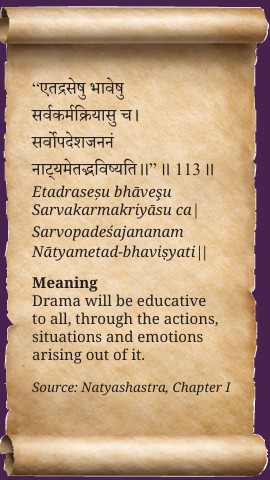
Introduction
Emotions Unveiled in theatre is an engaging way for students to explore, understand, and express different human emotions through acting, facial expressions, gestures, body language, voice, movement, and storytelling. Theatre allows performers to bring characters and situations to life while communicating feelings to an audience.
Definition
Emotions Unveiled in theatre means revealing and communicating the emotions of characters through acting, facial expressions, voice, gestures, body movements, and dramatic situations.
Exploring Emotions Through Theatre
1. Happiness
A smile, energetic movements, bright voice, and open body posture can communicate happiness.
2. Sadness
A slower voice, lowered posture, gentle movements, and appropriate facial expressions can represent sadness.
3. Anger
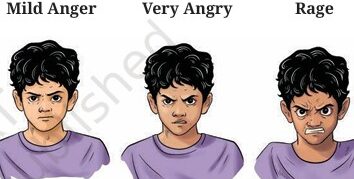
Strong but controlled voice, firm posture, focused facial expressions, and deliberate movements can communicate anger.
4. Fear
Changes in voice, cautious movements, facial expressions, and body posture can help portray fear.
5. Surprise
Wide eyes, sudden movements, changes in posture, and a quick vocal response can communicate surprise.
6. Excitement
Energetic movement, expressive voice, and lively gestures can portray excitement.
7. Calmness
Slow movements, relaxed posture, and a gentle voice can communicate a sense of calm.
Elements Used to Express Emotion
Facial Expression
The eyes, eyebrows, mouth, and overall face help the actor communicate feelings.
Voice
Tone, pitch, volume, speed, pauses, and emphasis can change the emotional meaning of dialogue.
Body Language
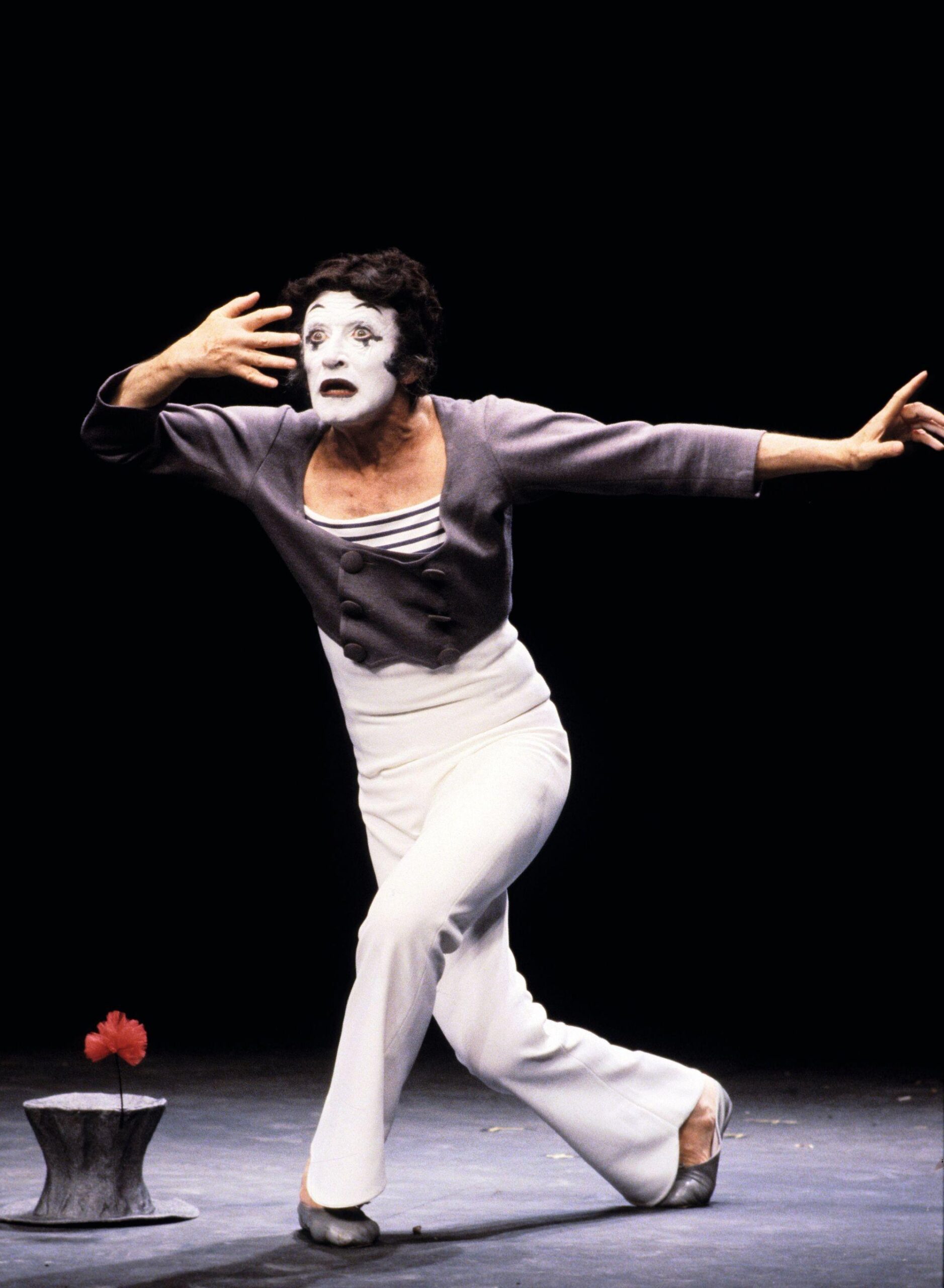
Posture, gestures, walking style, and movement help reveal a character’s feelings.
Movement
The speed, direction, and energy of movement can communicate different moods.
Dialogue
Words and the way they are delivered help the audience understand a character’s thoughts and emotions.
SCENE 1
Understanding Emotions
Understanding Emotions is an important part of theatre because emotions help actors bring characters and stories to life. An actor must understand what a character is feeling and then communicate that feeling naturally through facial expressions, voice, gestures, posture, and movement.
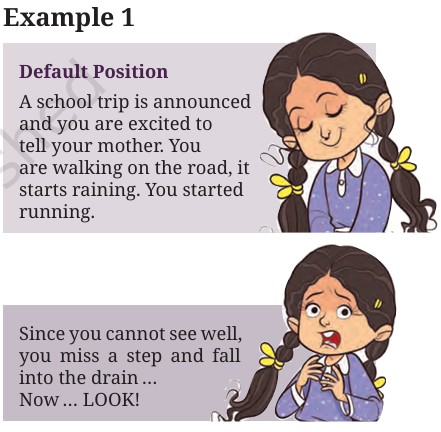
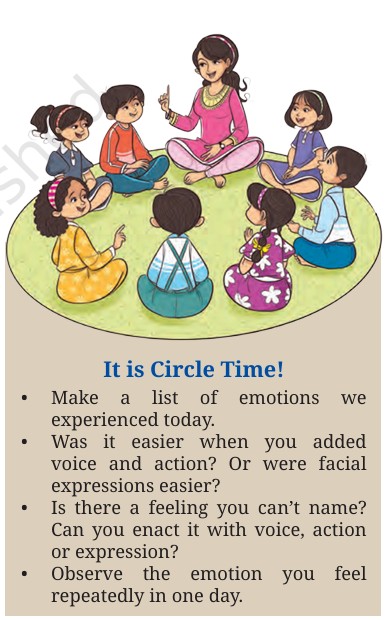
Instructions: The default position is — heads down. Eyes closed. Pay attention.
You will hear a story. Listen to it carefully. Start imagining. Be fully involved in the story. The story suddenly stops and you will hear the word — ‘LOOK’. You have to look up quickly and react to that situation in the story where it stopped.
Basic: Simple situation that ends in a dramatic reaction.
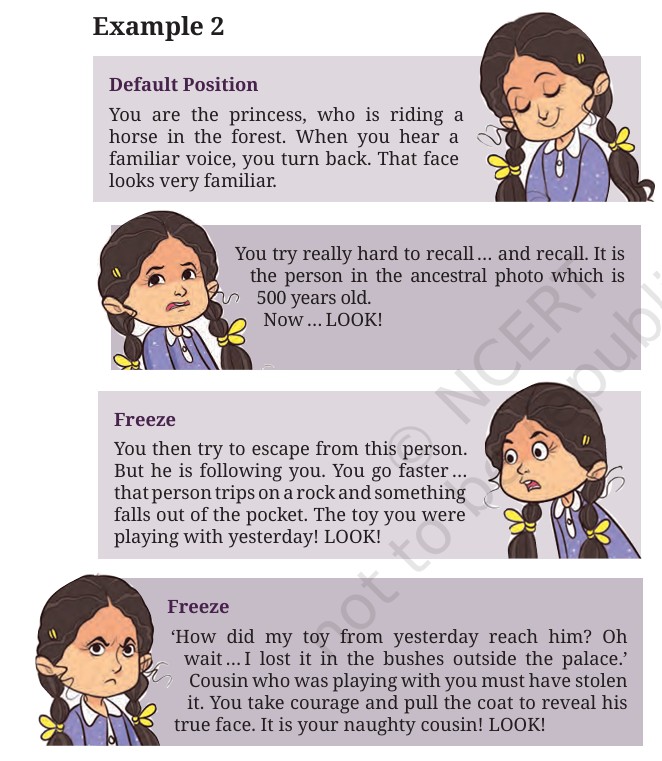
Advanced: Story continues after the first reaction. They FREEZE in the last reaction and continue to listen … and react at LOOK. Many twists and turns can be brought into the story, asking for a reaction at every twist in the tale!
Extended: Children volunteer to create stories of their own and narrate with ‘POSITION’, ‘FREEZE’ and ‘LOOK’, while the other children react.
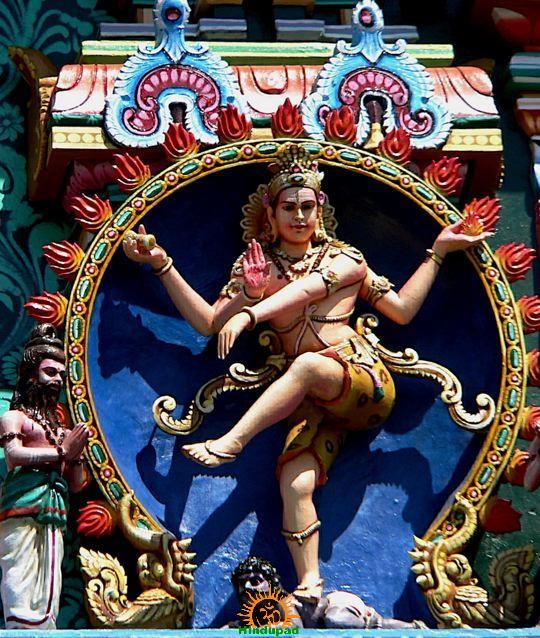
Rasa and Bhava in Indian Theatre
This is primarily done on the basis of two fundamental elements — rasa and bhava.
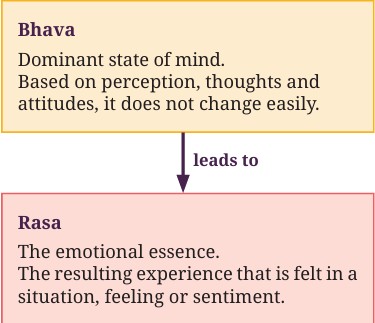
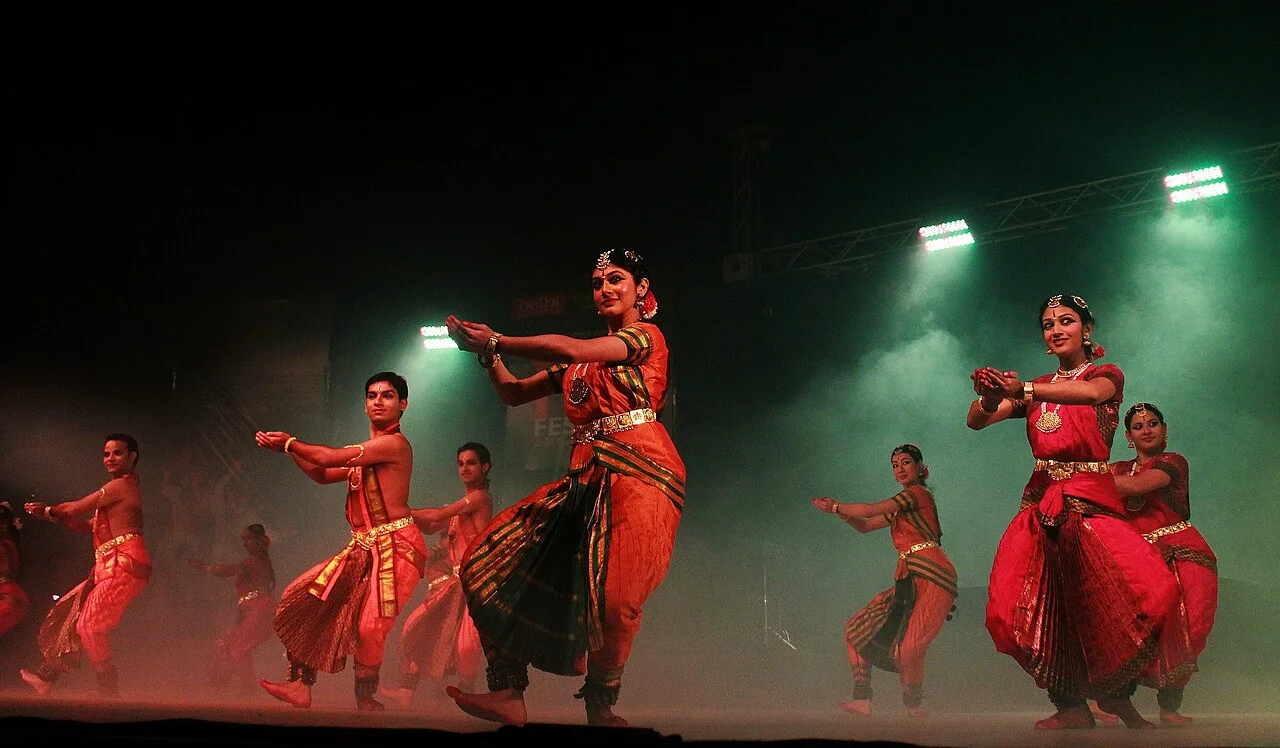
Indian theatre and classical performing arts are primarily based on two fundamental concepts: Rasa and Bhava.
- Bhava refers to the emotional state, feeling, or expression portrayed by the performer. Through facial expressions, gestures, body movements, and voice, the actor communicates the emotions of a character.
- Rasa refers to the aesthetic experience or emotional flavour experienced by the audience while watching a performance. It is the feeling or response that the performer’s expression evokes in the spectator.
Simple Relationship
Bhava → Expressed by the Performer → Rasa → Experienced by the Audience
For example, when an actor expresses love through facial expressions, gestures, and movements (Bhava), the audience may experience the aesthetic emotion of love (Shringara Rasa).
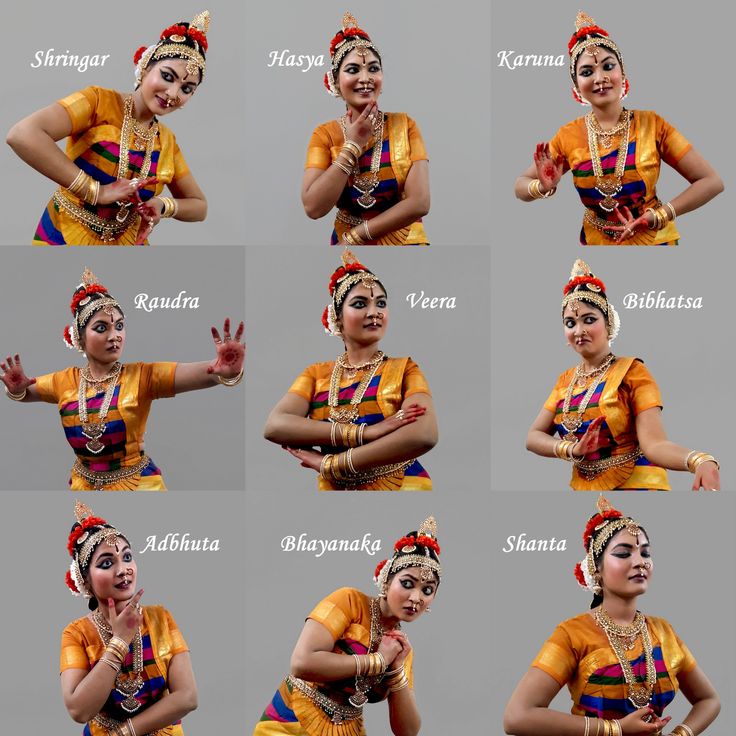
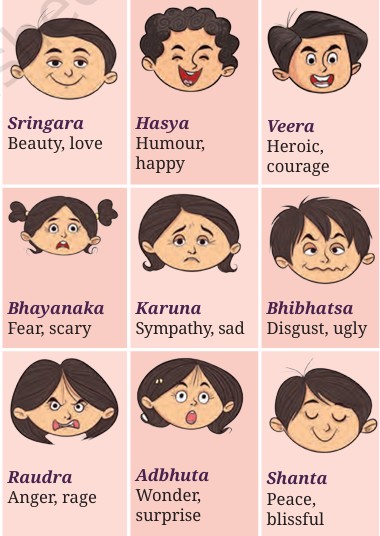
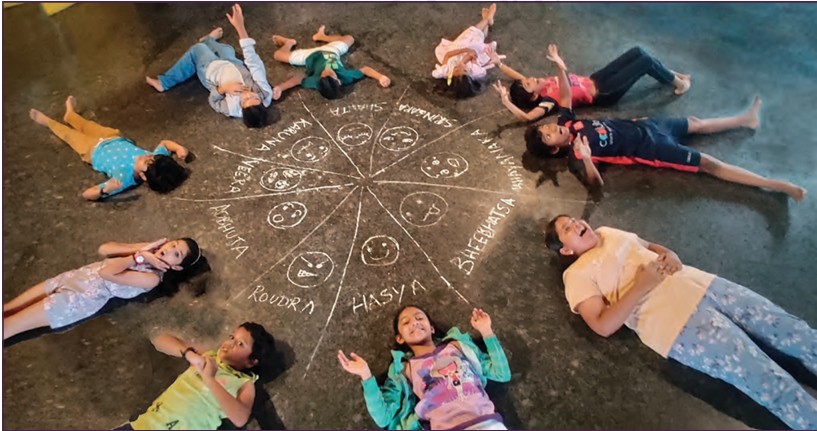
The Nine Rasas (Navarasa)
- Shringara – Love / Beauty
- Hasya – Laughter / Joy
- Karuna – Compassion / Sorrow
- Raudra – Anger
- Veera – Courage / Heroism
- Bhayanaka – Fear
- Bibhatsa – Disgust
- Adbhuta – Wonder / Amazement
- Shanta – Peace / Tranquillity
Thus, Bhava is the emotion expressed by the performer, while Rasa is the aesthetic emotion experienced by the audience. Together, they form a fundamental foundation of Indian theatrical and performing arts traditions.
Examples
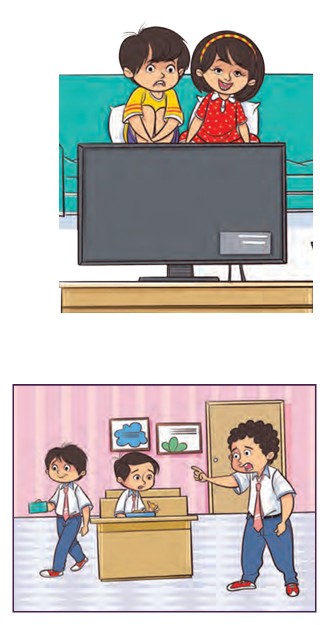
1. You are watching a match of your favourite sport with your friend. Your team wins. You are thrilled. Your friend is happy but not very excited because his favourite player did not score well.
2. You are having lunch with your friend. A bully in class comes and makes fun of both of you, laughs and goes away. You get irritated, but put it away and say ‘who cares’. You notice that your friend is crying in a corner, feeling very hurt.
In both these cases, though the situations are the same, what emotion and experience rise (rasa) depends on what basic attitude or thoughts you have (bhava).
The great rishis of India, had thought of this in their work on emotions and the human mind. Based on their study, they classified the rasas (our experience) into navarasas (nine rasas).
Navarasa Game
Navarasa Game is an interactive theatre activity designed to help students understand and express the nine Rasas (Navarasa) of Indian performing arts. Through facial expressions, gestures, body language, voice, and short acting exercises, students learn how emotions can be communicated to an audience.
Play this fun game to get familiar with the navarasas. Draw the navarasas in a circle in the centre of the room. All children go around the circle when the music is played. The music stops and the rasa that is nearest to the child should be expressed.
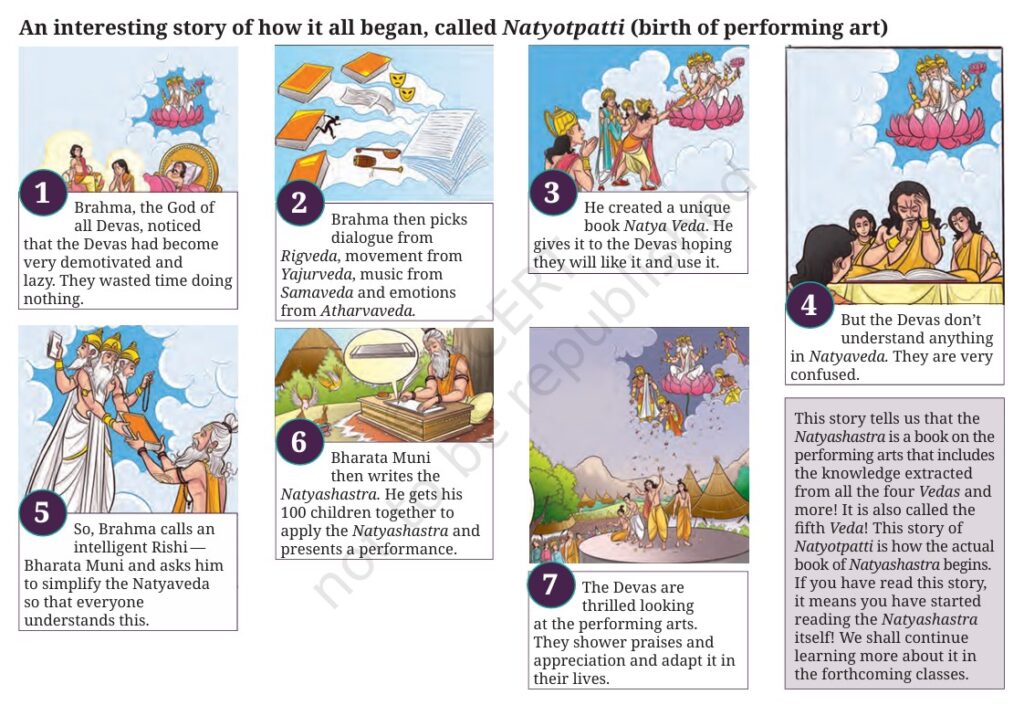
This concept of rasa, is a very small part of the big work on performing arts. It has everything from the most basic idea of how to read a story to the possibility of attaining moksha through the arts! It speaks about everything including make-up, costume, lights, music, dance, rehearsals, discipline, safety and responsibility of the arts towards the audience. This great work on the performing arts is called Natyashastra, written by Bharata Muni.
Scene 2:
Exploring Emotions
Exploring Emotions is an important theatre activity that helps students understand, recognize, and express different feelings through facial expressions, gestures, body language, voice, movement, and acting. Emotions play an important role in bringing characters and stories to life.
Different Emotions
Students can explore emotions such as:
- Happiness – joy, excitement, and pleasure
- Sadness – sorrow, disappointment, or loneliness
- Anger – frustration or irritation
- Fear – worry, nervousness, or uncertainty
- Surprise – reaction to something unexpected
- Love – affection, care, and kindness
- Courage – confidence and bravery
- Wonder – curiosity and amazement
- Peace – calmness and tranquillity
Rasa and Bhava
In Indian performing arts, emotions are closely connected with the concepts of Bhava and Rasa.
- Bhava is the emotional state or feeling expressed by the performer.
- Rasa is the aesthetic experience or emotional response experienced by the audience.
Bhava → Expression by Performer → Rasa → Experience of Audience
Instructions: The default position is, heads down, eyes closed, pay attention.
Listen to the story carefully. Be fully involved in the story. The story suddenly stops and you will hear the word — ‘LOOK’. You have to look up quickly and react to that situation with voice and action.
Basic: Simple situation that ends in a dramatic reaction.
Advanced: Story continues after the first reaction. They FREEZE in the last reaction and continue to listen … and react at LOOK. Many twists and turns can be done in the story, asking for a reaction at every twist in the tale!
Extended: Children volunteer to create stories of their own and narrate with ‘POSITION’, ‘FREEZE’, and ‘LOOK’, while the other children react.
The oldest known origin of performing arts outside of India, is the Greek Theatre, around the fifth century BCE.
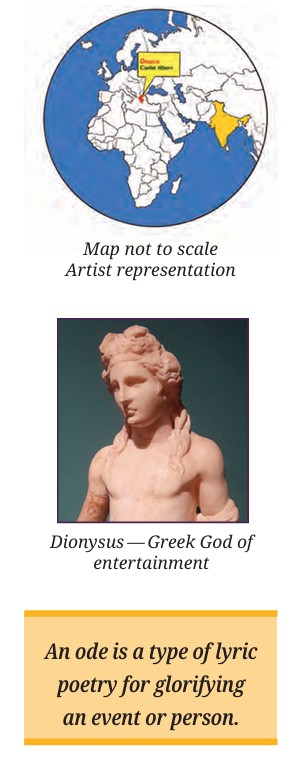
Dionysus
Dionysus was an important deity in ancient Greek religion and mythology, particularly associated with wine, celebration, fertility, theatre, music, and ecstatic worship. He became closely connected with the development of Greek dramatic festivals and is therefore an important figure when studying the history of theatre.
Dionysus and Theatre
Dionysus played a significant role in the development of ancient Greek theatre. Festivals held in his honour included dramatic performances, particularly tragedy and comedy. These celebrations brought performers and audiences together in large public events.
One of the most important festivals was the City Dionysia, held in Athens. Dramatic competitions were an important part of the festival.
Dionysus and Greek Drama
Theatre developed within a cultural environment where performances, music, dance, poetry, and religious celebrations were closely connected. During festivals associated with Dionysus, playwrights and performers presented dramatic works before large audiences.
Greek drama eventually developed major forms such as:
- Tragedy
- Comedy
- Satyr plays
These forms influenced the development of Western theatre.
The origin of the word comedy, similar to tragedy, is from the Greek terms — ‘Komos’ (enjoy) and ‘Odia’ (song). Comedy dramas have a happy ending. These include elements of humans, animals and Gods in their plays. They also included dance sequences and a dialogue directly with the audience or the playwright.
Observe this picture of a Greek theatre performance. What do you notice? All three actors are wearing masks.
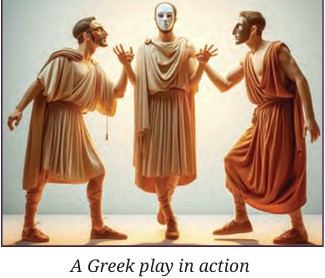
Masks were an important part of Greek theatre. This is also linked to the reason why they preferred tragedy.
Tragedy is actually serious and sad. Did the Greeks like to be sad and cry all the time? No. It helped them to release their suppressed emotions and pain. This is called catharsis. You will learn more about it in higher grades. Masks helped in relating to the character and not the person acting.
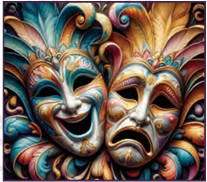
Tragedy and Comedy
So the next time you see these masks, you know the story behind it.
Activity — Masks and Emotions
Let us explore the emotions through masks. But masks cover the face and the face is the way to show emotions. How can masks show emotions? Masks are emotions and characters that you can wear and act! Though there are numerous types of masks, we will explore two of them. Be careful while using scissors and glue, use them under the supervision of your teacher!
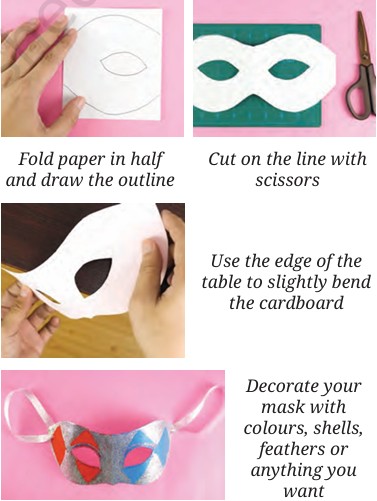
Cardboard Masks (half): (Cardboard, scissors, glue and colours).
• Draw the layout of the face, make sure you get the symmetry right. A simple way to achieve a symmetrical design is to fold the paper (see pictures).
• Mark the eyes and nose, this way both sides will come symmetrical, add different shapes and designs to bring out the eyes, nose and ears, or any other feature as desired.
• Add extra features creatively with coloured paper and glue.
• To make the cardboard according to the shape of the face, make sure you bend it, cut out an angle and then paste it.
• Make two holes near the ear area of the mask to tie a thread or elastic.
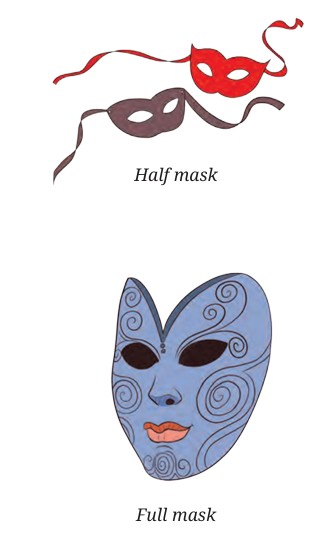
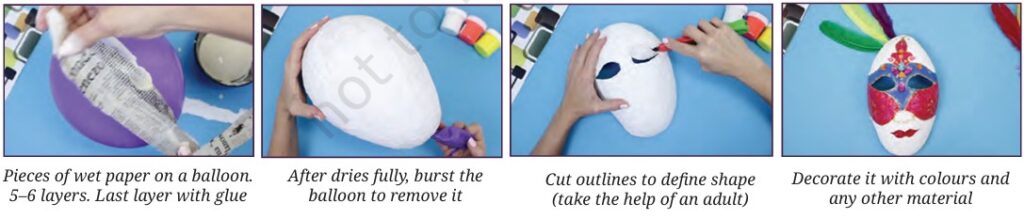
Paper Masks (full): (old newspaper, one balloon, glue, scissors, colours).
• Tear pieces of paper (newspaper or regular paper), wet it in water and apply it smoothly on the surface of the balloon.
• Cover half of the balloon as in the picture. The paper must overlap on the edges. Reapply layers of wet paper to bring out the different contours of the face.
• Allow it to completely dry. This process of applying a wet layer of paper, waiting for it to dry, reapplying layers and getting the desired shape might take around three days.
• Burst the balloon and cut the paper to define the shape.
• Paint the mask according to the characters, use different colours to bring out different emotions and expressions.
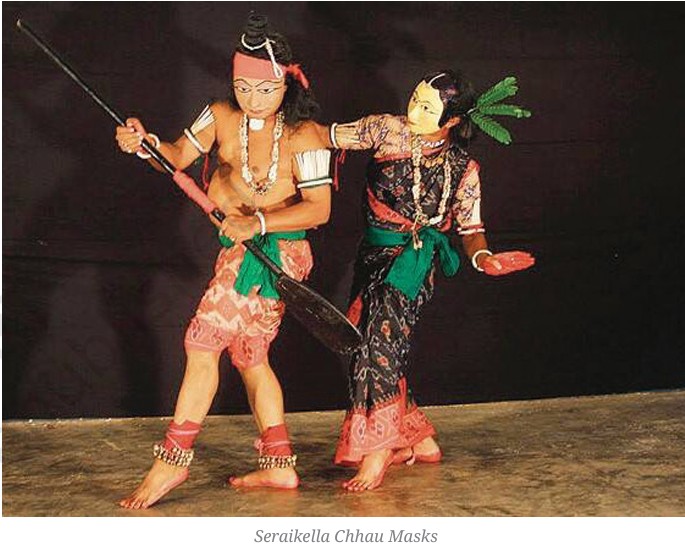
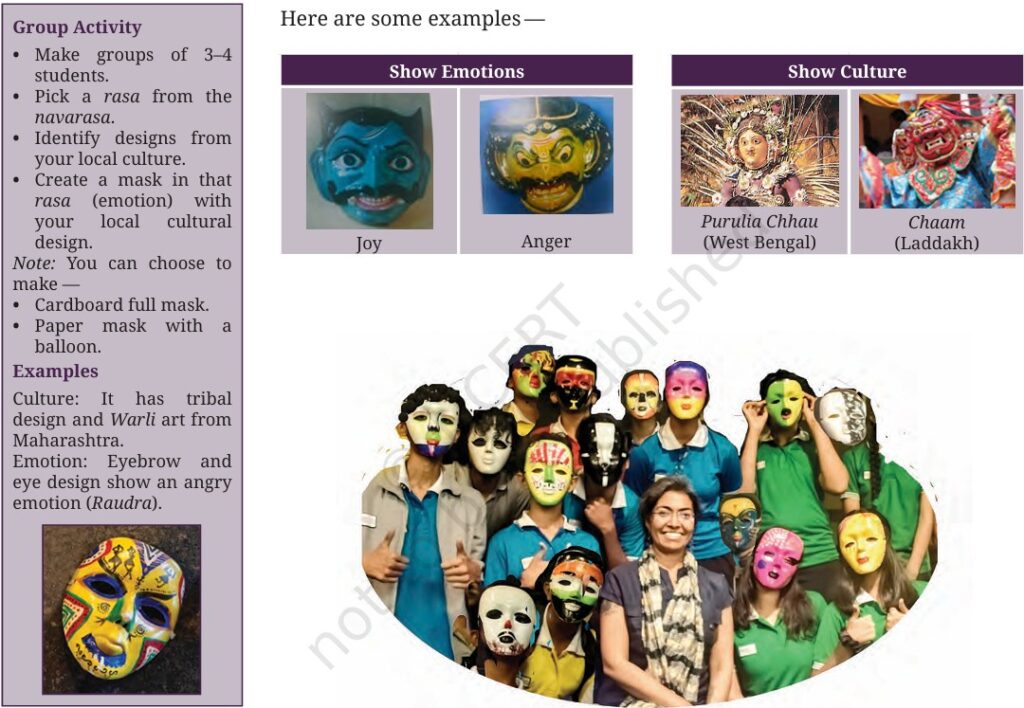
There are different purposes that a mask serves. The use of masks in performing arts is diverse and spans across various cultures and theatrical traditions. Whether conveying characters, cultural symbols or deeper meanings, masks are a powerful and versatile tool in the world of performance. India has more than 50 types of classical masks.
Conclusion
Emotions Unveiled! shows that feelings can be communicated in many creative ways. Theatre, dance, music, and visual arts provide powerful tools for expressing emotions and understanding the feelings of others. By exploring emotions through artistic activities, students can develop confidence, creativity, empathy, communication skills, and a deeper understanding of human expression.