
Introduction
Stories of Shadows and Strings — Puppetry introduces students to the fascinating world of puppetry, where stories are brought to life through puppets, movement, voice, light, music, and imagination. Puppetry is an important performing-art tradition found in many cultures and has been used for storytelling, entertainment, education, and cultural expression.
What Are Shadows and Strings?
Shadow Puppetry
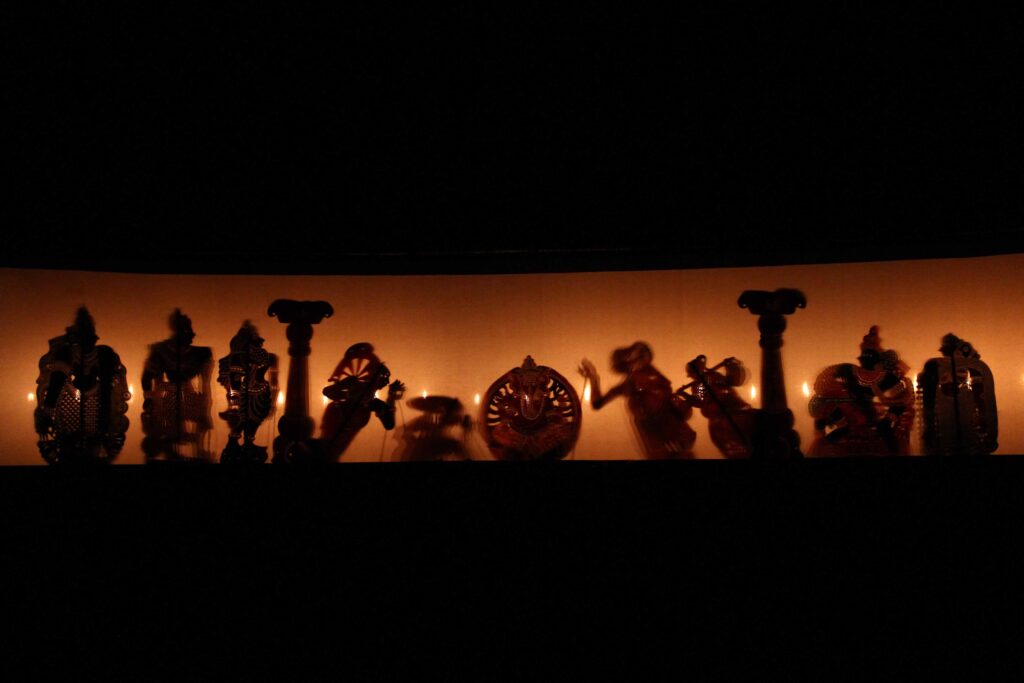
Shadow puppetry uses light, puppets, and a screen to create silhouettes or shadows. The puppets are placed between a light source and the screen, allowing their shadows to appear before the audience.
String Puppetry
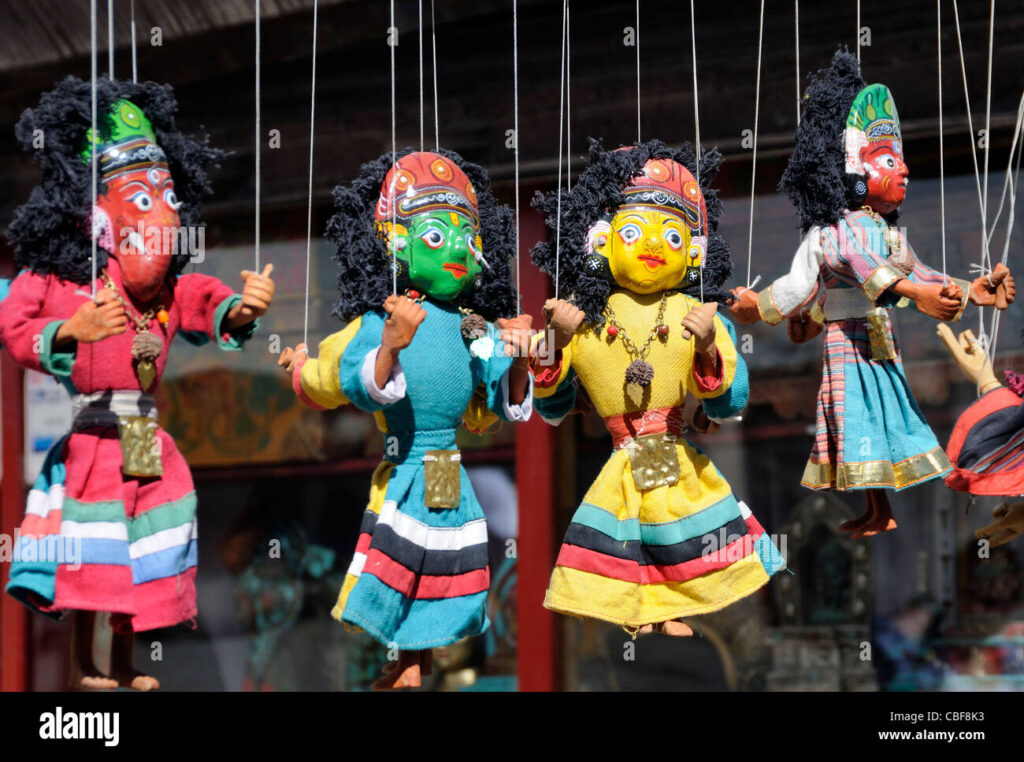
String puppetry, also called marionette puppetry, uses strings or threads attached to a puppet. The puppeteer controls the strings to create movements such as walking, turning, dancing, or bowing.
Other Types of Puppets
Students can also explore:
- Hand Puppets – Controlled using the hand.
- Finger Puppets – Small puppets worn on fingers.
- Rod Puppets – Controlled using rods or sticks.
- String Puppets – Controlled using strings.
- Shadow Puppets – Used to create silhouettes.
- Stick Puppets – Made using simple sticks and craft materials.
All of us have played with dolls, cars and rockets, creating stories and characters, right? We have made our little toy save someone in distress or have an adventure in a chocolate dreamland. This is exactly what puppetry is!
Puppetry is the art of using inanimate figures or representations to create a performance. Puppeteers manipulate these figures through various techniques such as hand movement, strings or rods, to tell stories, entertain or convey messages in front of an audience.
SCENE 5: Hand Puppetery — Finger, Socks and Glove
Puppets come in all shapes and sizes. There is no specific rule about what a puppet should look like. It can be as unique as your creative imagination. Let us start with the simplest of all — your hand! Make simple faces of the characters you want to create (from your family or friends) and make them talk!
Alternatively, you can also draw your hand on a paper and create characters.
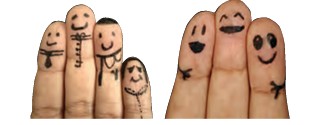
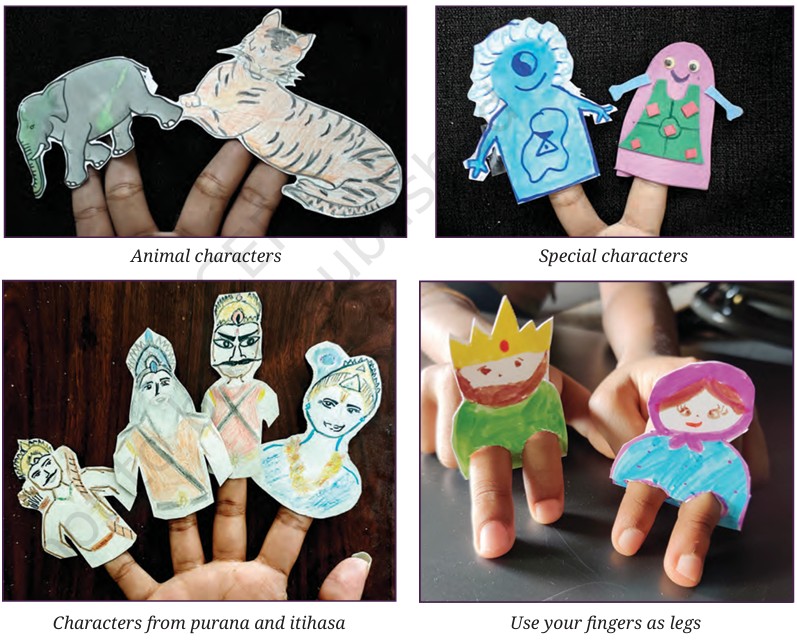
Let us now go a step further and create simple finger puppets. Use paper to create a simple cup with scissors and glue, wear it on
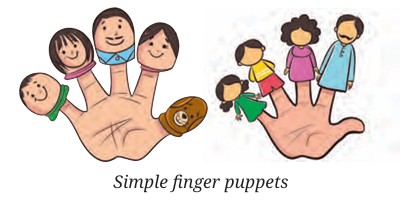
your finger, draw different faces, hands and legs. Now, you can give these characters a name and create a story of your own!
Since there is no limitation or rule on how the puppet has to be made, try different ways to make your puppet come alive!
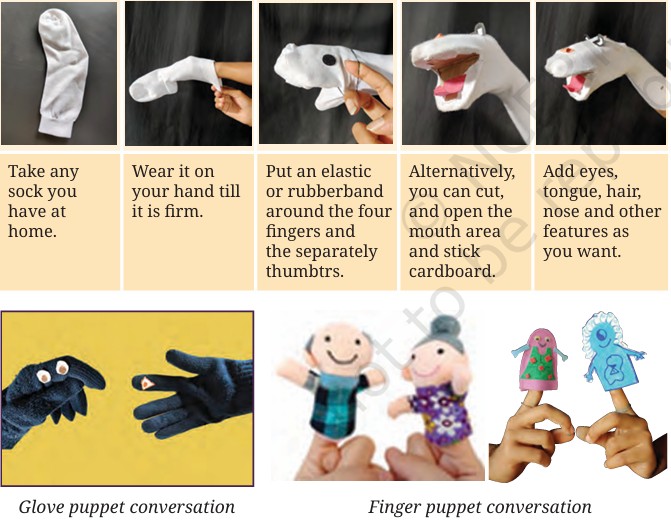
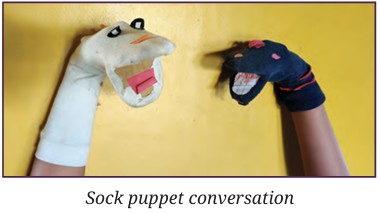
Sock and Glove Puppets
Another way to make puppets which adds more character to your imagination — sock or glove puppet. Here is a step by step guide to make a simple sock puppet of your own. Give it a name and create your own conversation!
Activity
Create two characters. Use your imagination. It can be people, animals or imaginary characters like aliens. You can also create combinations like a tiger and a ghost, or an old man and a dog.
List out characteristics. Give a name and emotion — are they funny, angry or sad?, assign a style of talking.
Write a simple conversation. Remember the three parts of a script? Make sure that you have a situation and a conflict where these two characters talk.
Showtime
Present this show in your class or to your family. You are now a puppeteer!
Hand Puppets in India
Traditions
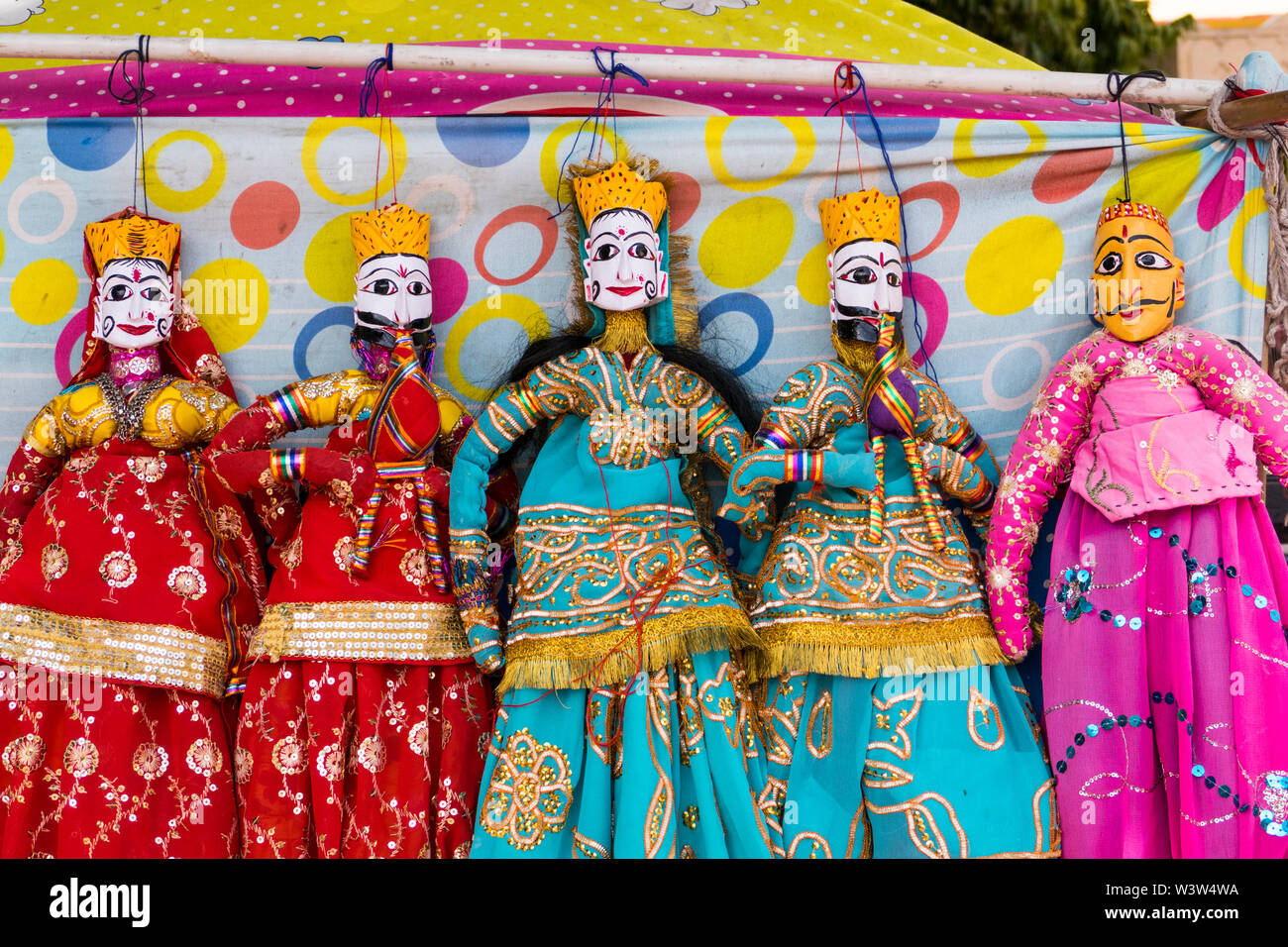
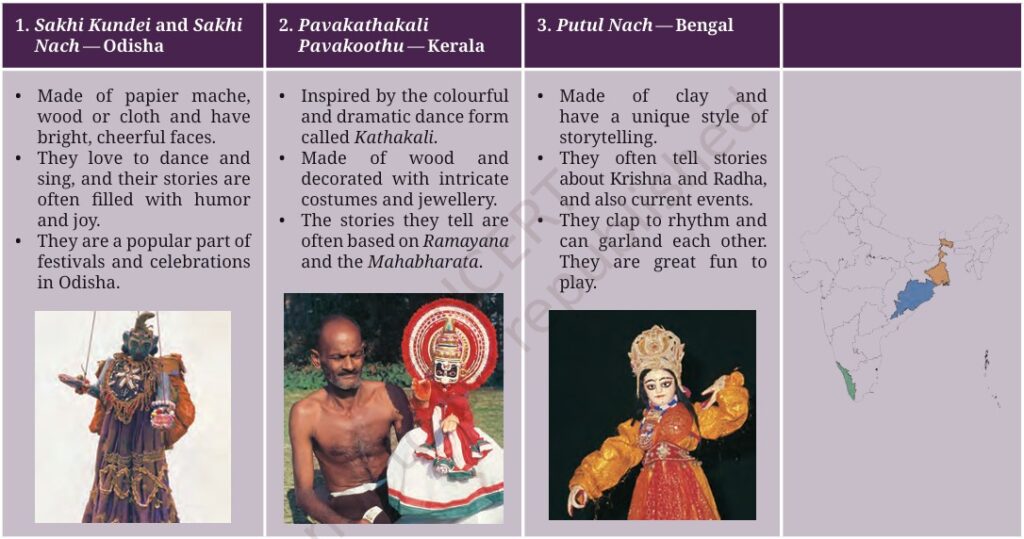
India has many traditional puppetry traditions, including:
- Kathputli – Rajasthan
- Tholu Bommalata – Andhra Pradesh and Telangana
- Togalu Gombeyata – Karnataka
- Pavakoothu – Kerala
- Putul Nach – West Bengal
- Gombeyatta – Karnataka
These traditions use different types of puppets, techniques, stories, music, and performance styles.
While you are thinking of new ideas for your next puppet show, let us explore different states of our country associated with puppetry.
SCENE 6: Stick and Shadow Puppetry
This is a form of puppetry that requires some basic set up. It can be done by you either in the class or at home. You will need some basic materials that you can find around you.
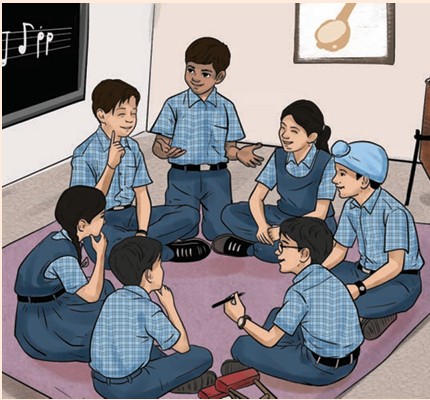
While you could do hand puppets and sock puppets on your own, these two forms require you to work in teams. So, go find your gang of puppeteers!
Class is to be divided into teams of five to six children. Each team will decide on a concept or a story they want to narrate. Each group will create a simple script with three to four characters in it. The team then works together to make the puppets.
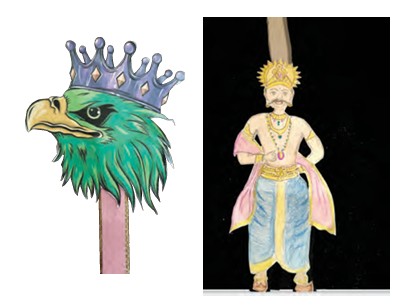
Stick Puppets
Stick puppets are the easiest to make and will also let children have lots of fun.
• Draw and colour pictures of all the characters in your story and cut them to shape.
• Find sticks that are at least six inches or longer. It can be twigs from a tree, ice-cream sticks or even cardboard strips that are stiff.
• Glue the pictures of the characters you have drawn to one end of the stick such that, you hold one end and the puppet is on the other end (see picture). Your stick puppets are ready!
Puppet Show Frame
Cut out a cardboard in a simple rectangle, big enough to fit in all the characters you have created.
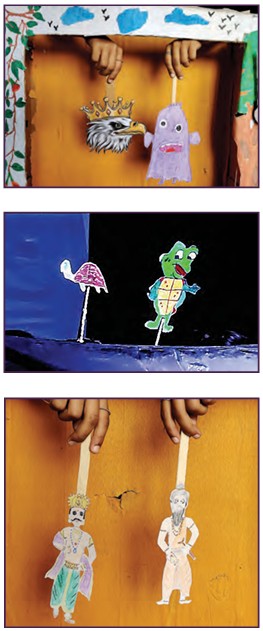
Optional: You can decorate the frame with suitable pictures according to your script.
You can also add a suitable background picture of a forest or a street, etc.
You are ready for the show! Each team member takes up one character and the team enacts the puppet show.
Now that you have the stick puppetry show ready, shadow puppetry is just one step away.
Shadow Puppets
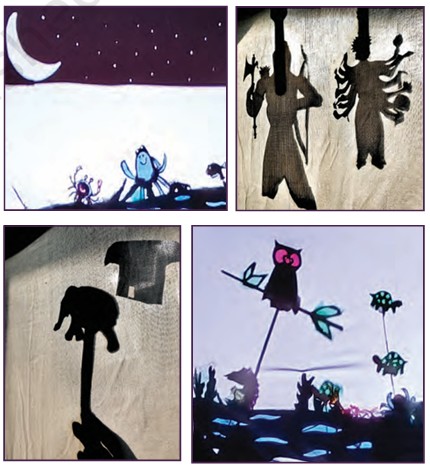
You can add a white cloth on the cardboard frame and use a pointed single source of light, like a torch. Some points to keep in mind for shadow puppetry —
• Make sure the light doesn’t spread too much as the sharpness of the shadow
depends on it. The light should be placed on a stable surface, so it doesn’t move.
• The outline of the character is the most important as the colour, facial features, etc., are not visible in the shadow. The outline should be able to tell your audience the character. As you try working your way by creating stories through shadow puppetry, let us find out how much progress we have made as a country, in the art of shadow puppetry.
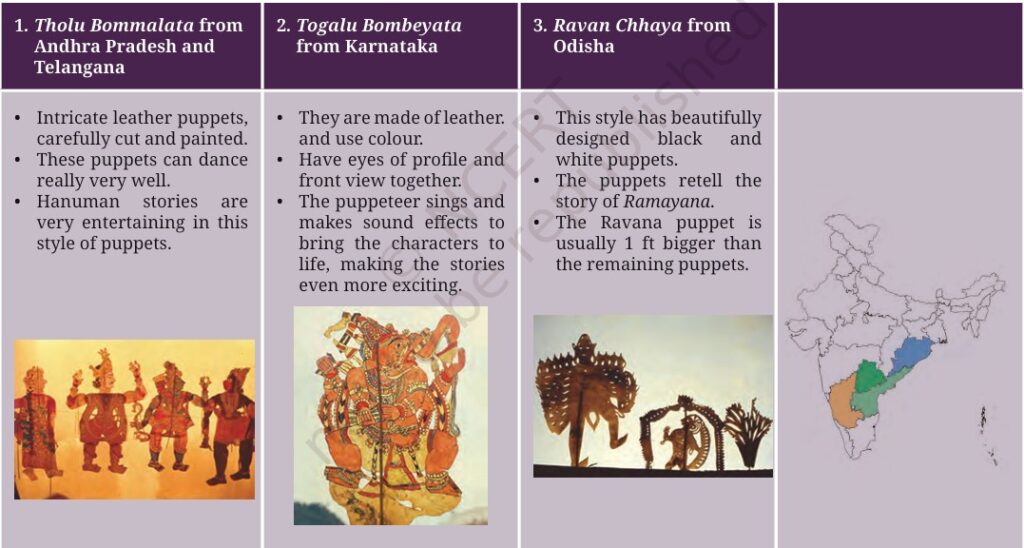
Stick and Shadow Puppets in India
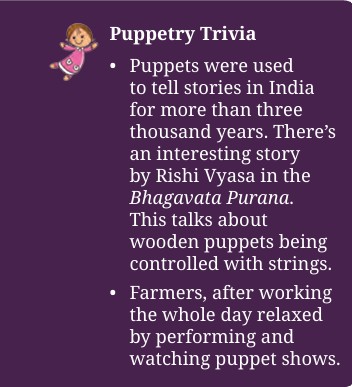
Shadow puppetry in India has existed for more than 2000 years. Stories of Rama and Krishna have been the most popular ones. In the following pictures, observe the level of detailing and the intricate designs of each puppet. This is how talented our artisans were!
Activity — Make your own puppet show!
Puppets — ready
rame — ready
Backdrop — ready
Script — ready
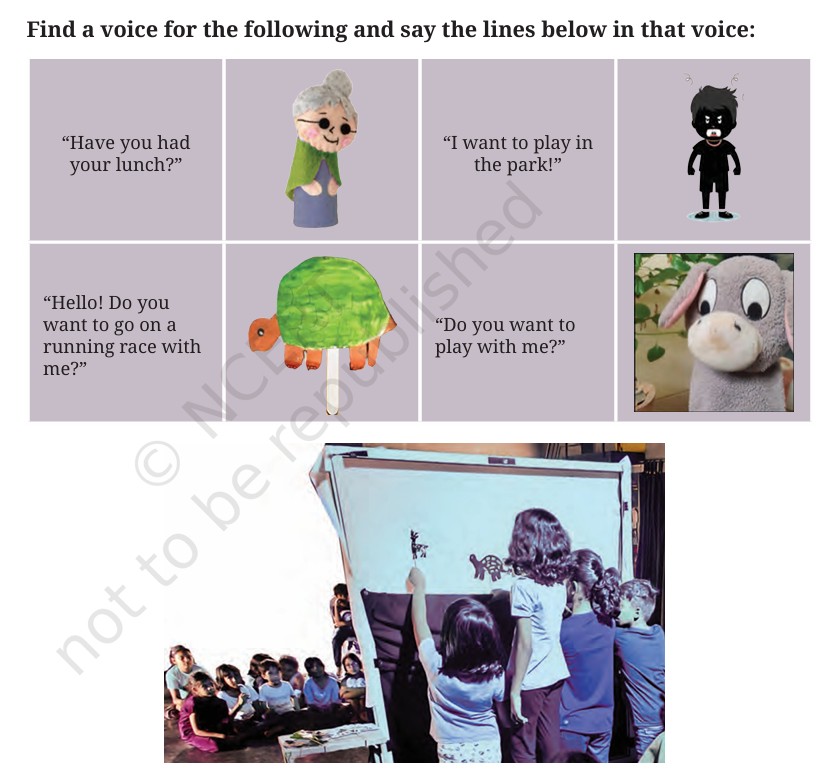
But who will deliver the dialogues? Do Puppets talk? No! Can you talk? Yes! But that will sound like you … How will you ‘sound like’ your character?
Answer: Voice modulation
Voice modulation in puppetry is giving your puppet different voices to match its feelings or the story it is telling. So, when your puppet is happy, you can make your voice sound cheerful and high-pitched. If it’s telling a spooky tale, you can lower your voice to make it sound mysterious just like how you play with different voices when you pretend to be different characters.
You can do the same with your puppet to make the show more exciting and fun!
This is very important when you are playing two characters yourself. Won’t it be boring to hear the same voice for both characters, which also sounds like your regular voice? So, both characters should sound different from each other and from your own voice.
This is true for any kind of puppetry, whether you do sock puppetry, stick puppetry or shadow puppetry. You have to work on your voice. Remember, it has to suit the character the puppet is representing!
Example — An old man cannot have a high-pitched squeaky voice! Keep practicing the lines from your script for the puppet show with the puppets you have made. You are now ready to put up the puppet show. Get your audience … ready … GO!
Conclusion
Stories of Shadows and Strings — Puppetry brings together theatre, storytelling, visual arts, music, movement, and imagination. Through shadow puppets, string puppets, hand puppets, and other forms, students can discover how simple objects can become expressive characters. Puppetry provides a creative way to explore stories and emotions while developing artistic skills and appreciation for traditional performing arts.