
Defination
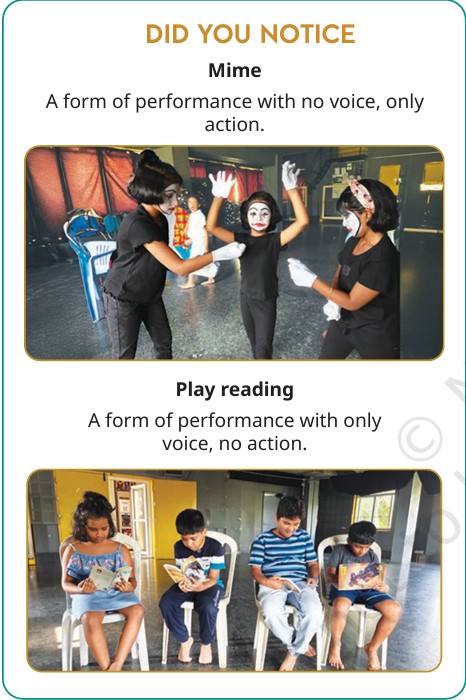
Play Reading is a form of theatre in which actors or students read the roles of different characters from a written script aloud, using voice, diction, intonation, pitch, volume, pace, pauses, and expression to communicate the story and emotions. It brings the written words of a play to life through expressive reading, without requiring actors to memorise the entire script or use elaborate costumes, sets, or props.
Introduction
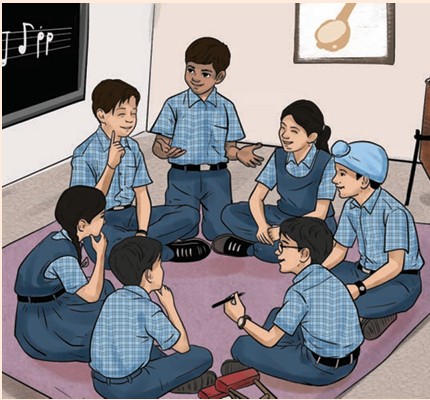
Words can do much more than tell us a story. When we read them with the right voice, expression, and emotion, they can make us imagine people, places, actions, and events. Play reading is a wonderful way to bring written words to life. It allows us to explore a story by reading the dialogues and parts of different characters aloud.
In play reading, each reader takes the role of a character or narrator. The way we use our voice, tone, volume, pace, pauses, and facial expressions can help communicate the character’s feelings and personality. A happy character may speak with excitement, while a frightened or worried character may use a softer or slower voice.
Play reading does not require elaborate costumes, sets, or memorising the entire play. The main focus is on understanding the characters, listening to others, and expressing the meaning of the words. It also encourages students to work together and respond naturally to one another.
Through play reading, literature becomes a shared performance. Students develop confidence, communication skills, imagination, listening skills, and an appreciation for theatre. Most importantly, they discover how words on a page can become lively when they are spoken, felt, and expressed.
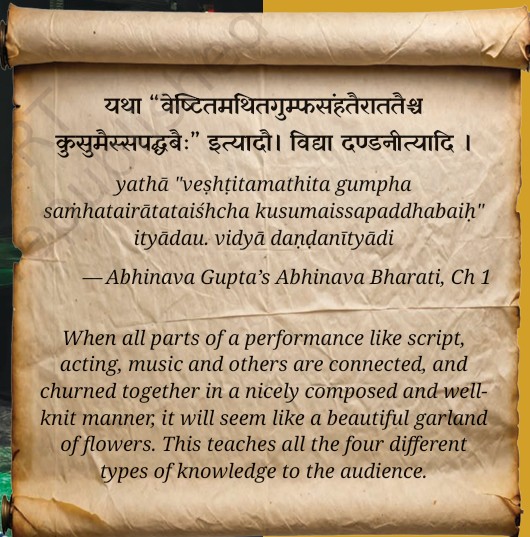
From Script to Stage: Bringing Words Alive Through Rehearsed Reading
Reading the script of a play is usually the first step towards creating a full-fledged theatre production. But did you know that this first step can itself become a complete performance?
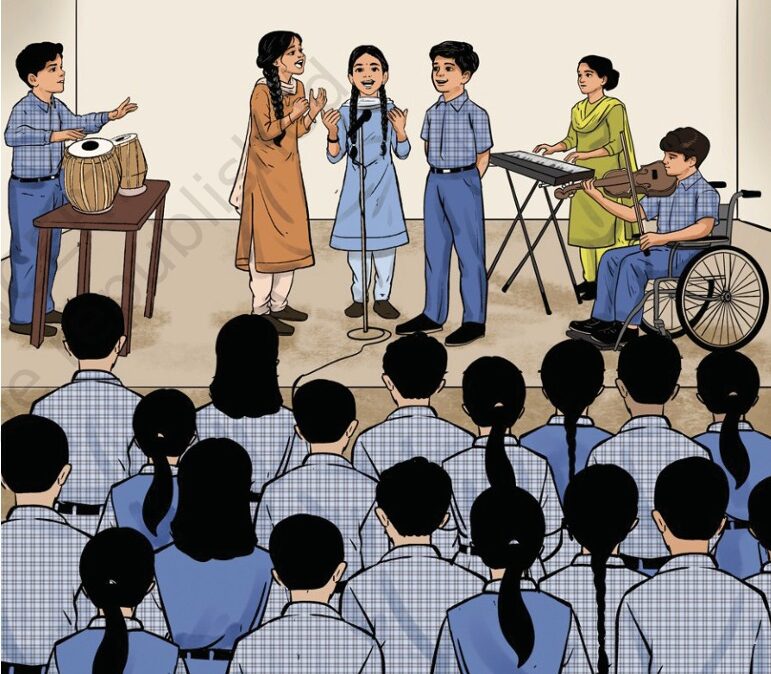
Rehearsed reading, also known as stage reading, is a form of theatre in which actors read the script aloud as a performance. Instead of memorising every line and using elaborate costumes, sets, and props, the actors focus on their voices, expressions, pauses, movements, and interaction with one another.
Stage reading allows the audience to experience the story, characters, emotions, and dialogue while the script remains in the actors’ hands. It is a simple and creative way to bring written words to life on stage.
REHEARSED READING
Rehearsed reading is a form of theatre performed without elaborate sets, props, costumes, or make-up. The actors usually wear regular clothes and sit or stand on the stage while reading the lines of their characters aloud.
However, rehearsed reading is much more than simply reading aloud. It is an art that brings characters, emotions, and stories to life through the voice and expression. Every word, pause, tone, and expression is important. The actors use changes in voice, pace, volume, and emotion to help the audience understand the characters and the story.
Because there are few visual elements, the audience is encouraged to use its imagination. The spoken words create images of places, people, actions, and situations in the minds of the listeners.
Rehearsed reading also creates a direct connection between the actors, the text, and the audience. Without elaborate sets or costumes, the focus remains on the power of the script and the skill of the performers. In this way, a simple reading can become an engaging and meaningful theatrical experience.
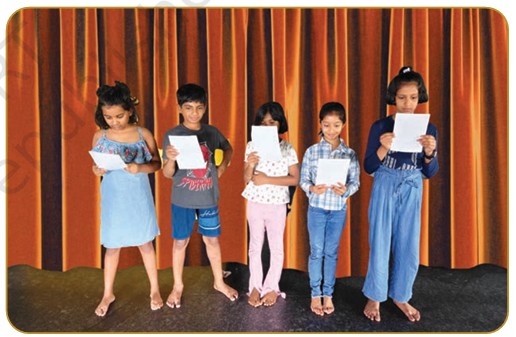
You may think it sounds simple—“That’s so easy… I can do it!” Of course, you can! But rehearsed reading also requires hard work, regular practice, and careful preparation.
The main difference is that the effort is focused on perfecting your voice, expression, timing, and understanding of the character. Every line needs to be spoken clearly and with the right emotion. Actors must practise their pauses, tone, volume, pace, pronunciation, and reactions to other characters.
Even though the actors may simply be sitting or standing with their scripts, their voices and expressions must help the audience imagine the characters, places, actions, and emotions. With practice, the script becomes more than words on a page—it becomes a lively theatrical experience.
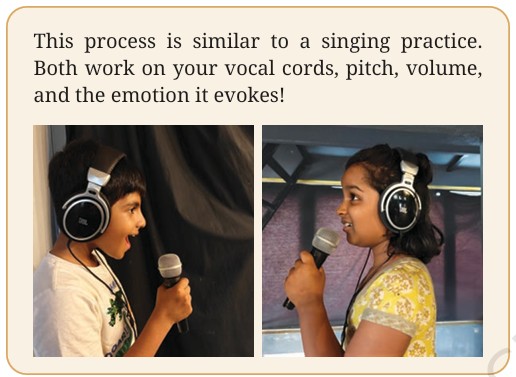
Interpreting characters and emotions is an important part of rehearsed reading. Actors remain in character throughout the reading and use their voices to express the character’s feelings, thoughts, and intentions. They put their energy into making every dialogue sound natural, meaningful, and expressive.
Sounds interesting? Let us try a few activities and exercises that can help you become a voice actor!
Since this style of acting focuses primarily on speech and dialogue delivery, the activities and exercises will focus on developing the skills needed to make speech clear, expressive, and engaging. We will work on improving voice modulation, pronunciation, expression, emotions, pauses, pace, and dialogue delivery.
We will work on improving —
- Clarity in speech
- Voice and diction
- Emoting through speech
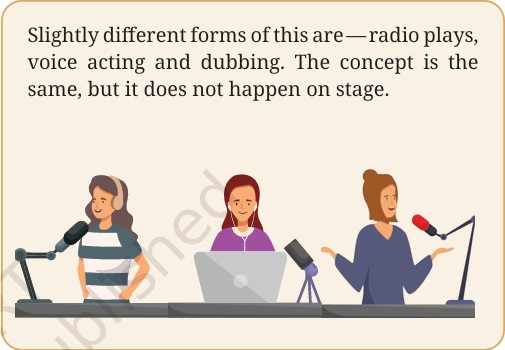
All these aspects of voice acting depend on the human body. Unlike some other forms of performance, we do not need special equipment or instruments to create the main effects. Our body itself acts as an important instrument for producing and shaping the voice.
So, let us first understand how the human voice is produced.
Many of us think that our voice comes only from the vocal cords. In reality, producing speech involves several parts of the body working together. Air from the lungs passes through the voice box (larynx), where the vocal folds vibrate and create sound. This sound is then shaped and modified by the throat, mouth, tongue, lips, and nasal passages to produce different speech sounds and voices.
The way these parts work together allows us to change our pitch, volume, tone, rhythm, and quality of voice. By learning how our voice is produced, we can use it with greater control and expression during rehearsed reading and other forms of performance.
THREE VOICE SUBSYSTEMS
| Subsystem | Voice Organ | Role in Sound Production |
| Air pressure system | Diaphragm, chest muscles, ribs, abdominal muscles and lungs | Provides and regulates air pressure to cause vocal cords to vibrate |
| Vibratory system | Voice box (larynx) and vocal folds (or vocal cords) | Vocal cords vibrate, changing air pressure to sound waves producing ‘the sound of the voice’ |
| Resonating system | Vocal tract: throat (pharynx), oral cavity, nasal cavities | Changes the ‘buzzy sound’ into a person’s recognisable voice |
Vāchika Abhinaya
Understanding how the human voice is produced can help us develop better voice control. It enables us to create the appropriate voice for a particular character, emotion, or line in a script. Pitch, volume, tone, rhythm, and emotional expression can be controlled through the coordinated use of different parts of the body involved in speech.
In the Nāṭyaśāstra, the use of speech and language as a means of expression is known as Vāchika Abhinaya. The word Vāchika refers to speech or language. It includes the use of spoken words, dialogue, and other vocal elements to communicate meaning and emotions during a performance.
Vāchika Abhinaya is not limited to theatre. It can also be seen in other performing arts where language or singing is used. For example, in dance, songs, spoken words, and lyrical expression can contribute to Vāchika Abhinaya.
Through Vāchika Abhinaya, performers use their voices to communicate characters, emotions, ideas, and stories, making the performance more expressive and engaging.
ACTIVITY 1.1: CLARITY IN SPEECH
Tongue Twisters: Improving Speech Clarity
Clear speech depends on how well we pronounce each syllable and how distinctly we speak each word. Even experienced speakers may sometimes fumble, stutter, or run words together while speaking. Regular practice can help improve clarity and confidence.
One useful way to practise difficult sounds and word combinations is through tongue twisters. Tongue twisters are phrases that contain similar or repeated sounds, making them challenging to pronounce quickly and accurately. Practising them regularly can improve pronunciation, articulation, speech clarity, and speaking fluency.
Begin by reading a tongue twister slowly and carefully. Focus on pronouncing every sound clearly. Once you can say it correctly, gradually increase your speed. Do not sacrifice clarity for speed. If you make a mistake or stumble over the words, start again and keep practising.
With patience and regular practice, difficult sounds become easier to pronounce, and everyday speech can become clearer, smoother, and more confident.
Here are some challenging tongue twisters —
- She sells sea shells on the sea shore.
- Red lorry yellow lorry
- Peter Piper picked a peck of pickled peppers
- A peck of pickled peppers Peter Piper picked; if Peter Piper picked a peck of pickled peppers, where’s the peck of pickled peppers Peter Piper picked?
And so on …
Such tongue
twisters exist in every language. Do you know any tongue twisters in your local language? Share them with your friends, and learn more!
ACTIVITY 1.2: DICTION
Diction refers to the way we pronounce and use words while speaking. Clear diction helps the audience understand every word easily. It involves correct pronunciation, clear articulation, suitable pace, and proper emphasis.
To improve diction, practise speaking slowly and clearly. Pause between sentences or ideas to make your speech easier to follow. Pauses can also help you emphasise important points, create suspense, build interest, and express emotions. Regular practice of reading aloud, tongue twisters, dialogues, and short speeches can help develop confident and effective speaking skills.
Diction and the Power of Pauses
To improve your diction, practise speaking slowly and pausing between sentences or ideas. Speaking at a steady pace helps you articulate words clearly and makes your speech easier to understand. Pauses also give your audience enough time to process the information and follow your ideas.
You can use pauses to emphasise important points and make your speech more expressive. Well-timed pauses can also create interest, suspense, or emotion. With regular practice, you can develop clearer diction and make your speaking more confident and engaging.
Speed: How quickly are you speaking? What is the pace between the words you say? Different dialogues may require different speeds. A calm or serious dialogue may need a slow pace, while an exciting or energetic scene may require a faster delivery.
Practising tongue twisters at different speeds can help you understand how the pace of your speech affects meaning and expression. Speaking slowly can create a sense of calm, seriousness, or suspense, while speaking quickly can express excitement, urgency, nervousness, or energy. By changing your speed thoughtfully, you can use your voice to express a wider range of emotions and make your performance more engaging.
Intonation: Intonation refers to the rise and fall of the voice while speaking. We can also use stress and emphasis on particular words to make them stand out and give them greater importance. Usually, we stress a word that carries the main idea or meaning of a sentence.
You can practise by repeating a tongue twister and stressing a different word each time. Notice how changing the stressed word can change the meaning or focus of the sentence. You can also stress two or more words together and observe how the expression changes. This activity helps you understand how intonation, stress, and emphasis can make speech more expressive and meaningful.
WORD IMPACT!
Take a simple sentence that is grammatically correct and play around with it by emphasising each word differently. Discuss how it changes the meaning of the sentence!

Example: ‘I didn’t go to school today.’
You can take turns with your friends in stressing the highlighted word and discuss what the meaning of the sentence would be.
I didn’t go to school today. (… but my friends went)
I didn’t go to school today. (… so I missed the games)
I didn’t go to school today. (… but got all the lessons)
I didn’t go to school today. (… but walked past it on the way to the fair)
I didn’t go to school today. (… went to the park instead)
I didn’t go to school today. (… but will go tomorrow)
VOLUME AND PITCH
Although volume and pitch are commonly used in music, they are also very important in theatre. Actors need to control their volume and pitch to make their dialogue clear, expressive, and engaging. Good voice control helps actors communicate emotions, moods, and the importance of different moments in a scene.
Practise changing your volume and pitch according to the situation. A soft voice may express calmness, sadness, or secrecy, while a louder voice may show excitement, anger, or urgency. Similarly, changes in pitch can help convey different emotions and make a character’s speech more expressive.
You can refer to your music lessons while practising and explore how volume and pitch can bring greater expression and life to your performance.
Volume and Expression in Theatre
Volume refers to how loud or soft a sound is. You may have experienced this while adjusting the volume when listening to music on your gadgets. In theatre, controlling volume is important because it helps the audience hear the dialogue clearly and understand the emotions and messages being expressed. We also use different volumes in our everyday lives.
For example, when we are angry, we may speak or shout loudly. Animals also use different volumes to communicate. A lion may roar loudly to show strength or warn others to stay away from its territory. A cat may meow softly to show comfort or seek affection.
Similarly, actors use changes in volume to express emotions. A loud voice can communicate strong emotions such as anger, excitement, or joy, while a soft voice can suggest sadness, fear, kindness, or secrecy. However, the appropriate volume depends on the situation and the character.
Learning to control and adjust your volume helps you express emotions more clearly, make dialogue effective, and connect better with the audience.

Pitch and Expression in Theatre
Pitch refers to how high or low a sound is. A high pitch can often express excitement, fear, surprise, or playfulness, such as when you react to an unexpected gift. A low pitch can suggest seriousness, calmness, authority, or anger.
Animals also use different pitches to communicate. For example, a mouse may produce a high-pitched squeak when it is frightened or excited. In contrast, a bear may make a deep, low-pitched growl to warn others or show aggression.
In theatre, actors change their pitch to bring characters to life. A childlike character may speak in a higher pitch, while a wise old king may use a deeper, lower pitch. Changing pitch can help actors create different personalities, communicate emotions, and make their characters more expressive.
Since we are using animals to understand how pitch and volume can communicate feelings, the table below provides some simple examples. Notice how different combinations of volume and pitch can create different sounds and expressions.

| ANIMAL | VOLUME | PITCH | EMOTION |
| Lion — roar | Very loud | Low | Power, dominance |
| Mouse — squeak | Soft | High | Fear, excitement |
| Owl — hoot | Soft | Low | Wisdom, calmness |
| Snake — hiss | Soft | Medium-high | Threat, fear |
| Horse — neigh | Loud | High | Alarm, fear |
| Bear — growl | Loud | Low | Aggression, threat |
ACTIVITY 1.3: GUESS THE ANIMAL EMOTION!
Here you can become an animal—an animal that expresses human emotions through sound!
Choose an animal and think of an emotion such as happiness, fear, anger, sadness, or excitement. One student can come to the front of the class and make the sound of the chosen animal. However, the student should secretly choose an emotion and change the animal sound using different volume and pitch.
The rest of the class has to guess both the animal and the emotion based on the sound.
- Volume: Was the sound loud or soft?
- Pitch: Was the sound high or low?
- Emotion: What feeling did the sound express?
Try the activity several times with different animals, emotions, volumes, and pitches. Notice how changing the way a sound is produced can change the emotion it communicates. This activity will help you understand how actors use voice, volume, and pitch to bring characters and emotions to life on stage.
Try different combinations of animals and emotions. For example, a happy lion might make a soft, playful growl, while a scared mouse might produce a very small, high-pitched squeak. You can also try expressing a happy dog, an angry dog, a tired goat, or an excited goat using only your voice.
Remember: Do not use facial expressions, gestures, or body language that might reveal the emotion. The challenge is to communicate the emotion through your voice alone.
Experiment with different combinations of volume and pitch. Notice how changing your voice can make the same animal sound express different emotions. This activity will help you understand how actors use their voices to communicate feelings and bring characters to life in theatre.
ACTIVITY 1.4: IF YOU ARE AN ACTOR …
Imagine that you are an actor preparing to perform a scene on stage. Your task is to use your voice to communicate the character’s feelings and situation clearly to the audience.
Choose a simple character and an emotion such as happiness, sadness, fear, anger, surprise, excitement, or kindness. Now say a short dialogue using different combinations of volume, pitch, speed, pauses, and intonation.
Try saying the same dialogue in different ways. Notice how changing your voice can change the emotion, meaning, or personality of the character.
Remember: Do not depend only on facial expressions or body movements. Try to communicate as much as possible through your voice.
After performing, ask your classmates:
- What emotion did you hear in my voice?
- Did I speak loudly or softly?
- Was my pitch high or low?
- Did I speak quickly or slowly?
- Where did I use pauses or emphasis?
- How did these changes help you understand the character?
Now exchange roles and let your classmates perform. Listen carefully and discuss how different actors use their voices in different ways.
This activity will help you develop voice control, expression, listening skills, confidence, and an understanding of how actors bring characters to life through speech.

ACTIVITY 1.5: EMOTING THROUGH SPEECH
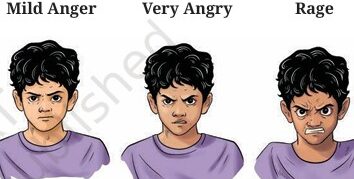
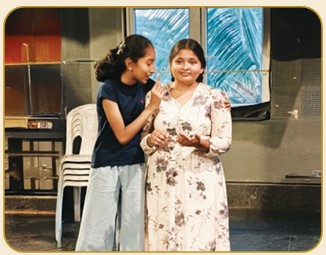
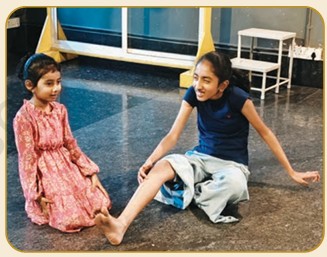
Emoting through speech means using your voice to express feelings and emotions. In theatre, actors do more than simply speak their lines. They change their volume, pitch, speed, pauses, and intonation to show what their characters are feeling.
The same sentence can express different emotions when spoken in different ways. A sentence spoken softly and slowly may suggest sadness or fear, while the same sentence spoken loudly and quickly may express anger, excitement, or urgency. Stressing different words can also change the focus and meaning of a sentence.
By practising different ways of speaking, actors learn to communicate emotions clearly and make their characters more believable. Good speech also helps the audience understand the situation and connect with the character.
Emoting through speech shows that words are not only about what we say, but also about how we say them. With practice, students can learn to use their voices creatively and confidently to bring characters and stories to life.
SPEAKING WITHOUT LANGUAGE!
Have you ever wondered how every word we speak carries a meaning? If we spoke random sounds or words without any meaning, would we still be able to communicate?
Communication depends not only on what we say, but also on how we say it. Sometimes, we may not understand the language spoken by another person, yet we can still understand the general idea of what they are trying to communicate. How is this possible?
The human brain can understand information beyond spoken language. We receive clues from the tone of voice, facial expressions, body language, gestures, and the situation or context in which something is said. These clues help us understand feelings and intentions even when we do not understand the words.
Let us try an experiment. Imagine that each of you has come from a different planet and speaks a unique language that nobody else understands. You have to communicate with one another using sentences made from random sounds instead of real words.
This kind of meaningless or made-up speech is called gibberish. Although the words may not have any actual meaning, you can use your voice, tone, expressions, gestures, and body language to communicate emotions and ideas.
Through this activity, you will discover how much we can communicate without using a familiar language.
BASIC
When you put together random sounds, no one is likely to understand what you are saying. Now, try saying the same gibberish sentence while expressing a particular emotion.
For example, imagine that you are annoyed with a friend who is disturbing you and not allowing you to study. Say the gibberish sentence as if you are speaking to that friend. Use your voice, actions, and facial expressions to communicate your feelings. You may find that your classmates can understand what you are trying to express, even though the words have no real meaning.
Now, combine your expressions with changes in volume and pitch. A louder voice may show anger or frustration, while changes in pitch can add emphasis and emotion.
Try the same gibberish sentence with different emotions and situations, such as happiness, fear, sadness, surprise, excitement, or confusion. Ask the other students in the class to guess what you are trying to communicate.
Give everyone a turn to communicate using gibberish. After the activity, discuss:
- How many people could you understand?
- Which emotions were easiest to recognise?
- How did volume, pitch, actions, and expressions help you communicate?
This activity shows that we can communicate many feelings and ideas even when we do not use familiar words or language.
ADVANCED
Sit with a friend and begin by speaking a sentence with a particular emotion. Let your partner respond using gibberish as well. Continue the conversation for about 4–5 lines, using your voice, tone, volume, pitch, facial expressions, and gestures to communicate.
When the conversation is over, stop and tell each other what you were actually trying to communicate. Compare your intended meaning with what your partner understood.
You can also imagine different situations for your conversation, such as a village fair, an office, a school playground, a market, or a family gathering. Try to change your emotions, actions, and voice according to the situation.
This activity will help you discover how voice, emotions, expressions, gestures, and context can make communication meaningful, even when the words themselves have no real meaning.
Note to the Teacher:
Look out for students who use simple gibberish instead of complex gibberish. A complex gibberish has many combinations of syllables and sounds, compared to a simple gibberish.
Example of a simple gibberish, “Tata tatata ta ttaat tatata. Or papapa pap papa paapapa papapap”
Complex combination — ‘tagutta mo le bo ungji ko”
Encourage the students to use multiple syllables, and change the rhythm of the sounds.
Motivate the students to use complex combinations to bring expression.
IMPORTANCE OF SPEECH
वाचि यत्नस्तु कर्तव्यो नाट्यस्यैषा तनुः स्मृता।
अङ्गनेपथ्यसत्त्वार्थान् वाक्यार्थं व्यञ्जयन्ति हि॥ २॥
Transliteration:
vāci yatnas tu kartavyo nāṭyasyeṣā tanuḥ smṛtā |
aṅganepathya-sattvārthān vākyārthaṃ vyañjayanti hi || 2 ||
Source: Nāṭyaśāstra, Chapter 15, Stanza 2
Meaning
The verse emphasises the importance of speech (vāc) in dramatic performance. It says that an actor should take great care in using words because speech is regarded as the body or essential form of drama.
Other elements of theatre—such as gestures and bodily movements (aṅga), costumes and stage appearance (nepathya), and expressions of inner emotions (sattva)—help reveal and strengthen the meaning of the spoken words.
Nāṭyaśhāstra (Stanza )
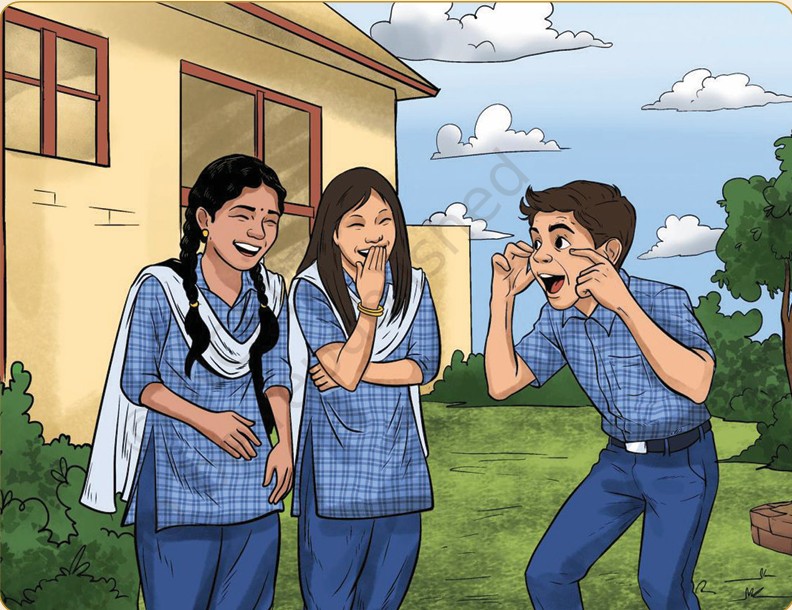
As the above stanza from the Nāṭyaśāstra explains, it is important to pay careful attention to our speaking skills. This chapter on reading and performing plays teaches us much more than acting. It helps us understand the power of speech and effective communication.
Through the activities in this chapter, you will learn to speak clearly, expressively, and thoughtfully, both on stage and in everyday life. Being aware of your intonation, pitch, volume, pace, pauses, and choice of words can make your communication stronger and more meaningful.
When we speak with clarity and expression, we can communicate our thoughts and feelings more effectively. Good speech also helps us listen, understand others, and respond appropriately. Whether you are performing a character, participating in a classroom discussion, giving a presentation, or talking with friends and family, the way you use your voice can influence how your message is understood.
Theatre therefore gives us an opportunity not only to become better performers but also to become more confident, mindful, and effective communicators.
Conclusion
Play reading shows us that a written script can become lively and expressive through the power of the voice. By reading a character’s lines with suitable diction, intonation, pitch, volume, pace, pauses, and emotion, we can bring characters and situations to life without needing elaborate costumes, sets, or props.
Through the activities in this chapter, we have learned that effective communication depends not only on the words we speak but also on how we speak them. Gibberish activities, voice exercises, and emotional speech help us understand the importance of expression, listening, and non-verbal communication.
Play reading also helps us develop confidence, imagination, teamwork, observation, and communication skills. These skills are useful both on stage and in everyday life.
Most importantly, play reading teaches us that words have the power to create images, express emotions, tell stories, and connect people. When we use our voice thoughtfully and creatively, we can truly bring words alive.