
Introduction
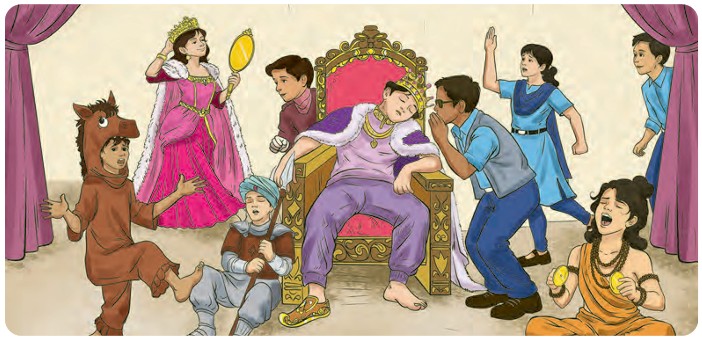
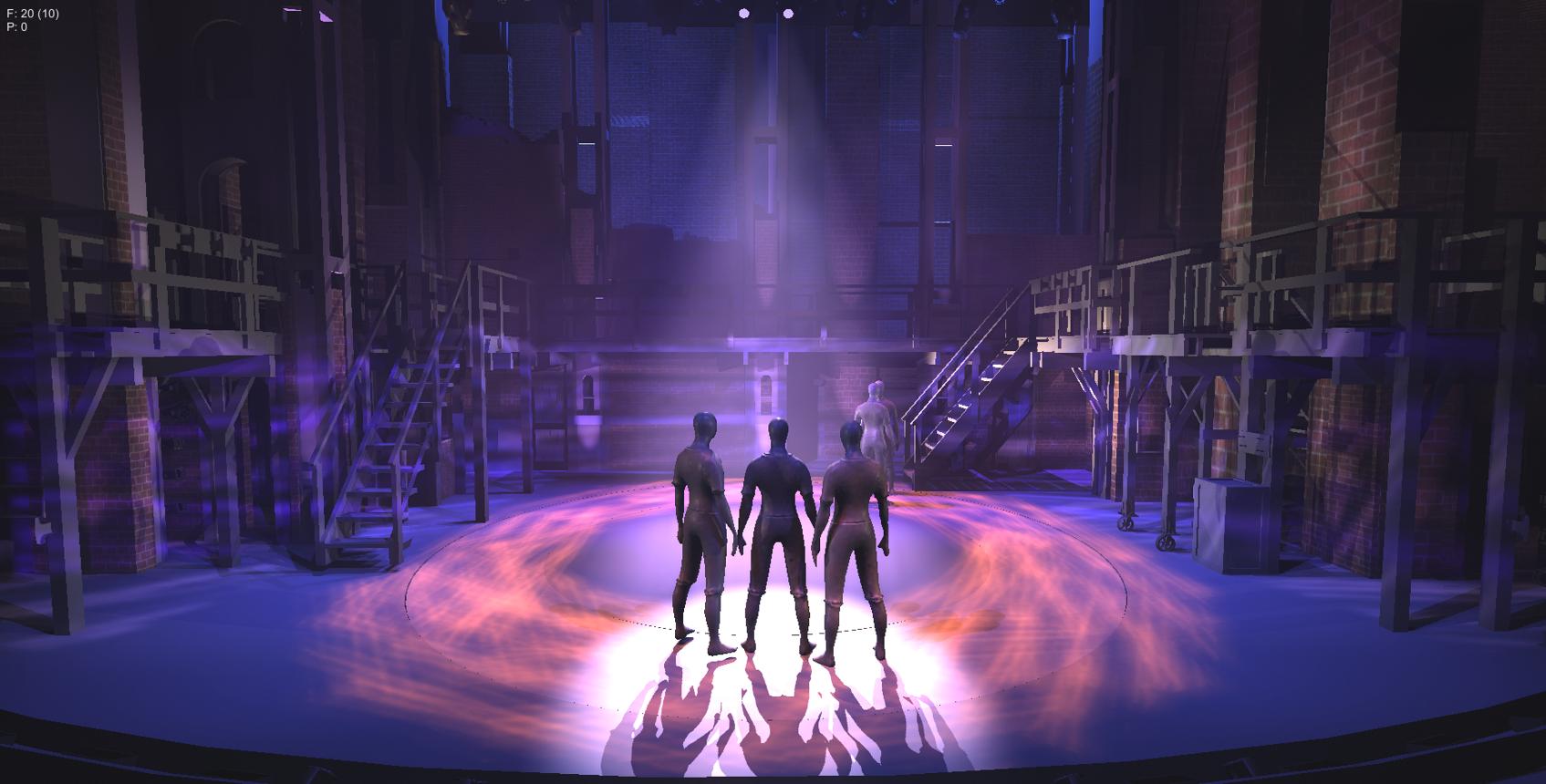
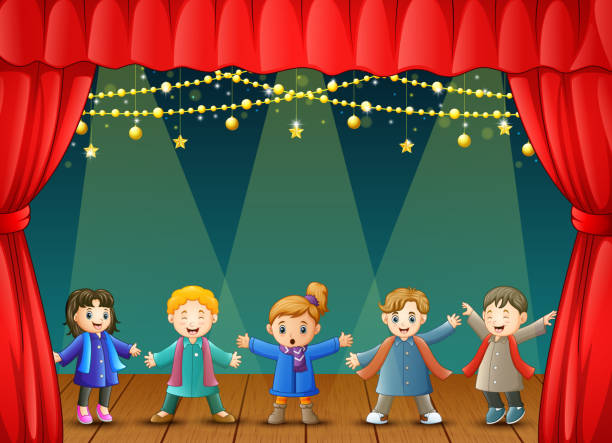
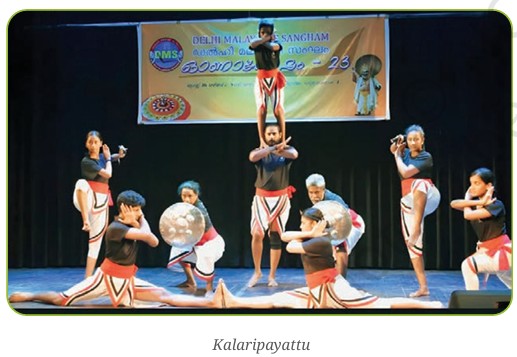
A stage may look like an empty space, but with imagination and creativity, it can become almost anything—a village, a palace, a forest, a classroom, a marketplace, or even a world that exists only in a story. The script gives direction to this transformation by providing the characters, dialogues, situations, and events that form the foundation of a play.
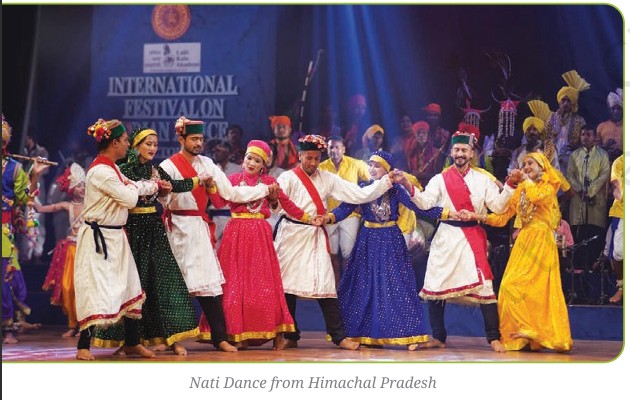
A single stage can host many different scripts. One performance may tell a folk story, another may present a historical event, while another may explore a modern social situation. Scripts may also come from different languages, regions, cultures, and literary traditions. Each one brings its own style, characters, expressions, music, and way of storytelling.
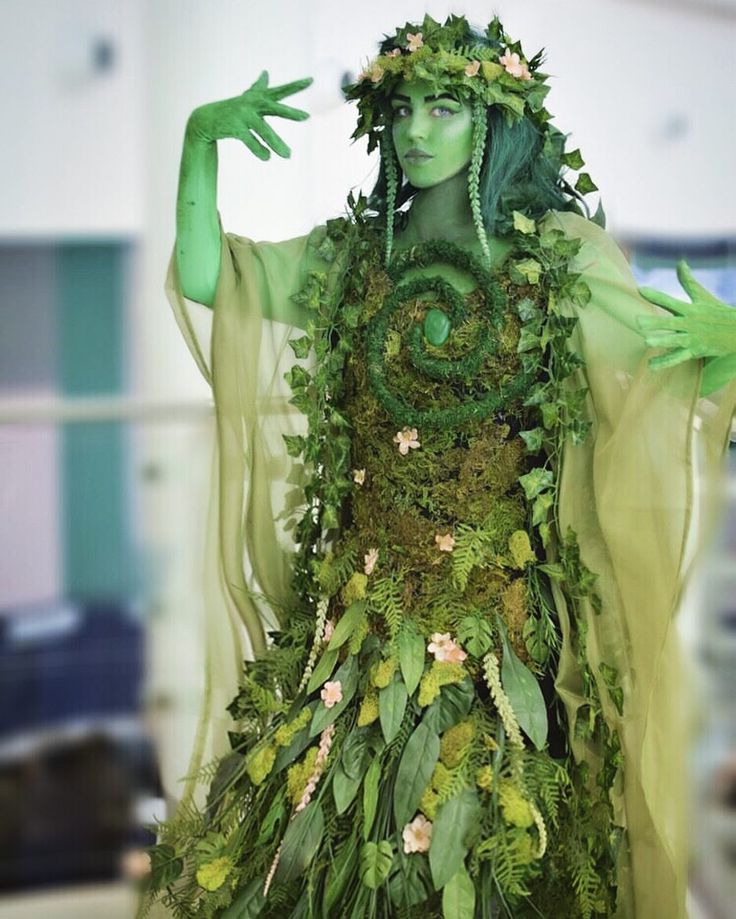
When a script moves from the page to the stage, actors give life to its words through voice, expression, movement, gestures, costumes, music, lighting, and props. The same stage can therefore look and feel completely different from one performance to another.
Exploring many scripts helps students understand that theatre is a rich and diverse art form. It encourages us to appreciate different languages and cultures while also recognising emotions and experiences that people can share across communities.
One Stage, Many Scripts invites us to discover how a single stage can hold countless stories, voices, characters, and ideas—and how each new script can open the door to a different world of imagination.
The Power of Writing a Script
The most fundamental aspect of any performance is the script. A script provides the structure and direction needed to develop a performance. It is important to write down your ideas, thoughts, dialogues, and observations on paper so that they can be explored, organised, and developed further.
In fact, this is one of the reasons why this textbook has been written. It is not enough for a teacher or mentor to simply explain a concept and assume that students have understood and will remember it. Writing helps us organise our thoughts, understand ideas more clearly, remember important information, and express ourselves effectively.
Writing also gives us an opportunity to return to our ideas, make changes, add new details, and improve them over time. In theatre, a written script helps actors, directors, and other members of the production team understand what needs to be performed.
Writing helps in multiple ways, such as developing ideas, organising information, improving memory, encouraging creativity, expressing thoughts clearly, and preparing for performance.
Writing helps in multiple ways such as —
- Bringing clarity
- Building on idea with more creativity
- Sharing with others for collaborative work
- Helping you remember and refer back when required
- Acting as record for future generations
Writing takes many forms and is an important part of our everyday lives. You may already be familiar with short stories, essays, poems, letters, emails, articles, and blogs. But writing is not limited to these forms.
Every film, television programme, web series, news broadcast, and documentary that you watch is also based on carefully prepared written material, such as scripts, dialogues, narration, or storyboards. These help performers, presenters, directors, and production teams understand what needs to be communicated and how it should be presented.
Writing can inform, entertain, explain, persuade, and express ideas and emotions. It allows us to record our thoughts, organise information, share experiences, and communicate with others.
In its many forms, writing acts as an invisible thread that connects different kinds of communication. Whether it appears in a story, a classroom lesson, a theatre script, or a documentary, writing helps turn ideas into meaningful expressions that can be shared with others.
YOU WILL LEARN
1.) Types of Scripts
2.) Genres in Various Forms
SCRIPTS FOR STAGE
Play scripts are written works intended to be performed on stage, in films, or on television. Depending on the type of performance they are designed for, they may vary in structure, style, language, and purpose.
A script provides a framework for presenting a story through characters, dialogue, actions, scenes, and situations. It guides actors and the production team while allowing them to use their creativity and interpretation during the performance.
There are several common types of play scripts. Each type serves a different artistic and storytelling purpose, reflecting human experiences, ideas, emotions, and situations in unique ways. Some scripts may focus on humour and entertainment, while others explore serious themes, relationships, social issues, history, or imaginary worlds.
Understanding different types of scripts helps us appreciate the diversity of theatrical storytelling. It also shows us how written words can be transformed into engaging performances through acting, voice, movement, music, costumes, lighting, and other elements of theatre.
Play Scripts in Ancient India
In ancient India, drama was often described using the terms Rūpa or Rūpaka, referring to dramatic representation or performance. Ancient Indian writers also used the term Dṛśya Kāvyā, meaning “visible poetry”, to describe dramatic works intended to be seen and performed.
Ancient Indian drama combined dialogue, poetry, music, movement, and performance. As a result, many Sanskrit dramatists were also accomplished poets. Their works were created not only to be read but also to be presented before an audience.
The Nāṭyaśāstra, traditionally attributed to Bharata Muni, provides a detailed discussion of drama and describes different forms and types of dramatic composition. These classifications help us understand the rich tradition of Indian theatre and its approach to storytelling.
Let us explore some of the forms described in the Nāṭyaśāstra and compare them with contemporary types of scripts and dramatic forms. This comparison will help us see how ideas about storytelling, performance, characters, and dramatic structure have developed while retaining connections with older theatrical traditions.

TYPES OF SCRIPTS
1.) DAŚHA RŪPAKA (NĀṬYAŚHĀSTRA)
Nataka has 5 to 10 acts based on the stories on kings or divine beings with love, heroism or pathos.
Prakarana has upto 10 acts. It is an entirely invented plot, based on the society.
Bhana is a one-act play with an invented plot based on the rogues and heroism.
Prahasana is a one-act play based on the humour and happy contexts. It is comical in nature.
Dima has four acts based on a popular story, including Devas and Asuras.
Vyayoga is a one-act play based on the traditional heroic stories that are non-comical.
Samavakara has 3 – 4 acts based on the traditional stories of Devas and Asuras.
Anka (Utsrishtanka) is a one-act play that is composed primarily based on the karuna rasa.
Ihamrga is a four-act play that mixes popular stories and fiction based on pauranik stories.
Veethi is a one-act play with just 2 – 3 characters that can be performed at any location.
2.) Classification in scripts
One-act plays are short dramatic works, typically lasting 10 – 30 minutes, that focus on a single, dominant and dramatic situation or conflict within a single act.
Two-act plays are stories with a climactic midpoint where the stakes rise or the protagonistʼs goal changes.
Three-act structure is a common plot structure used in films and television, divided into setup, confrontation, and resolution.
Linear, cyclical and non-linear are different ways to structure the plot, including flashbacks and non-chronological storytelling.
Adapted script is based on pre-existing materials like novels, books, poetry, short stories or historical events.
ACTIVITY 2.1: SCRIPT YOUR STYLE!
Writing a script is more than putting words on paper—it is a way of turning ideas, imagination, and experiences into a story that can be performed. Every writer has a unique way of creating characters, developing situations, using dialogue, and presenting emotions.
In this activity, you will get an opportunity to write your own script in your own style. You can choose a story, situation, memory, folk tale, or imaginary idea as your starting point. Think about who the characters are, where the story takes place, what happens, and how the characters respond to one another.
You can experiment with dialogue, humour, emotions, narration, stage directions, music, movement, and sound effects. You may also adapt a familiar story or create something completely new.
Remember that there is no single way to write a script. Your script can reflect your language, imagination, creativity, and perspective. What matters is that your ideas are clearly expressed and can be brought to life through performance.
Once your script is ready, read it aloud with your classmates. Discuss the characters, scenes, emotions, and possible ways of performing it. You may discover that a simple idea written on paper can become an exciting theatrical experience when brought to life on stage.
While the writers wrote and experimented in different forms of writing over the centuries, let us do a simple experiment in class!
Note: This can be done either in groups or individually. We will try four types of scripts. Each group (or individual) picks one type of script from the list below —
- Dialogue script — Characters speak directly
- Narrative script — Narrator tells the story
- Mime script — Only actions and stage directions
- Musical script — Includes lyrics or rhythmic speech
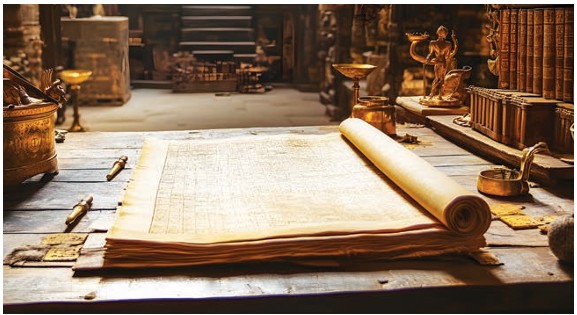
The common topic for everyone is — two friends walking in a forest, where they find a box that has the birch bark and other writing material that Kalidasa used.
Write one page in a style of your choice and compare the scripts. Discuss —
- Did the style affect the content?
- How does the experience of the audience vary?
DO YOU KNOW?
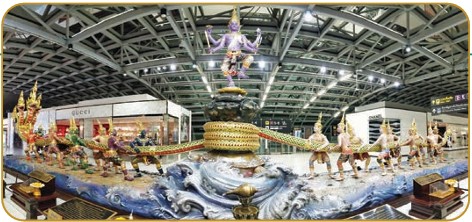
According to the Nāṭyaśhāstra, the first written script was a Samavakara (the 7th in the above list) by Brahma. It was based on the Amrita Manthana. As the process of creation of the performing arts, (Natyotpatti, learnt in Grade 6) had a discussion, and debate between the Devas and the Asuras, Brahma thought it was appropriate for the first performance to be about them. The Amrita Manthana (churning of the ocean) by the Devas and Asuras, is a significant event that has been depicted in different parts of the world. The picture above is an iconic representation of the Suvarnabhumi Airport in Bankok, Thailand.
GENRES
You may have heard the term “genre” while reading reviews or looking at posters of movies and plays. The term is also commonly used for novels, short stories, films, television programmes, and other forms of fictional work.
But what does genre actually mean?
A genre is a category or type of creative work that shares certain features, themes, styles, or storytelling patterns. Genres help us understand what kind of experience a work may offer. For example, a story may belong to the comedy, mystery, adventure, fantasy, tragedy, or historical genre.
Genres are not always fixed or separate. A single work can combine two or more genres, such as a comedy-drama, historical adventure, or fantasy mystery. Understanding genres helps us recognise different ways of telling stories and appreciate the variety of creative expression in literature, theatre, and other forms of art.
Based on the features in the writing, both in its style and content, it is categorised into a particular genre. The popular ones are —
1. Tragedy: Focus on serious themes, often involving a flawed protagonist, who had experience downfall due to fate, personal mistakes, or societal forces.

2. Comedy: Designed to entertain and amuse. It has humorous dialogues, misunderstandings, exaggeration and happy ending.
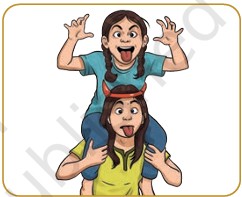
3. Melodrama: Emphasise on the exaggerated emotions, moral conflicts, and a clear distinction between heroes and villains.
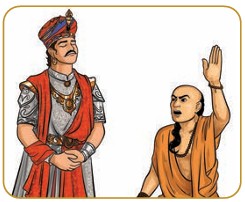
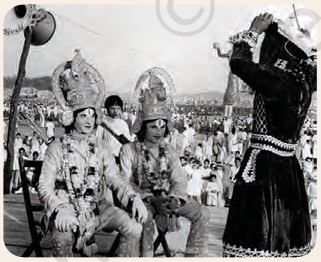
4. Historical Drama: These plays are based on historical events and figures, with dramatising real-life occurrences.

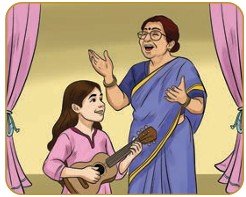
5. Musical: Incorporates songs, and dialogue with rhyme and rhythm along with dance to tell a story.
6. Mystery: It is centred around solving a puzzle, usually a crime. The answer is not revealed till the end.

7. Experimental: Break conventional storytelling norms by using unconventional structures, abstract themes, and surreal elements.
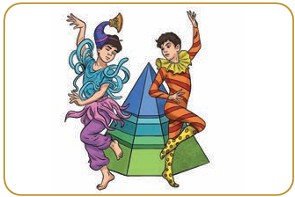
8. Fantasy: Incorporates magical elements in imaginary worlds, characters and situations.

9. Docudrama: Presents a dramatised re-enactments of real events and facts.
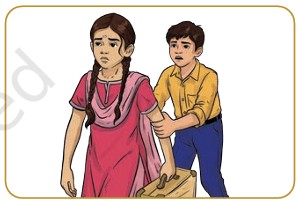
Understanding Genres and Their Importance
The genres mentioned earlier are only a few examples. Books and other reference sources have documented hundreds of different genres. The genres commonly discussed in literature are broad categories that can include a wide range of creative works.
Sometimes, a work may combine the features of two or more genres. In such cases, it may be placed under more than one category, depending on its themes and characteristics. For example, tragicomedy is a blend of tragedy and comedy. It combines serious themes, conflicts, or emotional situations with moments of humour and relief.
But have you ever wondered—why do we need genres? Why should creative works be placed into different categories? Can art not simply be a free and creative way of expressing an idea?
Genres are useful for several reasons:
1. Genre provides a framework for understanding
Genre gives readers and audiences a general idea of what to expect from a work. A piece of writing can be presented in different ways depending on its purpose, context, and style. Readers may not always know the writer’s intention or the situation in which the work was created. This can sometimes lead to different interpretations or misunderstandings.
Identifying the genre provides a useful context and helps readers understand how the work may be approached and interpreted.
2. Genre helps organise creative works
Genres also make it easier to organise and find books, plays, films, and other creative works. For example, in a library or bookshop, books are often arranged according to categories such as fiction, mystery, fantasy, biography, poetry, or history.
This organisation makes it easier to find what we are looking for without having to search through thousands of books. It also helps readers discover works that match their interests and preferences.
Thus, genres do not restrict creativity. Instead, they provide a useful way to understand, organise, explore, and appreciate the wide variety of creative expression.
The writer of plays is called a playwright.
Our country has seen hundreds of brilliant playwrights over the years. From the Sanskrit playwrights like Bhasa and Kalidasa to the present day, there are numerous plays written on all genres. Here are two such examples from the 19th century —
1. Bharatendu Harishchandra
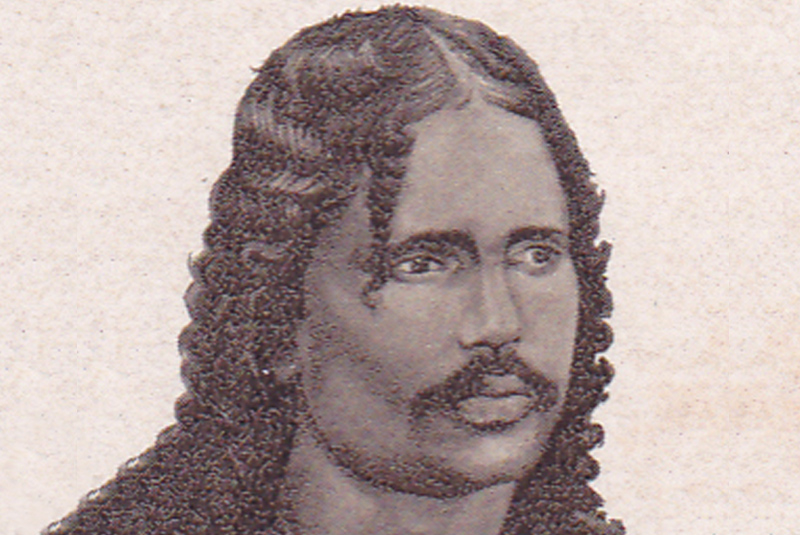
Bharatendu Harishchandra (1850–1885) was an important Hindi writer, poet, playwright, and journalist. He is widely associated with the development of modern Hindi literature and Hindi theatre in the nineteenth century. He wrote in Hindi and Braj Bhasha and used literature and theatre to explore social, cultural, and political issues of his time.
One of his best-known plays is Bharat Durdasha, which presents a critical picture of the condition of India under colonial rule. Another important work, Andher Nagari, uses satire and humour to comment on poor governance, injustice, and social problems. His plays demonstrate how theatre can entertain audiences while also encouraging them to think about society and its challenges.
Bharatendu also contributed to the growth of Hindi journalism and periodical literature. Through his writing, he encouraged the use of Hindi for literature, public discussion, and social awareness.
Because of his significant contribution to Hindi literature and theatre, Bharatendu Harishchandra is often remembered as the “Father of Modern Hindi Literature.” His works remain important for understanding the development of modern Hindi writing and theatrical traditions.
2. T. P. Kailasam
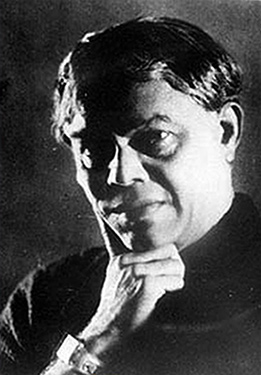
Kailasam often drew inspiration from Indian mythology, everyday life, and social situations. Instead of simply retelling traditional stories, he presented familiar characters and themes in fresh and imaginative ways. His plays often used humour to explore human behaviour, relationships, social customs, and contemporary concerns.
Some of his well-known works include Tali Kattoke Coola, Ammavra Ganda, Poli Kitty, and The Purpose. His writing helped make Kannada theatre more conversational, entertaining, and accessible to audiences.
Kailasam’s contribution shows how playwrights can use language, humour, satire, and creativity to transform ideas into engaging performances. His works continue to be remembered as an important part of the history of modern Kannada theatre.
DO YOU KNOW?
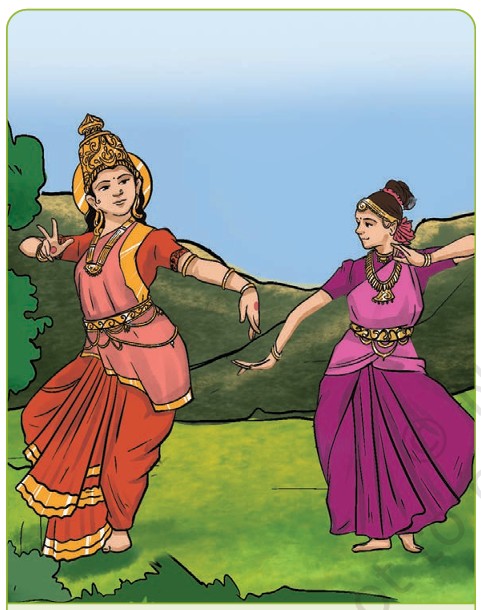
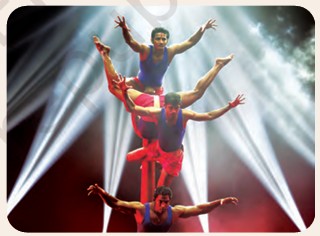
Even music, dance and visual arts have genres! Just like the genres in theatre.
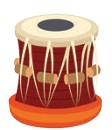
Music and dance have genres like —
• Classical
• Folk
• Contemporary
• Semi-classical … and many more.

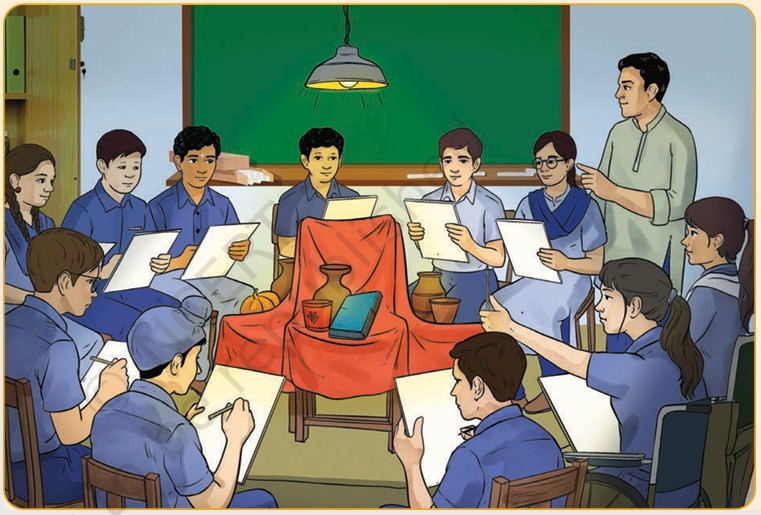
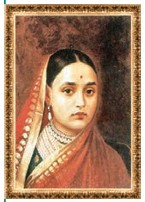
Visual arts has categories like —
• Portrait
• Landscape
• Still life … and many more

ACTIVITY 2.2: GENRE GENIUS!
Every story has its own mood, style, theme, and purpose. Some stories make us laugh, some create suspense, some take us into imaginary worlds, while others make us think deeply about life and society. These different ways of telling stories are known as genres.
In this activity, you will explore different genres and discover how the same idea can change when it is presented in different styles. A simple situation can become a comedy, a mystery, a tragedy, an adventure, or a fantasy depending on how you develop the characters, setting, dialogue, and events.
Choose a familiar story, situation, or idea and experiment with different genres. Think about how the characters, language, emotions, setting, and ending would change in each version.
For example, a story about a lost object could become a mystery if the characters search for clues, a comedy if the search leads to funny situations, or an adventure if the characters travel to different places to find it.
Try creating your own short scene in one or more genres. Read or perform it for your classmates and discuss how the genre influenced the way the story was written and performed.
This activity will help you understand that genres are not simply categories or boxes. They can provide creative frameworks that help writers and performers explore the same idea in many different and imaginative ways.
Now that we have explored different genres, you may have started connecting them with the books you have read and the movies and plays you have watched.
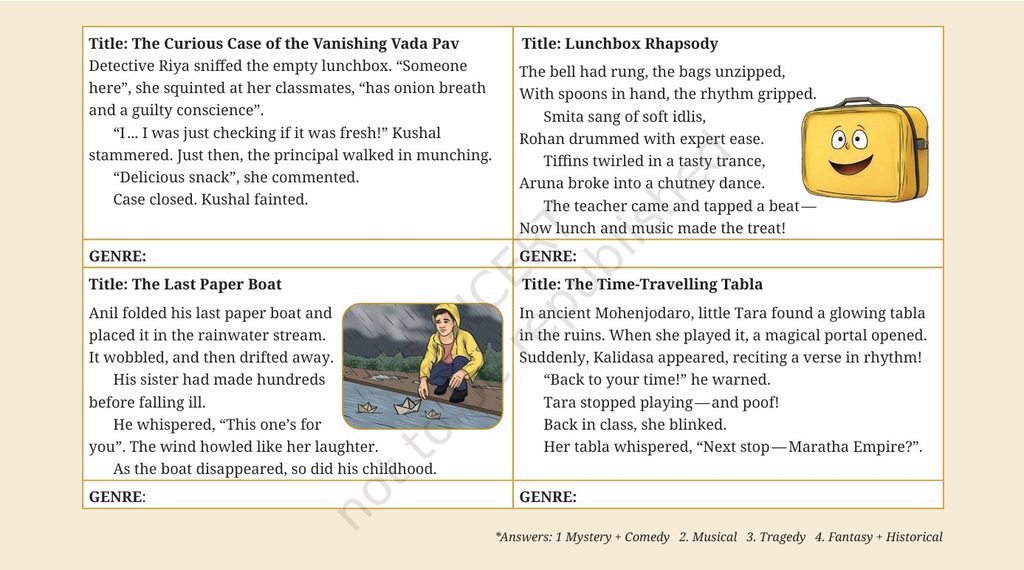
Let us now try to identify and categorise the genres of the paragraphs given below. Read each paragraph carefully and think about its theme, characters, setting, mood, events, and style of storytelling.
Remember that a piece of writing may belong to one specific genre or a combination of genres. For example, a story may combine comedy and drama, or adventure and fantasy.
Think and Respond
Read each paragraph and identify the genre or combination of genres it represents. Give reasons for your choice.
- What features helped you identify the genre?
- Which words, situations, or characters gave you clues?
- Can the same paragraph be interpreted as belonging to more than one genre?
- How would the paragraph change if it were written in a different genre?
There may not always be only one possible interpretation. Think carefully, discuss your ideas with your classmates, and explain your reasoning.
Explore and Create with Genres
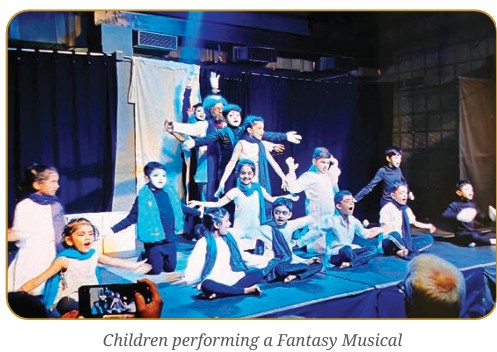
Now that you have explored the magical world of genres—from mysterious stories to musical adventures—it is time to start writing!
Choose your favourite genre, or combine two or more genres to create something unique. You can experiment with comedy, tragedy, mystery, adventure, fantasy, or any other genre you enjoy. Try writing the same idea in different genres and notice how the characters, emotions, situations, and endings change.
Who knows? Today, you may write a tear-jerking tragedy, and tomorrow, a comedy that makes everyone laugh! You might even invent a completely new genre of your own.
Remember, there are no fixed limits to creativity. Explore, experiment, combine, and create. The possibilities are endless!
REMEMBER
Do not miss the basics of a story and script that you learnt in Grades 6 and 7.
Plan your ‘Beginning — Middle — End’ and find an interesting conflict.
This is a must for whatever genre or type of script you write.
So grab your pen and paper — your next superhit story awaits. Get your parents and teachers to sit back, and enjoy your show!
Conclusion
One Stage, Many Scripts has shown us how theatre brings together stories, ideas, emotions, languages, cultures, and creative expressions. A stage may be a simple physical space, but through a script and the imagination of performers, it can become a palace, a village, a forest, a marketplace, a historical setting, or an imaginary world.
We have explored how scripts provide the foundation for performance. They help organise characters, dialogues, scenes, actions, and situations, while giving actors and other members of the theatre team a framework within which they can use their creativity. Writing a script also teaches us to organise our thoughts, develop ideas, create characters, and express ourselves clearly.
We have also learned about different types of scripts and genres. Theatre, films, television, radio, documentaries, and digital media may use scripts in different ways. Genres such as comedy, tragedy, mystery, adventure, fantasy, and historical drama offer different approaches to storytelling. A creative work may also combine two or more genres, showing that categories can provide a framework without limiting imagination.
The exploration of ancient Indian dramatic traditions helps us understand that scriptwriting and theatrical storytelling have a long history. Concepts such as Rūpaka and Dṛśya Kāvya, along with the ideas described in the Nāṭyaśāstra, remind us of the rich traditions of Indian theatre and performance.
Most importantly, this chapter encourages us to become writers, performers, readers, and creative thinkers. We can take a familiar story and present it in a new genre, combine different ideas, or even create a genre of our own. We can write about everyday experiences, imaginary worlds, historical events, or stories inspired by our surroundings.
Theatre teaches us that one stage does not have to tell only one kind of story. It can hold many voices, perspectives, traditions, and possibilities. When we bring together writing, acting, movement, music, design, and imagination, a simple script can become a meaningful shared experience.
Ultimately, One Stage, Many Scripts celebrates the limitless possibilities of storytelling. Every script opens a new door, every genre offers a different way to see the world, and every performance gives us an opportunity to imagine, create, communicate, and connect with others.