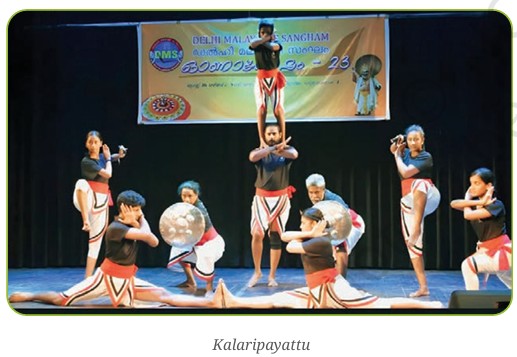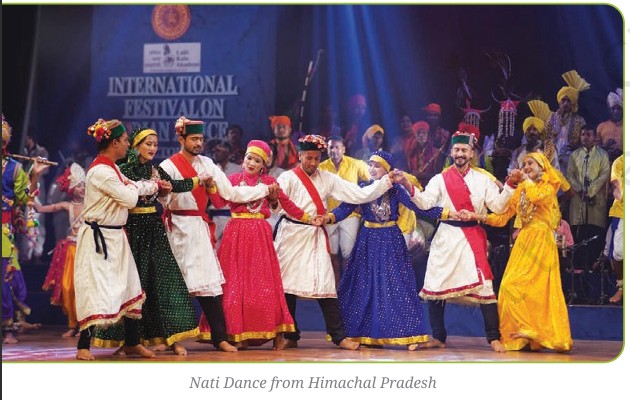

Introduction
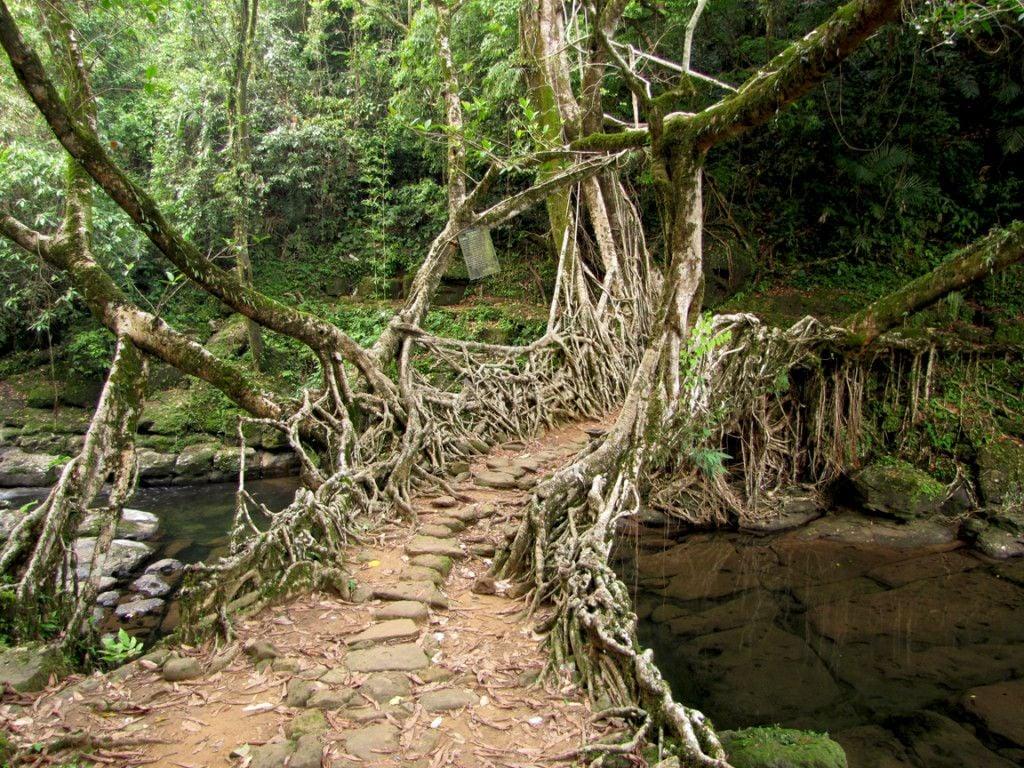
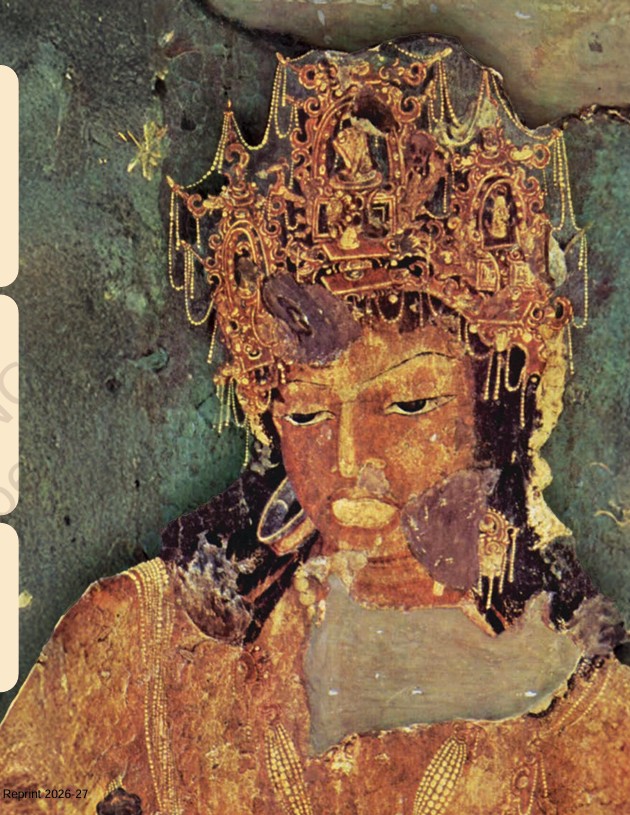
Inspiration and imagination are fundamental to creative thinking and artistic expression. Inspiration can come from observing the world around us, including nature, people, cultures, stories, objects, sounds, experiences, and ideas. It provides a starting point or stimulus for creating something.
Imagination is the ability to form ideas, images, possibilities, or situations in the mind, including those that may not be directly present or experienced. It allows us to combine familiar ideas in new ways, explore possibilities, and develop creative responses.
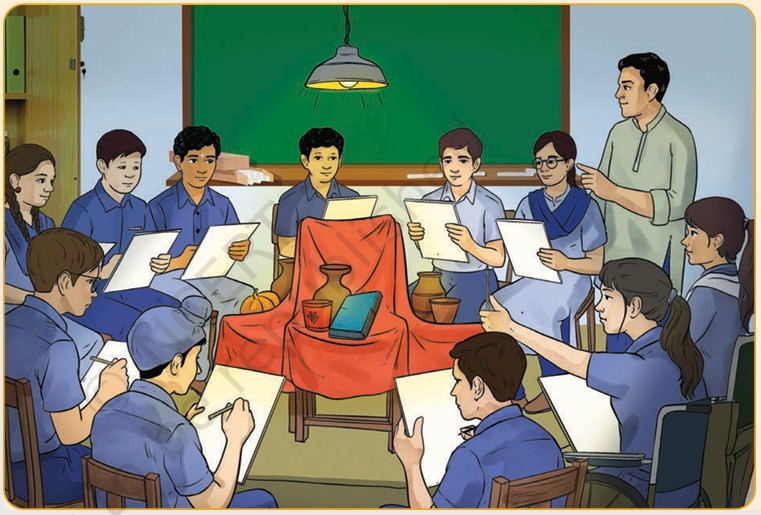
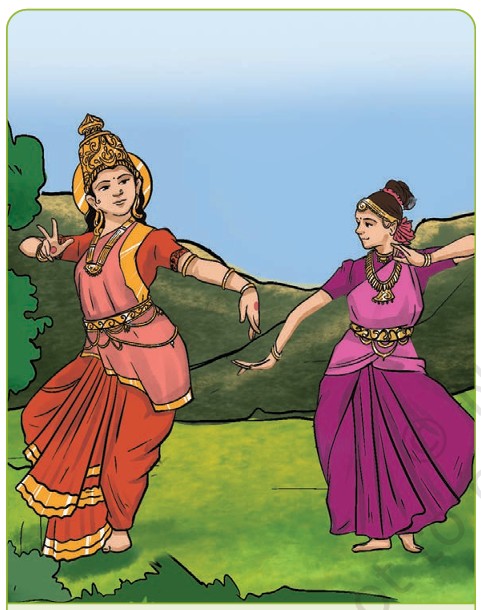
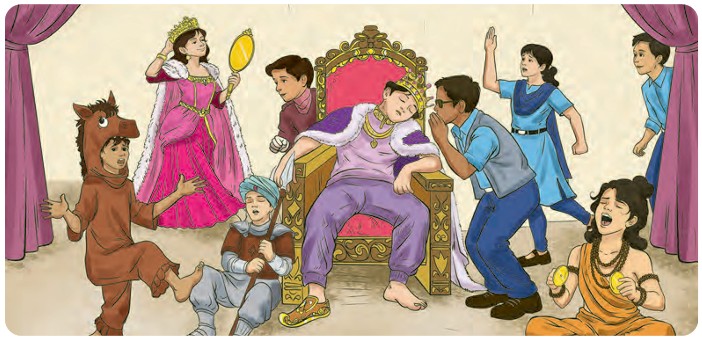
In the arts, inspiration and imagination often work together. An artist may observe a natural form and imagine a new design, a musician may transform an everyday sound into a musical idea, or a dancer may use movement to represent an imagined character or situation. Similarly, writers and performers can use experiences and observations as starting points for creating stories and artistic expressions.
Exploring different forms of art encourages us to observe carefully, think creatively, experiment with ideas, and express our individual perspectives. Through such activities, we can understand how inspiration and imagination contribute to the creative process.
Inspiring Artists
We may sometimes think that musicians and artists are born with natural talent and that performing on stage comes easily to them. However, artistic achievement is often the result of years of practice, dedication, learning, and perseverance.
Many musicians and artists have faced disabilities, personal difficulties, financial challenges, or other difficult circumstances during their lives. Despite these challenges, they continued to develop their skills and pursue their artistic interests. Their journeys show that creativity can grow through determination, discipline, hard work, and opportunities to learn and practise.
Learning about such artists helps us understand that success in the arts is not based only on natural ability. It can also come from continuous effort, resilience, creativity, and a willingness to overcome challenges. Their experiences can inspire us to recognise our own abilities and continue learning even when we face difficulties.
Ravindra Jain (1944 – 2015)
Ravindra Jain was a celebrated Indian music composer, lyricist, and singer who made significant contributions to Hindi film and television music. He was born on 28 February 1944 in Aligarh, Uttar Pradesh, and was blind from birth. From an early age, he showed a strong interest in music and received training in Indian classical music. His early musical learning helped him develop a deep understanding of melody and composition.
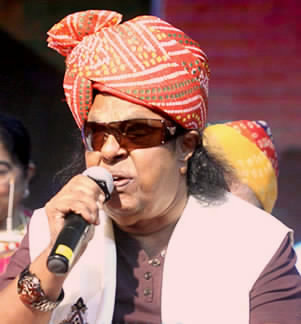
Ravindra Jain began his career in the Hindi film industry during the early 1970s. He became known for his melodious compositions and his ability to create music that complemented the stories and emotions of films. During his career, he composed music for more than 200 films. Some of his notable films include Chitchor, Geet Gaata Chal, Ankhiyon Ke Jharokhon Se, Nadiya Ke Paar, and Ram Teri Ganga Maili.
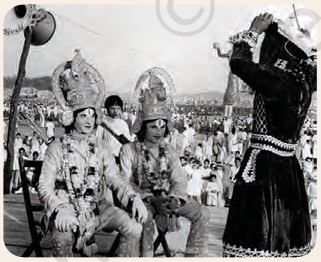
Jain also made an important contribution to Indian television music. He composed music for the highly popular television series Ramayan, produced by Ramanand Sagar. The programme became widely known, and its music and devotional songs reached a large audience.
Ravindra Jain was not only a composer but also a lyricist and singer. His work included film songs, devotional compositions, and music for television and other performances. He participated in numerous live and television programmes, allowing audiences to experience his musical talent beyond films.
For his contribution to Hindi film music, Jain received several honours. He won the Filmfare Award for Best Music Director for Ram Teri Ganga Maili in 1986 for the 1985 film. He was also awarded the Padma Shri in 2015, one of India’s civilian honours, in recognition of his contribution to the arts.
Ravindra Jain passed away on 9 October 2015 in Mumbai. His life remains an inspiring example of how training, creativity, dedication, and perseverance can help an artist overcome challenges and make a lasting contribution to the world of music.
ACTIVITY 8.1: ARTISTS WHO OVERCAME CHALLENGES
Artists may face many challenges during their lives, including disability, financial difficulties, limited opportunities, personal struggles, or social barriers. Yet many artists continue to learn, practise, create, and perform despite these circumstances.
The lives of such artists show that artistic development involves more than natural talent. Dedication, discipline, perseverance, creativity, and continuous learning can play an important role in an artist’s journey. Some artists have adapted their methods of learning or performance, while others have found new ways to express their ideas and abilities.
By learning about artists who have overcome challenges, we can understand the different paths through which people develop their creative skills. Their experiences also encourage us to recognise individual abilities, respect diversity, face difficulties with determination, and continue developing our own creativity.
Musical Monuments
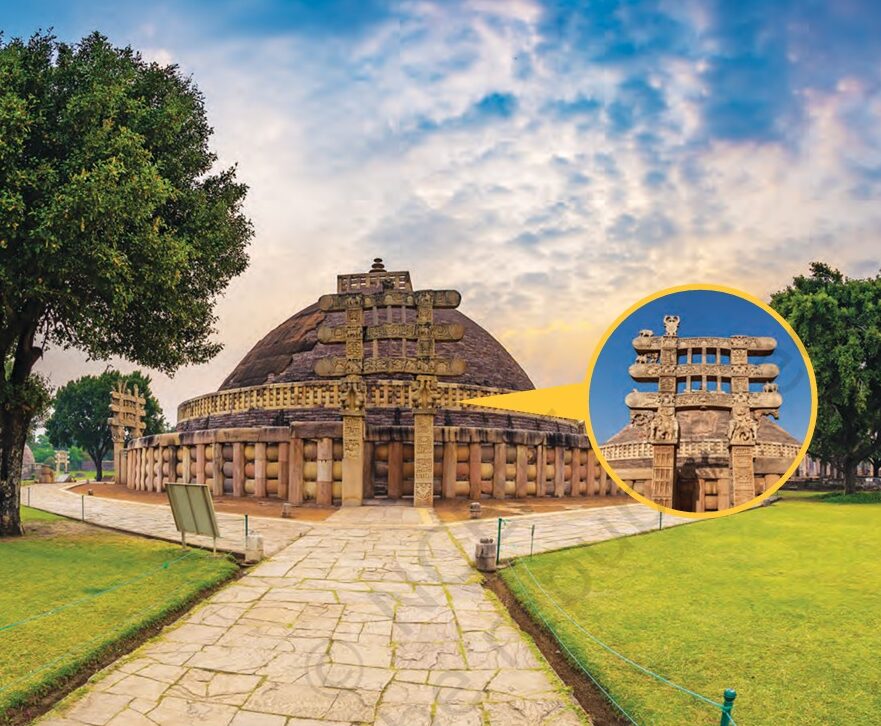
Many temples, historical buildings, and heritage sites in India have deep connections with music. These places were not only centres of religious and cultural life but also important spaces for singing, instrumental music, dance, and other performing arts.
The architecture of some monuments reflects an understanding of sound, space, rhythm, and performance. Certain temples have specially designed halls and pillars associated with musical performances. In some places, inscriptions, sculptures, and carvings provide evidence of musicians, musical instruments, dancers, and musical traditions of the past.
Examples such as the Vittala Temple in Hampi, known for its musical pillars, and the Nataraja Temple in Chidambaram, associated with dance and music traditions, show how music was closely connected with architecture and cultural practices.
Studying musical monuments helps us understand how music, architecture, history, religion, and craftsmanship have interacted over time. These monuments provide valuable clues about the musical knowledge and artistic traditions of earlier societies and remind us of India’s rich cultural heritage.
Several temple sculptures depict musical instruments being played. Here are a few examples —
1.) Chennakeshava Temple, Belur, Karnataka
The Chennakeshava Temple at Belur, Karnataka, is a celebrated example of Hoysala architecture and is closely connected with the artistic traditions of medieval South India. The temple was commissioned by King Vishnuvardhana of the Hoysala dynasty and consecrated in the 12th century.
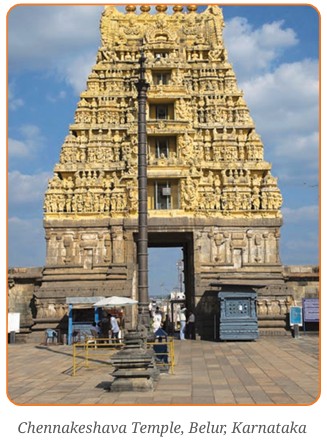
The temple is especially famous for its intricate stone carvings and sculptures. Its walls, pillars, and other architectural features contain detailed representations of deities, dancers, musicians, animals, and scenes from mythology and everyday life.
The numerous sculptures of musicians and dancers provide valuable evidence of the importance of music and performing arts in the cultural life of the period. The carvings depict people playing instruments such as drums, string instruments, and wind instruments, as well as performing different dance movements.
The temple therefore offers an opportunity to explore the relationship between architecture, sculpture, music, and dance. Although the sculptures are not musical instruments themselves, they preserve visual representations of historical performance practices and instruments.
The Chennakeshava Temple is an important part of India’s cultural heritage and helps us appreciate the craftsmanship, artistic imagination, and performing-art traditions associated with the Hoysala period.
2.) Gwalior Fort, Gwalior, Madhya Pradesh
Gwalior Fort, located in Gwalior, Madhya Pradesh, is one of India’s most important historical monuments and has a strong connection with the traditions of music, art, and culture. Built and expanded by different rulers over many centuries, the fort contains several palaces, temples, and historical structures.
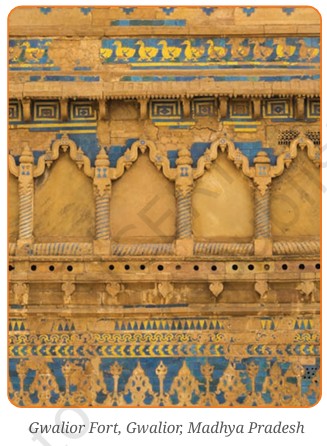
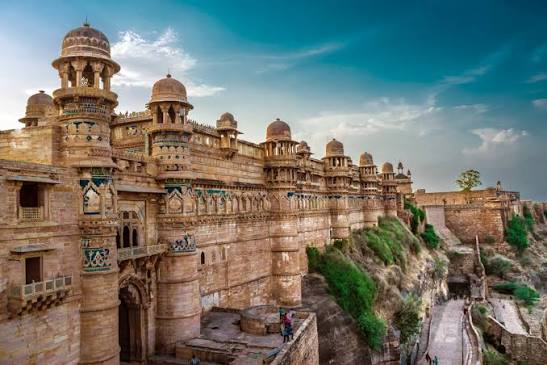
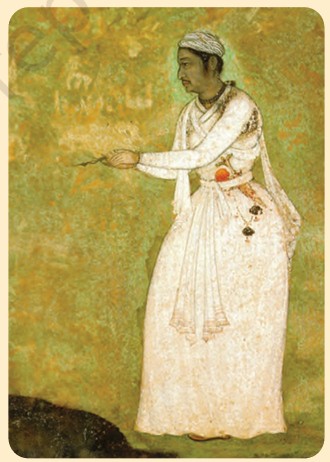
Gwalior is widely recognised as an important centre of Hindustani classical music. The city is associated with the Gwalior Gharana, one of the oldest and most influential schools of Khayal singing. The renowned musician Tansen, one of the celebrated musicians in the court of Emperor Akbar, is also closely associated with Gwalior.
Within the fort complex, structures such as the Man Singh Palace display beautiful architectural details, decorative tiles, carvings, and artistic designs that reflect the rich cultural traditions of the region.
The connection between Gwalior Fort and Indian classical music makes it an important example of how historical monuments can preserve and represent artistic heritage. The fort reminds us that architecture, history, music, and culture have often developed together over time.
Today, Gwalior Fort remains an important heritage site and a symbol of India’s rich traditions of music, art, and architecture.
3.) Konark Sun Temple, Konark, Odisha
The Konark Sun Temple, located in Konark, Odisha, is one of India’s most remarkable examples of medieval temple architecture and sculpture. Built in the 13th century during the reign of King Narasimhadeva I of the Eastern Ganga dynasty, the temple is dedicated to Surya, the Sun God.
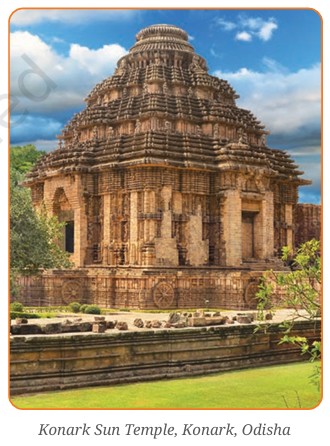
The temple was designed in the form of a magnificent stone chariot, with elaborately carved wheels and horses. Its walls and other architectural surfaces contain detailed sculptures depicting deities, dancers, musicians, animals, plants, and scenes from everyday life.
The numerous sculptures of musicians and dancers provide an important visual record of the performing arts of the period. The carvings show figures playing different types of instruments, including drums, cymbals, string instruments, and wind instruments. These representations demonstrate the important place of music and dance in the cultural and religious life of medieval Odisha.
The temple therefore provides an opportunity to explore the close relationship between music, dance, sculpture, architecture, and religious traditions. Although the stone sculptures do not produce music, they preserve valuable visual evidence of the instruments and performance practices of their time.
The Konark Sun Temple is now a UNESCO World Heritage Site and remains an important symbol of India’s architectural, sculptural, and performing-arts heritage.
Musical Pillars
Musical pillars are specially designed stone pillars found in some historic Indian temples. When gently tapped, certain pillars can produce different musical tones or resonant sounds. They demonstrate the remarkable understanding of stone craftsmanship, vibration, resonance, and acoustics possessed by traditional temple builders.
One of the best-known examples is the Vittala Temple in Hampi, Karnataka, where groups of slender stone pillars are associated with musical sounds. These pillars are popularly known as the SaReGaMa pillars because their sounds are traditionally compared with the musical notes Sa, Re, Ga, Ma and others.
Musical pillars show the fascinating connection between architecture, music, science, and craftsmanship. They also encourage us to explore how the material, shape, size, and structure of an object can influence the sounds it produces.
Some Indian temples are known for musical pillars or stone structures that produce resonant musical sounds when gently tapped. Their sound-producing qualities are associated with the material, shape, size, and precise craftsmanship of the stone. These remarkable structures show a fascinating connection between music, science, architecture, and sculpture.
1. Vijaya Vittala Temple, Hampi, Karnataka
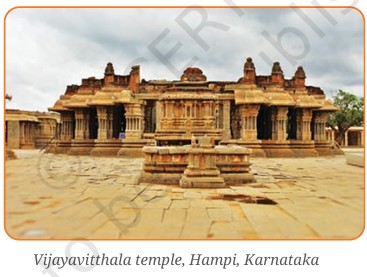
The Vijaya Vittala Temple, located in Hampi, Karnataka, is one of the most remarkable monuments of the Vijayanagara period. The temple complex is famous for its magnificent architecture, intricate stone carvings, and the celebrated Stone Chariot.
Feature: The temple is particularly well known for its 56 stone pillars, commonly called the musical pillars. The main pillars are surrounded by smaller, slender pillars, and some of these produce resonant sounds when gently tapped. Their sound is associated with the material, shape, size, and careful craftsmanship of the stone.
The musical pillars provide an interesting example of the connection between music, science, architecture, and sculpture. They demonstrate how traditional craftsmen used their knowledge of materials and construction to create remarkable architectural features.
Today, the Vijaya Vittala Temple is an important part of Hampi’s cultural heritage and offers visitors an opportunity to appreciate the remarkable craftsmanship of the Vijayanagara period.
Features: The temple is famous for its 56 stone pillars, including groups of pillars traditionally associated with musical sounds. These are popularly known as musical pillars and are celebrated for their resonant tones.
2. Airavateshwara Temple, Darasuram, Tamil Nadu
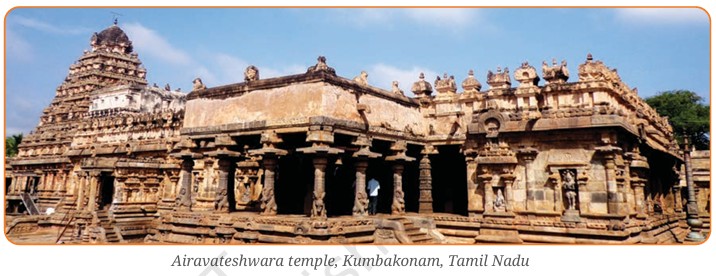
The Airavateshwara Temple, located at Darasuram near Kumbakonam, Tamil Nadu, is a remarkable example of Chola architecture. Built during the reign of King Rajaraja Chola II in the 12th century, the temple is renowned for its intricate stone carvings and artistic craftsmanship.
Feature: The temple is famous for a stone staircase whose steps are traditionally associated with different resonant musical tones when gently tapped. This fascinating feature demonstrates how the properties of stone, careful construction, and craftsmanship can interact to produce distinctive sounds.
The temple provides an interesting example of the connection between music, science, architecture, and sculpture in India’s cultural heritage. It is also a UNESCO World Heritage Site as part of the Great Living Chola Temples.
Features: The temple has a stone staircase whose steps are traditionally said to produce different resonant musical tones when gently tapped. This demonstrates the interesting relationship between stone craftsmanship and sound.
3. Sree Padmanabhaswamy Temple, Thiruvananthapuram, Kerala
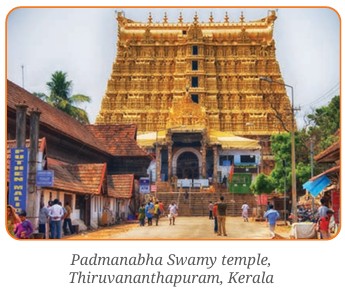
The Sree Padmanabhaswamy Temple, located in Thiruvananthapuram, Kerala, is one of India’s most renowned temples and an important example of traditional Kerala temple architecture. The temple is dedicated to Lord Padmanabha, a form of Lord Vishnu, and is known for its intricate architecture, sculptures, and artistic craftsmanship.
Feature: The temple complex contains beautifully carved stone pillars and architectural elements that demonstrate the skill of traditional craftsmen. Some accounts associate certain stone pillars with resonant sounds when gently tapped, reflecting the interesting relationship between the properties of stone, craftsmanship, and sound.
The temple provides an opportunity to explore the connection between music, science, architecture, and sculpture. Its artistic details also reflect the rich cultural heritage and architectural traditions of Kerala.
The Sree Padmanabhaswamy Temple continues to be an important centre of religious, artistic, and cultural heritage, reminding us of the remarkable craftsmanship preserved in India’s historic temples.
Features: The temple is known for its beautifully carved stone architectural elements. Some traditional descriptions associate its stone pillars with resonant musical sounds when tapped, reflecting the skilled craftsmanship of Kerala’s temple architecture.
These examples show how traditional Indian craftsmen explored the properties of stone, vibration, resonance, and form while creating magnificent architectural structures. They remind us that music, science, and sculpture can come together in extraordinary ways.
How do these pillars work?
- The pillars are made of resonant stone that vibrate at clearly audible frequencies.
- They are often hollow and have varying densities, allowing different frequencies to be produced.
ACTIVITY 8.2: EXPLORE A MUSIC INSTITUTION
| No. | Music Institution | Location | Main Area |
| 1 | Sangeet Natak Akademi | New Delhi | Music, dance & performing arts |
| 2 | ITC Sangeet Research Academy | Kolkata, West Bengal | Hindustani Classical Music |
| 3 | Bhatkhande Sanskriti Vishwavidyalaya | Lucknow, Uttar Pradesh | Hindustani Music & Dance |
| 4 | The Music Academy, Madras | Chennai, Tamil Nadu | Carnatic Music |
| 5 | Kalakshetra Foundation | Chennai, Tamil Nadu | Music, dance & traditional arts |
| 6 | Faculty of Performing Arts, Banaras Hindu University | Varanasi, Uttar Pradesh | Hindustani Music & Performing Arts |
| 7 | Rabindra Bharati University | Kolkata, West Bengal | Music, dance & drama |
| 8 | Indira Kala Sangeet Vishwavidyalaya | Khairagarh, Chhattisgarh | Music & Fine Arts |
| 9 | Faculty of Performing Arts, The Maharaja Sayajirao University of Baroda | Vadodara, Gujarat | Indian Classical Music & Performing Arts |
| 10 | Swathi Thirunal Government College of Music | Thiruvananthapuram, Kerala | Carnatic & Hindustani Music |
Imagining My Future
Over this year, we have explored many interesting ideas about the elements of music, musical instruments, songs, and emotions. We have also learned about the lives and achievements of inspiring musicians and musical legends.
Their journeys remind us that success does not come only from natural talent. Focus, regular practice, dedication, and perseverance can help us develop our abilities and achieve our goals.
You too can use your interests, skills, creativity, and dedication to shape your future and make a meaningful contribution to your family, community, and nation.
Now, let us take some time to imagine your future, think about your dreams and aspirations, and explore the steps you can take to turn them into reality.
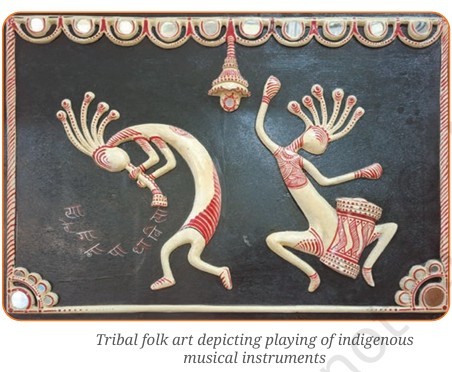
Tribal Folk Art Depicting the Playing of Indigenous Musical Instruments
Tribal folk art depicting the playing of indigenous musical instruments showcases the close relationship between music, community, tradition, and everyday life. Such artworks may portray tribal musicians playing traditional instruments during festivals, dances, ceremonies, celebrations, and community gatherings.
These paintings often use simple forms, bold lines, natural colours, and rhythmic patterns to represent musicians and performers. Indigenous instruments may include drums, flutes, string instruments, rattles, and other locally made instruments.
Such folk art not only represents musical performance but also helps preserve the cultural traditions, stories, and artistic heritage of tribal communities.
ACTIVITY 8.3: REPORT ON YOUR FUTURE SELF
Imagine that it is twenty years from now. You have achieved some of your goals and are now doing work that you enjoy and find meaningful. Write a newspaper article about yourself, using the third-person point of view.
Before you begin writing, think about and note down ideas for the following:
- Career: What career or profession have you chosen?
- Major accomplishments: What are some of your important achievements?
- Music and the arts: How has music or another art form contributed to your personal life?
- Milestone event: What important event in your future life would you like the newspaper to report?
- Present interests: What do you enjoy doing at present?
- Personal life: What other interesting details would you like to include?
- Future dreams: What goals and dreams would you like to achieve?
- Inspiration: Which musicians, artists, or other inspiring people have influenced you?
Use these ideas to create a first draft. Once you have completed the draft, review it and think of an eye-catching headline that captures the most important achievement or event in your story.
Now write the final newspaper article in 400–500 words. Remember to write about yourself in the third person, as though a journalist is reporting on your future achievements. You may include a headline, byline, date, and other features commonly found in a newspaper article.
Finally, display your article on the class notice board and read your classmates’ imagined future stories. Notice how different interests, talents, careers, and dreams can lead to different paths in life.
ACTIVITY 8.4: MUSICAL AUTOBIOGRAPHY
A musical autobiography is a creative way of telling the story of one’s life through music. It connects important memories, people, experiences, emotions, and milestones with songs or musical pieces. By explaining why each piece is meaningful, we can express our personal journey and show how music has influenced our lives.
1.) On My Way to Become a Drummer
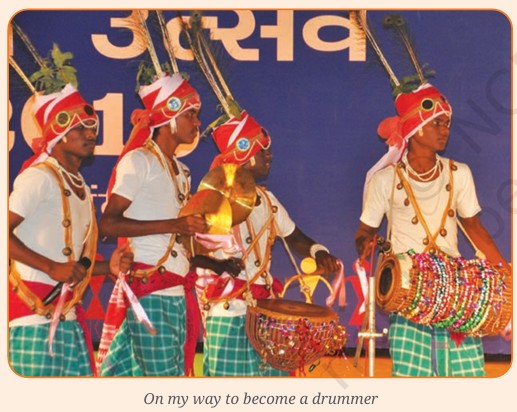
“On My Way to Become a Drummer” is a musical journey about learning to play the drums, developing rhythm, coordination, confidence, and creativity, and pursuing the dream of becoming a skilled drummer through regular practice and dedication.
2.) Stepping into the Rhythm of an Ensemble, Orchestra and Choir
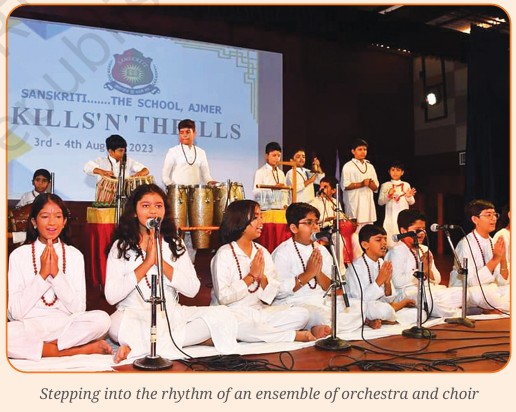
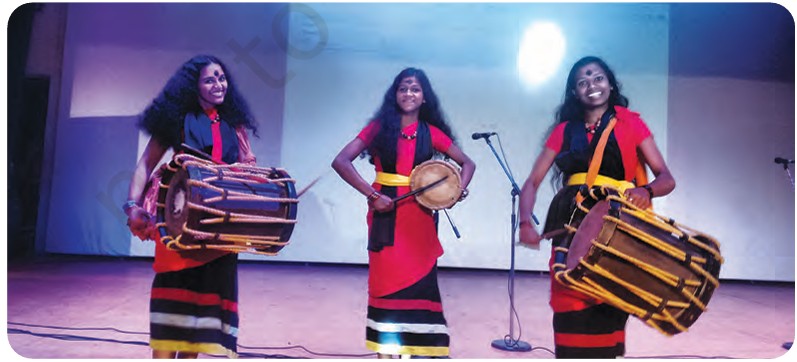
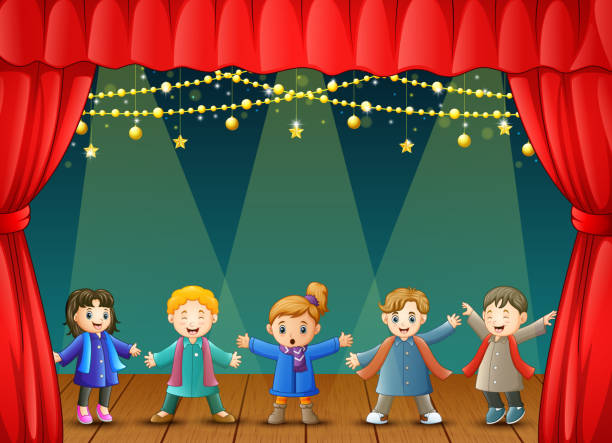
An ensemble, orchestra, or choir brings musicians and singers together to create music as a team. Each member has an important role and must listen carefully, follow the rhythm, and coordinate with others. Participating in such groups develops teamwork, discipline, confidence, musical skills, and cooperation.
Conclusion
Inspiration and imagination are important elements of creativity and artistic expression. Throughout this section, we explored how artists and musicians observe the world around them, draw ideas from their experiences, and transform those ideas into creative forms. Inspiration may come from nature, people, culture, stories, emotions, everyday experiences, and other works of art. Imagination allows us to combine these influences, develop new ideas, and express them in individual ways.
The lives and achievements of inspiring artists also remind us that artistic success is not based only on natural talent. Learning, regular practice, discipline, dedication, experimentation, and perseverance play an important role in developing artistic abilities. Many artists have faced personal or professional challenges, yet their continued efforts helped them develop their skills and contribute meaningfully to the world of art and music.
By studying different artists and their creative journeys, we can understand that every person has the potential to observe, imagine, create, and communicate. We can use our own experiences and interests as sources of inspiration and explore different forms of artistic expression.
Most importantly, this section encourages us to remain curious, open-minded, creative, and willing to learn. Inspiration gives us ideas, while imagination helps us turn those ideas into meaningful creative expressions.