
Our Cultural Heritage:
Introduction
The history of Indian arts reflects thousands of years of creativity, culture, and tradition. From prehistoric cave paintings and Indus Valley sculptures to magnificent temples, classical dances, music, paintings, and handicrafts, Indian art showcases the country’s rich heritage. Influenced by religion, philosophy, regional traditions, and royal patronage, artistic forms have evolved across different periods. Studying Indian arts helps us understand historical developments, appreciate cultural diversity, and recognise how generations of artists have preserved India’s identity through their remarkable creativity and imagination.
India, also known as Bharat, has a rich cultural heritage spanning approximately 5,000 years. This heritage can be seen, heard, and experienced through monuments, artefacts, paintings, manuscripts, musical instruments, traditional clothing, jewellery, masks, and diverse performance traditions. These cultural treasures reflect the knowledge, creativity, beliefs, and lifestyles of people across different periods of history.
Ancient Indian scriptures describe 64 kalās, or arts and skills, which aimed to support the overall development of an individual’s character, personality, and abilities. These included painting, music, dance, drama, crafts, and literature, along with practical skills such as herbal medicine, carpentry, metallurgy, and cooking.
The 64 kalās also covered everyday activities, including decorating homes, personal grooming, conversation, and even waking someone with music. This shows that art was not considered separate from daily life; instead, beauty, creativity, and artistic expression were woven into ordinary activities.
Our cultural heritage is a valuable link between the past and the present. It helps us understand our traditions, respect regional diversity, and appreciate the knowledge passed down through generations. Preserving and sharing this heritage allows future generations to learn from the achievements and creativity of their ancestors.
In conclusion, India’s cultural heritage represents a living tradition of artistic expression, practical knowledge, and human creativity. By learning about and protecting it, we can celebrate our identity and ensure that these valuable traditions continue to inspire future generations.
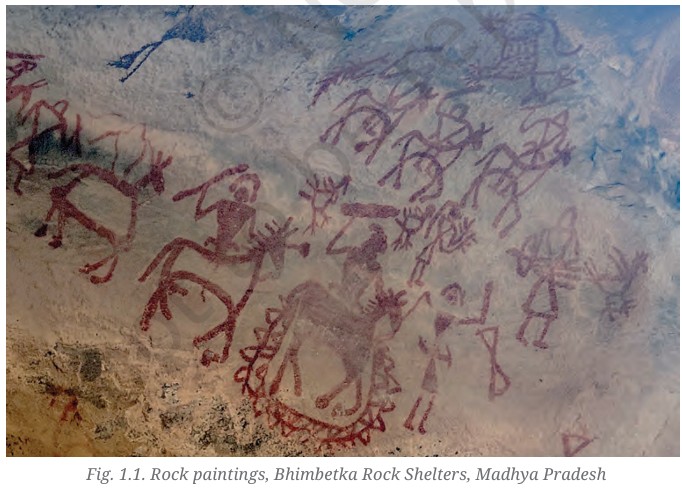
Tangible and intangible cultural heritage:
Civilisations across the world have developed their own cultural practices and traditions. The United Nations Educational, Scientific and Cultural Organization (UNESCO) defines culture as the distinct spiritual, material, intellectual, and emotional features characterising a society. According to UNESCO, all over the world today, cultural heritage is considered to be of two kinds:
1. Tangible cultural heritage
Definition: Tangible cultural heritage refers to the physical objects and material things that represent a community’s culture, history, traditions, and artistic achievements.
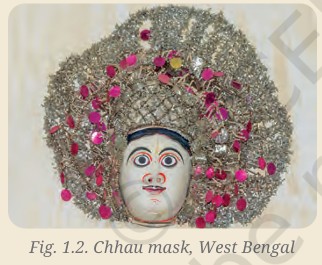
It includes artefacts, monuments, paintings, sculptures, manuscripts, musical instruments, traditional clothing, jewellery, masks, stage props, tools, and other physical objects. These items provide valuable information about the lifestyles, beliefs, skills, and creativity of people from different historical periods.
Tangible cultural heritage helps us understand our past and appreciate the artistic and cultural traditions passed down through generations. Preserving these objects is important because they connect us with our history and help future generations learn about their cultural roots.
Examples:
The Taj Mahal, ancient sculptures, traditional jewellery, historical manuscripts, Chhau mask, West Bengal and folk musical instruments.
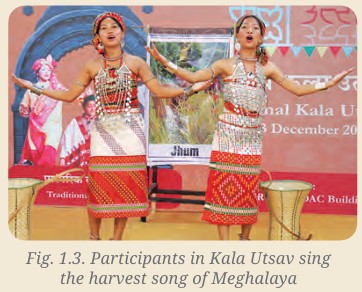
2. Intangible cultural heritage
Definition: Intangible cultural heritage refers to the living traditions, knowledge, skills, and cultural expressions that are passed down from one generation to another.
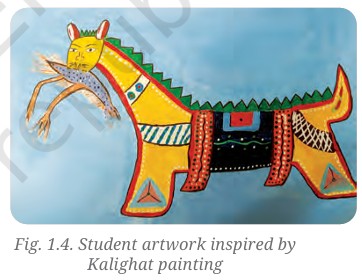
It includes oral traditions, folk music, dance, theatre, social practices, rituals, festivals, traditional knowledge, and practices related to nature and the universe. It also includes the skills used to create traditional handicrafts and artworks.
Intangible cultural heritage reflects the beliefs, values, customs, and identity of communities. Unlike tangible heritage, it does not mainly consist of physical objects; instead, it lives through people’s practices, performances, knowledge, and skills. Preserving it helps communities maintain their cultural identity and pass their traditions on to future generations.
Examples:
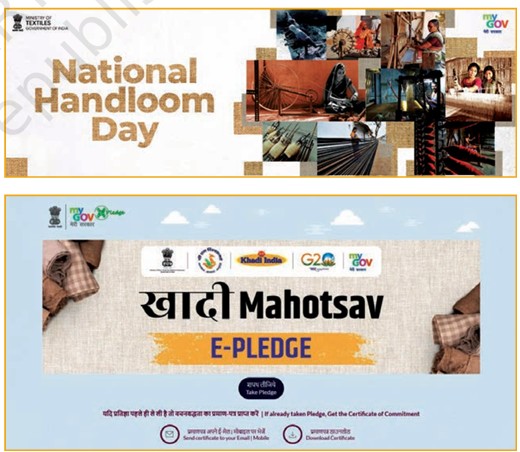
Bharatanatyam, folk songs, storytelling, traditional festivals, yoga, and the skills of handloom weaving.
| NOTE:- Purpose of the Arts The Arts are a foundational part of our cultural heritage and have consistently provided new ways for people to express their ideas, thoughts, and feelings. The practice of creating and living with the Arts has enriched societies and inspired them to pass their creative knowledge from one generation to the next. In this way, the Arts link the present with the past and nurture hope and vision for the future. Why should we study the history of the Arts The knowledge of history instils awareness of and pride in our rich cultural heritage. The Arts ignite our curiosity about the time, place, techniques, and environment of the people who created them. |
| Why timeline matters : This chapter holds special importance because it brings together. Four major art forms— Theatre, Music, Dance, and Visual Arts—in an integrated timeline, allowing you to see how creativity and culture have evolved as one interconnected story. When you study Indian and global artistic developments across art forms through the ages, you will be able to understand the uniqueness of your culture and what it shares with other cultures too. |
Glimpses of the Arts of India and the world: A timeline

Śhruti, Smṛiti, and Timeless Traditions:
Introduction
India’s cultural heritage has been preserved for thousands of years through oral traditions, ancient scriptures, storytelling, music, dance, drama, and other artistic expressions. Before writing became widespread, people passed knowledge, languages, customs, and artistic skills from one generation to another through listening, speaking, observing, and practising. Two important concepts associated with these traditions are Śhruti and Smṛiti.
1. Śhruti – That Which Is Heard
Śhruti means “that which is heard.” It refers to sacred knowledge traditionally transmitted orally from teachers to students. The guru–śhiṣhya-paramparā, or teacher–student tradition, played an important role in preserving the Vedas through careful listening, memorisation, and recitation.
Parents and elders also preserve oral traditions through lullabies, conversations, folk songs, and storytelling. These practices help children learn language, values, customs, and cultural knowledge.
2. Smṛiti – That Which Is Remembered
Smṛiti means “that which is remembered.” It is associated with traditions and texts transmitted through memory, narration, and written records. The Rāmāyaṇa, Mahābhārata, Purāṇas, and Dharmaśāstras are important examples of the Smṛiti tradition.
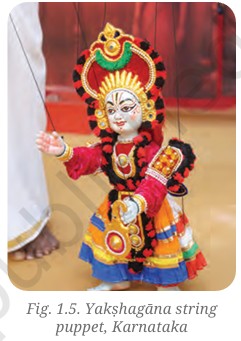
Stories from these texts continue to inspire Indian visual and performing arts. Traditional forms such as Rāmalīlā, Terukūttu, Bhavāi, Paṭachitra, Bayalāṭa, and Aṅkīyā Nāṭ present stories through regional languages, costumes, music, dance, paintings, and dramatic performances.
3. Early Traditions of Performing Arts
Early Indian performing traditions developed through religious rituals, storytelling, music, and dance. Vedic yajña rituals combined movement, dialogue, and musical recitation. The Sāmaveda played an important role in the development of Indian musical traditions, with sacred verses being chanted using specific notes. References to instruments such as the dundubhi, an ancient drum, also appear in the Ṛigveda.
Indian epics describe several figures associated with artistic traditions. Lava and Kuśha narrate the story of Rāma and Sītā through music and poetic performance. Śiva is worshipped as Naṭarāja, the Lord of Dance, while Kṛṣhṇa is celebrated as Muralīdhara, the flute player. Rāvaṇa is also portrayed as a skilled musician, and Arjuna, during his exile, teaches dance in the guise of Bṛihannalā.
Conclusion
Śhruti, Smṛiti, and oral traditions have played a vital role in preserving India’s cultural heritage. Through storytelling, recitation, music, dance, theatre, and visual arts, generations have continued to share knowledge and artistic expressions. These timeless traditions connect the past with the present and help preserve India’s rich cultural identity for future generations.
| Yajña rituals: Definition: Yajña rituals are ancient Vedic ceremonies in which offerings are made into a sacred fire while priests or participants recite Vedic mantras. Kuśhīlava Tradition: The Kuśhīlava tradition was an ancient Indian performing tradition involving professional singers, storytellers, and performers. They presented stories through music, singing, poetry, and dramatic performances. Pāṇini’s Aṣṭādhyāyī mentions this tradition, showing that performing arts were recognised as an occupation in ancient India. |
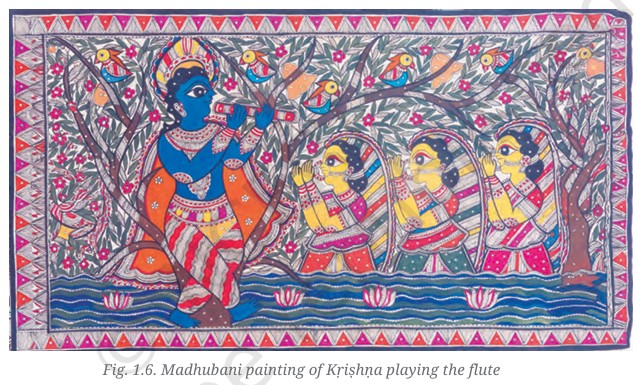
Madhubani painting of Kṛiṣhṇa playing the flute:
Madhubani painting of Kṛiṣhṇa playing the flute is a traditional Indian folk artwork from the Mithila region of Bihar. It depicts Lord Kṛiṣhṇa playing his flute, a symbol of divine love, peace, and spiritual harmony.
Madhubani art is known for its bold outlines, vibrant colours, intricate patterns, and decorative motifs inspired by nature, mythology, and everyday life. Artists traditionally use natural pigments and handmade materials, although modern artists also use synthetic colours and paper.
This painting reflects India’s rich cultural heritage by combining religious storytelling with traditional artistic techniques. It also demonstrates how stories from Indian mythology continue to inspire visual arts and preserve cultural traditions across generations.
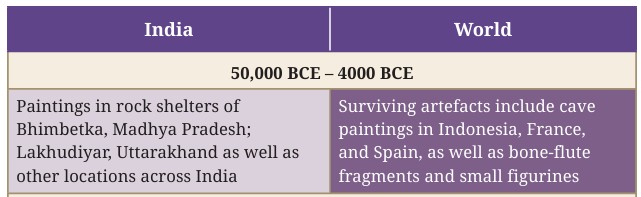
1.) 50,000 BCE – 4000 BCE (Prehistoric Art in India ):
Historical background
The period before the development of written records is known as prehistory. Our understanding of prehistoric life comes mainly from archaeological evidence, including stone tools, rock paintings, engravings, figurines, and other material remains.
Prehistoric art provides clues about how early humans observed animals, interacted with their surroundings, moved in groups, hunted, and expressed ideas. However, the exact meanings of many paintings remain uncertain because the artists left no written explanations.
Important: The date range 50,000 BCE–4000 BCE is a broad educational framework, not a precise date for every Indian rock painting. Different sites and artworks belong to different periods, and some Indian rock art continued to be created long after 4000 BCE.
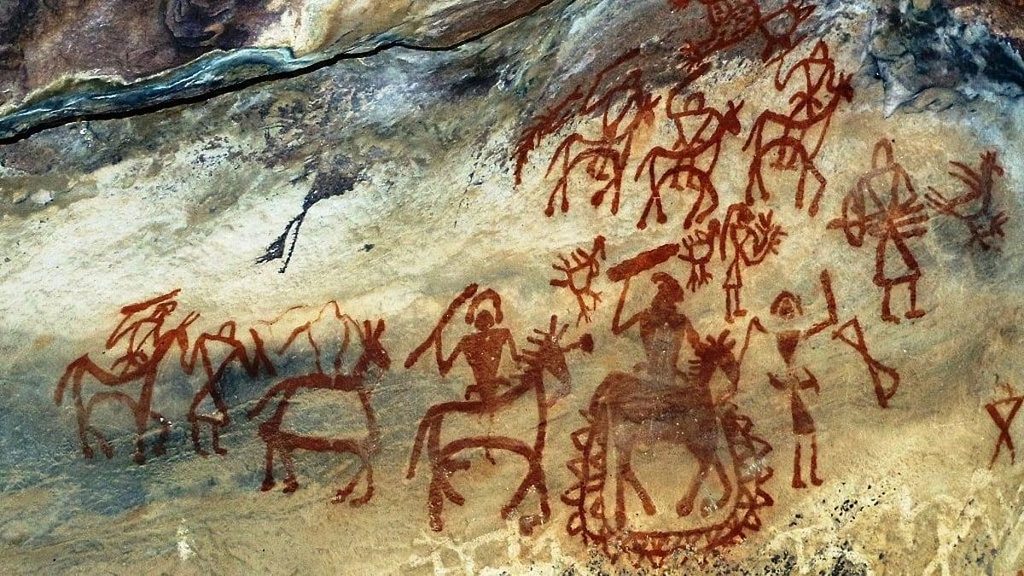
I. Bhimbetka Rock Shelters
Bhimbetka is located in the Vindhyan Hills of Madhya Pradesh, south of Bhopal. It contains hundreds of natural sandstone rock shelters, many of which have paintings on their walls. The site was brought to archaeological attention by V. S. Wakankar in 1957 and was inscribed on the UNESCO World Heritage List in 2003.
Important features
- Subjects: Paintings depict animals, hunting, dancing, group activities, processions, and scenes interpreted as rituals or everyday life.
- Colours: Red and white are prominent, with yellow and green also reported. Artists used mineral and earth-based pigments.
- Artistic techniques: Figures vary in size, outline, detail, and style. Some paintings overlap, indicating that different generations added images to the same rock surfaces.
- Historical value: The paintings provide evidence about human interaction with the landscape and help researchers investigate prehistoric hunting and gathering communities.
How old are the paintings?
The rock shelters preserve evidence of human occupation from very early Stone Age periods, while the paintings represent several later phases, from the Mesolithic period into historical times. The age of the shelter and the age of a particular painting are not necessarily the same. Many paintings have been dated indirectly through style, overlapping images, archaeological context, and comparisons with other evidence, rather than by directly dating the paint itself.
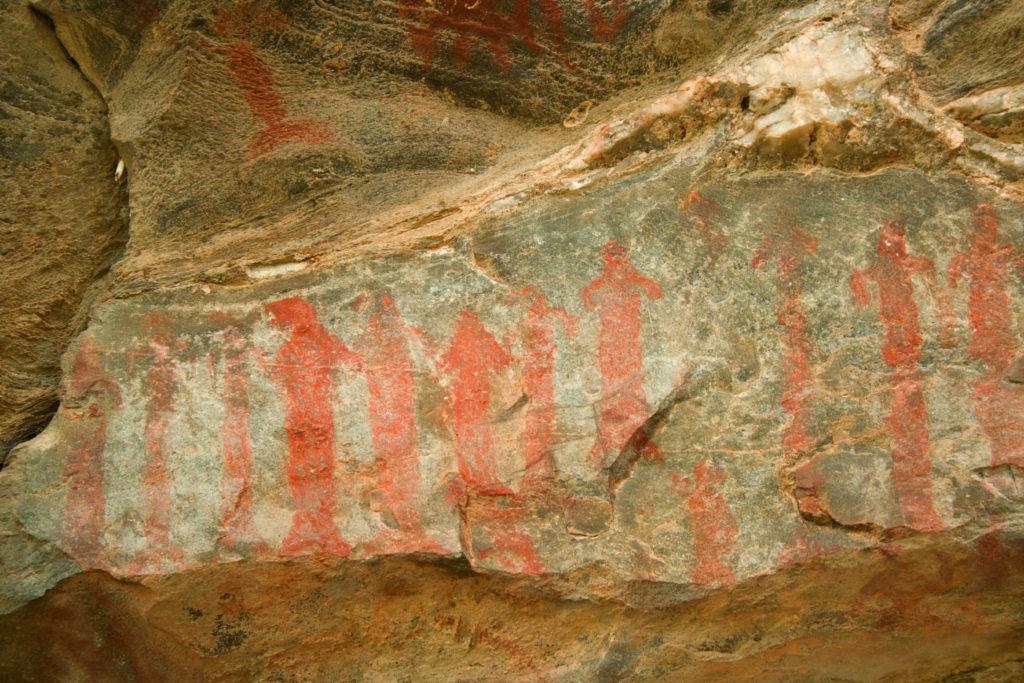
II. Lakhudiyar Caves
Lakhudiyar is a prehistoric rock-art site near Barechhina, in the Almora region of Uttarakhand, beside the Suyal River. The name is commonly translated as “one lakh caves.” The site is known for paintings of human figures, animals, and geometric patterns.
Important features
- Human figures: People are represented using simple, stick-like forms. One notable scene shows human figures holding hands, often interpreted as a group dance.
- Animal motifs: The paintings include animal forms, including a long-snouted animal, a fox-like figure, and a multi-legged lizard-like form.
- Geometric designs: Wavy lines, groups of dots, and rectangular patterns appear alongside human and animal figures.
- Colours: Black, red ochre, and white are documented. Some paintings overlap, and the textbook describes an apparent sequence of black, red, and then white paintings.
- Archaeological importance: The images demonstrate the use of simplified forms, patterns, and colour to communicate visually. Their precise meanings remain uncertain.
Other important prehistoric rock-art sites in India:
Kupgallu, Karnataka
A site associated with prehistoric rock art, including paintings made with red ochre and white pigments. It contributes to our understanding of early artistic practices in southern India.
Piklihal, Karnataka
Known for prehistoric remains associated with early communities in the Deccan region. It is among the sites discussed in studies of early Indian rock paintings.
Tekkalkota, Karnataka
Another important site associated with prehistoric artistic expression, including the use of natural rock surfaces as a medium for painting.
Materials and techniques used
Prehistoric artists worked with materials available in their surroundings. Mineral pigments, including red ochre, were used to create coloured designs on rock surfaces. The documented palettes vary between sites and include red, white, and black, with yellow and green also reported at Bhimbetka.
Artists used outlines, filled shapes, simplified human figures, animal forms, and geometric patterns. Some paintings were placed over earlier images, allowing researchers to study the relative sequence of artistic activity. The exact recipes used at every site cannot be established from the appearance of the paintings alone.
Related Developments in Global Art:
During prehistoric times, early humans created remarkable artworks in different parts of the world. Famous cave paintings have been discovered at Altamira, Chauvet Cave, and Lascaux Cave in Europe, as well as on the Indonesian island of Sulawesi. These paintings often depict animals such as horses, bison, deer, and wild cattle. Artists used natural pigments, simple lines, outlines, and shading to represent the animals’ shapes and physical features. Their ability to capture movement and form demonstrates their keen observation of nature and their developing artistic skills.
Early humans also explored music and sound. Ancient flutes made from bird bones and mammoth ivory have been discovered at prehistoric sites in Europe, providing evidence of early musical traditions. However, these instruments should not be confused with Neanderthal flutes, whose identification and interpretation remain debated. Together, these discoveries reveal that prehistoric communities expressed themselves through visual art and music, laying important foundations for the development of human creativity across the world.

2.) 4000 BCE – 500 BCE: Art and Early Civilisations:
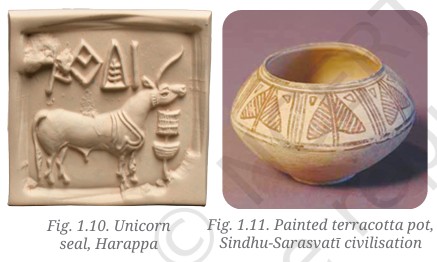
Between 4000 BCE and 500 BCE, early civilisations flourished along river valleys across the world. People developed writing systems to record their lives, beliefs, trade, and cultural practices. In the Indian subcontinent, the Indus Valley Civilisation, also known as the Harappan Civilisation, produced seals bearing inscriptions in a script that remains undeciphered. These seals, along with pottery, ornaments, terracotta figurines, and sculptures, demonstrate the artistic creativity and technical expertise of the people.
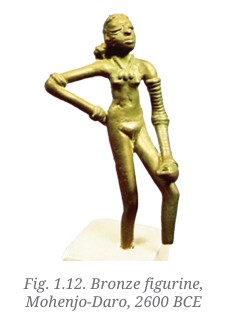
One of the most famous artworks from this period is the bronze figurine popularly known as the Dancing Girl, discovered at Mohenjo-daro. It was created using the lost-wax casting technique, a method in which a wax model is covered with a moulding material, and the melted wax is replaced with molten metal. This technique continues to be practised by traditional metalworkers in regions such as West Bengal, Jharkhand, and Chhattisgarh.
The figurine depicts a young female figure standing confidently, with one hand resting on her hip, the other hanging by her side, and her head held slightly raised. Her posture, ornaments, and carefully modelled features reveal the sculptor’s understanding of the human form. This remarkable artwork reflects the advanced metalworking skills and rich artistic traditions of the Indus Valley Civilisation.
Related Developments in Global Art:
During ancient times, art played an important role in the civilisations of Mesopotamia, Egypt, and China. People created sculptures, pottery, jewellery, paintings, seals, and decorative objects that reflected their religious beliefs, social life, rulers, and cultural traditions.
i. Mesopotamian Art
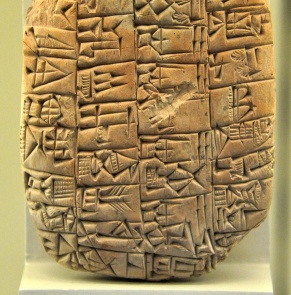
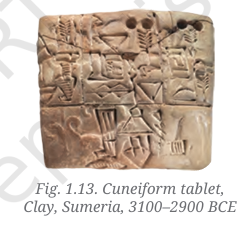
Mesopotamia, located between the Tigris and Euphrates rivers, was known for its clay tablets, cylinder seals, monumental temples called ziggurats, and carved stone reliefs. Artists used clay, stone, and metal to depict gods, kings, animals, and important events.
ii. Egyptian Art
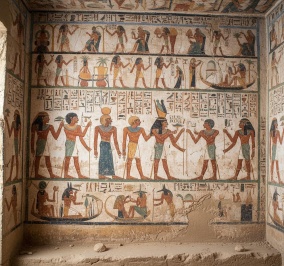
Ancient Egyptian art included pyramids, tomb paintings, statues, jewellery, and decorated coffins. Artists used hieroglyphic writing and symbolic images to express religious beliefs, honour rulers, and represent ideas about life after death. The pyramids remain remarkable examples of their architectural achievements.
iii. Chinese Art
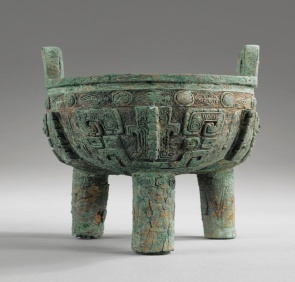
Ancient Chinese artists developed sophisticated bronze casting, jade carving, pottery, and decorative designs. Bronze ritual vessels were used in ceremonies, while artistic objects often reflected beliefs about ancestors, nature, and social status. These traditions demonstrate remarkable craftsmanship and technical knowledge.
Many artefacts from these civilisations are preserved in museums around the world. Studying museum collections, historical monuments, and books helps us understand how art developed alongside writing, religion, technology, and social life. These ancient artistic traditions continue to inspire artists and architects today.
iv. Cuneiform was one of the first systems of writing that developed in Mesopotamia and Persia. This cuneiform tablet with seal impressions is believed to be an administrative account of barley distribution.
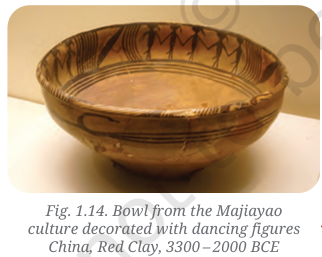
v. Thousands of everyday objects like this bowl have been found in archaeological sites of ancient civilisations across the world.
Discussion circle
Comparison of Pottery from Ancient Civilisations
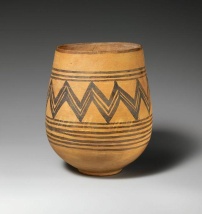
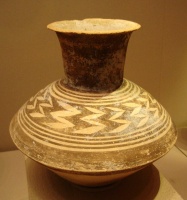
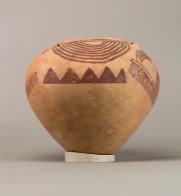
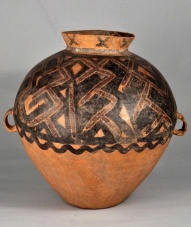
Pottery from the Sindhu-Sarasvatī (Indus Valley) Civilisation can be compared with pottery from Mesopotamia, Egypt, and China. These civilisations produced pottery for everyday use, storage, trade, and religious ceremonies.
i. Sindhu-Sarasvatī Civilisation
Pottery was commonly made from red clay, often decorated with black geometric patterns, plants, and animal motifs. Pots, bowls, jars, and storage vessels demonstrate skilled craftsmanship and standardised shapes.
ii. Mesopotamian Civilisation
Mesopotamian pottery included bowls, jars, and vessels used for storing food and liquids. Some examples feature painted geometric designs, while others are plain. Pottery production supported domestic life and trade.
iii. Egyptian Civilisation
Egyptian pottery was made in different shapes and colours, including red, brown, and buff-coloured vessels. Some pots were decorated with lines, animals, plants, or scenes from daily life and were used in households, tombs, and religious practices.
iv. Chinese Civilisation
Early Chinese pottery included red and grey earthenware, as well as painted vessels with geometric and natural motifs. Neolithic painted pottery is particularly notable for its balanced designs and decorative patterns.
Observations
- Similarities: All four civilisations made pottery for practical purposes, such as cooking, storing food and water, and transporting goods. Many also decorated vessels with patterns or images inspired by nature and everyday life.
- Differences: Harappan pottery often features black designs on a red surface. Mesopotamian pottery varied by region and period, Egyptian pottery included distinctive vessel shapes and colours, and some early Chinese pottery displayed elaborate painted patterns.
- Artistic skills: The use of clay, controlled firing, carefully shaped vessels, and decorative techniques demonstrates the technical knowledge of ancient potters.
- Cultural significance: Pottery provides valuable evidence of the lifestyles, artistic traditions, trade networks, and beliefs of ancient communities.
Conclusion: Pottery from these civilisations shows that, despite geographical and cultural differences, ancient people combined creativity with practical needs. Their pottery helps us understand the development of art, technology, and daily life in early human societies.
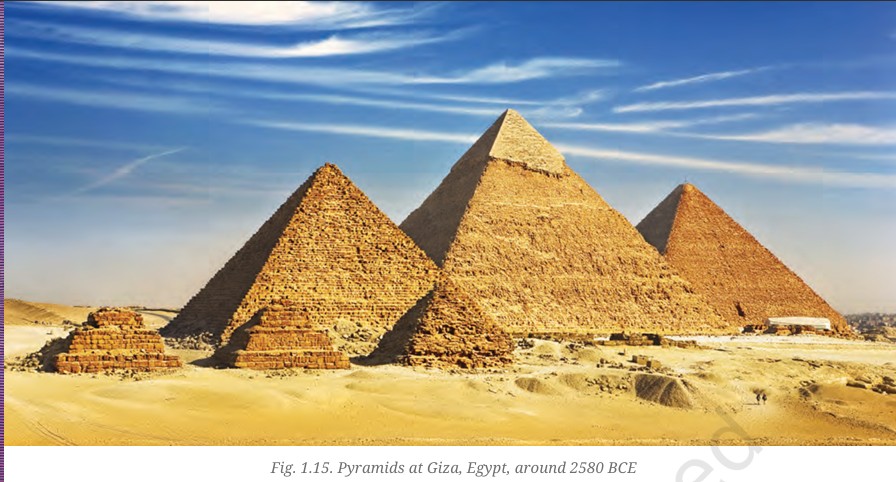
The Pyramids of Ancient Egypt
The pyramids of ancient Egypt are monumental stone structures built primarily as tombs for the pharaohs, the rulers of Egypt. They were designed to protect the bodies of the deceased rulers and their funerary belongings, reflecting ancient Egyptian beliefs about the afterlife. The most famous examples are the Pyramids of Giza, including the Great Pyramid, built for Pharaoh Khufu during the Old Kingdom, around the 26th century BCE.
Constructing these massive structures required careful planning, skilled workers, architectural knowledge, and the transportation of enormous stone blocks.
Their geometric shapes, solid foundations, and precise alignment demonstrate the remarkable engineering abilities of ancient Egyptians.
Pyramids formed part of larger funerary complexes that included temples and other structures. They remain important examples of ancient architecture and provide valuable insights into Egyptian art, religion, technology, and society.
Musical Instruments of Ancient Egypt and Mesopotamia
Music played an important role in the religious ceremonies, celebrations, royal gatherings, and everyday lives of ancient Egyptians and Mesopotamians. Archaeological discoveries, including preserved instruments, fragments, and artistic depictions, provide evidence of their musical traditions.
Ancient Egypt: Musical instruments included harps, lyres, flutes, drums, rattles, and the sistrum, a metal percussion instrument that produced a jingling sound. Musicians performed during religious rituals, festivals, and celebrations.
Ancient Mesopotamia: People played lyres, harps, flutes, and drums. One remarkable discovery is the collection of lyres and harps from the Royal Cemetery of Ur, dating to around 2500 BCE. These instruments demonstrate the advanced craftsmanship of Mesopotamian artisans.
Although some ancient instruments have survived, many have deteriorated over thousands of years. Archaeologists and historians also study musical instruments shown in carvings, paintings, and sculptures to understand how ancient people created music.
These discoveries reveal that music was an important part of ancient cultural life and that several instrument families used today have very old historical roots.
Arched Harp: An Ancient Egyptian Musical Instrument:
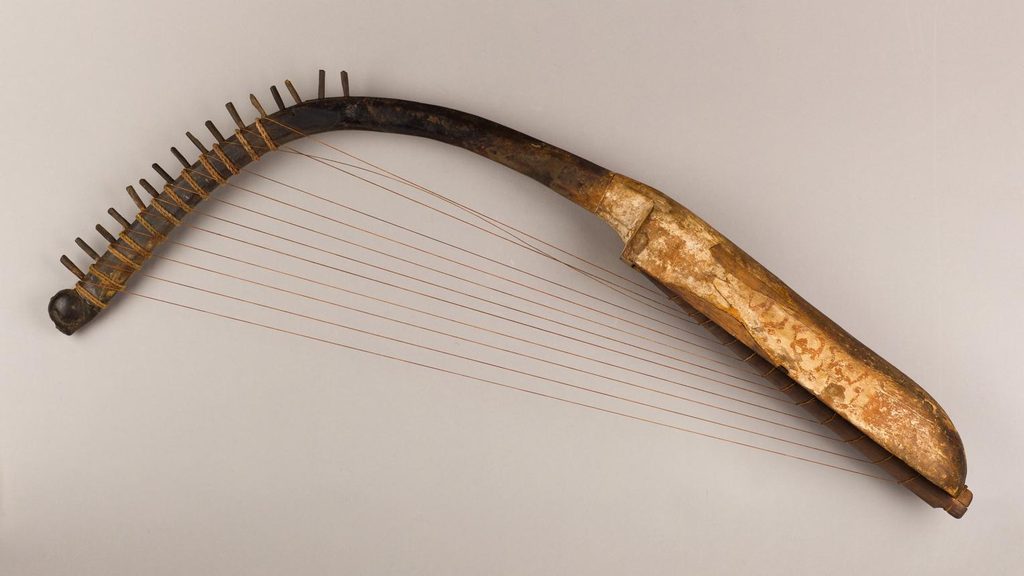
Arched harp, Wooden musical instrument with strings, Egypt,
1390–1295 BCE
The arched harp was a stringed musical instrument used in ancient Egypt. Made primarily from wood, it had a curved frame with strings stretched between its ends. The strings were plucked with the fingers to produce musical sounds. Harps were often played during royal gatherings, religious ceremonies, banquets, and other social occasions.
This wooden musical instrument, dated to approximately 1390–1295 BCE, belongs to the New Kingdom period of ancient Egyptian history. Harps are frequently depicted in Egyptian tomb paintings and reliefs, where musicians perform for rulers, guests, and religious gatherings. Their presence in these artworks demonstrates the importance of music in Egyptian culture.
The arched harp is an important example of ancient musical craftsmanship. Its design also helps historians understand the early development of stringed instruments and the long history of music in human civilisation.
The Passion Play of Abydos: An Early Form of Theatre:
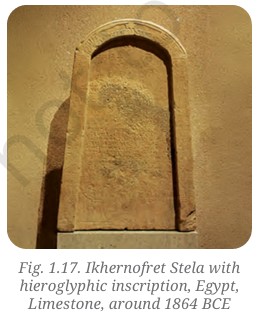
Ikhernofret was an important official and treasurer during the reign of Pharaoh Senusret III in Egypt’s Middle Kingdom, around the 19th century BCE. He was associated with the annual religious festival dedicated to Osiris, the Egyptian god linked with the afterlife, resurrection, and fertility. The festival took place at Abydos, an important religious centre devoted to Osiris.
A stone inscription known as the Ikhernofret Stela describes the rituals and ceremonial activities performed during the festival. These included ritual processions, symbolic actions, the use of sacred objects, and the participation of priests and other people. The ceremonies represented important events associated with Osiris and his divine story.
The festival is sometimes described as the Passion Play of Abydos because its ritual enactments involved the dramatic presentation of religious events. The inscription provides valuable evidence of organised performance in ancient Egypt, including designated roles, a sequence of actions, symbolic props, costumes, and specific spaces for ceremonies.
Although it was primarily a religious ritual rather than theatre in the modern sense, the festival demonstrates how storytelling, movement, symbolism, and collective participation were combined in ancient performances. It offers an important glimpse into the historical relationship between religion, ritual, and the development of theatre.
3.) 500 BCE – 600 CE: Artistic Developments in India
Between 500 BCE and 600 CE, Indian art and culture flourished through developments in drama, dance, music, painting, sculpture, and literature. Artists from different regions developed specialised skills and artistic traditions. Important texts were composed to record artistic knowledge, explain techniques, and guide future generations of performers and artists.
Important Texts and Treatises on the Arts:
i. Nāṭyaśhāstra by Bharata Muni
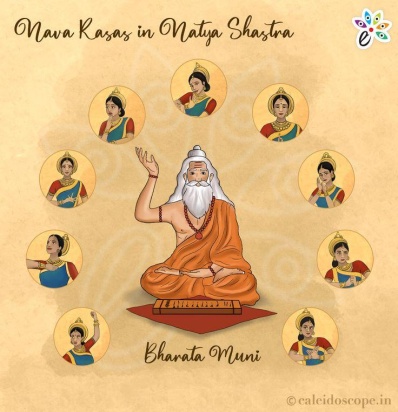
The Nāṭyaśhāstra is a foundational Sanskrit treatise on theatre, dance, music, acting, stagecraft, and dramatic expression. It explains how performers communicate emotions and experiences through body movements, gestures, facial expressions, speech, and music. Its discussion of rasa is especially influential in Indian performing arts.
ii. Viṣṇudharmottara Purāṇa: Chitra-sūtra
The Chitra-sūtra, a section of the Viṣṇudharmottara Purāṇa, discusses the principles of painting, including drawing, proportions, colour, composition, and the representation of figures. It provides valuable insights into classical Indian ideas about visual art and the relationship between observation, technique, and artistic expression.
iii. Silappadigāram by Iḻaṅkō Aḍigaḷ
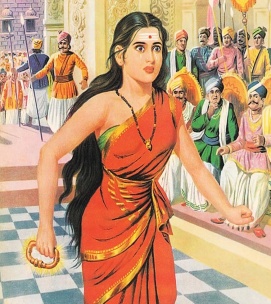
Silappadigāram is one of the great classical Tamil epics, traditionally attributed to Iḻaṅkō Aḍigaḷ. Through the story of Kannagi and Kovalan, it provides insights into ancient Tamil society, music, dance, performance traditions, and cultural life.
Why Is the Nāṭyaśhāstra Important?
The Nāṭyaśhāstra is among the most influential early treatises on Indian performing arts. It presents systematic explanations of drama, dance, music, acting, costumes, stage design, gestures, and the expression of emotions. Its ideas have shaped many Indian classical dance and theatre traditions.
One of its most significant contributions is the rasa theory, which explains how artistic performances evoke aesthetic experiences in an audience. The text connects emotional states (bhāvas) with aesthetic experiences known as rasas.
The following are the eight rasas traditionally associated with the original rasa scheme of the Nāṭyaśhāstra:
| Rasa | Meaning | Associated bhāva |
| Śṛṅgāra | Love and beauty | Rati (love) |
| Hāsya | Laughter and humour | Hāsa (mirth) |
| Karuṇa | Sorrow and compassion | Śoka (grief) |
| Raudra | Anger and fury | Krodha (anger) |
| Vīra | Courage and heroism | Utsāha (energy or enthusiasm) |
| Bhayānaka | Fear | Bhaya (fear) |
| Bībhatsa | Disgust | Jugupsā (aversion) |
| Adbhuta | Wonder and amazement | Vismaya (astonishment) |
The Nāṭyaśhāstra originally describes eight rasas; Śānta (peace or tranquillity) was incorporated into later developments of rasa theory.
These treatises preserve India’s artistic knowledge and demonstrate how creativity, technical skill, philosophy, and cultural traditions were interconnected. They continue to guide the study and practice of Indian arts today.
Cave Architecture and Stūpa:
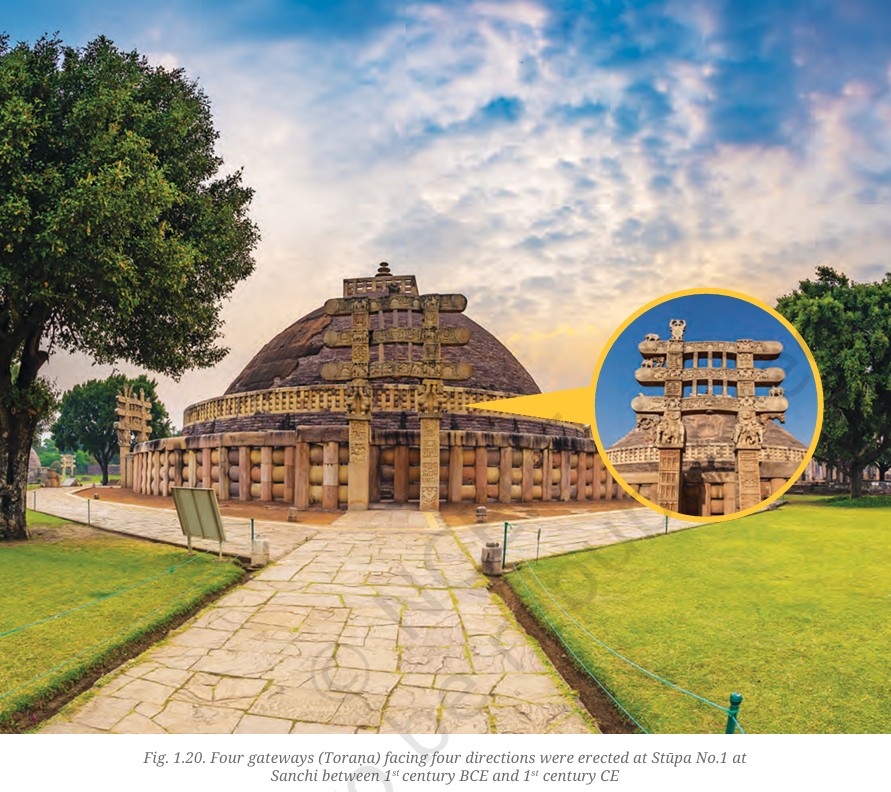
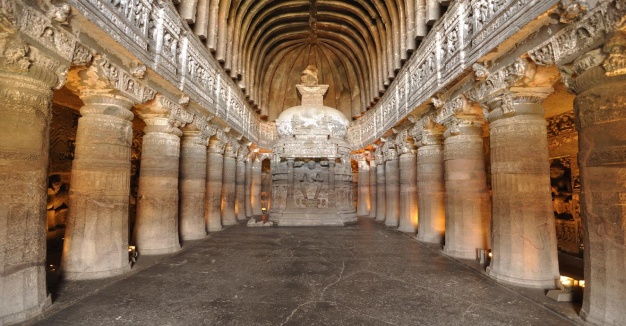
From the third century BCE onwards, the growth of Buddhism and Jainism encouraged the development of distinctive architectural traditions in India. Rulers, merchants, monks, and communities supported the construction of stūpas, chaityas, and vihāras as places for worship, meditation, learning, and monastic life. These structures became important centres of religious and artistic activity.
1. Stūpa
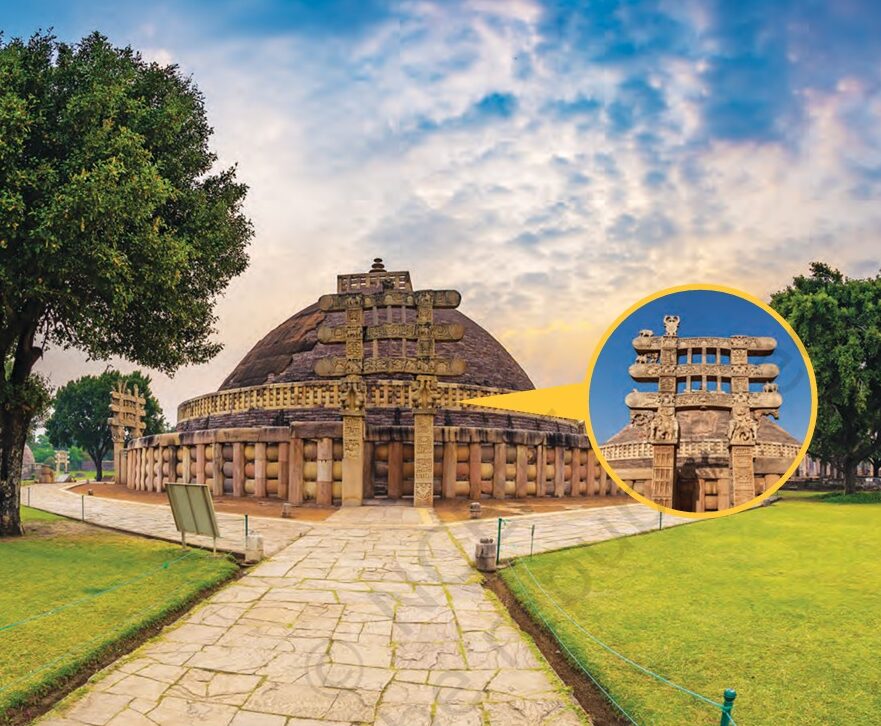
A stūpa is a dome-shaped Buddhist monument originally associated with the preservation of sacred relics. It also serves as a focus for worship and circumambulation, the practice of walking around the monument as a religious act. The Great Stūpa at Sanchi in Madhya Pradesh is a famous example. Its gateways and railings feature carvings depicting stories from the Buddha’s life, Jātaka tales, and important symbols of Buddhism.
2. Chaitya
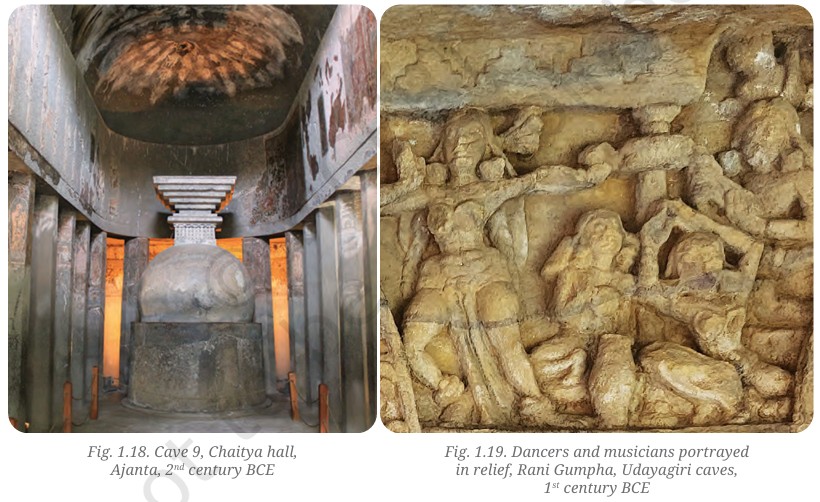
A chaitya is a Buddhist prayer hall, often containing a stūpa at its far end. Many chaityas were excavated directly into rock, with pillars, vaulted ceilings, and spaces for congregational worship. The rock-cut chaitya halls at Karla and Ajanta demonstrate the skill of ancient Indian architects and sculptors.
3. Vihāra
A vihāra is a monastery where monks and nuns lived, studied, and meditated. Rock-cut vihāras often contain a central hall surrounded by small cells for residents. The cave complexes at Ajanta and Ellora preserve examples of monastic architecture, paintings, sculptures, and religious imagery.
Important Sites
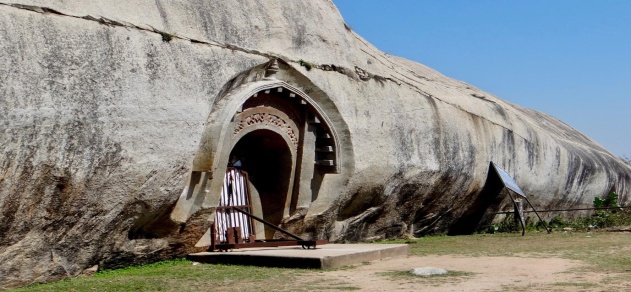
- Barabar, Bihar: Famous for some of India’s earliest surviving rock-cut caves, including caves associated with the Ajivikas.
- Bharhut, Madhya Pradesh: Known for its ancient Buddhist stūpa remains and richly carved railings.
- Vidisha and Sanchi, Madhya Pradesh: Important centres of Buddhist architecture and sculpture.
- Vaishali, Bihar: An important site associated with the history of Buddhism and early Buddhist monuments.
- Udayagiri and Khandagiri, Odisha: Famous mainly for rock-cut caves associated with Jainism.
- Sarnath and Kushinagar, Uttar Pradesh: Important Buddhist pilgrimage centres associated with major events in the Buddha’s life.
- Amaravati, Andhra Pradesh: Renowned for its Buddhist stūpa and elaborate sculptural tradition.
- Ajanta and Ellora, Maharashtra: Famous for rock-cut religious architecture, sculptures, and paintings representing Buddhist, Hindu, and Jain traditions.
These architectural developments demonstrate the remarkable craftsmanship of ancient Indian builders and artists. Stūpas, chaityas, and vihāras reflect the religious beliefs, artistic achievements, and community life of their time. Many remain important historical monuments and pilgrimage destinations today.
| Do you know? Kauṭilya’s Arthaśāstra recognises naṭa (actors), nartakī (female dancers), gāyaka (singers) and vādaka (musicians) as professional performers who played an important role in society and contributed to the state’s economy. Their artistic skills provided entertainment, supported cultural activities and created opportunities for earning a livelihood. This recognition highlights that dance, music and theatre were not merely forms of artistic expression in ancient India but also important professions that formed part of the economic and cultural life of the state. |
Let us recall
The Great Stūpa at Sanchi is one of the most important Buddhist monuments in India. Located in Madhya Pradesh, it was originally commissioned by Emperor Ashoka in the 3rd century BCE. A stūpa is a dome-shaped structure built to preserve sacred relics and serve as a place of Buddhist worship and meditation.
The Sanchi Stūpa is known for its hemispherical dome, stone railings and beautifully carved gateways called toranas. These gateways depict scenes from the life of the Buddha, stories of his previous births (Jātakas), and important events associated with Buddhism. The monument reflects the artistic excellence, architectural knowledge and religious traditions of ancient India.
Today, the Sanchi monuments are recognised as a UNESCO World Heritage Site and stand as an enduring symbol of India’s rich cultural and spiritual heritage.
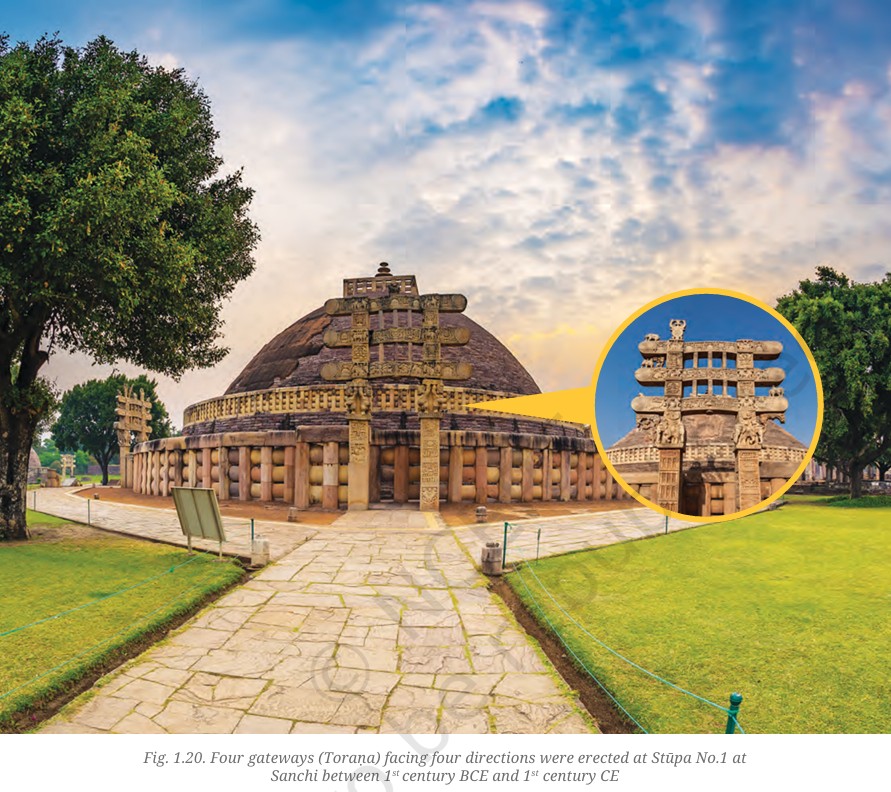
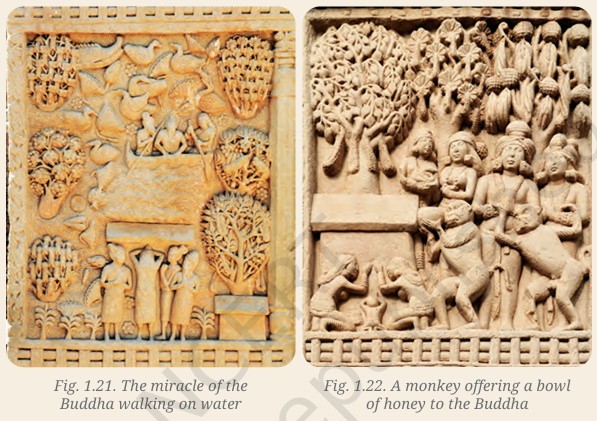
The four gateways (toranas) of the Great Stūpa at Sanchi are decorated with intricately carved stone reliefs depicting important episodes from the life of the Buddha and stories of his previous births, known as Jātakas. These include the Vessantara Jātaka, which teaches generosity and selflessness; the Mahākapi Jātaka, which highlights courage, compassion and sacrifice; and the Syāma Jātaka, which emphasises devotion, kindness and respect for parents.
These carvings often communicate Buddhist teachings through symbolic representations rather than direct portrayals of the Buddha. By reading these stories, we can better understand the meaning behind the reliefs, appreciate the artistic skills of ancient Indian sculptors, and explore the moral and spiritual values that shaped Buddhist traditions.
Activity 1.4
In the early phase of Buddhist art, the Buddha was often represented through symbols rather than his human figure. The relief panels on the gateways of the Great Stūpa at Sanchi contain several symbols associated with the Buddha and his teachings.
- Bodhi tree with a platform: Represents the Buddha’s enlightenment.
- Stūpa: Symbolises the Buddha’s presence and the remembrance of his teachings.
- Elephant: Associated with the dream of Queen Māyā and the Buddha’s birth.
- Lotus: Symbolises purity, spiritual growth and enlightenment.
- Empty throne: Represents the Buddha’s presence without depicting him in human form.
- Dharma Chakra (Wheel of Dharma): Symbolises the Buddha’s first sermon and the teaching of the Dharma.
- Footprints of the Buddha: Represent the Buddha’s presence and his spiritual path.
These symbols help us understand how early Buddhist artists expressed the Buddha’s life, teachings and spiritual significance without showing him directly in human form.
Activity 1.5
Imagine the Music
1. What do you think is the occasion?
The occasion might be a religious ceremony, a festival, a royal celebration, or a procession honouring the Buddha.
2. Identify the instruments or their categories.
The musicians may be playing drums and other percussion instruments, wind instruments such as flutes and trumpets, and string instruments.
3. What kind of music might they have played?
They might have played joyful and rhythmic music for celebrations, ceremonial music for religious occasions, or devotional melodies to accompany processions and dances.
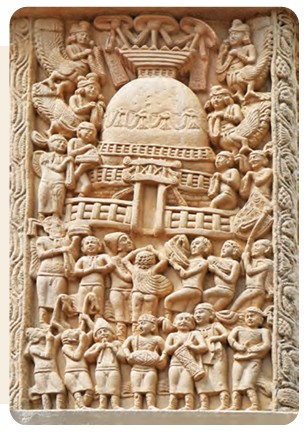
Fig. 1.23.
A group of performers
with musical instruments
Important centres for sculpture:
For a more reliable, historically accurate explanation, it is important to distinguish the contributions of Sarnath, Mathura and Gandhara, as well as the historical context of Ashoka’s pillars and the Lion Capital.
Sarnath, Mathura and Gandhara: Ancient Indian Sculpture
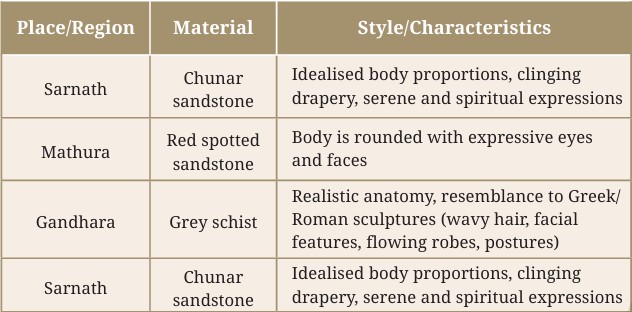
Sarnath, Mathura and Gandhara developed as important centres of sculpture, each with distinctive artistic features. Their sculptors created works associated with Buddhism, Hinduism and Jainism, although the religious traditions represented varied by region and period.
- Sarnath: Located near Varanasi in Uttar Pradesh, Sarnath was an important Buddhist religious and artistic centre. During the Gupta period (4th–6th centuries CE), its sculptors developed a refined style characterised by serene expressions, balanced proportions and delicately carved robes.
- Mathura: Located in present-day Uttar Pradesh, Mathura was a major centre of sculpture under the Kushanas and later rulers. Its workshops produced Buddhist, Hindu and Jain images, often using red sandstone. Mathura was also one of the important centres for the development of the Buddha’s human-form image.
- Gandhara: Situated in the north-western part of the Indian subcontinent, including areas of present-day Pakistan and Afghanistan, Gandhara developed a distinctive Buddhist artistic tradition. Its sculptures show influences from Greek and Roman art, particularly in the treatment of facial features, wavy hair and draped garments.
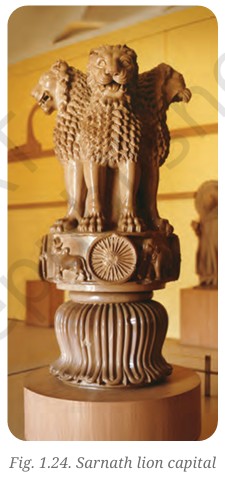
The Lion Capital of Ashoka
The Lion Capital of Ashoka is one of the finest surviving examples of Mauryan sculpture from the 3rd century BCE. It originally crowned an Ashokan pillar at Sarnath, the place associated with the Buddha’s first sermon. Carved from polished Chunar sandstone, it features four lions standing back-to-back above an abacus decorated with animals and wheels. The highly polished surface reflects the remarkable craftsmanship of Mauryan artisans.
The four lions appear on India’s National Emblem, adopted on 26 January 1950. The original capital is preserved in the Archaeological Museum at Sarnath.
Ashoka’s pillars and Dhamma
Emperor Ashoka erected pillars bearing inscriptions known as edicts during the 3rd century BCE. These inscriptions communicated his policies on Dhamma, including respect for elders, compassion towards living beings, ethical conduct and religious tolerance. Animal figures and other motifs on the pillars carried artistic and symbolic significance.
Historical clarification: The Lion Capital belongs to the Mauryan period, while the distinctive Sarnath school of Buddha sculpture reached its height during the Gupta period several centuries later. These are related parts of Sarnath’s artistic history, but they should not be treated as the same phase.
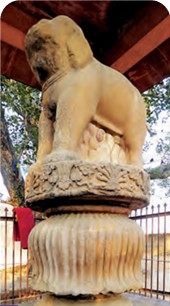
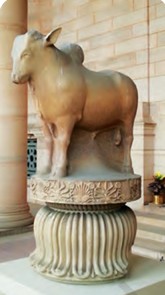
Animal Capitals of Ashoka’s Pillars:
(i) Vaishali Lion Capital
Located at Vaishali, Bihar, this capital features a single lion standing atop the pillar. It is an example of early Mauryan stone sculpture.
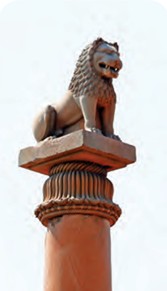
(ii) Rampurva Lion Capital
Found at Rampurva in Bihar, this capital depicts a single lion. It is noted for its carefully modelled form and polished stone surface.
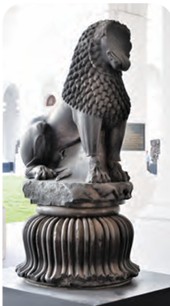
(iii) Sankissa Elephant Capital
Associated with Sankissa (Sankasya) in Uttar Pradesh, this capital features an elephant. Sankissa is also associated with Buddhist tradition.
(iv) Rampurva Bull Capital
This capital depicts a powerful bull and is distinguished by its naturalistic form. The original sculpture is preserved at Rashtrapati Bhavan in New Delhi.
These capitals belong to the tradition of Mauryan art, dating to the 3rd century BCE. They demonstrate the skill of ancient Indian sculptors in representing animals in stone.
The Emergence of Buddha Images in Mathura and Gandhara:
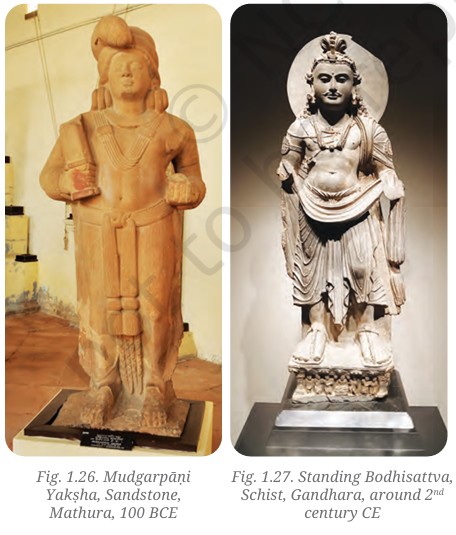
Along with Sarnath, Mathura and Gandhara emerged as important centres of art production in ancient India. During the early centuries CE, Buddhist art witnessed a significant development as artists increasingly began depicting the Buddha in human form rather than representing him only through symbols.
Mathura School of Art: The Mathura tradition drew inspiration from earlier Yakṣha sculptures, which were known for their powerful physiques, broad shoulders and strong bodily forms. Artists commonly used red sandstone to create Buddha images with a distinctive sense of strength and spiritual presence. The Mathura school also produced sculptures associated with Hinduism and Jainism, influencing artistic traditions across northern India.
Gandhara School of Art: The Gandhara tradition developed in the north-western Indian subcontinent and incorporated influences from Greek and Roman art. Its Buddha images often feature wavy hair, realistic facial features and deeply carved robes resembling classical drapery.
Sarnath School of Art: Sarnath became particularly renowned during the Gupta period for its serene Buddha images, refined proportions and delicately represented clothing. These sculptures express calmness, compassion and spiritual enlightenment.
Together, the Mathura, Gandhara and Sarnath traditions played a crucial role in the development of Buddhist sculpture, demonstrating how different regions developed distinctive artistic styles while expressing shared religious ideas.
Representation of Buddha in different places:
Iconography in Hindu Sculpture:
Iconography is the study and use of images, symbols and distinctive attributes to identify deities, characters or themes in art.
In Hindu sculpture, deities are recognised by their characteristic objects, gestures, vehicles and physical features. For example, Śhiva is identified by his trishula (trident) and damaru (small drum), while Sarasvatī is commonly depicted holding a veena and associated with a swan.
Viṣhṇu is recognised by attributes such as the shankha (conch), chakra (discus), gada (mace) and padma (lotus). His ten principal incarnations are known as the Daśhāvatāras.
How is the Daśhāvatāra sculpture different?
The Daśhāvatāra sculpture differs from the Buddhist sculptures discussed in this chapter in several ways:
- Subject matter: It represents an incarnation of Viṣhṇu, whereas the Buddhist sculptures depict the Buddha, Buddhist teachings or events from his life.
- Religious symbolism: Hindu sculptures use specific attributes and forms to identify deities and their incarnations. Buddhist sculptures may use symbols such as the Bodhi tree, Dharma Chakra, lotus and empty throne to represent the Buddha.
- Purpose and meaning: The Daśhāvatāra image expresses Hindu religious beliefs about Viṣhṇu and his incarnations, while Buddhist sculptures often communicate the Buddha’s teachings and path to enlightenment.
- Representation: The Hindu sculpture may depict a deity or incarnation with distinctive divine attributes, whereas early Buddhist art frequently represented the Buddha symbolically before human-form images became widespread.
Conclusion: Both Hindu and Buddhist sculptures use iconography to communicate religious ideas and identify important figures. However, their symbols, artistic conventions and religious meanings differ according to their respective traditions.
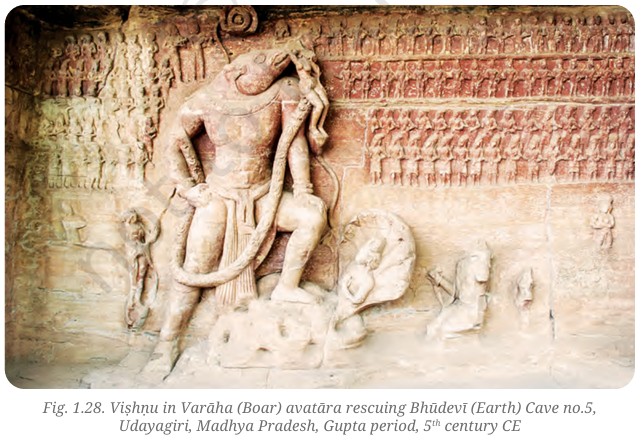
Viṣhṇu in Varāha Avatāra: Rescuing Bhūdevī:
Artwork:
Viṣhṇu in Varāha (Boar) avatāra rescuing Bhūdevī (Earth) Location: Cave No. 5, Udayagiri Caves Period: Gupta period, 5th century CE Art form: Rock-cut sculpture and religious relief
Description
The magnificent Varāha relief at Udayagiri depicts Viṣhṇu in his boar incarnation rescuing Bhūdevī, the Earth goddess, from the cosmic waters. According to Hindu mythology, the demon Hiraṇyākṣa carried the Earth into the depths of the cosmic ocean. Viṣhṇu assumed the form of Varāha, fought the demon, and rescued the Earth, restoring cosmic order.
In this sculpture, Varāha is shown with a powerful boar’s head and a human-like body. Bhūdevī is depicted being lifted to safety, symbolising the restoration of life and stability. The surrounding figures represent divine beings, sages and other participants in this cosmic event.
Artistic and cultural significance
The sculpture is an outstanding example of Gupta-period art, known for its balanced composition, monumental scale and expressive figures. The arrangement of gods and sages around Varāha makes the rescue a cosmic event rather than an ordinary act.
The artwork also symbolises the victory of good over evil, the protection of the Earth and the restoration of dharma (cosmic order). It is an important example of Hindu religious iconography, in which a deity’s distinctive form communicates a story and its spiritual meaning.
summary
The Varāha relief at Udayagiri demonstrates the artistic excellence and religious imagination of ancient India. By depicting Viṣhṇu rescuing Bhūdevī, it expresses the belief that divine power protects the world and restores balance whenever chaos threatens creation. It remains a remarkable achievement of Gupta sculpture and an important part of India’s cultural heritage.
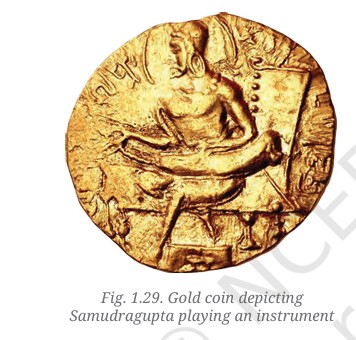
Gold coin depicting Samudragupta playing an instrument:
The Gupta period is known for its wide variety of coins, particularly gold coins, which provide valuable insights into the art and culture of ancient India. One such coin depicts Samudragupta, a powerful Gupta ruler, playing a seven-stringed, bow-shaped veena known as the Parivādinī. This depiction highlights his interest in music and the importance of musical traditions during the Gupta period.
A similar stringed instrument, called the Yāzh, is mentioned in Sangam literature, reflecting the rich musical heritage of ancient India.
Early Indian Painting Traditions:
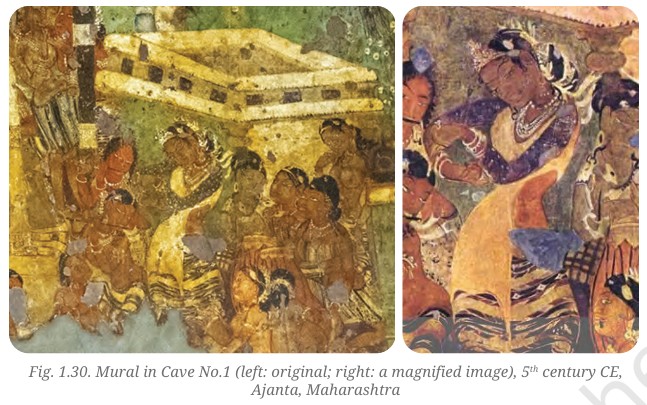
Early Indian painting traditions are beautifully represented in the Ajanta Caves in Maharashtra and the Sittannavasal Caves in Tamil Nadu. Paintings created directly on wall surfaces are known as murals.
At Ajanta, artists used earth pigments and natural colours over a prepared plaster surface to create detailed and expressive paintings. The use of blue pigment obtained from lapis lazuli suggests cultural and trade connections with regions such as Persia or Central Asia. Artists skillfully created a sense of depth and three-dimensionality through perspective and shading techniques.
Figure 1.30 depicts a scene from the Mahājanaka Jātaka, showing a dancer accompanied by musicians playing the flute, cymbals and drums. The graceful postures, clearly defined outlines, shaded tones and varied facial expressions demonstrate the artists’ remarkable skills.
These features can be associated with the principles of painting described in the Chitra-sūtra of the Viṣhṇu-dharmottara Purāṇa, reflecting the richness and sophistication of India’s ancient painting traditions.
Influence of Sanskrit Literature on the Arts:
Sanskrit literature played a significant role in the development of Indian music, dance and drama, particularly during the Gupta period. Literary works explored themes such as love, nature, courage, devotion and human emotions, providing inspiration for artists and performers.
The Pañchatantra, traditionally attributed to Viṣhṇu Śharmā, is a famous collection of stories that teaches moral lessons through engaging narratives and animal characters.
Sanskrit poets and playwrights gained widespread recognition for their creative works, many of which continue to inspire Indian art forms today.
Sanskrit texts and plays also featured characters who were skilled in music, dance and other performing arts. These characters and their stories provided rich material for theatrical performances, classical dances, paintings and sculptures.
The close relationship between literature and the arts helped preserve India’s cultural heritage and continues to influence its artistic traditions.
Here are a few examples:
Āmrapālī in the Buddhist text Therīgāthā
Mālavikā in Mālavikāgnimitram, a play by Kālidāsa
Urvaśhī in Vikramorvaśhīyam, a play by Kālidāsa
Vasantasenā in Mṛichchhakaṭikam, a play by Śhūdraka
| Do you know? Aśhvaghoṣha and Sanskrit Literature Aśhvaghoṣha was an important ancient Indian poet and dramatist who lived during the first and second centuries CE. He is regarded as one of the earliest known Sanskrit literary figures and made significant contributions to Sanskrit literature. His famous work, Buddhacharitam, describes the life of Gautama Buddha, including his birth, early life, renunciation, enlightenment and teachings. Composed in the form of a mahākāvya (epic poem), the work combines poetic beauty with Buddhist philosophy and spiritual ideas. Aśhvaghoṣha’s literary contributions helped develop Sanskrit poetry and influenced the presentation of religious themes through literature and the arts. His works also demonstrate how poetry could be used to communicate spiritual teachings and preserve important stories from India’s cultural and religious heritage. |
Rhythmic Recitation Challenge: Bhāravi’s Kirātārjunīyam:
Bhāravi’s Kirātārjunīyam is a famous Sanskrit mahākāvya (epic poem) known for its powerful language and heroic sentiment, or vīra rasa. The verse given in the activity is remarkable because it uses only one consonant, “न” (na), along with vowel sounds and other marks, demonstrating the poet’s extraordinary skill with language and rhythm.
The verse should be recited aloud several times to appreciate its rhythm, pronunciation and sound patterns. Although the words may seem difficult to understand at first, repeated recitation helps learners recognise the rhythmic flow and enjoy the musical quality of Sanskrit poetry.
The verse conveys an ethical idea associated with bravery: a truly courageous person understands their own strength and does not oppress or harm those who are weaker. It therefore connects poetic creativity with moral values, showing how Sanskrit literature combines linguistic artistry, rhythm and the ideals of heroism.
Related developments in global art:
Ancient Greek and Roman Contributions to the Arts:
Ancient Greek and Roman civilisations made significant contributions to visual arts, theatre, music, architecture and public entertainment. Their artistic traditions influenced the development of Western art and continue to shape modern theatre, sculpture, architecture and performance.
1. Greek theatre and performance
Greek theatre developed from religious festivals held in honour of Dionysus. Performances gradually developed into organised dramatic competitions featuring tragedy and comedy. Playwrights such as Aeschylus, Sophocles and Euripides became famous for their tragedies, while Aristophanes was known for his comedies.
Actors used masks to represent different characters, ages and emotions, allowing performers to play multiple roles. Performances often took place in large outdoor theatres with tiered seating arranged around a circular performance area called the orchestra. The word theatron comes from Greek and refers to a place for viewing, while skēnē originally referred to a structure behind the performance area, later used for scenery and backstage activities.
2. Roman art and portraiture
Roman art was influenced by Greek and Etruscan traditions but developed its own distinctive features. Roman sculptors were particularly skilled in portraiture, often representing individual facial features, wrinkles and signs of age. This realistic style, known as verism, was especially prominent during the Roman Republic and could communicate qualities such as experience, wisdom and public responsibility. However, Roman portraiture was not always realistic; emperors were also depicted with idealised features to convey authority and power.
3. Roman architecture and public entertainment
Roman architects constructed impressive public buildings, including amphitheatres, theatres, baths and circuses. The Colosseum is a famous example of Roman engineering. It hosted gladiatorial contests, animal hunts and other public spectacles. The Circus Maximus, a large chariot-racing venue in Rome, accommodated enormous crowds and became an important centre of public entertainment. These venues demonstrate how architecture supported mass performances and social gatherings in Roman society.
It is important to distinguish between these structures: the Colosseum was an amphitheatre, whereas the Circus Maximus was a circus designed primarily for chariot racing.
4. Greek and Roman masks and theatrical traditions
Masks were an important feature of ancient Greek theatre and were also used in Roman performances. They helped audiences recognise character types and distinguish different dramatic roles. Greek tragedy often explored fate, duty, suffering and the actions of gods and heroes, while comedy frequently used humour and satire to examine social and political life. Roman theatre adapted many Greek dramatic forms and developed its own popular entertainments, including mime and farce. Archaeological objects such as terracotta masks and sculpted theatre decorations provide evidence of these traditions.
5. Lasting influence on the arts
Greek and Roman artistic traditions continue to influence modern culture. Greek drama helped shape later traditions of tragedy and comedy, while Roman portraiture contributed important examples of realistic representation and political imagery. Roman arches, vaults and amphitheatre designs also influenced later architecture. Together, these cultures demonstrate how visual art, performance, storytelling and public spaces can express shared beliefs, social values and political power.
Conclusion: Ancient Greek and Roman civilisations made lasting contributions to theatre, sculpture, architecture and entertainment. Their artistic achievements reveal the importance of creativity in religious ceremonies, public life and cultural expression, and their influence remains visible in artistic traditions around the world.

4.) 600 CE–1200 CE Artistic Developments in India:
The period between 600 CE and 1200 CE witnessed remarkable developments in Indian art and culture. During these centuries, the Bhakti traditions influenced religious beliefs, literature, music, dance and other performing arts. Important treatises on art and aesthetics helped shape artistic practices and preserve knowledge of music, drama and dance.
Temple architecture flourished across different regions of India, with temples becoming important centres of worship, artistic expression and community life. Sculptors created intricate images of deities, celestial beings and mythological scenes, while painters developed distinctive styles to represent religious stories and cultural traditions.
These artistic achievements reflected the diversity of regional cultures and the close relationship between religion, society and creative expression. The period therefore represents an important chapter in India’s artistic history, demonstrating the richness of its architectural, sculptural, painting and performing arts traditions.
Influence of Bhakti Traditions and Important Treatises (600 CE–1200 CE):
Bhakti, meaning devotion to God, played a significant role in the development of Indian culture, music, dance and theatre. Around the seventh century CE, Tamil devotional poetry composed by the Āḻvārs, who worshipped Viṣhṇu, and the Nāyanmārs (Nāyanārs), who worshipped Śhiva, helped spread Bhakti as a path of spiritual fulfilment. Their poetry expressed love, faith and surrender to the divine and reached people from different social backgrounds. Over the following centuries, Bhakti became a widespread religious and cultural movement, inspiring devotional songs, dance performances and other artistic traditions.
Under the Bhakti tradition, dance became closely associated with temples and religious ceremonies. Some temples provided dedicated spaces for dance performances, making dance an integral part of worship and ritual activities. This led to the development of temple-dance traditions. Records from the Chola period indicate that dancers performed in different settings, including temples, religious rituals, royal courts and public gatherings. These performances helped preserve and develop various forms of Indian dance.
The ninth-century CE Chera ruler Kulaśhekhara Varman, also known as Kulaśhekhara Āḻvār, is traditionally associated with the development and reorganisation of Kūḍiyāṭṭam, a Sanskrit theatre tradition of Kerala that combines dramatic performance, expressive gestures and elements of dance.
This art form continues to be practised in Kerala and is recognised for its distinctive acting techniques and rich theatrical heritage.
Important Treatises on Music
From the seventh century CE onwards, several treatises on music and the performing arts were composed. These works documented musical theories, classifications of melodies and regional traditions, providing an important foundation for later developments in Indian classical music. Two significant works are Saṅgīta-makaranda, attributed to Nārada, and Bṛihaddeśhī, attributed to Mataṅga Muni.
Saṅgīta-makaranda is an important text on Indian music that discusses musical concepts, rāgas and their classification. It also refers to earlier authorities on music, including Bharata Muni and Mataṅga Muni. The text describes musical traditions associated with different communities and geographical regions. Some rāgas were associated with regional names, such as Gurjar, Khamboj and Mālava, reflecting the diversity of India’s musical culture.
Bṛihaddeśhī is particularly significant for its discussion of the distinction between mārga and deśhī musical traditions. Mārga refers to the established classical tradition, while deśhī refers to regional musical practices and styles. The text also discusses rāga as an important musical concept and associates colours with the seven svaras, or musical notes, illustrating the connections between music, imagination and aesthetic experience.
S- Colour of a lotus petal
R- Colour of a parrot
G- Golden colour
M- White like a jasmine bloom
P- Black (Kṛiṣhṇa)
D- Yellow
N- Multi-coloured
Together, Bhakti traditions and these important treatises contributed to the growth of Indian music, dance and theatre. They connected religious devotion with artistic expression, preserved regional cultural traditions and established foundations that continue to influence India’s performing arts today.
Visualise music
Music can be visualised as a beautiful combination of sound, colour, rhythm, movement and emotion. In Indian classical music, the seven svaras—Sa, Re, Ga, Ma, Pa, Dha and Ni—create melodies, while tāla provides rhythmic structure.
Rāgas evoke particular moods and feelings, allowing music to be expressed through colours, patterns and movement.
Abhinavabhāratī and Rasa Theory
Abhinavabhāratī is an important Sanskrit commentary written by the Kashmiri philosopher and aesthetician Abhinavagupta (c. 950–1020 CE) on Bharata Muni’s Nāṭyaśāstra. It expanded the understanding of rasa theory, which explains how artistic performances evoke aesthetic experiences and emotions in audiences.
According to this theory, drama, dance, music and other art forms can communicate feelings such as love, laughter, sorrow, anger, courage, fear and wonder. Abhinavagupta further developed the idea that audiences experience rasa by responding to the emotions expressed through artistic representation.
His commentary became a major contribution to Indian aesthetics and influenced the understanding of classical theatre, dance, poetry and performance traditions.
Nāṭakalakṣhaṇaratnakośha by Sāgaranandi
Nāṭakalakṣhaṇaratnakośha is an important Sanskrit treatise on drama, attributed to Sāgaranandi and dated to the ninth century CE. The text discusses the characteristics and conventions of Sanskrit theatre, explaining how dramatic principles can be applied in theatrical compositions and performances.
It deals with aspects such as dramatic structure, the organisation of a play and different types of characters. Such treatises helped playwrights and performers understand the rules and techniques of classical Sanskrit drama.
They also contributed to the preservation and development of India’s theatrical traditions by documenting important principles of dramatic composition and performance.
Daśharūpaka by Dhanañjaya
Daśharūpaka is an important Sanskrit treatise on dramaturgy written by Dhanañjaya in the tenth century CE. The text explains the principles of Sanskrit drama and classifies dramatic compositions into ten types, known as rūpakas, based on their structure, themes, characters and methods of presentation.
These forms include nāṭaka (play), prakaraṇa (play based on an invented story), bhāṇa (a monologue-style dramatic form), prahasana (comedy or farce) and other dramatic genres. The treatise discusses how plots are organised, how characters are represented and how dramatic actions are developed.
It provided valuable guidance to playwrights, actors and scholars and contributed to the systematic study of Indian theatre. Daśharūpaka remains an important source for understanding the diversity and sophistication of classical Sanskrit drama.
Abhinaya-darpaṇam by Nandikeśhvara
Abhinaya-darpaṇam is an important Sanskrit treatise on Indian dance, traditionally attributed to Nandikeśhvara and associated with the medieval period. It focuses on the techniques of abhinaya, or artistic expression, through which dancers communicate emotions, stories and ideas to an audience.
The text describes hand gestures (mudrās or hastas), movements of the head, eyes and other body parts, as well as postures and expressive techniques used in dance. These elements help performers convey feelings such as love, joy, sorrow, anger and devotion through coordinated movements and facial expressions.
Abhinaya-darpaṇam has become an influential reference for Indian classical dance traditions, particularly Bharatanāṭyam, and continues to be studied by dancers and teachers today. It demonstrates how precise gestures, bodily movements and emotional expression work together to communicate meaning through dance.
Mindful Movement: Dance as a Mindful Practice
Yes, dance can be a mindful practice because it brings together body movements, eye coordination, concentration and emotions. The verse from Abhinaya-darpaṇam, traditionally attributed to Nandikeśhvara, explains how these elements work together in expressive dance. When the hands move, the eyes follow; the eyes guide the mind, the mind gives rise to bhāva (emotion or expression), and bhāva evokes rasa (aesthetic experience).
By practising a few dance movements according to this verse, we can become more aware of our bodies, thoughts and feelings. Following hand gestures with the eyes encourages concentration, while coordinating movements with emotions helps us express ourselves more meaningfully.
My reflections: I felt calm and focused while performing the movements. Following my hands with my eyes helped me improve my concentration and coordination. I also became more aware of my facial expressions and emotions. This activity helped me understand that dance is not only a physical activity but also a way to develop mindfulness, express feelings and connect the body with the mind.
Rock-cut architecture and sculpture:
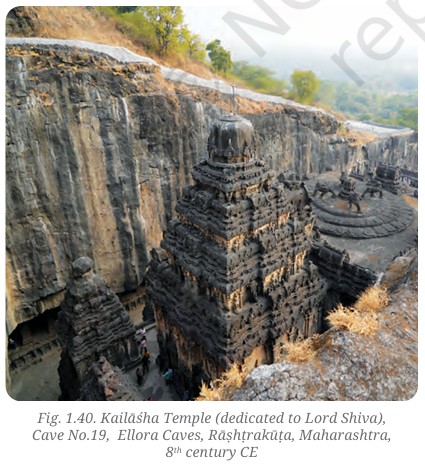
i.) Kailāśha Temple, Ellora
The Kailāśha Temple at the Ellora Caves is one of the most remarkable achievements of ancient Indian rock-cut architecture and sculpture. Designated as part of a UNESCO World Heritage Site, the temple is dedicated to Lord Śhiva and is renowned for its enormous scale, intricate carvings and extraordinary construction technique.
Unlike conventional temples built by assembling separate blocks of stone, the Kailāśha Temple was carved directly out of a single mass of basalt rock. The builders worked from the top downwards, removing rock to reveal the temple’s towers, halls, pillars, courtyards and sculptural details. This subtractive technique required exceptional planning, engineering knowledge and artistic skill.
The temple is generally dated to the eighth century CE and is associated with the reign of the Rāṣhṭrakūṭa king Kṛiṣhṇa I. Although popular accounts estimate that its construction took around 18 years and involved the removal of approximately 400,000 tonnes of rock, these figures remain uncertain.
The temple’s magnificent sculptures depict Hindu deities and mythological stories, including scenes associated with Śhiva and Viṣhṇu. The Kailāśha Temple stands as a testament to the ingenuity, devotion and artistic excellence of India’s medieval craftsmen.
ii.) Unākoṭi: Rock-Cut Relief Sculptures of Tripura:
Unākoṭi, located in the state of Tripura, is a remarkable archaeological site known for its monumental rock-cut relief sculptures spread across a forested landscape. The name Unākoṭi means “one less than one crore” (9,999,999). According to local legend, the site contains carvings representing this enormous number of deities, although the actual number of sculptures is unknown.
The site is especially famous for its colossal rock-cut images of Lord Śhiva, including the impressive relief known as Unakotiswara Kal Bhairava. Other carvings depict Hindu deities and mythological figures, showcasing the artistic skills of the sculptors who worked directly on the natural rock surfaces. Surrounded by lush greenery, hills and waterfalls, Unākoṭi combines religious significance, natural beauty and artistic heritage.
Its sculptures provide valuable insights into regional religious traditions and the development of rock-cut art in northeastern India. Unākoṭi remains an important cultural landmark, celebrated for its monumental carvings and the legends associated with them.
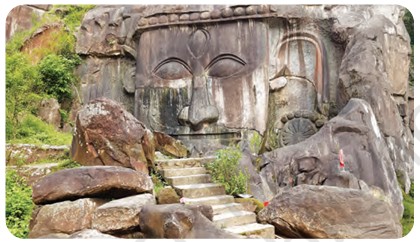
Unākoṭīśhvara Kālabhairava (30-foot rock-cut Sculpture
of Lord Śhiva), Unakoti, Tripura, 7th–9th century CE
iii.) Kudumiyanmalai Musical Inscription, Tamil Nadu:
The Kudumiyanmalai inscription, located at the cave temple in Kudumiyanmalai, Tamil Nadu, is an important historical record of India’s musical heritage. Engraved on a rock face, the inscription contains groups of musical notations that provide valuable insights into early Indian music and the development of musical practices.
Dating to the Pallava period or a closely related early medieval context, it is commonly associated with the study of ancient musical theory and performance. The inscription presents patterns of musical notes and demonstrates how musical knowledge was recorded and preserved in stone. It is particularly significant for understanding the history of svara patterns and the teaching of music in South India.
The inscription is traditionally associated with the Pallava ruler Mahendravarman I, although its precise historical interpretation has been debated. As a rare example of musical knowledge preserved through epigraphy, the Kudumiyanmalai inscription highlights the close relationship between music, temple culture and scholarly traditions in ancient India.
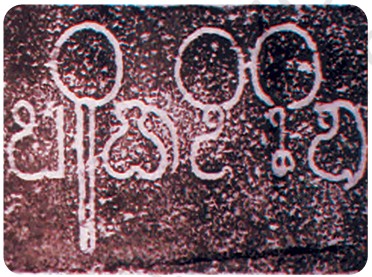
Inscription at the Kudumiyanmalai Temple
Pallava, Pudukkottai, 7th century CE
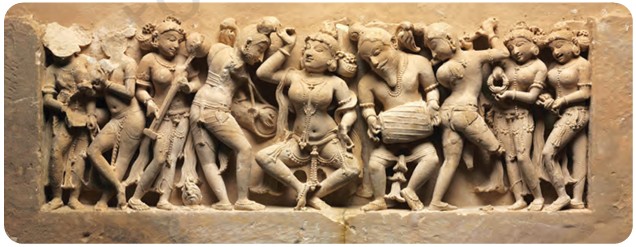
Performing Traditions in Temple Sculptures:
Temple sculptures across India provide a rich visual record of the country’s artistic and performing traditions. They depict a wide variety of subjects, ranging from stories from the Purāṇas and great epics such as the Rāmāyaṇa and the Mahābhārata to scenes of everyday life, religious ceremonies, music and dance.
Many temples feature elaborate stone carvings of dancers performing graceful movements, musicians playing instruments, singers and other artists participating in celebrations and rituals.
These sculptures often capture expressive gestures, body postures and rhythmic movements, revealing the importance of the performing arts in religious and social life.
Temples such as those at Khajuraho in Madhya Pradesh and Halebidu in Karnataka are renowned for their intricate carvings of dancers, musicians and celestial performers. Such representations provide valuable insights into historical costumes, musical instruments, dance postures and performance practices.
They also demonstrate how temple architecture served not only as a place of worship but also as a medium for preserving and celebrating India’s rich cultural heritage.
Look at the following examples:
I.) 108 Karaṇas (dance phrases) from the Nāṭyaśhāstra (depicted like a storyboard), Chola, Chidambaram temple, Tamil Nadu, 9th century CE.
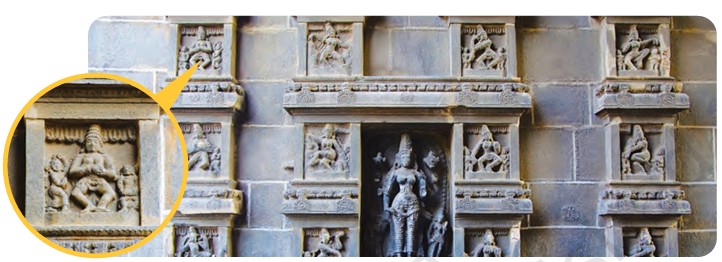
II.) Sculptures in Khajuraho group of monuments, Chandela, 10th–12th century CE.

III.) Sandstone panel with dancers and musicians, Sikar, Harshgiri Rajasthan, 973 CE.
Chola Bronze Sculpture: Naṭarāja, the Lord of Dance:
The Chola dynasty of South India, particularly between the 9th and 13th centuries CE, achieved remarkable excellence in bronze sculpture. One of its most celebrated artistic creations is Naṭarāja, the dancing form of Lord Śhiva, which represents the cosmic rhythm of the universe.
Although Śhiva as Naṭarāja had appeared in earlier stone sculptures, the Chola bronze images became especially iconic for their graceful movements, balanced proportions and intricate craftsmanship. The sculpture depicts Śhiva dancing within a circular ring of flames, symbolising the continuous cycle of creation, preservation and destruction. His raised leg represents liberation, while his other foot presses down upon the dwarf Apasmāra, symbolising ignorance.
The drum in one hand represents the sound of creation, while the flame in another signifies destruction and transformation. The flowing locks, expressive gestures and dynamic posture convey energy, balance and movement.
Created using the lost-wax casting technique, these bronzes demonstrate the technical mastery of Chola artisans. The Naṭarāja sculpture remains a powerful symbol of Indian art, spirituality and the harmonious relationship between dance and the cosmic order.
Iconography of the Naṭarāja:
Ring of fire: The cyclical nature of the universe
Five cosmic activities: Creation, preservation, destruction, illusion, and salvation
Four hands:
- Back left: Fire, denoting destruction in the cycle of nature
- Front left: Gajahasta-mudrā (elephant trunk hand) signifying refuge and emancipation for the soul
- Back right with ḍamaru: birth of sound and source of the alphabet of language
- Front right: Abhaya hasta for protection. You have already learnt some hasta mudrās in previous grades
Flying hair: River Ganga and a snake within it
Left foot: Detachment leading to upliftment of the soul for the attainment of mokṣha
Right foot: Apasmāra Puruṣha (dwarf), crushing ignorance
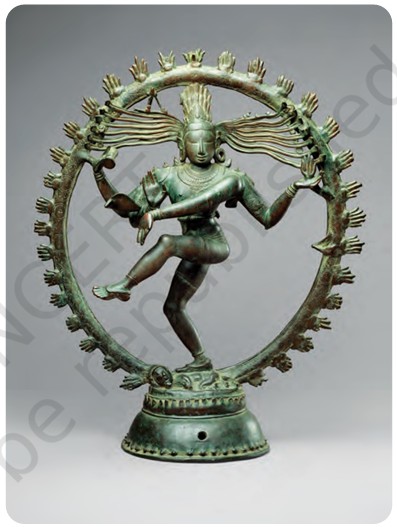
Naṭarāja, Chola period, Bronze,
10th century CE
Madanikā: Dancing Drummer, Hoysala, Soap stone, Chennakeshava Temple, Belur, Karnataka, 12th century CE:
The Madanikā: Dancing Drummer is a remarkable example of Hoysala sculpture found at the Chennakeshava Temple. Created during the 12th century CE, this sculpture is carved from soapstone, a material widely used by Hoysala artisans for its suitability for detailed carving.
Madanikās are graceful female figures that decorate Hoysala temples and are celebrated for their elegant postures, expressive gestures and intricate ornaments.
This sculpture depicts a female figure engaged in dancing while playing a drum, bringing together the traditions of music and dance. The carefully carved body posture conveys rhythm and movement, while the detailed jewellery, clothing and facial features demonstrate the exceptional craftsmanship of the sculptor.
The figure also provides insight into the importance of musical instruments and performing arts in medieval Karnataka.
The sculpture reflects the artistic excellence of the Hoysala period, when temple architecture was enriched with elaborate carvings of dancers, musicians, celestial beings and scenes from mythology. It illustrates how temple sculptures preserved and celebrated the performing traditions of the time, making the Chennakeshava Temple an important landmark in India’s artistic and cultural heritage.
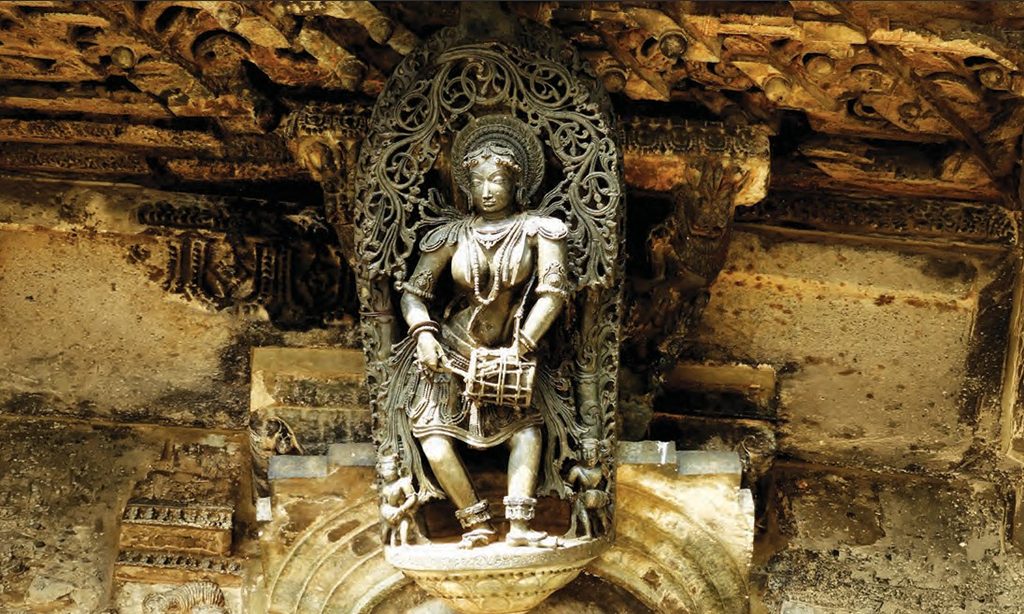
Hoysala sculptures, developed under the Hoysala rulers of Karnataka between the 11th and 14th centuries CE, are renowned for their intricate detailing, decorative patterns and exceptional craftsmanship. The human figures are often depicted with compact proportions, rounded forms and graceful postures.
Sculptors paid great attention to elaborate jewellery, ornamental clothing, hairstyles and expressive facial features. Soapstone was widely used because its softness made it suitable for creating fine details and complex designs. Temples such as the Chennakeshava Temple at Belur and the Hoysaleswara Temple at Halebidu showcase these artistic achievements. Their sculptures portray deities, celestial dancers, musicians, animals and scenes from Hindu epics and mythology.
These features reflect the artistic excellence of the Hoysala period and demonstrate the close relationship between temple architecture, sculpture and performing traditions in medieval Karnataka.
Manuscript painting:
The Gilgit Manuscript: An Ancient Buddhist Manuscript
The Gilgit Manuscript is an important collection of ancient Buddhist manuscripts discovered in the Gilgit region of present-day Pakistan-administered Kashmir. Dating mainly from the fifth to sixth centuries CE, these manuscripts were written on birch bark and contain valuable Buddhist religious and philosophical texts.
They are associated with the development of Buddhist literature and manuscript traditions in the northwestern Himalayan region. The manuscripts include texts written in Sanskrit using scripts associated with the region, including the Gilgit/Bamiyan type of Brāhmī script; the Śhāradā script became prominent in Kashmir during a later period.
Before paper became widely used, manuscripts in India were commonly prepared on palm leaves and birch bark, while cloth was used in certain contexts. These materials were vulnerable to moisture, insects and physical damage, making the survival of ancient manuscripts particularly rare.
Their relatively small and portable format also allowed religious texts and knowledge to travel between centres of learning. The Gilgit Manuscripts are therefore an invaluable source for understanding ancient Indian writing, Buddhist teachings, book-making practices and the transmission of knowledge across Asia.
White Tārā: Aṣhṭasāhasrikā Prajñāpāramitā Manuscript:
The painting of White Tārā appears in an Aṣhṭasāhasrikā Prajñāpāramitā manuscript associated with the Pāla period of eastern India, dating to the early 12th century CE. Attributed to Mahāvīra Master, this artwork is an example of the illustrated palm-leaf manuscripts produced by Buddhist artistic traditions.
White Tārā is a revered figure in Mahāyāna and Vajrayāna Buddhism and is associated with compassion, protection, healing and long life. She is commonly depicted with a serene expression, a white complexion and multiple eyes symbolising her ability to perceive the suffering of living beings.
The Aṣhṭasāhasrikā Prajñāpāramitā, meaning the Perfection of Wisdom in Eight Thousand Lines, is an important Buddhist scripture that explores wisdom and the realisation of emptiness. During the Pāla period, Buddhist monasteries in eastern India became important centres of learning, manuscript production and artistic activity.
Artists painted delicate figures and decorative details on narrow palm-leaf folios, combining religious devotion with exceptional craftsmanship. This manuscript tradition provides valuable evidence of the relationship between Buddhist literature, painting and the preservation of knowledge in medieval India.
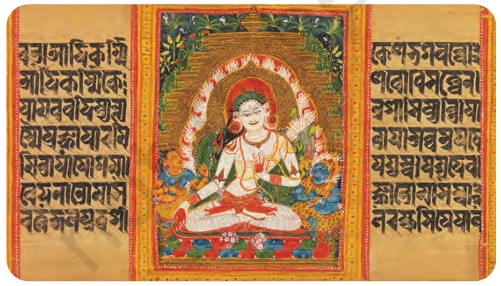
White Tārā, Aṣhṭasahasrikā Prajñāparimitā manuscript,
by Mahāvīra Master, Pala, palm leaf, early 12th century CE
Related developments in global art:
Indian Influence on Southeast Asia
Indian art and culture began spreading to Southeast Asia through maritime trade, cultural exchanges and the travels of Buddhist and Hindu monks. These interactions began in the early centuries BCE and expanded over time through trade networks connecting India with regions across the Indian Ocean.
Indian religious ideas, literature, artistic traditions and architectural styles influenced the cultural development of several Southeast Asian societies. The Rāmāyaṇa and the Mahābhārata became important sources of inspiration for local art, sculpture, temple architecture, dance and theatre.
In Cambodia, the magnificent temples of Angkor Wat feature scenes from these epics, while Indonesia developed distinctive shadow-puppet theatre traditions, such as Wayang Kulit, based on stories from the Rāmāyaṇa and the Mahābhārata.
Thailand adapted the Rāmāyaṇa into its celebrated national epic, the Ramakien, which continues to inspire classical dance and theatrical performances. These stories also influenced artistic and religious traditions in Vietnam and other parts of Southeast Asia, although their influence varied by region.
The Chola dynasty further strengthened maritime and cultural connections with Southeast Asia through trade, diplomacy and military expeditions, particularly during the 10th and 11th centuries CE. These exchanges did not simply reproduce Indian traditions; local communities adapted them to their own beliefs, languages and artistic styles. As a result, Southeast Asia developed distinctive cultural traditions that reflect centuries of interaction between Indian and local artistic influences.
i.) Angkor Wat, Hindu-Buddhist temple, Cambodia, 12th century CE, built during the reign of Suryavarman II of the Khmer Empire:

Angkor Wat is one of the most magnificent temple complexes in the world, located in Siem Reap, Cambodia. It was built in the 12th century CE during the reign of Suryavarman II, a ruler of the Khmer Empire. Originally dedicated to Lord Viṣhṇu, the temple reflects the influence of Hindu religious traditions and later became an important Buddhist place of worship.
Its architecture features towering stone structures, galleries, courtyards and intricately carved bas-reliefs depicting scenes from Hindu epics, including the Rāmāyaṇa and the Mahābhārata, as well as the famous Churning of the Ocean of Milk.
The temple’s five central towers symbolise Mount Meru, the sacred mountain regarded in Hindu and Buddhist cosmology as the centre of the universe. Angkor Wat demonstrates the remarkable architectural and artistic achievements of the Khmer civilisation and the influence of Indian religious and cultural traditions in Southeast Asia.
Today, it is a UNESCO World Heritage Site and an enduring symbol of Cambodia’s cultural heritage.
ii.) Wayang Kulit (shadow puppetry) based on Hindu epics, Indonesia:
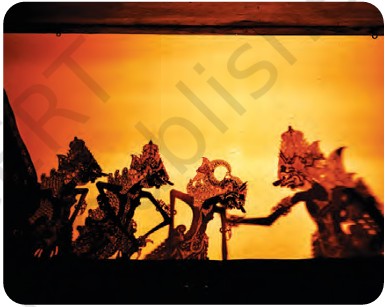
Wayang Kulit is a traditional form of shadow puppetry from Indonesia, especially associated with the islands of Java and Bali. The name Wayang Kulit means “leather shadow,” as the puppets are traditionally made from carefully carved and decorated leather. During a performance, a puppeteer called the dalang manipulates the puppets behind a screen, using a light source to cast their shadows.
Many performances are based on the Hindu epics, the Ramayana and the Mahabharata, and feature characters such as Rama, Sita, Krishna, and Arjuna. Accompanied by traditional gamelan music, the performances combine storytelling, music, humour, and moral lessons.
Wayang Kulit reflects the lasting influence of Indian epics on Indonesian culture while expressing Indonesia’s own artistic traditions and local beliefs. It is an important part of Indonesia’s cultural heritage and was recognised by UNESCO as an outstanding form of intangible cultural heritage.
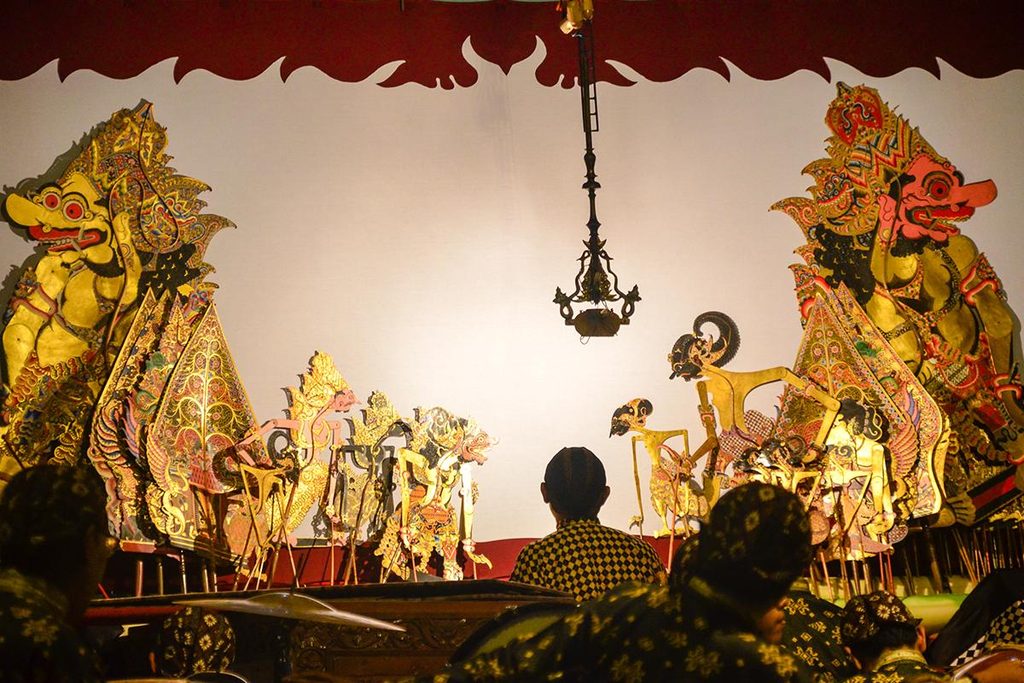
iii.) Relief at Angkor Wat depicting a war band:
The relief at Angkor Wat depicting a war band is an excellent example of the artistic excellence of the Khmer Empire in Cambodia. Angkor Wat was built in the 12th century CE during the reign of King Suryavarman II.
The stone carving portrays a group of warriors marching together, with detailed representations of their clothing, weapons, ornaments, and body postures. These sculptures provide valuable insights into the military organisation, royal power, and social life of the Khmer Empire.
The relief also demonstrates the remarkable skills of Khmer artists, who used temple walls to portray historical events, military activities, and royal achievements.
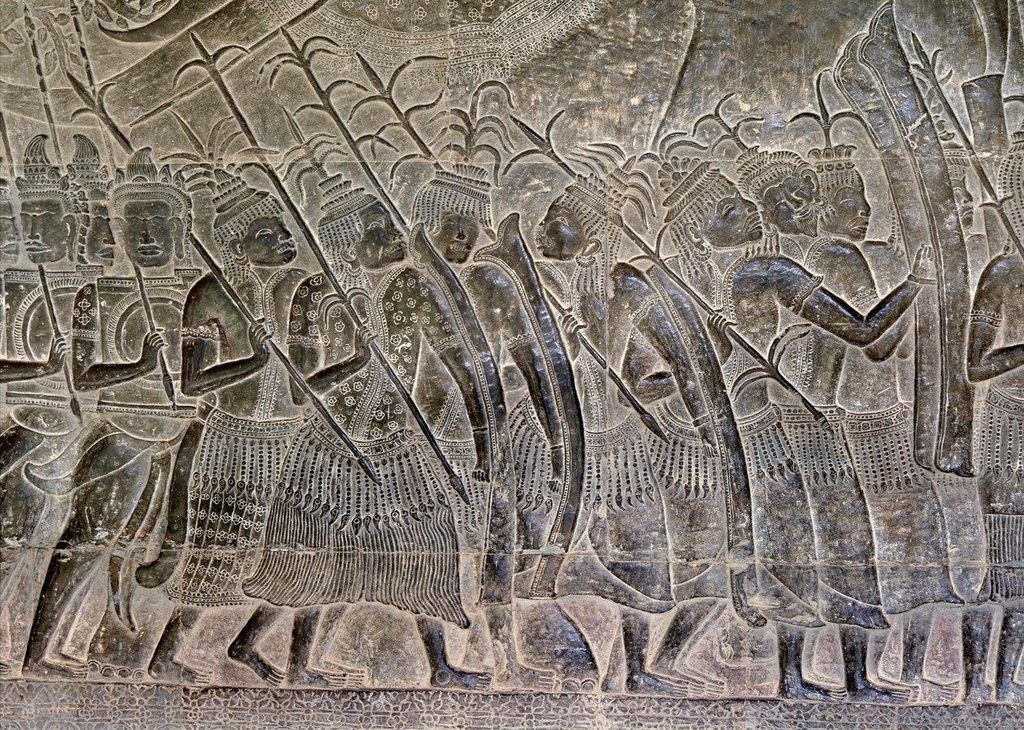
iv.) Apsarās from Angkor Wat:
The Apsarās from Angkor Wat are beautiful stone carvings of celestial female dancers and heavenly beings found on the walls of Angkor Wat in Cambodia. These figures represent grace, beauty, elegance, and spiritual significance in Hindu mythology.
They are depicted with elaborate hairstyles, detailed jewellery, decorative clothing, and graceful body postures. The Apsarās reflect the exceptional craftsmanship of Khmer artists during the 12th century CE, when Angkor Wat was built under King Suryavarman II.
Their intricate details demonstrate the artistic achievements of the Khmer Empire and the influence of Hindu religious traditions on Southeast Asian art and culture.
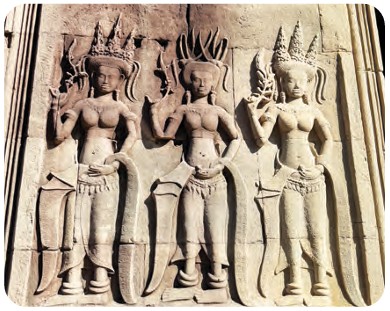
Living Traditions:
Living traditions are cultural practices, artistic skills, and forms of knowledge that continue to be practised and passed down from one generation to another. Many have existed for centuries, although their exact origins are not always known, making it difficult to assign them a precise date.
Living traditions include pottery, weaving and textile-making, sculpture, painting, handicrafts, the creation of everyday objects, musical instrument-making, music, dance, and drama. They form an important part of India’s cultural heritage and reflect the creativity, beliefs, skills, and lifestyles of different communities.
Some traditions involve tangible objects, such as pottery, textiles, and sculptures, while others involve intangible heritage, such as songs, dances, performance techniques, and traditional knowledge. These traditions connect present generations with their historical and cultural roots.
They also demonstrate how artistic practices adapt to changing times while retaining elements of their heritage. Studying living traditions helps us appreciate India’s cultural diversity and understand the links between traditional art forms, historical monuments, and ancient texts such as the Natyashastra. Preserving and practising these traditions ensures that valuable cultural knowledge and artistic skills can be shared with future generations.
Explore Living Traditions of India
India has a rich variety of living traditions that can be experienced during festivals, religious ceremonies, weddings, community celebrations, and cultural events. These traditions include music, dance, drama, painting, sculpture, pottery, weaving, and other handicrafts. Many have been passed down from one generation to another and continue to reflect the country’s cultural diversity and artistic heritage.
By observing these traditions, we can connect contemporary art forms with the historical artworks, sculptures, paintings, and ancient texts studied in this chapter. For example, traditional dances often preserve gestures and movements described in classical dance treatises, while pottery, textile-making, and sculpture demonstrate skills that have developed over centuries.
In Jharkhand, living traditions include Chhau dance, the use of the Nagada and Mandar drums, Sohrai painting, Khovar painting, traditional bamboo crafts, and tribal folk music. These art forms express the beliefs, celebrations, relationship with nature, and community life of the region. Exploring living traditions in different states helps us appreciate India’s cultural heritage and understand the importance of preserving traditional knowledge and artistic skills for future generations.
Metal Crafts: Ḍhokrā Art
Ḍhokrā is a traditional metal-casting craft practised by artisan communities in central and eastern India, including Jharkhand, Chhattisgarh, Odisha, and West Bengal. It is especially known for creating beautiful metal sculptures, jewellery, figurines, and decorative and everyday objects.
The craft uses the lost-wax process, an ancient technique in which an object is first modelled in wax, covered with a moulding material, and heated so that the wax melts away. Molten metal is then poured into the space left by the wax. Once the mould cools, it is broken to reveal the finished object, which is cleaned and polished.
Traditionally, Ḍhokrā artisans have used brass and other copper-based alloys, while some contemporary craftspeople also incorporate recycled or scrap metals. Common designs include human and animal figures, folk deities, musicians, and objects inspired by village life and nature.
The distinctive textures and handcrafted patterns make each piece unique. This living tradition connects modern artisans with India’s long history of metalworking and preserves valuable skills, cultural knowledge, and artistic creativity for future generations.
Ḍhokrā artefacts, Madhya Pradesh
Ḍhokrā artefacts from Madhya Pradesh represent a traditional metal-casting craft made using the lost-wax process. Artisans create a variety of objects, including human and animal figurines, tribal deities, musicians, jewellery, and decorative items inspired by everyday life and nature. The process involves shaping wax into a desired design, covering it with a mould, and heating it to remove the wax.
Molten metal is then poured into the hollow space to form the final object. These artefacts are valued for their distinctive textures, intricate patterns, and handmade appearance. Ḍhokrā craft reflects the artistic skills and cultural heritage of central India and continues to be practised by traditional artisan communities.
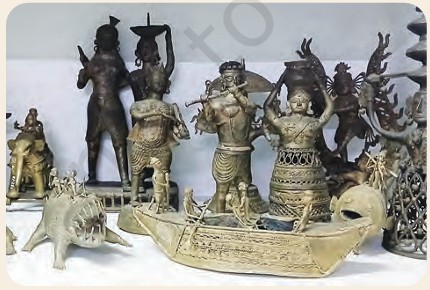
Naṭarāja at the Bharat Mandapam:
The Naṭarāja at Bharat Mandapam represents Lord Shiva as the cosmic dancer, symbolising the eternal cycle of creation, preservation, and destruction. The image reflects the rich heritage of Indian sculpture and the spiritual significance of dance in Hindu tradition.
Shiva is typically shown dancing within a circle of flames, with one foot raised and the other resting on the figure of Apasmara, who represents ignorance. His four arms hold symbolic objects, including the Damaru (drum) and Agni (fire), while his gestures express protection and liberation.
The sculpture connects India’s living artistic traditions with the classical chola-period bronze Naṭarāja images, which are celebrated for their balance, graceful movement, and intricate craftsmanship.
The statue installed at Bharat Mandapam in New Delhi is approximately 27 feet tall and weighs 18 tonnes. It was created by sculptor Radhakrishnan Sthapathy and his team from Swamimalai, Tamil Nadu, using the traditional lost-wax casting technique and Ashtadhatu, an alloy of eight metals.
Unveiled for the G20 Summit in 2023, it celebrates India’s ancient metalworking traditions and the continuing legacy of Chola-period bronze sculpture.
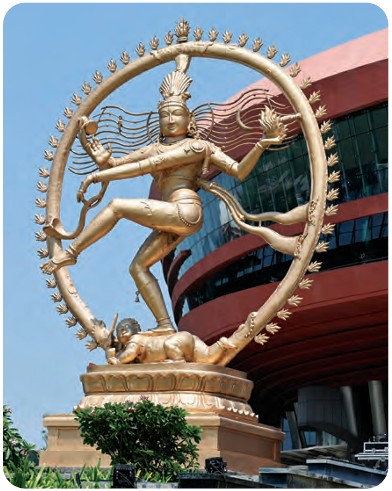
Naṭarāja at the Bharat Mandapam
Painting traditions:
India has a rich variety of traditional painting styles that have been passed down through generations. These paintings reflect the beliefs, festivals, nature, mythology, and everyday lives of different communities.
Examples :
1.) Madhubani painting from Bihar,
2.) Warli painting from Maharashtra,
3.) Pattachitra from Odisha,
4.) Kalamkari from Andhra Pradesh,
5.) Phad painting from Rajasthan, and
6.) Sohrai and Khovar paintings from Jharkhand.
Traditional artists use materials such as natural pigments, handmade brushes, cloth, paper, and mud-plastered walls. Some painting traditions depict religious stories and deities, while others portray animals, plants, village life, and seasonal celebrations.
These art forms connect contemporary communities with India’s historical artistic heritage and preserve traditional techniques, symbols, and cultural knowledge. They continue to evolve as artists adapt their work to new materials and audiences while maintaining the distinctive features of their regional traditions.
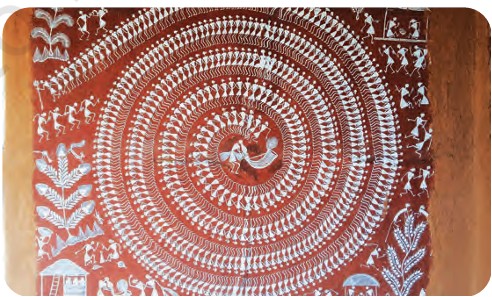
Warli painting, Maharashtra
Dance Forms:
An artwork from this chapter that shows dancers in a similar formation is the depiction of dancers in ancient Indian art, such as the dancing figures shown in temple sculptures and paintings. These artworks illustrate how dance has been an important part of Indian cultural and artistic traditions for centuries.
Several Indian dance forms practised today feature dancers arranged in coordinated formations. Examples include Garba and Dandiya Raas from Gujarat, Bihu from Assam, Ghoomar from Rajasthan, Bharatanatyam group performances from Tamil Nadu, and Chhau from eastern India. In Jharkhand and neighbouring regions, group folk dances are also performed during festivals and community celebrations.
For a reliable example from the chapter, you can refer to the dancing figures depicted in the Ajanta paintings or dancers shown in historical temple art, depending on the specific image in your textbook. Modern group dances such as Garba, Dandiya Raas, Bihu, and Jharkhand’s Jhumar and Chhau show coordinated movements and formations.
Dance from Kumaon, Uttarakhand
The Kumaon region of Uttarakhand is famous for its traditional folk dances, which reflect the culture, customs, and community life of the Himalayan region.
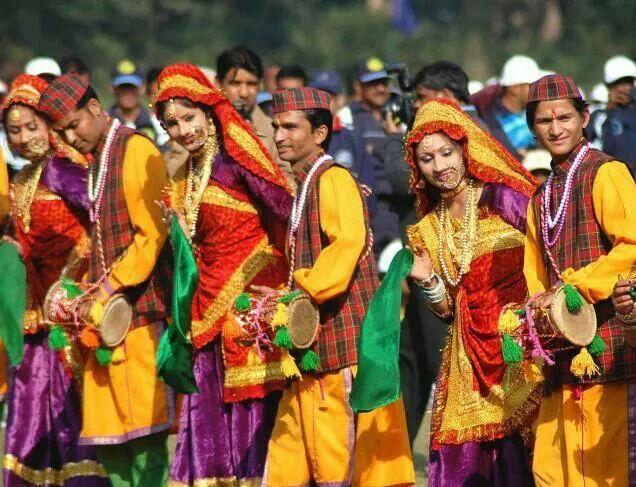
Jhora is a popular group dance in which men and women hold hands or link arms and dance in a circle to folk songs and rhythmic music. It is performed during fairs, weddings, and seasonal celebrations.
Chholiya is a traditional martial dance featuring swords and shields, commonly performed during wedding processions. Chanchari is another folk dance in which dancers perform together in a semicircle, accompanied by traditional singing and musical instruments. These dances are important living traditions that preserve Kumaon’s cultural heritage.
Connection to this chapter: Jhora is a good example of the group formations seen in Indian dance traditions and can be compared with dancers depicted in historical Indian artworks.
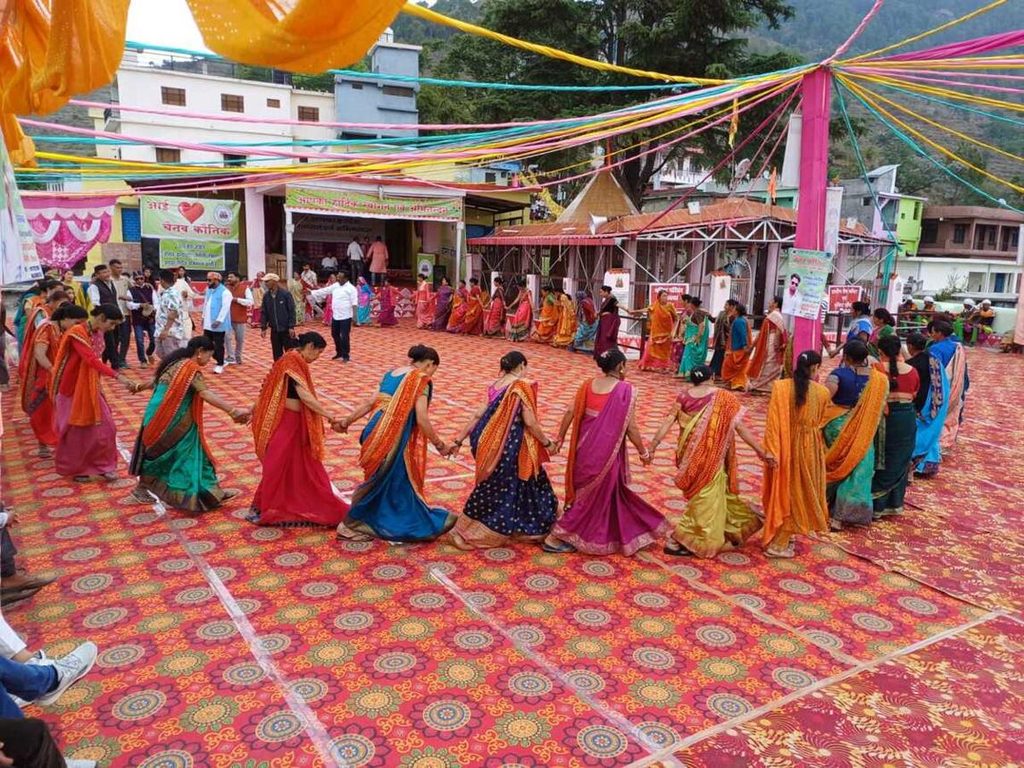
Masks in Indian Performing Traditions
India has a rich tradition of using masks in folk dances, religious ceremonies, and theatrical performances. Masks help performers represent gods, goddesses, demons, animals, and characters from traditional stories. They also make performances more colourful and expressive.
What are the masks made of?
Indian traditional masks are made from a variety of materials, depending on the region and the type of performance. These include wood, clay, papier-mâché (paper pulp), bamboo, cane, cloth, and plant fibres. They are often painted in bright colours and decorated with beads, fabric, ornaments, and elaborate headgear.
How are they used in performances?
Masks are worn over the face or as part of a performer’s costume to portray particular characters and bring stories to life. For example, Chhau dance in Jharkhand and West Bengal uses masks to represent mythological characters, while Ankiya Bhaona in Assam uses masks in traditional theatrical performances. Masks are also used in ritual performances such as Ramman in Uttarakhand. Performers combine masks with body movements, gestures, music, and dance to communicate stories and emotions to the audience.
Conclusion: Traditional masks are an important part of India’s living cultural heritage. The skills used to make and perform with them are passed down through generations, preserving regional art forms and storytelling traditions.

Left: Mask and costumes in Pilīveśha (tiger dance, Karnataka);
Middle: Mask made by the Monpa tribe, Arunachal Pradesh;
Right: Dance with masked performers, Goa
Traditional Songs of Jharkhand
Jharkhand has a rich tradition of folk songs performed during important life events, festivals, agricultural activities, and everyday work. Sohar songs are sung to celebrate the birth of a child, while wedding songs are performed during marriage ceremonies. Jhumar songs accompany folk dances and community celebrations. Harvest songs express gratitude for crops and nature, while seasonal and festival songs are sung during occasions such as Sarhul, Karma, and Sohrai. Tribal communities also sing songs related to forests, farming, village life, love, and their cultural beliefs. Traditional musical instruments such as the Mandar, Nagara, and flute often accompany these songs.
These traditional songs are categorised as intangible cultural heritage because they consist of music, lyrics, oral traditions, and performance practices passed down from one generation to another. Although the songs themselves are intangible, the musical instruments used to perform them are examples of tangible cultural heritage.
Musical instruments
Several artworks and ancient texts discussed in this chapter show the close relationship between music, dance, and sculpture.
For example, the image of Samudragupta playing the Parivādinī veena on ancient coins provides evidence of musical traditions in ancient India. The Nāṭyaśāstra, traditionally attributed to Bharata Muni, describes music, musical instruments, dance, and drama.
In Jharkhand, traditional musical instruments such as the Mandar, Nagara, Dhamsa, Dhol, Bansuri, and Jhanj are commonly associated with folk music, festivals, and dances such as Karma, Jhumar, and Chhau.
These instruments are made from locally available materials, including wood, bamboo, metal, and animal hide. The Mandar is a double-headed drum with a wooden body and hide drumheads, while the Bansuri is made from bamboo and the Jhanj consists of metal cymbals.
These instruments produce distinctive rhythms and melodies that accompany traditional songs and community celebrations. They are important examples of India’s living cultural heritage because they preserve traditional craftsmanship, musical knowledge, and regional cultural identity across generations.
Musical Instruments: Taus or Mayūrī Veena
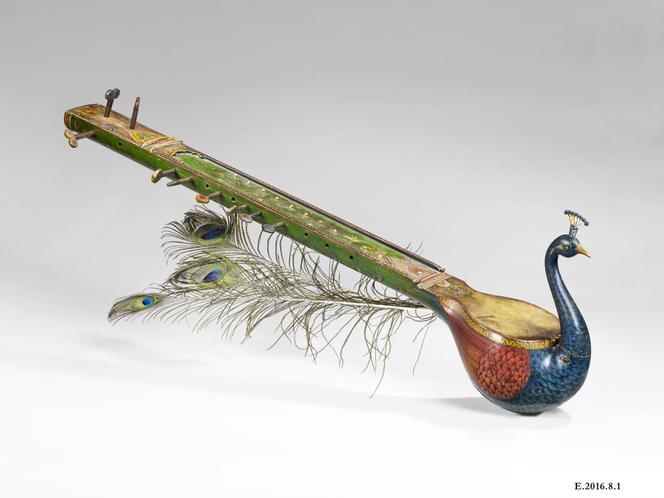
Several artworks and texts in this chapter are connected to music. Ancient Indian sculptures and paintings depict musicians playing instruments, while the Nāṭyaśāstra, traditionally attributed to Bharata Muni, describes music and musical instruments. The image of Samudragupta playing the Parivādinī veena on ancient coins is another example of the connection between art and music.
The Taus, also known as the Mayūrī Veena, is a traditional Indian bowed string instrument associated with Punjab and Sikh devotional music. Its body is shaped like a peacock, and it produces sound when its strings are played with a bow. It is traditionally made from wood, with a skin-covered soundboard, metal strings, and decorative elements that may include metal, bone, and peacock feathers. Some examples have four main melody strings and additional sympathetic strings that vibrate along with the melody.
The instrument is used to accompany devotional singing, including Shabad Kirtan. Its distinctive design and craftsmanship make it an important example of India’s musical heritage.
Kathā / Storytelling Traditions of India
India has a rich heritage of storytelling traditions through which folk tales, legends, epics, moral lessons, and local histories are passed from one generation to another. Different regions use drama, music, dance, puppetry, and visual arts to bring stories to life. Famous examples include Kathakali in Kerala, Yakshagana in Karnataka, Pattachitra storytelling in Odisha, Pandavani in Chhattisgarh, and Kathputli puppetry in Rajasthan.
In Jharkhand, stories are shared through tribal folk songs, dances, traditional theatre, paintings, and oral storytelling. Community elders narrate tales about nature, animals, ancestors, local heroes, and traditional beliefs. Folk performances combine singing, dancing, musical instruments such as the Mandar and Nagara, and expressive movements to communicate stories. Sohrai paintings and other traditional art forms also depict animals, plants, and aspects of community life, helping preserve cultural memories.
For example, the Seraikela Chhau dance tradition of Jharkhand presents stories from mythology, folklore, and nature through expressive movements and masks. These performances demonstrate how storytelling can combine drama, dance, music, and visual art.
Across India, traditions such as Pandavani, Yakshagana, and Kathputli puppetry also preserve folk stories and epics in distinctive regional styles. Storytelling is therefore an important form of intangible cultural heritage, keeping India’s oral traditions and community memories alive.
Tolpāvakūtu: Shadow Puppetry of Kerala
Tolpāvakūtu (Tholpavakoothu) is a traditional shadow-puppetry art form of Kerala, especially associated with Palakkad district and temples dedicated to Goddess Bhadrakali. The word thol means leather, pava means puppet, and koothu means play.
The performances mainly narrate episodes from the Kamba Ramayanam, the Tamil version of the Ramayana composed by the poet Kambar.
The puppets are traditionally made from treated animal hide, especially deer skin, and are carefully cut, decorated with patterns, and sometimes coloured. Puppeteers move the flat figures behind a white screen illuminated by oil lamps, creating shadows that the audience watches from the other side. The performance combines storytelling, dialogue, recitation, singing, and musical accompaniment. The lead storyteller is traditionally known as a Pulavar.
Traditionally, Tolpāvakūtu is performed at night in a special theatre called a koothumadam as a ritual offering to Goddess Bhadrakali. These performances preserve Kerala’s storytelling, music, craftsmanship, and religious traditions, making Tolpāvakūtu an important example of India’s living intangible cultural heritage.
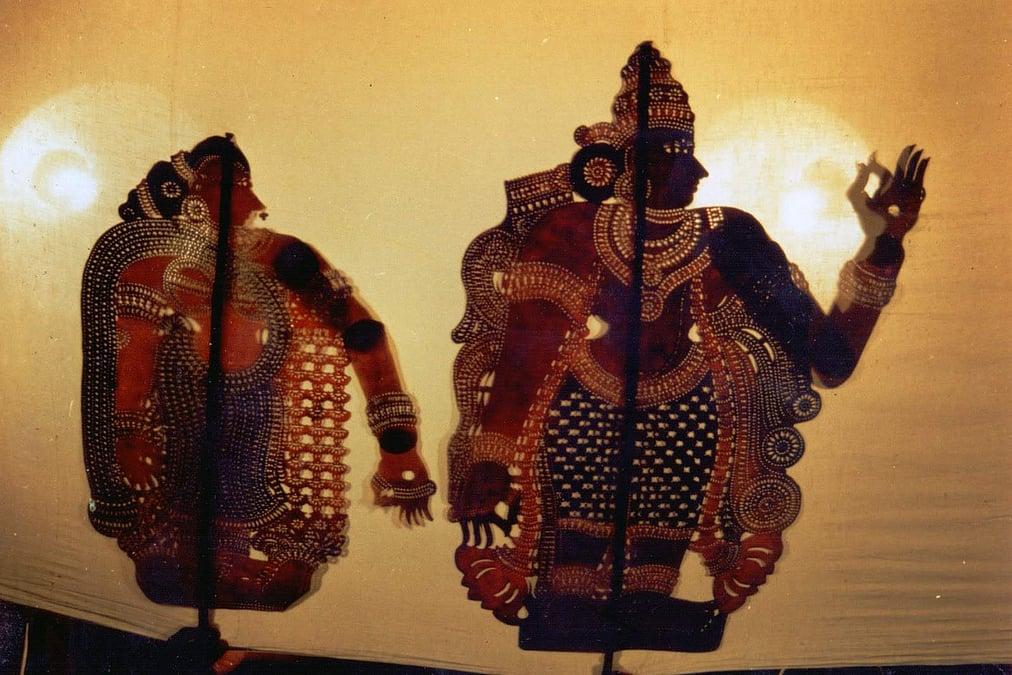
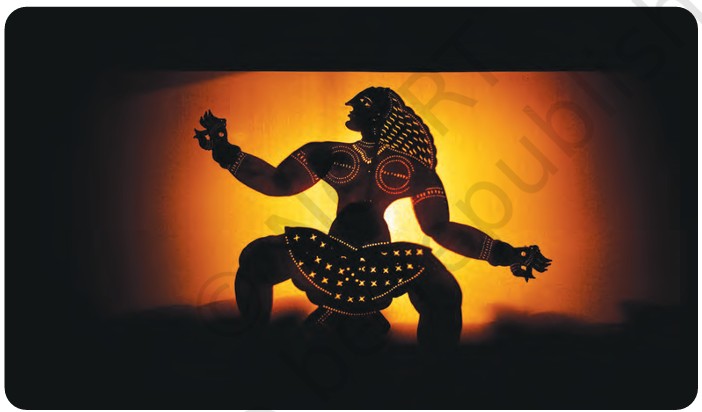
Tolpāvakūtu, a shadow puppetry tradition from Kerala
Conclusion:
The history of arts reflects the creativity, imagination, beliefs, and cultural development of human civilisation. From ancient sculptures, paintings, and temple architecture to traditional music, dance, drama, and handicrafts, Indian art represents a rich heritage passed down through generations.
Historical monuments, bronze sculptures, murals, and ancient texts such as the Nāṭyaśāstra help us understand how artistic traditions developed over time. Living traditions, including Ḍhokrā metal casting, Sohrai painting, Chhau dance, and Tolpāvakūtu shadow puppetry, demonstrate how traditional art continues to flourish in different parts of India.
Studying the history of arts helps us appreciate the contributions of artists and craftspeople, understand the connections between the past and present, and recognise the importance of preserving our cultural heritage for future generations.