
Music and Us – Introduction
Music is an important part of our everyday lives. It expresses emotions, connects people, and reflects the culture and traditions of different communities. From classical and folk music to devotional and contemporary songs, music brings joy, inspires creativity, and helps us understand ourselves and the world around us.
Music is an important part of our everyday lives. It expresses emotions, connects people, and reflects the culture and traditions of different communities. From classical and folk music to devotional and contemporary songs, every musical form has its own beauty and significance. By listening to, learning, and creating music, we can develop creativity, appreciate our cultural heritage, and discover the joy of musical expression.
Music is an inseparable part of human life. From a mother singing a lullaby to a child to the joyful songs of weddings, festivals, and celebrations, music accompanies us through different stages of life. It expresses emotions that words sometimes cannot fully describe and brings comfort, happiness, inspiration, and peace to our minds. Whether we listen to a favourite song, hum a familiar tune, clap to a rhythm, or play a musical instrument, music gives us opportunities to express ourselves creatively.
Music also reflects our identity, traditions, and cultural heritage. Every community has its own musical practices, folk songs, instruments, and styles that tell stories about its history, beliefs, customs, and way of life. In India, the diversity of music can be experienced through classical traditions, regional folk songs, devotional music, tribal rhythms, and contemporary compositions. Each musical form offers a unique glimpse into the lives and experiences of different people.
Music is not only an individual experience but also a shared activity that connects families, friends, and communities. Singing together, performing in groups, and celebrating through music encourage cooperation, listening, and mutual understanding. Music can also bring people closer despite differences in language, region, or background.
Exploring music helps us discover our personal preferences, appreciate different musical traditions, and understand the relationship between sound, emotion, and culture. It encourages creativity, develops listening skills, and deepens our respect for diversity. By learning about music and participating in musical activities, we begin to understand ourselves, our communities, and our country better. Ultimately, music reminds us that every voice, rhythm, and melody has the power to tell a story and bring people together.
Forms and Styles of Music:
Music reflects the diversity of geography, languages, traditions, and cultures. India is home to a rich variety of musical forms that have developed over centuries and continue to evolve with changing times. From classical compositions and folk songs to devotional music, tribal rhythms, and modern popular songs, each style has its own distinctive features and cultural significance.
Music can be classified in different ways according to its purpose, origin, style, performance method, and musical structure. Some forms are performed during religious ceremonies and festivals, while others accompany dance, storytelling, celebrations, or everyday activities. Classical music emphasises structured musical principles, while folk music often expresses the customs, experiences, and traditions of local communities. Contemporary music combines traditional influences with modern instruments, technology, and creative ideas.
Exploring different forms and styles of music helps us appreciate India’s cultural richness and understand how music connects people across regions and generations.
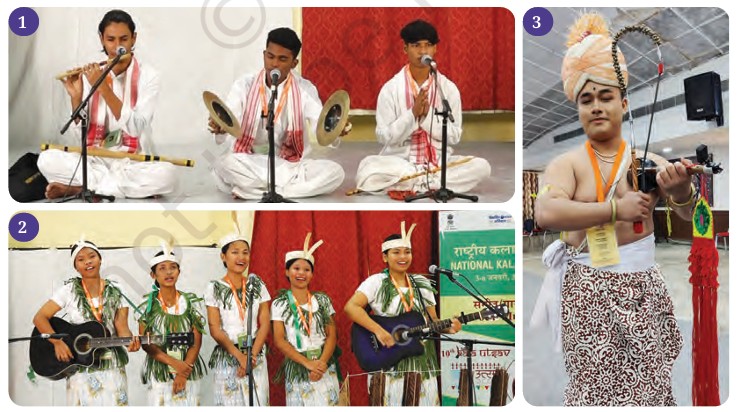
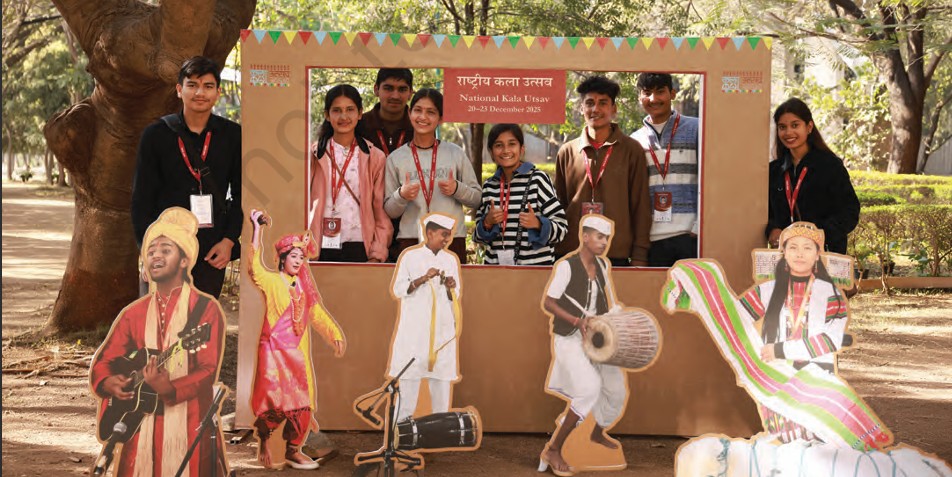
Participants of Kala Utsav (1) Students from Assam playing the flute and bhortāl; (2) Students from Goa singing with the accompaniment of guitar; (3) A student from Manipur playing the penā.
What Is a Genre?
A genre (also called form or vidhā) is a category of music with its own characteristic features and sounds. A genre is identified by factors such as the musical instruments used, singing techniques, rhythms, cultural traditions, and geographical origins.
Śhailī, or style, refers to the particular way music is presented or performed within a genre. For example, two singers may perform the same genre of music but use different vocal techniques and expressions.
Identifying musical genres helps us classify different types of music, recognise their unique characteristics, and understand the cultural traditions behind them.
Do you know?
Learning by Listening
Kumar Gandharva was a renowned Indian classical vocalist who showed an extraordinary ability to learn music by listening. By the age of 12, he was known for imitating and reproducing recordings of legendary musicians such as Abdul Karim Khan and Faiyaz Khan.
At the age of 23, he became seriously ill with tuberculosis and lost his voice. During years of illness and recovery, he spent much of his time listening to the sounds around him. Folk songs sung in nearby villages, temple bells, birdsong, and the sound of the wind became important sources of musical inspiration.
When he eventually returned to singing, his voice had changed, but his musical vision had grown deeper and more distinctive. He explored new ways of understanding music, drawing inspiration from everyday sounds and the folk traditions he heard around him.
What can we learn from his journey?
Kumar Gandharva’s life teaches us that listening is a powerful way to learn music. By listening carefully to songs, instruments, nature, and the people around us, we can develop our musical awareness, imagination, and creativity. Music is not found only in formal lessons or performances; it can also be discovered in the sounds of everyday life.
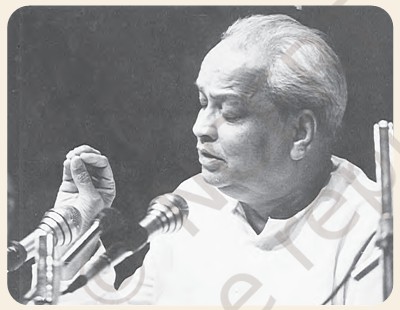
Kumar Gandharva
Activity
My Music Journal
A music journal is a personal notebook that you will maintain throughout Grades 9 and 10 to record your musical journey. In this journal, you will write about the songs you listen to, learn, and create, as well as document the creative exercises and activities you complete. You can also record your observations, ideas, and experiences while exploring different musical styles, rhythms, melodies, and instruments.
Maintaining a music journal will help you reflect on your learning, develop your creativity, and track your progress over time. Musical books and treatises often have creative and meaningful names, so think of a unique title that reflects your interest in music.
You may choose a name such as My Musical Journey, The Melody Diary, Swar Sāgar, or My World of Music. Write your chosen title decoratively on the cover page and make it attractive with musical notes, instruments, or artistic designs. Your journal will become a special record of your musical experiences, imagination, and growth.
Activity
Listening to Various Genres
Listening to various genres of music helps us explore different musical styles and traditions. Whenever you listen to a song or instrumental performance, write its name in your music journal and tick the appropriate genre.
You can explore Hindustani vocal, Carnatic vocal, Carnatic instrumental, Hindustani instrumental, Indian pop, folk songs, patriotic songs, film songs, world music, devotional music, and other genres. Pay attention to the melody, rhythm, instruments, singing style, and mood of each piece.
For example, you can listen to Ae Mere Watan Ke Logon as a patriotic song, Kesariya Balam as a Rajasthani folk song, or Vatapi Ganapatim as a Carnatic composition. Try to listen to different genres throughout the year, including music that is unfamiliar to you. Record your observations and note what you find interesting about each piece.
This activity will help you improve your active listening skills, discover new musical traditions, and appreciate the rich diversity of music in India and around the world.
Examples of Various Music Genres
| Genre | Example |
| Hindustani vocal | Raga Yaman – vocal performance |
| Carnatic vocal | Vatapi Ganapatim – Muthuswami Dikshitar |
| Carnatic instrumental | Vatapi Ganapatim played on the veena |
| Hindustani instrumental | Raga Yaman played on the sitar |
| Indian pop | Made in India – Alisha Chinai |
| Folk song | Kesariya Balam – Rajasthani folk song |
| Patriotic | Ae Mere Watan Ke Logon – Lata Mangeshkar |
| Film song | Kesariya – from Brahmāstra |
| World music | Waka Waka (This Time for Africa) – Shakira |
| Devotional | Raghupati Raghav Raja Ram |
| Others | Jazz music |
You can listen to these examples, write the song or performance name in your music journal, and tick the corresponding genre. Some songs may fit more than one genre, depending on their musical style and context.
Discussion circle
Understanding the Structure of a Song
Every piece of music has an underlying structure that organises its different sections. A devotional song often has a chorus, called pallavī or sthāyī, followed by two or more verses, known as charaṇas or antarās. The chorus may repeat after each verse. A contemporary song may begin with an instrumental introduction, followed by verses, a chorus, instrumental interludes, and an ending.
For example, the devotional song Raghupati Raghav Raja Ram has a repeating refrain that makes it easy to remember and sing along with. Similarly, many Hindi film songs begin with a musical introduction and repeat the main chorus between verses.
Listen carefully to the song played by your teacher and identify its different sections, such as the introduction, chorus, verses, instrumental parts, and ending. Notice whether the melody, rhythm, tempo, or instruments change throughout the song. Also, identify any unique features, such as a memorable chorus, a distinctive instrumental sound, or a change in singing style. Discuss your observations with your classmates and record them in your music journal.
Raghupati Raghav Raja Ram
Raghupati Raghav Raja Ram is a well-known devotional bhajan associated with Mahatma Gandhi and India’s freedom movement. Its structure is simple and repetitive, making it easy for people to sing together.
The song has a main refrain (sthāyī) that repeats throughout the performance, along with additional lines or verses (antarās) in some versions. The melody is usually gentle and soothing, creating a peaceful and devotional atmosphere. Instruments such as the harmonium, tabla, manjira, or tanpura may accompany the singing, depending on the arrangement.
The repeated refrain helps listeners remember the words and participate in group singing. Some performances begin directly with the main refrain, while others include a short instrumental introduction. The song generally ends by repeating the refrain, giving the performance a sense of unity and closure. Its simple melody, repeated phrases, and spiritual message are among its most distinctive features.
While there are many types of music in India, most music can broadly be categorised into three areas, as below:
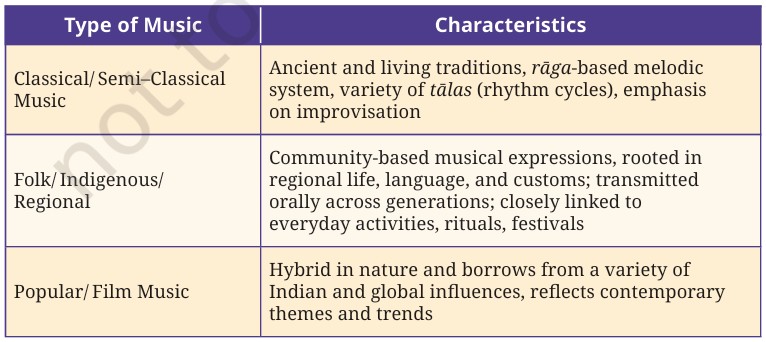
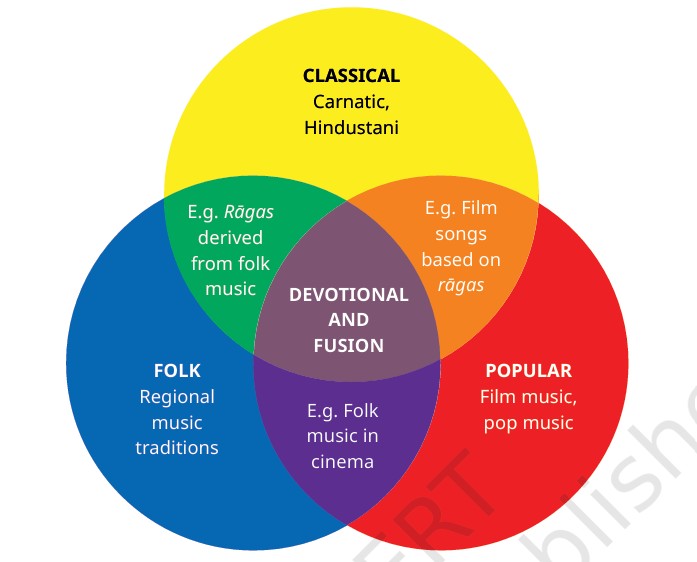
Genres of Indian Music– Genres are not watertight compartments. They often interact and overlap giving rise to sub-categories.
Let Us Explore
Devotional music can be placed in the devotional genre because its main purpose is to express faith and spiritual feelings. However, devotional songs may also include elements of Hindustani classical, Carnatic, folk, or contemporary music. Similarly, contemporary folk-rock bands combine traditional folk melodies and instruments with rock music, including electric guitars, drums, and modern rhythms.
Music genres are not always separate categories. They often overlap as musicians experiment with different styles and cultural traditions. For example, “Raghupati Raghav Raja Ram” is a devotional bhajan that is often performed with folk or contemporary musical arrangements. “Vande Mataram” has been presented in both patriotic and contemporary musical styles. Songs by bands such as Indian Ocean combine Indian folk and classical influences with rock and fusion music.
Can you think of other songs that combine two or more genres? Listen carefully to their melodies, rhythms, instruments, and singing styles, and discuss how different musical traditions come together to create a unique sound.
Music and Emotion
Music has a powerful connection with our emotions, and different kinds of music can affect us in different ways. You may enjoy certain musical styles more than others because they are familiar to you, reflect your cultural background, or use a language you understand.
Sometimes, a lively rhythm can make you feel energetic and excited, while a slow melody may help you feel calm and peaceful. Devotional music may create a sense of faith and inner peace, whereas patriotic songs may inspire pride and courage.
Similarly, sad melodies can make us thoughtful or emotional, while cheerful songs may lift our mood. Our personal experiences, memories, and preferences also influence how we respond to music.
By listening to different genres and observing your feelings, you can discover how melody, rhythm, tempo, lyrics, and instruments shape your emotional experience. Music allows us not only to express our feelings but also to understand and connect with the emotions of others.
Music and Patriotism
Patriotic songs express love, respect, and devotion to one’s country. During India’s freedom struggle, “Vande Mātaram” became an important symbol of national pride and inspired many Indians in their struggle for independence. Written by Bankim Chandra Chattopadhyay, the song celebrates the motherland through beautiful imagery of nature, including green fields, flowing rivers, and the richness of the land. In 2025, India commemorated the 150th anniversary of this iconic song.
Listen to Vande Mātaram and sing it together in class. Pay attention to its melody, rhythm, lyrics, and singing style. Notice how the musical arrangement creates feelings of pride, courage, unity, and love for the country. Imagine the scenes and images described in the song and consider how they connect music with the beauty of the motherland. After listening, discuss the emotions you experienced and how the song’s words and music influenced those feelings. This activity will help you understand how music can express patriotism, preserve cultural memories, and bring people together through shared emotions.
Music, Mood, and Navarasa
Indian artistic traditions describe Navarasa, the nine emotions that can be expressed through music, dance, drama, and other art forms. These are Śhṛiṅgāra (love), Vīra (courage), Karuṇa (compassion), Hāsya (joy), Raudra (anger), Bhayānaka (fear), Bībhatsa (disgust), Adbhuta (wonder), and Śhānta (peace).
Music can evoke these emotions through its melody, rhythm, tempo, lyrics, and instruments.
For example, a gentle melody may create a feeling of Śhānta rasa, while a powerful rhythm and energetic musical arrangement may inspire Vīra rasa. Soft and emotional music can evoke Karuṇa rasa, whereas cheerful tunes may bring out Hāsya rasa. Mysterious sounds can create Bhayānaka rasa, while unusual musical patterns may awaken Adbhuta rasa.
Our responses to music can differ according to our experiences, memories, and preferences.
By listening carefully to different kinds of music, we can explore how sounds influence our moods and emotions. Choosing music thoughtfully can help us relax, feel motivated, express our feelings, and appreciate the emotional richness of Indian artistic traditions.
Do you know?
Music Therapy
Music therapy is the use of music, including rhythms, melodies, songs, and sounds, to support mental health and overall well-being. It can help people relax, manage stress, reduce feelings of anxiety, and ease physical tension.
Gentle melodies and slow rhythms may create a sense of calm, while lively music can improve mood and encourage positive feelings. Music therapy may involve listening to music, singing, playing instruments, or creating songs under the guidance of a trained music therapist.
It is used in various settings, such as hospitals, rehabilitation centres, schools, and care facilities, to support people’s emotional, social, and physical needs. Although music can promote relaxation and emotional expression, music therapy is not a replacement for necessary medical or psychological treatment. It is a supportive approach that shows how music can contribute to a person’s quality of life.
Folk Songs and Traditional Knowledge
Folk songs are closely connected to the culture, environment, and everyday lives of communities. They reflect local customs, traditions, beliefs, festivals, occupations, and social practices. Passed down orally from one generation to another, these songs preserve the experiences, wisdom, and values of people.
In many communities, folk songs serve as a storehouse of traditional knowledge, sharing information about farming, seasonal changes, medicinal plants, nature, and community life.
For example, farmers may sing songs related to sowing and harvesting, while women may sing traditional songs during weddings, festivals, and other important occasions. Folk songs also help preserve regional languages, local stories, and cultural identities.
Through their lyrics, melodies, and rhythms, they connect younger generations with their heritage and teach them about the knowledge and experiences of their ancestors. Thus, folk music is not merely a form of entertainment; it is also a valuable means of preserving and passing on traditional knowledge and cultural heritage.
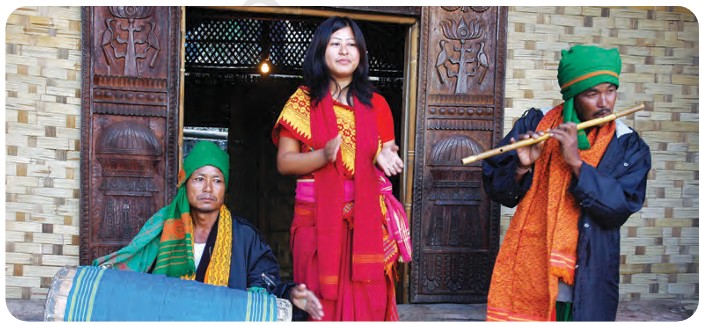
Musicians from Nagaland
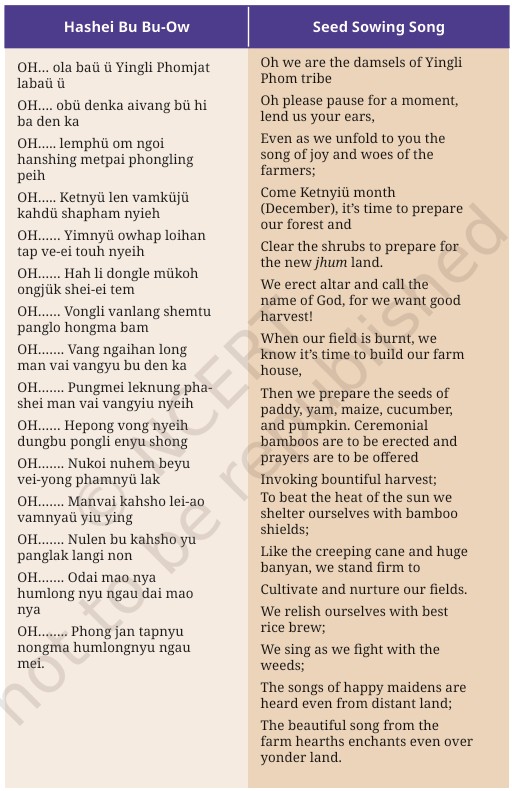
A folk song from Nagaland:
Activity
Songs and Traditional Knowledge
Folk songs preserve the traditions, customs, beliefs, and everyday experiences of different communities. In this activity, find recordings of the songs mentioned on the preceding page, listen to them online, and sing along.
You may also invite local musicians to your school to perform the songs and help students learn them. Pay attention to the lyrics and identify the community traditions and practices described in the song, such as farming, festivals, weddings, seasonal changes, local occupations, or religious ceremonies.
Think about how the song passes traditional knowledge from one generation to another. Next, identify a similar folk song from your own region and compare it with the song given in the textbook.
Observe the similarities and differences in their language, melody, rhythm, instruments, themes, and cultural significance.
For example, students in Jharkhand may explore traditional tribal folk songs associated with festivals, nature, agriculture, and community celebrations. This activity will help you understand how folk music preserves cultural heritage, strengthens community bonds, and connects people with their history and environment.
1.) Students Playing Traditional Percussion Instruments of Kerala
Students playing traditional percussion instruments of Kerala demonstrate the rich musical heritage of the state. Instruments such as the chenda, maddalam, ilathalam, and edakka are used in temple festivals, ritual performances, and traditional art forms.
The chenda produces a loud, powerful sound, while the ilathalam provides rhythmic metallic beats. These instruments are often played together in ensembles such as Chenda Melam, creating energetic rhythms that accompany cultural celebrations and performances.
Learning to play these instruments helps students appreciate Kerala’s traditions, develop a sense of rhythm, and understand the importance of preserving India’s diverse musical heritage.
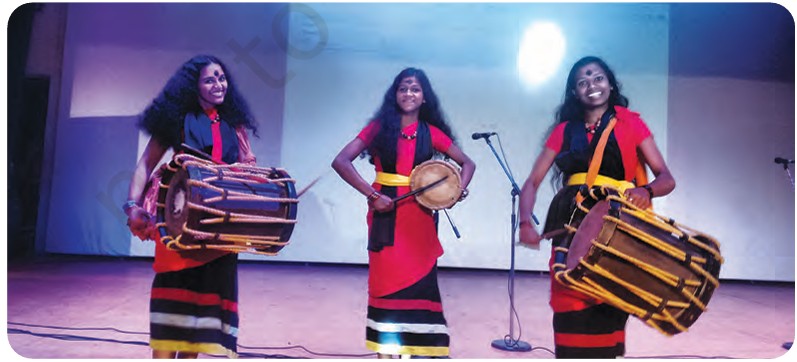
Students playing traditional percussion instruments of Kerala
2.) Snake Charmers of Haryana Playing Been, Tasha, and Gapchu
Traditional snake charmers of Haryana perform folk music using instruments such as the been, tasha, and gapchu. The been is a wind instrument that produces a continuous, melodious sound, while the tasha is a percussion instrument that creates sharp, rhythmic beats.
The gapchu is another traditional instrument associated with local folk performances. These instruments contribute to the distinctive sounds of regional music and reflect the cultural traditions of communities in Haryana. Such performances provide an opportunity to learn about traditional instruments, musical techniques, and the role of folk music in preserving local cultural heritage.
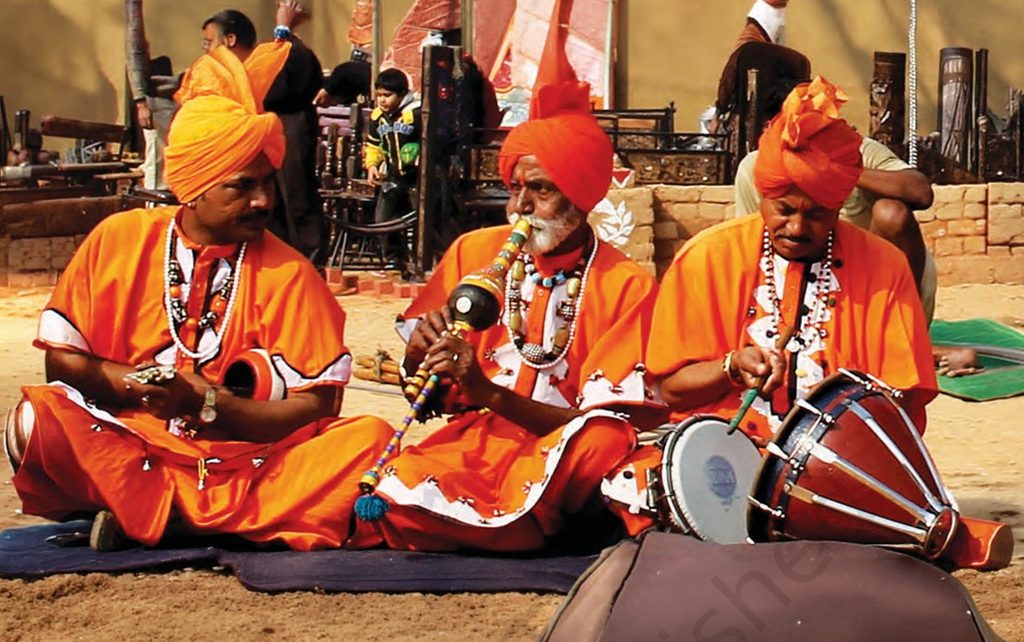
Snake charmers of Haryana playing been, tasha, gapchu
3.) Devotional Song with Dance in a Temple in West Bengal
Devotional songs and dances are an important part of the cultural and spiritual traditions of West Bengal. In temples, devotees sing songs in praise of deities and express their faith through rhythmic movements, clapping, and traditional dance. These performances may be accompanied by instruments such as the khol (a traditional drum), kartal (small hand cymbals), and harmonium. Devotional music creates an atmosphere of devotion, joy, and community participation. Such traditions help preserve Bengal’s rich musical heritage and bring people together through shared faith and cultural expression.
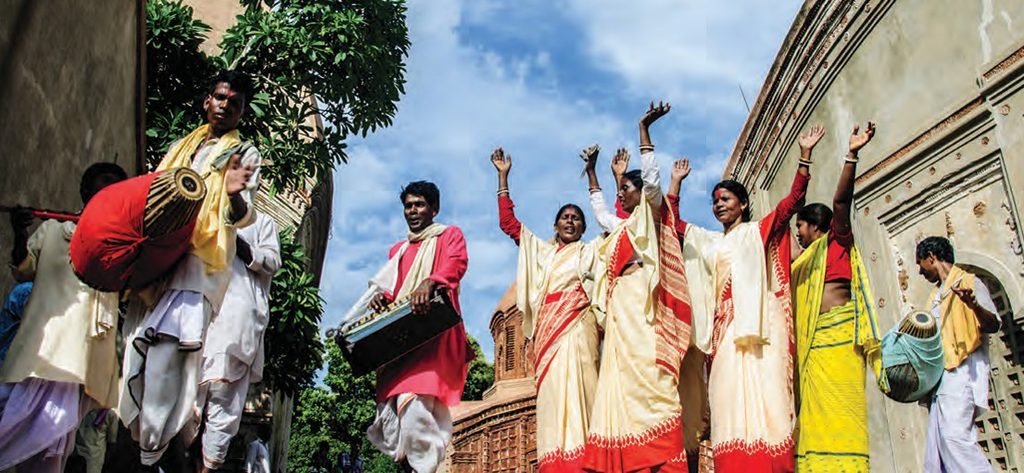
Devotional song with dance in a temple in West Bengal
Conclusion:
Music is an inseparable part of human life. It accompanies us during celebrations, festivals, religious ceremonies, family gatherings, and moments of happiness or sadness. It allows us to express emotions, communicate ideas, and connect with people beyond the boundaries of language, region, and culture. Whether we listen to a classical raga, sing a folk song, enjoy a patriotic melody, or dance to a contemporary rhythm, music enriches our experiences and brings meaning to our everyday lives.
India has a remarkable musical heritage, with diverse traditions such as Hindustani classical music, Carnatic music, folk songs, devotional music, tribal music, and contemporary music. Each form reflects the history, beliefs, lifestyles, and creativity of the communities that practise it. Traditional songs also preserve valuable knowledge about nature, agriculture, seasons, medicinal plants, and community life. By learning about these musical traditions, we develop respect for our cultural diversity and recognise the importance of preserving our heritage.
Active listening helps us appreciate the different elements of music, including melody, rhythm, tempo, instruments, lyrics, and vocal styles. Exploring various genres also enables us to understand how music creates different moods and evokes emotions. Singing, playing instruments, composing melodies, and participating in musical activities further develop our creativity, confidence, concentration, and teamwork.
Music can also promote relaxation, emotional well-being, unity, and a sense of belonging. It brings people together and creates shared experiences that remain meaningful across generations.
Ultimately, music is much more than a combination of sounds. It is a powerful form of artistic expression that connects our minds, hearts, and communities. By listening, learning, creating, and sharing music, we can celebrate our cultural heritage, nurture our creativity, and discover the beautiful ways in which music makes our lives richer and more joyful.