
Introduction
Music is a universal language that connects people across countries, cultures, and generations. Although languages, traditions, and lifestyles may differ from one place to another, music has the remarkable ability to express emotions and bring people together. A joyful melody can make us dance, a gentle tune can calm our minds, and a powerful rhythm can fill us with energy. From traditional folk songs and classical compositions to modern pop, jazz, rock, and electronic music, every musical tradition offers a unique way of understanding the world.
As music travels across borders, it carries stories, beliefs, customs, and memories from one culture to another. Trade, migration, travel, and cultural exchanges have helped musical instruments, melodies, rhythms, and singing styles reach distant lands. For example, musical instruments and musical ideas have travelled between Asia, Africa, Europe, and the Americas, inspiring new forms of music. Today, recordings, films, radio, television, and digital platforms allow us to discover music from almost every corner of the world.
India itself is home to a rich variety of musical traditions, including Hindustani and Carnatic classical music, folk songs, devotional music, and contemporary styles. Exploring music from other countries helps us appreciate both the similarities and differences between musical cultures. We may recognise familiar rhythms in an unfamiliar song or discover new instruments and sounds that expand our musical imagination.
Music also encourages creativity, cooperation, and respect for cultural diversity. By listening carefully, singing together, exploring instruments, and learning about musical traditions, we become more aware of how people express their identities and experiences through sound.
In this journey, let us travel around the world through music, discover its fascinating diversity, and celebrate the melodies and rhythms that unite humanity.
Let’s Begin Our Musical Journey Around the World!
Have you ever travelled to a town, city, or country different from the place where you live? When people travel, they discover new languages, traditions, foods, and ways of life. In the same way, music and culture travel across regions and countries, carrying melodies, rhythms, instruments, and stories with them.
Through trade, migration, festivals, and modern technology, musical traditions meet, influence one another, and develop new forms. So, let’s pack our bags, open our ears, and set off on an exciting musical journey around the world!
Music and Migration: How People Carry Their Musical Traditions:
Migration is the movement of people from one place to another to settle in a new location. When people who share a common country of origin or cultural heritage settle in another country, they may form a community known as a diaspora.
Over thousands of years, people have migrated into and out of the Indian subcontinent for various reasons, including trade, employment, education, conflict, and the search for better opportunities. Along with their belongings, they carried their music, songs, instruments, and cultural traditions to their new homes.
Music plays an important role in the lives of migrant communities. It helps people maintain a connection with their homeland, remember their roots, and share a sense of belonging with others from similar backgrounds. Songs can preserve memories, languages, customs, and stories across generations. Music also provides a way to express emotions such as joy, hope, homesickness, and the hardships of adapting to a new environment.
As migrants interact with local communities, their musical traditions often blend with existing styles. They may adopt new instruments, rhythms, melodies, and languages while retaining elements of their original music. These exchanges can lead to the development of new musical forms and genres, enriching the cultural life of both communities.
Thus, migration does not simply move music from one place to another; it helps music grow and evolve. By exploring the relationship between music and migration, we can understand how people preserve their identities, build connections, and create new cultural traditions through the universal language of music.
Chutney Music: A Vibrant Blend of Indian and Caribbean Cultures
Chutney music emerged from the migration of Indians, particularly from Bihar and Uttar Pradesh, to the Caribbean islands during the nineteenth and early twentieth centuries. These migrants carried their Bhojpuri folk songs, devotional music, and musical traditions to their new homes. Over time, these traditions blended with Caribbean musical styles such as soca and calypso, creating a lively and distinctive fusion genre.
Chutney music reflects the experiences, cultural identity, and everyday lives of Indo-Caribbean communities. Its lyrics may combine Bhojpuri, Hindi, English, and Caribbean Creole, expressing themes of family, celebration, relationships, and community life. Its energetic rhythms and danceable melodies make it popular at festivals, weddings, and social gatherings.
Traditional instruments such as the dholak, tassa, and dhantal, along with modern instruments like keyboards, contribute to its distinctive sound. Chutney music demonstrates how migration can bring different musical traditions together and inspire new forms of cultural expression.
Today, it remains an important part of Indo-Caribbean heritage, connecting generations with their Indian roots while celebrating their Caribbean identity.
Listening Selections
- “Phulowrie Bina Chutney Kaise Bani” — Sundar Popo
- “Cham Cham Baje” — Drupatee Ramgoonai
As you listen, notice the rhythms, instruments, language, and vocal style. Think about how Indian musical traditions and Caribbean influences combine to create a unique musical experience.
Bhangra in the United Kingdom: From Punjabi Roots to a Modern Sound:
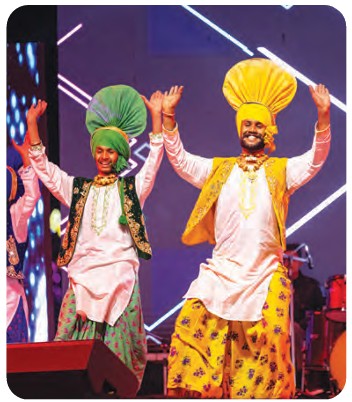
Bhangra is a vibrant folk music and dance tradition from Punjab, India, known for its energetic rhythms, lively movements, and celebratory spirit. The powerful beats of the dhol, a traditional double-headed drum, are central to its distinctive sound.
When Punjabi migrants settled in the United Kingdom, particularly from the 1950s to the 1980s, they brought Bhangra with them as a way to preserve their cultural identity, language, and community traditions. Music and dance helped them remain connected to their Punjabi heritage while adapting to life in a new country.
Growing up between Punjabi households and British cities, young musicians began experimenting with new sounds. They combined traditional Bhangra rhythms and Punjabi lyrics with influences from reggae, hip-hop, pop, and electronic music. This creative fusion gave rise to UK Bhangra, a modern musical style that blends the energy of Punjabi folk traditions with contemporary British music.
UK Bhangra is recognised for its fast beats, powerful basslines, traditional percussion, synthesizers, and modern production techniques. It became popular at weddings, cultural festivals, clubs, and community celebrations, reaching audiences beyond the Punjabi diaspora.
UK Bhangra demonstrates how migration can transform musical traditions without erasing their roots.
It reflects the experiences of a new generation that embraces both Punjabi heritage and British cultural life, creating music that celebrates identity, belonging, and cultural exchange.
Listening selections
- Tutak Tutak Tootiya – Malkit Singh
- Dowain Jaaniya – Heera group
Bhangra
Do You Know?
The Siddi Community: A Musical Link Between Africa and India
Just as Indians have migrated to other countries, people from different parts of the world have also migrated to India, bringing their music, dance, and cultural traditions with them. One fascinating example is the Siddi community, whose ancestors came from Africa to the Indian subcontinent many centuries ago.
Today, Siddi communities live in several parts of India, including Gujarat, Karnataka, and other western and southern regions. Over generations, they have developed a rich cultural identity that reflects both their African heritage and their connections with local Indian communities.
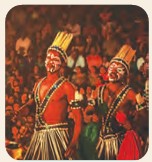
One of their distinctive cultural expressions is Siddi Dhamāl, a lively music-and-dance tradition particularly associated with Gujarat. It combines African-influenced rhythms, energetic movements, and percussion with elements of Gujarati folk traditions. Performers often sing, dance, clap, and play drums in rhythmic patterns that create a powerful sense of celebration and community.
Siddi Dhamāl illustrates how migration allows cultural traditions to travel, interact, and evolve. It also reminds us that Indian culture has been shaped by exchanges with people from many regions of the world.
Learning activity: Read about the Siddi community and watch videos of Siddi Dhamāl. Listen carefully to the rhythms, observe the dance movements, and identify the musical features that reflect African and Gujarati influences.
Siddi Dhamāl dance
Siddi Dhamāl Dance: Celebrating African and Indian Heritage:
Siddi Dhamāl is a vibrant music-and-dance tradition associated with the Siddi community of Gujarat, India. The Siddis are an Indian community whose ancestors came from Africa many centuries ago. Over generations, they developed a distinctive cultural identity by combining elements of their African heritage with local Indian traditions.
Siddi Dhamāl is known for its energetic dance movements, powerful drum rhythms, rhythmic clapping, and lively group performances. Music and dance play an important role in community celebrations and cultural gatherings. The performance reflects the community’s history, shared identity, and strong sense of belonging.
This dance form is a wonderful example of how migration influences music and culture. As people move from one region to another, they carry their traditions with them and adapt them to their new surroundings. Siddi Dhamāl demonstrates how African and Gujarati cultural influences can come together to create a unique and expressive art form.
Through Siddi Dhamāl, we can appreciate the diversity of Indian music and dance and understand how cultural exchange enriches artistic traditions across generations.
Activity:
Migration in Your Family
Migration is an important part of many families’ stories. People move to different towns, cities, or countries for education, employment, or other opportunities. Even when they settle in a new place, songs can help them remember their home, family, and cultural traditions.
Let’s Explore!
1. Talk to a migrant: Speak to someone who has moved to another town, city, or country. Ask them why they moved and what they miss most about their home.
2. Discover a song: Ask the person to share a song that reminds them of their hometown, family, or childhood. Listen carefully and discuss the feelings and memories it brings back.
3. Create your own song: Imagine moving to a different place and leaving your home and family behind. Write a few lines of lyrics expressing your love for your home, your memories, and your hope of returning.
Example: A Song About Home
My home is where the flowers grow,
Where family smiles and warm winds blow.
Though distant lands may call my name,
My heart will always feel the same.
I carry memories wherever I go,
Like a little light that continues to glow.
Across the miles, through sun and rain,
My home will call me back again.
Reflection: How can music help people stay connected to their homes and cultural roots after migration? Write your thoughts in your journal.
Do You Know?
Flamenco: A Musical Journey from Spain
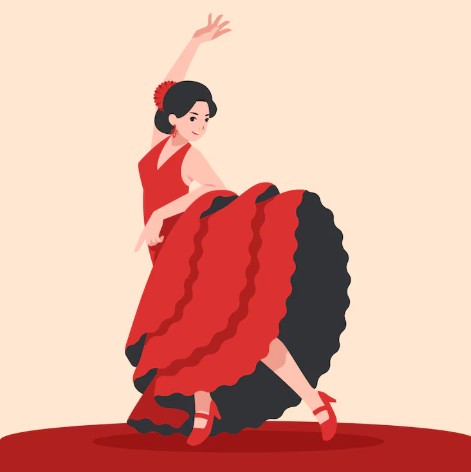
The dancing woman emoji seen in many messaging apps is inspired by flamenco, a traditional art form from Andalusia in southern Spain. Flamenco brings together passionate singing (cante), expressive dancing (baile), and guitar music (toque). It is closely associated with the Andalusian Roma (Gitano) community and is known for its powerful rhythms, graceful hand movements, rhythmic footwork, and emotional expression.
Flamenco developed through centuries of cultural interaction in Andalusia. Roma communities, who migrated from the Indian subcontinent to Europe over several centuries, played an important role in its development. Their musical traditions interacted with local Andalusian, Moorish, and Jewish influences, contributing to the distinctive character of flamenco.
Flamenco is a beautiful example of cultural exchange. Its development reflects the meeting of different communities and musical traditions over many centuries. The Roma community played an essential role in shaping this art form, alongside other cultural influences in Andalusia. Flamenco was recognised by UNESCO as an Intangible Cultural Heritage of Humanity in 2010.
Interesting fact: The Roma people’s historical migration from northwestern India to Europe is well established, but the exact route and dates are debated. Therefore, it is more accurate to describe the connection with Rajasthan and India as a historical link rather than state that flamenco directly originated there.
Families of Musical Instruments:
Musical instruments are found in every part of the world, and each has its own unique sound, design, and playing technique. As we have studied, the Nāṭyaśhāstra classifies musical instruments into four main categories based on how sound is produced:
- Tata (String Instruments): Instruments that produce sound through vibrating strings, such as the sitar, veena, guitar, and violin.
- Suṣhira (Wind Instruments): Instruments that produce sound when air is blown through them, such as the flute, shehnai, trumpet, and clarinet.
- Avanaddha (Percussion Instruments): Instruments that produce sound through vibrating stretched membranes when struck or played, such as the tabla, dholak, mridangam, and drums.
- Ghana (Solid Instruments): Instruments that produce sound through the vibration of solid materials when struck, shaken, or played, such as manjira, bells, cymbals, and the xylophone.
This fourfold classification is a useful way to understand musical instruments from different parts of the world. However, instruments can also be grouped in other ways, such as according to their musical genre, country or region of origin, playing technique, or shared physical characteristics.
Exploring these families helps us recognise similarities and differences between musical traditions. It also shows how people across the world have developed creative ways of producing sound and expressing themselves through music.
Do You Know?
Rāvaṇa-Hatthā: An Ancient Bowed String Instrument
The Rāvaṇa-hatthā is an ancient Indian bowed string instrument traditionally associated with Rajasthan. According to folklore, it was invented by Rāvaṇa, the legendary king of Lanka. It is played by drawing a bow across its strings to produce a rich, expressive sound. The instrument is still used by folk musicians, particularly in Rajasthan, where it accompanies traditional songs and storytelling.
The Rāvaṇa-hatthā belongs to the bowed string family, in which sound is produced by the vibration of strings through the movement of a bow.
Other Examples of Bowed String Instruments
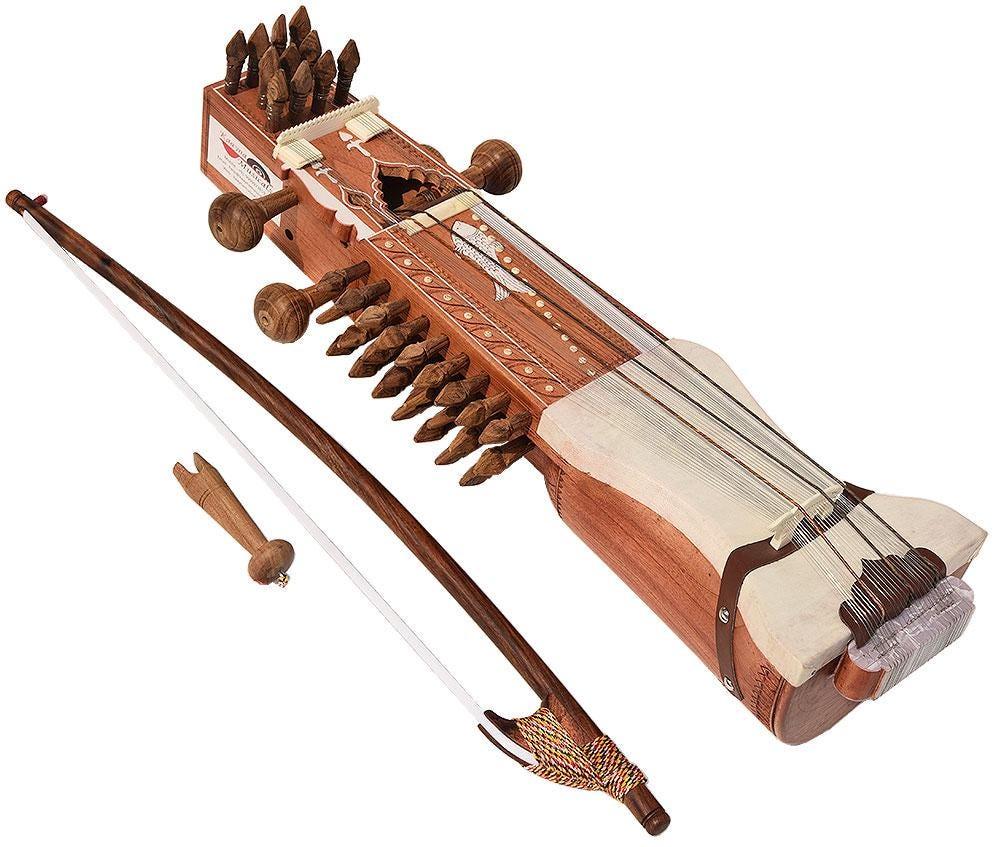
Sarangi
A traditional Indian bowed instrument known for its expressive sound and ability to imitate the human voice.
Esraj
A bowed string instrument used in Indian classical and devotional music.
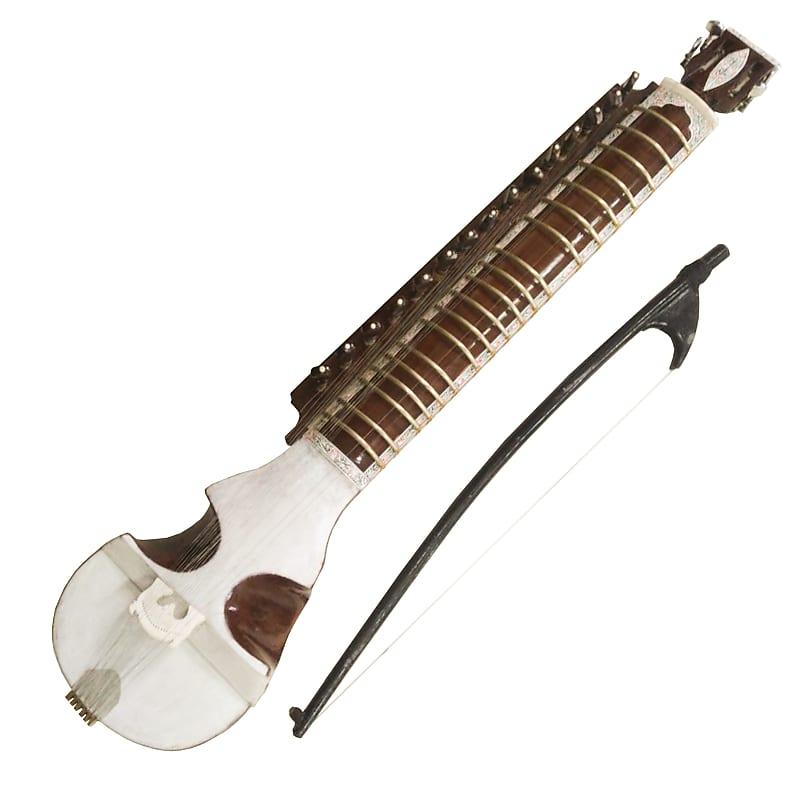
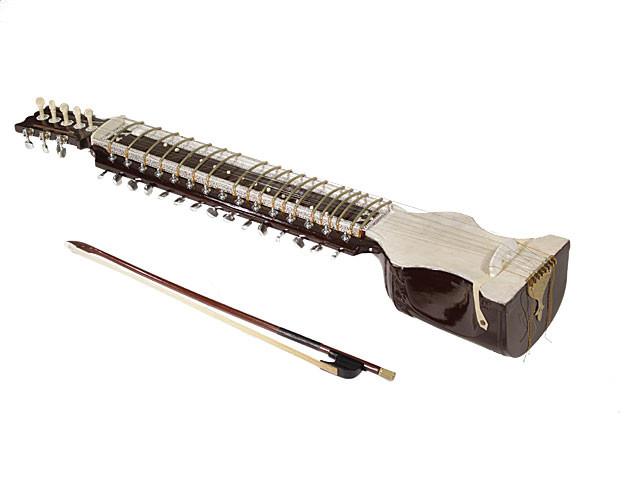
Dilruba
A bowed string instrument associated with North Indian and Sikh musical traditions.
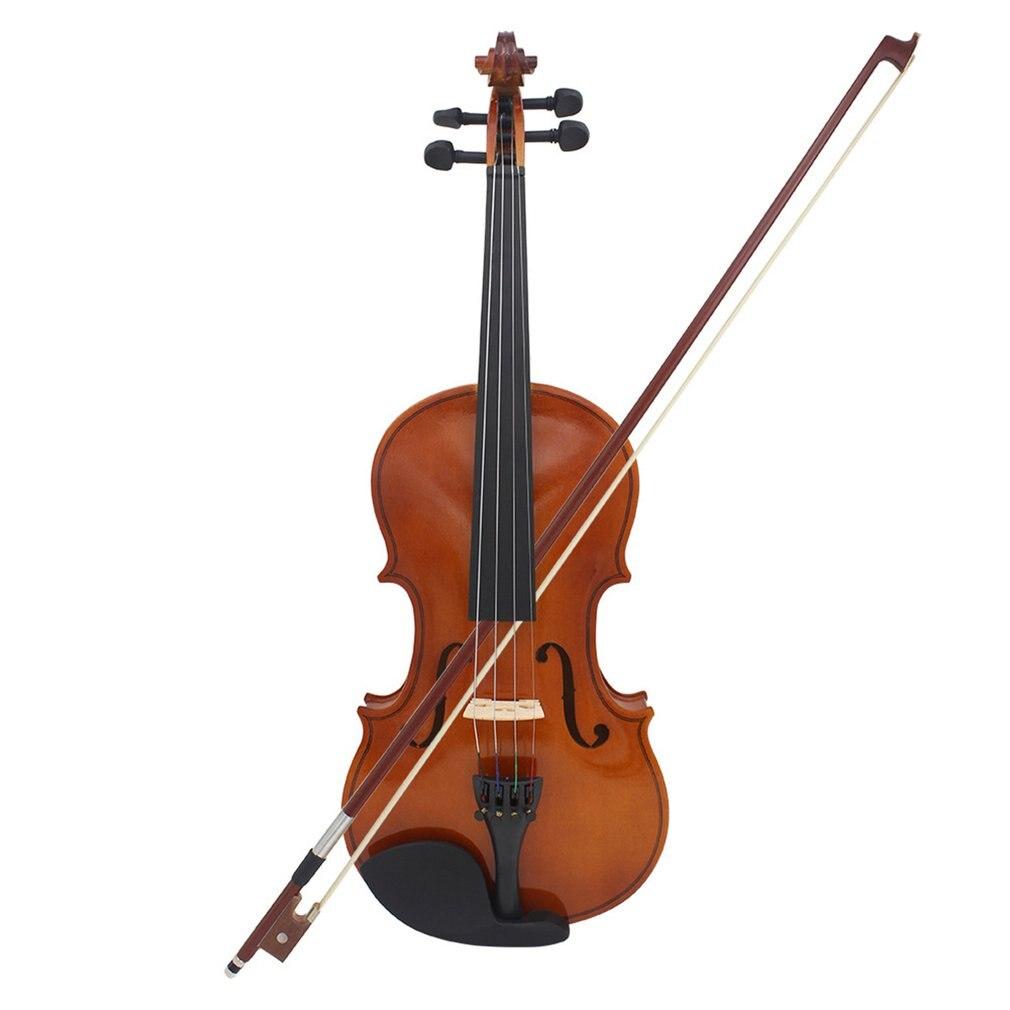
Violin
A widely played bowed string instrument used in classical, folk, and contemporary music around the world.
Erhu
A traditional Chinese two-stringed bowed instrument with a distinctive, expressive tone.
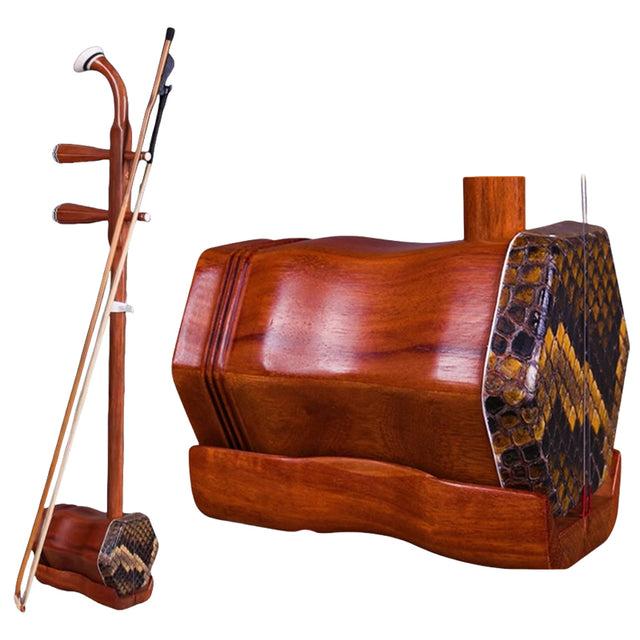
Explore: Find pictures or recordings of these instruments. Compare their shapes, strings, bows, and sounds. What similarities and differences can you identify?
The Lute Family:
Plucked String Instruments Around the World
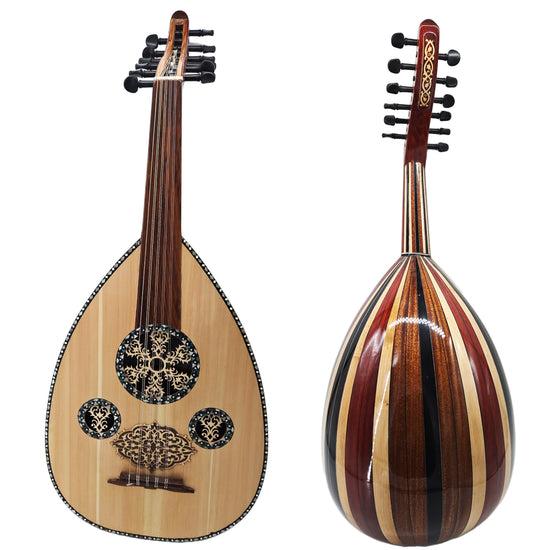
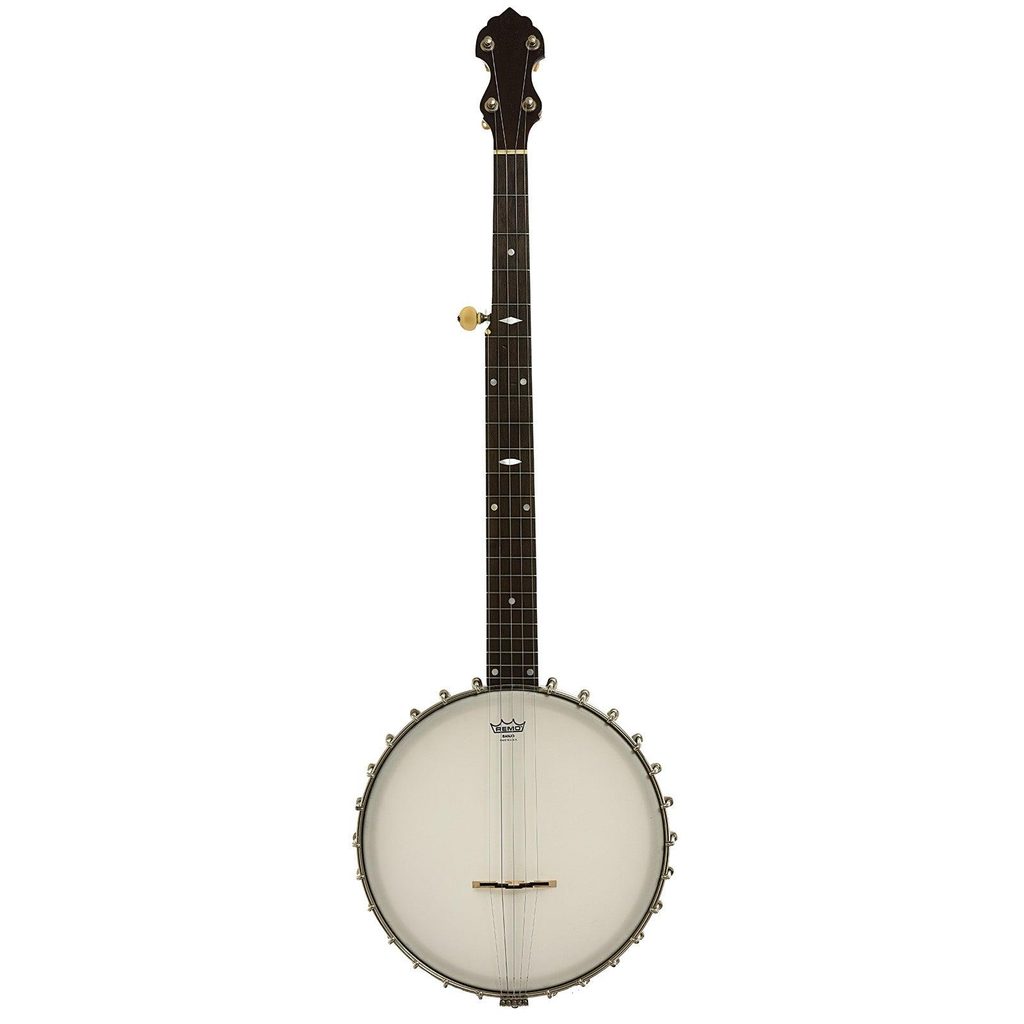
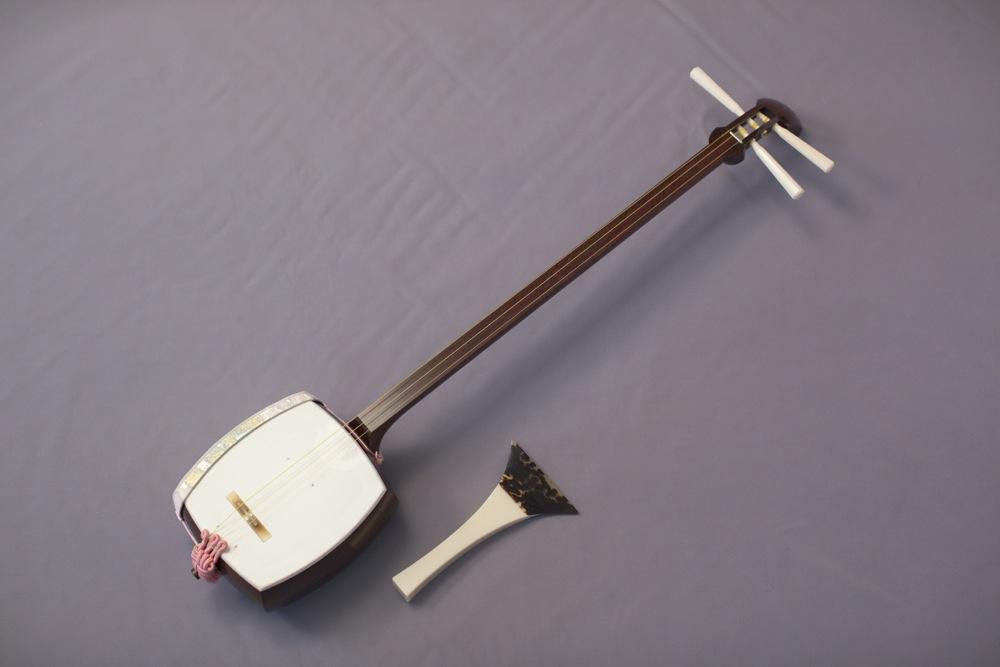
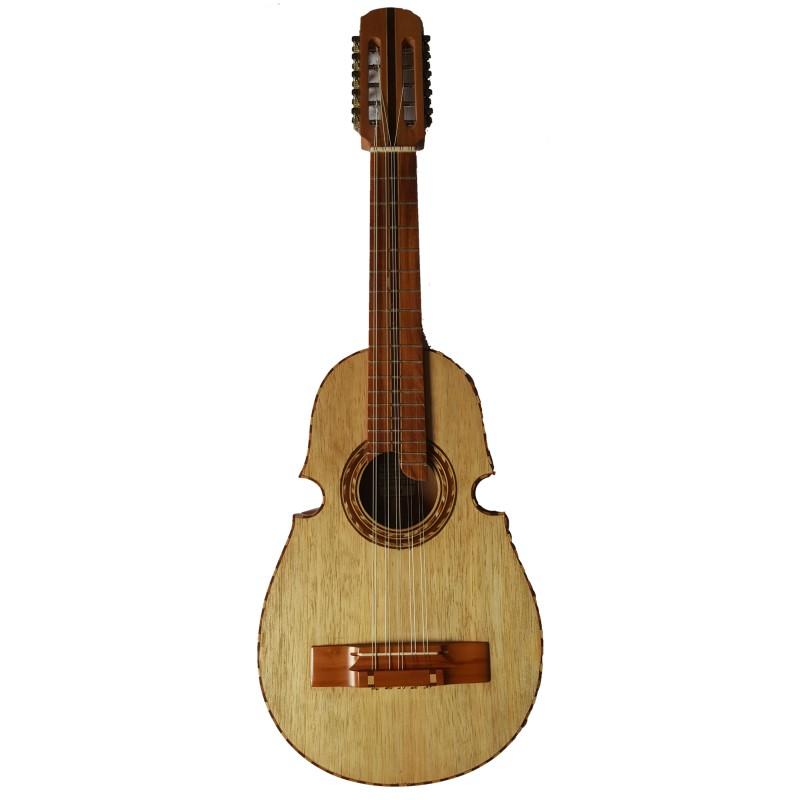
The lute family includes a wide variety of plucked string instruments found across Asia, Europe, and other parts of the world. These instruments share a basic design consisting of a resonating body and a narrow neck. However, they differ in their shapes, sizes, materials, construction methods, and playing techniques.
The resonating body amplifies the vibrations of the strings to produce sound. Its upper surface, known as the belly or soundboard, may be made from different materials. For example, the West Asian oud generally has a wooden soundboard, while the banjo traditionally has a stretched membrane as its soundboard.
Some instruments are made using distinctive materials according to local traditions. The Japanese shamisen traditionally uses animal skin for its body covering, while the Puerto Rican cuatro is commonly made from wood, including jagrumo in some traditional constructions.
The Indian sarod has a wooden body with a stretched goatskin soundboard.
Today, synthetic materials are also used in the construction of some instruments to improve durability, reduce maintenance, and explore new sounds.
Examples of Instruments from the Lute Family
Oud ( West Asia )
Banjo ( North America )
Shamisen ( Japan )
Cuatro ( Puerto Rico )
Sarod ( India )
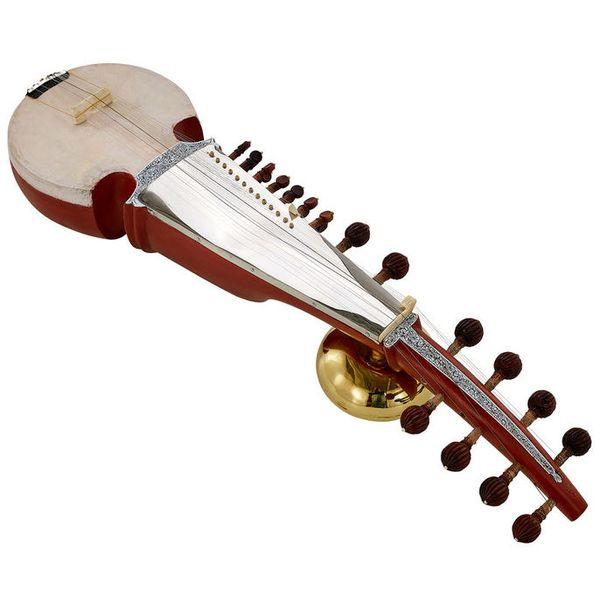
The lute family demonstrates how different cultures have developed instruments based on a shared design while using locally available materials and craftsmanship. These instruments reflect the creativity, musical traditions, and cultural diversity of communities around the world.
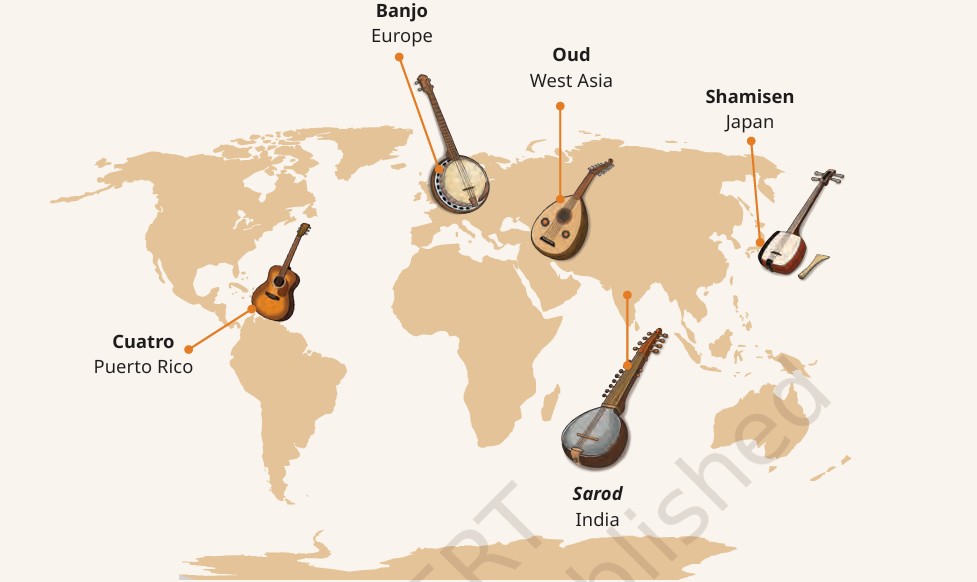
Some instruments of the lute family
The Flute Family:
An Ancient Musical Tradition Across the World:
The flute is one of the oldest known types of musical instruments. Archaeologists have discovered ancient flutes dating back tens of thousands of years, showing that humans have been making music since prehistoric times. At its simplest, a flute is a hollow tube that produces sound when a player blows air into it or across an opening on its surface. The air inside the tube vibrates, creating musical notes.
Flutes are found in almost every culture around the world. Although they share the same basic principle of sound production, they differ greatly in their shapes, sizes, materials, number of holes, and playing techniques. Some are made from bamboo or wood, while others are crafted from metal, bone, clay, or other materials.
For example, India’s bānsurī is a traditional bamboo flute, while the Western concert flute is generally made of metal. The Chinese dizi often has an additional membrane-covered hole that gives it a distinctive buzzing quality. The Japanese shakuhachi is traditionally made from bamboo and produces expressive, breathy tones.
These variations demonstrate how different communities have developed unique instruments from the same basic idea. Flutes are used in classical music, folk traditions, devotional performances, and contemporary compositions.
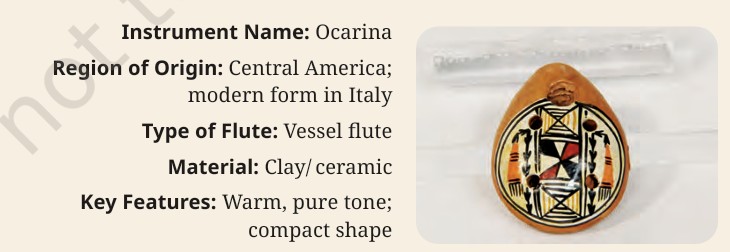
Ocarina
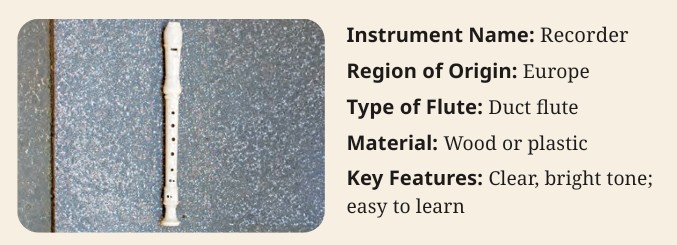
Recorder

Bansuri
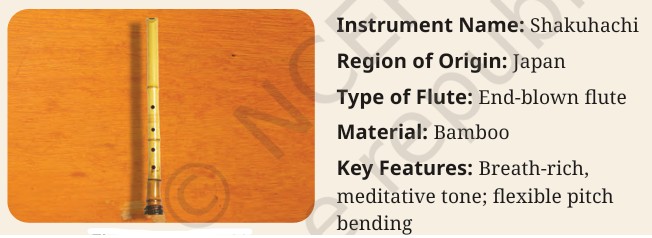
Shakuhachi
Discovering Families: Exploring the Zither Family:
Zithers are a family of stringed musical instruments found in different parts of the world. They generally have strings stretched across or over a resonating body or soundboard. Unlike lutes, most zithers do not have a separate neck. Their strings are plucked, struck, or sometimes bowed to produce musical sounds.
Instruments belonging to this family differ in their shapes, sizes, materials, number of strings, and playing techniques. Let us explore some examples from different countries and compare their features.
Examples of Zither Instruments Around the World
1. Explore Five Zither Instruments from Around the World
| Instrument | Country or region | Sound characteristics | Materials | Playing technique |
| Guzheng | China | Bright, flowing and resonant | Wooden body, metal or synthetic strings | Plucked with finger picks; the left hand bends notes |
| Koto | Japan | Gentle, delicate and melodic | Wooden body and strings | Plucked using finger plectra |
| Gayageum | Korea | Soft, warm and expressive | Wooden body and strings | Plucked with fingers; strings are pressed to create ornaments |
| Santur | Iran | Bright, ringing and shimmering | Wooden box with metal strings | Struck with small, lightweight hammers |
| Qanun | West Asia and North Africa | Clear, sparkling and richly ornamented | Wooden body and metal strings | Plucked using small plectra attached to the fingers |
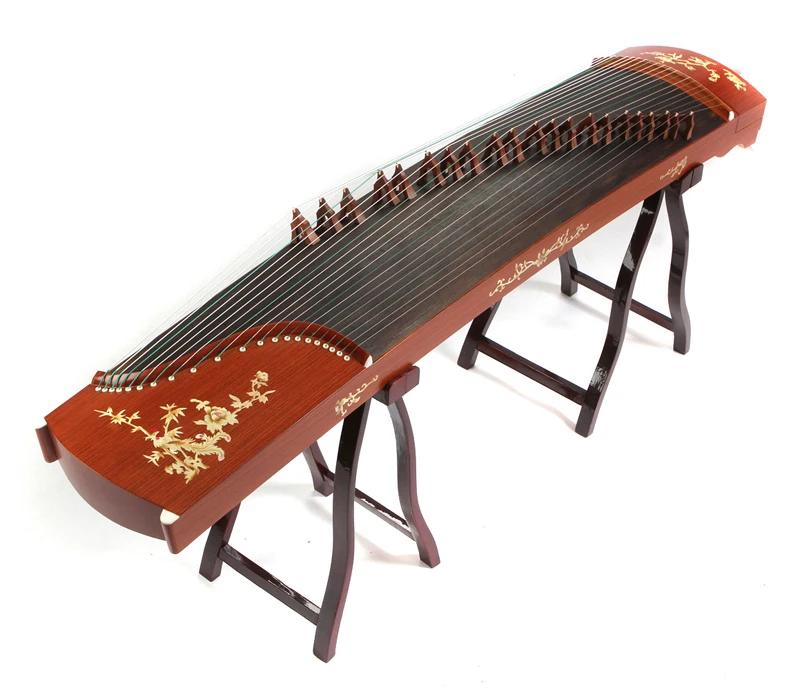
Guzheng ( China )
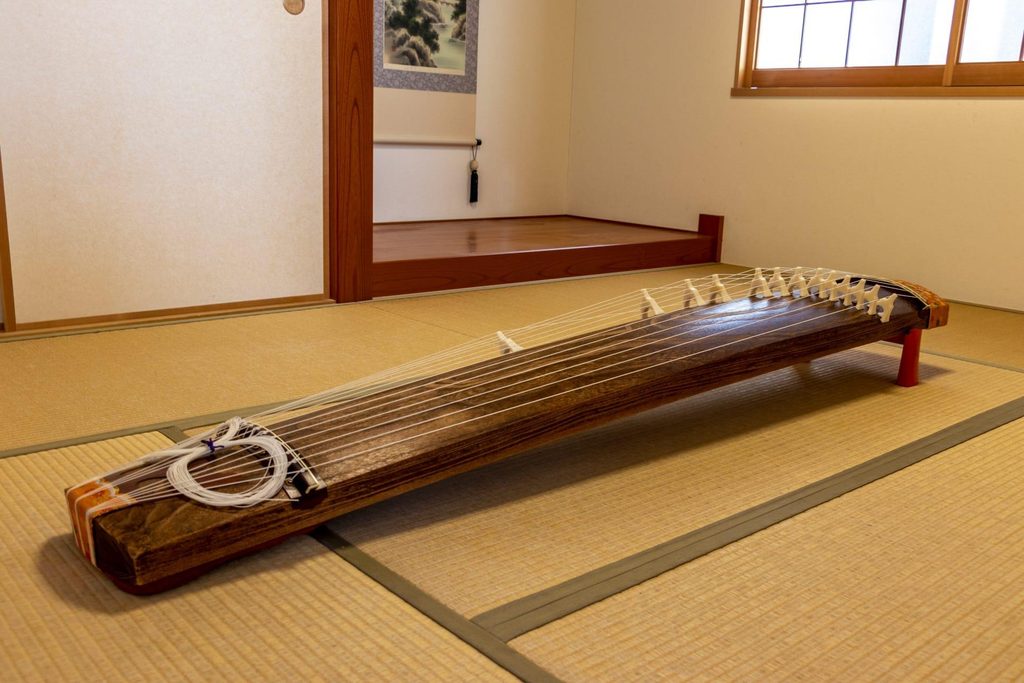
Koto ( Japan )
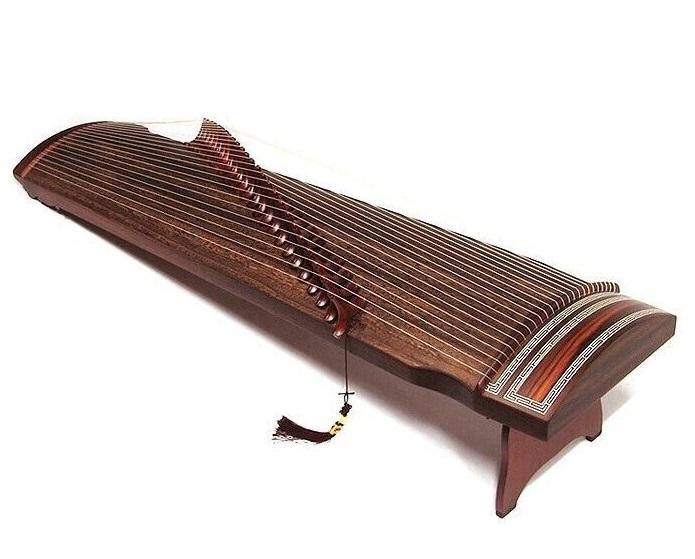
Gayageum (Korea )
2. Listening and Comparison Activity
Listen to recordings of two different stringed instruments, such as the Japanese koto and the Iranian santur. Observe their sounds carefully and note their similarities and differences.
| Feature | Koto | Santur |
| Sound | Gentle, delicate and flowing | Bright, ringing and shimmering |
| Playing technique | Strings are plucked | Strings are struck with small hammers |
| Tone quality | Warm and expressive | Crisp and resonant |
| Musical expression | Can create calm and reflective moods | Can create lively and energetic moods |
Making of the Veena: The Art of Traditional Instrument Craftsmanship
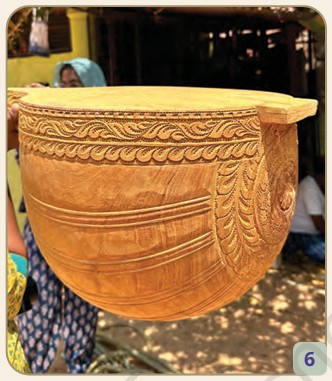
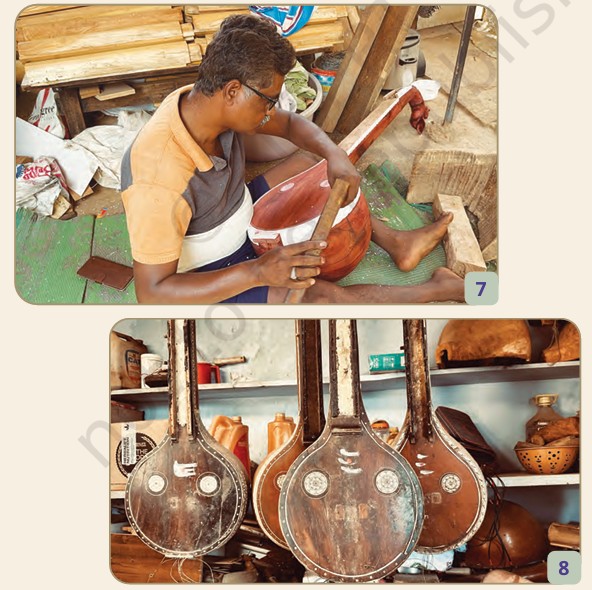
The veena is one of India’s most important traditional stringed musical instruments. Its making is a careful and skilled process that requires patience, creativity, and years of experience. Craftspersons select suitable materials, shape the resonating body, prepare the neck, fit the frets, stretch the strings, and carefully adjust the instrument to produce the desired sound.
Each stage requires great attention to detail. The size and shape of the resonating body, the placement of the frets, the quality of the strings, and the final tuning all influence the instrument’s sound.
Traditional veena makers often use specialised tools and techniques passed down through generations.
Making a veena is not simply a process of assembling different parts; it is an art that combines traditional knowledge, craftsmanship, and musical understanding. Every instrument reflects the dedication and hard work of the artisan who creates it.
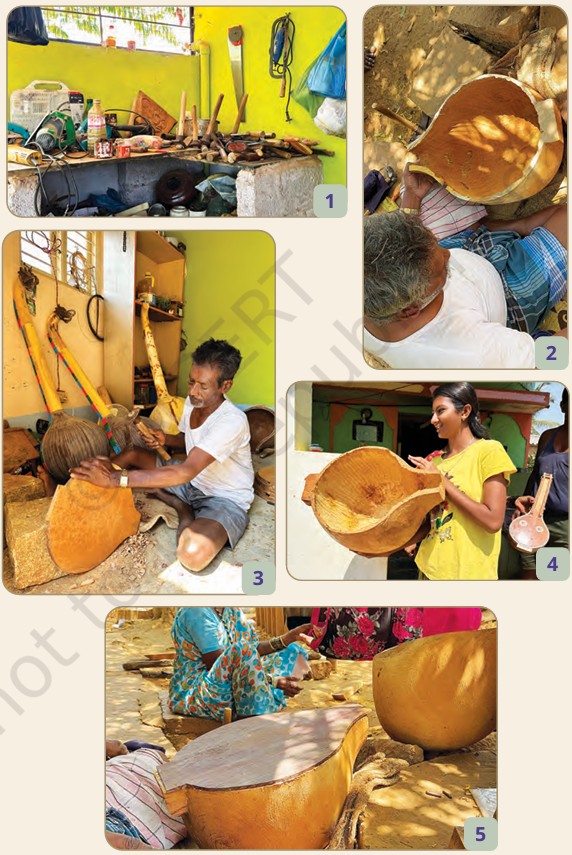
The Veena: A Treasured String Instrument of India
The veena is one of India’s oldest and most respected stringed musical instruments. It is traditionally crafted from a single block of wood, most commonly jackwood. The instrument has two principal parts: a large resonator called the kuḍam and a long, hollow neck known as the daṇḍi. The resonator helps amplify the sound, while the neck supports the strings and frets.
At the end of the daṇḍi, there is often a beautifully carved figure of the yāḻi, a mythical creature commonly seen in South Indian temple art and traditional craftsmanship. This decorative carving adds to the instrument’s distinctive appearance.
The veena holds an important place in Carnatic classical music and is widely played in southern India. Its rich, resonant tone makes it suitable for expressing delicate melodies, intricate musical phrases, and the emotional beauty of rāgas. The instrument represents India’s remarkable musical heritage and the craftsmanship of generations of traditional artisans.
Conclusion:
Music is a beautiful expression of human creativity that connects people across countries, cultures, and generations. As we have explored in this chapter, music travels around the world through migration, trade, cultural exchange, and modern technology. When people move from one place to another, they carry their songs, instruments, rhythms, and musical traditions with them. These traditions help them remember their roots, preserve their cultural identity, and share their heritage with new communities.
We have also discovered how music changes when different cultures come together. Indo-Caribbean Chutney music, British Bhangra, and the musical traditions of the Siddi community show how cultural influences can blend to create unique musical expressions. Similarly, instruments such as the flute, lute, zither, and Rāvaṇa-hatthā reveal the variety of musical traditions found across the world. Although these instruments may differ in shape, materials, and playing techniques, they all express emotions and bring people together.
Learning about music from different parts of the world helps us appreciate cultural diversity and respect the traditions of others. Listening carefully to unfamiliar musical styles can introduce us to new rhythms, melodies, languages, and ways of expressing feelings. It also reminds us that music is not limited by geographical boundaries.
As we continue our musical journey, let us remain curious, explore different musical traditions, and celebrate the creativity of musicians everywhere. Music is a universal language that travels beyond borders, builds friendships, preserves memories, and brings the world closer together.