
Introduction
Dance — Connecting Cultures Beyond Boundaries
Culture connects people beyond geographical and social boundaries. Our customs, traditions, regional practices, values, and beliefs together shape our cultural identity. Dance is an important part of this identity, expressing the stories, emotions, celebrations, and ways of life of different communities.
When people experience and appreciate dance forms from other cultures, they gain a better understanding of diverse traditions and develop mutual respect.
Indian dance forms have travelled across the world through migration, cultural exchange, and the efforts of artists and dance organisations. For example, folk dances such as Dandiya Raas and Bhangra have spread to many countries with the Indian diaspora.
Today, people from different backgrounds participate in these dances during festivals, cultural events, and community celebrations. They are no longer limited to their regions of origin but have become part of the cultural life of many communities around the world.
Similarly, international dancers and performers have learned and practised Indian classical and folk dance forms, introducing them to new audiences and exploring creative collaborations. Such exchanges allow artists to share techniques, ideas, music, and artistic experiences while respecting the traditions from which these dances originate.
Dance therefore acts as a universal language that brings people together. It creates opportunities for cultural learning, friendship, and collaboration. By appreciating different dance traditions, we celebrate cultural diversity and recognise the shared human emotions that connect us all.
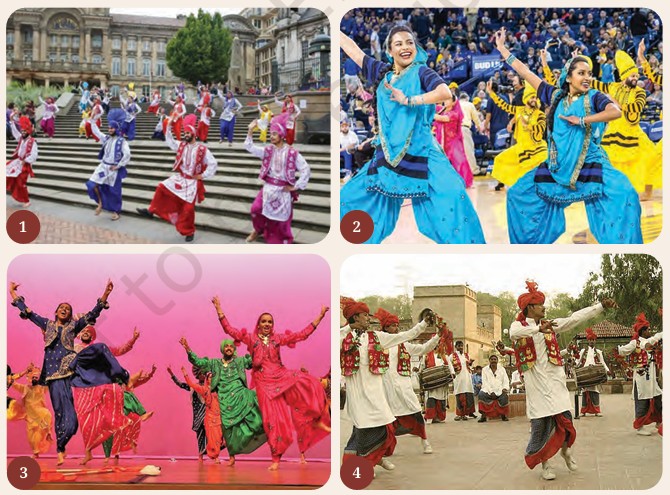
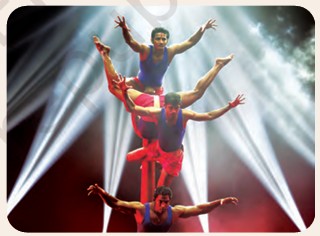
The global presence of Bhangra (1) Flashmobs in Birmingham; (2) Half-time performances at NBA games in the USA; (3) Stage competitions in Singapore; and (4) Lohri celebrations in Punjab
A Dance for Every Situation — Celebrating the Journey of Life
Dance is a beautiful reflection of human experiences, emotions, and cultural traditions. In India, it is closely connected with different stages and occasions of life, from birth and marriage to festivals, religious ceremonies, and even funeral rituals. Every community has its own dance traditions through which people express happiness, devotion, sorrow, gratitude, and togetherness. These performances reflect the beliefs, customs, and way of life of the communities that preserve them.
Many folk dances are performed to celebrate the birth of a child. Badhāī of Madhya Pradesh and Sohar of Bihar are associated with childbirth and the happiness that a newborn brings to the family. Such celebrations often involve singing, rhythmic movements, and the participation of family members and community members. They express blessings and good wishes for the child and the family.
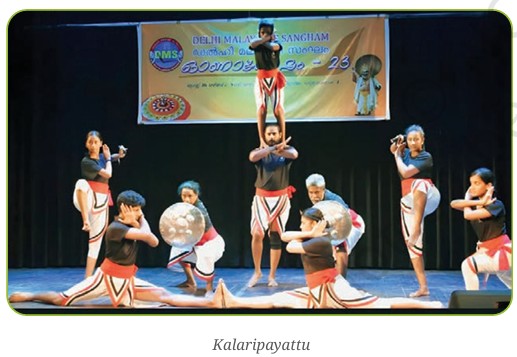
Weddings and marriage processions are also important occasions for dance. Khoriyā of Haryana and Chholiyā Nṛitya of the Kumaon region of Uttarakhand are traditional dances associated with wedding celebrations. Chholiyā is particularly known for its energetic movements and martial elements, often performed during wedding processions.
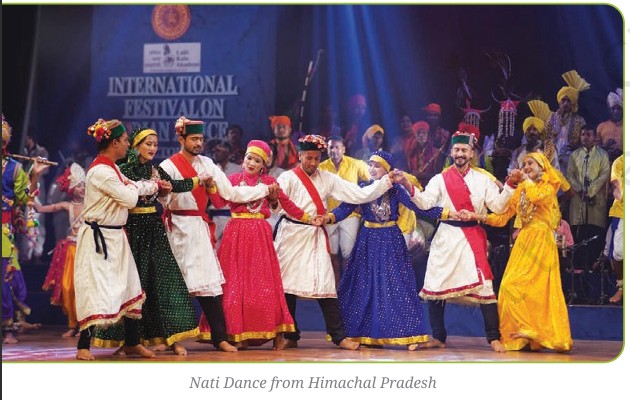
Similarly, Nāṭī of Himachal Pradesh is a colourful community dance performed at weddings, festivals, and other joyful gatherings. These dances create an atmosphere of celebration and strengthen bonds among people.
Dance also plays a significant role in religious and spiritual ceremonies. Naṭa Saṅkīrtana of Manipur is a devotional performance tradition associated with Vaishnavite practices. It is also an integral part of funeral rituals in certain Vaishnavite communities of the region. Through singing, music, and rhythmic movements, participants express devotion, remembrance, and spiritual beliefs.
Some dances are not restricted to a particular occasion. Jhūmar of Bihar is a celebratory folk dance performed throughout the year during social gatherings and festive occasions. It provides people with opportunities to come together and share their happiness.
These examples demonstrate that dance accompanies people through many important moments of life. It is not merely a form of entertainment but also a way of preserving cultural heritage, expressing collective emotions, and strengthening community relationships. Through dance, traditions are passed from one generation to another, keeping the cultural spirit of communities alive.
i.) Naṭa-Saṅkīrtana of Manipur
Naṭa-Saṅkīrtana is a distinctive devotional performance tradition of Manipur, deeply rooted in the Vaishnavite culture of the region. It combines singing, rhythmic movements, music, and dance to express devotion to Lord Kṛṣhṇa. Performers sing devotional compositions while accompanying themselves with traditional instruments, especially the Pung (a Manipuri barrel-shaped drum) and cymbals.
The performance is marked by coordinated movements, rhythmic patterns, and powerful drumming. The Pung plays an important role in maintaining the rhythm and guiding the flow of the presentation. In some performances, dancers also perform energetic movements and turns while playing the drum, a style associated with Pung Cholom.
Naṭa-Saṅkīrtana is performed during religious ceremonies, festivals, and important occasions in the Vaishnavite communities of Manipur. It also forms an important part of certain funeral rituals, where devotional singing and performance provide a way to express spiritual faith and remembrance.
Recognised by UNESCO in 2013 as an Intangible Cultural Heritage of Humanity, Sankirtana reflects the rich spiritual and artistic heritage of Manipur. It brings together music, movement, and devotion, strengthening the bond between the performers, the community, and their religious traditions.
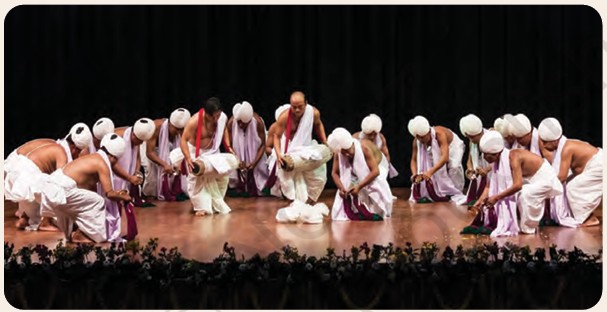
Naṭa-Saṅkīrtana of Manipur
ii.) Chholiyā Nṛitya of Kumaon, Uttarakhand
Chholiyā Nṛitya is a traditional folk dance of the Kumaon region of Uttarakhand. It is especially associated with wedding celebrations and processions, where dancers perform in front of the wedding party to mark the occasion with energy and excitement. The dance is known for its lively movements and martial elements, reflecting the region’s historical traditions and cultural heritage.
Dancers traditionally carry swords and shields, performing coordinated steps, rhythmic movements and mock combat sequences. Their movements resemble the actions of warriors, while the music of traditional instruments such as the dhol and damau provides a strong rhythmic foundation. Colourful costumes, turbans and energetic performances add to the visual appeal of the dance.
Chholiyā Nṛitya is more than a form of entertainment. It brings together music, movement and community participation, making wedding celebrations vibrant and memorable. Through its martial movements and festive spirit, this dance preserves the cultural identity and traditions of Kumaon.
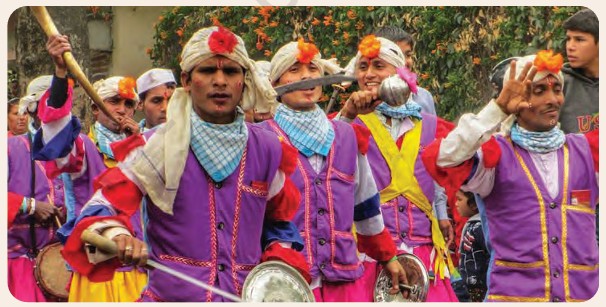
Chholiyā Nṛitya of Kumaon, Uttarakhand
Folk Dances of India — Celebrating Festivals, Nature, and Cultural Traditions:
India’s folk dances reflect the country’s diverse beliefs, customs and festive traditions. Each dance has its own story, purpose and style of performance. Bārḍo Chham, from Arunachal Pradesh, symbolises the journey from death to rebirth and represents the victory of good over evil. Its performance reflects the belief in the triumph of positive forces over negative ones.
Many Indian folk dances are closely connected with harvest festivals and agricultural celebrations. Bihu, from Assam, is performed during the harvest season and expresses joy, gratitude and the spirit of community life. Hojāgirī, from Tripura, is known for its graceful movements and remarkable balancing skills, especially among the women performers.
Taraṅgmel, a vibrant community dance of Goa, adds colour and energy to festive celebrations. Dancers carry colourful flags as props and move rhythmically to percussion instruments such as the dhol and tāśhā. They often shout “ho ho” together in rhythm, creating enthusiasm and helping maintain coordination during the performance.
Ummattāṭ, from Karnataka, begins with an invocation to the river Kaveri and is traditionally associated with harvest festivals. Its movements and music reflect the community’s cultural and spiritual connection with nature.
These dances demonstrate how folk traditions bring people together through music, movement and shared celebrations. They also preserve regional identities and pass cultural values from one generation to the next.
i.) Bārḍo Chham — The Dance of Good Over Evil from Arunachal Pradesh
Bārḍo Chham is a traditional masked dance associated with Arunachal Pradesh. The word Chham refers to a form of masked dance performed in parts of the Himalayan Buddhist cultural region. Bārḍo Chham symbolises the journey between death and rebirth and presents the victory of good over evil. Its themes are connected with beliefs about life, death and the spiritual journey after death.
During the performance, dancers wear distinctive masks and costumes and use expressive movements to represent spiritual ideas and the struggle between positive and negative forces. Music and rhythmic movements help create a dramatic atmosphere, making the performance meaningful as well as visually engaging.
Bārḍo Chham reflects the region’s rich cultural and spiritual heritage. Through its symbolic characters and storytelling, it communicates the importance of goodness and the triumph of positive forces over evil.
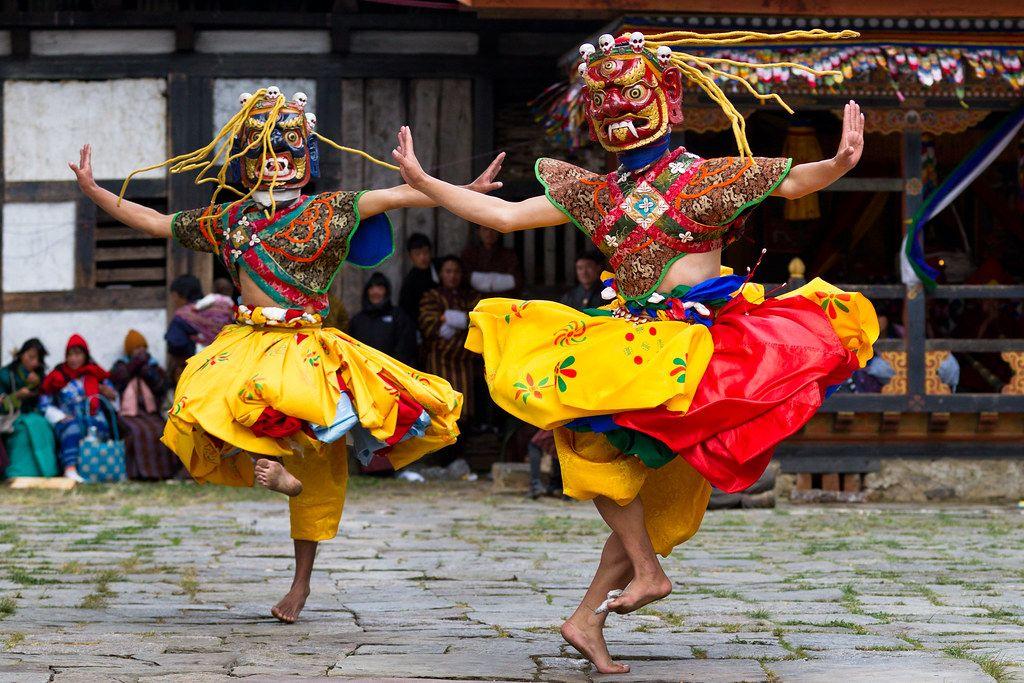
Bārḍo Chham from Arunachal Pradesh
ii.) Hojāgirī — The Graceful Balancing Dance of Tripura
Hojāgirī is a traditional folk dance of Tripura, performed mainly by women of the Reang (Bru) community. It is especially associated with the Hojagiri festival, celebrated after the harvest. The dance is admired for its graceful movements and remarkable balancing skills.
During the performance, dancers balance objects such as bottles, earthen lamps and other items on their heads while moving their bodies rhythmically. In some performances, they balance on earthen pitchers or other supports and demonstrate impressive control and coordination. Their movements often involve bending and swaying the upper body while keeping the feet relatively steady. Male performers generally provide musical accompaniment using traditional instruments such as the kham (drum) and bamboo flute.
Hojāgirī reflects the Reang community’s cultural identity, festive spirit and connection with agricultural life. Through its rhythmic music, graceful movements and extraordinary balancing techniques, this dance celebrates community traditions and preserves Tripura’s rich folk heritage.
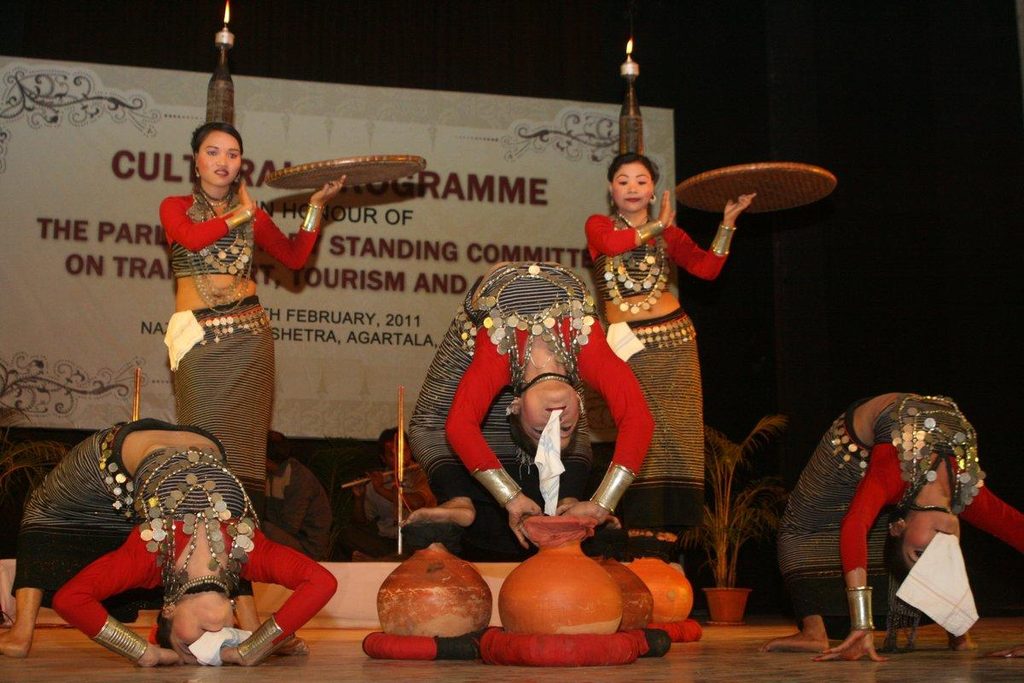
Hojāgirī from Tripura
Rani Machaiah — Preserving the Ummattāṭ Folk Dance of Karnataka
Rani Machaiah is a renowned cultural practitioner from Karnataka, known for her dedicated efforts to preserve and popularise Ummattāṭ, a traditional folk dance of the Koḍava community. This dance is an important part of Koḍava cultural heritage and is traditionally associated with festivals and harvest celebrations. Through her performances and efforts to promote the art form, she has helped create greater awareness of its unique movements, music and cultural significance.
In March 2023, Rani Machaiah received the Padma Shri, one of India’s prestigious civilian awards, in recognition of her contribution to preserving and promoting Ummattāṭ. Her achievement highlights the valuable role of folk artists in safeguarding traditional performing arts. Her dedication inspires younger generations to learn, practise and carry forward their cultural traditions, ensuring that this distinctive dance form continues to flourish.
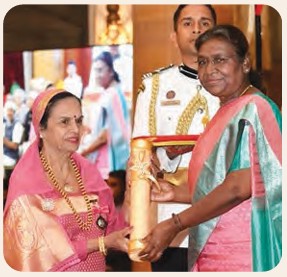
Rani Machaiah receiving the
Padma Shri from the honourable
President of India Droupadi Murmu
Activity
Dance Voices: Become a Dance Podcaster or Interviewer
Objective: To explore the world of dance by interviewing dance artists, teachers or representatives of dance institutions and sharing their experiences with others.
This activity has three stages: Pre-production, Production and Post-production.
1. Pre-production — Research and Planning
- Prepare a list of dance schools, institutions, organisations and well-known dance artists in your region and neighbouring areas.
- Remember that dance institutions are not only places to learn dance; they can also serve as important cultural resource centres for local communities.
- Select a dance artist, teacher or organisation for your interview.
- Prepare thoughtful, open-ended questions about the organisation’s activities or the artist’s life, training, achievements and career journey.
- Encourage curiosity and ask questions that help you discover new ideas and experiences.
2. Production — Conducting the Interview
- Visit the selected dance school, institution, organisation or artist as a group, accompanied by a teacher.
- Assign different responsibilities to group members. Some can act as interviewers, while others can manage lighting, video recording, audio recording and technical support.
- Conduct the interview and record it, preferably in video format. If video recording is not possible, an audio recording may be used.
- Listen carefully and maintain a respectful and friendly conversation throughout the interview.
3. Post-production — Editing and Presentation
- If possible, edit the recorded material to create a polished dance podcast.
- Prepare short video excerpts highlighting interesting moments and important learning experiences.
- Give special attention to inspiring thoughts and practical lessons shared by the artist that can be applied to everyday life.
- Present your podcast or selected highlights to the class and share the key takeaways from the interaction.
Learning Outcome: This activity will develop your research, communication, interviewing and teamwork skills. It will also help you understand the dedication, discipline and creativity involved in a dancer’s journey while encouraging you to appreciate and preserve local dance traditions.
One Story, Many Renditions — Exploring the Art of Storytelling Through Dance
A single story can be presented in many different ways through dance. Different dance forms use their own movements, gestures, facial expressions, music, costumes and rhythms to bring the same story to life. For example, an episode from the Rāmāyaṇa or Mahābhārata may be interpreted through Bharatanatyam, Kathak, Odissi, Kathakali or a regional folk-dance tradition. Although the central story remains the same, each dance form gives it a distinctive style and expression.
These different interpretations reflect the cultural traditions, artistic techniques and creative imagination of the performers. A character may be portrayed through graceful movements in one dance form and powerful gestures in another. Music, costumes and stage arrangements also influence how the audience experiences the story.
Exploring multiple renditions of the same story helps us understand that dance is not merely a sequence of movements; it is a powerful medium of communication and creative storytelling. It also encourages us to appreciate the diversity of India’s performing arts and the many ways in which artists preserve and reinterpret traditional stories.
| Do You Know? Bāli-jātrā: Celebrating Odisha’s Ancient Maritime Heritage Trade and travel from the eastern shores of Bharat encouraged cultural, religious and linguistic exchanges with distant regions from ancient times. The region of Kaliṅga, in present-day Odisha, played an important role in maritime trade across the Bay of Bengal. Historical traditions associate Bāli-jātrā with the departure of merchants on overseas voyages after the monsoon season. These voyages are traditionally commemorated on Kārtika-Pūrṇimā, the full-moon day of the Hindu month of Kārtika. Even today, Bāli-jātrā is celebrated in Odisha with great enthusiasm. The festival features colourful fairs, traditional songs, dances and cultural performances. It keeps alive the memory of Odisha’s seafaring heritage and the historic connections between its people and lands across the seas. Note: The association of Bāli-jātrā with very ancient voyages is part of Odisha’s maritime tradition. Specific claims dating the festival or its records to the third century BCE should be presented as traditional accounts unless supported by historical evidence. |
The Growth of Shared Performance Traditions Across Southeast Asia
From the seventh to the fourteenth century CE, a shared vocabulary of movement, gestures and performance practices gradually developed across Southeast Asia. This cultural exchange was influenced by trade, religious interactions and the movement of artists, scholars and performers between different regions. Indian epics, religious stories and artistic traditions also inspired local dance, theatre and ceremonial performances.
Over time, these influences blended with indigenous customs, creating distinctive regional styles while retaining certain shared features. This development reflects the close cultural connections between India and Southeast Asia and demonstrates how performing arts evolve through interaction and exchange.
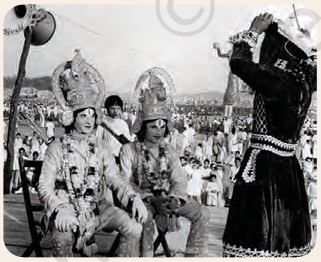
Rāmalīlā, August 1949 Lord Rāma
and Lakṣhmaṇa are receiving
Vibhῑṣhana, the brother of Rāvaṇa
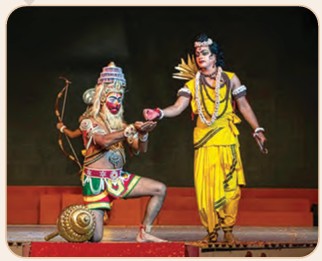
Scene from Rāmalīlā
Rāmalīlā is a popular Indian dance-theatre tradition that presents episodes from the Rāmāyaṇa, particularly the life and heroic deeds of Lord Rāma. It has roots in the ancient Kuśhīlava traditions of storytelling and performance.
The form developed into the style widely recognised today during the seventeenth century CE. Rāmalīlā is traditionally performed around the festival of Dussehra (Vijaya-daśhamī), celebrating the victory of good over evil. Through acting, dialogue, music, songs and expressive movements, performers bring the characters and events of the Rāmāyaṇa to life.
These performances often take place in open spaces and involve the participation of local communities, making Rāmalīlā an important part of India’s cultural and theatrical heritage.
The Rāmāyaṇa — A Shared Story Across Diverse Dance Traditions
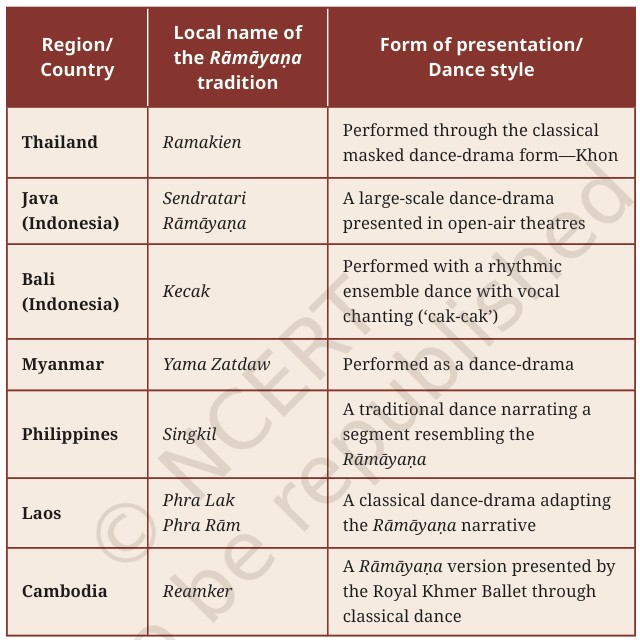
The Rāmāyaṇa became an important theme in the performing arts of many regions across India and Southeast Asia. Over generations, artists interpreted, retold and presented its episodes through different dance and theatre traditions. Each region adapted the narrative according to its own cultural practices, artistic styles, dance vocabulary, music and local aesthetics.
For example, stories from the Rāmāyaṇa are portrayed through Indian classical dance forms, such as Bharatanatyam and Kathakali, as well as Southeast Asian traditions, such as Balinese dance and Cambodian classical dance.
Although the central story remains recognisable, its characters, movements, costumes and presentation may differ from one tradition to another. This demonstrates how a shared story can connect diverse cultures while allowing each community to express its own artistic identity.
Hanumān — The Enduring Legacy of the Rāmāyaṇa in Southeast Asian Art
To deepen our understanding of this cultural journey, let us explore how the Rāmāyaṇa continues to live beyond dance and theatrical performances. One of the most striking examples is the figure of Hanumān, whose image appears in sculptures and other works of art across several Southeast Asian regions.
Although the character remains recognisable, artists have represented him in different ways, reflecting their local artistic styles, cultural traditions and religious influences. These sculptures demonstrate how the stories and characters of the Rāmāyaṇa travelled beyond India and became part of the artistic heritage of other countries. Through these diverse representations, Hanumān continues to symbolise devotion, courage, strength and loyalty, connecting communities through a shared cultural story.
A sculpture captures movement in stillness, and dance captures stillness even in movement!
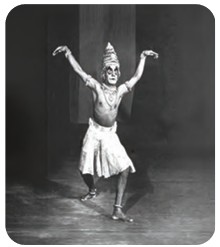
i.) C. K. Balagopalan as Hanumān — An Iconic Representation at Kalakshetra
C. K. Balagopalan is remembered for his iconic portrayal of Hanumān at Kalakshetra, Chennai. Through expressive movements, powerful gestures and a commanding stage presence, he brought the qualities of Hanumān to life.
His portrayal reflected the character’s courage, strength, devotion and loyalty to Lord Rāma. This representation demonstrates how dance and theatre can transform a familiar mythological character into a memorable stage experience.
It also highlights the important role of performers in preserving and presenting the stories of the Rāmāyaṇa through India’s rich performing-arts traditions.
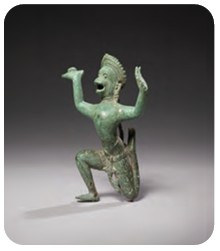
ii.) Flying Hanumān Cambodia, Koh Ker style, 10th century CE
The Flying Hanumān sculpture from Cambodia, dating to the 10th century CE, is a remarkable example of the influence of the Rāmāyaṇa on Southeast Asian art. Created in the Koh Ker style, the sculpture depicts Hanumān in a dynamic flying posture, reflecting his extraordinary strength, courage and ability to travel through the air. Its form and artistic details reveal the distinctive sculptural traditions of ancient Cambodia.
This representation also shows how characters from Indian epics were adopted and reinterpreted by Southeast Asian artists, becoming an integral part of their local cultural and artistic heritage.
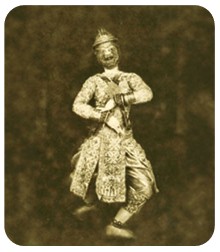
iii.) Hanumān from Cambodian Reamker presented by Royal Khmer Ballet, 1915
The figure of Hanumān from the Cambodian Reamker, presented by the Royal Khmer Ballet in 1915, reflects the lasting influence of the Rāmāyaṇa on Cambodian performing arts.
The Reamker is the Cambodian adaptation of the Indian epic, retold through local cultural traditions, artistic expressions and storytelling styles. In this tradition, Hanumān is portrayed through graceful yet energetic movements, expressive gestures and distinctive costumes.
The Royal Khmer Ballet brings the epic’s characters and episodes to life through carefully choreographed dance and dramatic expression. This portrayal demonstrates how a story that travelled across regions became part of Cambodia’s own cultural identity while retaining its connection with the wider Rāmāyaṇa tradition.
Conclusion
Dance is much more than an art of movement; it is a powerful means of connecting people, cultures and communities. Throughout history, trade, travel, religious exchanges and cultural interactions have helped dance traditions spread across regions and countries. As these traditions travelled, they blended with local customs, music, costumes and artistic expressions, creating new forms while preserving elements of their shared heritage.
The journey of the Rāmāyaṇa across India and Southeast Asia beautifully illustrates these cultural connections. Its stories have been interpreted through different dance and theatre traditions, including Rāmalīlā in India and the Cambodian Reamker. Characters such as Hanumān have also appeared in sculptures and performances, reflecting the artistic styles and cultural identities of different regions. Although each community presents these stories in its own distinctive way, their central themes of courage, devotion, loyalty and the victory of good over evil continue to connect audiences.
Festivals and traditional performances also play an important role in keeping cultural relationships alive. They provide opportunities for communities to celebrate their heritage, share stories and pass artistic knowledge to younger generations.
Exploring dance traditions from different regions helps us recognise both their unique qualities and their shared influences. It encourages respect for cultural diversity, strengthens mutual understanding and reminds us that art can communicate beyond the boundaries of language and geography. Through dance, stories travel across generations and borders, creating meaningful connections between people and cultures around the world.