
Introduction
Dance Choreography — Shaping the Flow of Movement and Expression
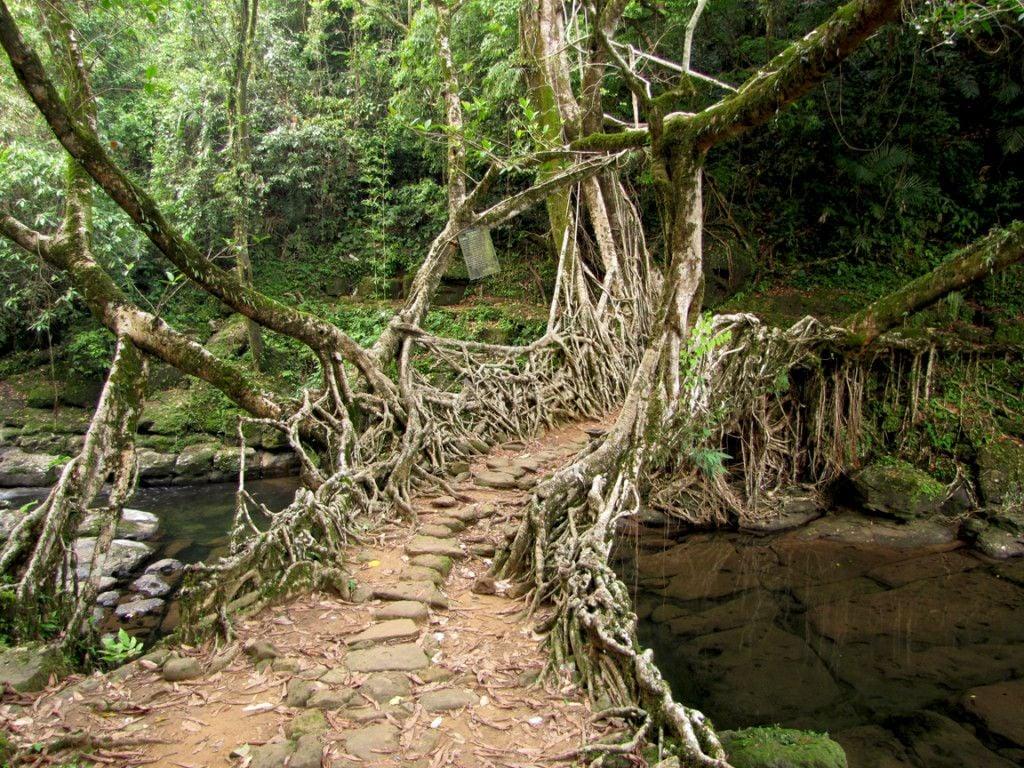
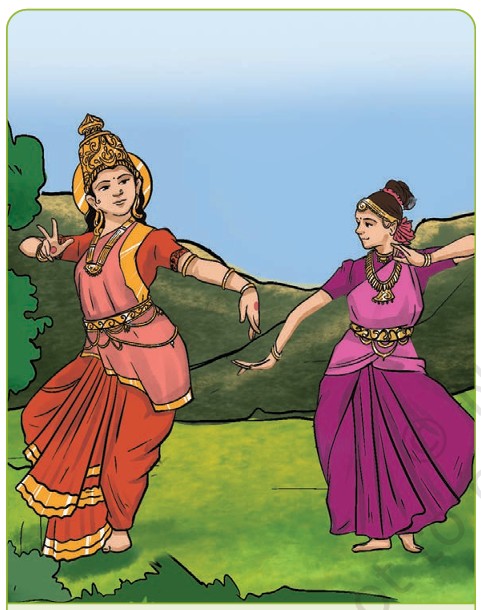
Just as a river flows around rocks and pebbles, choreography shapes the flow and direction of a dance performance. Dance choreography is the art of creating, arranging and organising movements to form a meaningful visual composition. It transforms individual steps and gestures into a coordinated sequence that communicates ideas, expresses emotions and tells stories.
Through choreography, a dancer’s movements become part of a larger artistic design.
A choreographer is responsible for developing the overall structure and presentation of a dance. This involves deciding where dancers will stand, how they will move, which directions they will face and when they will pause or change formations. The choreographer also considers the use of space, rhythm, timing, speed and energy to create an interesting performance. Every movement is carefully planned so that the dancers work together and the performance flows smoothly.
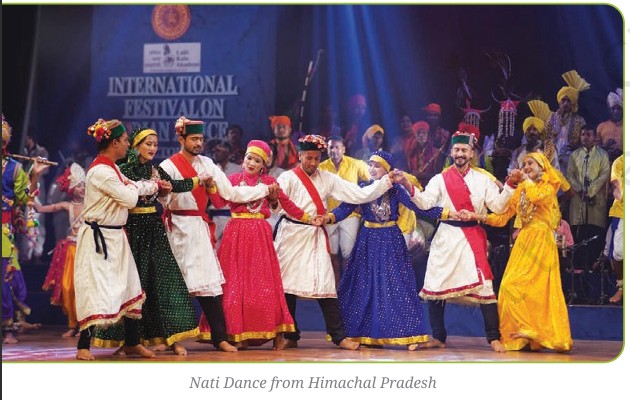
Choreography may be created for a solo performance, a duet or a large group. In group dances, dancers may move in lines, circles, diagonals or other formations to create attractive visual patterns.
Changes in levels, directions and movements add variety and help maintain the audience’s interest. Music and rhythm often guide the dancers, while facial expressions and gestures add meaning to the performance.
Choreography can be inspired by many things, including nature, stories, festivals, historical events, social themes and personal experiences. It may follow the traditional vocabulary of classical and folk dance forms or explore new movements and contemporary styles. In this way, choreographers preserve cultural traditions while encouraging creativity and innovation.
Learning choreography helps students develop imagination, coordination, discipline, teamwork and confidence. It teaches them how individual movements can be combined to create a complete artistic experience.
Ultimately, choreography gives shape, meaning and direction to dance, allowing performers to bring their creative vision to life through the language of movement.
| Do You Know? Piṇḍībandhas: Early Ideas of Choreography in India Sage Bhārata, traditionally regarded as the author of the ancient Indian treatise Nāṭyaśhāstra, described an interesting concept related to the organisation of dancers and group movements. More than 2,000 years ago, he referred to Piṇḍībandhas, which are coordinated group formations created by dancers. These formations involve clustering, weaving, linking and moving together in organised patterns. They help create attractive visual arrangements on the stage and bring harmony to group performances. The concept of Piṇḍībandhas demonstrates that the thoughtful arrangement of dancers and their movements was an important part of Indian performing arts in ancient times. It also shows how early ideas of choreography were explored through collective movement, coordination and spatial patterns. |
Ancient Choreographic Ideas in Modern Dance
Many ancient ideas of choreography continue to influence dance performances even today. The concept of organised group movements and formations can be seen in both traditional and contemporary dance styles.
Some examples include:
1. Group Formations and Shapes: Dancers arrange themselves in different patterns, such as circles, lines, triangles and other geometric shapes, to create attractive visual compositions.
2. Coordinated Travelling Patterns: Dancers move together across the performance space in planned directions and pathways, creating smooth transitions and organised formations.
3. Movement Flow in Unison or in Opposition: Dancers may perform the same movements simultaneously and in harmony, known as unison. Alternatively, they may perform contrasting movements or move in opposite directions to create visual variety and dramatic effect.
These choreographic techniques demonstrate how ideas developed in ancient Indian performing arts continue to find expression in modern dance, connecting traditional knowledge with contemporary creativity.
Choreography and Collaboration — Creating Dance Through Teamwork
In the context of Indian dance, the term nṛitya saṁrachanā (dance creation) can be used to describe the process of dance choreography. Creating a dance composition requires imagination, planning, creativity and teamwork. It also involves the thoughtful use of various elements and techniques of dance and movement, such as rhythm, space, body movements, gestures, expressions and formations.
A choreographer does not work alone but collaborates closely with the dancers to bring an artistic idea to life. Together, they explore different movements, experiment with formations, develop sequences and make improvements through regular practice. This collaborative process allows dancers to contribute their ideas and creativity while helping the choreographer shape the overall performance. Each participant plays an important role in making the final presentation coordinated and meaningful.
An important part of choreography is the selection and use of the soundscape, which refers to the sounds accompanying a performance. It may include instrumental music, lyrical songs, natural sounds, spoken words or even complete silence.
A choreographer may design movements that follow the rhythm of the music or create interesting cross-patterns in which movements contrast with the accompanying rhythm. Silence can also be used creatively to highlight gestures, pauses and body movements.
The possibilities of choreography are endless. By combining imagination, movement, music and collaboration, dancers and choreographers can create unique performances that communicate ideas, emotions and stories. This process encourages artistic exploration, mutual understanding and teamwork.
1.) Interlinked Hands in a Dance Formation
Interlinked hands create a connected group formation in which dancers hold one another’s hands while performing coordinated movements. This arrangement symbolises unity, cooperation and togetherness. It also helps dancers maintain coordination, balance and rhythm while moving as a group.
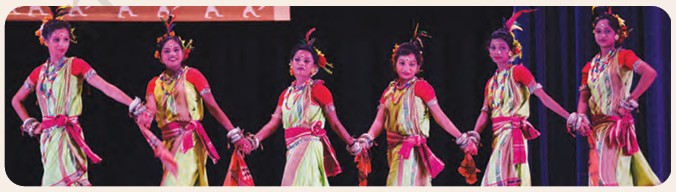
Interlinked hands in a dance formation
2.) Circular Movement Pattern in Dance
A circular movement pattern is formed when dancers move together along a circular pathway, either around a central point or while holding a circle formation. This arrangement creates a sense of unity, continuity and harmony. Dancers must maintain proper spacing, rhythm and coordination to perform the movements smoothly.
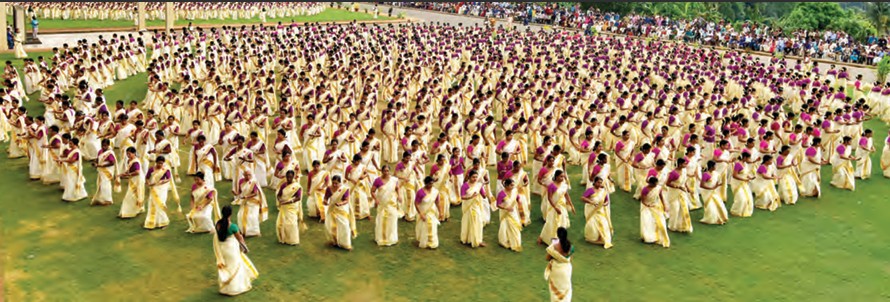
Circular movement pattern in dance
A choreography includes the following:
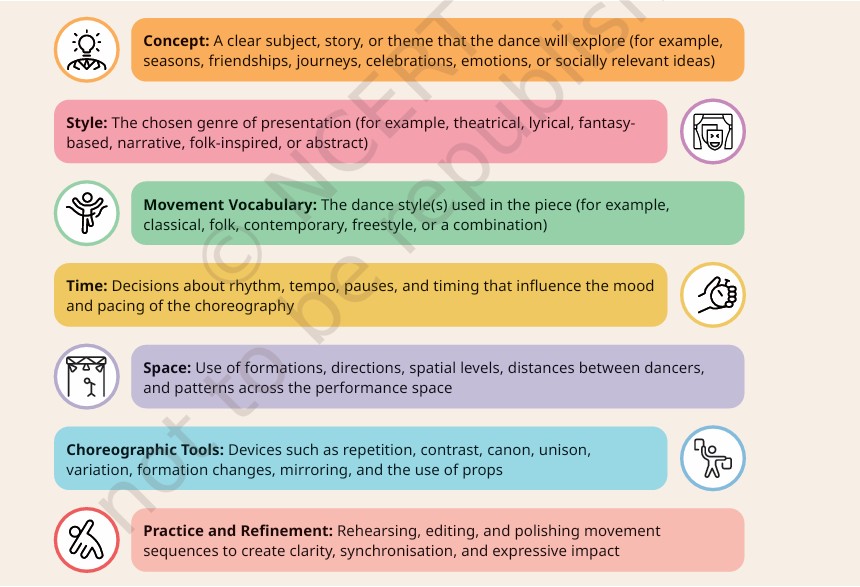
Now, let us explore the two aspects of choreography — movement patterns and use of space.
Movement Patterns in Choreography — Creating Meaning Through Movement
There are countless ways to create patterns through dance movements. Choreographers carefully arrange individual steps and group movements to develop visual designs and meaningful sequences. The process of creating movement patterns may include:
- Linking Movements into Sequences: Combining individual steps, gestures and movements to create a continuous and organised dance sequence.
- Designing Shapes with the Body: Using different body positions, postures and gestures to create interesting shapes and visual patterns.
- Arranging Dancers into Formations: Positioning dancers in lines, circles, triangles, diagonals or other formations to create attractive group compositions.
- Creating Symmetry or Asymmetry: Arranging movements and formations in balanced or contrasting ways to add variety, harmony and visual interest to a performance.
Movement patterns in choreography can carry deeper meanings, particularly in folk-dance traditions. Rooted in everyday life and collective experiences, these patterns often develop through simple steps, repetition and group formations. In many Indian regional dances, coordinated movements reflect the activities and relationships of community life.
They may represent shared agricultural work, traditional occupations, social bonds, festivals and collective celebrations. When dancers move together in rhythm, their movements express a sense of unity, cooperation and belonging.
Thus, movement patterns are not merely arrangements of steps and formations. They are also a way of communicating cultural identity, shared experiences and community values through the language of dance.
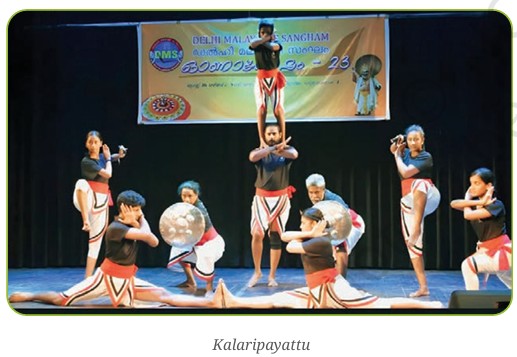
Human formations, such as pyramids, are commonly seen in several Indian dance forms.
1.) Dance by the Naga Community at the Hornbill Festival
The Naga communities of Nagaland have a rich tradition of folk dances that reflect their cultural identity, history and community life. These dances are often performed during festivals and celebrations, accompanied by traditional music, rhythmic drumbeats and energetic movements.
Dancers wear colourful traditional attire, including distinctive shawls, ornaments and feathered headgear, which represent the heritage of their respective tribes. The Hornbill Festival, celebrated every year in Nagaland, provides a platform for different Naga tribes to present their traditional dances, songs, music and customs. Through these performances, people celebrate their shared cultural heritage while preserving the unique traditions of individual communities.
The festival also offers visitors an opportunity to experience the diversity and vibrancy of Naga culture.
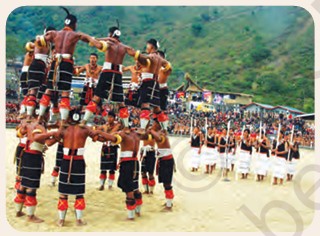
Dance by the Naga Community at the Hornbill Festival
2.) Mallakhamba — Traditional Gymnastics of Maharashtra
Mallakhamba is a traditional Indian sport that combines gymnastics, strength, balance and physical flexibility. It is especially popular in Maharashtra, where it has been practised for generations. The word Mallakhamba comes from two words: malla, meaning wrestler, and khamba, meaning pole.
During a performance, athletes climb, balance, twist and perform challenging movements on a tall wooden pole or a rope. These movements require great strength, concentration, coordination and body control. Mallakhamba is traditionally associated with physical training for wrestlers, helping them develop stamina, agility and flexibility.
Today, it is also practised as a competitive sport and performed in demonstrations and cultural events. Mallakhamba reflects India’s rich heritage of indigenous physical practices and celebrates the discipline, determination and skill of its performers.
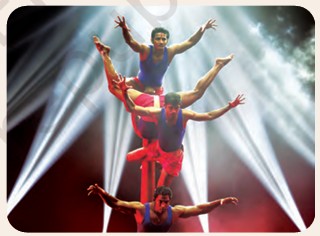
Mallakhamba — Traditional Gymnastics
of Maharashtra
3.) Karagāṭṭam — The Pot-Balancing Folk Dance of Tamil Nadu
Karagāṭṭam is a traditional folk dance of Tamil Nadu, closely associated with the worship of the village goddess Māriyammaṉ. In this lively dance, performers balance decorated pots, known as karagam, on their heads while moving gracefully to rhythmic music.
The pots are often decorated with flowers, colourful cloth and other ornaments. Dancers demonstrate remarkable balance, coordination and control as they perform intricate steps, turns and movements without allowing the pots to fall. Traditional musical instruments such as the nāgasvaram and tavil accompany the performance, creating an energetic atmosphere.
Karagāṭṭam is commonly performed during village festivals, temple celebrations and other community gatherings. It reflects the devotion, artistic skill and festive spirit of Tamil Nadu’s folk traditions.
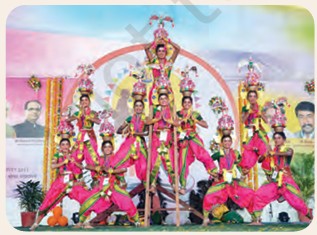
Karagāṭṭam from Tamil Nadu
4.) Bhangra — The Energetic Folk Dance of Punjab
Bhangra is a lively and energetic folk dance of Punjab, traditionally associated with the harvest season and the celebration of a successful crop. It reflects the joy, enthusiasm and vibrant spirit of Punjabi rural life. Dancers perform energetic movements, vigorous jumps, shoulder movements and rhythmic steps, often raising their arms in the air.
Traditionally performed by men, Bhangra is now enjoyed by people of all genders and is popular at festivals, weddings and cultural celebrations. The powerful beats of the dhol (a traditional double-headed drum) provide the rhythm for the dance, while instruments such as the tumbi and chimṭā add to its musical richness.
Dancers often wear colourful Punjabi outfits, including turbans, kurta and lungi. Today, Bhangra has gained international popularity and is performed on stages around the world. It continues to celebrate Punjab’s cultural identity, community spirit and love of music and dance.
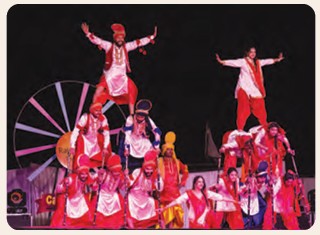
Bhangra — The Energetic Folk Dance of Punjab
Let us explore
Bagurumba — The Butterfly Dance of Assam
Bagurumba is a traditional folk dance of the Bodo community of Assam. Often called the Butterfly Dance, it is admired for its graceful movements, gentle swaying and flowing gestures that resemble butterflies fluttering among flowers. The dance reflects the Bodo community’s close relationship with nature and its cultural traditions.
Women usually perform Bagurumba in groups, wearing colourful traditional attire, including the dokhona and aronai. Their movements imitate elements of nature, such as butterflies, birds, flowers and the gentle movement of leaves in the breeze. Traditional instruments, including the kham (drum), sifung (flute) and jotha (cymbals), provide musical accompaniment.
Bagurumba is performed during important celebrations, particularly the Bodo festival of Bwisagu, which marks the beginning of the Assamese New Year. Through its beautiful movements, rhythmic music and connection with nature, Bagurumba celebrates the identity and rich cultural heritage of the Bodo people.
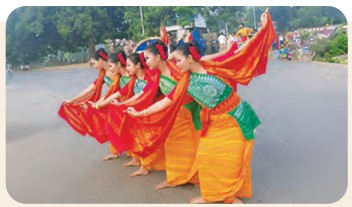
Bagurumba Butterfly dance from Assam
Nava Nritya of Manjushree Chaki Sarkar
Manjushree Chaki-Sarkar was an Indian dancer and choreographer who developed Nava Nritya, meaning “new dance”. She received training in Indian dance forms in Kolkata during the 1950s. Later, she spent several years in the United States, where she became familiar with Western modern and contemporary dance. After returning to India, she felt the need to create a new contemporary dance vocabulary rooted in Indian aesthetics.
Drawing on her training and knowledge of cultural anthropology, she explored ways to bring Indian artistic traditions into dialogue with modern movement techniques. This creative approach developed into Nava Nritya, a dance form that combined elements of Indian classical and folk traditions with contemporary expression.
Her daughter, Ranjabati, assisted her in this work and contributed to its development. Manjushree Chaki-Sarkar received the Sangeet Natak Akademi Award in 1994 for her contribution to dance. Her work encouraged dancers to explore new possibilities while remaining connected to India’s cultural and artistic heritage.
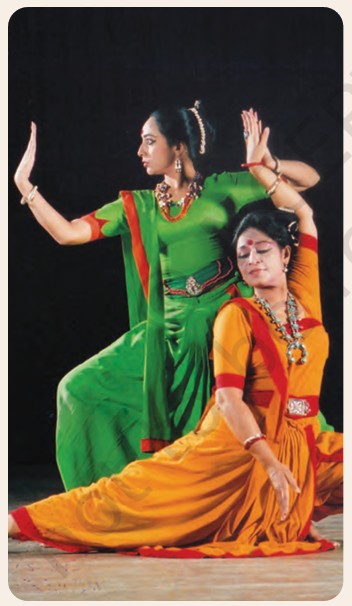
Manjushree and Ranjabati Chaki Sarkar
as Māyā and Prakṛiti in Modern
Indian dance (Nava Nritya)
Spatial Usage in Choreography — Creating Patterns on the Dance Floor
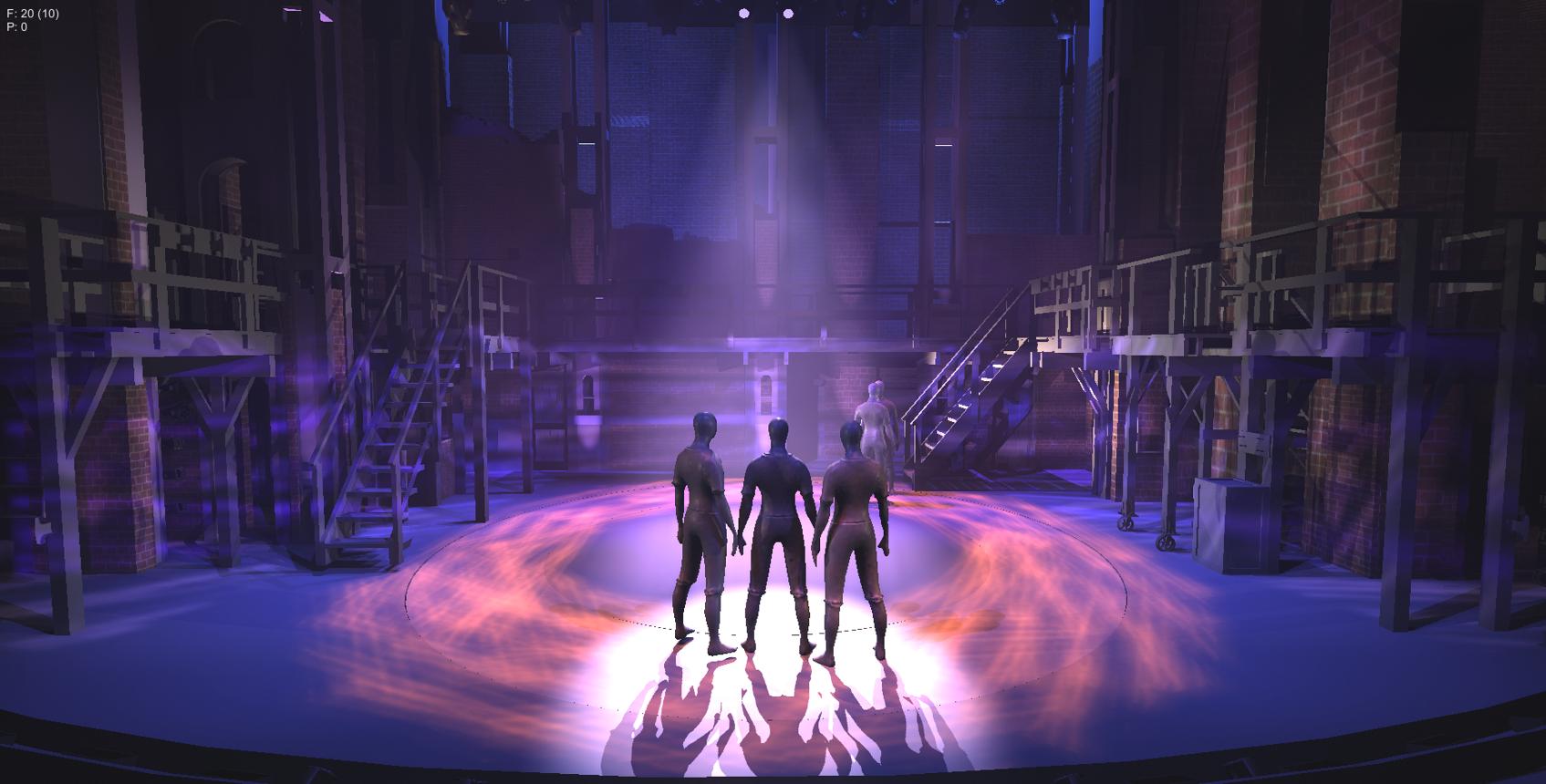
One of the key skills of a choreographer is understanding and using the available dancing space effectively. The dance floor can be mapped to create different lines, pathways, levels and shapes, helping the choreographer visualise how dancers can move and arrange themselves.
Dancers may move in straight lines, circles, diagonals or other formations, either individually or as a group.
They may also travel across the stage, move towards or away from one another, or perform in fixed positions. Careful use of space makes a performance visually interesting and helps maintain balance, coordination and harmony among dancers. By planning spatial arrangements, a choreographer can guide the flow of movement and bring creative ideas to life.
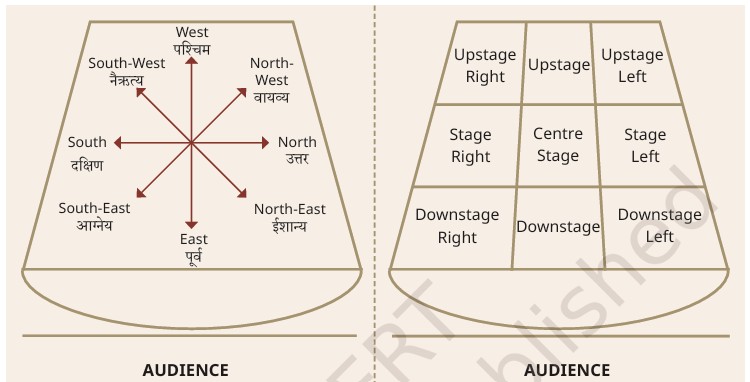
Stage directions – Performers face East Present-day stage divisions
(stage directions are not compass-based)
Activity:
Creating Your Choreography
Divide the class into four groups and select one lead choreographer for each group.
1. Create a solo movement: Each lead choreographer creates a short solo movement sequence based on a concept of their choice. It could represent a contemporary theme, an element of nature such as rain or thunderstorms, or a celebration such as a festival. They may use any movement style or vocabulary they are comfortable with.
2. Develop a group choreography: Each lead choreographer adapts their solo movement sequence into a group performance. Explore different formations, spacing, timing, emotional expressions and interactions among the dancers.
3. Include the four abhinayas: The choreography may incorporate different aspects of abhinaya through:
- Expressive and stylised movements, including hand gestures, animation and mime.
- Rhythmic syllables and spoken words.
- Props and objects that support the theme.
- Music, rhythm and other sound elements to enhance the performance.
4. Present the performances: First, each lead choreographer presents their solo sequence. This is followed by the group’s performance of the same sequence adapted for several dancers.
5. Observe and discuss: Watch each group’s performance and explore how the movement and expression change when a solo sequence becomes a group choreography. Discuss how interaction among dancers, formations and the use of space influence the overall performance.
Think and reflect: How does a movement sequence change when performed by one dancer compared with a group? How do spacing, coordination and interaction create new meanings and expressions?
Contemporary Kathak Choreography — Blending Tradition with Innovation
Contemporary Kathak choreography combines the traditional techniques of Kathak with modern themes, creative movements and experimental stage arrangements. It retains important elements of the classical dance form, such as tatkār (rhythmic footwork), chakkars (spins), mudrās (hand gestures), facial expressions and storytelling.
At the same time, choreographers explore new ways of using space, movement, music, costumes and lighting to express contemporary ideas. Dancers may perform in traditional formations or experiment with different group patterns, levels, directions and interactions.
Music may include classical compositions as well as contemporary sounds. Through this creative approach, Kathak continues to evolve while preserving its distinctive artistic identity. Contemporary Kathak demonstrates how a traditional dance form can connect with present-day audiences through innovation and imaginative expression.
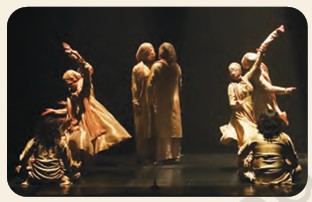
Contemporary Kathak choreography
Do you know?
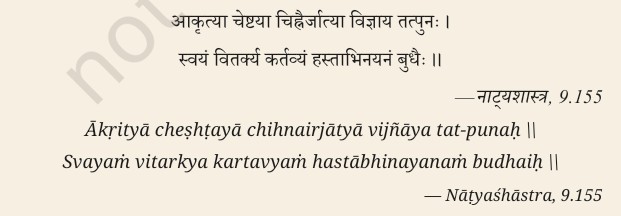
Creativity in Dance — Bringing Tradition to Life
Sage Bharata, traditionally regarded as the author of the Nāṭyaśhāstra, emphasises the importance of understanding the fundamentals of a dance form, including its movements, techniques and meanings. Once dancers become familiar with these elements, they can use their creativity and imagination to shape their own expressions.
The Nāṭyaśhāstra provides valuable guidance, but it is the dancer who brings the movements to life through personal interpretation, innovation and artistic expression. In this way, dancers can respect traditional knowledge while exploring new possibilities in performance.
Conclusion:
Dance choreography is the art of transforming ideas, emotions and stories into meaningful patterns of movement. It brings together imagination, rhythm, space, expressions and body movements to create an engaging performance. Through choreography, dancers learn how individual movements can be connected into sequences and arranged into different formations. They also discover how the use of space, timing, direction, levels and interaction can influence the meaning and visual impact of a dance.
The process of creating choreography involves observation, planning, experimentation and practice. A choreographer develops an idea, explores suitable movements and works with dancers to refine the performance. Whether it is a solo, duet or group presentation, every movement contributes to the overall expression. Elements of abhinaya, music, rhythmic syllables, spoken words and props can further enrich a performance and help communicate its theme.
India’s rich dance traditions provide a valuable foundation for creative exploration. The Nāṭyaśhāstra, traditionally associated with Sage Bharata, offers guidance on the principles of performance, while encouraging dancers to bring imagination and artistic expression to their work. Contemporary approaches, such as innovative Kathak choreography and Nava Nritya, demonstrate how traditional ideas can inspire new forms of movement.
Choreography also develops confidence, discipline, coordination, teamwork and creative thinking. It teaches us to appreciate different perspectives and express ourselves through movement. Ultimately, dance choreography is not simply about performing steps; it is about creating meaning, sharing experiences and connecting with audiences. It allows tradition and innovation to come together, making dance a continuously evolving art form.