

Introduction
Songwriting is a creative and expressive process of developing songs by combining lyrics, melody, rhythm, and musical ideas. It allows people to communicate their emotions, experiences, stories, thoughts, and imagination through the beautiful language of music. A song can express happiness, sadness, love, hope, courage, friendship, or devotion, helping listeners connect with the feelings and ideas of its creator.
Songwriting involves several important elements. Lyrics provide the words and meaning of a song, while melody gives it a memorable sequence of musical notes. Rhythm creates its beat and movement, and musical accompaniment can add harmony, depth, and character. Songwriters bring these elements together to create songs that communicate a message, tell a story, or express a particular mood.
Songs are created for many purposes, including personal expression, entertainment, cultural celebrations, films, theatre, musical performances, and social awareness. Folk songs preserve traditional stories and community experiences, devotional songs express spiritual feelings, and contemporary songs often explore everyday life and modern ideas. Through songwriting, people can also share messages about nature, peace, friendship, equality, and the importance of protecting the environment.
Songwriting does not require everyone to have advanced musical knowledge or professional equipment. Beginners can start by writing a few meaningful lines, humming a simple tune, clapping a rhythm, or drawing inspiration from their surroundings and personal experiences. Listening to different types of music and experimenting with words, sounds, and melodies can help develop songwriting skills over time.
Learning songwriting encourages creativity, imagination, language development, concentration, and emotional expression. It also teaches patience, confidence, and the importance of revising ideas to improve a composition. Working with others can further develop teamwork and introduce learners to different musical perspectives.
Ultimately, songwriting is much more than writing words and creating tunes. It is a meaningful way to transform thoughts and feelings into music that can inspire, entertain, comfort, and connect people. By exploring songwriting, learners can discover their creative potential and experience the joy of turning their own ideas into original musical expressions.
Definition
Songwriting is the art of creating a song by developing lyrics, melodies, rhythms, and musical structures that work together to communicate an idea, story, or emotion.
Main Elements of Songwriting: 5 Essential Building Blocks for Creating a Beautiful Song
Songwriting combines words, musical notes, rhythms, and creative ideas to produce meaningful and memorable songs. Each element contributes to the song’s structure, emotional impact, and overall musical expression. Understanding these basic elements helps students explore their creativity and develop the skills needed to write their own songs.
1. Lyrics
Lyrics are the words of a song. They communicate the songwriter’s story, message, thoughts, feelings, and experiences. Lyrics may explore themes such as love, friendship, nature, happiness, sadness, culture, and social awareness. Well-written lyrics help listeners understand the meaning of a song and connect emotionally with its message. Songwriters often use rhymes, repetition, imagery, and simple language to make lyrics expressive and memorable.
2. Melody
Melody is the sequence of musical notes that forms the main tune of a song. It is often the part that listeners remember and hum after hearing the music. A melody can be cheerful, peaceful, emotional, dramatic, or energetic, depending on the notes and musical patterns used. Songwriters create melodies by experimenting with different pitches, note patterns, and musical phrases that complement the lyrics.
3. Rhythm
Rhythm is the pattern of beats and durations that gives a song its movement, timing, and flow. It helps organise the words and musical notes into a recognisable pattern. A lively rhythm can make a song exciting and suitable for dancing, while a gentle rhythm may create a calm and relaxing mood. Songwriters can develop rhythms by clapping, tapping, using percussion instruments, or experimenting with different beat patterns.
4. Harmony
Harmony is created when different musical notes are played or sung together to support and enrich the melody. It adds depth, fullness, and emotional colour to a song. Harmony can be produced by musical instruments, background vocals, or chords played on instruments such as the guitar, piano, or keyboard. When combined effectively with melody and rhythm, harmony helps create a balanced and expressive musical experience.
5. Song Structure
Song structure refers to the way different sections of a song are organised. A clear structure helps listeners follow the musical ideas and understand how the song develops from beginning to end. Common sections include:
- Introduction: Opens the song and establishes its mood, rhythm, or musical theme.
- Verse: Develops the story or introduces new information through changing lyrics.
- Chorus: Presents the main message or central idea, often using memorable and repeated lyrics.
- Pre-Chorus: Connects the verse to the chorus and builds anticipation. It is optional.
- Bridge: Introduces a contrasting musical or lyrical idea, often providing a fresh perspective.
- Outro: Brings the song to a close through a final musical phrase, repeated chorus, or gradual ending.
Not every song contains all these sections. Songwriters can arrange them in different ways to suit their musical ideas and creative goals.
Objective: Building your own unique style to express your thoughts and ideas to your audience through lyric writing. Watch a video to understand what songwriting is all about.
Descriptive writing
Descriptive writing means describing. an object, place, experience or thing in detail to create a clear picture in the mind of the reader.
1. Describe in depth the details of the object of your song to help your listeners picture it easily.
2. Use all your senses — describe how it looks, smells, feels, and so on.
3. Use your imagination to describe (in detail) something unfamiliar.
4. Share your writing to get better at it; open yourself to feedback. This is an important part of the process.
5. Read other people’s writing as well to learn different perspectives. Watch the video to learn how to write descriptively.
Songwriting Tip Think of writing as collaboration, not competition, and try to be constructive and positive while leaving feedback for others.
1: Try it Yourself!
Write descriptively about a tree.
2: Write a Song based on Familiar or Popular Melody
Watch the video to understand how to write lyrics for existing melodies.
Let us take the example of Twinkle Twinkle Little Star. We have all heard this song multiple times. It is interesting to know that this melody is similar to Baa Baa Black Sheep and the popular alphabet song, A B C D. Make your own song to this popular melody.
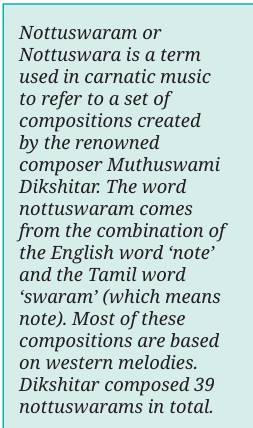
Watch this video for a few examples of the lyrics to Twinkle Twinkle Little Star. Listen to this popular Indian song (nottuswaram) Shyamale Meenakshi. Go on and write your own words for this popular song.
3: Write a Song based on Unfamiliar or Uncommon Melody
Listen to the melody in the audio and write your own lyrics to it. You can also listen nottuswaram and write your own lyrics to it.
Learn to Rhyme
Rhyming is a very important part of a song or a poem. One reason is that rhymes help our ears understand where the line changes. Rhymes also help highlight the idea that our song is trying to convey. People tend to listen carefully when words rhyme.
Examples cat, bat, mat love, above hand, understand Watch the video to learn to rhyme.
4: Listen to the Rhyme in the Solar System Song
The Solar System Song
Verse 1
I’m Mercury, the smallest,
I’m closest to the Sun
I take eighty-eight days
to complete my yearly run.
I’m Venus, the hottest,
I’m very, very bright
I look like a star
when you look at me in the night.
I’m Earth, your home,
the only place with life,
I have water, air, and food
to keep you all alive.
Chorus
(The planets, the planets, revolve around the Sun Don’t forget the solar system Once this song is done.) × 2
Verse 2
I’m Mars, I’m red,
I’m smaller than the earth
My moons are like potatoes,
They’re deimos and phobos.
I’m Jupiter, the largest,
I have a reddish spot;
Sixty-three moons surround me,
Which really is a lot.
I’m Saturn, I’m sparkly,
My rings are made of ice;
I can float on water
As I’m very, very light.
Chorus
(The planets, the planets, Revolve around the Sun Don’t forget the solar system Once this song is done.) × 2

Verse 3
Uranus, the coldest,
I’m tipped onto my side;
Thirteen rings surround me
But they’re very hard to find.
I’m Neptune, I’m blue,
I’m farthest from the Sun;
When you stand on me it feels
Like a cloud and that is fun.
Bridge
We know our rocky planets, They are the first four; After that the gas giants and Then many more. Pluto is a dwarf, He wants to join them all; But the problem is that he is So so so so small.
Chorus
(The planets, the planets, Revolve around the Sun Don’t forget the solar system Once this song is done.) × 2
Steps in Songwriting
Step 1: Choose an Idea
Start with a subject, experience, story, emotion, or message.
Step 2: Write the Lyrics
Develop words that communicate the chosen idea clearly and creatively.
Step 3: Create a Melody
Develop a tune that matches the emotion and meaning of the lyrics.
Step 4: Add Rhythm
Choose a rhythm and tempo that suit the song.
Step 5: Add Chords and Harmony
Use suitable chords or accompanying instruments to support the melody.
Step 6: Create the Song Structure
Arrange the verses, chorus, bridge, and other sections into a complete song.
Step 7: Revise and Practice
Sing or play the song, listen carefully, and make improvements where necessary.
Types of Songwriting
- Folk Songwriting – Based on traditional stories and cultural experiences.
- Devotional Songwriting – Focuses on spirituality and devotion.
- Patriotic Songwriting – Expresses love and respect for a country.
- Pop Songwriting – Usually focuses on catchy melodies and relatable themes.
- Inspirational Songwriting – Communicates hope, motivation, and positive messages.
- Film Songwriting – Songs created to support stories and scenes in films.
- Children’s Songwriting – Uses simple lyrics and melodies suitable for children.
Qualities of Good Songwriting
- Clear and meaningful lyrics.
- Memorable melody.
- Suitable rhythm and tempo.
- Strong emotional expression.
- Interesting song structure.
- Original and creative ideas.
- Good connection between lyrics and music.
Benefits of Songwriting
- Encourages creativity and imagination.
- Provides a way to express emotions.
- Improves language and communication skills.
- Develops musical understanding.
- Builds confidence and self-expression.
- Helps preserve stories and cultural traditions.
- Encourages critical and creative thinking.
Songwriting Activities for Students
Students can:
- Write a short song about nature.
- Create lyrics about friendship.
- Compose a simple school song.
- Write a song about their community.
- Turn a personal experience into lyrics.
- Create a song using a familiar melody.
- Work in groups to write and perform an original song.
Importance of Songwriting in Music Education
Songwriting gives students an opportunity to become creators rather than only listeners or performers. It helps them understand how lyrics, melody, rhythm, and harmony work together. It also encourages students to communicate their ideas and emotions in a creative and meaningful way.
Conclusion:
Songwriting is a powerful and meaningful form of musical and creative expression that brings together words, melody, rhythm, harmony, and emotions to create memorable songs. It provides people with an opportunity to transform their thoughts, feelings, experiences, and imagination into music that can inspire, entertain, comfort, and connect listeners. Through carefully chosen lyrics and beautiful melodies, songwriters can communicate ideas that touch hearts and leave lasting impressions.
Songwriting also plays an important role in storytelling and cultural preservation. Songs can share personal experiences, describe historical events, celebrate traditions, express devotion, and communicate important social messages. Folk songs preserve the customs and stories of communities, while modern compositions explore contemporary experiences and ideas. In this way, songwriting connects the past with the present and helps keep cultural heritage alive for future generations.
Practising songwriting encourages creativity, imagination, language development, musical understanding, and emotional awareness. It helps learners explore different rhythms, experiment with melodies, organise their ideas, and develop confidence in expressing themselves. Writing songs individually or collaborating with others also strengthens communication, patience, problem-solving, and teamwork.
Songwriting does not require professional musical knowledge to begin. Anyone can start by writing a few meaningful lines, creating a simple tune, or turning an everyday experience into a song. With regular practice, observation, and experimentation, learners can gradually improve their skills and discover their unique creative styles.
In conclusion, songwriting is much more than combining words and musical notes; it is an art that gives a voice to human emotions, experiences, and imagination. It enriches music education by encouraging students to think creatively, communicate effectively, and appreciate the beauty of musical expression. A simple idea can become a memorable song, and a heartfelt song can inspire people, preserve traditions, and bring hearts together through the universal language of music.