
Introduction
Dance is more than the movement of the body. It is a form of creative expression in which movement, rhythm, emotions, imagination, and awareness come together. The inner dynamics of dance refer to the way a dancer uses energy, balance, posture, breath, rhythm, space, and expression to make movements meaningful and expressive.
Every movement has an inner quality. A dancer may use gentle movements to express peace, flowing movements to show grace, or strong and energetic movements to communicate courage, excitement, or anger. The speed, direction, weight, and intensity of a movement can change the way it is experienced by the audience.
A dancer also needs body awareness and concentration. Understanding how different parts of the body move and coordinate helps create control, balance, flexibility, and precision. Breathing and rhythm support the flow of movement, while facial expressions and gestures communicate emotions and ideas.
Exploring the inner dynamics of dance helps us understand how physical movement can become artistic expression. It encourages dancers to observe, feel, imagine, experiment, and communicate through their bodies.
1. Breath in Dance
According to yogic philosophy, the word prāṇa refers to the vital life force or breath of life. The movement of breath through inhalation and exhalation is closely associated with prāṇāyāma, the yogic practice of regulating and becoming aware of the breath.
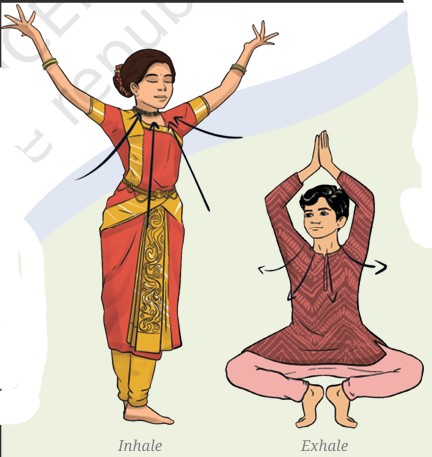
In dance, breath provides an important connection between the body, movement, and expression. Dance movements begin from a state of balance and ease, with a relaxed and aligned spine. Conscious breathing helps the body release unnecessary tension, particularly around the spine, allowing the dancer to move with greater agility, stability, and control.
Breath also acts as a link between two movements, helping them flow smoothly rather than appearing as separate actions. The dancer’s breathing can change according to the speed, energy, and quality of movement.
Breath is equally important when conveying emotions. Changes in breathing can support the expression of joy, fear, anger, sadness, excitement, or calmness.
Thus, breath helps unite movement, rhythm, balance, and emotion, making dance more natural and expressive.
Activity 10.1: Breathing In Stillness And Motion
Breathing is an essential part of dance. It connects the body, mind, and movement and helps a dancer remain relaxed, balanced, and aware. Whether the body is still or moving, natural and controlled breathing supports concentration and helps movements flow smoothly.
In a still position, breathing helps the dancer maintain stability, posture, and calmness. A steady breath can reduce unnecessary tension and allow the body to remain comfortable and alert. In motion, breathing supports coordination, rhythm, energy, and control. The breath can also help connect one movement to the next, making the sequence appear continuous and effortless.
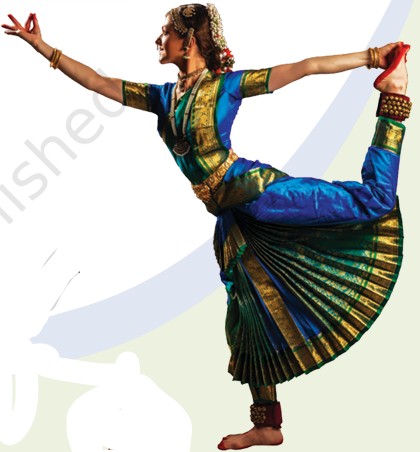
Divide yourselves into four groups. Each group will begin by holding a dance posture practised in earlier classes. Stay still for a few moments and observe the flow of your breath through the body, particularly around the spine and torso.
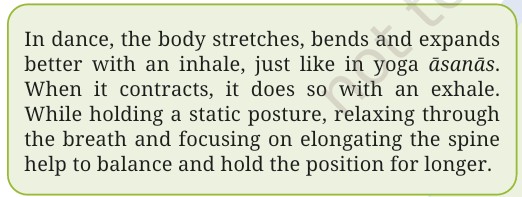
Next, create a movement involving expansion of the body. For example, you may stretch your arms outward, gently bend the body, or lengthen the movements of your feet. While performing the movement, observe how breathing in supports the expansion and openness of the body.
Then, shift into a movement involving contraction of the body. For example, you may crouch or draw the body inward to express feelings such as fear or nervousness. Coordinate this movement with breathing out and observe how the body responds.
Finally, return to another static dance posture and allow your breathing to become relaxed and natural.
Once each group has presented its movement pattern, discuss how breathing supports both stillness and movement. Reflect on how inhalation and exhalation can influence the quality, flow, energy, and expression of dance movements.
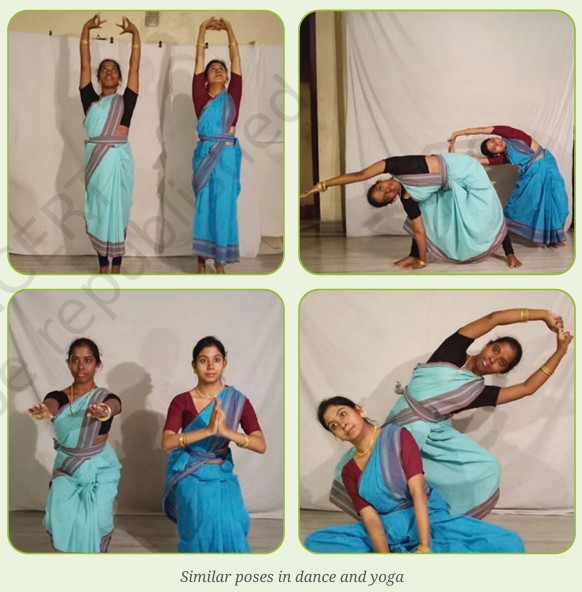
2. Elements of Dance
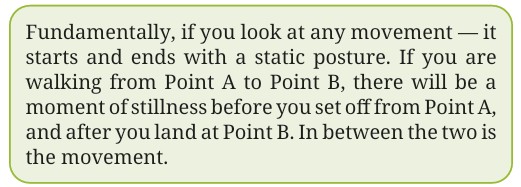
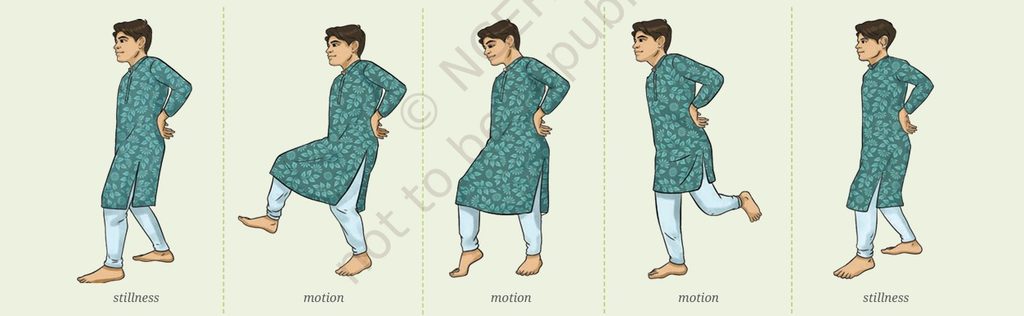
Dance is a combination of stillness and movement, bringing together static and dynamic elements. A dancer may hold a posture for a moment, creating stillness, balance, and stability, and then move into another posture or sequence, creating motion and flow.
Both stillness and movement are important in dance. A static posture can communicate an emotion, character, idea, or moment, while dynamic movement can express energy, rhythm, direction, speed, and change. The transition between stillness and motion gives dance its structure and expressive quality.
By exploring both static and dynamic movements, dancers learn to control their bodies, maintain balance, use space effectively, and express ideas and emotions through movement.
Postures and Movements in Dance Texts
Postures and movements are described in various Indian dance texts, and each text presents its own interpretations and terminology. These texts provide important insights into how dancers use the body to create stillness, movement, and expression.
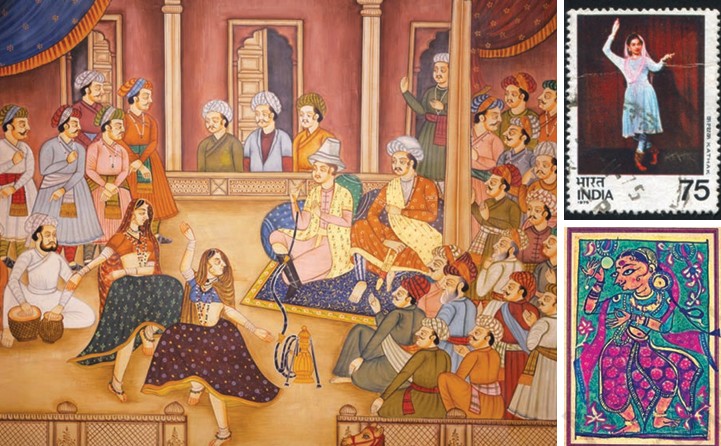
The Nāṭyaśāstra describes bodily postures using the term sthāna and discusses different ways of moving through concepts such as chārī, gati, and maṇḍala. These classifications help explain how the body is positioned and how it moves through space.
The Saṅgīta Ratnākara, meaning the “Ocean of Music,” provides further descriptions and variations of dance movements. It also gives importance to deśī, or regional forms and variations, showing the diversity of movement traditions found in different parts of India.
The Abhinaya Darpaṇa, meaning the “Mirror of Gestures,” uses terms such as sthānaka and maṇḍala to describe postures and body positions. It also describes ways of moving through concepts such as chārī and gati.
The terminology may differ from one text to another, but these works demonstrate the rich and systematic understanding of body postures, movement, space, and expression in Indian dance traditions.
History Trivia
The history of Indian dance is closely connected with several important texts on performing arts. The Nāṭyaśāstra, traditionally attributed to Bharata Muni, is one of the oldest and most influential treatises on Indian performing arts. Traditionally dated to the early centuries BCE/CE, it discusses a wide range of subjects related to dance, drama, music, acting, gestures, movement, emotions, and stagecraft. It provides a systematic framework for understanding performance and has influenced Indian dance and theatre traditions for centuries.
In 2025, the Nāṭyaśāstra was included in UNESCO’s Memory of the World Register, recognising its importance as a significant documentary heritage.
The Saṅgīta Ratnākara, written by Śārṅgadeva in the 13th century CE, is another important treatise that brings together knowledge of vocal music, instrumental music, and dance. The term saṅgīta is traditionally used in this broader sense. The text is especially significant because it contains an important section devoted to dance. It discusses the established, classical conventions associated with mārgī, while also describing regional and locally developed forms known as deśī. This makes the text valuable for understanding both established traditions and regional variations in Indian performing arts.
The Abhinaya Darpaṇa, traditionally attributed to Nandikeśvara, is another influential text devoted primarily to dance and abhinaya, or expressive representation. It describes gestures, postures, movements, and expressions and continues to be an important reference in the study and practice of several Indian dance traditions.
3. Postures in Dance
According to the Nāṭyaśāstra, sthāna refers to a body posture or position used in dance and performance. Sthānas are broadly described in three categories based on the position of the body: standing, sitting, and reclining postures. These postures provide a foundation for movement and help dancers maintain balance, stability, alignment, and control.
Standing postures involve supporting the body on the feet, while sitting postures are performed with the body supported in a seated position. Reclining postures involve the body resting or leaning closer to the ground. Each posture can be used to communicate different actions, situations, characters, and emotions in a performance.
Learning different postures helps dancers understand how the body can remain still while preparing for or transitioning into movement. It also develops body awareness, coordination, balance, and expressive ability.
i.) Standing postures
Standing postures are dance positions in which the body is supported primarily by the feet and legs. They provide a stable foundation for movement and help dancers maintain balance, alignment, strength, and control. In Indian dance traditions, standing postures may vary according to the dance style, character, action, and expressive purpose.
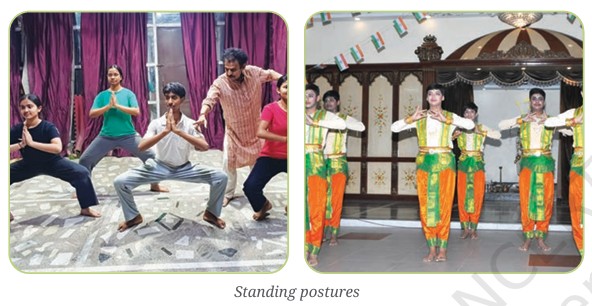
A standing posture involves the coordinated placement of the feet, legs, spine, torso, shoulders, arms, head, and gaze. The dancer may stand upright, bend the knees, shift the weight from one foot to another, or arrange the body in different positions according to the movement vocabulary of the tradition.
Standing postures are important because many dance movements begin, end, or pass through a stable standing position. Practising them helps develop body awareness, coordination, flexibility, balance, and precision. Dancers also learn to maintain a posture with ease before transitioning smoothly into another movement.
Different Indian dance texts describe and classify standing positions using specific terminology. Learning these postures helps students understand the systematic vocabulary of Indian dance and appreciate how stillness can become the foundation for expressive movement.
ii.) Sitting Postures
Sitting postures are dance positions in which the body is supported by the hips, legs, or feet while remaining close to the ground. They are used to create different levels, shapes, and expressions in dance and can communicate various actions, situations, characters, and emotions.
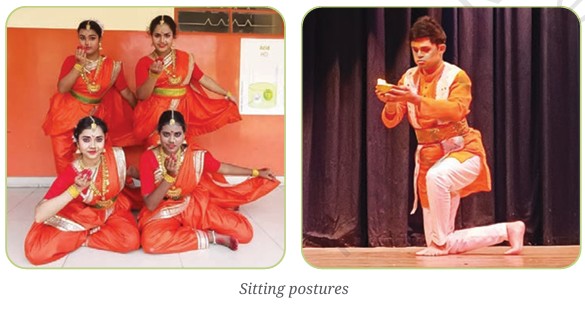
In a sitting posture, the dancer needs to maintain proper alignment of the spine, placement of the legs and feet, and control of the upper body. The hands, arms, head, and gaze can be positioned in different ways according to the requirements of the dance form or performance.
Sitting postures add variety and contrast to standing movements. They may be used to show actions such as resting, praying, observing, or interacting with another character. A dancer may also move smoothly from a standing position into a sitting posture and return to standing as part of a movement sequence.
Practising sitting postures helps develop balance, flexibility, coordination, body awareness, and control. It also teaches dancers how to use different levels and positions of the body to make their movements more expressive and visually interesting.
iii.) Standing and Reclining Postures
Standing postures are dance positions in which the body is supported mainly by the feet and legs. They provide a stable foundation for movement and help dancers develop balance, alignment, strength, and control. The dancer may stand upright, bend the knees, shift weight between the feet, or arrange different parts of the body in specific positions. Standing postures are often used at the beginning, end, or during transitions between movements.
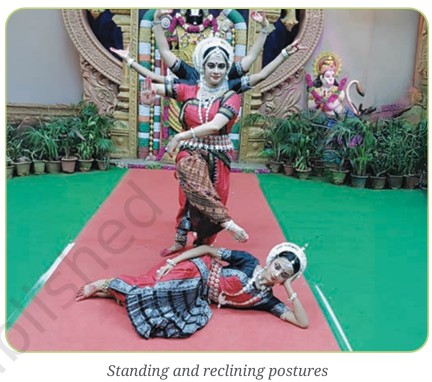
Reclining postures are positions in which the body is resting or supported on the ground, either partly or completely. These postures create a different level and shape and can be used to represent actions, situations, characters, or emotions. A dancer may recline on the back, side, or another supported position, depending on the requirements of the dance tradition and performance.
Both standing and reclining postures require body awareness, coordination, balance, and control. Moving smoothly between different levels helps dancers create variety and contrast in a performance. Standing postures can suggest stability and readiness, while reclining positions may suggest rest, relaxation, sleep, surrender, or other situations depending on the context.
Practising these postures helps students understand how stillness, body position, levels, and movement work together to create meaningful and expressive dance.
iv.) Reclining Postures
Reclining postures are dance positions in which the body is resting or supported on the ground, either partly or completely. These postures allow dancers to explore different levels, shapes, and qualities of movement. They may be performed while lying on the back, side, or another supported position, depending on the dance tradition and the requirements of a performance.
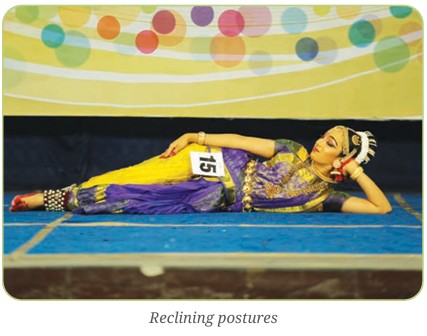
Reclining postures can be used to represent different actions, situations, characters, and emotions. For example, they may suggest rest, sleep, relaxation, surrender, weakness, or other states depending on the context of the performance.
Performing these postures requires body awareness, balance, coordination, flexibility, and control. Dancers should move into and out of reclining positions carefully and smoothly. Practising them helps students understand how changes in levels, body position, stillness, and movement can make dance more varied and expressive.
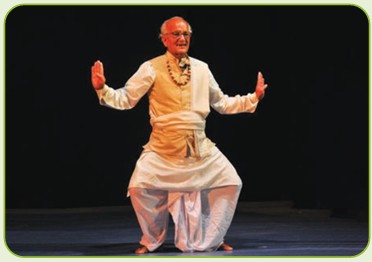
In many dance forms, there are definite male and female postures; for example, the purusha and prakriti pāk in sattriya.
i.) Purusha
Purusha is a term used in Sattriya dance to describe a traditional movement or posture pattern associated with masculine qualities. The movements generally emphasise strength, stability, firmness, and controlled energy. It forms part of the movement vocabulary through which dancers portray different characters and qualities in Sattriya.
The Purusha pattern is performed with attention to body alignment, posture, balance, rhythm, and coordination. It is traditionally contrasted with Prakriti, which represents feminine qualities in the movement vocabulary.
Together, Purusha and Prakriti demonstrate how Sattriya uses variations in posture and movement quality to create different forms of expression and characterisation.
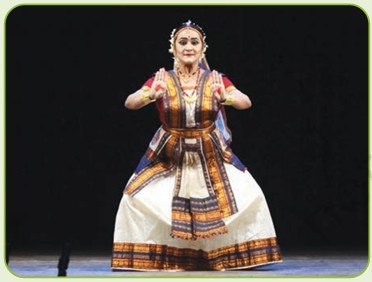
ii.) Prakriti Pāk
Prakriti Pāk is a traditional movement pattern in Sattriya dance associated with feminine qualities. The movements emphasise qualities such as grace, softness, fluidity, and elegance. It forms part of the movement vocabulary used by Sattriya dancers to express different characters and qualities.
The Prakriti Pāk is performed with attention to posture, balance, rhythm, coordination, and controlled movement. It is traditionally contrasted with Purusha, which represents masculine qualities in the movement vocabulary.
Together, Purusha and Prakriti Pāk illustrate how Sattriya uses different movement qualities and postures to create variety, characterisation, and expressive meaning in dance.
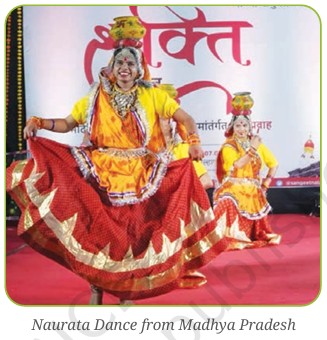
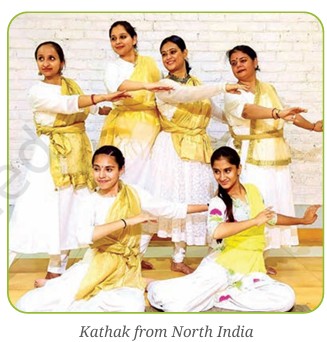
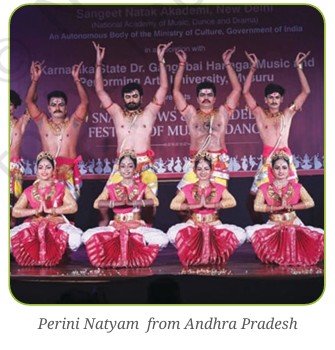
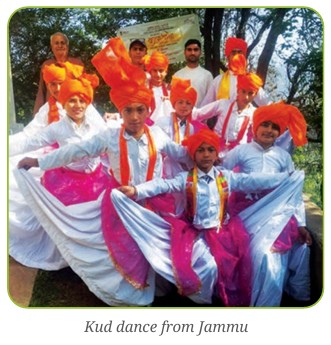
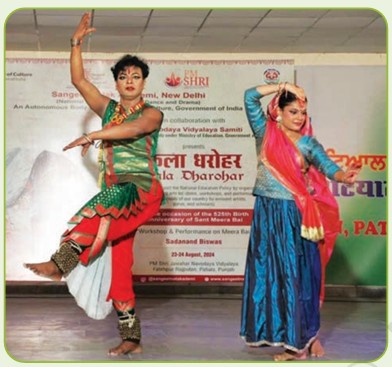
Observe the different postures in different dance forms:
i.) Naurata Dance from Madhya Pradesh
ii.) Kathak from North India
iii.) Perini Natyam from Andhra Pradesh
iv.) Kud dance from Jammu
ACTIVITY 10.2: POSE THE POSTURES
Dance postures help develop balance, stability, body awareness, and control. In this activity, explore different standing, sitting, and reclining postures practised in earlier classes.
Hold each posture for a few moments and observe the position of your feet, legs, spine, torso, arms, hands, and head. Maintain a comfortable and stable position.
Next, practise moving smoothly from one posture to another. Work individually or in small groups to create a short sequence using three to five postures. Present your sequence to the class.
Finally, discuss how stillness, movement, and changes in body position influence the expression and meaning of dance.
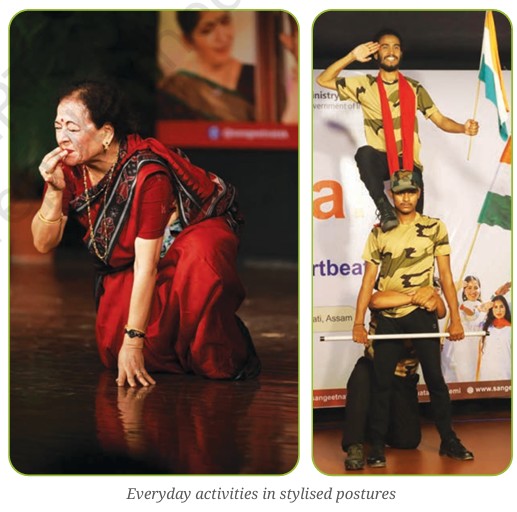
ACTIVITY 10.3: PICTURE PERFECT
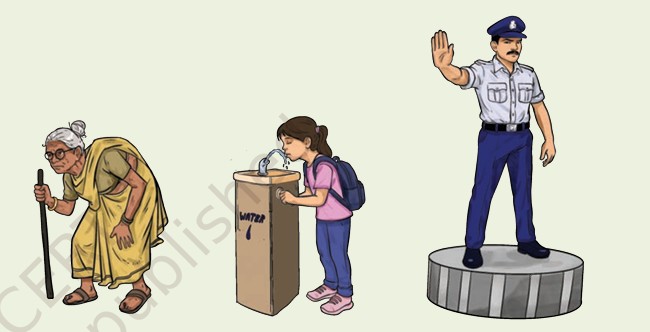
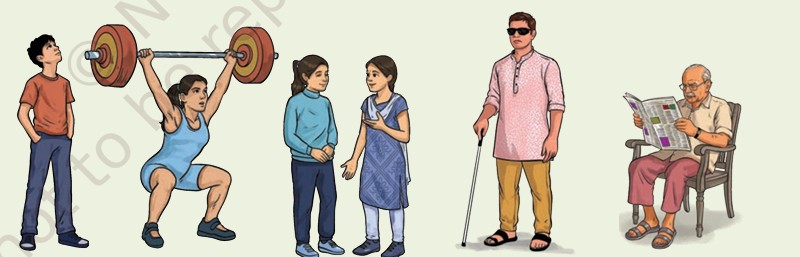
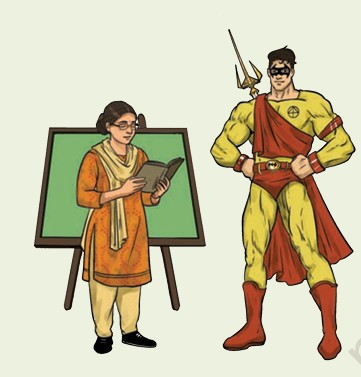
Think about characters from everyday life, such as an older person, superhero, builder, police officer, or sportsperson. Observe their typical postures and actions. Choose a character and strike a pose that captures a memorable photographic moment. Present your pose and let classmates guess the character and action.
A dance posture can create a strong visual image and communicate an idea, emotion, or situation without words. In this activity, work individually or in small groups to create a picture using your bodies.
Choose a theme, character, object, animal, or scene and decide how you can represent it through posture, gestures, facial expressions, and body shapes. Hold your chosen position without moving for a few moments, as if you are creating a still photograph.
Observe how the arrangement of different bodies, levels, directions, and expressions creates a visual composition. Present your “picture” to the class and invite others to guess what it represents.
4. Motion in Dance
Motion in dance refers to the different ways in which a dancer uses the body to move through space. Dancers can use different levels, postures, speeds, extensions, leaps, turns, and other movements to travel from one place to another. These movements give dance energy, rhythm, direction, and expression.
The choice of movement may depend on the mood and character, the action being portrayed, or the pattern of the choreography. For example, movements may follow linear, circular, curved, or other pathways. A slow and gentle movement can create a calm feeling, while quick and energetic movements can express excitement, strength, or urgency.
By exploring different forms of motion, dancers learn how to use space, time, energy, and body movement creatively. Motion therefore helps transform individual postures into expressive sequences and gives dance its dynamic quality.
There are innumerable ways of moving in dance. As mentioned earlier, each text gives us many variations.
According to Nāṭyaśhāstra
- Chāris are of two types — bhaumi chāris which are earthly movements, where the feet don’t leave the ground; and ākāshi chāris which are aerial movements where the feet leave the ground. A combination of chāris makes a mandala.
Think about different ways of moving where your feet are stuck to the ground like dragging your feet, and then think about ways where your feet leave the ground, like leaps, jumps, etc.
- Gati refers to movements and walks suitable for various characters in the play. Think about how different characters walk, like a soldier, a baby, a bear, a monkey.
NOTE:-
Tippani Dance from Gujarat
If you examine a regional dance style, you may notice that some forms use repetitive steps and movements arranged in particular patterns. These repeated movements create rhythm, coordination, and a sense of group unity.
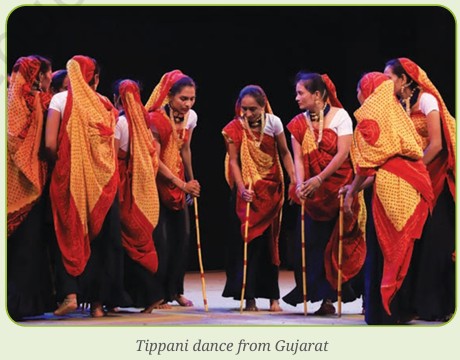
For example, Tippani, a traditional folk dance associated with Gujarat, uses a wooden tool called a tippani as a prop. Traditionally, the tippani was used for pounding and compacting floors during construction work, rather than for pounding spices. In the dance, performers move rhythmically while using the sticks, often incorporating small jumps and coordinated steps in circular or linear patterns.
What makes Tippani especially interesting is that the entire group moves together. The dancers coordinate their steps and body movements, while the sticks create a strong rhythmic pattern. The accompanying music and songs may also build in energy, with the tempo gradually becoming faster and more energetic.
Tippani demonstrates how repetition, props, group coordination, pathways, rhythm, and changes in speed can combine to create an engaging and dynamic dance performance.
According to the Abhinaya Darpanam
- Chāri refers to different ways of moving or displacing yourself. It is derived from the word ‘chāra,’ which means to move.
Examples of chÃri (from Abhinaya Darpanam)
1. Chalana — simple walking steps
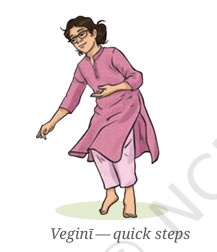
2. Veginī — quick steps
3. Saraṇam — wide steps
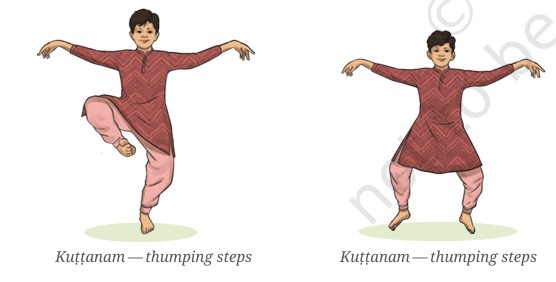
4. Kuṭṭanam — thumping steps
- Gati is a characteristic gait like that of an animal. The dancer embodies the way the animal would move. This can either be used to depict the animal or the characteristics of the animal.
Examples of gati (from Abhinaya Darpanam)
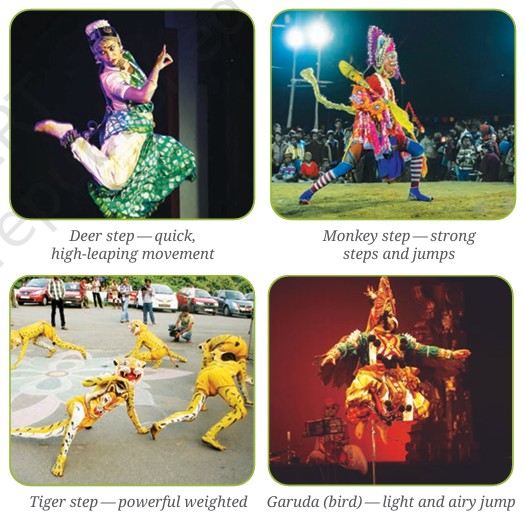
Think about the dance styles of your region and observe the different ways in which dancers move. Pay attention to their steps, postures, gestures, footwork, rhythm, speed, and use of space. Notice how movements may vary according to the music, character, emotion, or action being presented. Discuss your observations with your classmates and identify what makes the movements of your regional dance styles unique and expressive.
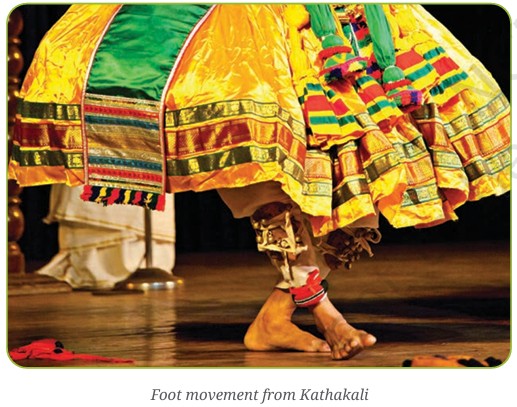
For instance, in Kathakali from Kerala, the sides of the feet are used in a characteristic thumping movement, known as chāri. In Seraikella Chhau from Jharkhand, dancers perform several animal-inspired walks and movements, known as gati. These may imitate animals such as the lion, peacock, duck, deer, bear, goat, and crocodile.
Observe the movements shown through the QR code and pay attention to the dancers’ footwork, posture, rhythm, speed, and use of space. Notice how movements inspired by animals are transformed into stylised dance vocabulary.
Foot movement from Kathakali
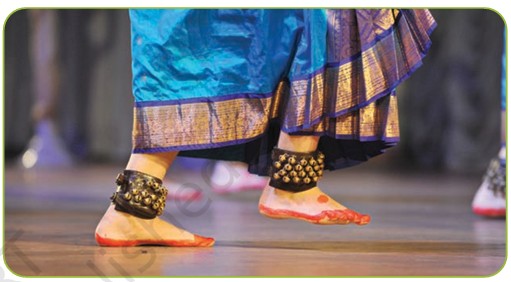
Kathakali, the classical dance-drama tradition of Kerala, is known for its expressive acting, elaborate costumes, facial expressions, hand gestures, and powerful body movements. Footwork plays an important role in creating rhythm, energy, and characterisation.
Kathakali dancers practise carefully controlled steps, stamps, shifts of weight, and rhythmic movements of the feet. These movements are coordinated with the music and percussion to create a strong rhythmic effect. The dancer’s feet also work together with the knees, legs, torso, gestures, and facial expressions, allowing movement to become part of the dramatic storytelling.
The energetic foot movements of Kathakali require strength, stamina, balance, coordination, and extensive practice. Dancers gradually develop the ability to perform movements with precision while maintaining the characteristic posture of the dance-drama.
Observe how the feet remain connected with the rhythm while the rest of the body communicates the character and emotion. This shows how even a simple movement of the feet can contribute to the larger expressive language of dance.
Activity 10.4: Spirit Of Movements
Every dance tradition has its own movement vocabulary that reflects its history, culture, environment, and artistic practices. By observing dance styles from different regions, we can discover how dancers use postures, footwork, gestures, rhythm, speed, pathways, and levels to express ideas and emotions.
For example, Kathakali from Kerala includes powerful foot movements and characteristic thumping steps. In Seraikella Chhau from Jharkhand, dancers use stylised walks and movements inspired by animals such as the lion, peacock, duck, deer, bear, goat, and crocodile.
Observe the movements shown through the QR code. Pay attention to how the dancers use their feet, body, rhythm, space, and energy. Notice how ordinary actions or animal movements are transformed into expressive dance movements.
Think about the dance styles of your own region. What makes their movements distinctive? How do the movements connect with the music, culture, stories, and traditions of the community?
Exploring the spirit of movements helps us understand that dance is not simply about moving the body; it is about transforming movement into meaningful artistic expression.
5. Combination of Postures and Movements
A complete dance movement phrase is created by combining different postures and movements with coordinated actions of the arms and hand gestures. These elements work together to create meaningful and expressive dance movements.
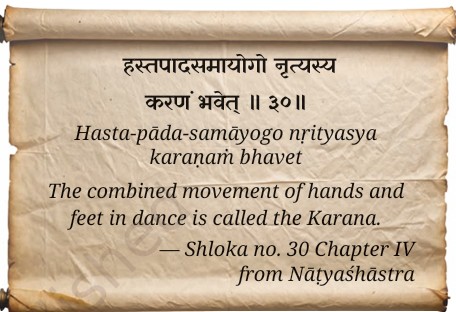
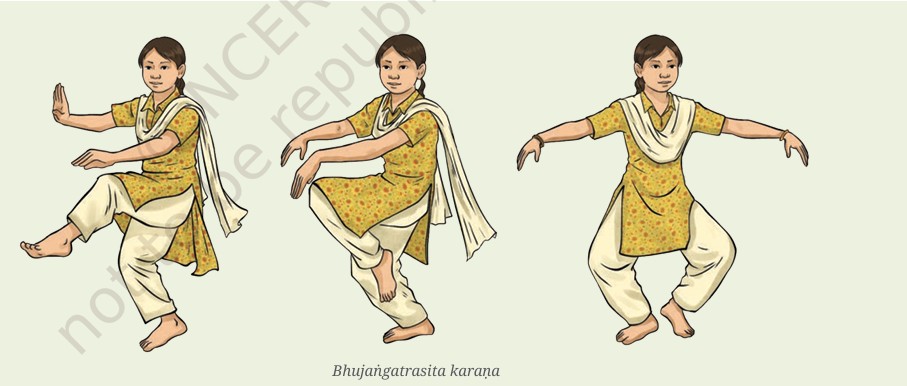
The Nāṭyaśāstra describes a coordinated movement of the hands and feet as a karaṇa and describes 108 karaṇas. Each karaṇa combines specific movements of different parts of the body to create a complete dance unit.
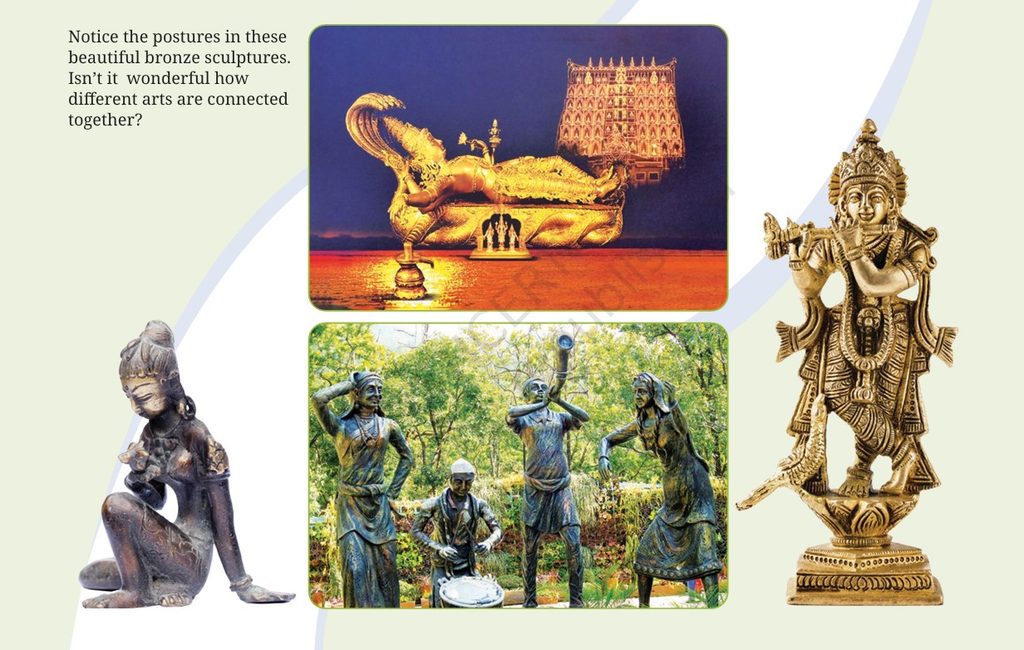
You may have seen bronze sculptures of dancing Shiva, which capture such moments of movement in a still form. The image shown here represents Bhujaṅgatrāsita Karaṇa, No. 24, described in the Nāṭyaśāstra.
Studying these karaṇas helps us understand how posture, movement, hand gestures, footwork, balance, and coordination come together to create the rich movement vocabulary of Indian dance.
i.) Nataraja
Nataraja, meaning “Lord of Dance,” is a celebrated form of Shiva in Indian art and culture. The image represents Shiva as the cosmic dancer, expressing the dynamic nature of the universe through dance.
Nataraja is usually shown dancing within a circle of flames, symbolising the cosmic cycle of creation and destruction. One leg is raised while the other rests on Apasmara, a small figure representing ignorance. Shiva’s multiple arms hold symbolic objects and gestures. The ḍamaru (small drum) represents the rhythm of creation, while the flame represents destruction and transformation. One hand offers abhaya, a gesture of protection and fearlessness.
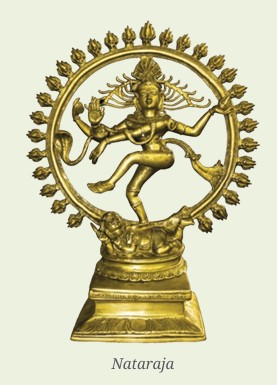
The Nataraja image beautifully combines movement, rhythm, balance, energy, and symbolism. It shows how dance can communicate philosophical ideas through posture, gestures, and expression. The sculpture is therefore not only an artistic representation of Shiva but also a powerful symbol of the cosmic rhythm of life.
Nataraja is especially associated with the artistic traditions of South India, including the famous bronze sculptures of the Chola period.
ii.) Bhujaṅgatrāsita Karaṇa
Bhujaṅgatrāsita Karaṇa is one of the 108 karaṇas described in the Nāṭyaśāstra, the classical Sanskrit treatise on Indian performing arts. A karaṇa is a coordinated dance unit that combines the movements of the hands, feet, body, and other parts into a complete movement.
The name Bhujaṅgatrāsita is associated with the idea of a serpent-like or snake-inspired movement. It illustrates how Indian dance uses coordinated body movements to create distinctive shapes and expressive qualities.
The karaṇas have been represented in temple sculptures and artistic depictions across India. They provide an important link between the descriptions found in classical dance texts and the visual representation of dance movements.
Studying Bhujaṅgatrāsita Karaṇa helps students understand how posture, movement, balance, coordination, and expression can come together to form a complete dance movement.
Activity 10.5: Dancing From Head To Toe
Arrange yourselves into four groups. As a group, create a short dance sequence that includes the following:
- One static posture (sthāna): Begin with a stable and balanced dance posture.
- One movement of the lower limbs (chārī or gati): Include a suitable movement or way of travelling through space.
- Arm movements and hand gestures (hastas): Use your arms, hands, and fingers to add meaning and expression.
- Optional body movements: Include movements of the hips, neck, sides, or head, drawing on what you have already learned.
Conclude your sequence by returning to a moment of stillness.
Breath Awareness
As you move, pay attention to your breath.
- Inhale gently when the body expands or rises.
- Exhale smoothly as the body releases, bends, or grounds.
- In stillness, allow the breath to settle into a calm, relaxed, and effortless rhythm.
Let your breath guide the rhythm and flow of your movement, and allow the final moment of stillness to bring the sequence to a peaceful close.
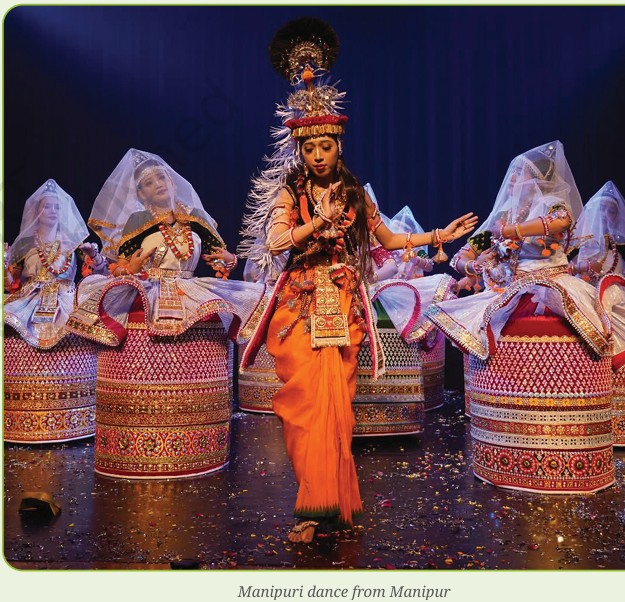
Manipuri Dance from Manipur
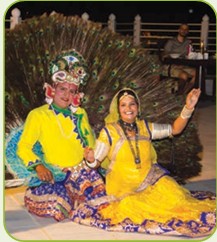
Manipuri dance is a major classical dance tradition of Manipur, in northeastern India. It is known for its graceful movements, gentle footwork, flowing body movements, expressive gestures, and devotional themes. Many Manipuri dance performances are associated with Vaishnavism and depict stories of Radha and Krishna, especially themes from the Raslila tradition.
The dance has a distinctive style in which movements often appear soft, rounded, and continuous rather than sharply angular. Dancers use the hands, arms, torso, head, and eyes in coordination to express characters, emotions, and actions. Foot movements are generally controlled and less forceful, creating a smooth and graceful quality.
Manipuri dance is performed with traditional costumes and ornaments. In Raslila performances, female dancers may wear the characteristic potloi, a cylindrical or bell-shaped skirt, while Krishna is traditionally portrayed in distinctive costume and ornaments.
Music and rhythm are important parts of Manipuri dance. Performances may include drums, cymbals, singing, and devotional music. The pung, a traditional Manipuri drum, is especially important in Manipuri performance traditions.
Manipuri dance beautifully combines devotion, storytelling, music, rhythm, movement, and visual elegance, making it an important part of India’s rich classical dance heritage.
Conclusion
The inner dynamics of dance show us that dance is much more than physical movement. Breath, balance, posture, rhythm, energy, space, and emotion work together to give every movement meaning. From stillness to motion and from a simple posture to a complete dance sequence, each element contributes to the dancer’s expression.
By becoming aware of the body and breath, dancers can improve their control, coordination, concentration, and creativity. Exploring different movements also helps us understand how the body can communicate ideas, emotions, characters, and stories without relying only on words.
Dance therefore becomes a harmonious connection between the body, mind, breath, and imagination. When these elements work together, movement becomes expressive, purposeful, and alive.