
Introduction
Visual Art is a beautiful form of creative expression that allows us to communicate our thoughts, emotions, imagination, and experiences through different materials, tools, and techniques. After exploring essential warm-up activities such as sketching and journalling, it is time to take the next step and discover the fascinating world of artistic creation. Every artwork begins with an idea, but it is the choice of materials and the techniques used by an artist that bring that idea to life.
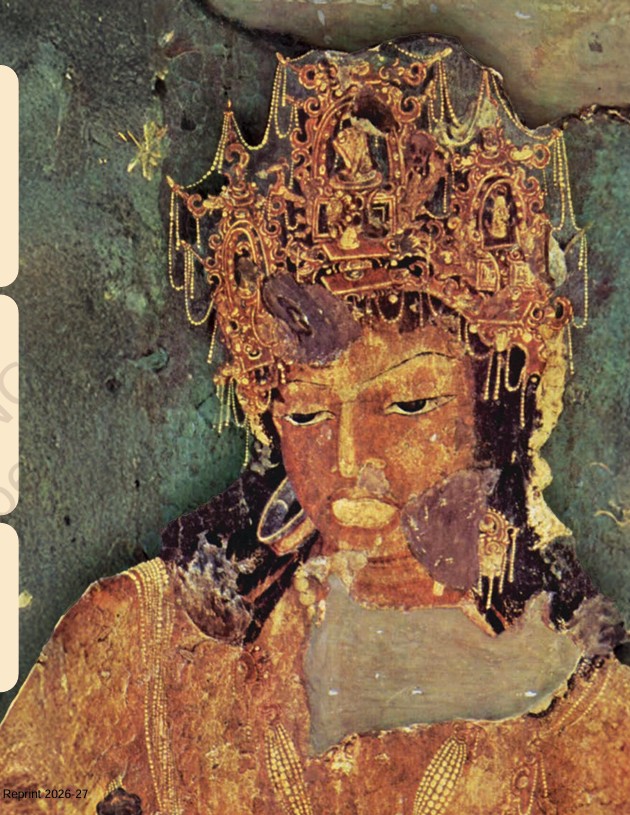
Throughout history, artists have explored and experimented with a wide variety of mediums and surfaces to express their creativity. From prehistoric cave paintings created with natural earth pigments, charcoal, and minerals to the colourful paintings, detailed sculptures, and digital artworks of the modern world, artistic materials have continuously evolved. Artists have used walls, rocks, wooden panels, handmade paper, canvas, clay, stone, metal, and many other surfaces to create remarkable works of art.
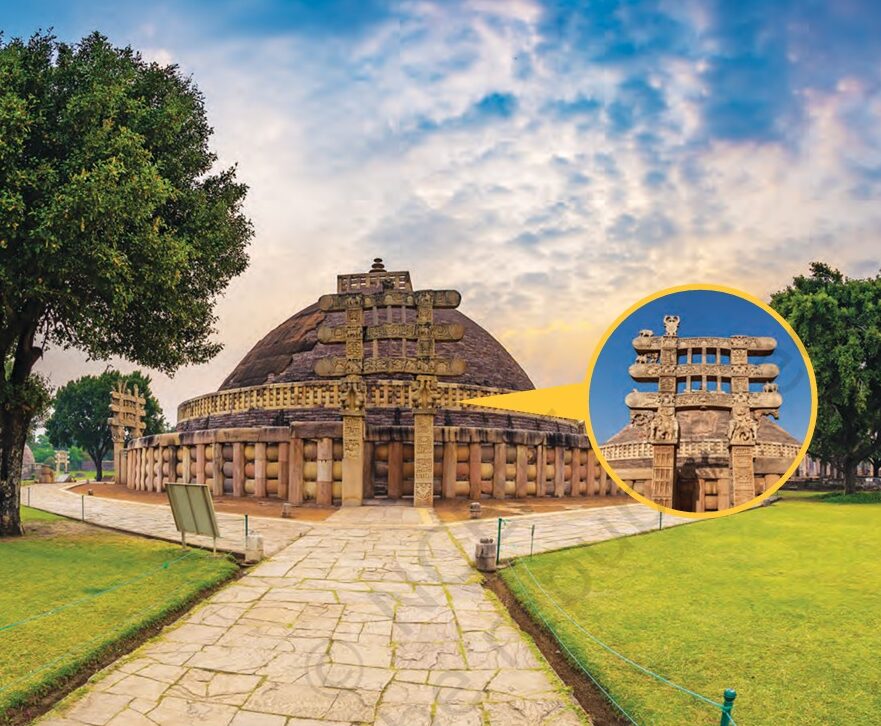
The development of artistic techniques has also played an important role in preserving our cultural heritage. Ancient artists possessed a remarkable understanding of natural materials, colours, textures, and methods of application. They carefully selected and prepared their materials to ensure that their creations could withstand the effects of time, changing weather conditions, and other environmental challenges. The survival of many ancient paintings, sculptures, and monuments demonstrates their extraordinary craftsmanship, technical knowledge, and artistic imagination.
Today, visual artists have access to traditional as well as modern materials, including watercolours, acrylics, oil paints, printing tools, photography, and digital drawing devices. Each medium offers unique possibilities for creativity and self-expression.
Exploring different mediums and techniques helps us understand how art has developed across generations and cultures. It also encourages us to experiment, discover our artistic abilities, develop new skills, and transform simple ideas into meaningful and beautiful works of art.
Talking About Mediums
In visual art, the word medium refers to the materials, tools, and processes that artists use to create an artwork. It is an essential part of artistic expression because every medium offers different possibilities for creativity, experimentation, and communication. The choice of medium influences the appearance, texture, colour, structure, and overall feeling of an artwork.
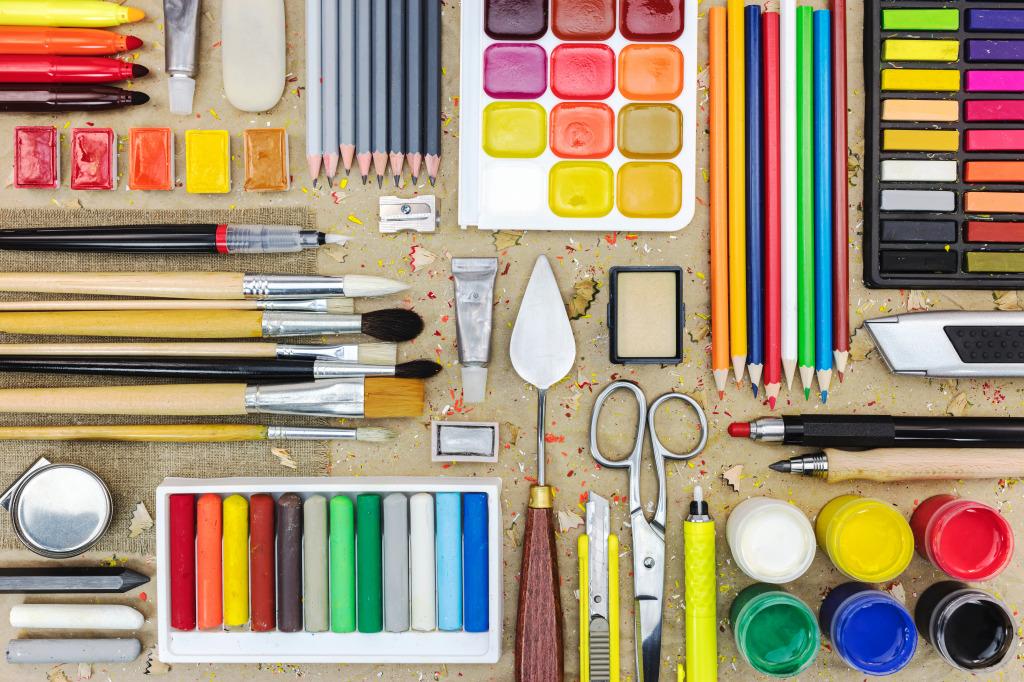
Artists use a wide variety of mediums depending on their ideas, artistic interests, and the results they want to achieve. For example, drawing and painting involve materials such as pencils, charcoal, crayons, watercolours, acrylics, and oil paints. Printmaking uses specialised tools, inks, blocks, and printing surfaces to produce images. Sculpture involves materials such as clay, stone, wood, metal, and plaster to create three-dimensional forms.
Similarly, textile crafts use fabrics, threads, yarns, needles, and dyes to produce beautiful decorative and functional objects. Paper crafts involve paper, cardboard, scissors, glue, and folding techniques to create creative designs and structures. In modern times, digital art has introduced new possibilities through computers, tablets, styluses, and specialised drawing software.
Each medium has its own characteristics, advantages, and techniques. Some materials are easy to handle, while others require patience, practice, and specialised skills. By exploring different mediums, artists can discover new ways of expressing their imagination and developing their artistic abilities.
Visual Art Mediums and Materials
Visual art includes a wide range of mediums and materials that artists use to express their creativity and transform ideas into beautiful artworks. Each art form requires different tools, materials, and techniques to produce unique results. The major categories of visual art mediums include:
1. Drawing and Painting
Materials include pencils, charcoal, crayons, pastels, watercolours, acrylic paints, oil paints, brushes, paper, and canvas. These are used to create sketches, illustrations, colourful paintings, and expressive compositions.
2. Printmaking
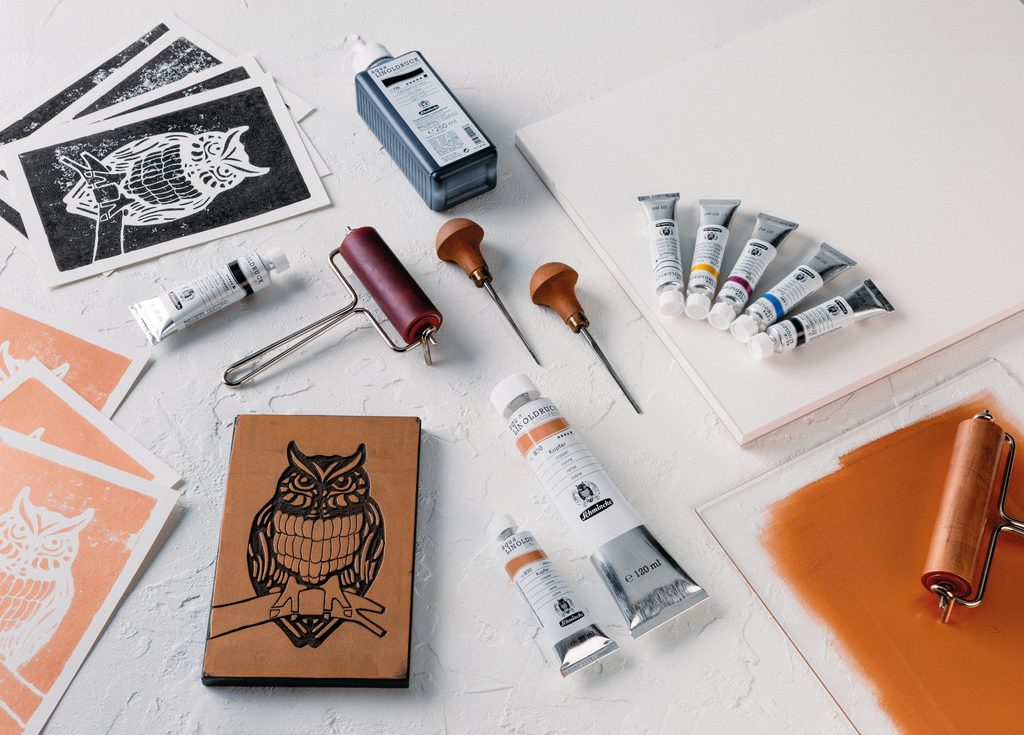
Materials include woodblocks, linoleum sheets, printing plates, carving tools, rollers, printing inks, and paper. These help artists create multiple impressions of an original design.
3. Sculpture
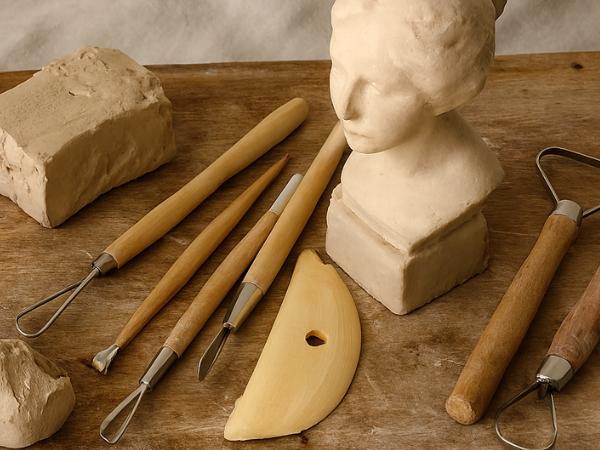
Materials include clay, stone, wood, metal, plaster, and other mouldable substances. Artists shape these materials into three-dimensional objects, figures, and artistic structures.
4. Textile Crafts
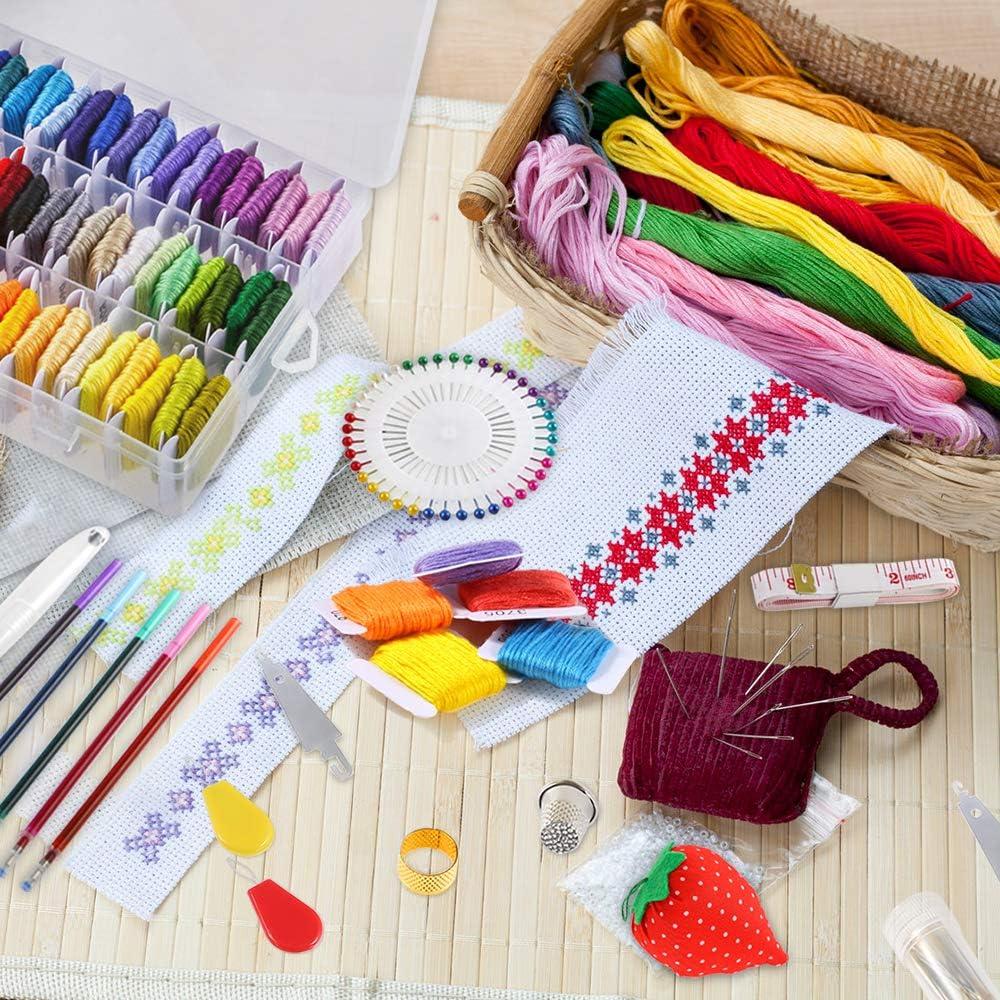
Materials include fabrics, cotton threads, wool, yarn, needles, dyes, and embroidery hoops. They are used for weaving, knitting, embroidery, stitching, and decorative textile designs.
5. Paper Crafts
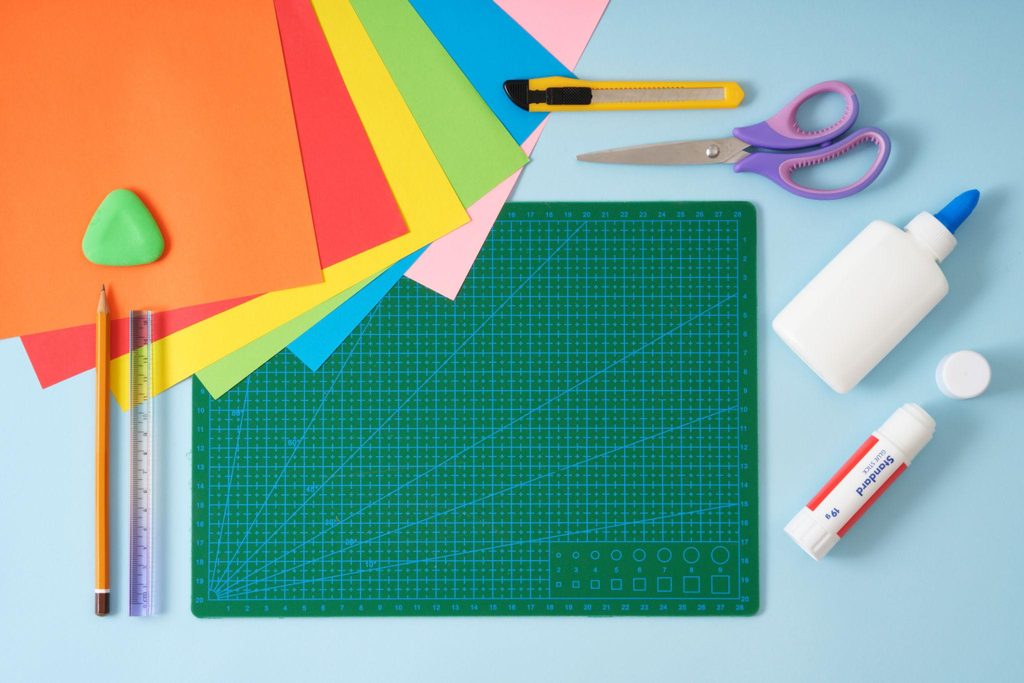
Materials include coloured paper, cardboard, handmade paper, scissors, glue, and cutting tools. These are used for origami, paper folding, cutting, collage, and creative paper decorations.
6. Digital Art
Materials and tools include computers, tablets, digital pens, styluses, and graphic design software. Artists use these technologies to create digital illustrations, paintings, animations, and graphic designs.
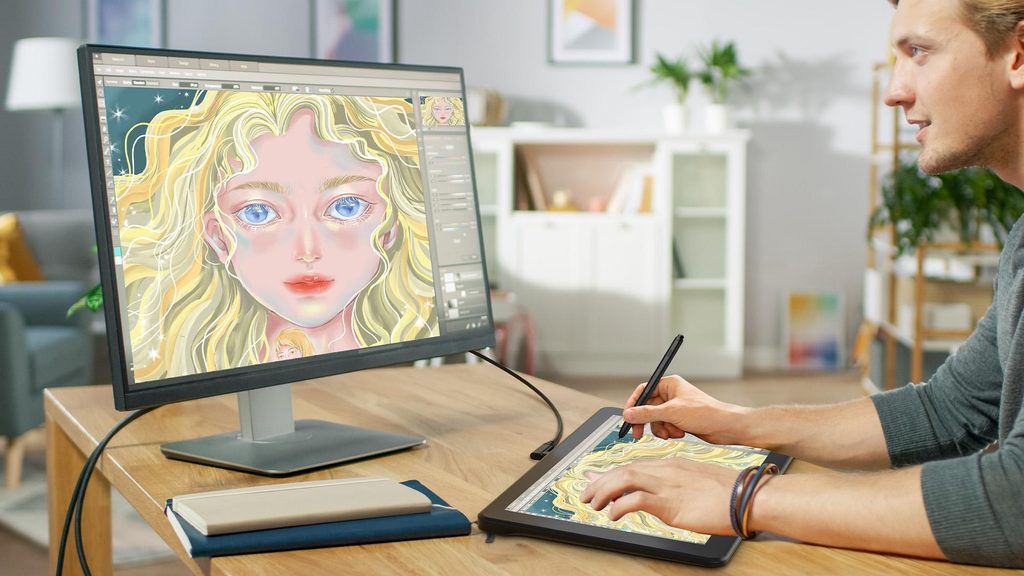
Conclusion: Every visual art medium offers a unique way to explore imagination and creativity. Learning about different materials and techniques helps artists develop their skills, experiment with new ideas, and create meaningful works of art.
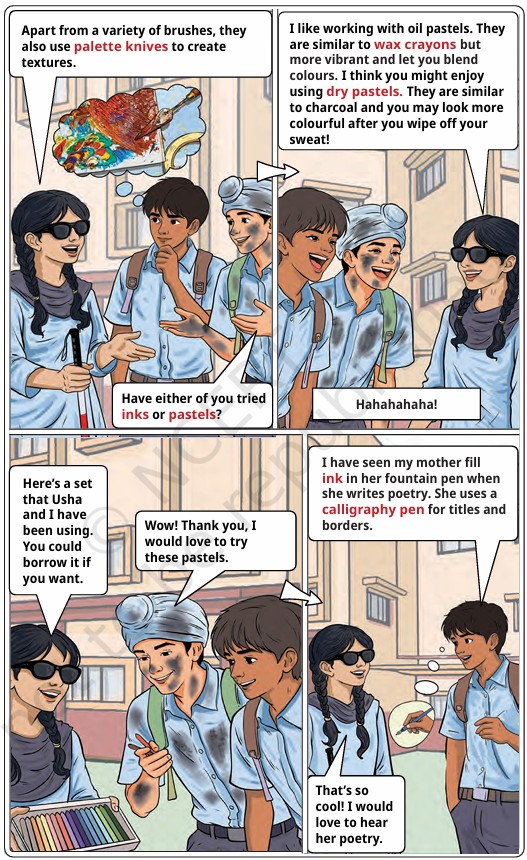
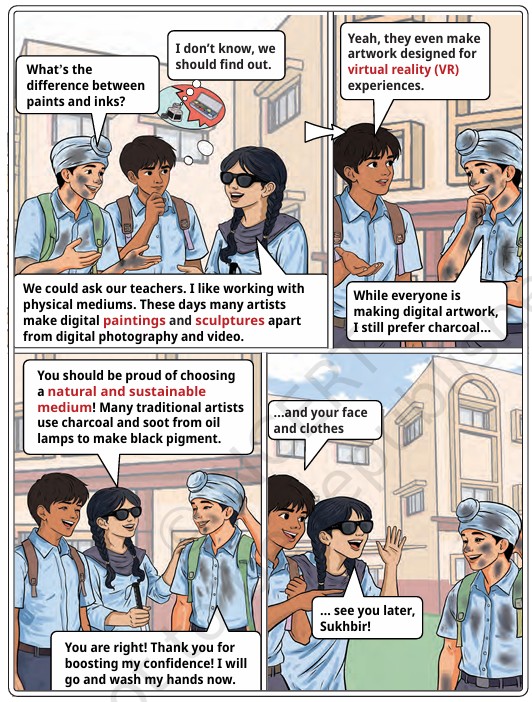
Read this conversation and explore further.


Care, Maintenance, and Responsible Storage of Materials
Taking proper care of art materials is an important part of learning and practising visual art. Artists and students should develop good habits of organising, cleaning, maintaining, and storing their materials after every creative activity. Proper care not only keeps art supplies in good working condition but also helps prevent unnecessary waste, saves money, and ensures that materials can be used again and shared with others.
Different art materials require different methods of care and storage. Paints, brushes, pencils, papers, fabrics, clay, printing tools, and digital devices should all be handled carefully to maintain their quality and usefulness. For example, paintbrushes should be cleaned after use, colours should be tightly closed to prevent drying, and drawing materials should be kept in suitable containers. Paper and finished artworks should be protected from moisture, dust, direct sunlight, and accidental damage.
Responsible storage also plays an important role in protecting the environment. Reusing materials, recycling suitable waste, avoiding unnecessary consumption, and sharing unused supplies encourage sustainable artistic practices. Sharp tools, paints, adhesives, and other potentially harmful materials should be handled safely and stored away from children when necessary.
Source consciously
- Choose non-toxic and sustainable materials as much as possible.
- Reuse paper and experiment with recyclable materials.
Handle and maintain with care
- Clean brushes immediately after use. Wash them with soap and rinse thoroughly. Shape their bristles and dry them horizontally or upright (with bristles facing up).
- Close paint tubes tightly and properly, and replace the cap of markers and ink bottles after using to prevent drying.
- Do not touch artworks with dirty or oily hands.
- Dispose of inks, acrylics, and chemical waste like turpentine responsibly.

Care and maintenance
Responsible storage
Visit a stationery store or an art supplies store to see how paper, books, and other stationery are stored carefully in a limited space.
- Store paper, canvas, and drawings in dry, flat spaces.
- Store sharp objects like cutters, scissors, needles, and sculpting tools safely in a box at a safe space, away from young children, animals, and vulnerable others.
- Keep food and water away from artwork, as they are susceptible to fungi and other organisms that destroy artwork.
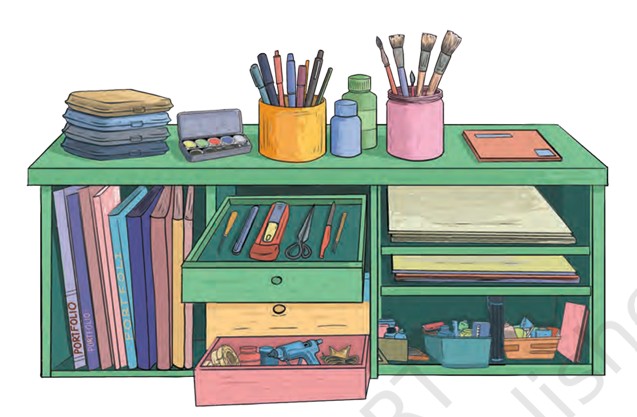
Organised storage of art materials
The Sculptural Crafts of India
India has a rich and diverse heritage of traditional crafts that reflects the creativity, artistic skills, and cultural identity of its different regions. From ancient times, skilled artisans and craft communities have used locally available materials to create beautiful objects that combine artistic expression with everyday usefulness. These traditional crafts add remarkable colours, patterns, textures, and beauty to India’s cultural heritage.
Indian sculptural crafts are created using a wide variety of materials, including stone, metal, terracotta, wood, grass, palm leaves, beads, and fabrics. Each material offers unique possibilities for artistic creation. Stone is carved into sculptures, statues, and decorative structures, while metals are shaped into idols, utensils, ornaments, and intricate decorative objects. Terracotta is used to make pottery, figurines, toys, and traditional sculptures. Wood is carefully carved into furniture, figures, panels, and decorative items.
Similarly, grass and palm leaves are woven into baskets, mats, toys, and other useful objects. Beadwork is used to create colourful jewellery and decorative designs, while fabrics are transformed into embroidered pieces, dolls, wall hangings, and traditional textile crafts.
Different communities of artisans have preserved these valuable skills through generations by passing their traditional knowledge, techniques, and artistic practices from one generation to another. Their craftsmanship represents a close connection between nature, culture, creativity, and community life.
Exploring the sculptural crafts of India helps us appreciate the diversity of regional traditions and understand how ordinary materials can be transformed into extraordinary works of art. These crafts are not merely decorative objects; they are living expressions of India’s history, identity, traditions, and artistic imagination. Preserving and promoting them is essential for keeping India’s cultural heritage alive for future generations.

(1) A traditional potter sculpting idols for the festivals, Kumoratuli, Kolkata; 199 (2) Animal figurines, Terracotta, Odisha; (3) Rāvaṇa, painted wood, Uttar Pradesh
Materials in India᾽s Sculptural Craft

Let us learn about two unique traditions used to make head gears.
i.) Sumok Thyāktuk: Traditional Bamboo Hats of the Lepcha Community
Sumok Thyāktuk is a traditional bamboo and cane hat handcrafted by the Lepcha community of Sikkim. It represents the community’s rich cultural heritage, traditional craftsmanship, and close relationship with nature. These beautifully woven hats are worn during festivals, religious rituals, cultural celebrations, and other special occasions. They are an important part of the traditional identity and artistic expression of the Lepcha people.
The hats are made using locally available bamboo and cane, which are carefully selected and prepared before weaving. The preparation process begins with splitting the bamboo and cane into very fine, flexible strips or threads. These strips are then carefully arranged and woven together to create the structure of the hat.
One of the most interesting features of Sumok Thyāktuk is its intricate four-layer weaving technique. Each layer has its own distinctive pattern and symbolic meaning, reflecting the artistic knowledge and cultural traditions of the Lepcha community. Creating a single hat requires considerable patience, precision, and skill, as the entire weaving process takes approximately one month.
The craftsmanship involved in making these hats demonstrates how natural materials can be transformed into beautiful and meaningful cultural objects. The knowledge and techniques are preserved through generations, highlighting the importance of traditional artisans in protecting India’s diverse handicraft heritage.
Cultural Significance: Sumok Thyāktuk is more than a traditional hat; it is a symbol of Lepcha identity, creativity, and cultural continuity. Its intricate patterns and natural materials showcase the beauty of sustainable craftsmanship and the enduring relationship between traditional art and nature.

Sumok Thyāktuk, Sikkim
ii.) Śholāpith: Traditional Pith Craft of West Bengal and Odisha
Śholāpith is a traditional Indian handicraft practised mainly in West Bengal and Odisha. A similar craft tradition is found in Tamil Nadu, where it is known as Neṭṭī. This beautiful art form is famous for its delicate, lightweight, milky-white decorative objects made from the soft, spongy inner core of the śholā plant, scientifically known as Aeschynomene aspera.
The process of making śholāpith crafts begins with extracting the soft white pith from the plant. Skilled artisans carefully cut, shape, carve, and arrange this delicate material to create intricate designs and decorative patterns. Because the pith is extremely lightweight and easy to shape, it allows artists to produce detailed flowers, ornaments, figurines, and other artistic objects.
Traditionally, śholāpith was used to make beautiful garlands, decorative headgear for brides and grooms, religious idols, and ornaments for festivals and celebrations. It also holds an important place in Bengali wedding traditions, particularly in the creation of the bridegroom’s traditional headgear, known as Topor.
The artisans who practise this craft are traditionally called Malakars, meaning garland-makers. However, their artistic skills extend far beyond making garlands. Today, they create a wide variety of decorative objects, religious accessories, sculptures, and contemporary craft products.
Cultural Significance: Śholāpith represents the artistic imagination, traditional knowledge, and craftsmanship of Indian artisan communities. Its delicate white appearance and intricate designs make it a distinctive example of how natural plant materials can be transformed into beautiful works of art. The continued practice of this craft helps preserve regional traditions and supports the livelihoods of skilled artisans.
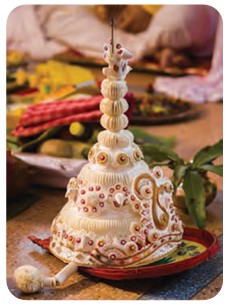
Śholāpith, West Bengal
Explore Mediums with Colour Theory
Colour is one of the most important elements of visual art. It brings life, beauty, emotion, and meaning to an artwork. Understanding colour theory helps artists select, combine, and use colours effectively to create attractive and expressive compositions. In Indian art traditions, the knowledge of colours and their preparation has existed since ancient times.
An important historical source of Indian artistic knowledge is the Chitra-sūtra of the Viṣhṇu-dharmottara Purāṇa. This text explains various aspects of painting, including the sourcing, extraction, preparation, and application of colours. It provides valuable information about how traditional artists understood and used colours in their creative processes.
According to the Chitra-sūtra, five basic colours are recognised: white, yellow, red, blue, and black. These colours serve as the foundation for creating numerous other colours through different combinations and proportions. By mixing the basic colours, artists can produce a wide variety of shades and colour variations.
Colour theory also explains how secondary colours can be modified to create different visual effects. Adding white to a colour produces a tint, making it lighter and softer. On the other hand, adding black creates a shade, making the colour darker and deeper. For example, adding white to red produces lighter pink tones, while adding black creates darker red tones.
Looking at Fig , map the complementary and analogous colours on your colour wheel.
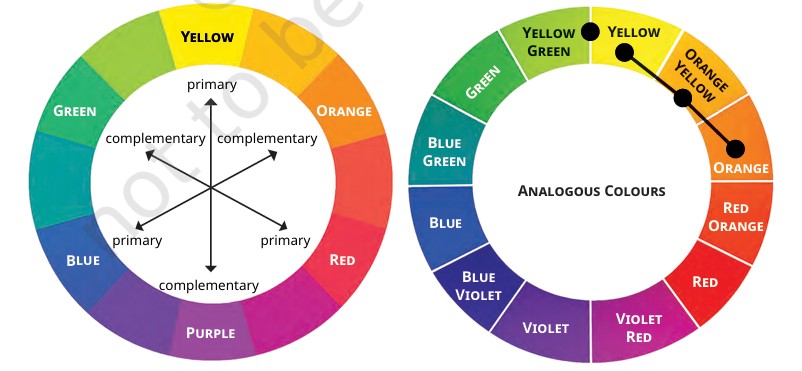
Colour wheels
Complementary Colours
Complementary colours are pairs of colours that appear opposite each other on the colour wheel. When placed next to one another, they create a strong visual contrast, making both colours appear brighter and more noticeable. Artists use complementary colours to add energy, balance, depth, and visual interest to their paintings and designs.
The three common pairs of complementary colours in the traditional RYB (Red, Yellow, Blue) colour wheel are:
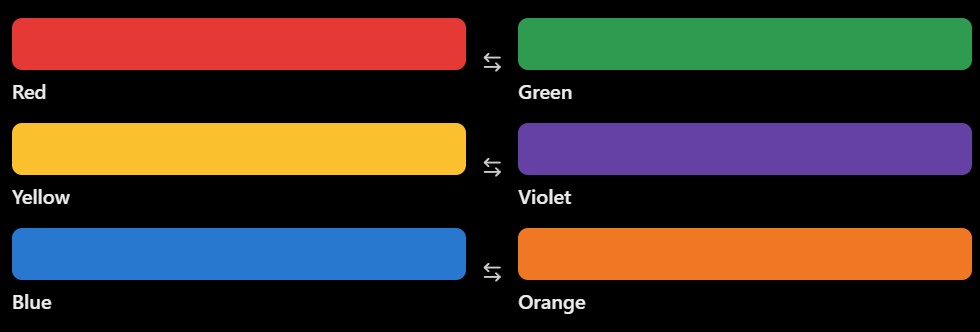
Importance of Complementary Colours in Art
- Creating Contrast: Complementary colours make different elements of an artwork stand out.
- Enhancing Brightness: When placed side by side, these colours create a lively and eye-catching effect.
- Achieving Balance: Artists use complementary combinations to create visual harmony and balance.
- Expressing Emotions: Different colour combinations can communicate energy, warmth, calmness, and excitement.
- Adding Depth: Complementary colours help artists create interesting visual effects and distinguish foreground elements from backgrounds.
Analogous Colours
Analogous colours are groups of three or more colours that appear next to one another on the colour wheel. These colours usually share a common base colour and create a smooth, harmonious, and visually pleasing effect when used together in an artwork.
For example, yellow, yellow-orange, and orange form an analogous colour combination. Similarly, blue, blue-green, and green create another beautiful combination. Since these colours are closely related, they blend naturally and produce a sense of unity and balance.
Examples of Analogous Colour Combinations

Importance of Analogous Colours in Art
- Creating Harmony: Closely related colours produce a balanced and pleasant visual appearance.
- Smooth Colour Transitions: They help artists create natural transitions between different areas of an artwork.
- Expressing Mood: Warm analogous colours can create feelings of energy and excitement, while cool colours often communicate calmness and relaxation.
- Enhancing Creativity: Artists can experiment with different combinations to create beautiful paintings, illustrations, and decorative designs.
- Creating Unity: Using related colours helps connect different elements of an artwork into a complete composition.
Perspective Techniques
Perspective is an important drawing technique in visual art that helps artists create the illusion of three-dimensional space, depth, and distance on a flat, two-dimensional surface. It makes drawings and paintings appear more realistic by showing how objects look from a particular viewing position.
In everyday life, we observe that objects appear smaller as they move farther away from us, while nearby objects appear larger and more detailed. Artists use this natural visual effect to represent buildings, roads, landscapes, interiors, and other objects realistically.
Perspective techniques help establish the position, size, shape, and relationship of objects within an artwork. They also create a sense of distance between the foreground, middle ground, and background.
i.) Linear Perspective
Linear perspective is an important drawing technique used in visual art to create the illusion of three-dimensional depth and distance on a flat, two-dimensional surface. It is based on the principle that parallel lines appear to come closer together as they move farther away from the viewer and seem to meet at a common point called the vanishing point on the horizon line.
For example, when we look down a long corridor, railway track, road, or row of buildings, the parallel edges appear to converge towards a single point in the distance. Nearby objects appear larger, while distant objects appear smaller. Artists use this natural visual effect to make their drawings and paintings look realistic and proportionate.
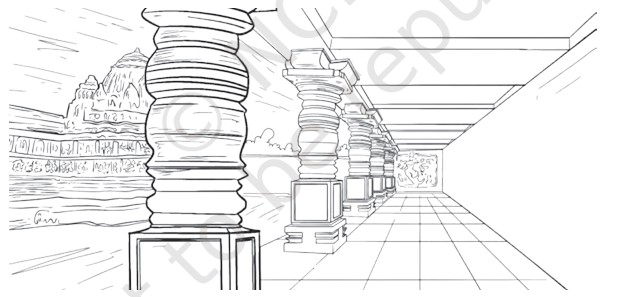
Linear perspective
Activity
Mark the Vanishing Point and Draw Converging Lines
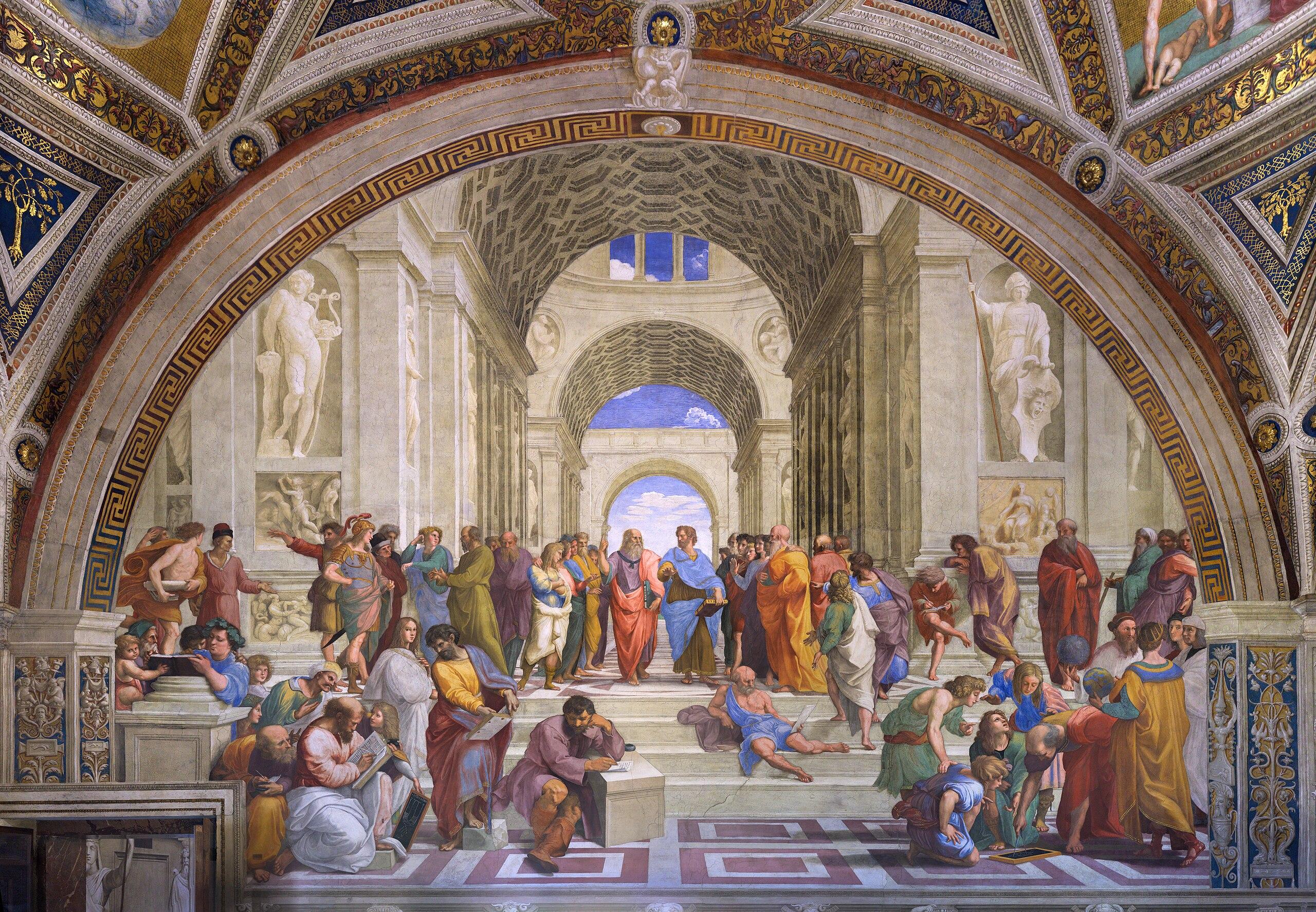
In linear perspective, the vanishing point is an important element that helps artists create the illusion of depth and distance in a painting. To understand this technique, we can observe the famous Renaissance painting The School of Athens by the Italian artist Raphael.
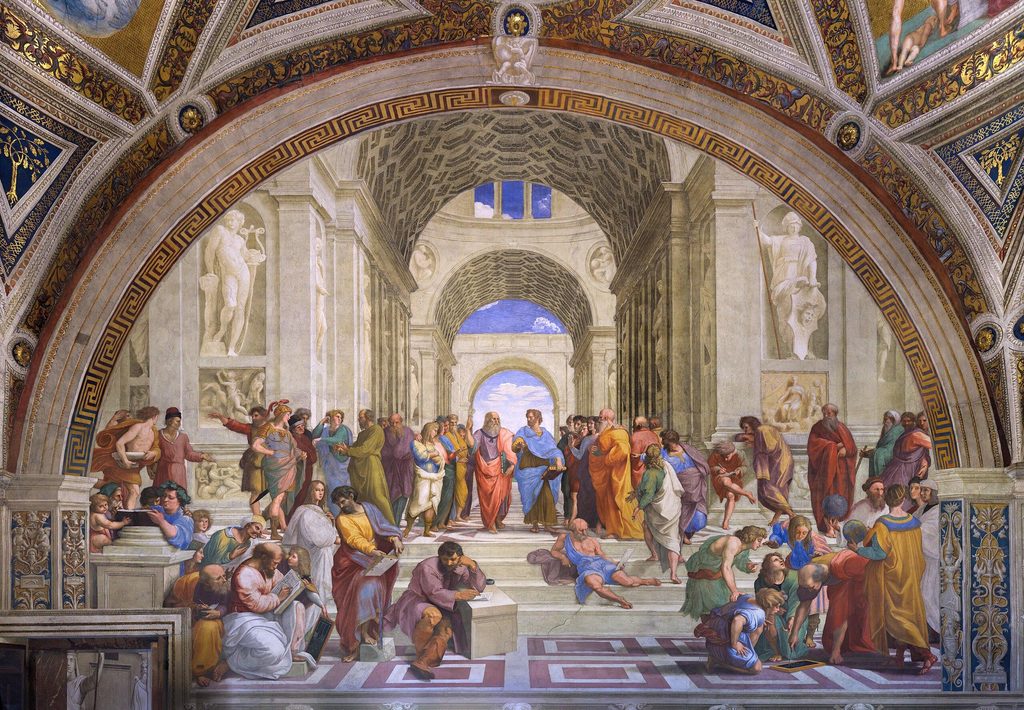
School of Athens by Raphael, Fresco,
Italy, 1508–1511 CE
In this painting, the architectural lines of the grand building gradually converge towards a central point in the composition. This point is known as the vanishing point, which is located between the two central figures, Aristotle and Plato. The surrounding gathering includes famous philosophers, scientists, and mathematicians such as Socrates, Pythagoras, Archimedes, and Heraclitus.
The architectural features, including the floor patterns, arches, and ceiling structures, guide the viewer’s eyes towards the centre of the painting. This arrangement creates a strong sense of depth, balance, and spatial harmony.
How to Identify the Vanishing Point
- Observe the architectural lines in the painting.
- Identify the lines that appear to move towards the centre.
- Imagine extending these lines until they meet.
- Mark the point where they converge as the vanishing point.
- Draw straight converging lines from the architectural edges towards that point.
ii.) Aerial Perspective (Atmospheric Perspective)
Aerial perspective, also known as atmospheric perspective, is an artistic technique used to create the illusion of depth and distance in a painting by changing the colours, tones, contrast, and details of objects. It is based on the natural effect of the atmosphere, where distant objects appear less clear, lighter, and sometimes bluish or greyish compared to objects that are closer to the viewer.
In landscape painting, artists use this technique to show the difference between the foreground, middle ground, and background. Nearby mountains, trees, plants, and other objects are generally painted with richer colours, sharper outlines, stronger contrasts, and finer details. As the distance increases, colours become softer and paler, details gradually disappear, and objects appear hazy because of atmospheric conditions such as mist, dust, and moisture.
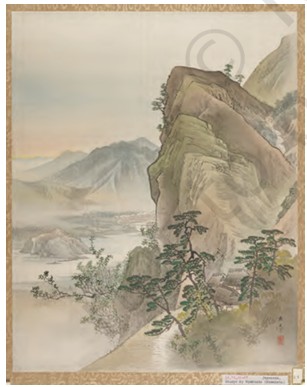
Landscape by Kawabata Gyokusho Album leaf, ink and colour on silk, Japan, 1887–1892 CE
In the given landscape painting, the mountain on the right side is painted with richer and stronger colours because it appears closer to the viewer. In contrast, the distant mountains look lighter, softer, and hazy behind a layer of mist. Similarly, the plants and trees in the foreground have more visible details and clearer shapes, while those farther away appear less distinct.
Important Features of Aerial Perspective
- Colour Changes: Distant objects generally appear lighter and less saturated than nearby objects.
- Reduced Details: Objects lose their sharpness and fine details as they move farther away.
- Atmospheric Haze: Distant landscapes may appear bluish, greyish, or misty.
- Contrast: Nearby objects usually have stronger contrasts between light and dark areas.
- Depth and Distance: Gradual changes in colour, tone, and clarity create a realistic sense of space.
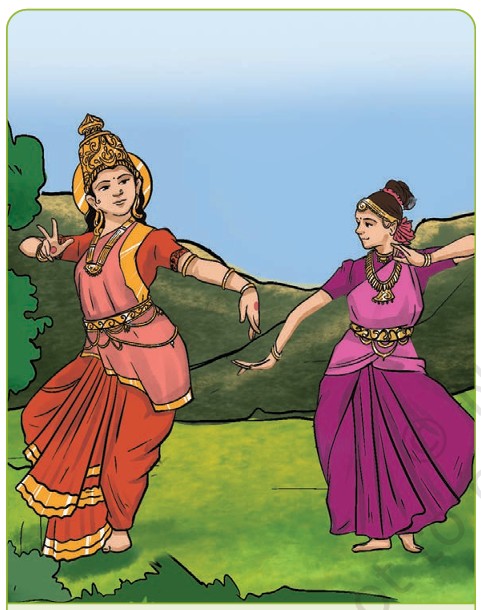
Deccan Miniature Painting Showing Two Dancers, 1750 CE
The Deccan miniature painting depicting two dancers, dating to around 1750 CE, represents the elegance, beauty, and artistic richness of the Deccan school of painting. This traditional painting style developed in the Deccan region of India and is known for its vibrant colours, intricate details, graceful figures, and decorative compositions.
The artwork captures two dancers performing with expressive body movements and graceful gestures. Their traditional costumes, ornaments, and carefully illustrated features reflect the cultural traditions and aesthetic preferences of the period. The use of rich colours, delicate brushwork, and decorative elements adds beauty and visual harmony to the composition.
Deccan miniature paintings often depict themes related to royal courts, music, dance, festivals, romantic scenes, and cultural celebrations. Artists paid particular attention to facial expressions, clothing patterns, jewellery, and the arrangement of figures to communicate emotions and stories.
Artistic Significance: This painting provides a glimpse into the importance of dance, music, and entertainment in the cultural life of the Deccan region during the eighteenth century. It also demonstrates how miniature artists used colour, fine details, and expressive figures to preserve India’s artistic and cultural heritage.
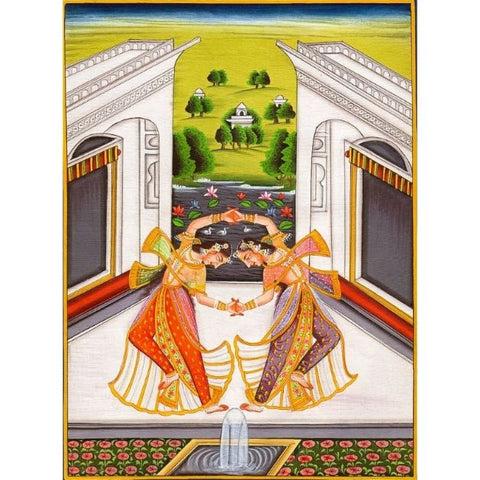
Deccan miniature painting showing two dancers, 1750 CE
Visual art
Visual art is a wonderful journey of imagination, discovery, and self-expression. Every artistic material offers a new opportunity to experiment, learn, and transform simple ideas into beautiful creations. By exploring different mediums and mastering creative techniques, artists can develop their skills, discover their artistic potential, and communicate their thoughts through meaningful artworks.
Here are 15 inspiring ways to explore artistic materials, strengthen creative abilities, and discover the beauty of visual expression.
1. Discover the Beauty of Different Art Mediums
Explore a variety of artistic materials, including pencils, charcoal, watercolours, acrylic paints, oil paints, clay, wood, stone, and fabrics. Each medium has unique characteristics that allow artists to create different textures, patterns, shapes, and visual effects. Experimenting with different materials helps develop artistic confidence and opens new possibilities for creativity.
2. Develop Your Drawing and Sketching Skills
Drawing and sketching are fundamental skills in visual art. Practise creating lines, shapes, patterns, objects, and human figures to improve observation and hand coordination. Regular sketching helps artists understand proportions, composition, and forms while developing their ability to express ideas through visual representations.
3. Explore the Wonderful World of Colours
Colours bring energy, emotion, and meaning to artistic creations. Learn about primary, secondary, and tertiary colours, along with complementary and analogous colour combinations. Experiment with different colour mixtures, tints, and shades to understand how colours interact and influence the overall appearance of an artwork.
4. Master the Art of Painting Techniques
Discover different painting techniques, such as watercolour washes, dry brushing, layering, blending, stippling, and impasto. Each technique creates a distinctive visual effect and allows artists to experiment with texture, depth, and colour. Practising these methods helps improve painting skills and develop an individual artistic style.
5. Appreciate India’s Traditional Sculptural Crafts
Explore India’s rich sculptural heritage through traditional crafts made from stone, metal, terracotta, wood, bamboo, grass, palm, beads, and fabrics. Discover how skilled artisans transform natural materials into beautiful sculptures, decorative objects, and cultural artefacts. Understanding these traditions develops respect for India’s artistic diversity and traditional craftsmanship.
6. Learn the Beauty of Traditional Handicrafts
Traditional handicrafts reflect the creativity, cultural identity, and knowledge of different artisan communities. Explore bamboo weaving, wood carving, pottery, embroidery, beadwork, Śholāpith, and other regional crafts. Learning about these art forms helps preserve cultural traditions while inspiring new approaches to creative expression.
7. Experiment with Texture and Patterns
Texture and patterns add character, depth, and visual interest to artworks. Experiment with rough, smooth, soft, hard, repetitive, and irregular surfaces. Artists can create textures through brushstrokes, printing, carving, weaving, layering, and other techniques. These experiments make artworks more expressive and visually engaging.
8. Understand the Importance of Perspective
Perspective helps artists create the illusion of three-dimensional space on a flat surface. Learn linear perspective using horizon lines, vanishing points, and converging lines. Explore aerial perspective to understand how colours, tones, and details change with distance. These techniques help create realistic landscapes, buildings, interiors, and architectural drawings.
9. Explore the Creative Possibilities of Printmaking
Printmaking is an exciting artistic process that allows artists to produce multiple impressions of an original design. Explore techniques such as woodblock printing, linocut, stencil printing, and monoprinting. Experiment with printing inks, rollers, carving tools, and different surfaces to create interesting patterns and compositions.
10. Discover the Art of Paper and Textile Crafts
Paper and textile crafts offer wonderful opportunities to explore creativity through folding, cutting, weaving, stitching, knitting, and embroidery. Use colourful papers, cardboard, fabrics, threads, and yarns to create decorative objects, patterns, and artistic designs. These activities also improve patience, concentration, and practical skills.
11. Explore the Modern World of Digital Art
Digital technology has introduced exciting opportunities for artistic expression. Use computers, drawing tablets, digital pens, and creative software to develop illustrations, paintings, animations, and graphic designs. Digital art combines traditional artistic principles with modern technology, allowing artists to experiment with colours, layers, textures, and visual effects.
12. Develop Creativity Through Observation
Careful observation is an essential part of artistic development. Observe nature, architecture, people, objects, animals, and everyday surroundings to discover interesting shapes, colours, patterns, and textures. Drawing inspiration from the environment helps artists develop imagination and transform ordinary experiences into meaningful artworks.
13. Practise Care, Maintenance, and Responsible Storage
Taking care of artistic materials is an important creative habit. Clean brushes, organise tools, close paint containers, and protect finished artworks from dust, moisture, and direct sunlight. Reuse suitable materials and recycle waste whenever possible. Responsible storage helps preserve materials, reduce waste, and create a safe and organised working environment.
14. Express Your Emotions Through Artistic Creations
Art provides a meaningful way to communicate feelings, experiences, thoughts, and personal perspectives. Experiment with colours, shapes, lines, textures, and compositions to express happiness, sadness, excitement, peace, and inspiration. Developing personal expression helps artists create original artworks that communicate emotions and connect with viewers.
15. Build Confidence Through Continuous Practice and Experimentation
Artistic development requires curiosity, patience, dedication, and regular practice. Try unfamiliar materials, explore different techniques, learn from mistakes, and experiment with new ideas. Participate in creative activities, observe the work of other artists, and appreciate different artistic traditions. Every experiment provides an opportunity to improve skills and discover new creative possibilities
Conclusion:
Mediums and techniques play an important role in the world of visual art, providing artists with endless opportunities to express their thoughts, emotions, imagination, and creativity. From traditional materials such as stone, clay, bamboo, wood, metal, fabrics, and natural colours to modern digital tools, every medium offers unique possibilities for artistic exploration. India’s rich sculptural crafts, including bamboo weaving, Śholāpith, terracotta, and traditional wood and metal crafts, demonstrate the remarkable craftsmanship and cultural knowledge preserved by generations of skilled artisans.
Understanding colour theory helps artists explore different colour combinations, including complementary and analogous colours, to create harmony, contrast, and visual interest. Similarly, perspective techniques such as linear and aerial perspective help represent depth, distance, and three-dimensional spaces on flat surfaces. These techniques make artworks more realistic, expressive, and visually appealing.
Learning about the care, maintenance, and responsible storage of art materials also encourages good habits, environmental awareness, and respect for creative resources. By organising, reusing, and preserving materials, artists can develop a responsible and sustainable approach to artistic practice.
Exploring different mediums and techniques is not just about learning artistic skills; it is also about appreciating India’s cultural heritage, understanding traditional craftsmanship, and discovering new ways of creative expression. Every material offers a new experience, every technique opens a creative possibility, and every artwork tells a unique story.
Keep exploring, experimenting, and creating! Let your imagination guide your artistic journey and transform simple ideas into beautiful expressions of creativity.