
Introduction
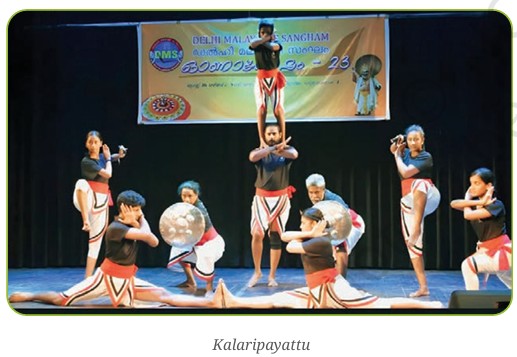
A theatre performance does not truly end when the final dialogue is spoken. After the curtain closes, there is an important opportunity to look back, appreciate the effort, and learn from the experience. This stage of theatre-making helps performers understand what worked well and what could be improved.
Applause and Advice focuses on two important parts of this process: appreciation and constructive feedback. Applause allows us to recognise the hard work and creativity of everyone involved, both on stage and backstage. Advice helps performers reflect on their work and discover new ways to improve their acting, voice, movement, teamwork, and presentation.
Giving feedback requires care, respect, and thoughtful observation. Similarly, receiving advice requires patience and an open mind. When students learn to appreciate one another while also sharing helpful suggestions, they create a positive environment where everyone feels encouraged to learn and experiment.
Through this process, students discover that every performance is a learning experience. Success is not only about receiving applause; it is also about understanding what we have learned and how we can make our next performance even more expressive and meaningful.
Being a Good Audience Member
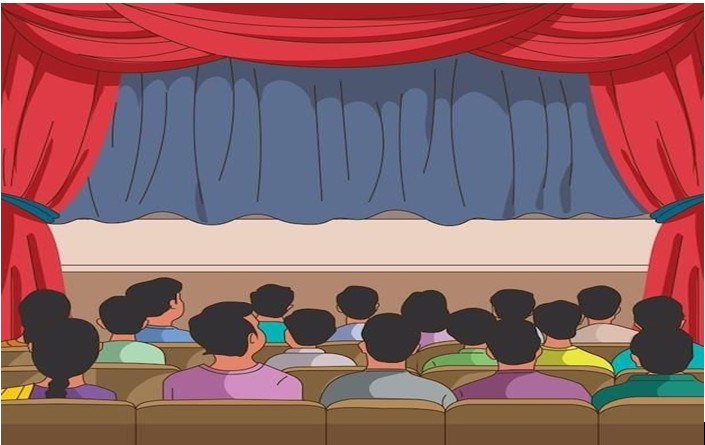
As theatre performers, you put in a great deal of effort, time, and creativity, both on stage and backstage, to make a performance enjoyable for the audience. Actors practise their dialogues and movements, while the backstage teams work with costumes, makeup, props, music, lighting, sound, and other arrangements. Everyone contributes to bringing the performance to life.
But performers also have certain expectations from their audience, don’t they? A theatre performance becomes more meaningful when the audience shows attention, respect, encouragement, and appreciation for the work that has gone into creating it.
As you have learned in previous grades, watching performances can help you become a better performer. By observing how actors use their voices, expressions, movements, timing, and emotions, you can learn new ways of presenting a character. You can also notice how music, costumes, lighting, props, and other theatrical elements contribute to the performance.
Being a good audience member therefore comes with its own responsibility and duty. It means listening carefully, respecting the performers, avoiding unnecessary talking or distractions, and responding appropriately to the performance. Applause at suitable moments can encourage performers and show appreciation for their efforts.
A good audience does not simply sit and watch. It observes, listens, understands, appreciates, and learns. When performers and audiences respect one another, the theatre becomes a shared experience in which everyone can enjoy, learn, and grow.
Being a good audience for the performing arts
- When you sit among the audience, you are just as important as the actors on stage! Your duty is to — Watch and listen respectfully, giving full attention to the performance.
- It is important not to talk, fidget or use phones
- Small distractions from you can disturb the actors and the other audience.
- Applauding at the right time, reacting kindly and appreciating the effort of the performers.

stanza speaks about how the appreciation must be communicated to the performers —

The stanza speaks about how appreciation should be communicated to performers. A performance is the result of the hard work, practice, creativity, and cooperation of many people. Therefore, appreciation from the audience is an important way of recognising their efforts.
Appreciation can be expressed through applause, encouraging words, attentive listening, and respectful behaviour during and after the performance. A warm response from the audience can give performers confidence and encourage them to continue improving their skills.
However, appreciation does not mean praising everything without thought. A good audience member can also offer constructive feedback in a polite and respectful manner. Sharing what was enjoyable and suggesting areas for improvement can help performers learn from their experience.
Thus, communicating appreciation is not only about clapping at the end of a performance. It is about recognising effort, respecting creativity, responding thoughtfully, and encouraging performers. In this way, the audience becomes an active and supportive part of the theatre experience.
It mentions that the expression of success can be in two ways —
1. Vocally — through words — speech, exclamations and writing.
You can express appreciation through spoken words, encouraging comments, exclamations, and written messages. Saying “Well done!”, “That was wonderful!”, or sharing a thoughtful comment after the performance can make performers feel appreciated. You can also write a short note or message describing what you enjoyed about the performance.
2. Physical body — through actions — clapping, standing up after the show for respect and giving gifts.
Your actions can also communicate appreciation. Clapping is one of the most common ways audiences show appreciation during or after a performance. Standing up at the end of a particularly memorable performance can also express respect and appreciation. Other gestures, such as smiling, nodding, or giving a respectful gesture, can communicate encouragement.
In some situations, audiences may also offer flowers, cards, or small gifts to performers as a gesture of appreciation. Such gestures are meaningful when they are appropriate to the occasion and given respectfully.
Remember that appreciation does not always have to be grand. Sometimes, attentive listening, a warm smile, sincere applause, or a few encouraging words can mean a great deal to performers.
A thoughtful audience understands that every performance represents time, practice, teamwork, creativity, and effort. By expressing appreciation appropriately, we can encourage performers and make the experience more positive for everyone.
Reviewing
Reviewing is the process of carefully observing, thinking about, and giving feedback on a performance. It helps us understand what worked well, what could be improved, and how effectively the performance communicated its story or message. A good review is not about finding faults; it is about appreciating strengths, noticing details, and offering useful suggestions. Reviewing also develops observation, critical thinking, communication, and reflection skills.
Reviewing in Theatre
When reviewing a theatre performance, we look beyond the story and observe how it is presented. We can pay attention to the actors’ voice, dialogue delivery, expressions, movements, emotions, timing, and interaction with other performers. We can also observe supporting elements such as music, dance, costumes, makeup, puppetry, props, lighting, sound, and sets.
A reviewer may ask: Were the dialogues clear? Did the actors express emotions effectively? Were the movements suitable for the scene? Did the music and costumes support the story? Were the props and sets useful? Did the different teams coordinate well? What could be improved?
Reviewing Is Not Criticising
A thoughtful review should be specific, respectful, and constructive. Instead of saying, “The acting was bad,” we can say, “The emotions could be expressed more clearly through voice and facial expressions.” Such feedback helps performers improve without discouraging them.
Theatre is a collective art involving actors, writers, directors, musicians, dancers, technicians, and backstage teams. Therefore, a good review appreciates everyone’s contribution.
By reviewing performances thoughtfully, students become careful observers, sensitive listeners, and respectful communicators. It helps both performers and audiences learn, improve, and enjoy theatre more meaningfully.
There are three types of reviews —
Self-review — When the creators themselves examine the art and check for ways to improve before presenting it to the audience.
Peer review — Contemporaries in the field provide suggestions, either before or after the show.
Critical review — It is obtained from everyone after the show, which includes a detailed analysis of all the aspects of the performance, including the scope for improvement, strengths and weaknesses.
ACTIVITY 4.1: PLAY WATCHING
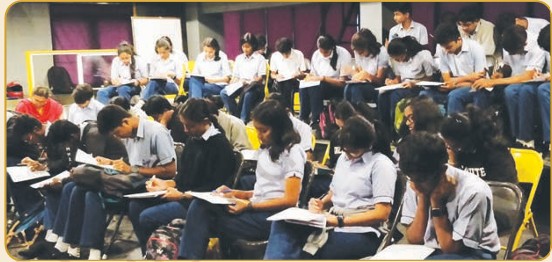
As theatre students, you not only perform theatre but also learn by watching plays. Try to watch performances in different languages and genres whenever possible. You can request your teachers to organise field trips to theatres so that the class can watch plays together.
You can also enjoy plays with your family and friends as a fun and meaningful activity. While watching, observe the actors, story, dialogues, expressions, movements, music, costumes, and other elements of the performance.
Remember to write a review after every play you watch. The steps and ideas given in this chapter will help you observe performances carefully and express your thoughts clearly.
Steps For Reviewing A Play
1. Research the Play
- Find out the name of the play, playwright and the basic plot (without spoiling it!).
- Understand the time period or setting, if it is famous or historical.
2. Know the Genre
- Is it a comedy, tragedy, musical, historical drama, or a modern play? This helps you watch with the right mindset.
3. Find out about the Theatre Team that is Performing
- Find out about the group performing — are they professionals, students or a community group? It helps in understanding their point of view.
4. Keep a Journal
- Carry a small notebook to quickly jot down thoughts during or right after the show.
5. Your Mindset
- Go with an open mind — be ready to enjoy and observe.
- A reviewer must be honest but also fair and respectful. Holding a bias towards the team or an actor will not make the review honest.
6. Revise What You Intend to Observe
- Acting — Was it believable and emotional?
- Set design — Did the stage support the story?
- Costumes — Did they match the time and character?
- Lights and Sound — Did they add to the mood?
- Story — Was it clear, engaging or confusing?
- Flow — Is there a smooth flow from one scene to another? Are the entries and exits smooth within a scene?
- Errors that were visibly evident — How were they handled?
7. Have No Expectations
- Every production is different. Donʼt expect it to be exactly like a movie or a previous version you may have seen.
Writing a Review
After watching a play, organise your observations and write a clear and thoughtful review. Begin with basic details such as the title of the play, playwright, theatre group, venue, and date. Give a brief idea of the story without revealing important surprises.
Next, describe what you observed about the acting, dialogues, expressions, movements, costumes, set, music, lighting, sound, and props. Mention what worked well and explain why. If something could be improved, give your suggestions politely and respectfully.
A good review should be honest, balanced, specific, and fair. Avoid personal comments about actors or the theatre team. Remember that a play is a collaborative effort involving many people.
Finally, share your overall response. Mention what you enjoyed, what you learned, and which part of the performance you found memorable.
A review is not simply about saying whether you liked or disliked a play. It shows that you have watched carefully, thought critically, appreciated the creative work, and expressed your ideas clearly.
Donʼt be mean or personal — Critique the performance, not the person. Never insult an actor, director or team.
No spoilers — If the story depends on a surprise, donʼt ruin it for others.
Avoid using single phrases like ‘it was not bad’ — Explain why you thought it was good or needed improvement. Justify your opinions.
Have a balance of positives and negatives — Even if you didn’t enjoy the play, find and mention something positive too. The main purpose is to help the team or individuals improve and do better.
Neither too long nor too short — Find the balance — detailed but easy to read. Around 300 words is good for beginners
ACTIVITY 4.2 : WATCH AND REFLECT
Watch a theatre performance carefully and think about your experience. Observe the story, acting, dialogues, expressions, movements, costumes, music, lighting, sound, props, and set design.
After the performance, reflect on what you saw and learned. Ask yourself:
- What did I enjoy most about the performance?
- Which character or scene was memorable, and why?
- How did the actors communicate emotions?
- How did music, costumes, lights, and props support the story?
- Was the story clear and engaging?
- What could have been improved?
- What did I learn that I can use in my own theatre work?
Write your thoughts honestly and respectfully. Watching, reflecting, and reviewing can help you become a more thoughtful audience member and a better theatre practitioner.
Conclusion
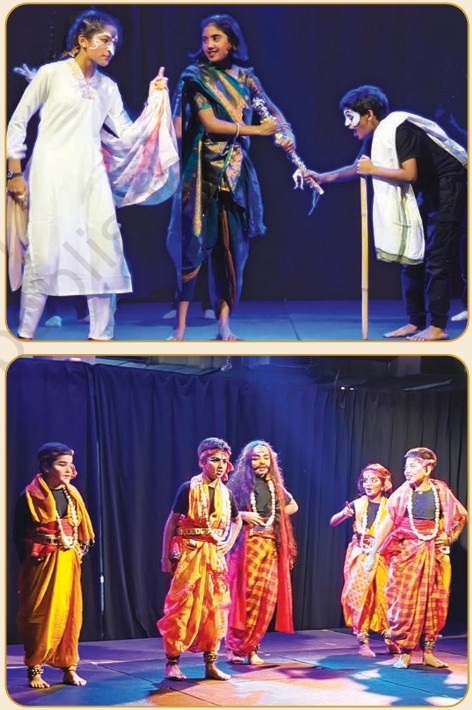
Applause and Advice reminds us that theatre is a shared creative experience. Applause helps us appreciate the hard work, creativity, and dedication of performers and everyone working behind the scenes. Thoughtful advice helps performers understand their strengths and improve their skills.
By learning to give feedback with respect, honesty, and kindness, and by receiving suggestions with an open mind, we create a positive environment for learning. Every performance gives us an opportunity to observe, reflect, appreciate, and grow.
Thus, applause celebrates effort and achievement, while advice encourages learning and improvement. Together, they make theatre a meaningful journey of creativity, cooperation, confidence, and continuous growth.