
INTRODUCTION
The chapter introduces students to the exciting and creative process of theatre-making, beginning with a simple idea and leading to a final stage performance. It helps students understand that a theatre production is not created in one step. It develops through planning, writing, rehearsing, designing, practising, and performing.
Theatre is presented as a collaborative art form in which everyone has an important role. Actors bring characters to life on stage, while writers, directors, costume and makeup teams, musicians, lighting and sound teams, set designers, stage managers, and other helpers work behind the scenes. When everyone works together, a simple idea can become a meaningful and engaging performance.
An interesting feature of this chapter is that it is written in the form of a play script. This makes learning more practical and enjoyable. Students can read different roles, speak dialogues, explore characters, and imagine how the written script can be transformed into a live performance.
The chapter also shows that creativity and dedication are more important than expensive resources. Simple materials can be used imaginatively as costumes, props, or stage elements. Students are encouraged to use skills learned earlier, including acting, dialogue delivery, puppetry, mime, music, dance, costume, makeup, movement, and storytelling.
Most importantly, the chapter focuses on learning by doing. Students learn by participating, practising, experimenting, cooperating, and performing. Through this hands-on experience, they develop confidence, communication, imagination, creativity, teamwork, and responsibility.
From the first idea to the final performance, this chapter takes students on a journey where words become action, imagination becomes creation, and a simple script comes alive on stage.
THEATRE-MAKING
Theatre-making is the creative process of turning an idea, story, or theme into a live performance that can be shared with an audience. It involves many stages, from developing the first idea to rehearsing and finally presenting the performance on stage. Each stage requires planning, creativity, cooperation, and careful preparation.
It includes:
- Selecting a story
Every performance begins with an idea. It may be based on a folk tale, historical event, poem, book, everyday experience, imaginary situation, or original story. The group decides what story they want to tell and what they want the audience to experience or understand.
- Writing a script
The selected idea is developed into a script. The script may include characters, dialogues, scenes, actions, narration, and stage directions. It provides a basic structure for the performance and helps everyone understand what happens and when.
- Planning music, dance, puppetry, costumes, and sets
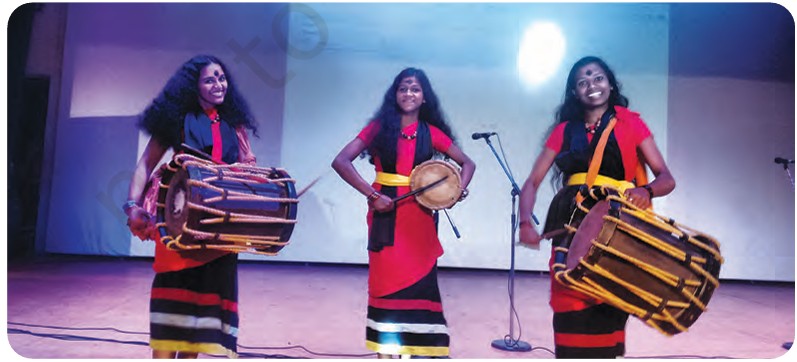
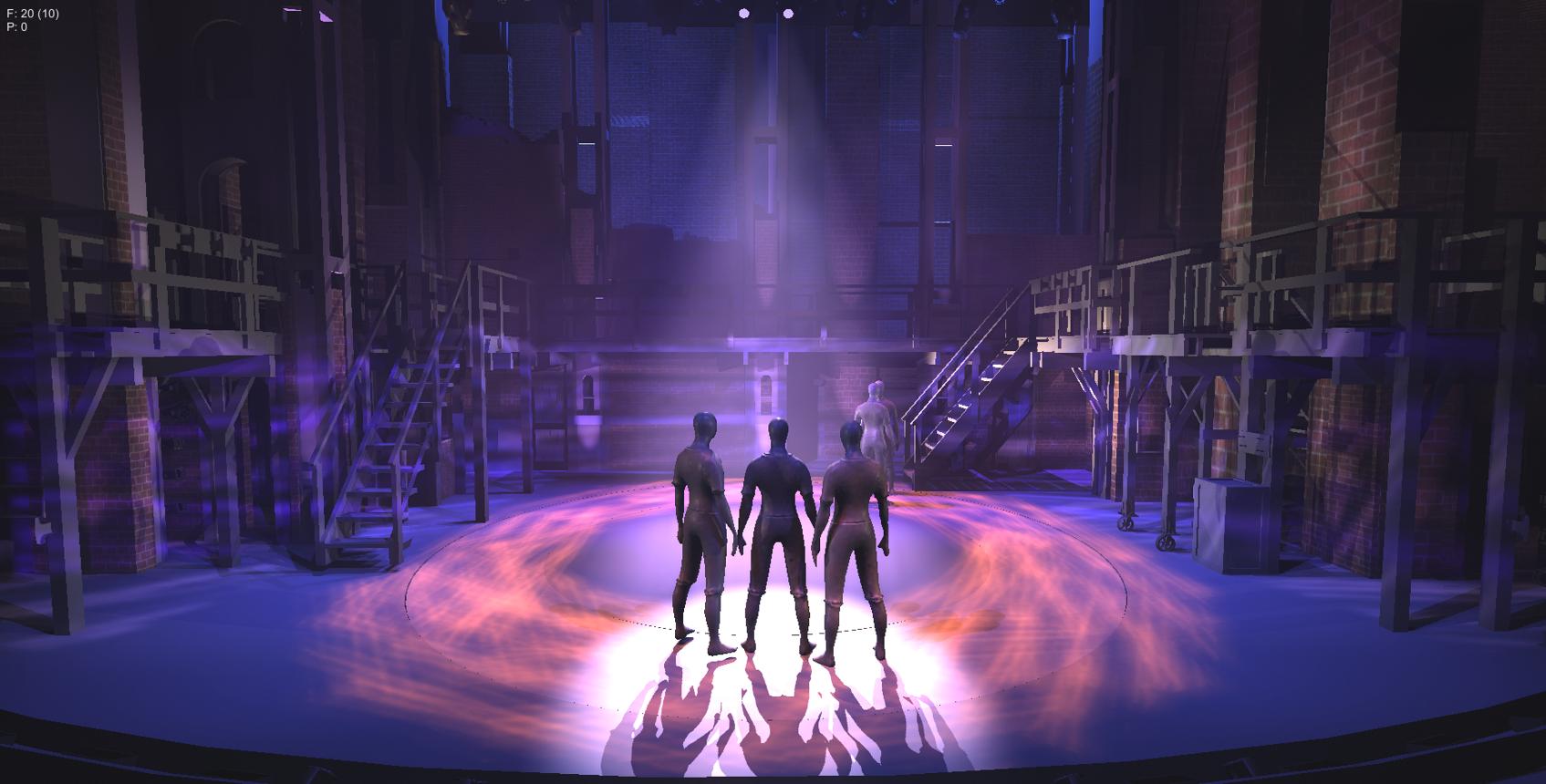
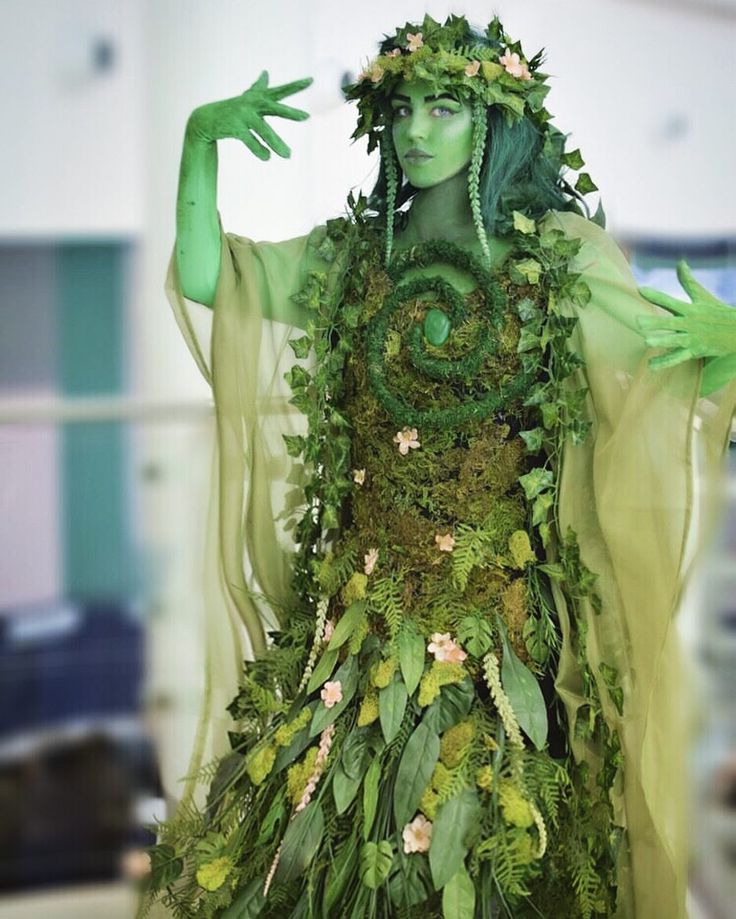
Once the script is ready, the team decides how it will be presented. This may include planning music, dance, puppetry, costumes, makeup, props, sets, lighting, sound, and movement. Creative choices should support the story and help the audience understand the characters and situations.
- Rehearsing
Rehearsal is an important part of theatre-making. Actors practise their dialogues, expressions, movements, entrances, and interactions. Music, dance, puppetry, costumes, props, sound, and other elements are also practised and coordinated. Rehearsals help the team identify problems and improve the performance.
- Performing on stage
After sufficient preparation, the performance is presented before an audience. Actors use their voice, expressions, movements, and emotions, while the backstage team manages costumes, props, music, lighting, sound, and other technical requirements.
Every department is important, whether acting, music, props, documentation, or backstage help. Theatre is a team effort. The actors may be the most visible members of a production, but the performance also depends on writers, directors, musicians, dancers, puppeteers, costume and makeup teams, prop handlers, set designers, lighting and sound teams, stage managers, photographers, and documentation teams.
Every department contributes to the final performance. Good coordination between these groups ensures that the different elements work together smoothly.
Theatre teaches coordination, creativity, discipline, and responsibility. Theatre-making develops many useful skills. Students learn coordination by working with others, creativity by developing ideas and finding imaginative solutions, discipline by attending rehearsals and completing responsibilities, and responsibility by understanding the importance of their individual roles.
It also develops confidence, communication, listening, observation, cooperation, problem-solving, and time-management skills. Most importantly, theatre teaches us that a successful performance is created when people respect one another’s contributions and work together towards a common goal.
Thus, theatre-making is not simply about performing on stage. It is a shared creative journey in which an idea gradually becomes a script, a script becomes a rehearsal, and a rehearsal finally becomes a live performance.
ALL THE DRAMA OF THEATRE!
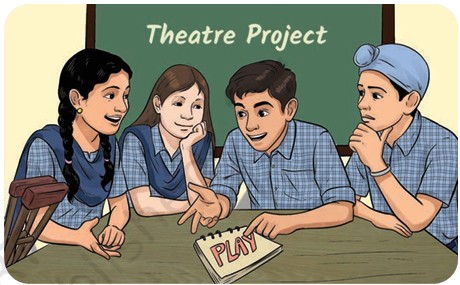
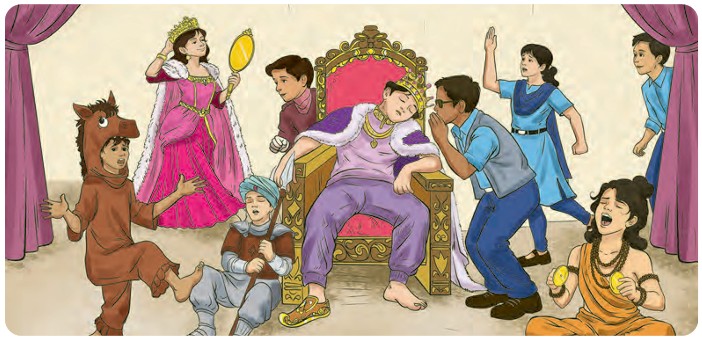
The story begins when class 8 students receive a notice to prepare a school play
Students feel excited, nervous, and confused, just like real performers.
The entire chapter follows their journey step by step through different scenes.
Scene 1: Brainstorming
Students discuss ideas for the play such as comedy, folk tales, panchatantra, tenali Rama, and regional stories.
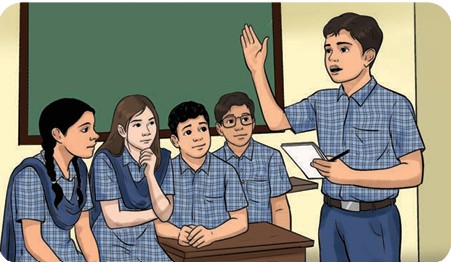
Brainstorming helps in sharing ideas freely.
They decide:
- Theme and story
- Length of the play
- Use of indian elements like folk music, dance, puppetry, and mime
Voting and discussion help in finalising the story.
Different teams are formed:
- Script
- Music
- Dance
- Puppetry
- Set and props
- Makeup and costumes
- Documentation
Lesson : backstage work is as important as acting.
Scene 2: Work Begins
Once the different teams have been formed, each team begins working on its assigned responsibility. Although every team has a different task, all the teams need to communicate and cooperate because their work will eventually come together in the final performance.
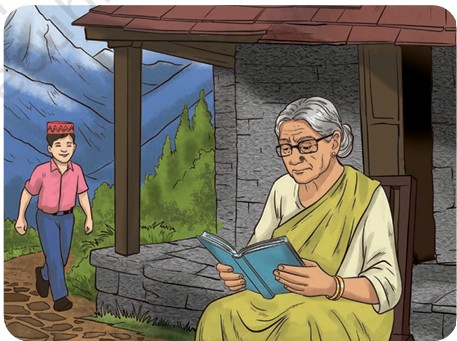
Script writing begins with:
Clear beginning : Introduces the characters, setting, and situation.
Middle : Develops the story, introduces problems or challenges, and creates conflict.
End : Brings the main events towards a conclusion or resolution.
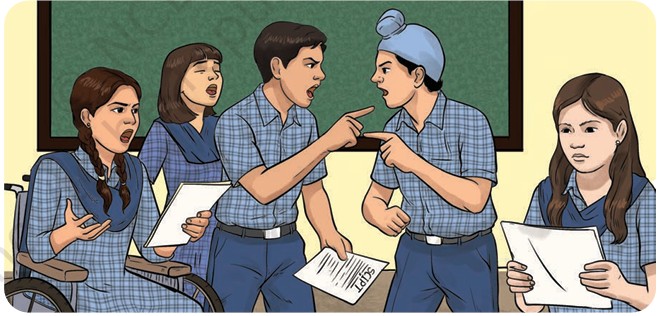
Conflict in the story : Script writing is a collaborative process. Students may have different ideas about the characters, dialogues, situations, or ending of the story. They should share their suggestions openly and listen carefully to the ideas of others.
Students give suggestions and feedback.
Conflicts arise when ideas clash, but discussion helps improve the script.
Teacher guides students without controlling them.
Lesson:
- Respect others’ ideas
- Listen patiently
- Do not judge withput hearing fully.
Scene 3: Rehearsals and Preparation
Rehearsals starts after the script is ready.
Many activities happen at the same time:
- Dance practice
- Music composition
- Costume preparation
- Puppet making
Confusion, arguments, and stress appear.
Teacher explains:
- Conflicts are part of the creative process
- Coordination is essential
A common storyboard is suggested so all teams stay connected.
Lesson:
- Teamwork and organisation are key
- Patience and cooperation are necessary
Scene 4: The First Run-through
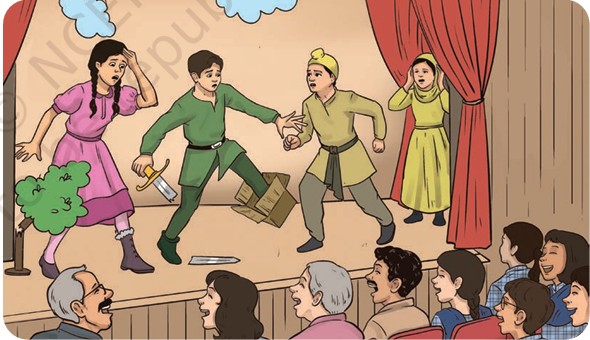
A full rehearsal is performed in front of teachers.
Many mistakes happen:
- Slow scene changes
- Low voice projection
- Prop handling issues
Teachers give constructive feedback, not criticism.
Students realise:
- Trial runs are very important
- Feedback helps improvement
Lesson:
- Accept feedback positively
- Practice improves performance
Scene 5: Showtime!
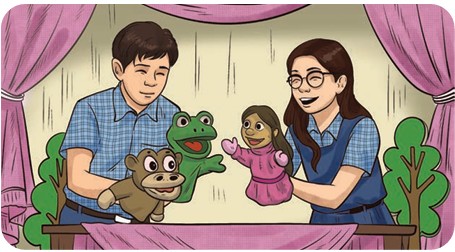
Final performance day arrives.
Students do last- minute checks of props, costumes, and music.
A team prayer is performed to build confidence and unity.
During the show:
- One actor misses an entry
- Another actor uses presence of mind and improvises
The play continues smoothly.
Audience and chief guest applaud the performance.
Lesson:
- The show must go on
- Presence of mind is crucial
Suggested prayer
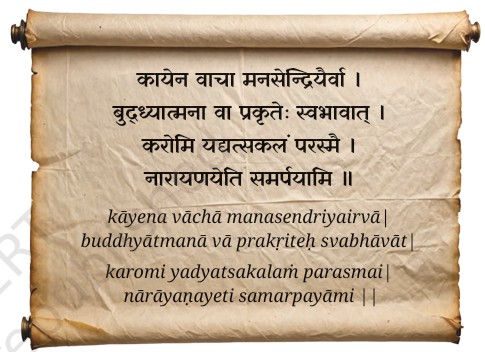
The prayer teaches:
- Surrender of all actions
- Working without attachment to results
It helps build:
- Focus
- Calmness
- Team spirit
ACTIVITY 3.1: THOUGHT SPLASH!
Students reflect on:
- How relatable the play felt
- Their own classroom experiences
Encourages:
- Self- expression
- Drawing, writing, and discussion
Helps students connect theatre lessons with real life.
KEY TAKEWAYS- LESSONS FOR LIFE
“The show must Go On” is the theatre motto.
Theatre teaches:
- Resilience
- Adaptability
- Confidence
- Problem- solving
Mistakes are normal:
- Do not panic
- Improvise and move forward
Teamwork can overcome any difficulty.
These lessons are useful not only on stage but in real life.
SUMMARY
“From page to stage” explains the complete journey of theatre- making.
It show how:
- An idea becomes a script
- A script becomes rehearsal
- Rehearsal becomes performance
Every student plays an important role, whether visible or invisible.
The chapter highlights:
- Teamwork
- Respect
- Creativity
- Discipline
- Confidence
Theatre is not about perfection, but participation and perseverance.
Theatre builds life skills that help students beyond the classroom.