
Introduction
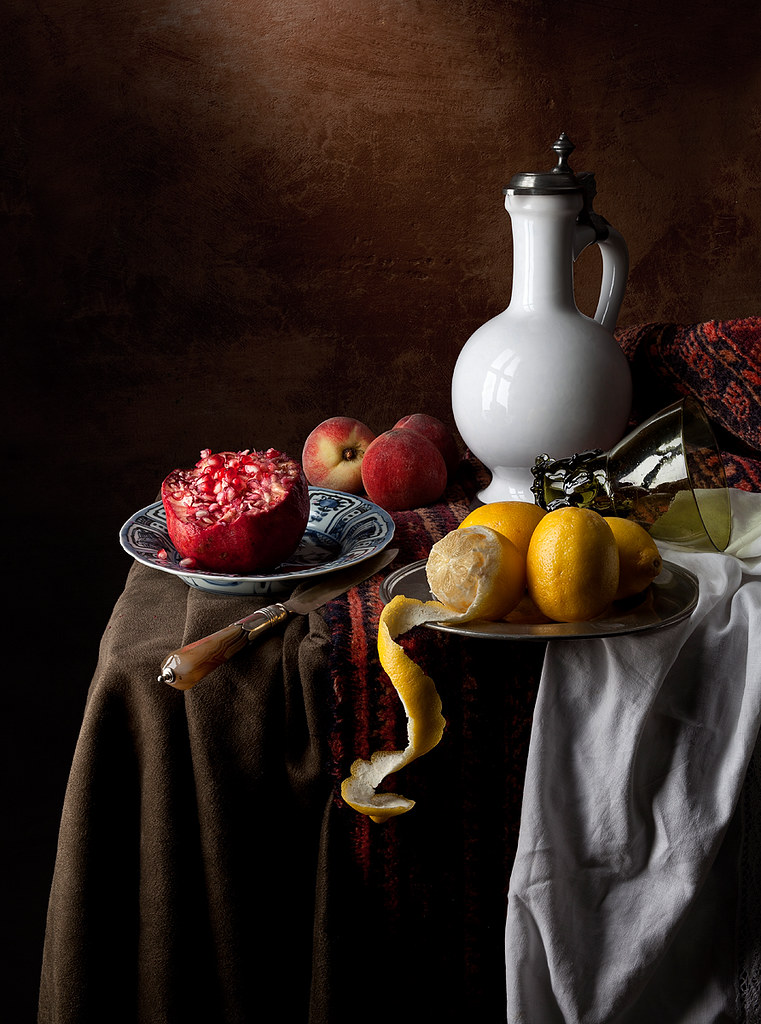
Objects and Still Life are important subjects in visual arts that focus on observing and representing everyday, non-living objects through drawing, painting, photography, and other artistic mediums.
Common still life objects include fruits, flowers, books, bottles, utensils, and decorative items arranged in a thoughtful composition.
This art form helps artists and students develop observation skills, understand shapes, colors, textures, light, and shadow, and improve their creative expression.
By studying and creating still life artworks, learners gain a deeper appreciation for the beauty of ordinary objects and the principles of visual design, making it a fundamental practice in art education.
Still life art is a genre that depicts inanimate objects, arranged thoughtfully to convey aesthetic, symbolic, or personal meaning.
Definition and Concept
A still life is a composition of both natural and man-made objects, such as fruits, flowers, utensils, books, or musical instruments, arranged by the artist in a deliberate way to create visual interest and meaning.
The term “still life” originates from the Dutch word stilleven and the French nature morte, both meaning “dead nature,” emphasizing the inanimate nature of the subjects Despite appearing simple, still life paintings allow artists significant freedom in choosing objects, colors, composition, and mood.
Historical Background
Still life art dates back to ancient Egyptian and Roman times, where objects were depicted in tombs and decorative art During the Middle Ages and Renaissance, objects often carried religious or symbolic significance. The genre became formally recognized in the 16th and 17th centuries in the Netherlands, where Dutch and Flemish artists created elaborate arrangements of everyday objects, establishing still life as a distinct art form By the 18th century, still life painting had spread to other parts of Europe and Russia, gaining popularity for its aesthetic and technical challenges.
Common Objects and Symbolism
Artists carefully select objects for their symbolic, cultural, or personal significance Common subjects include:
- Natural foods: fruits, vegetables, meat, or flowers, often symbolizing abundance, mortality, or the passage of time
- Man-made items: books, musical instruments, vessels, clocks, or tools, which can convey knowledge, leisure, or social status
- Vanitas elements: skulls, extinguished candles, or decaying food, reminding viewers of mortality and the transient nature of life
The arrangement, lighting, and perspective of these objects are crucial, guiding the viewer’s eye and creating a sense of depth, texture, and harmony.
1. Explore Objects from Surroundings:-
Exploring objects from your surroundings is an important visual arts activity that helps develop observation, creativity, and artistic skills. Students carefully observe everyday objects and represent them through drawing, painting, or craft work.
Common Objects to Explore
- Fruits and vegetables
- Flowers and leaves
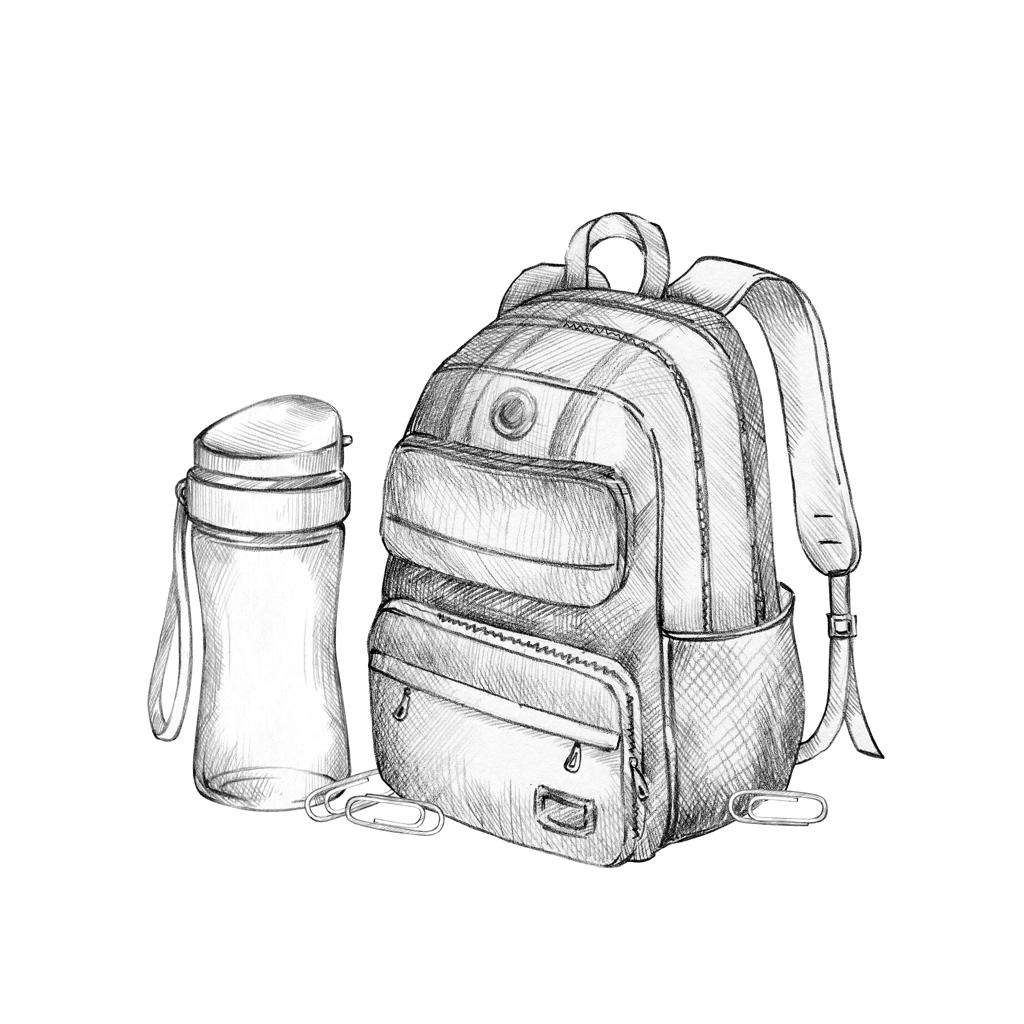
- Water bottles and cups
- School bags and books
- Toys and household items
- Stones, shells, and natural materials
Steps to Explore Objects
- Observe the object’s shape, size, color, and texture.
- Identify its purpose and features.
- Sketch the object using simple lines and shapes.
- Add details, shading, and colors.
- Compare different objects and note their similarities and differences.
Benefits
- Improves observation skills.
- Enhances creativity and imagination.
- Develops drawing and painting abilities.
- Helps understand shapes, forms, and textures.
- Encourages appreciation of everyday objects.
2. Draw Objects in Different Ways
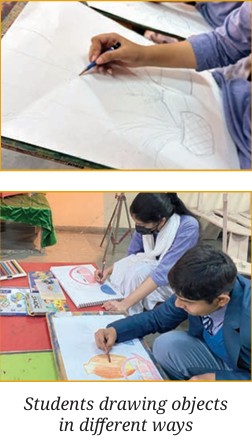
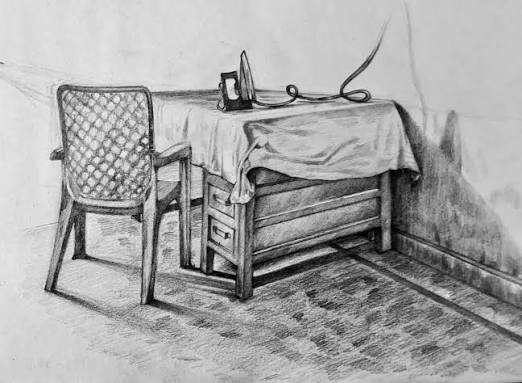
Draw objects of different materials found at home. Find objects made of wood, metal, clay, plastic, cloth, etc. Place them where there is some light. Create an outline drawing and try to map the dark and light areas. Notice the colour and shape of shadows, and include these in your drawing.
3.Light and Shade
Place different objects in front of you.
• Observe their shapes, shades, shadows and how the light falls on each of them.
• What is the shape of their shadows?
• On which side of the objects do you see their shadow?
Use a pencil and try a few experiments. Vary the pressure as you create rhythmic strokes in any direction. Are you able to create light and dark tones? After you have practiced this on a separate paper or drawing book, draw the objects in front of you. Within the outline of the objects, create pencil strokes from light to medium to dark tones. Also, observe the shadows and show them in your drawing.
4. Through the Eyes of an Artist
Artists have a practice of studying objects. They arrange them in a group to create drawings, paintings, sculptures and photographs.
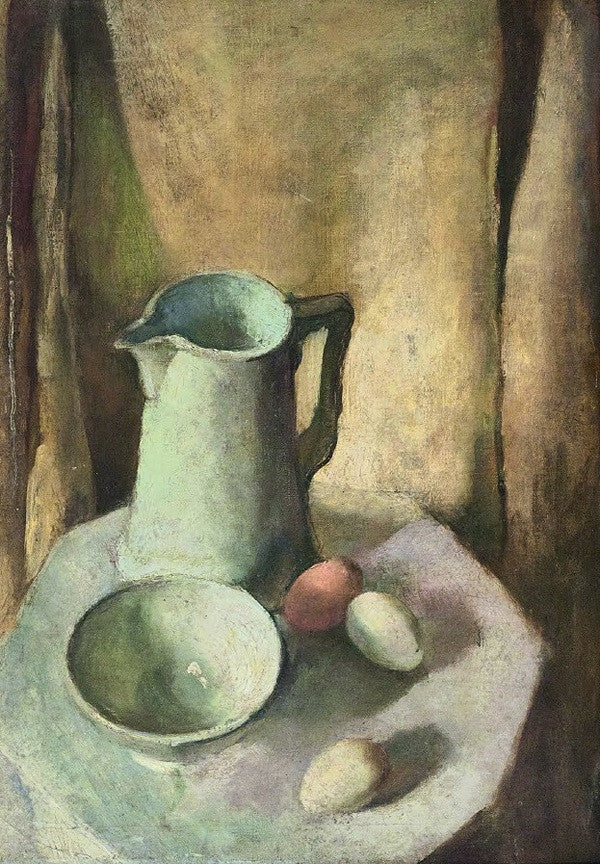
Such artworks are called still life. In a still life, a lot of thought is given to the choice of objects and how they are arranged. Flowers, plants, vegetables, fruits, food items, clothing, tools and other household objects are also included in a still life arrangement.
Why do you think it is called a still life? If an object doesn’t have life, would it be a still life? Still life artworks depict things that are ‘still’ and do not move. In the process of making the artwork, the objects get a new ‘life’.
Look at still lifes made by well-known artists and discuss them in your class.
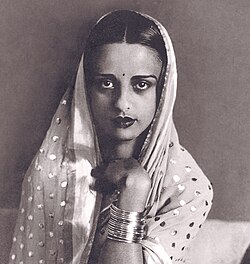
Amrita Sher-Gil was an important modern Indian woman artist. She was born in 1913. Her mother was from Hungary and her father was from India. She studied art in Paris. When she was 21 years old, she returned to India.
She travelled around the smaller towns and villages with her canvases, oil paints and brushes. Her paintings have rich earthy colours.
She was deeply affected by observing the life and conditions of common Indian people, and created paintings based on these themes.
5. Create your own Still Life
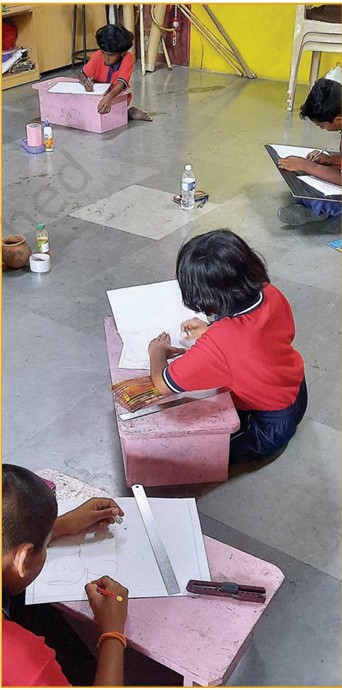
A still life is an artwork that features a collection of inanimate (non-living) objects arranged together. Creating a still life helps improve observation, composition, and drawing skills.
Materials Needed
- Drawing paper
- Pencil and eraser
- Colors (crayons, colored pencils, or paints)
- Everyday objects from your surroundings
Steps to Create a Still Life
- Choose Objects
- Select 3–5 objects such as fruits, bottles, cups, books, flowers, or toys.
- Arrange the Objects
- Place them on a table in an interesting arrangement.
- Put larger objects at the back and smaller ones in front.
- Observe Carefully
- Notice the shapes, sizes, colors, and shadows of the objects.
- Draw the Outline
- Sketch the basic shapes lightly with a pencil.
- Add Details
- Refine the shapes and include important features.
- Shade and Color
- Add shading to show light and shadow.
- Color the objects neatly.
- Complete the Background
- Draw the table surface and a simple background to make the artwork realistic.
Tips
- Keep the arrangement simple.
- Draw what you actually see.
- Pay attention to proportions.
- Use light pencil strokes before coloring.
Learning Outcomes
- Improves observation and concentration.
- Develops drawing and coloring skills.
- Enhances understanding of shapes, space, and composition.
- Encourages creativity and artistic expression.
6. Drawing Furniture
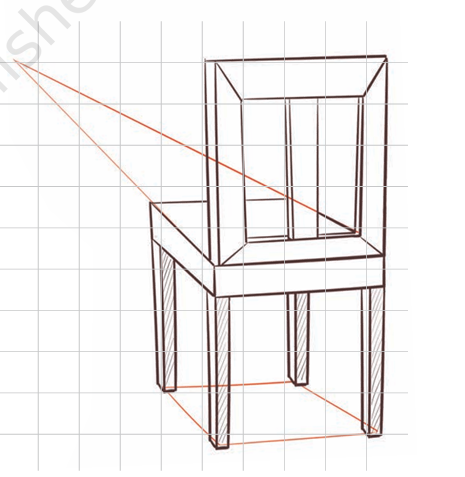
What are the different types of furniture you see in school and at home? Observe and draw any two or three furniture objects. Compare your drawings with the actual objects.
Compare the straight lines, angles and shapes you drew with straight lines, angles and shapes in the object.
Edit your drawings so that they convey dimension and depth around the object. This is called perspective. It gives us a feeling of three-dimensional space as though we are seeing it in front of us. In small groups, look at the work of your peers and analyse whose work has perspective.
Identify the lines, shapes and forms that are helping in showing the perspective.
Continue: Observe and draw objects that are a part of buildings — doors, windows, pipes, taps, shutters, fans and lights.
Conclusion
Objects and Still Life play an important role in visual arts by helping artists develop observation, creativity, and technical skills. Through the careful study and artistic representation of everyday objects, students learn about shape, form, texture, color, light, and composition. Still life artworks encourage patience, attention to detail, and personal expression while transforming ordinary objects into meaningful visual experiences. By exploring objects from their surroundings and creating still life compositions, learners gain a deeper appreciation for art and the beauty found in everyday life. Visual arts continue to inspire imagination, communication, and creativity, making them an essential part of artistic and cultural development.