
INTRODUCTION
Art forms do not always exist separately. Visual arts, music, dance, theatre, literature, and crafts can come together to create a rich and meaningful artistic experience. When different forms of art are combined, each one adds something special to the others.
A sculpture, for example, is usually a three-dimensional artwork that can be observed from different angles. But what if we imagine that a sculpture could come alive? Its form, pose, expression, costume, and gestures could inspire a dance performance or theatrical presentation. Music and sound effects could create an atmosphere around it, while storytelling could give the sculpture a character, history, or emotion.
Artists can also use lighting, costumes, props, painted backgrounds, and movement to transform a sculpture into part of a larger performance. A sculpture of a dancer might inspire students to recreate its pose through movement. A sculpture representing a musician could become the starting point for a musical performance. Similarly, a historical or mythological sculpture could inspire a short play supported by dialogue, music, and dance.
This integration encourages us to look at artworks in new ways. Instead of seeing a sculpture only as a still object, we can imagine the story, movement, sounds, emotions, and ideas connected with it.
Activity: Bring a Sculpture to Life
Choose a sculpture or statue from your surroundings, textbook, museum, or a historical site. Observe its pose, gestures, expression, clothing, objects, and overall form. Then work in groups to create a short presentation inspired by it using two or more art forms, such as dance, music, theatre, storytelling, visual art, or craft.
Through this activity, discover how different art forms can work together to turn a still sculpture into a lively artistic experience.
When All Art Forms Come Together
Art is a powerful language that can speak directly to our minds and hearts. A beautiful painting, a moving dance performance, a piece of music, or a play can make us feel emotions that are sometimes difficult to express in words. Each art form has its own way of communicating ideas, experiences, and feelings.
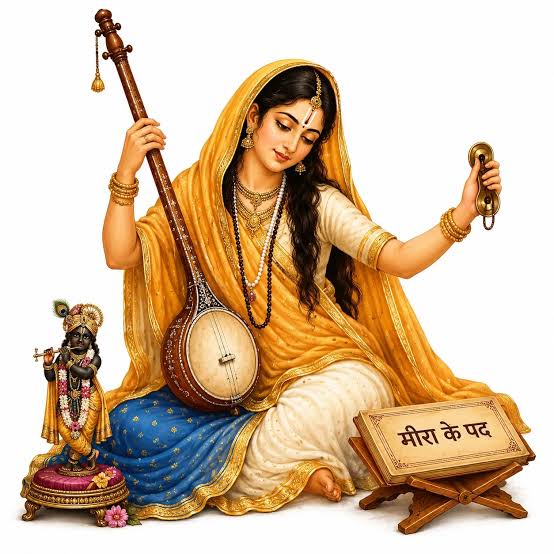
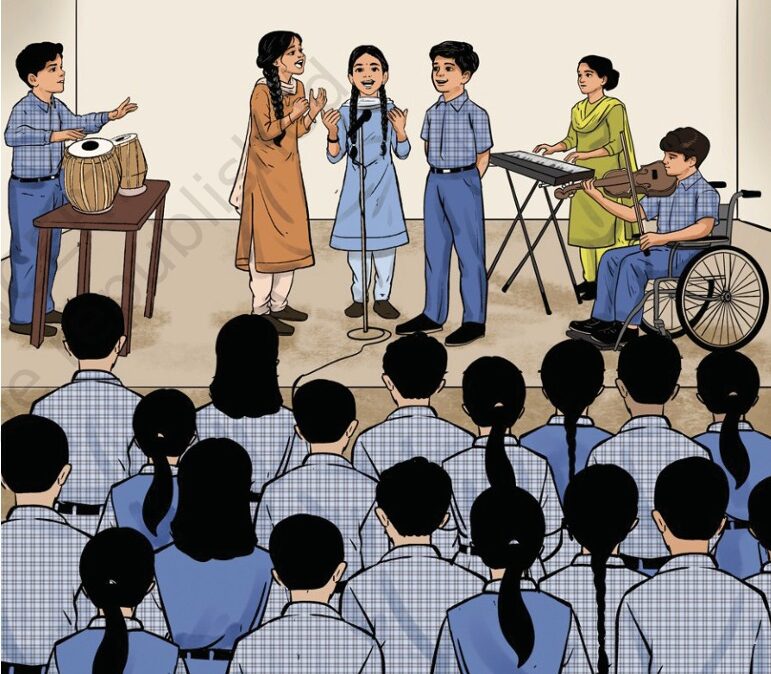
Now, imagine bringing all the art forms you have explored together. Visual art, music, dance, theatre, literature, and crafts can work together to create a unique and memorable experience. A story can be expressed through words, brought to life through acting and dance, supported by music, and enriched with costumes, props, paintings, or sculptures.
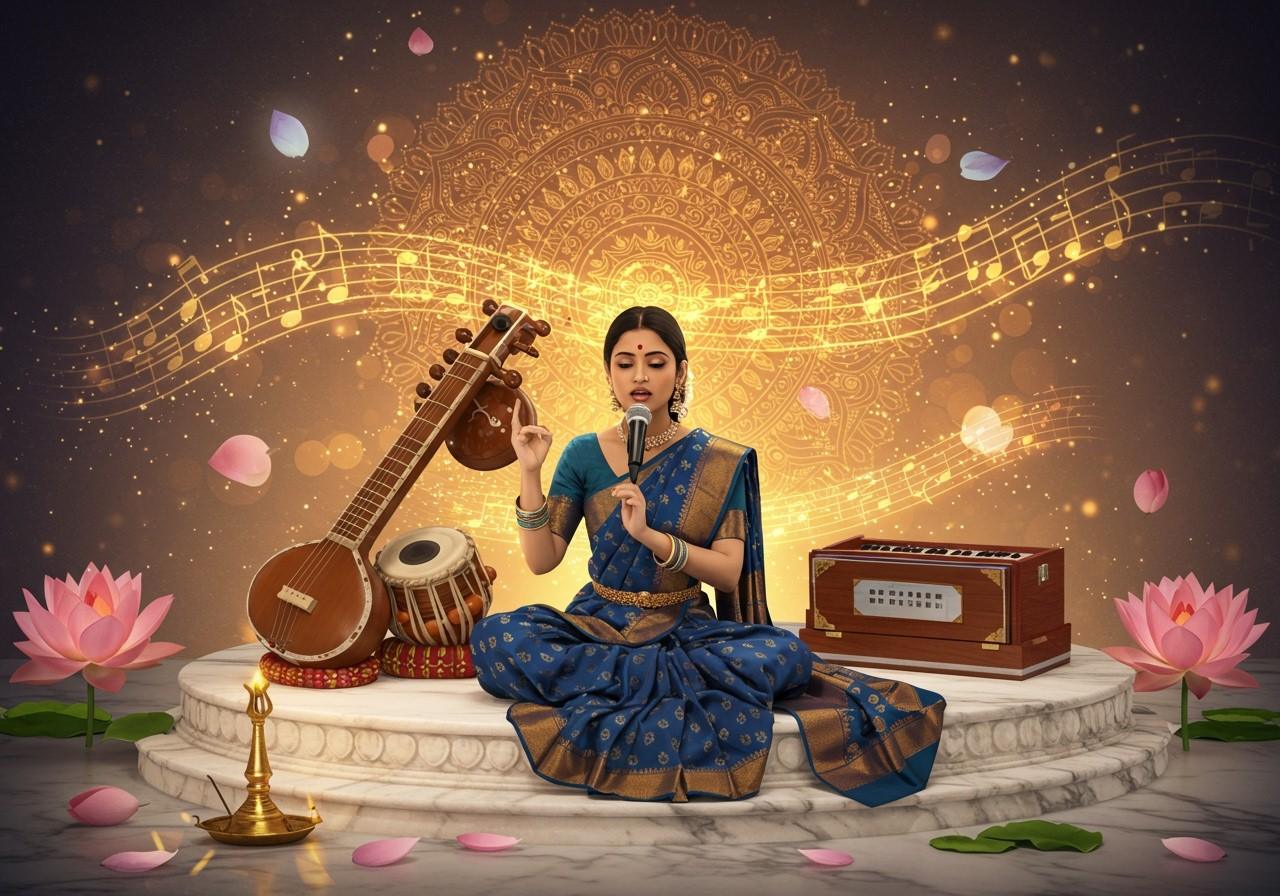
When different art forms come together, they do not lose their individual identities. Instead, they complement one another. Music can create a mood, dance can show movement and emotion, visual art can create the setting, and theatre can bring characters and stories to life.
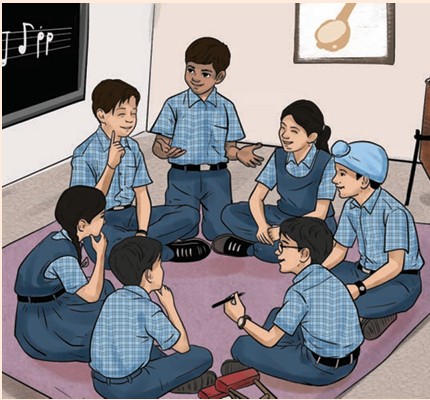
In this section, you will explore how different forms of art can be combined creatively. You will have an opportunity to observe, imagine, experiment, collaborate, and create. Work with your classmates and discover how the different art forms you have learned can come together to tell a story and create one shared artistic experience.
ACTIVITY 20.1: STORIES IN STONE
INTRODUCTION
Stories in Stone refers to the art of telling stories through sculptures and stone carvings. Since ancient times, artists have used stone to represent gods, people, animals, dancers, warriors, and scenes from everyday life. These sculptures often show important stories, beliefs, traditions, and events of a community. The expressions, poses, clothing, ornaments, and objects carved into stone can provide clues about the people and culture of a particular period. Temples, monuments, caves, and historical sites contain many such examples. By observing these artworks, we can learn about the past and understand how artists used stone to preserve history, culture, and imagination.
The objective of this activity is to inspire creativity and collaboration by using ancient sculptures as a starting point to build a story, and then bringing it to life through performance with music, movement and dialogue.
1. Preparation
Look carefully at the sculptures and stone carvings shown throughout the four sections of this book. Observe their shapes, poses, expressions, clothing, ornaments, and other details. Notice how artists have used stone and other materials to represent people, animals, gods, dancers, warriors, and scenes from everyday life.
You can also collect or find more pictures of sculptures from your surroundings or places you have visited. These may include sculptures found in temples, monuments, museums, public spaces, historical sites, or other cultural places. If you have photographs from your travels, you can bring them to the classroom and share them with your classmates.
You can also discuss the activity with your Social Science teacher and ask for additional pictures of sculptures that may help you develop your story.
Use these images as inspiration to imagine characters, movements, scenes, and stories. Think about how a still sculpture could be brought to life through dance, theatre, music, storytelling, or other art forms.
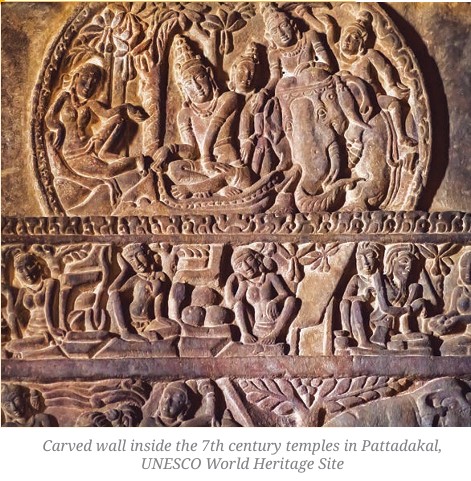
Carved wall inside the 7th century temples in Pattadakal, UNESCO World Heritage Site
The carved walls of the temples at Pattadakal, Karnataka, are outstanding examples of India’s early medieval stone-carving tradition. Pattadakal developed as an important centre of temple architecture under the Early Chalukyas, particularly during the 7th and 8th centuries CE. The monument complex combines architectural traditions from northern and southern India and was inscribed as a UNESCO World Heritage Site in 1987.
The temple walls, pillars, doorways, and other architectural surfaces are decorated with carefully carved figures and ornamental designs. Sculptors represented deities, mythological scenes, human figures, dancers, musicians, animals, and decorative motifs. These carvings are not merely decorations; they provide visual clues about the religious beliefs, artistic practices, clothing, ornaments, and cultural life of the period.
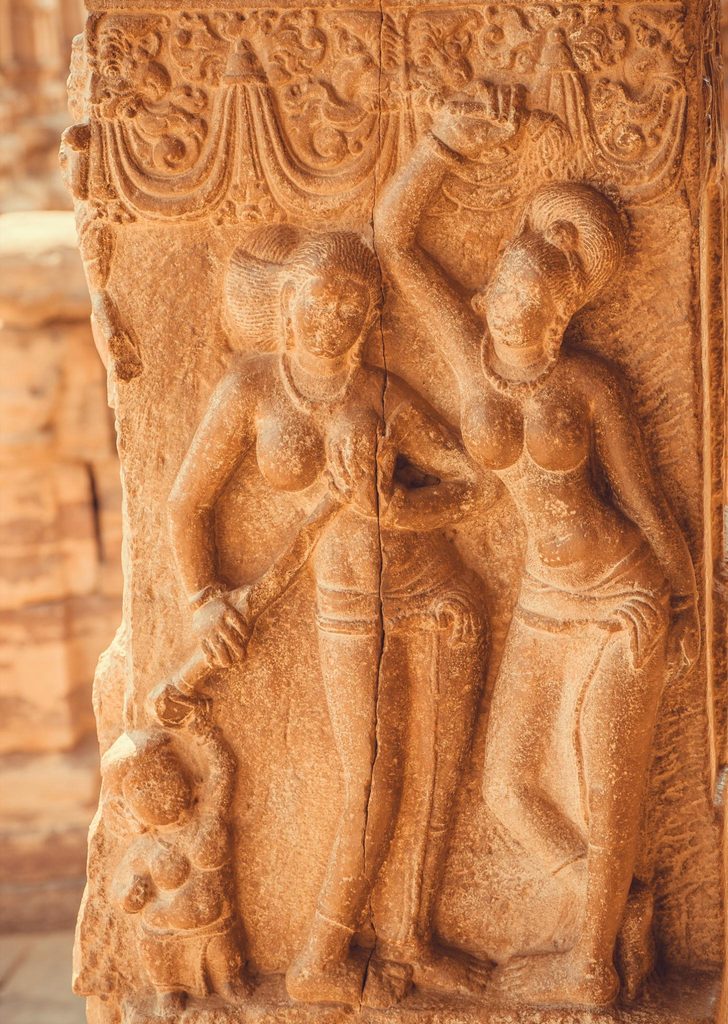
The Virupaksha Temple, built around 740 CE, is one of the most important monuments at Pattadakal. It was commissioned by Queen Lokamahadevi to commemorate her husband’s military victory in the south.
For the theme “Stories in Stone,” Pattadakal is an excellent example of how artists used stone to communicate ideas and narratives. The carved figures appear frozen in stone, yet their gestures, poses, expressions, and actions can help us imagine the stories and performances they represent.
These sculptures also show the remarkable patience, skill, observation, and craftsmanship of the artisans who transformed solid stone into detailed works of art.
2. Story Creation
Story creation is the process of developing a story by combining characters, setting, events, emotions, dialogue, and imagination. A story can begin with a simple idea, picture, sculpture, sound, movement, or personal experience. When different art forms come together, they can provide many interesting ways to create and present a story.
A sculpture, for example, can inspire us to imagine who the character is, where they are, what they are doing, and what might happen next. Dance and movement can show the actions and emotions of the characters, while music and sound can create the mood of different scenes. Visual art, costumes, props, and stage design can help create the setting. Dialogue and narration can connect the different parts of the story.
Story creation encourages imagination, observation, collaboration, communication, and creativity. It also helps us understand how different art forms can work together to tell a meaningful story.
- Make small groups (4 – 6 students).
- Each group carefully examines the sculptures, and imagine the lives, emotions and actions of the figures depicted.
- With help from your teacher, create a story that connects the sculptures in a meaningful way. For example:
- A heroic adventure of a warrior statue.
- A festival scene featuring dancers and musicians.
- A divine story featuring gods and mythical creatures.
- A simple tale from the life of common people.
- Arrange the pictures in the order of how the story progresses, so it makes sense when you look at it (almost like a comic strip but with sculptures!). Make it as creative and unique as possible.
The following eight examples are important stories told through stone sculptures and carvings:
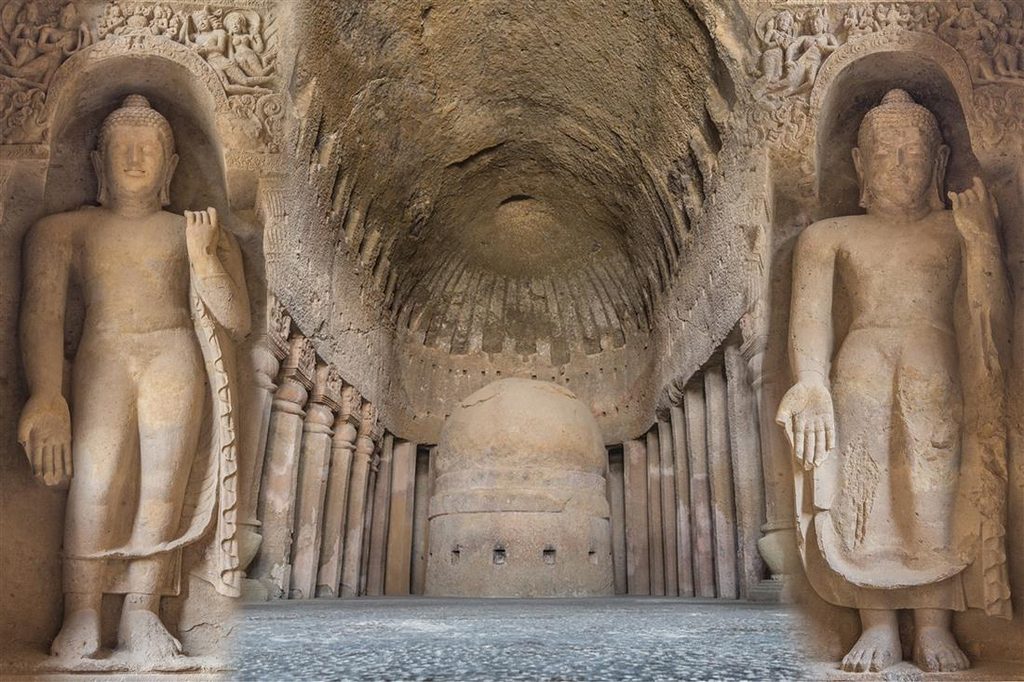
i.) Rock cut Buddha era cave in Mumbai
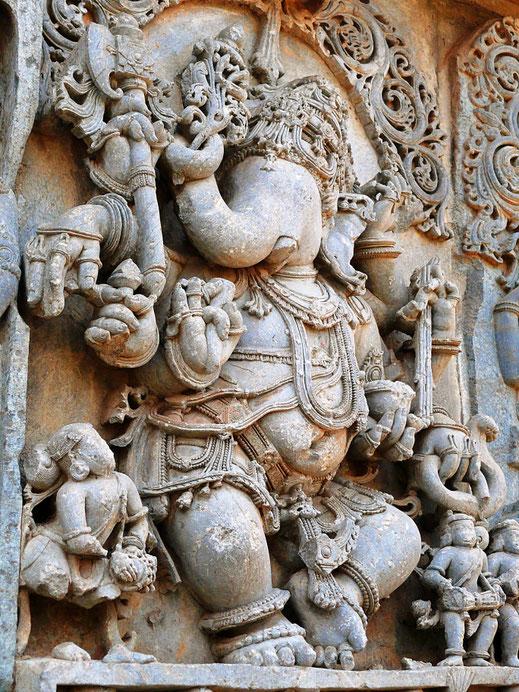
ii.) Ganesh sculpture, 12th century, Halebidu
iii.) Mahabalipuram, Tamil Nadu
iv.) Vijayanagara Empire, Hampi, Karnataka
v.) Chola Temples at Darasuram, Tamil Nadu
vi.) Temple wall, South India
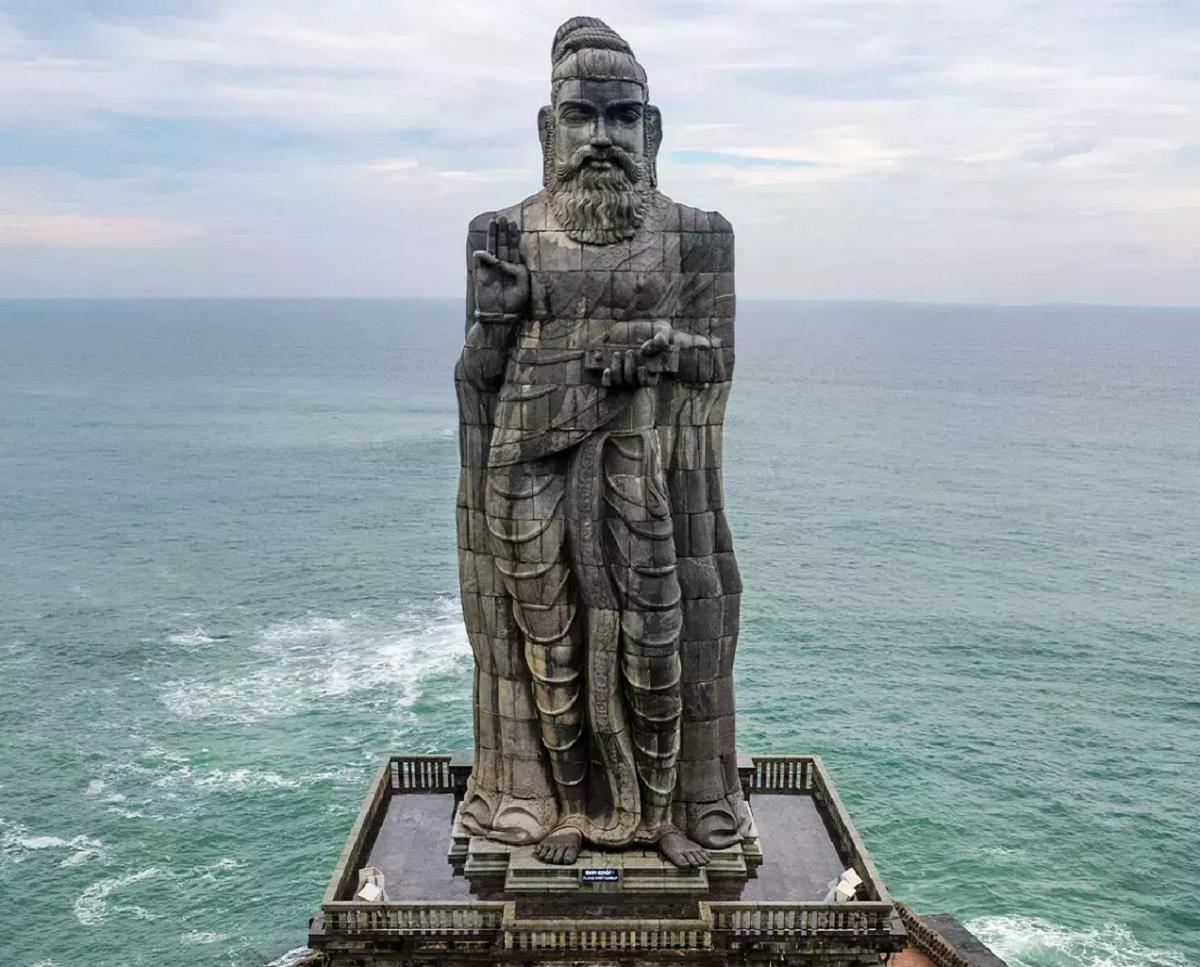
vii.) Thilluvaluvar, Sculpture of Kanyakumari
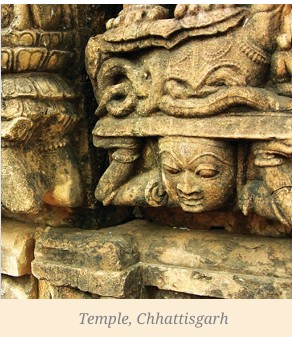
viii.) Temple, Chhattisgarh
Following eight details:-
i.) Rock cut Buddha era cave in Mumbai :-
The rock-cut Buddhist caves of Mumbai, particularly the Kanheri Caves, are important examples of India’s ancient rock-cut architecture and sculpture. Located within the Sanjay Gandhi National Park, the caves were developed over several centuries, beginning around the 1st century BCE and continuing into the later centuries.
The caves contain Buddha images, stupas, pillars, inscriptions, and carved architectural details. Sculptures of the Buddha and Bodhisattvas represent important ideas and stories
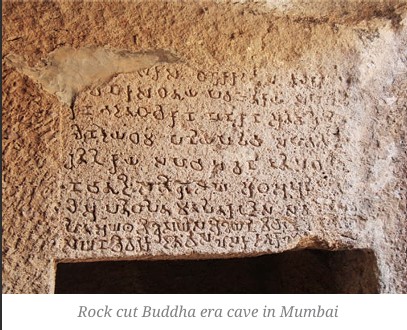
associated with Buddhism. The figures, postures, and symbols provide clues about the religious and artistic practices of the people who created and used these spaces.
What makes these caves especially interesting is that the artists carved the architecture directly into the natural rock. Instead of constructing a building from separate blocks, they carefully removed stone to create halls, chambers, pillars, and sculptural forms.
For “Stories in Stone,” the Kanheri Caves show how stone can preserve religious beliefs, artistic traditions, historical information, and human creativity. They allow us to imagine the communities that lived, studied, worshipped, and travelled through this ancient centre.
ii.) Ganesh sculpture, 12th century, Halebidu
The Ganesha sculptures at Halebidu, Karnataka, are fine examples of the detailed stone carving of the Hoysala period. The Hoysaleshvara Temple, built around the 12th century, is famous for its richly carved walls and numerous images of Hindu deities, dancers, musicians, animals, and scenes from mythology.
Ganesha is shown in different forms, including standing and dancing poses. The sculptures have carefully carved ornaments, crowns, jewellery, clothing, and multiple arms holding symbolic objects. The surrounding floral patterns and smaller figures add to the richness of the composition.
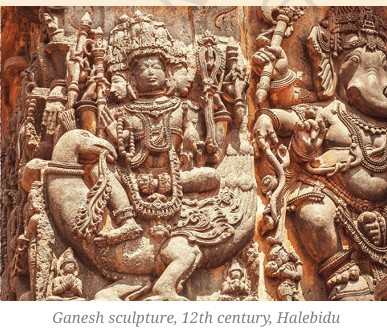
The sculptures were carved from soapstone (schist), which allowed artisans to create fine details and deep relief. The dynamic poses give the stone figures a sense of movement and life.
For “Stories in Stone,” the Ganesha sculpture shows how an artist can use pose, gesture, expression, ornament, and movement to communicate an idea through a still stone figure. It can inspire students to imagine the character, movement, music, and story behind the sculpture.
iii.) Mahabalipuram, Tamil Nadu
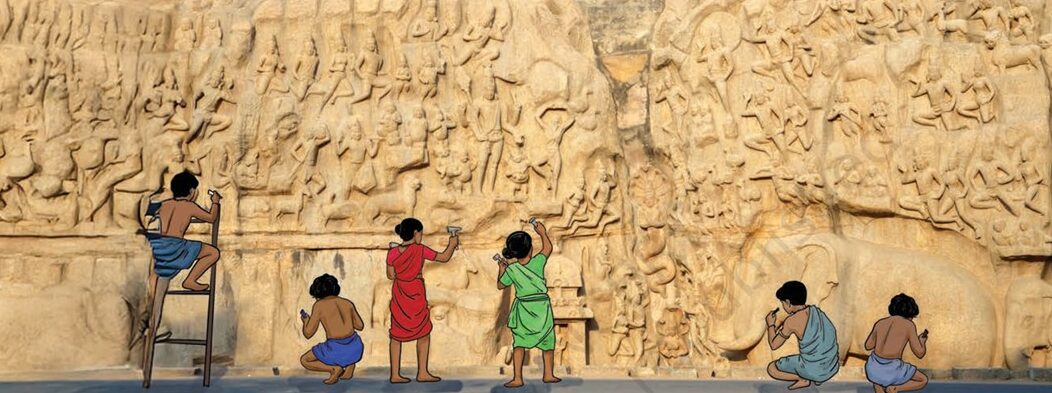
Mahabalipuram, also known as Mamallapuram, in Tamil Nadu is famous for its remarkable rock-cut temples, monolithic shrines, sculptures, and large open-air reliefs. These monuments were created mainly under the Pallava rulers during the 7th and 8th centuries. The Group of Monuments at Mahabalipuram has been a UNESCO World Heritage Site since 1984.
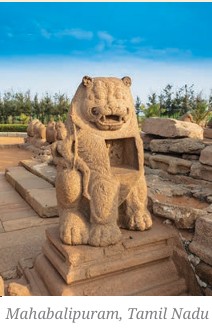
One of its most famous artworks is the huge rock relief known as “Descent of the Ganges” or “Arjuna’s Penance.” The relief contains numerous carved figures, including gods, sages, celestial beings, humans, and animals. The figures are arranged across the natural rock surface to create a lively scene that tells a mythological story.
Mahabalipuram also has the famous Pancha Rathas, rock-cut cave temples, and the Shore Temple. The sculptures show graceful human figures, deities, animals, and decorative designs. The artists made use of the natural rock itself, transforming large stones and rock faces into detailed works of art.
For “Stories in Stone,” Mahabalipuram is an excellent example of how a story can be communicated through figures, gestures, poses, animals, and carefully arranged scenes. The sculptures invite us to observe the details and imagine the stories, beliefs, and cultural life represented in stone.
iv.) Vijayanagara Empire, Hampi, Karnataka
Hampi, in Karnataka, was the capital of the Vijayanagara Empire and is renowned for its magnificent temples, monuments, sculptures, and stone carvings. The city flourished particularly during the 14th to 16th centuries and became an important centre of art, architecture, trade, and culture. The Group of Monuments at Hampi is a UNESCO World Heritage Site.
The temples and monuments at Hampi contain detailed carvings of deities, dancers, musicians, animals, warriors, mythical creatures, and scenes from Hindu epics and everyday life. These figures are carefully arranged on pillars, walls, gateways, and other architectural surfaces.
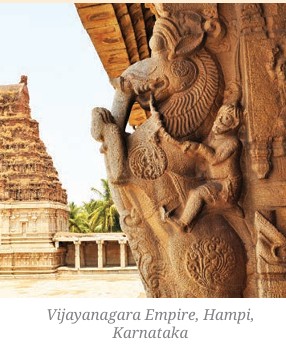
The Hazara Rama Temple is especially known for its narrative reliefs depicting scenes associated with the Ramayana. The Vittala Temple is famous for its richly carved pillars and architectural details. Such works demonstrate the ability of Vijayanagara artists to transform hard stone into expressive figures and lively scenes.
For “Stories in Stone,” Hampi provides an excellent example of how sculptures and carvings can communicate myths, history, cultural practices, music, dance, and everyday life. The poses, gestures, costumes, and expressions of the carved figures allow viewers to imagine the stories and activities represented in stone.
v.) Chola Temples at Darasuram, Tamil Nadu
The Airavatesvara Temple at Darasuram, Tamil Nadu, is a remarkable example of Chola architecture and stone sculpture. It was built in the 12th century by Chola King Rajaraja II and is one of the three temples that together form the Great Living Chola Temples, a UNESCO World Heritage Site.
The temple is known for its richly carved stone surfaces. Sculptures and reliefs show deities, dancers, musicians, animals, mythical figures, and decorative patterns. The artists paid great attention to details such as facial expressions, jewellery, clothing, poses, and gestures. These details make the figures appear lively even though they are carved from stone.
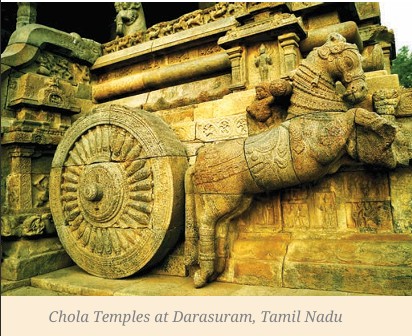
The temple’s sculptural decoration also reflects the close relationship between sculpture, dance, music, and religious traditions in Chola culture. The carvings can therefore be viewed as visual records of artistic practices and cultural ideas of the period. UNESCO notes that the Great Living Chola Temples demonstrate outstanding achievements in architecture, sculpture, painting, and bronze casting.
For “Stories in Stone,” Darasuram shows how stone carvings can communicate mythology, movement, music, devotion, and cultural life. By observing the gestures and poses of the carved figures, we can imagine the stories and performances that inspired them.
vi.) Temple wall, South India
Temple walls in South India are richly decorated with sculptures and stone carvings that reflect the region’s long artistic and religious traditions. Artists carved deities, mythological characters, dancers, musicians, animals, floral patterns, and scenes from everyday life onto walls, pillars, gateways, and other parts of temples.
Many of these carvings are connected with stories from Indian epics, Puranic traditions, and local legends. Figures are often shown with carefully designed poses, gestures, ornaments, clothing, and expressions. These details make the stone figures appear lively and help viewers understand the stories and ideas represented by them.
The temple wall can therefore be viewed as a visual storytelling surface. Instead of using written words alone, artists communicated stories through the arrangement of figures and their actions. Dancers and musicians carved in stone can also provide insights into the importance of performance traditions in South Indian culture.
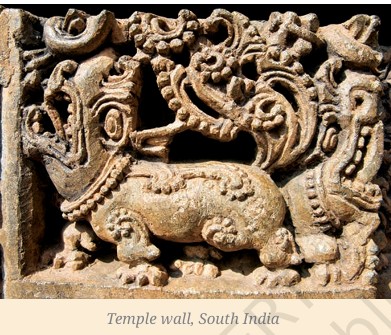
For “Stories in Stone,” these temple carvings demonstrate how artists transformed architectural surfaces into detailed visual narratives. They preserve aspects of history, mythology, culture, craftsmanship, and artistic expression, allowing later generations to observe and interpret the stories carved by earlier artists.
vii.) Thilluvaluvar, Sculpture of Kanyakumari
The Thiruvalluvar Statue at Kanyakumari, Tamil Nadu, is a magnificent stone sculpture dedicated to Thiruvalluvar, the celebrated Tamil poet and philosopher and the author of the Tirukkural. The statue stands on a rocky island near the meeting point of the seas and has become an important symbol of Tamil literature and cultural heritage.
The monument is 133 feet high, representing the 133 chapters of the Tirukkural. The statue itself is 95 feet high and stands on a 38-foot pedestal. The monument was completed in 1999 and inaugurated on 1 January 2000. It was designed by the Indian sculptor V. Ganapathi Sthapathi, with about 500 sculptors involved in its construction.
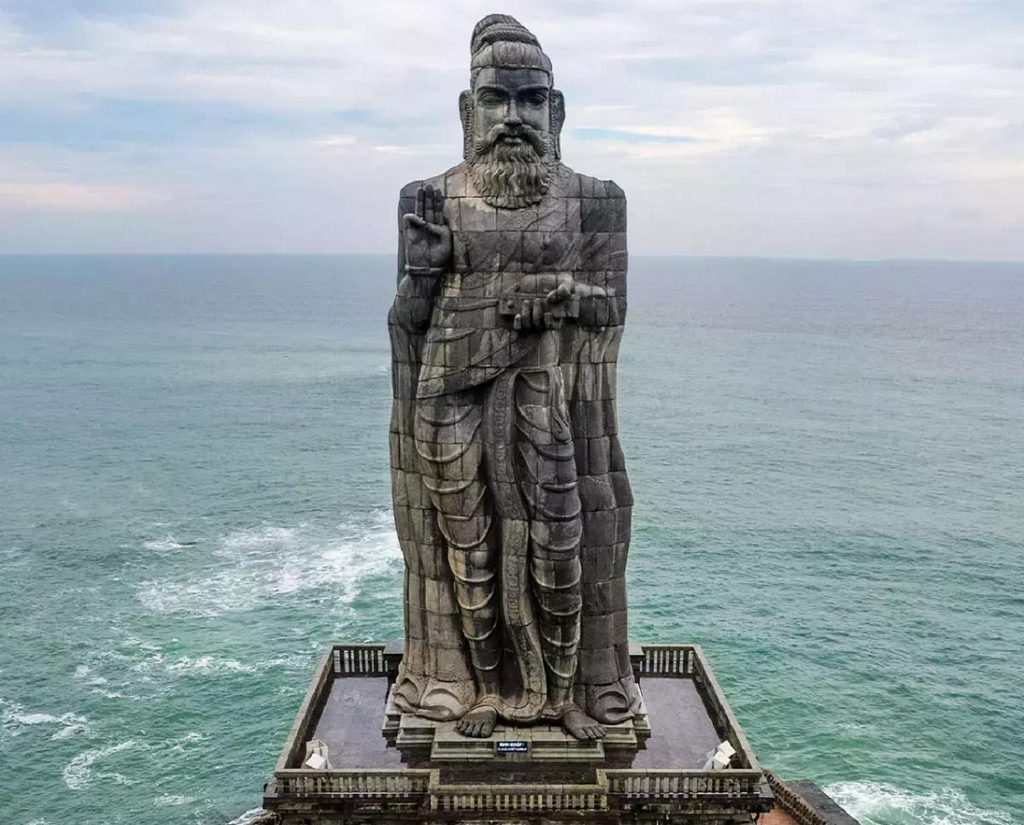
The sculpture presents Thiruvalluvar in a dignified standing posture. Its carefully carved form, clothing, facial features, and gestures give the figure a strong and expressive appearance. The height and location of the statue make it visually impressive against the sea and sky.
For Stories in Stone, the Thiruvalluvar Statue shows how sculpture can represent not only a person but also literature, wisdom, ideas, and cultural identity. It reminds us that a stone sculpture can carry the memory and teachings of an important literary figure for generations.
viii.) Temple, Chhattisgarh
The temples of Chhattisgarh are known for their beautiful stone architecture and detailed sculptures. Among them, the Bhoramdeo Temple is a well-known example of the region’s rich sculptural tradition. The temple is dedicated to Lord Shiva and is located in Kabirdham district. Its exterior walls are decorated with finely carved figures of deities, dancers, musicians, animals, attendants, and other decorative forms.
The sculptures show careful attention to postures, gestures, ornaments, clothing, and movement. Some figures appear to dance or play musical instruments, giving the stone carvings a sense of life and movement. These details help us understand the artistic traditions and cultural life of the period.
For Stories in Stone, the temple shows how artists can use stone to communicate stories, beliefs, characters, movement, and cultural traditions. By looking closely at the figures, students can imagine the scenes, characters, and actions represented by the sculptor. The carvings also demonstrate how architecture and sculpture can work together to create a rich visual experience.
3. Incorporating Art Forms
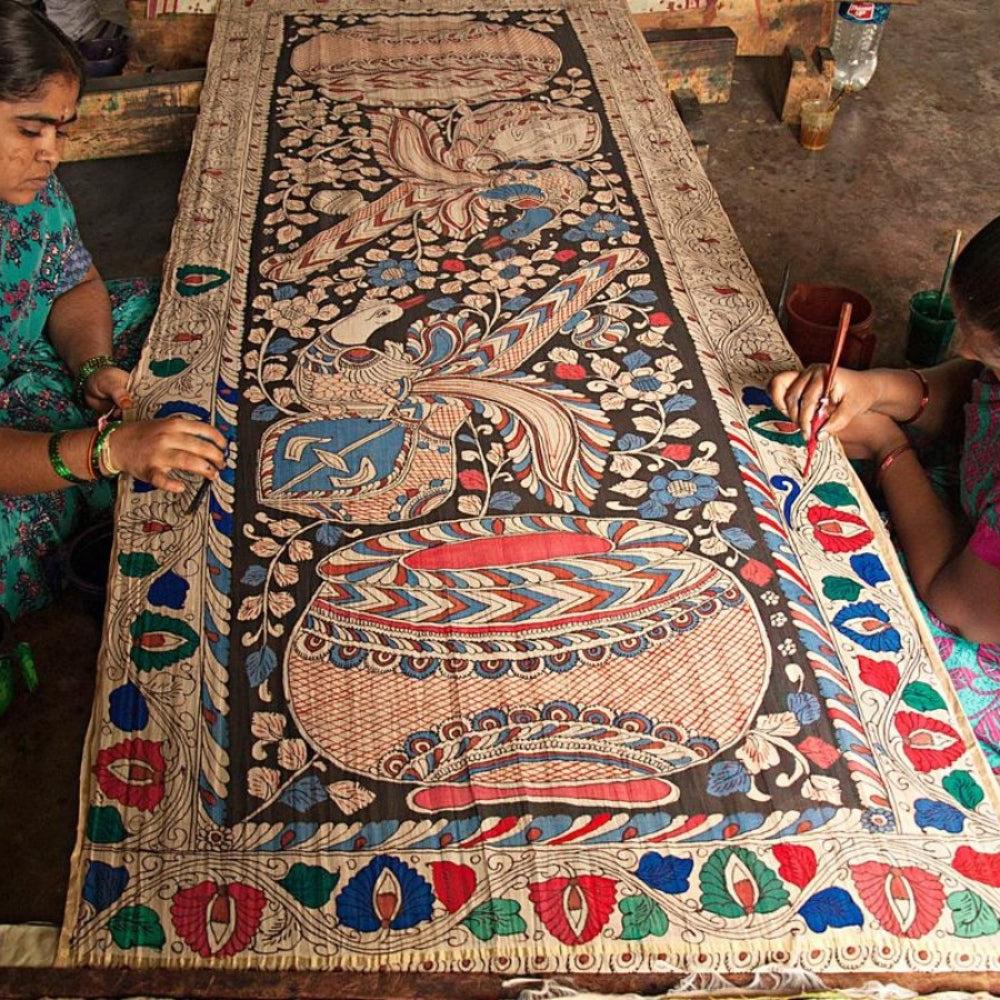
- Visual art — Imagine the parts of the story which don’t have pictures and make your own drawings to connect and express the story. Recall the familiar visual storytelling traditions that you have learnt about in this book like Phad or Patachitra. Take inspiration from these and create your own visual narrative. Think about the variety of materials and techniques you can use to express your story.
- Movement — Include dance or body movements and gestures to represent the hastas and postures of the sculptures.
- Dialogue — Write short dialogues or monologues for the characters inspired by the expressions or postures in the sculptures. This should help in taking the story forward.
- Music/Songs — Add traditional music or create simple songs that fit the story. You can clap, hum or use available instruments to create rhythm.
- Folk storytelling — Try incorporating one of the styles of storytelling that you have studied in this book, like Phad storytelling or Harikathe or any other local form that you have seen.
Some following :-
i.) Gangaikondacholisvaram Temple, Gangaikonda Cholapuram
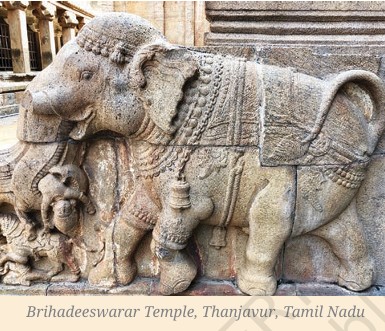
ii.) Brihadeeswarar Temple, Thanjavur, Tamil Nadu
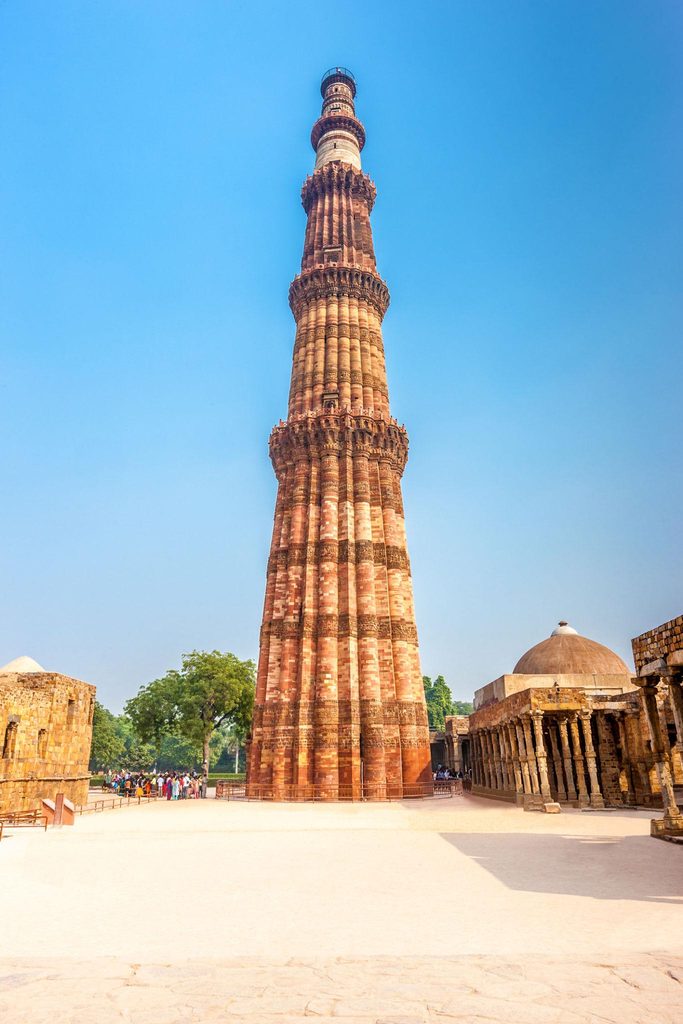
iii.) Qutub Minar, New Delhi
iv.) Sanchi, Buddhist Stupa, Madhya Pradesh
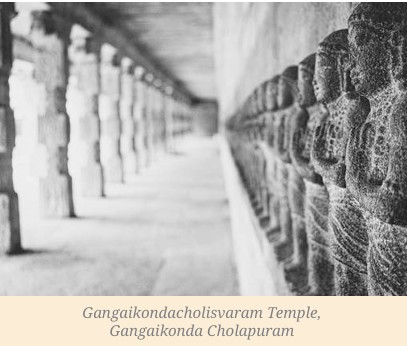
i.) Gangaikondacholisvaram Temple, Gangaikonda Cholapuram
The Gangaikondacholisvaram Temple, located at Gangaikonda Cholapuram in Tamil Nadu, is a magnificent example of Chola architecture and stone sculpture. The temple was built by Rajendra Chola I and completed around 1035 CE. It is one of the three temples that form the Great Living Chola Temples, a UNESCO World Heritage Site.
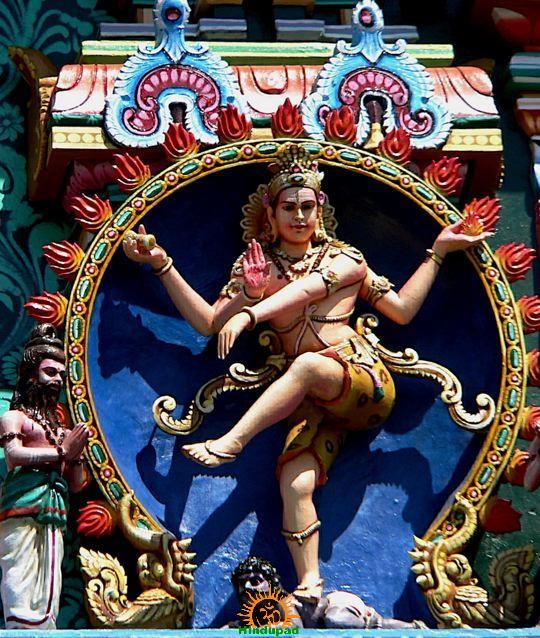
The temple is dedicated to Lord Shiva and is famous for its beautifully carved stone sculptures. The walls and entrances feature figures of deities, guardians, dancers, and other artistic forms. Sculptures such as Nataraja show graceful poses and movement, while other figures display carefully carved ornaments, clothing, facial expressions, and gestures.
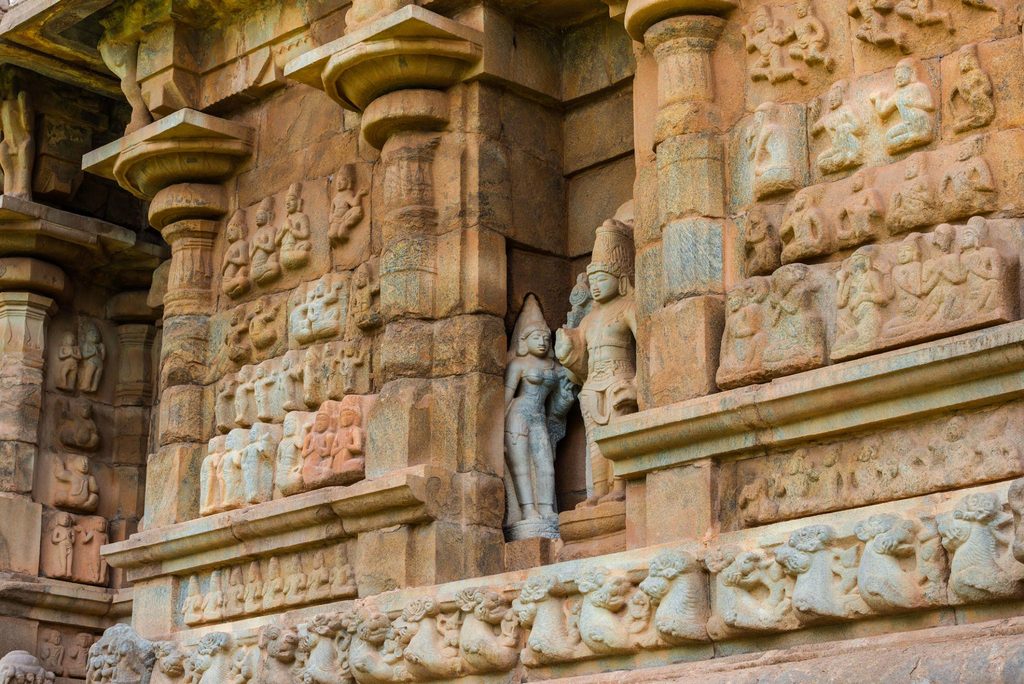
The temple is especially important for Stories in Stone because its sculptures communicate ideas and traditions through visual forms. A figure’s pose, gesture, expression, and surrounding characters can help viewers imagine a story or scene. The detailed carvings also show the high level of skill achieved by Chola artists in working with stone. UNESCO describes the temple as having sculptures of exceptional quality.
The temple also shows how architecture, sculpture, religion, and cultural traditions can come together in one artwork. By observing these carvings, students can imagine how a still stone figure can inspire movement, music, dance, or storytelling.
ii.) Brihadeeswarar Temple, Thanjavur, Tamil Nadu
The Brihadeeswarar Temple, also known as the Brihadisvara Temple, is a magnificent example of Chola architecture and stone sculpture in Thanjavur, Tamil Nadu. It was built by Rajaraja Chola I and consecrated around 1010 CE. The temple is dedicated to Lord Shiva and is one of the three Great Living Chola Temples, recognised as a UNESCO World Heritage Site.
The temple is famous for its grand Dravidian architecture, tall vimana, detailed stone carvings, paintings, and sculptures. The walls and architectural surfaces contain figures of Shiva and other deities, along with decorative designs. The temple also has 81 carved representations of karanas, or dance poses described in the Natyashastra. These carvings create an important connection between sculpture and dance.
The sculptures show careful attention to posture, gestures, ornaments, clothing, and movement. When we look closely at these figures, we can imagine the actions and stories that inspired the artists. The combination of architecture, sculpture, painting, dance, and religious traditions makes the temple an excellent example of the integration of different art forms.
For Stories in Stone, Brihadeeswarar Temple demonstrates how stone can preserve stories, beliefs, artistic traditions, and cultural knowledge. Its sculptures allow us to see how Chola artists transformed stone into expressive figures and meaningful visual narratives.
iii.) Qutub Minar, New Delhi
The Qutub Minar in New Delhi is one of India’s most famous examples of early Indo-Islamic architecture and stone craftsmanship. Built mainly in the early 13th century, the red sandstone tower rises to about 72.5 metres and forms the central monument of the Qutb complex. The site was declared a UNESCO World Heritage Site in 1993.
The tower is decorated with beautifully carved bands of inscriptions, geometric patterns, floral designs, and ornamental details. Arabic and Nagari inscriptions appear at different places on the monument and provide information about its history. Its projecting balconies and carefully carved stone brackets add to its architectural beauty.
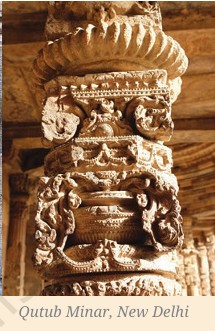
The Qutub Minar is particularly interesting for the theme Stories in Stone because its stone surfaces preserve information through writing, patterns, shapes, and architectural decoration. The carved inscriptions act almost like a historical record, while the ornamental designs show the skill and creativity of medieval craftsmen.
By observing the Qutub Minar, students can understand how stone can communicate history, culture, architecture, and artistic ideas. It also provides an excellent example of how calligraphy and architecture can come together to create a powerful visual work of art.
iv.) Sanchi, Buddhist Stupa, Madhya Pradesh
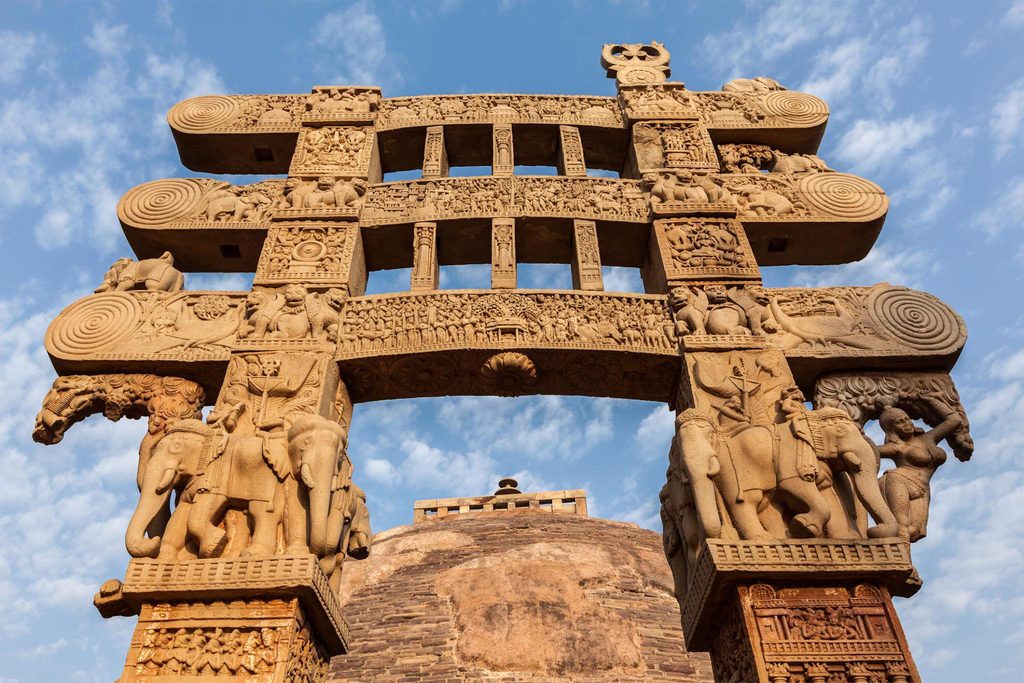
The Great Stupa at Sanchi, in Madhya Pradesh, is one of the finest examples of early Buddhist architecture and stone carving in India. Its origins date to the 3rd century BCE, during the reign of Emperor Ashoka. The monument was enlarged and decorated over several centuries, with its famous stone gateways and railings added later. The Buddhist Monuments at Sanchi are recognised as a UNESCO World Heritage Site.
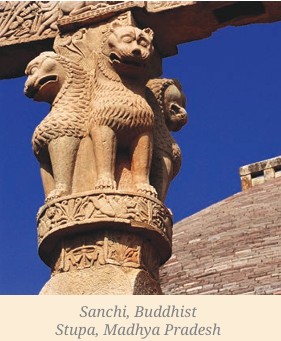
The four beautifully carved toranas, or gateways, are especially important. Their stone reliefs show Jataka stories, scenes connected with the life of the Buddha, animals, plants, people, and symbolic forms. In the early Buddhist tradition at Sanchi, the Buddha was often represented through symbols rather than a human figure. For example, the lotus, Bodhi tree, wheel, footprints, and stupa could represent important events or teachings.
The carvings are full of movement and detail. Elephants, horses, lions, dancers, musicians, worshippers, and other figures are arranged within the narrative scenes. These reliefs show how artists used stone, gestures, symbols, and composition to tell stories without written sentences.
For Stories in Stone, Sanchi is an excellent example of how sculpture can preserve religious stories, cultural traditions, beliefs, and historical memories. By observing the gateways carefully, students can imagine the characters, actions, and stories represented by the ancient artists.
4. Rehearsal and Practice
- Each group is given time to rehearse their story, incorporating movement, music and dialogue.
- You can be creative by adding interesting parts to the story, but remember to keep the story clear and focused.
5. Presentation and reflection
- Each group performs their story for the class. The audience (the rest of the class that is watching) can discuss how the sculptures inspired the characters, movements and actions.
- After the performances, facilitate a discussion:
- What stories did the sculptures inspire?
- How did music, movement and dialogue enhance the story?
- What emotions or messages did the sculptures convey through the performance?
OUTCOME
This activity helps students connect with India’s rich heritage of temple art while encouraging teamwork, storytelling and creativity. By integrating music, movement and dialogue, they learn to bring history to life in an engaging and imaginative way.
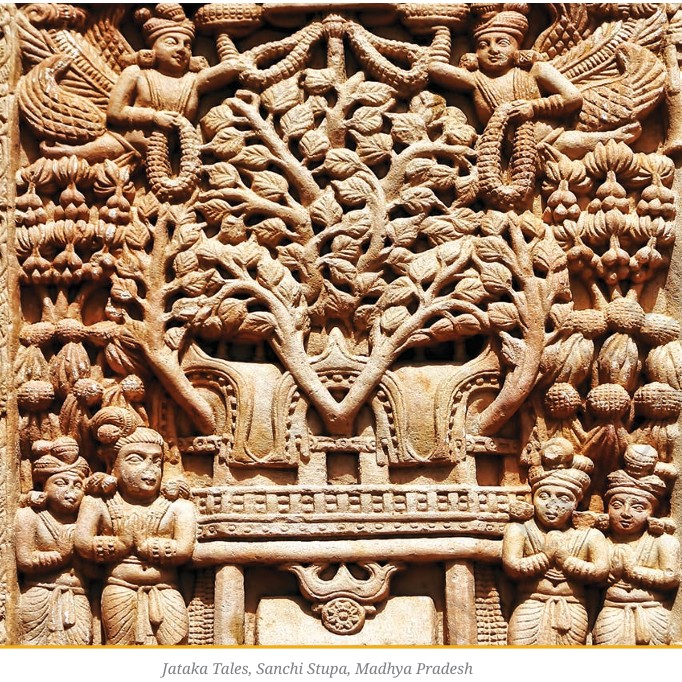
Jataka Tales, Sanchi Stupa, Madhya Pradesh
The Jataka Tales are stories about the previous births of the Buddha, in which he is shown in different forms, including as animals, kings, and other beings. These stories teach values such as kindness, compassion, wisdom, courage, generosity, and selflessness.
The beautifully carved stone gateways (toranas) of the Sanchi Stupa contain many scenes associated with Jataka stories. The artists represented these stories through people, animals, trees, buildings, symbols, and different actions. Instead of using written descriptions, they arranged figures and scenes in a way that allowed viewers to understand or imagine the story.
Animals play an important role in many of the carvings. Elephants, horses, deer, monkeys, lions, and other animals are shown in lively poses. Human figures are also depicted through gestures, clothing, activities, and expressions. These details make the stone reliefs appear full of movement and life.
For Stories in Stone, the Jataka carvings at Sanchi are an excellent example of visual storytelling. They show how ancient artists used stone to preserve stories, moral values, beliefs, and cultural traditions. By carefully observing a carving, we can identify characters, actions, symbols, and settings and imagine the story being represented.
Caption: Jataka Tales depicted through richly carved stone reliefs on the gateways of Sanchi Stupa, Madhya Pradesh.
Conclusion
Integration of All Art Forms helps us understand that art becomes even more meaningful when different forms work together. A sculpture can inspire a story, a dance, a musical performance, or a dramatic scene. Visual art, music, dance, theatre, literature, and crafts can come together to create a rich and memorable experience.
By observing the posture, gestures, expressions, clothing, and details of a sculpture, we can imagine its character and story. Music can create the mood, dance can bring movement, theatre can give the character a voice, and costumes and props can make the scene more lively.
When we combine different art forms, we develop imagination, creativity, teamwork, observation, and communication skills. Most importantly, we learn to look at artworks in new ways and discover that even a still sculpture can inspire movement, emotion, sound, and stories.
Sculptures may be made of stone, metal, or other materials, but through our imagination and creativity, we can make them truly come alive.