
Introduction
Backstage Work is the essential support system behind every successful theatre performance. While the audience watches actors performing on stage, many people work behind the scenes to manage costumes, props, sets, lighting, sound, makeup, stage changes, and technical operations.
These backstage artists and technicians may remain unseen, but their contribution is fundamental to bringing a theatrical production to life.
Theatre Performance = Onstage Performance + Backstage Support
I. BACKSTAGE WORK — THE INVISIBLE PILLAR OF THEATRE
i.} A tree in full bloom with flowers and fruits is such a beautiful sight to watch! But what is the source of its beauty? Its strong and healthy roots.

ii.} A beautifully constructed ancient temple that tells us many stories of the past, is a matter of pride. What is its strength?
Its strong and deep underground foundation.

Q. } What do you understand from these examples?
Anything that is interesting, meaningful and successful to the people, needs a strong support system.
Q. what is backstage? Is it the physical space that extends behind the performing area? Why is it so important?
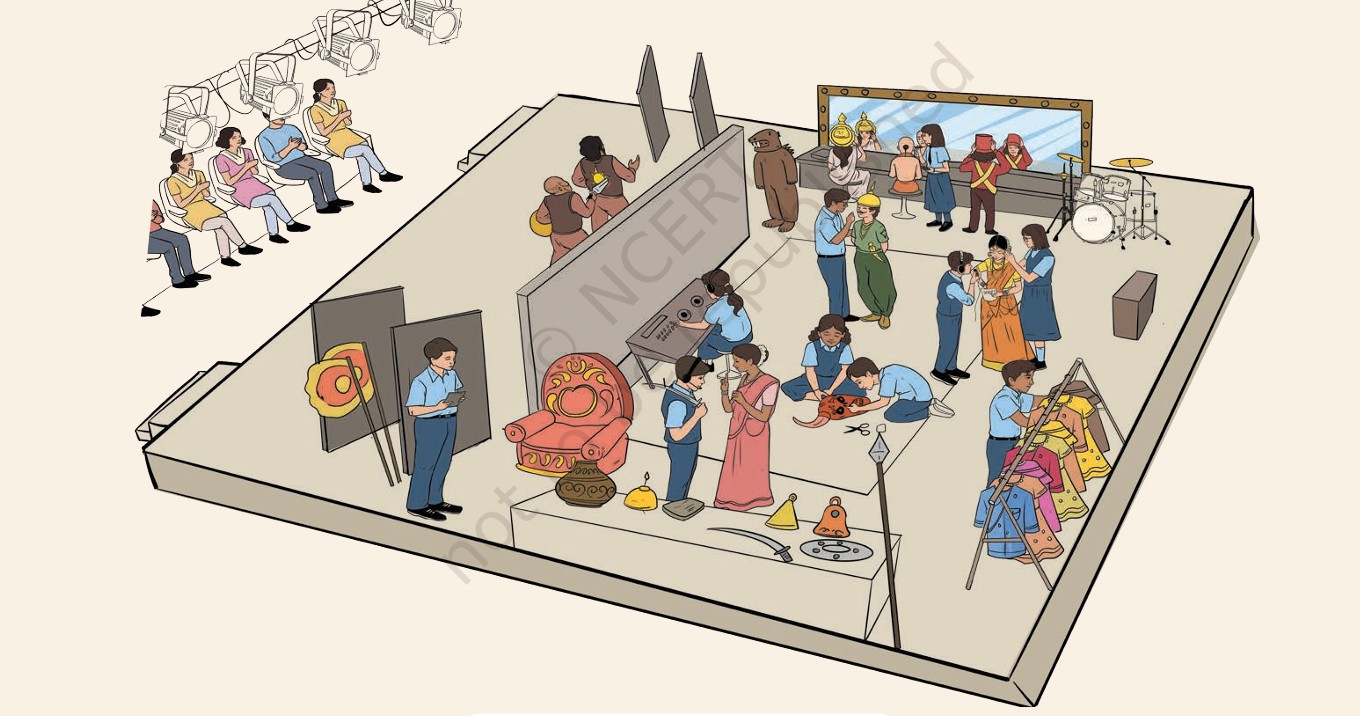
It is important not because of the physical space, but because of the work that happens and the people involved. Notice all the effort and hard work of the backstage team as the actors perform on stage.
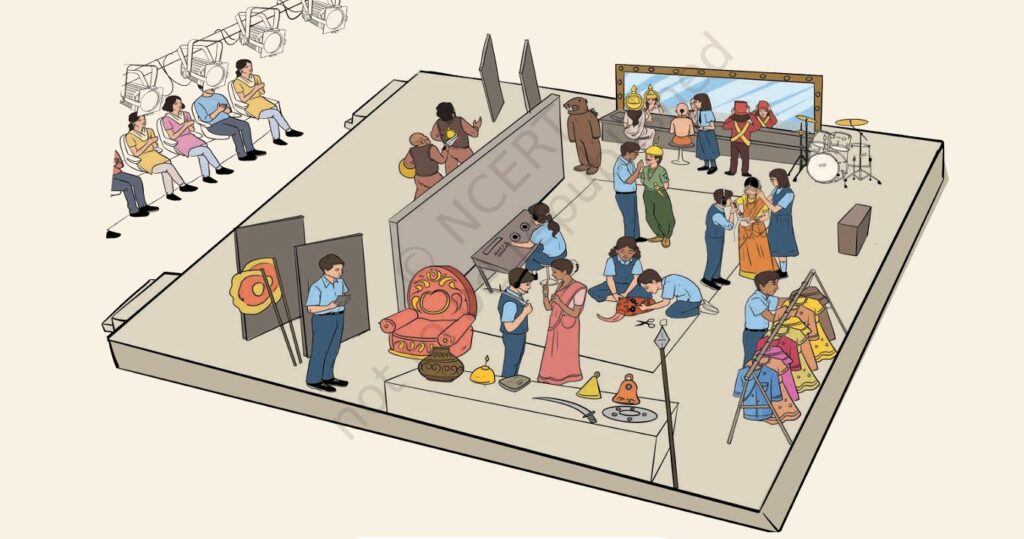
Backstage work involves the following aspects —
1. Set and Properties
- Changing the stage set according to the scenes being performed.
- Keeping all the hand props ready for the actors to pick up.
- Making sure the stage is free of objects that may obstruct the actors.
- Support during the scene, in case something goes wrong or something is forgotten by the actor.
2. Costume and Make up
- Getting the actors ready with character related costume and make up.
- Helping with quick changes between scenes.
- Support with minor tear and damage in costumes.
3. Music
- Working with the actors and tech team to get the right cues for sound tracks.
- Working on music and sound effects that suit the performance.
- Sometimes cover-up onstage glitches with appropriate sound or music.
4. Lighting
- Plan lights and know your cues well.
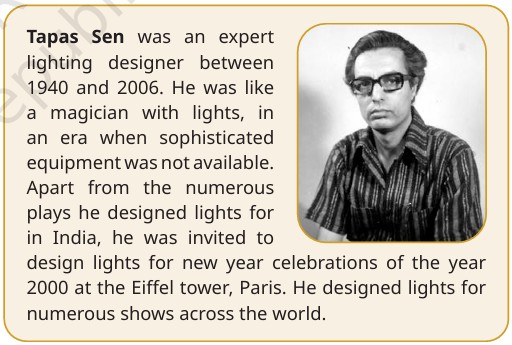
- Timing lights and supporting the actors during unexpected issues.
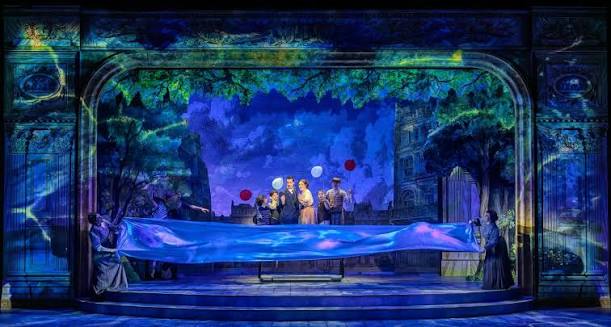
5. Special Effects
Some productions may use carefully planned effects such as:
- Fog
- Projections
- Visual effects
- Controlled movement of scenery
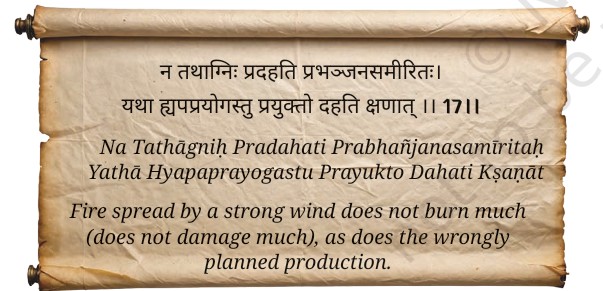
All effects should be planned with safety as the highest priority.
6. Stage Management
The stage management team coordinates the different parts of the production and ensures that performances run smoothly.
They may manage:
- Scene changes
- Actor entrances and exits
- Props
- Stage cues
- Communication between teams
- Timing of performances
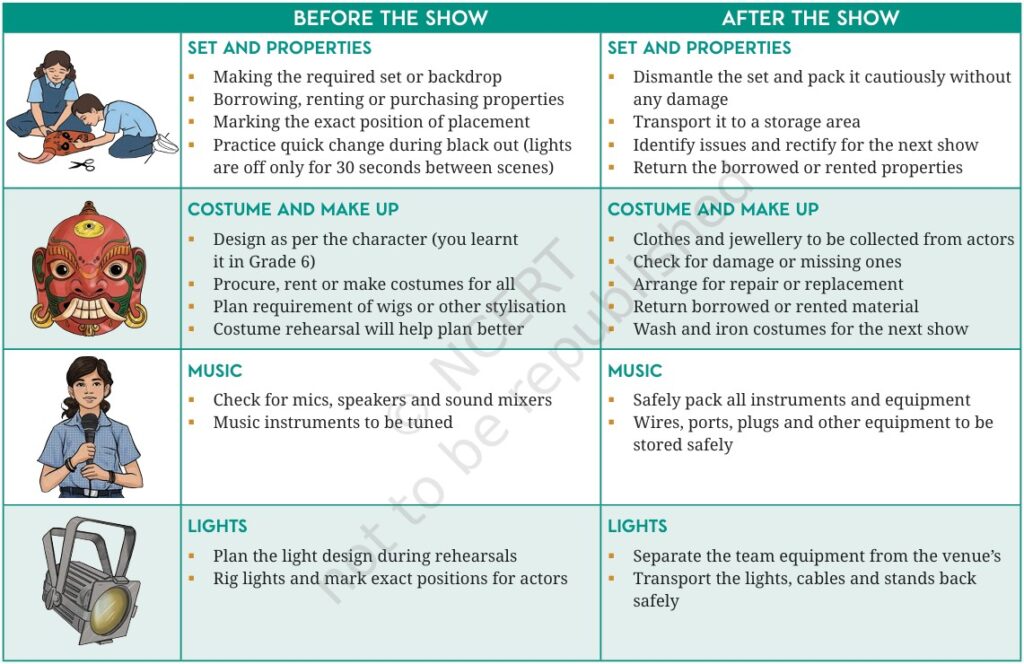
Though the major backstage responsibility is during the show, there is a lot of planning and preparation that happens before and after the show. Planning after the show? Yes! Read on …
The Importance of Teamwork
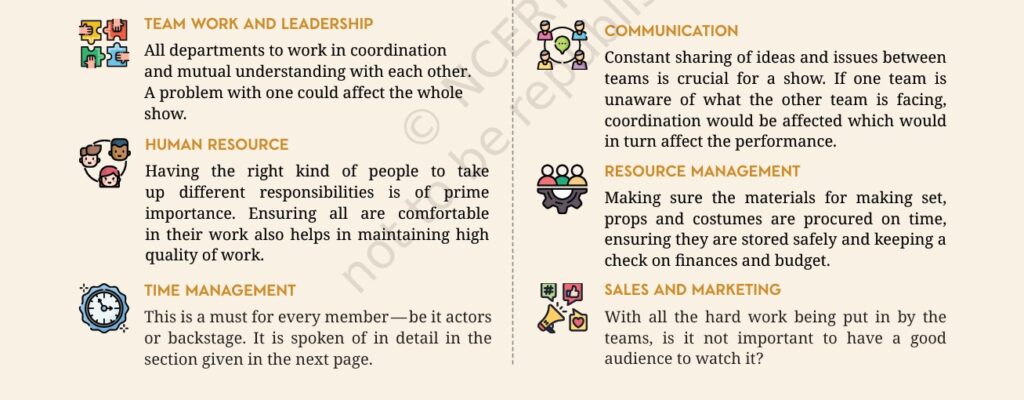
Backstage work requires close cooperation. A small mistake in timing can affect an entire scene, so everyone must understand their responsibilities and communicate clearly.
A successful performance depends on:
Planning → Preparation → Coordination → Cues → Performance
Planning, Management and Discipline
There are many life skills that can be acquired by doing theatre and more specifically backstage work.
Three bells in theatre
Any professional theatre performance has three bells at different intervals. Each one has a different meaning. This is not just for the cast and crew, but for the audience as well! Here is what they mean:
1. First Bell — An indication for the audience to maintain silence, as the play would start soon. By this time, the sets and props related to the first scene are placed on stage.
2. Second Bell — Now, the actors are on stage and in position. Everyone back stage also gets in position. This is an indication that the stage mics have been switched on. The announcement is made (name of the play, playwright, director and special mentions). A strict ban on flash photography and usage of phones during the play are also announced.
3. Third Bell — The show begins! The show is like the final exam for the team, after so many rehearsals.
History of Backstage Work and Poorvaranga Vidhi
Backstage work in theatre is as old as theatre itself. This is because every performance, at any point in history, has required a strong support system working behind the scenes to make the production successful.
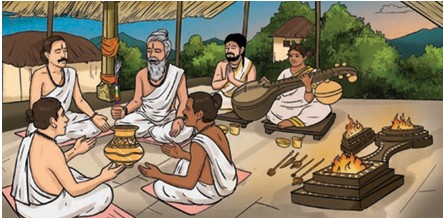
In fact, one of the oldest treatises on performing arts — the Natyashastra, traditionally attributed to Bharata Muni and more than 2,500 years old — provides a detailed description of the preparations and procedures that need to be followed before a theatrical performance.
In the history of theatre, these preparations and activities carried out before the performance are known as “Poorvaranga Vidhi.” It describes various preparations and rituals that take place before the actual performance begins.
Poorvaranga Vidhi includes several aspects such as arranging music, preparing musical instruments, getting performers ready, organizing the stage, and carrying out various activities before the performance. It demonstrates that a successful theatrical production depends not only on the performers visible on stage but also on careful preparation, discipline, coordination, and teamwork behind the scenes.
Natyashastra
Natyashastra is one of the most important ancient Indian treatises on theatre and performing arts. It is traditionally attributed to Bharata Muni and is believed to have been composed more than 2,000 years ago. The text presents detailed ideas about drama, acting, dance, music, emotions, stagecraft, costumes, makeup, and performance.
It provides a comprehensive framework for understanding how a theatrical performance can be planned, prepared, and presented.
Natya Gruha
The word “Natya” means drama or theatrical performance, while “Gruha” means house or enclosed space.
Thus:
Natya Gruha = A House or Space for Theatrical Performance
Greek Theatre and the Green Room
Greek theatre also had such arrangements, especially because performances were often held in open-air spaces.
The place where actors prepared themselves for the performance, including putting on their costumes and masks, was located behind the performing area. This space was often surrounded or covered by green vines, trees, and bushes.
This is believed to be why it came to be known as the “Green Room.”
Even today, performers around the world use the term Green Room for the space where they prepare before a performance. It is used for makeup, costume changes, relaxation, and final preparations before going on stage.
Although modern Green Rooms do not necessarily contain anything green, the name has survived as a reminder of an old theatrical tradition.
Green Room → Preparation → Makeup → Costume Change → Stage Performance

II. SCRIPT WRITING ‘WRITE RIGHT’
The Importance of a Script
“Without a script, a play is like a ship without a compass. A script anchors the story to its vision and purpose.”
Since a script plays such an important role, it is essential to understand how to create the right and effective script for a play.
So far, you have learned the following:
- The difference between a story and a script.
- The three main parts of a story:
- Beginning
- Middle
- End
- The importance of conflict.
- How to write simple conversations.
It is not enough to simply learn these concepts. You need to practise them regularly.
You may not always have to write scripts. Instead, you can practise identifying these concepts in the storybooks you read or in the movies you watch.
Doing this will help you understand how story, conflict, dialogue, and other elements are actually presented and organized in real performances and stories.
We will now move on to the next steps in script writing.
1. Structure
Structure, is simply the order in which you arrange story events. The basic structure that you will have to follow is to ensure you have the following elements —
Protagonist — Who the story is about.
Goal — What does he/she want?
Conflict — Obstacle in his/her path to the goal.
Resolution — Does he/she achieve goal? How?
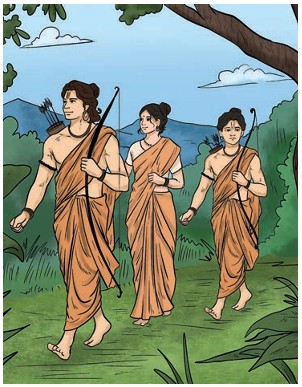
For example, let us look at the Ramayana which we all are familiar with. Identifying the structure, we have:
Protagonist — Rama
Goal — Take care of Ayodhya as the king, follow the path of Dharma.
Conflict — Banished to the forest for 14 years, his wife Sita is kidnapped by Ravana.
Resolution — Finds support of Hanuman to bring back Sita, completes 14 years, returns to rule Ayodhya.
2. Characters
Characters are the people, animals, or imaginary figures who take part in a story or play. They are one of the most important elements of a script because they perform the actions, experience the conflict, speak the dialogue, and move the story forward.
A good script needs characters who have clear roles, personalities, emotions, and motivations.
What is a Character?
A character is a person or figure created by the writer to participate in the events of a story.
i. Know your main characters well
A character’s personal problem should not be confused with the main conflict of the story. The story conflict is the larger problem or challenge that drives the plot, while a character’s personal problem is an individual fear, weakness, difficulty, or limitation that affects how they respond to situations.
1. What Do They Want?
Identify the character’s main goal or desire in the story.
Example: Harsha wants to solve the mystery of the strange sound coming from his backyard.
2. What Is Their Personal Problem?
Think about the character’s individual fear, weakness, habit, or difficulty. This is different from the main conflict of the story.
Example: Harsha is afraid of darkness.
ii. Understand the changes in characters through the story
Every experience and situation we face can bring about a change in us. An experience may make us stronger, give us a new perspective about someone, or change our opinion about something. In the same way, characters can also change as they experience different situations throughout a story.
These changes make characters more realistic and relatable. A character may begin the story with a fear, weakness, or belief and gradually develop a new understanding or strength because of what they experience.
Example: Harsha
Harsha wants to solve the mystery of the strange sound coming from the backyard of his house. However, he keeps failing because he is afraid of going outside after dark.
One day, his Ajji (grandmother) visits him and tells him about a time when she was afraid of getting onto a bus. She explains how she worked on herself and gradually overcame her fear.
Harsha’s Character Journey
Beginning:
Harsha is curious but afraid of darkness.
↓
Problem:
His fear prevents him from investigating the mystery.
↓
Experience:
Ajji shares her own experience of overcoming fear.
↓
Realisation:
Harsha understands that fear can be overcome with courage and effort.
↓
Change:
Harsha becomes more confident and begins going into the backyard after dark.
iii. Supporting characters
Though the story may not be about them, supporting characters are equally important. The main characters may not be able to move the story forward without their help, guidance, information, or actions.
Writers should feel free to add new characters when they help develop the story. However, it is important to be responsible and purposeful when introducing them. Every new character should have a clear meaning and purpose connected to the goal of the script.
Example: Harsha’s Story
Ajji, who helps Harsha overcome his fear of darkness, is a good supporting character. Her experience gives Harsha the courage and motivation he needs to face his fear.
Similarly, a scientist who provides useful information about sound and wind can be a good supporting character because the information helps Harsha understand the mystery.
3. Scenes
Scenes are sections of a play or movie that mark a change in time, place, characters, or action. They help organize the story and make it easier for the audience to follow.
A good scene should have:
- A clear purpose
- Smooth transition
- Beginning, Middle, and End
- Connection to the overall story
The first scene should attract the audience’s attention, while the last scene should provide a strong and meaningful conclusion.
Conclusion
Stage Technicals helps students understand the invisible work that supports every performance. Through design, technology, creativity, and teamwork, technical theatre transforms a simple stage into a meaningful world of stories, emotions, and imagination.
Backstage Work — The Invisible Pillar of Theatre reminds us that every performance is supported by people whose work may never be seen by the audience. From managing props and costumes to controlling lights, sound, sets, and stage cues, backstage teams transform preparation into performance. Their discipline, coordination, creativity, and teamwork make the magic of theatre possible. Without the backstage team, the show truly cannot go on.
Stage Technicals 2 helps us understand that a stage performance is a combination of art, technology, planning and teamwork. A performer may be talented, but the overall impact of a performance also depends on how effectively the stage, lighting, sound, costumes, props and sets are designed and managed.
Stage technical elements help to create the right atmosphere and mood for the audience. Lighting can highlight important moments and express emotions, while sound makes dialogue, music and songs clear and powerful. Set design and props help establish the location and support the story. Costumes and make-up help performers communicate their characters and cultural identity.
Proper stage management and backstage coordination are equally important. Every technical team member must understand their responsibility and work according to the performance schedule. Sound and lighting cues, performer movements, prop changes and scene transitions must happen at the correct time.
Technical rehearsal is an essential part of the process. It gives the team an opportunity to identify problems, test equipment and make improvements before the final performance. Feedback from teachers, performers and audience members can further improve the presentation.