
Introduction
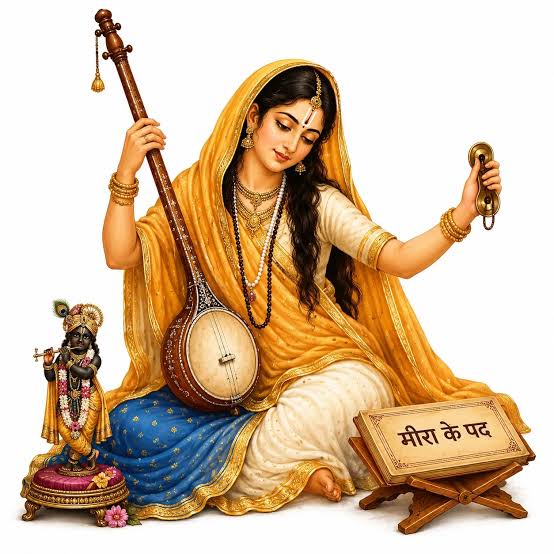
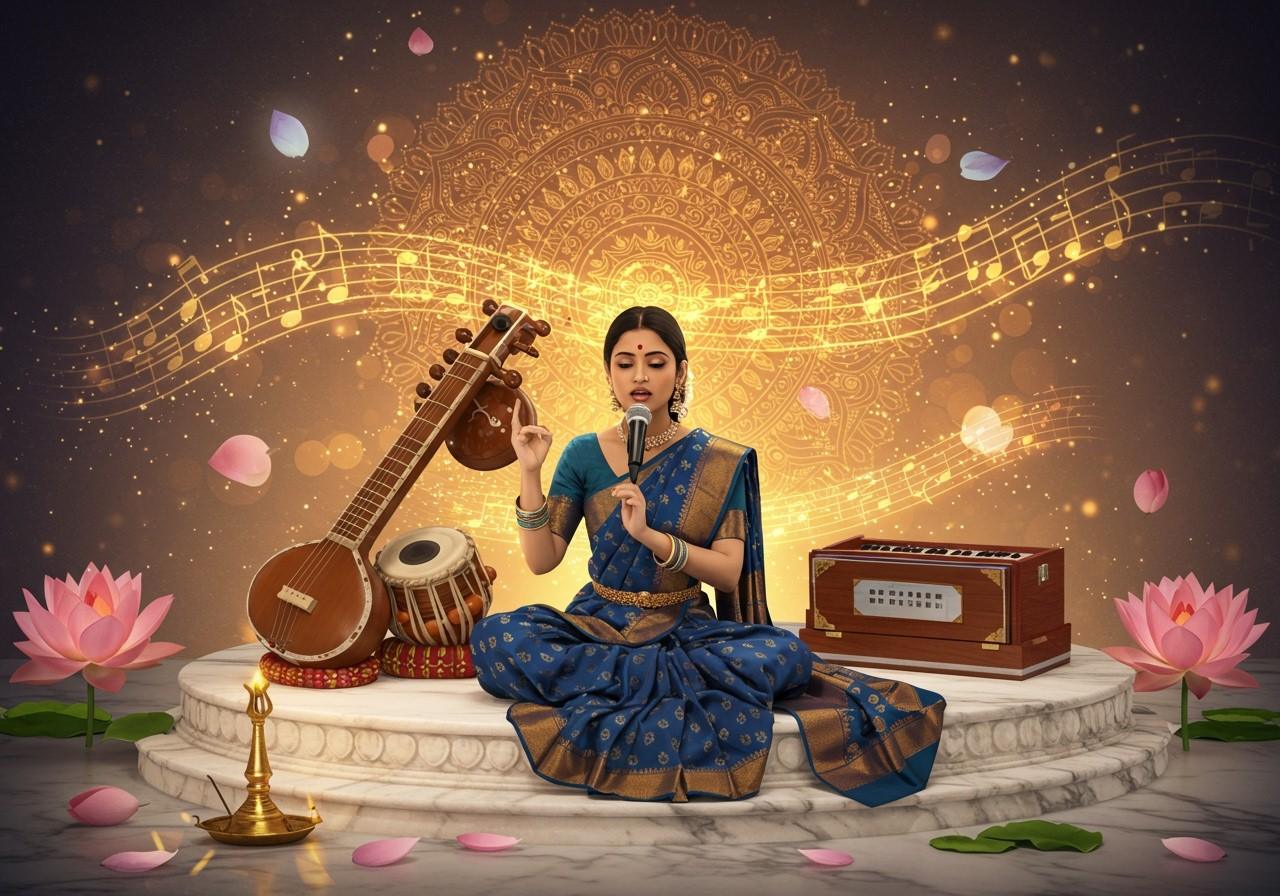
Making Music is the process of creating music using voice, instruments, rhythm, melody, pitch, tempo, and different sounds. Music allows us to express our thoughts, feelings, ideas, and creativity.
A song is made up of different musical layers, such as vocals, rhythms, instruments, melodies, and background sounds. By exploring these layers, students can understand how individual sounds come together to create a complete musical composition.
Making music also encourages students to listen carefully, experiment with sounds, work together, and express emotions creatively. Through singing, playing instruments, composing, and group activities, students discover that music can be both a form of artistic expression and a way of connecting with others.
Let us start by singing a popular song together. Here are some suggestions:
- Barso re megha megha
- Bharat humko jaan se pyaara hai
- Aa chalke tujhe main lekey chaloon
- Zindagi ek safar hai suhana
- palan haarey nirgun aur nyaare
There are many elements that contribute to making music. When you listen to music, think about how it is created or made. Focus on —
- Vocals
- Musical instruments
- Melody
- Harmony
- Lyrics
Layers in Music
All the different types of sounds you hear in a song are called layers. Each layer has its own role and contributes to the overall sound of the music.
For example, you may hear drum beats, musical instruments, voices, background sounds, and melodies. All of these can work together as different layers.
What Layers Can You Hear?
Common musical layers include:
- Rhythm: Drums, percussion, or beats that provide the pulse.
- Melody: The main tune of the song.
- Harmony: Additional notes or sounds that support the melody.
- Bass: Low-pitched sounds that add depth and strength.
- Vocals: The singer’s voice or group of voices.
- Instruments: Sounds produced by instruments such as flute, guitar, piano, tabla, or violin.
- Background Sounds: Additional sounds that create atmosphere or texture.
Layers in Different Styles of Music
Different styles of music use different combinations of sounds and instruments.
Film Song:
Vocals + rhythm + bass + melody + strings + electronic sounds + background music
Devotional Song:
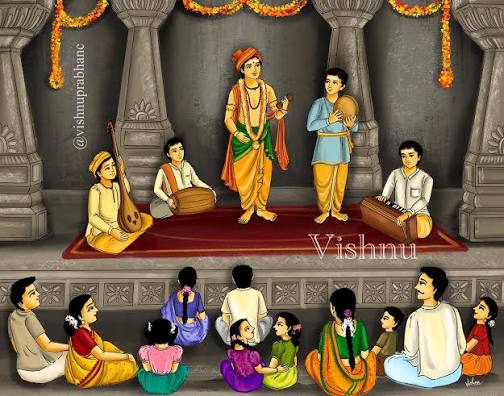
Lead voice + chorus + rhythm + harmonium + tabla/dholak + bells or other devotional instruments
The combination of these layers gives each song its unique mood, character, and identity.
Listening Activity
Listen carefully to a song and try to identify:
Voice → Rhythm → Melody → Instruments → Bass → Background Sounds
By listening for individual layers, you can understand how different sounds come together to create a complete musical composition.
Would you like a short textbook version or a detailed classroom activity on “Layers in Music”?
ACTIVITY 5.1: EXPLORING SONGS
Exploring Songs is about listening to different songs carefully and understanding how voice, rhythm, melody, instruments, lyrics, and emotions come together to create music.
What to Explore in a Song
- Lyrics: What story, idea, or message does the song communicate?
- Melody: What is the main tune?
- Rhythm: What beats or rhythmic patterns can you hear?
- Instruments: Which instruments are being used?
- Layers: What different sounds are playing together?
- Voice: Is it a solo voice, chorus, or a combination?
- Mood: Does the song feel joyful, peaceful, energetic, emotional, or devotional?
1. Musical elements — voice, instruments, pitch and tempo
Music is made up of several important elements that work together to create a song or musical composition.
i. Voice
The voice is used to sing lyrics and express emotions. A singer can change the tone, volume, and expression of their voice to suit the music.
ii. Instruments
Musical instruments add rhythm, melody, harmony, and texture to a song. Examples include the tabla, flute, violin, guitar, piano, drums, and harmonium.

iii. Pitch
Pitch tells us whether a sound is high or low. Different pitches combine to create melodies.
iv. Tempo
Tempo refers to the speed of the music. Music can have a slow, medium, or fast tempo.
- Slow tempo – calm or peaceful
- Medium tempo – steady and balanced
- Fast tempo – energetic or exciting
In Short
Voice → Expression
Instruments → Musical sounds
Pitch → High or low sounds
Tempo → Fast or slow music
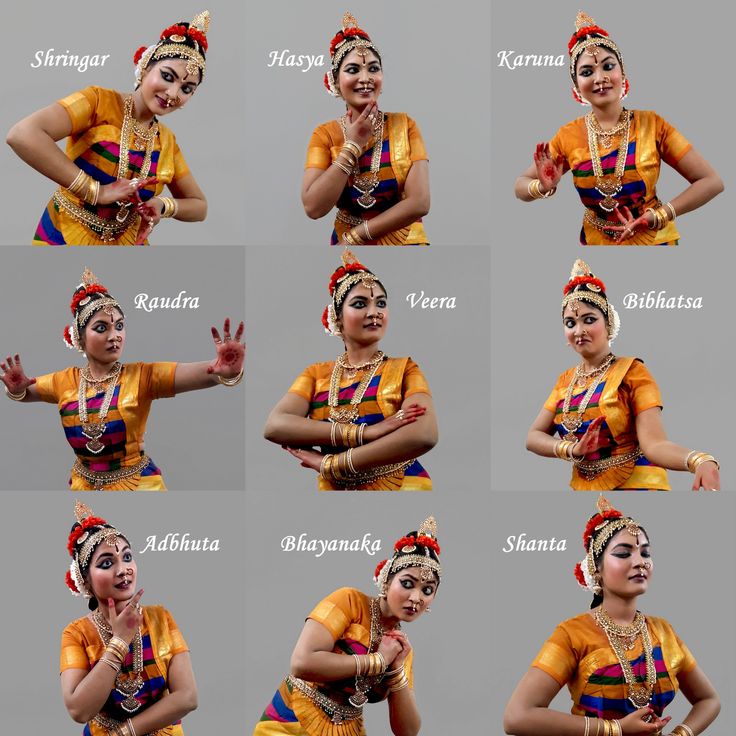
2. Mood — emotions (rasa) and Theme
When listening to a song, think about the following questions:
- What is the mood of the song?
Is it joyful, peaceful, energetic, emotional, devotional, sad, or inspiring? - What do you like about the song?
Think about the melody, voice, rhythm, lyrics, instruments, or overall feeling. - Would you like to change the mood? How?
You could change the tempo, instruments, rhythm, pitch, or voice to create a different mood. - Is the arrangement heavy or light?
A heavy arrangement uses many instruments, beats, and musical layers. A light arrangement uses fewer sounds and creates a simpler musical texture. - How many layers can you hear?
Listen for different voices, instruments, rhythms, melodies, and background sounds playing together.
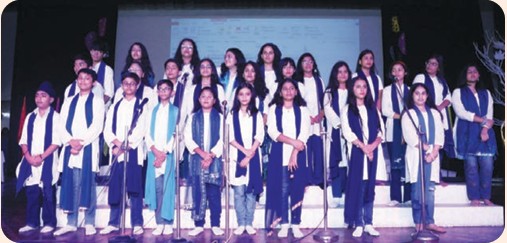
ACTIVITY 5.2: MEASURE YOUR ACCURACY
Choose a song that you are comfortable singing. You may use a karaoke track if available.
Steps
- Sing and Record
Record yourself singing the song.
- Listen Carefully
Play your recording and check:- Pitch: Are you singing the correct notes?
- Rhythm: Are you staying with the beat?
- Tempo: Are you maintaining the correct speed?
- Voice: Is your singing clear and steady?
- Compare with the Original
Listen to the original version and your recording. Note where you are accurate and where you need improvement.
- Identify Areas for Improvement
Write down specific points, such as:- Maintaining the correct pitch
- Keeping a steady rhythm
- Starting and ending notes correctly
- Improving breath control
- Get Constructive Feedback
Ask a classmate, friend, teacher, or family member to listen to your recording and give you helpful feedback.
Remember
Record → Listen → Compare → Identify → Improve → Perform Again
Remember
Record → Listen → Compare → Identify → Improve → Perform Again
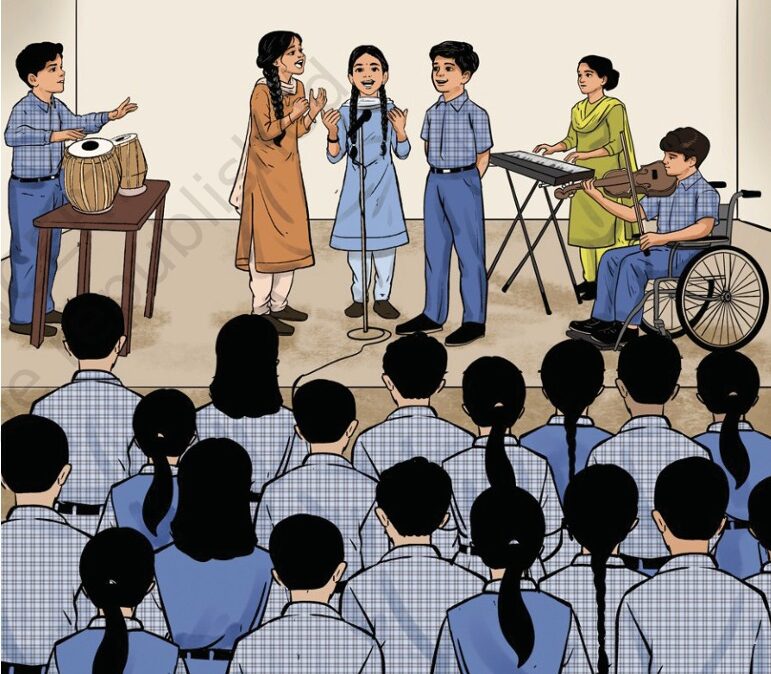
MAKING MUSIC TOGETHER
When you hear multiple voices of people singing together, creating a pleasing blend of different notes, it is called singing in harmony. Harmony is common in many styles of music, both instrumental and vocal.
There is an easy way to start singing in harmony, and that is, by singing a canon. A canon is where different groups of singers sing the same melody but start at different times. Songs that are written as canons, are written so that the different notes you hear at the same time, sound good together.
Harmony
Harmony is created when two or more different notes or musical lines are played or sung together in a way that sounds pleasing. It adds depth, richness, and emotion to music.
Example:
One person sings the main melody while another sings a different supporting line at the same time.
Canon
A canon is a musical technique in which one voice or group begins a melody, and another voice or group repeats the same melody after a short delay.
Harmony = Different musical lines performed together
Canon = The same musical line entering one after another
You can select any patriotic song, folk song, for example —
Kuṭṭanaḍan punjayile kochu peṇṇe kuyilale (you learnt in Grade 6)
- The song is associated with the beautiful Kuttanad region of Kerala, known for its paddy fields, waterways, boats, and rich folk culture. Its lively melody and rhythmic character make it useful for exploring harmony and canon.
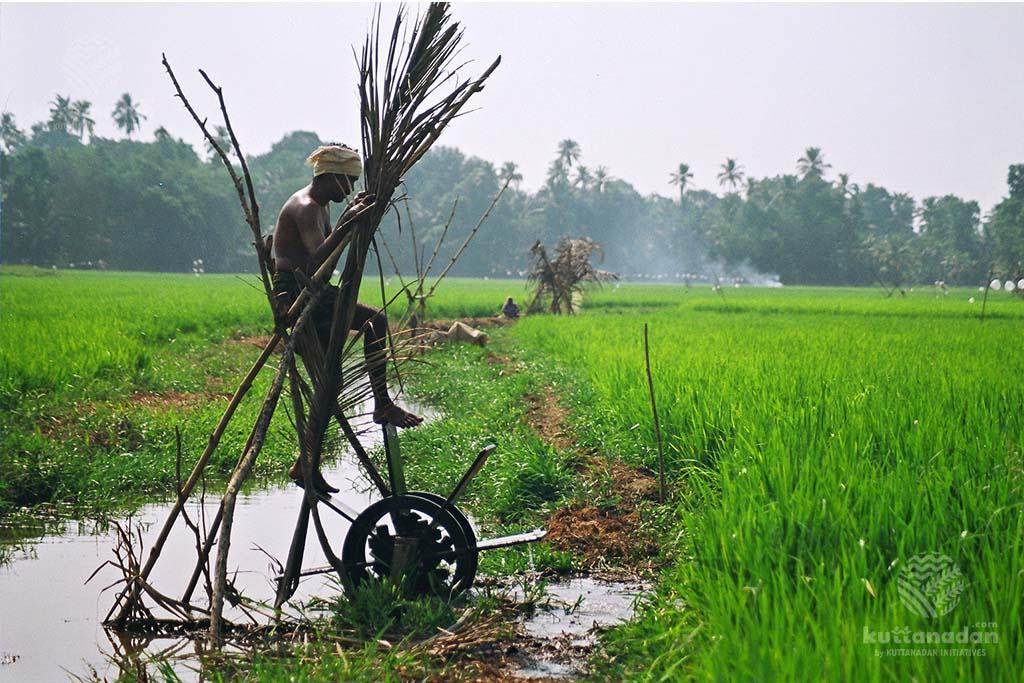
Kuttanad is a distinctive agricultural region in the Alappuzha district of Kerala, famous for its extensive backwaters, paddy fields and traditional farming practices. It is often described as the “Rice Bowl of Kerala.”

Geographical Features
Kuttanad is well known because much of its agricultural land lies below sea level. Farmers cultivate rice in fields protected by bunds and polders, while canals and waterways help manage water.
The region has a unique landscape of:
- Large paddy fields
- Coconut trees
- Backwaters and canals
- Traditional villages
- Water-rich agricultural areas
Traditional Life
Water plays a central role in everyday life in Kuttanad. Boats are traditionally used for transportation, fishing, farming activities and connecting villages.
Agriculture, particularly rice cultivation, has traditionally been an important part of the local economy and culture.
Music and Cultural Heritage
Kuttanad is also associated with Kerala’s rich traditions of folk songs, boat songs and community celebrations. Music often accompanies agricultural work, festivals and boat-related activities.
One famous tradition is Vallam Kali, the traditional Kerala boat race. Long snake boats, known as chundan vallams, are rowed by large teams in rhythm with songs and percussion.
Boat Songs
Traditional boat songs are often called Vanchipattu. They help rowers maintain a common rhythm and coordination while creating an energetic atmosphere.
The songs demonstrate how music can be closely connected with work, community life and collective effort.
Importance of Kuttanad
Kuttanad is important because it represents:
- Agricultural heritage
- Traditional water management
- Community life
- Folk music and songs
- Boat-racing traditions
- Kerala’s natural and cultural diversity
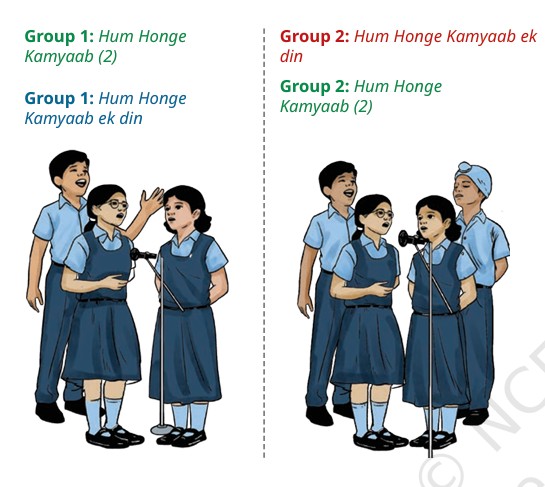
Hum honge kaamyaab (you learnt in Grade 3)
- “Hum Honge Kaamyab” is a well-known Hindi inspirational song that students may have learned in Grade 3. It is often sung in groups and is especially useful for learning about harmony, canon, rhythm, and collective singing.
Exploring the Song
Students can sing the song together and observe how different voices combine to create musical layers.
- Melody: The main tune of the song.
- Harmony: Different vocal parts can be sung together to enrich the melody.
- Canon: Groups can begin the same melody at different times to create overlapping musical lines.
- Rhythm: The steady beat helps everyone sing together.
- Mood: The song creates a feeling of hope, confidence, unity, and determination.
MUSIC AS TEAMWORK
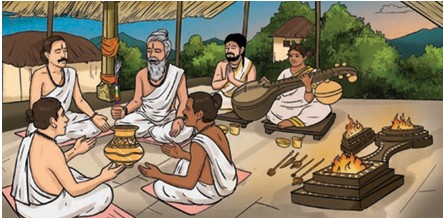
This era was a time imbued with deep spiritual and musical traditions. As the first rays of dawn painted the horizon, a team of Vedic priests — Ritvijs, guardians of the sacred hymns, from the four Vedas, assembled in the morning with the institutor, Yajamāna and his wife — Yajamāna-patnī, in the Yāga-śhālā, to begin the sacred Vedic fire ceremony — Shrauta-yajna
Amongst this team of ritvijs, there is a unique sub-team of four ritvijs specialised in the Sāma-Vēda. They are led by the main Sāma-Vēdī-Ritvij — the Udgātā, and together they are known as the Udgātṛi Gaṇa.
Alongside the Sāma-Vēda, they are highly skilled in devotional music, both singing and playing traditional musical instruments. They harmonize verses from Sāma-Vēda Saṁhitā, the divine texts that form the cornerstone of Vedic ceremonies.
In the Yāga-śhālā, facing East (the direction of the rising sun) — an eternal symbol of divinity and renewal — the Sāma-Vēdī-Ritvijs divided themselves into distinct roles. Each role contributes to the intricate structure and harmonious nature of Sāma-Vēda chanting known as Sāma-gāna. The singing of the Sāma-gāna composition is generally divided into five sections called bhaktis.
- Prastāva: The introduction of the composition is initiated by the Prastotā.
- Udgītha: The primary section, which forms the core of the Sāma-gāna recitations, and is sung by the head Ritvij Udgātā.
- Pratihāra: It is sung by continuing from the last line of the Udgītha, by the Pratihartā.
- Upadrava: The connective musical interlude, i.e., the instruments and the rhythmic interpretations, which is again rendered by the Udgātā.
- Nidhana: The concluding section, it is sung in unison by all ritvijs, creating a profound and unified culmination.
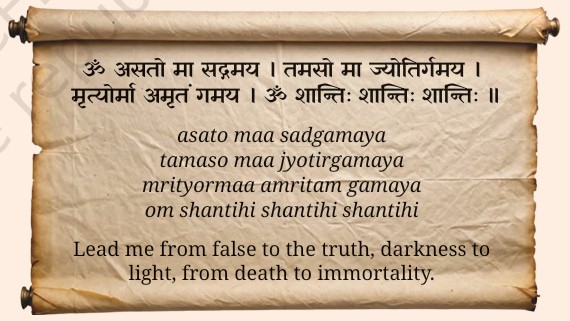
ACTIVITY 5.3: CHANT SHLOKAS IN A GROUP
Group chanting of shlokas is a musical and cultural activity in which students recite Sanskrit verses together in a coordinated rhythm. It helps develop voice control, rhythm, pronunciation, concentration, and teamwork.
What Students Learn
- Rhythm: Maintaining a steady flow while chanting.
- Pitch: Using appropriate high and low tones.
- Pronunciation: Speaking the words clearly and correctly.
- Coordination: Starting, pausing, and ending together.
- Expression: Understanding the meaning and mood of the shloka.
- Group Harmony: Listening to others and keeping the voices balanced.
Activity
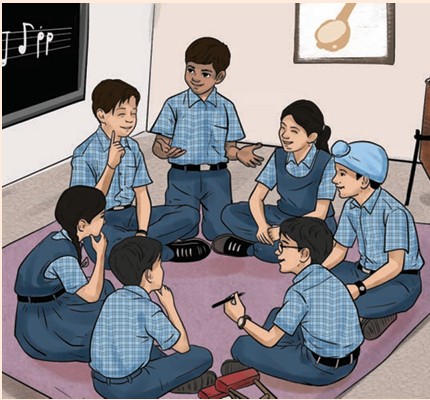
Divide the class into small groups. Choose a familiar shloka and practise it slowly. One group can begin while another group joins after a short interval to explore layering and musical coordination.
Remember: In group chanting, the aim is not to be the loudest voice but to listen, stay together, and create a unified sound.
Conclusion
Music is much more than singing or playing an instrument. It is a combination of sound, rhythm, melody, harmony, emotion, expression, and creativity. By exploring songs, identifying musical layers, understanding pitch and tempo, practising accuracy, and performing together, students develop a deeper appreciation of music and learn how different sounds can come together to create meaningful and expressive musical experiences.