
INTRODUCTION
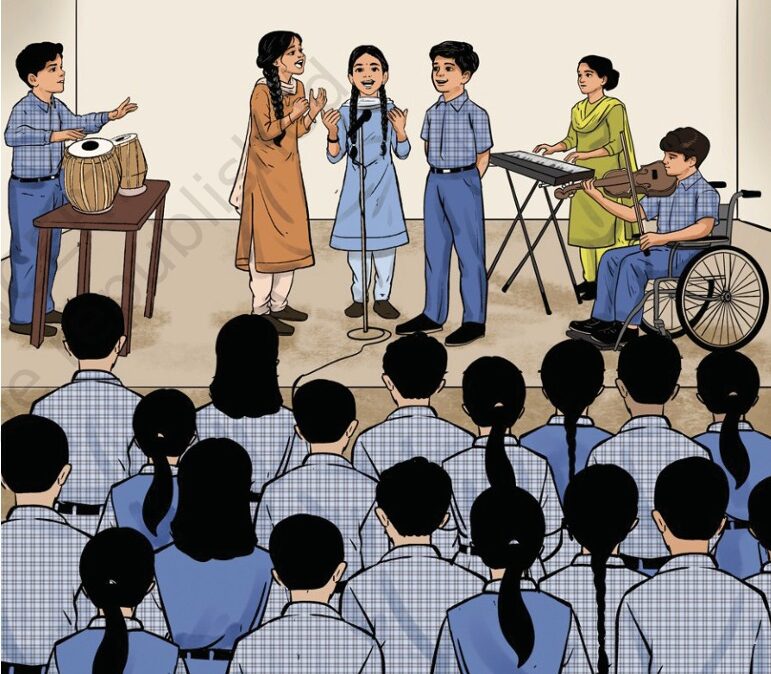
Music is a powerful form of self-expression. It can communicate emotions, create moods, tell stories, and inspire creativity. Through singing, playing instruments, listening, and creating music, we can explore how sound connects with our feelings and imagination.
Music can make us feel happy, peaceful, excited, sad, hopeful, energetic, or inspired. Elements such as pitch, tempo, rhythm, melody, voice, and instruments influence the mood of a song.
For example:
- A slow melody may create a calm or reflective mood.
- A fast rhythm may create excitement and energy.
- Soft sounds may create a peaceful atmosphere.
- Strong beats may express power or enthusiasm.
Abhinaya Darpana
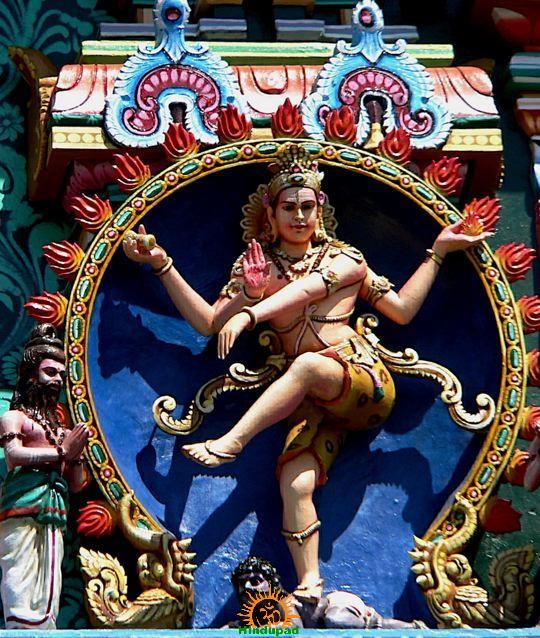
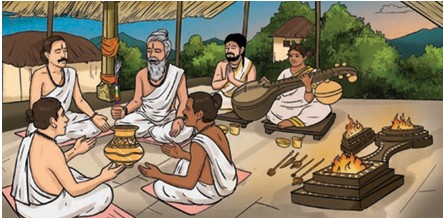
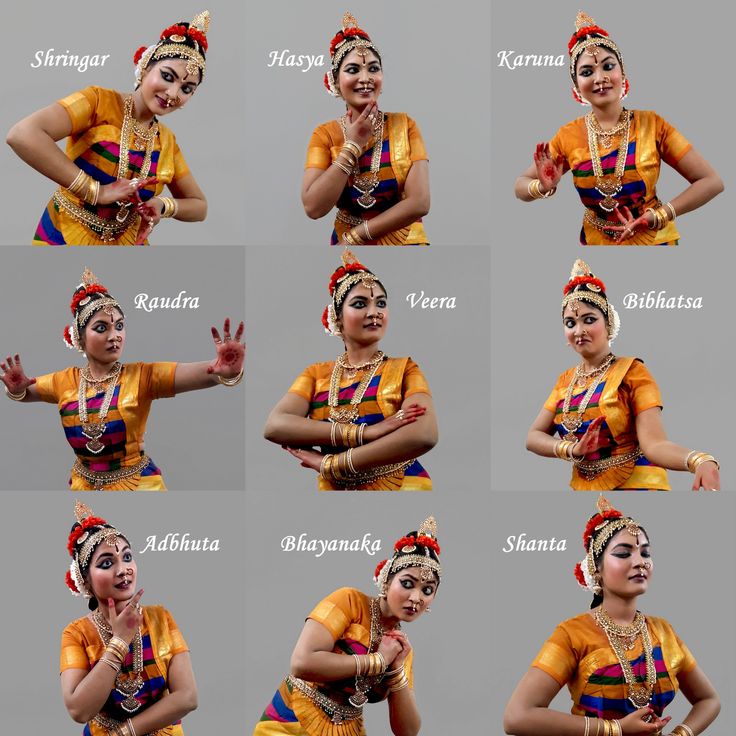
Abhinaya Darpanam (Mirror of Gestures) is an ancient Sanskrit text written around 1000 AD by Nandikeshvara. It serves as a foundational manual for Indian classical dance, detailing physical movements, facial expressions, and hand gestures used to tell stories on stage.
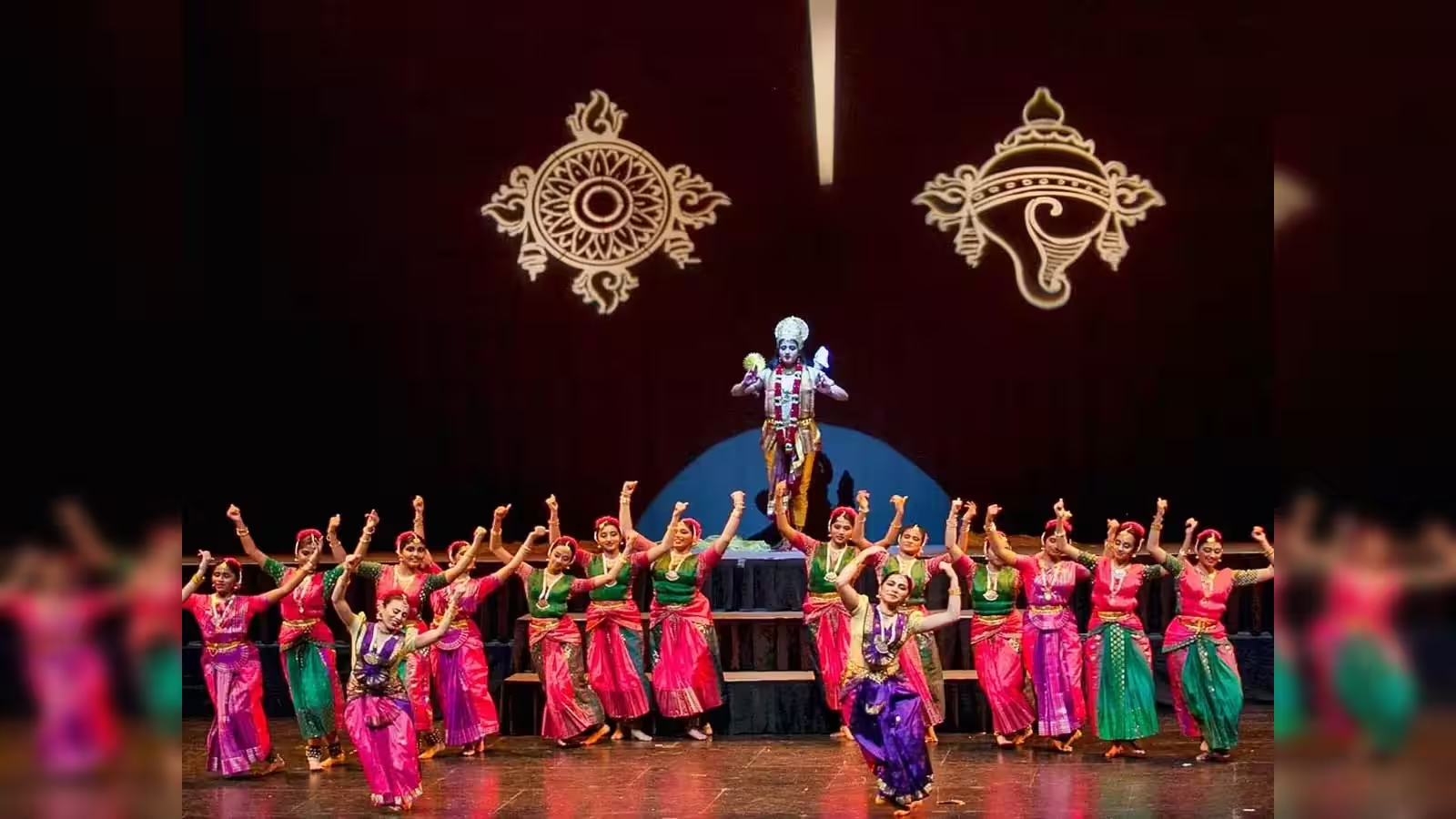
Abhinaya Darpana, meaning “Mirror of Gestures,” is an ancient Sanskrit text associated with Nandikeshvara. It is considered an important foundational text for Indian classical dance. The text explains how body movements, hand gestures, facial expressions, and emotions are used to communicate stories and ideas through performance.
Core Focus of the Text
- Angika Abhinaya: Expression through body movements, postures, gestures, and physical actions.
- Hand Gestures (Hastas): Explains single-hand gestures (Asamyuta Hastas) and double-hand gestures (Samyuta Hastas) and their different meanings and uses.
- Limb Classification: Describes the movements of major body parts (Angas), subsidiary parts (Upangas), and intermediate body parts (Pratyangas).
Four Types of Abhinaya
The four major forms of expression are:
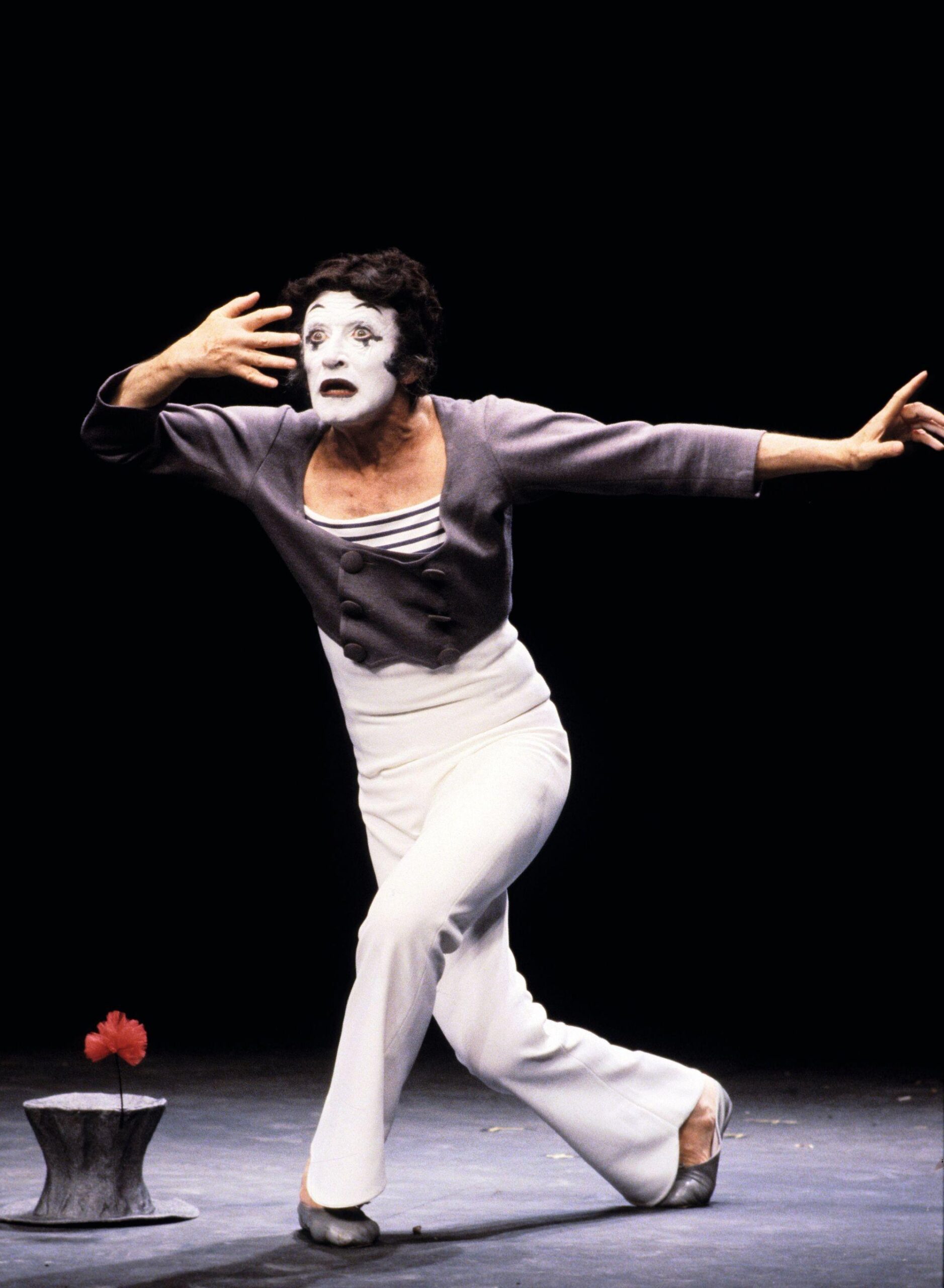
- Angika Abhinaya — Expression through body movements, gestures, and facial expressions.
- Vachika Abhinaya — Expression through speech, songs, dialogue, and voice.
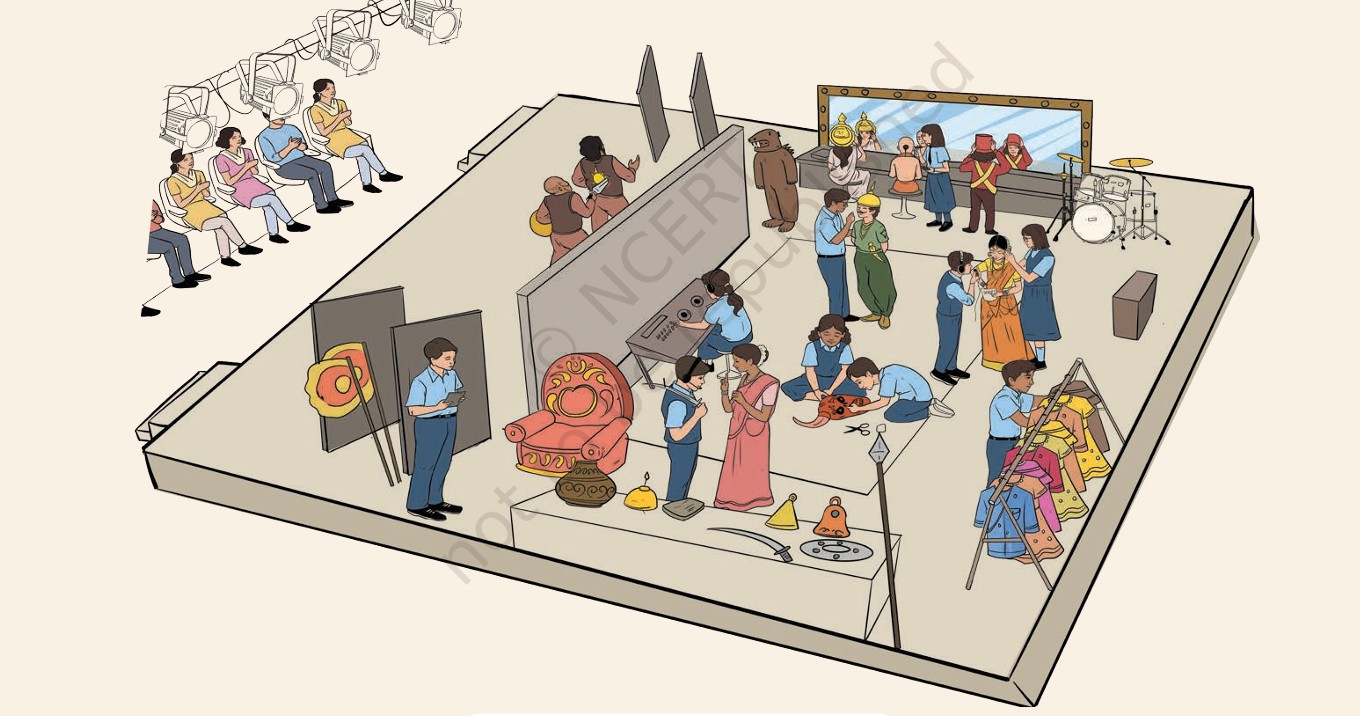
- Aharya Abhinaya — Expression through costumes, jewellery, makeup, and stage appearance.
- Sattvika Abhinaya — Expression of inner emotions and natural emotional responses.
Importance
Abhinaya Darpana shows that classical dance is not merely about physical movement. It is a complete form of storytelling in which body, voice, appearance, and emotions work together to communicate meaning and feelings to the audience.
“Sabha Kalpataru Bhaati”
It expresses the idea that the audience is an important source of inspiration, encouragement, and fulfilment for an artist. The audience’s appreciation and response give meaning and motivation to the artist’s performance.
Sabha Kalpataru Bhaati refers to the idea of a distinguished musical gathering where artists share and celebrate the richness of Indian music.
In simple words:
The audience is like a Kalpataru (wish-fulfilling tree) because its appreciation inspires and fulfils the artist.
DEVOTIONAL MUSIC
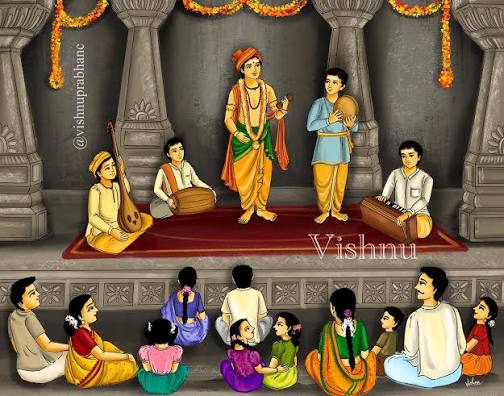
People pray in different ways. Music allows people to express the feeling of devotion. People often come together in groups and sing devotional songs, in different styles of singing, using a variety of words, tunes and rhythms.
Let us understand how the words, tune and rhythm come together when we sing a devotional song.
Here are some examples.
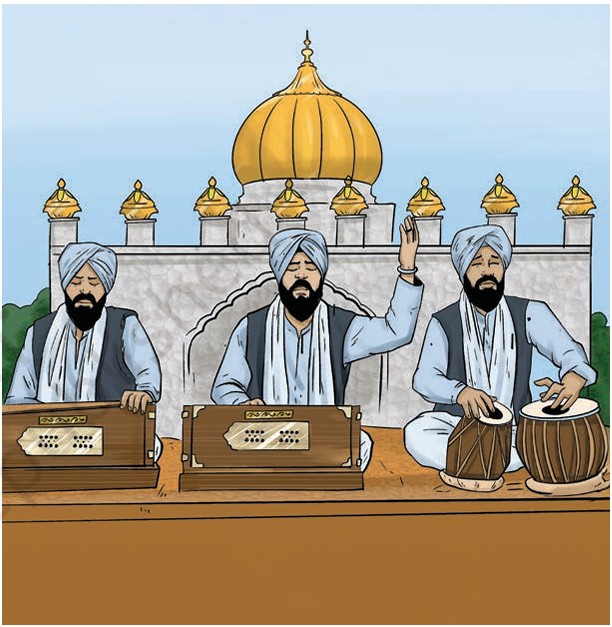
1. Shabad — Shabads are musical prayers in the Sikh religion and are sung in the Gurudwara. Let us learn this song.
koi boley raam raam koi khudaye
koi sevai gosayya koi alaahey
kaaran karan karan kareem,
kirapaa dhaar raheem ||1||
koi naaveye teerthh koi haj jaye ||
koi karey poojaa koi sir navaaey ||2||
koi padey ved koi kataeb
koi odey neel koi supedh ||3||
koi kahe turk koi kahey hindu
koi baanchey bisth koi seer bindu ||4||
kahey naanak jin hukam pachhataa
prabh saaheb kaa teen bhed jaataa ||5||
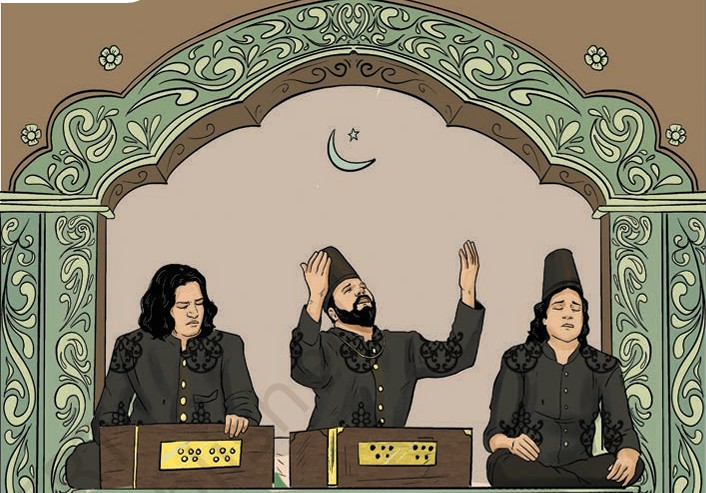
2. Urdu song
This is a devotional and patriotic song in Urdu.
Lab Pe Aati Hai Dua Ban Ke Tamanna Meri
Zindagi shamma ki surat ho, khuda ya meri
Lab pe pati pai dua ban ke tamanna meri
ho mere dum se yun hi mere watan ki zeenat
Jis tarah phool se hoti hai chaman ki zeenat
Zindagi ho meri parwaane ki surat ya rab
Ilm ki shamma se ho mujh ko muhabbat ya rab
Ho mera kaam gareebon ki himaayat karna
Dardmandon se, zayifon se muhabbat karna
CREATIVITY AND STORYTELLING
Creativity and storytelling are closely connected. Creativity helps us develop new ideas, characters, situations, and ways of presenting a story, while storytelling helps us communicate those ideas to others.
Storytelling
Storytelling is the art of sharing a story, idea, experience, or message through words, actions, expressions, music, or performance.
ACTIVITY 6.2: UNDERSTANDING A PAINTING THROUGH MUSIC
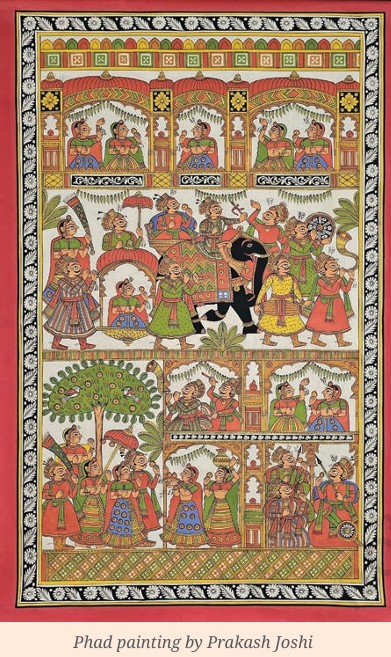
Phad paintings are ancient, vibrant scroll artworks from Rajasthan, India. Created on hand-woven cloth, these portable visual stories depict local folk heroes and deities like Pabuji and Devnarayan. Traditional priest-singers called Bhopas use them as mobile temples during night-long village performances.
History and Origin
- Practiced for over 700 years.
- Centered mainly in Shahpura near Bhilwara.
- Traditionally guarded and passed down within the Joshi family lineage.
- Derived from the Rajasthani word phad, meaning “fold”.
Materials and Process
- Canvas: Thick hand-woven cotton cloth treated with a starch and gum paste.
- Polish: Rubbed with a moonstone to create a smooth, glossy shine.
- Colors: Made entirely from natural minerals, stones, and plants.
- Final Step: Painting the eyes of the main deity last to awaken its sacred power.
Music
Phad performance is a 700-year-old nomadic folk tradition from Rajasthan where vibrant, hand-painted cloth scrolls depicting local heroes like Pabuji and Devnarayanji are used as visual backdrops for all-night musical storytelling by traditional bards known as Bhopas and Bhopis.
Create two lines which will describe the plates one by one. It can be in your native language. The lines should be rhythmic and easy to sing. For example, “Dekho dekho sakhi dwar pe suj sanwar kay kaun khada”.
The Performance Structure
Setting: Performed exclusively at night under the open sky, often during winter, lasting from dusk until dawn.
The Scroll (Phad): Acts as a portable temple and visual comic strip where the main deity is larger-than-life and secondary figures face inward toward the center.
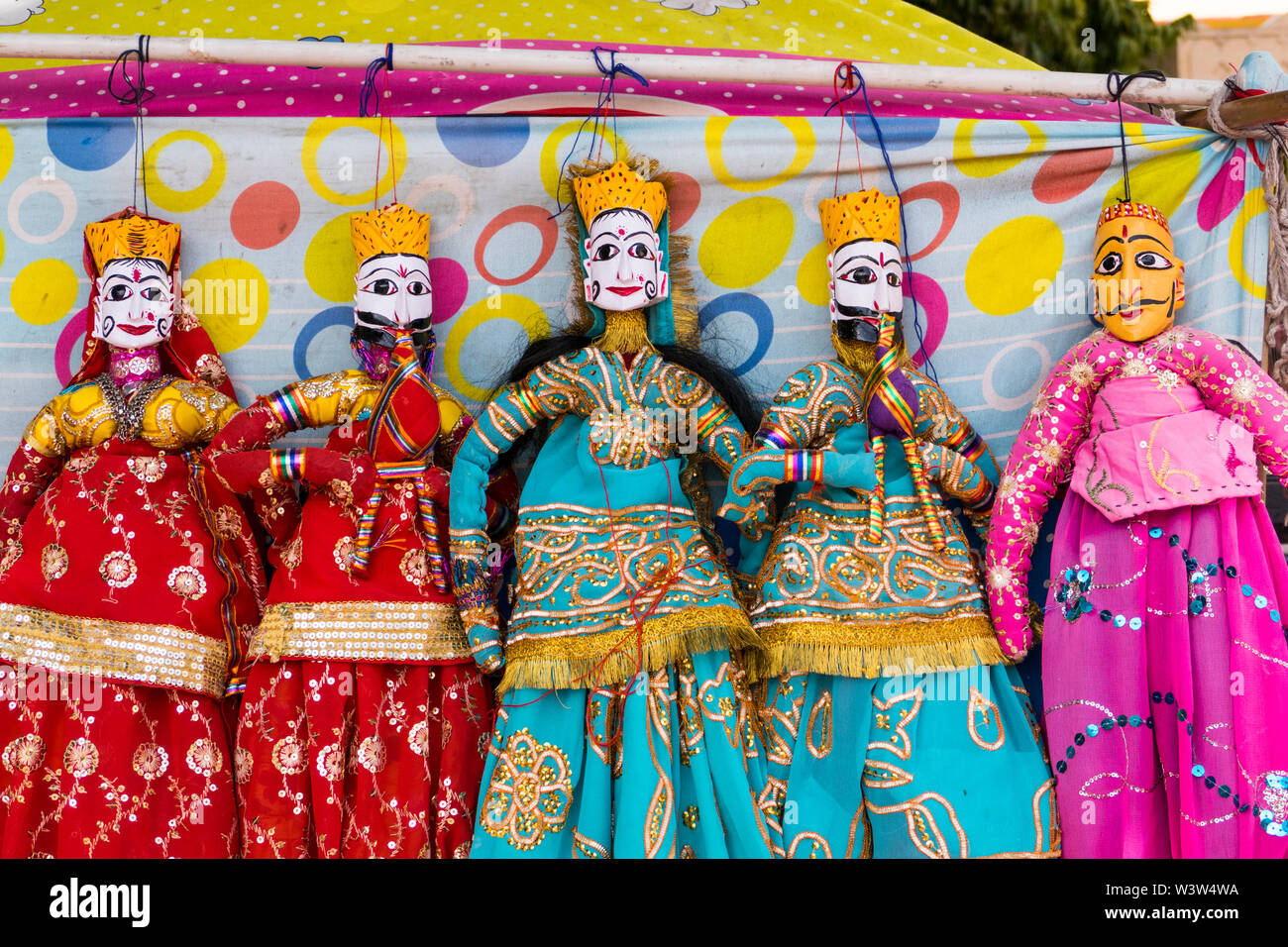
The Action: The male bard (Bhopa) sings, dances with ankle bells (ghungroos), and plays traditional instruments while his wife (Bhopi) illuminates specific sections of the scroll using a lighted oil lamp.
Audience Interaction: Performances are fluid; bards dynamically alter verses or respond directly to questions and offerings from local devotees.
Songs and Musical Style
The Poetry: Narration follows a prosomeric style using rhyming verses called gavs made up of couplets known as karis.
Language: Sung entirely in archaic regional dialects and folk variations of Marwari and Mewari.
Core Instruments:
- Ravanhatta: A rustic, bowed string instrument made of coconut shell and goat skin.
- Jantar: A heavy, dual-gourd string instrument played specifically during epic recitations of Devnarayanji.
ACTIVITY 6.3: MUSICAL NARRATIVE
A musical narrative is a way of telling a story through music. It combines singing, melody, rhythm, instruments, lyrics, narration, and expression to communicate characters, events, emotions, and ideas.
Key Features
- Story: Has a clear sequence of events.
- Lyrics: Communicate the story, characters, or message.
- Melody: Helps create mood and emotion.
- Rhythm: Gives movement and energy to the narrative.
- Instruments: Support the story and create atmosphere.
- Voice and Expression: Help portray different characters and emotions.
- Visual Elements: In some traditions, paintings, puppets, gestures, or dance may accompany the music.
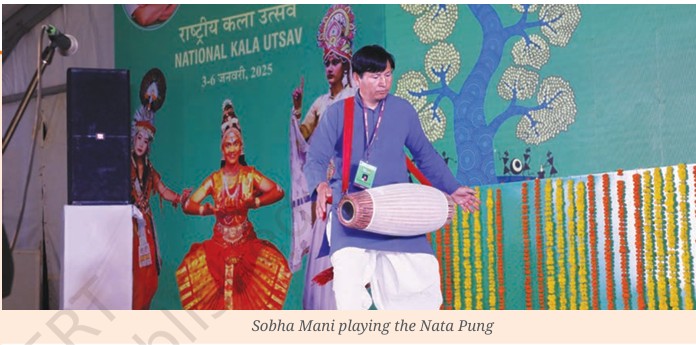
Sobha Mani Playing the Nata Pung
Sobha Mani is known for her work with the Nata Pung, a traditional drum of Manipur. The instrument is an important part of Nata Sankirtana, a devotional musical tradition that combines singing, percussion, movement, and spiritual expression.
What is the Nata Pung?
The Nata Pung, commonly known as Pung, is a traditional double-headed barrel-shaped drum of Manipur. It is played with the hands and is capable of producing a wide range of rhythmic sounds.
The Pung is especially important in Manipuri Sankirtana, where it accompanies devotional singing and dancing.
Role in Nata Sankirtana
In Nata Sankirtana, the Pung provides the rhythmic foundation for the performance. The player uses different hand strokes to produce patterns that interact with the singers and dancers.
The performance may include:
- Pung playing
- Devotional singing
- Cymbals
- Rhythmic movement
- Chanting
- Coordinated group performance
The musicians and performers work together to create a powerful combination of rhythm, melody, movement, and devotion.
Pung Cholom
One of the most spectacular traditions associated with the Pung is Pung Cholom. In this performance style, drummers play the Pung while performing carefully coordinated dance movements and jumps.
This requires considerable:
- Rhythmic skill
- Physical coordination
- Concentration
- Balance
- Stamina
- Musical awareness
The performer must control both the instrument and body movements while maintaining the rhythmic structure.
Cultural Importance
The Pung is deeply connected with the cultural and spiritual traditions of Manipur. Nata Sankirtana is recognized by UNESCO as an Intangible Cultural Heritage of Humanity.
The tradition demonstrates how music, dance, devotion, and community participation can come together in a single performing art.
ACTIVITY 6.4: ACTIVE LISTENING
‘Active listening’ is a term used when you listen to something carefully and try to understand it. Active listening is very important in music. The more you listen to a wide range of music, the more you start to pick up on different styles, structures, and techniques that you might not notice at first.
- Actively listen to a folk, tribal, modern or contemporary song of your choice, or from a list provided by your teacher.
- Explore how the lyrics and the tune tell a story.
- What are the moods and emotions of the lyrics and the tune?
- Now try the same activity with a piece of instrumental music.
- What are the differences you notice in the mood and emotions?
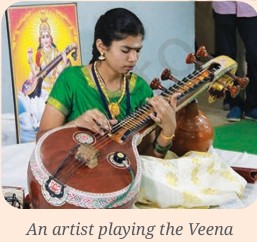
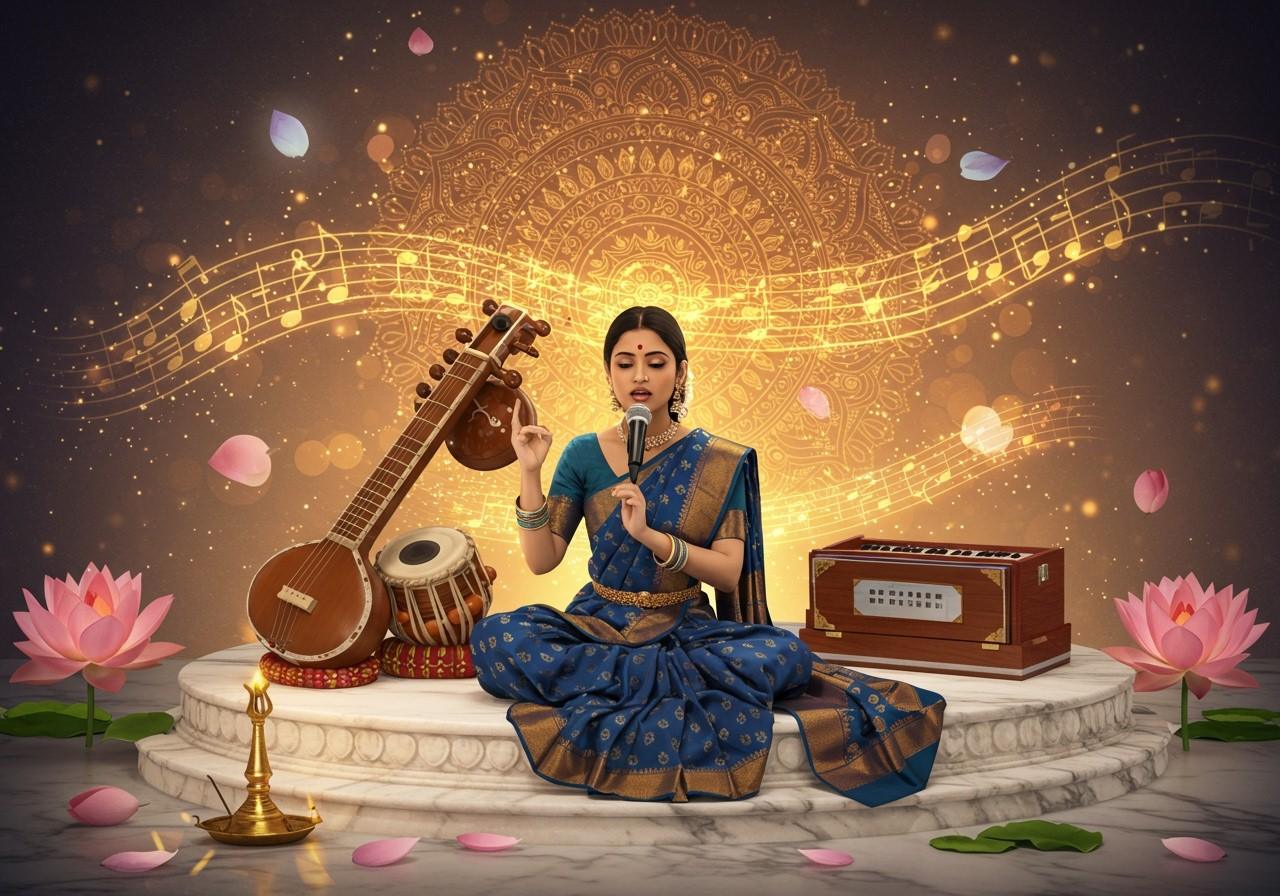
The Veena is one of India’s most important traditional string instruments and has a long association with Indian classical music, particularly Carnatic music.
About the Veena
- The Veena is a plucked string instrument.
- It usually has a large resonating body, a long neck, frets, and strings.
- The performer plucks the strings with the fingers while using the other hand to change the pitch along the frets.
- It can produce both melodic lines and expressive musical ornamentation.
Role in Indian Music
The Veena is especially prominent in Carnatic music. It can be used for solo performances as well as musical accompaniment.
A skilled artist can use the Veena to express subtle variations in pitch, melody, rhythm, and emotion. Techniques such as gamakas—ornamental movements between notes—are particularly important in Indian classical music.
Cultural Significance
The Veena has a strong place in Indian cultural and artistic traditions. It is traditionally associated with Goddess Saraswati, who is regarded as a symbol of knowledge, music, learning, and the arts.
ACTIVITY 6.5: ACT IT OUT
1. Ektara Instrumental
The Ektara is a traditional Indian one-string musical instrument commonly associated with folk singers, wandering musicians, and devotional performers. Its simple design produces a distinctive rhythmic and melodic sound.
Act It Out
Imagine you are an artist travelling from one village to another with your Ektara.
- Hold an imaginary Ektara in one hand.
- Gently pluck its single string with the other hand.
- Maintain a steady rhythm and tempo.
- Sing a simple folk or devotional song.
- Use facial expressions and body movements to show the emotion of the song.
- Imagine an audience listening and responding to your performance.
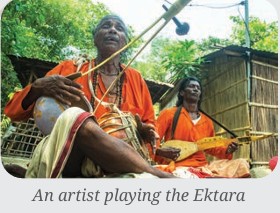
Act It Out: Ektara
- How does the Ektara create rhythm?
The artist repeatedly plucks its single string in a steady pattern, creating a simple rhythmic pulse that supports the song. - What mood or emotion does the song express?
It can express emotions such as devotion, peace, joy, longing, or spirituality, depending on the song. - How does the artist use voice and movement?
The artist uses singing, facial expressions, hand movements, and body gestures to communicate the meaning and emotion of the song. - How does the instrument support the storytelling?
The Ektara provides a continuous musical accompaniment that sets the rhythm, supports the voice, and helps create the mood of the story.
2. Santoor Instrumental
When played without singing, the Santoor can create a complete musical experience through melody, rhythm, pitch, and expression. Different patterns of striking the strings can create fast, energetic passages or slow, peaceful melodies.
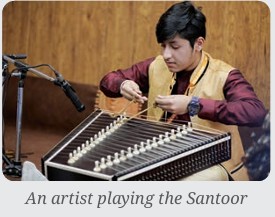
Key Features
- Type: Stringed instrument
- Shape: Trapezoid-shaped wooden instrument
- Strings: It has many strings arranged in groups.
- Playing Method: The strings are struck gently with wooden mallets.
- Sound: Produces a clear, bright, and soothing tone.
- Musical Tradition: Particularly associated with the musical traditions of Kashmir and later became an important instrument in Hindustani classical music.
Listening Activity
While listening to a Santoor instrumental piece, observe:
- Is the tempo slow or fast?
- Is the sound soft, bright, or energetic?
- What mood or emotion does it create?
- Can you identify repeated rhythmic or melodic patterns?
- How does the artist use changes in pitch and tempo?
Conclusion
Music is much more than a combination of sounds. It is a powerful form of human expression, communication, imagination, and creativity. Through music, we can express feelings and ideas that may sometimes be difficult to communicate through ordinary words.
The different elements of music—voice, instruments, pitch, tempo, rhythm, melody, harmony, and musical layers—work together to create a particular mood and emotional experience. A slow melody may create a feeling of peace or sadness, while a lively rhythm may create excitement, happiness, or energy.
Music also provides a wonderful opportunity for creative expression. Singing, playing instruments, composing melodies, experimenting with rhythms, creating musical narratives, and performing in groups allow us to develop our own ideas and styles. There is no single way to express an emotion through music; different people may create different musical responses to the same feeling.