
Introduction
Dance and sculpture are two different forms of art, yet they share a deep connection through the human body, movement, posture, balance and expression. Dance uses the moving body to communicate rhythm, emotions and stories, while sculpture captures the human body in a still form. Indian artists have long represented dancers, musicians, deities and other human figures in stone and metal, preserving moments of movement and expression for generations.
The relationship between dance and sculpture can be seen in many famous Indian monuments, such as the Chidambaram Temple in Tamil Nadu, Konark Sun Temple in Odisha, Ellora Caves in Maharashtra, Elephanta Caves in Maharashtra and Dilwara Temples in Rajasthan. Their sculptures show different positions of the arms, legs, hands and torso, along with facial expressions and gestures. These artistic representations help us understand how the human body can become a language of movement and storytelling.
The Vishnudharmottara Purana also emphasises the interrelation and interdependence of different art forms. Knowledge of dance, movement and expression can therefore help an artist understand and represent the human form in sculpture.
Dancing Body in Sculptures
Dancing Body in Sculptures refers to the way sculptors represent the movement, rhythm, posture and expressions of dancers in stone, bronze and other materials. Although a sculpture is stationary, a skilled artist can make the figure appear graceful, energetic and full of movement.
Indian art has a long tradition of depicting dancing figures in temples and sculptures. These figures show different body positions, hand gestures, facial expressions and movements associated with dance.
Famous Example: Nataraja
One of the most famous examples is Nataraja, the dancing form of Shiva. The figure represents cosmic dance and beautifully combines movement, balance, energy and symbolism.
Connection with Dance
Dancing sculptures show the close relationship between dance and visual art. A dancer creates movement with the body, while a sculptor captures one moment of that movement in a permanent form.
The Vishnudharmottara Purana emphasises the interrelation and interdependence between various art forms.
The Vishnudharmottara Purana is an important ancient Indian text that highlights the interrelationship and interdependence of different art forms. It explains that arts such as painting, sculpture, dance, music, theatre and literature are not completely separate. Instead, they influence and support one another.
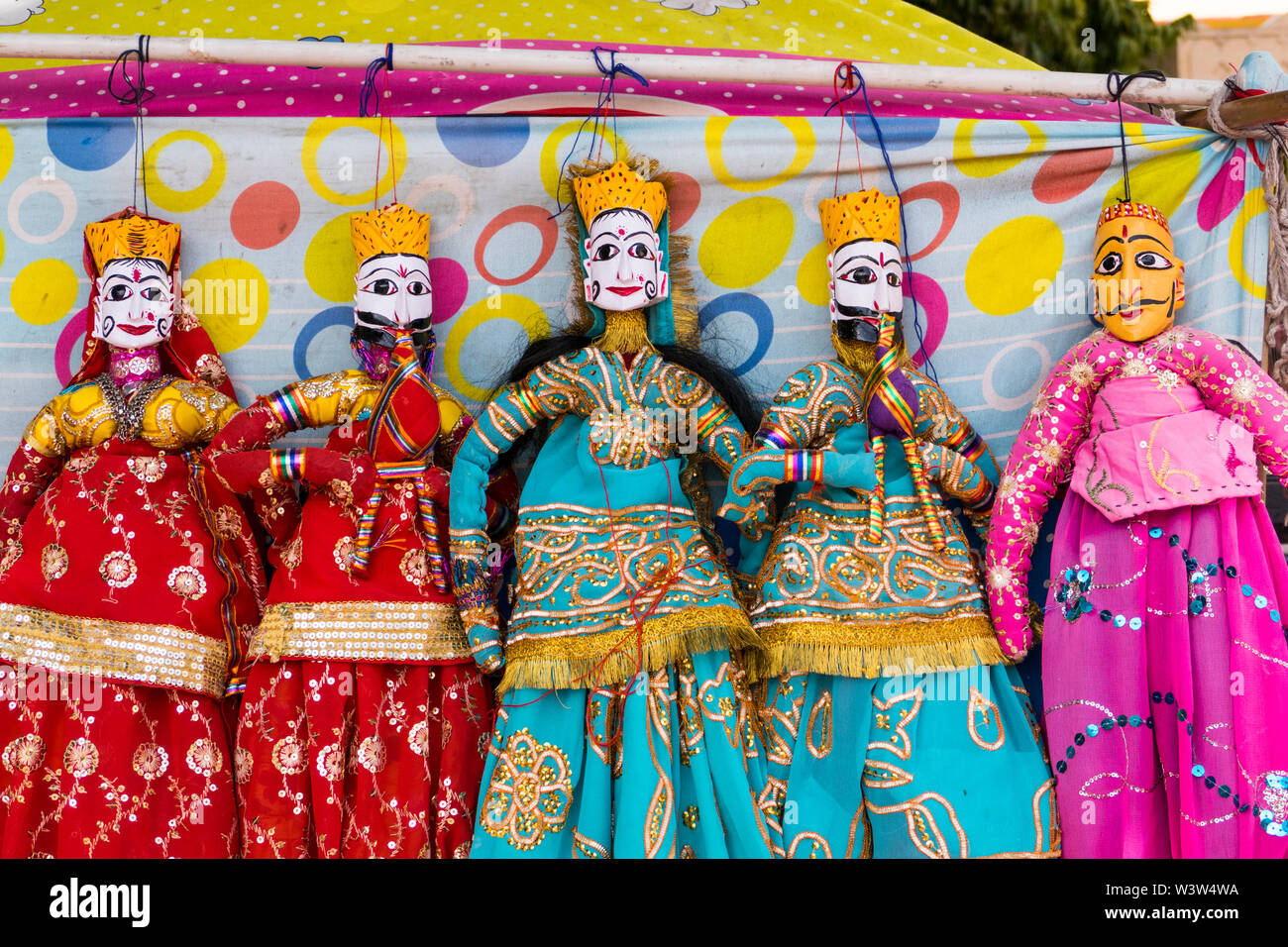
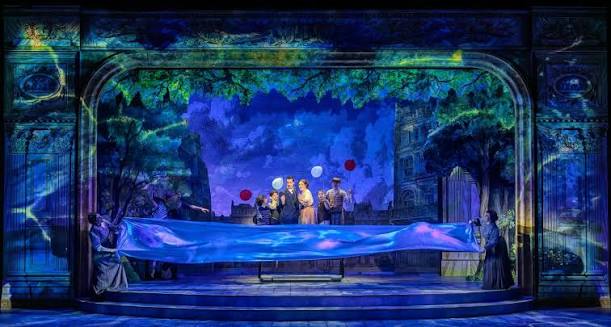
For example, a sculptor who creates a dancing figure needs to understand the movements, postures, gestures and expressions used in dance. Similarly, a dancer needs knowledge of music, rhythm, expression and body movement. A theatre performance may combine acting, music, dance, costumes, painting, set design and storytelling.
Dated around 400 to 600 CE, the end of the Gupta period, is also known as the golden age of Indian arts. It understands the importance of spatial concepts of the performing body.
discussion occurs between King Vajra and Markandeya on painting and drama in a memorable verse. It states the manifold interrelationship of performing and visual art.
Sage Markandeya instructs, “One who does not know the laws of painting (chitra) can never understand the laws of image-making (shilpa); and, it is difficult to understand the laws of painting (chitra) without any knowledge of the technique of dancing (nrtya) …”
1. Dancing Shiva carvings at Ellora caves, Maharashtra
The Dancing Shiva carvings at the Ellora Caves in Maharashtra are striking examples of how ancient Indian artists represented movement, rhythm, energy and expression in stone. Ellora is a UNESCO World Heritage Site famous for its rock-cut Buddhist, Hindu and Jain monuments.
Dancing Shiva
Shiva is often represented as a dancer, particularly in the form of Nataraja, meaning the “Lord of Dance.” His cosmic dance symbolises the dynamic nature of the universe.
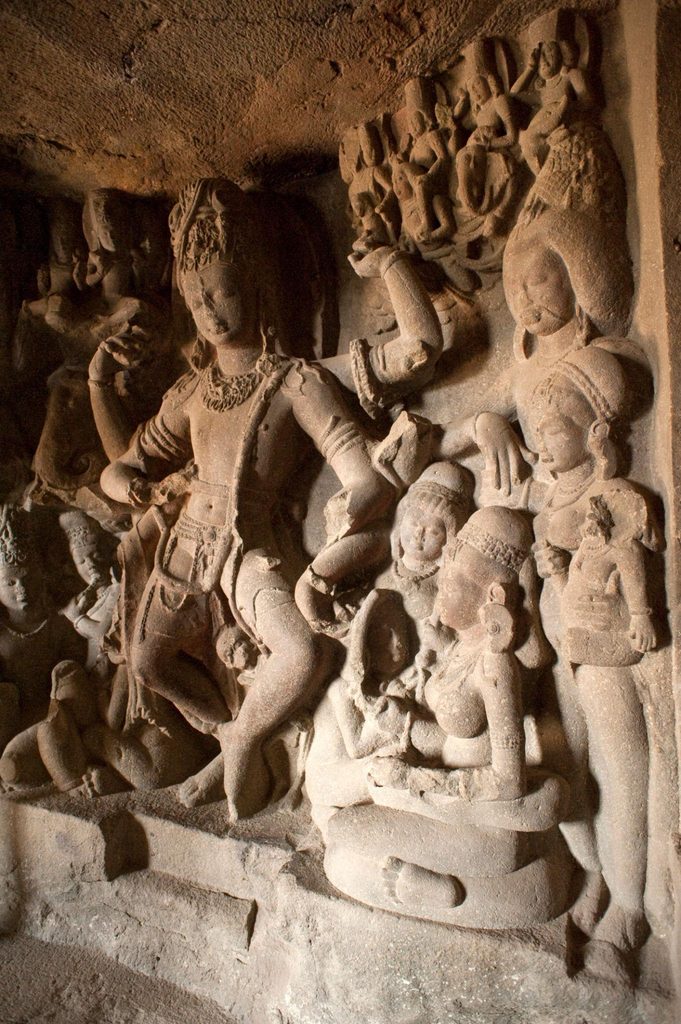
In the sculptures at Ellora, Shiva is shown in dynamic poses, with carefully arranged arms, legs and body movements. Although the carving is made from solid rock and cannot physically move, the posture gives the viewer a strong impression of dance and motion.
Geometrical shapes in dance
Dance and mathematics often intertwine with geometrical shapes, playing a key role in creating balanced and visually appealing movements.
Small body parts, medium body parts and big body parts which are mentioned in dance texts. You are familiar with identifying shapes created by upper body bends or torsos.

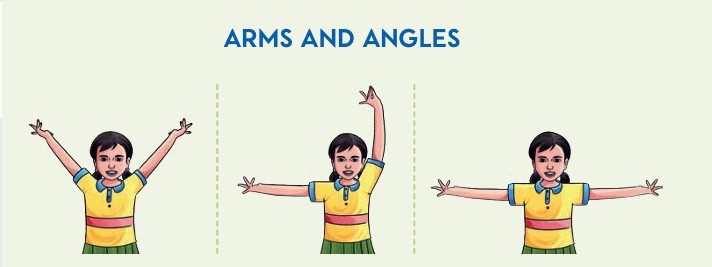
Arms and Angles
Earlier you have used your arms in different ways, moved in circles, made half circles and diagonals. Now, observe how your arms create various geometrical angles when it is used in dance.
“Arms and Angles” refers to the way artists use the position, direction and angle of the arms and other body parts to create movement, balance and expression in visual art and performance. This is especially important when studying dancing bodies in sculptures.
In Indian sculpture, the position of the arms is rarely accidental. The artist carefully arranges the arms, hands, shoulders, head and legs to make a figure appear graceful, dynamic and expressive.
Note to the Teacher:
Connecting these actions to the lessons in geometry would help the child understand the concepts of lines and angles in an enjoyable way.
Now, it is time to focus on your lower torso, and explore the geometrical shapes formed through its movements and postures.
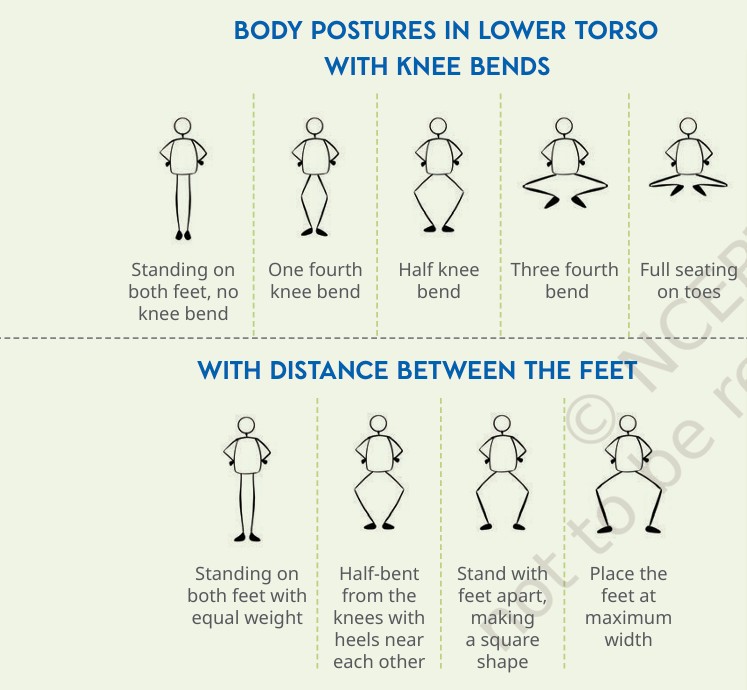
ACTIVITY 10.1: MY BODY IN VARIOUS SHAPES
Combine your upper torso, lower torso, and arms to make various shapes and postures, and let your friends identify the shapes — squares, triangles, rectangles, parallels or rhombuses?
The human body can take many different shapes by changing the position of the head, arms, hands, legs, feet and torso. A simple change in posture can communicate movement, emotion, balance or an idea.
Artists and performers use these body shapes to make their work more expressive and interesting.
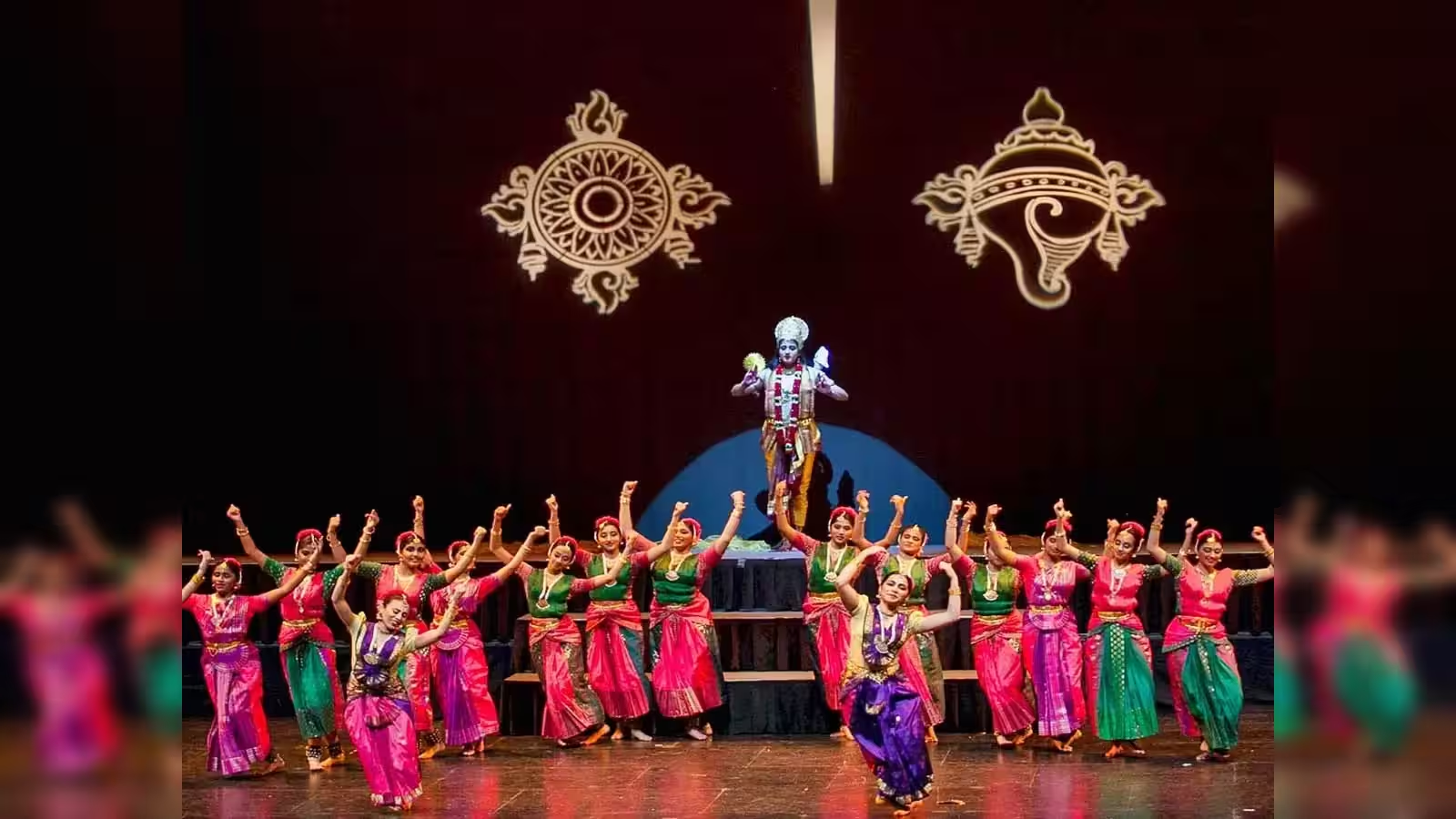
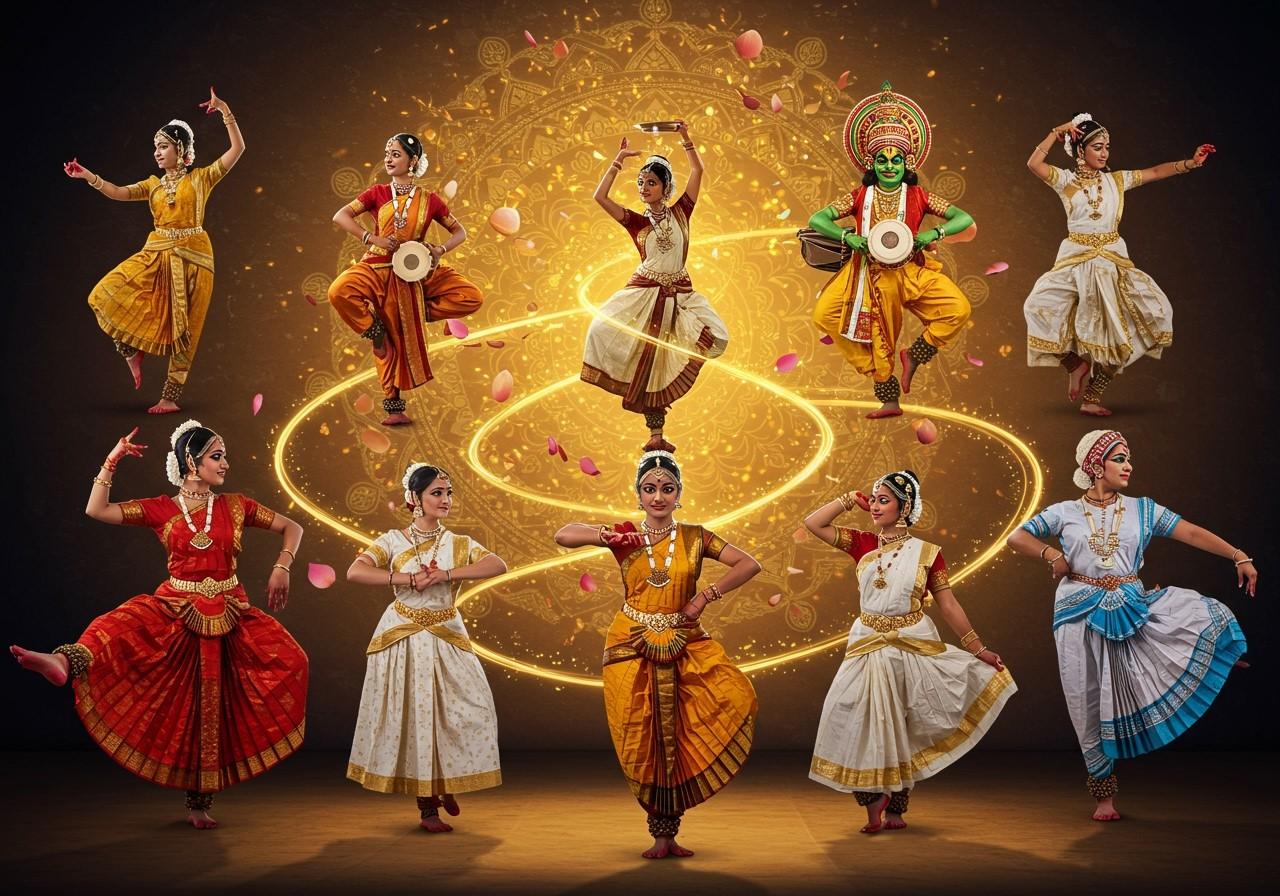
1. Bharatanatyam
Bharatanatyam is an excellent example of how the human body can create different shapes, angles, postures and movements to express rhythm, emotions and stories. In this classical dance form, every part of the body has an important role.
Bharatanatyam uses carefully structured body positions. The dancer changes the position of the arms, legs, head, hands and torso to create beautiful and expressive shapes.
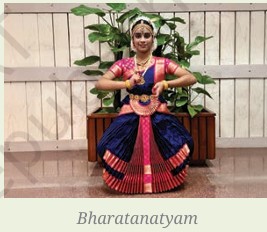
Araimandi Position
- One of the most recognisable Bharatanatyam positions is araimandi. The dancer bends the knees and turns them outward while maintaining an upright torso.
- This creates a strong, balanced and symmetrical body shape.
Arms and Angles
- The dancer uses the arms in many different positions:
- Raised above the head
- Extended sideways
- Bent at the elbows
- Held in front of the body
- Positioned diagonally
- These different angles create geometric patterns and visual beauty.
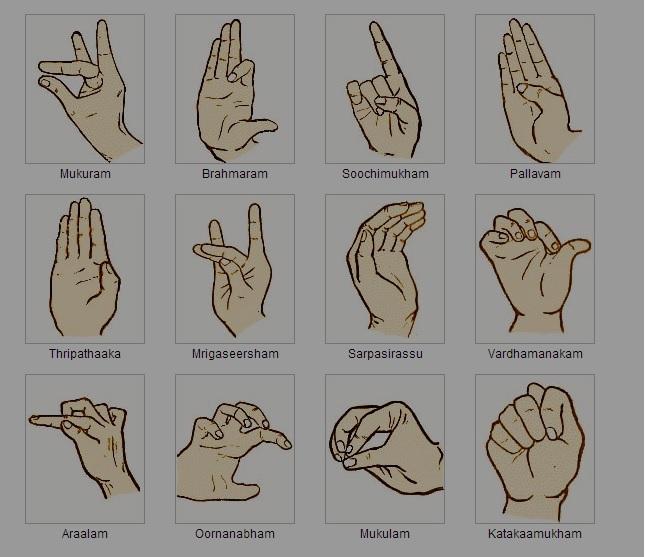
Hand Gestures — Mudras
The hands form different mudras to communicate meaning. A mudra may represent an object, person, action, emotion or idea.
Thus, the hands become an important part of the dancer’s visual language.
Head and Eye Movements
The head can turn, tilt or move in different directions. The dancer also uses eye movements to guide the audience’s attention and express emotions.
Curved and Straight Shapes
Bharatanatyam includes both straight and curved body lines. A dancer may stretch the arms and legs to create an open shape or bend the body to create a more curved shape.
Balance and Symmetry
Many Bharatanatyam poses require excellent balance and body control. The dancer may create symmetrical shapes with both arms or deliberately create an asymmetrical pose for dramatic effect.
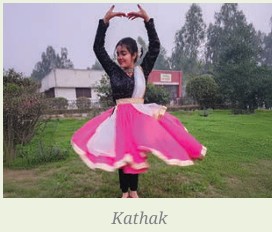
2. Kathak
In Kathak, the body shapes and creates geometry through a central vertical axis, straight lines, balanced curves, and sharp angles.
Core Alignment and Posture
- Spine and Torso: Kept upright and straight with a consolidated core, tucked tummy, and aligned back.
- Shoulders and Head: Shoulders are dropped down and rolled back slightly; ears stay aligned with the shoulders and the chin is held at a normal upright angle.
- Foot and Leg Position: Feet typically begin in a small V-shape or heels-together-toes-apart stance, ensuring equal body weight distribution.
Shaping Space through Arms and Hands
- Hastas and Mudras: Hand gestures like Pataka or curved finger positions act as expressive vocabulary at chest level.
- Diagonals and Curves: Arms stretch into precise diagonal lines or gentle frames around the face, maintaining a balance between symmetry and fluid grace.
- Chakkars (Spins): Rotations are anchored around the body’s central axis with a fixed focal point to maintain balance and clear geometric lines.
3. Kathakali
Kathakali is a major classical dance-drama tradition of Kerala, India. It combines dance, drama, music, facial expressions, hand gestures and elaborate costumes and make-up to tell stories, especially those drawn from Indian epics and traditional literature.
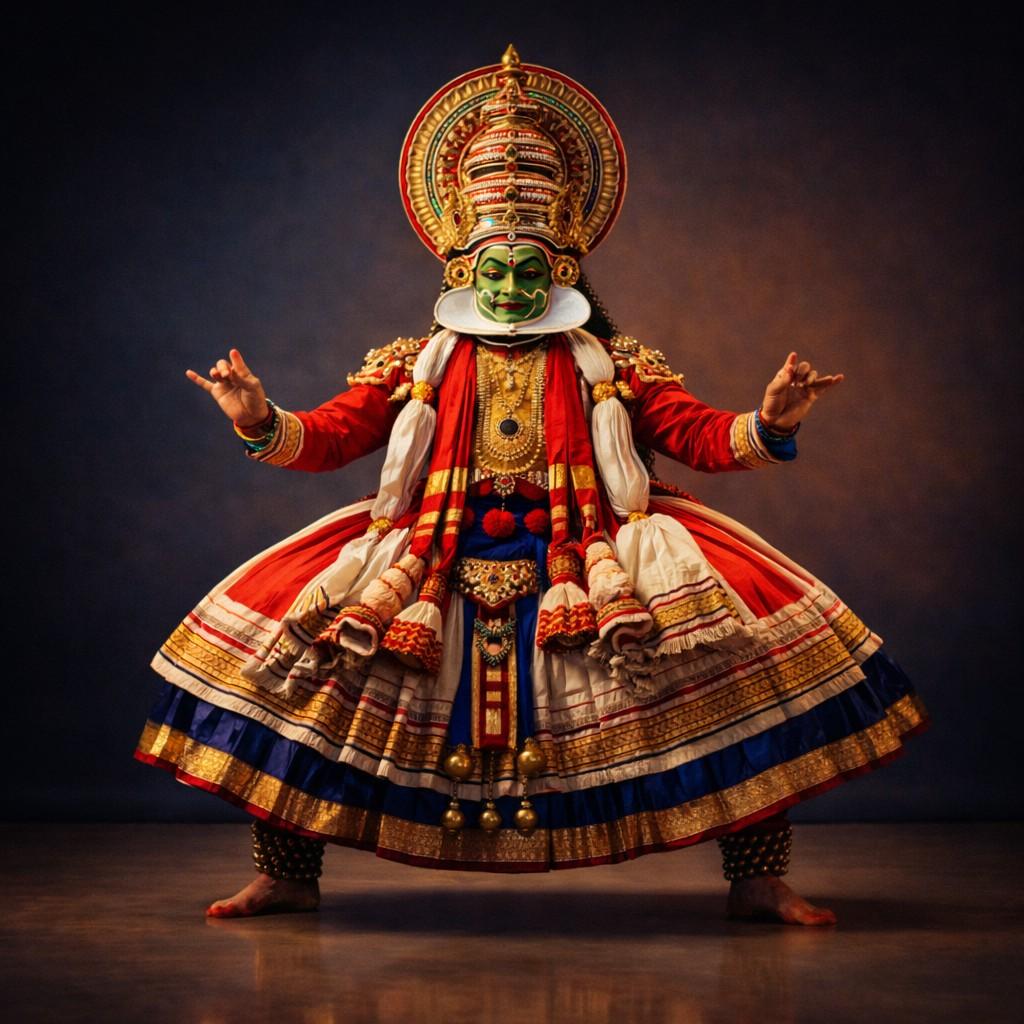
Kathakali uses strong, stylised body movements and poses to communicate characters, emotions and stories. The performer creates different shapes, lines, angles and positions using the arms, legs, head and torso.
- Body Postures: Strong and stylised postures give characters a distinctive appearance.
- Hand Gestures (Mudras): Gestures are used to communicate words, objects, actions and ideas.
- Facial Expressions: The eyes, eyebrows and facial muscles express emotions and help tell the story.
- Leg and Foot Movements: Bent knees and controlled movements create strong and dramatic body shapes.
- Arms and Angles: Extended, raised and bent arms create expressive lines and shapes.
- Costume and Make-up: Elaborate costumes and colourful make-up visually identify different character types.
ACTIVITY 10.2: DANCING SCULPTURES
Temple sculptures throughout India have beautiful dance representation. Some of the important temples include the
1. Chidambaram Temple in Tamil Nadu,
2. The Konark Sun Temple in Odisha,
3. The Dilwara Temple in Rajasthan and
4. Elephanta Caves in Maharashtra.
1. Chidambaram Temple in Tamil Nadu
Thillai Nataraja Temple, also referred as the Chidambaram Nataraja Temple, is a Hindu temple dedicated to Nataraja, the form of Shiva as the lord of dance (cosmic dancer).
This temple is located in Chidambaram, Tamil Nadu, India. This temple has ancient roots and a Shiva shrine existed at the site when the town was known as Thillai. Chidambaram, the name of the city literally means “stage of consciousness”. The temple is commonly called “Kovil” (The Temple) in Tamil Shaivism Tradition.
The architecture symbolizes the connection between the arts and spirituality, creative activity and the divine.
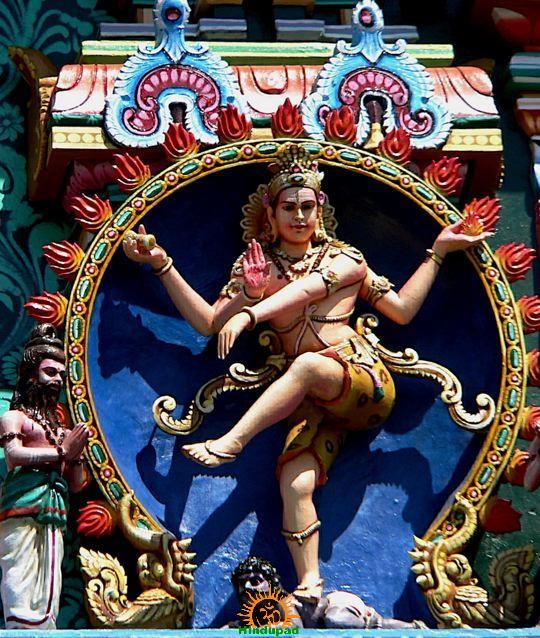
The present temple was renovated into current form in the 10th century when Chidambaram was one of the main cities of Chola dynasty.
The Nataraja temple in Chidambaram is located in the southeastern Indian state of Tamil Nadu. It is about 5 kilometres (3.1 mi) north of the Kollidam River (Kaveri), 15 kilometres (9.3 mi) west from the coast of Bay of Bengal, and 220 kilometres (140 mi) south of Chennai.
The Nataraja temple has ancient roots, early textual evidence, such as those of the Sangam tradition, suggest a temple existed here along with Madurai in ancient times, but the town is not named Chidambaram in these pre-5th-century texts. The earliest mention of “dancing god of Chidambaram” as Shiva is found in 6th- and early-7th-century texts by Appar and Sambadar. The Suta Samhita embedded inside Sri Kanda Puranam and variously dated between 7th and 10th century mentions the Chidambaram dance.
These carvings are especially useful for understanding body shapes, arm positions, gestures, balance and movement in Indian classical dance.
2. The Konark Sun Temple in Odisha
The name Konark (Sanskrit: कोणार्क, romanized: Koṇarka) derives from the combination of the Sanskrit words कोण, koṇa, ‘corner, angle’ and अर्क, arka, ‘the Sun’. The context of the term koṇa is unclear, but probably refers to the southeast location of this temple either within a larger temple complex or in relation to other sun temples on the subcontinent. Arka refers to the Hindu god of the Sun, Surya.
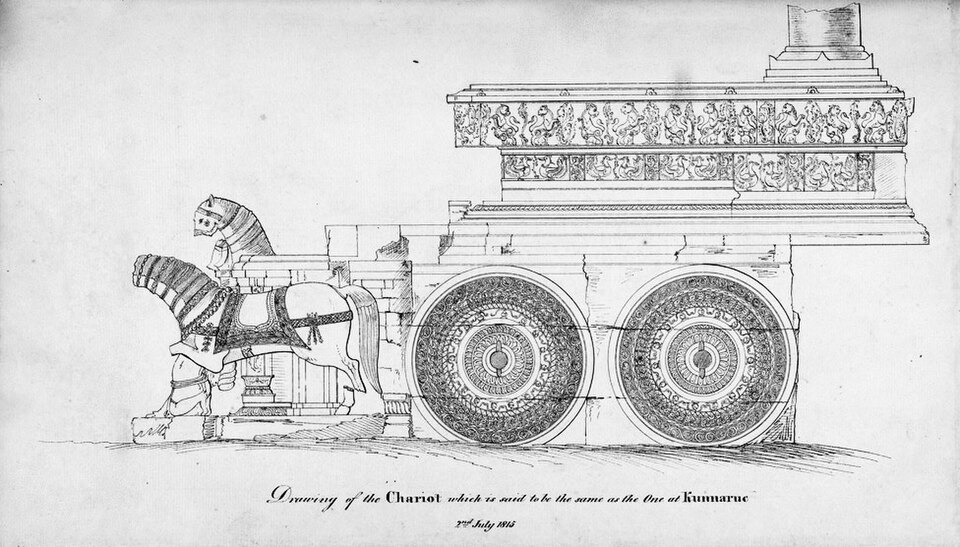
Konark Sun Temple is a 13th-century CE Hindu Sun temple at Konark about 35 kilometres (22 mi) northeast from Puri city on the coastline in Puri district, Odisha, India. The temple is attributed to king Narasingha Deva I of the Eastern Ganga dynasty about 1250 CE.
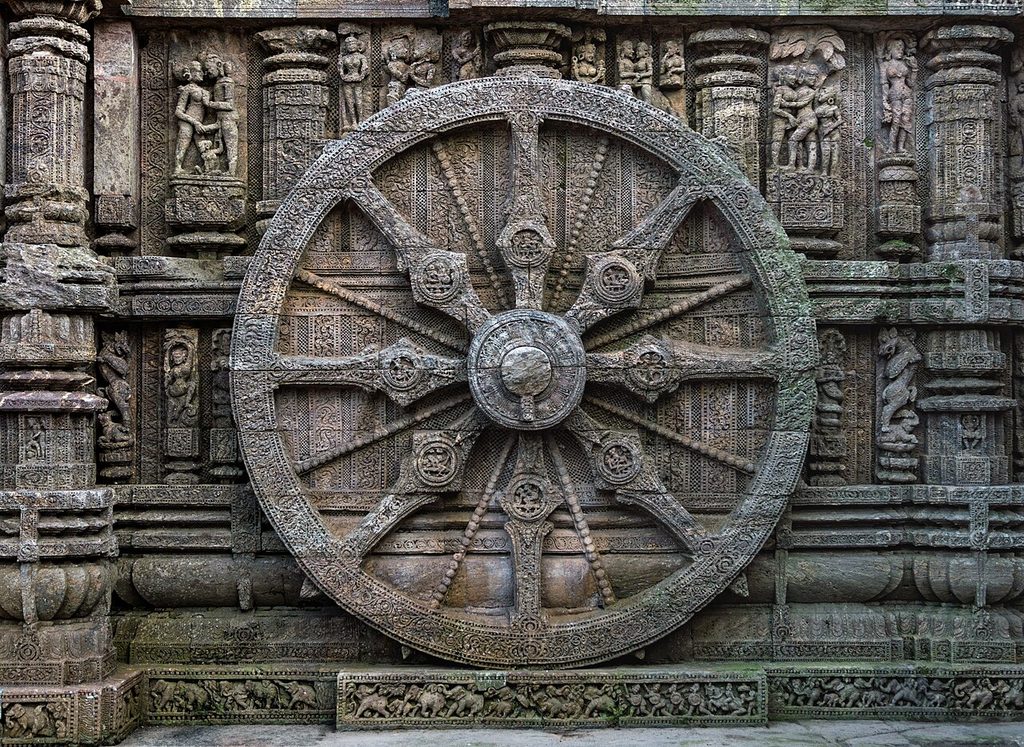
Dedicated to the Hindu Sun-god Surya, it reflects the pinnacle of Kalingan architecture and artistic excellence, what remains of the temple complex has the appearance of a 30-metre (100 ft) high chariot with immense wheels and horses, all carved from stone. Once over 61 metres (200 ft) high, much of the temple is now in ruins, in particular the large shikara tower over the sanctuary; at one time this rose much higher than the mandapa that remains.
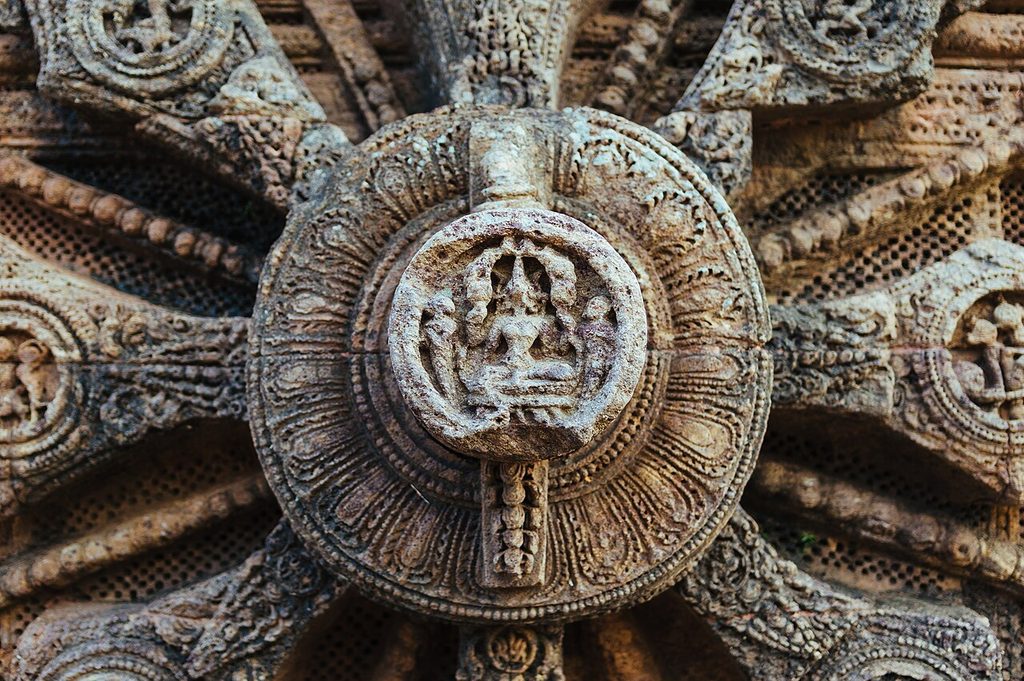
The structures and elements that have survived are famed for their intricate artwork, iconography, and themes, including erotic kama and mithuna scenes.
Also called the Surya Devalaya, it is a classic illustration of the Odisha style of Architecture or Kalinga architecture.
The Temple is located in an eponymous village (now NAC Area) about 35 kilometres (22 mi) northeast of Puri and 65 kilometres (40 mi) southeast of Bhubaneswar on the Bay of Bengal coastline in the Indian state of Odisha. The nearest airport is Biju Patnaik Airport in Bhubaneswar, Odisha. Both Puri and Bhubaneswar are major railway hubs connected by Indian Railways.
The Konark Sun Temple was built in 1250 CE during the reign of the Eastern Ganga King Narasingha Deva I from stone in the form of a giant ornamented chariot dedicated to the Sun god, Surya.
The seven horses are named after the seven metres of Sanskrit prosody: Gayatri, Brihati, Ushnih, Jagati, Trishtubh, Anushtubh, and Pankti. Typically seen flanking Surya are two females who represent the dawn goddesses, Usha and Pratyusha. The goddesses are shown to be shooting arrows, a symbol of their initiative in challenging the darkness. The architecture is also symbolic, with the chariot’s twelve pairs of wheels corresponding to the 12 months of the Hindu calendar, each month paired into two cycles (Shukla and Krishna).
i. The Stone Chariot
The temple is famous for its enormous stone chariot, traditionally represented with:
12 pairs of elaborately carved wheels
Horses pulling the chariot
Richly decorated stone surfaces
Detailed sculptural panels
The wheels are among the most recognisable features of the temple.
ii. Dancing Figures and Sculptures
Konark is particularly important when studying dance and the human body in sculpture. The temple contains numerous carvings of dancers, musicians and performers.
These sculptures show different:
Body postures
Arm positions
Hand gestures
Leg movements
Facial expressions
Rhythmic poses
The figures appear to capture different moments of dance, even though they are carved permanently in stone.
iii. Connection Between Dance and Sculpture
The dancing sculptures at Konark demonstrate how a sculptor can transform movement into a still image.
A dancer uses:
Body → Movement → Rhythm → Gesture → Expression
The sculptor captures these qualities as:
Stone → Posture → Form → Gesture → Expression
This creates the impression that the stone figures are frozen moments of a dance performance.
iv. Music and Performing Arts
The temple also contains sculptures of musicians playing different instruments. These include representations of performers with drums and string and wind instruments.
This makes Konark an excellent example of the connection between:
Dance + Music + Sculpture + Architecture
v. Cultural Importance
The Konark Sun Temple represents the extraordinary craftsmanship of the artists of medieval Odisha. Its sculptures provide valuable visual evidence of dress, ornaments, musical instruments, dance poses and cultural life of the period.
The temple is also closely associated with Odisha’s rich dance tradition, particularly Odissi.
vi. UNESCO World Heritage Site
The Konark Sun Temple is recognised as a UNESCO World Heritage Site, reflecting its outstanding architectural and artistic importance.
3. The Dilwara Temple in Rajasthan
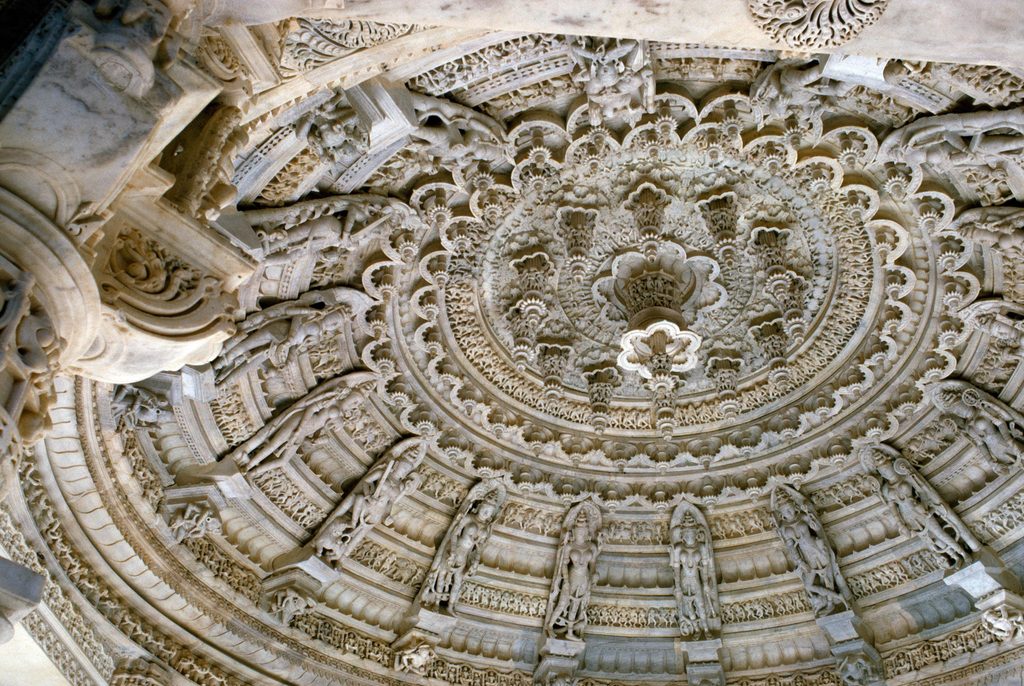
The Dilwara Temples are a group of magnificent Jain temples located at Mount Abu in Rajasthan. They are renowned for their extraordinary white-marble architecture, delicate carvings and detailed sculptures. The temples are an important example of India’s rich architectural and artistic heritage.
i. History
The Dilwara temple complex was built mainly between the 11th and 13th centuries. The five principal temples are dedicated to different Jain Tirthankaras.
The five temples are:
- Vimal Vasahi
- Luna Vasahi
- Pithalhar
- Parshvanatha
- Mahavir Swami
ii. Marble Craftsmanship
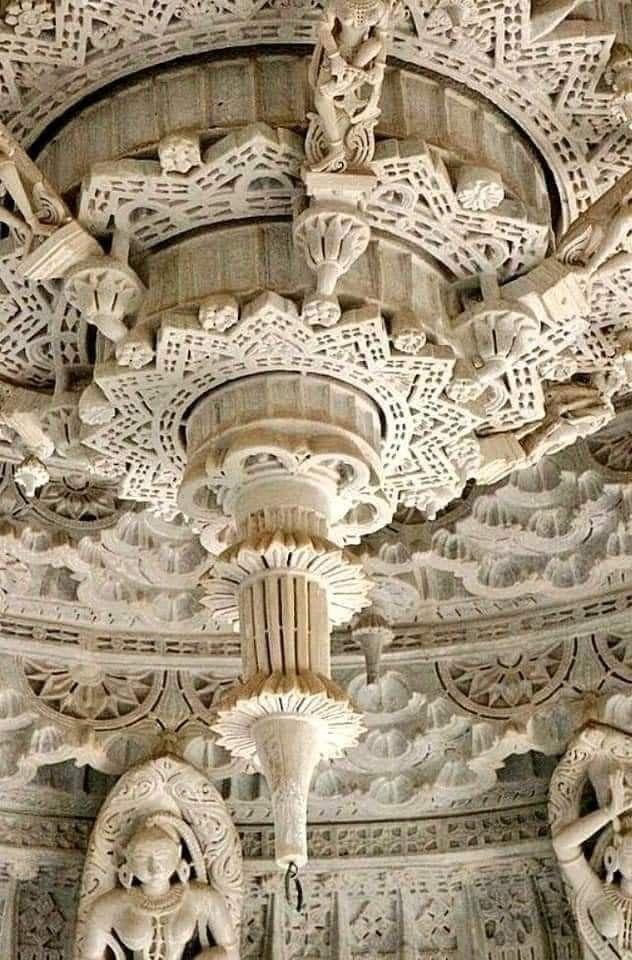
The temples are especially famous for the incredible detail carved into white marble. Artists created:
- Intricately carved pillars
- Decorative ceilings
- Floral patterns
- Geometric designs
- Sculptures
Figures and ornamental details
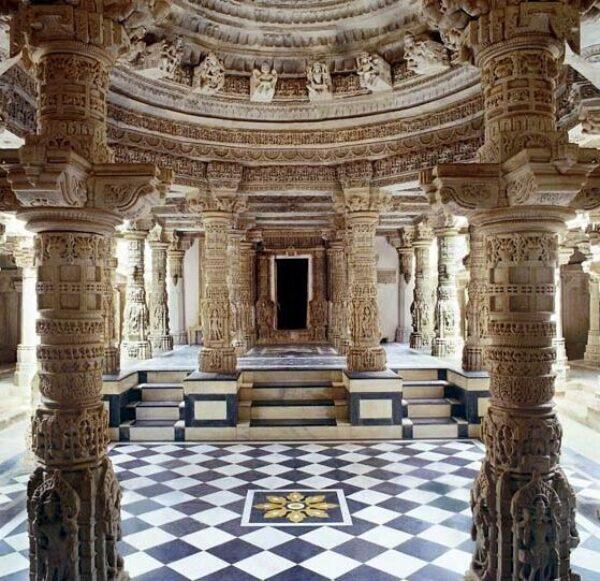
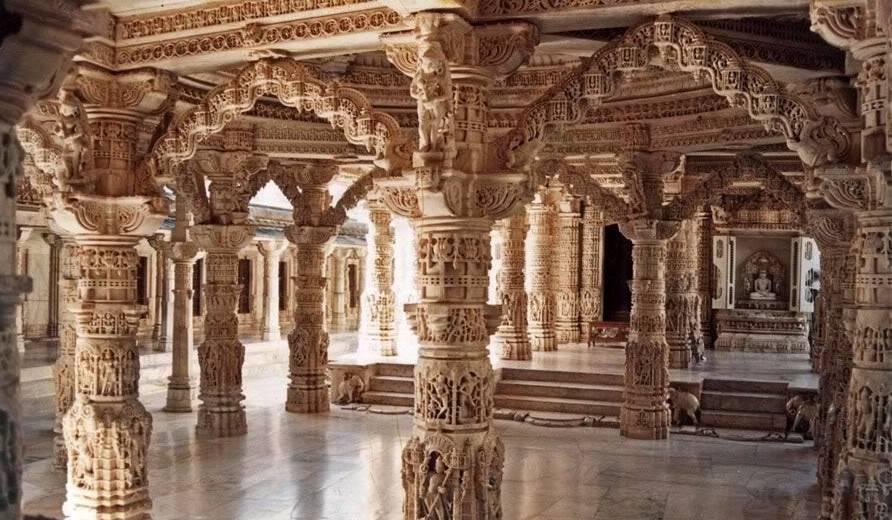
The delicate work demonstrates the extraordinary patience, precision and craftsmanship of the artists.
iii. Sculptures and Human Forms
The carvings include numerous human and divine figures. Their postures, gestures, proportions and expressions demonstrate the importance of understanding the human body in Indian visual art.
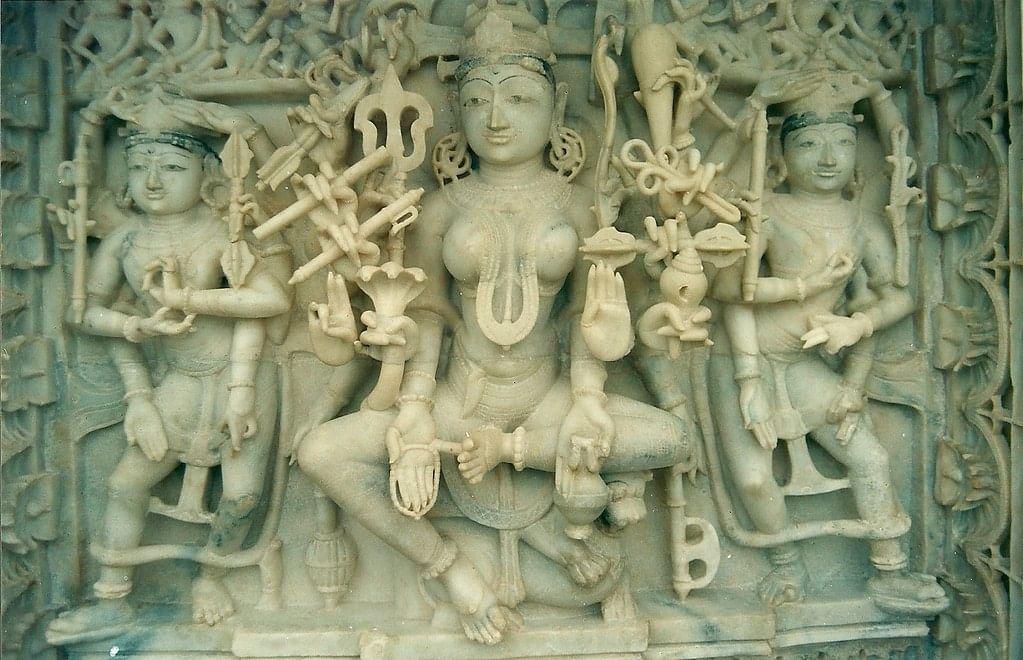
Some figures are represented in graceful poses, showing how artists used lines, curves, balance and symmetry to create visual beauty.
iv. Connection Between Art Forms
The Dilwara Temples can be understood through the broader Indian tradition of connecting different arts.
Architecture → Creates the artistic space
Sculpture → Gives form to figures and stories
Design → Creates patterns and visual rhythm
Craftsmanship → Brings the entire structure together
The intricate marble work demonstrates how architectural design and sculpture can work together to create a unified artistic experience.
v. Importance of the Temples
The Dilwara Temples are important because they demonstrate:
- Exceptional marble carving
- Jain religious and cultural heritage
- Medieval Indian architecture
- Detailed ornamental design
- Artistic discipline and craftsmanship
- The relationship between architecture and sculpture
4. Elephanta Caves in Maharashtra.
The Elephanta Caves are a remarkable group of ancient rock-cut cave temples located on Elephanta Island in Maharashtra, near Mumbai. They are famous for their magnificent sculptures, especially those depicting Lord Shiva and different aspects of Shaivite traditions.
The caves demonstrate the close relationship between sculpture, architecture, mythology, human forms and artistic expression.
1. History
The main monuments at Elephanta are generally dated to around the 5th–6th centuries CE. The caves were carved directly into solid rock and contain large halls, pillars and sculptural panels.
The site was designated a UNESCO World Heritage Site in 1987.
2. Sculptures of Shiva
Elephanta is particularly famous for its large and impressive sculptures of Shiva. One of the best-known works is the Trimurti, or Maheshmurti, a monumental three-faced representation of Shiva.
Other important representations include Shiva associated with:
- Dance
- Marriage
- Cosmic activities
- Divine stories
- Different forms and aspects
3. Dancing Shiva
Some carvings at Elephanta depict Shiva in dynamic poses, showing the connection between the divine figure and dance.
The sculptor uses:
- Raised and extended arms
- Bent limbs
- Body angles
- Facial expressions
- Movement through posture
to create a sense of energy and action in the stone.
4. Sculptures and Human Forms
The sculptures demonstrate sophisticated understanding of the human body. Artists carefully represented:
- Body proportions
- Postures
- Muscular forms
- Facial features
- Gestures
- Ornaments
- Drapery
Even though the figures are carved in stone, their poses can communicate movement, emotion and character.
5. Connection with Dance
The relationship between dance and sculpture can be seen in the way movement is represented in the carvings.
A dancer uses the body to create:
Movement → Posture → Gesture → Expression
A sculptor captures these elements in:
Stone → Form → Pose → Gesture
Therefore, the sculpture becomes a frozen moment of movement.
6. Architecture and Sculpture
The Elephanta Caves also demonstrate the integration of architecture and sculpture. Large sculptural panels are placed within the cave environment, making the architecture itself part of the artistic experience.
7. Cultural Importance
The Elephanta Caves are important because they preserve a significant tradition of Indian rock-cut architecture and sculpture. They provide valuable examples of how mythology and religious ideas were communicated through visual art.
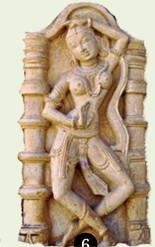
Left to right, top to bottom:
1. Dancing Hindu Goddess, Hoysaleshwara Temple in Halebidu, Karnataka
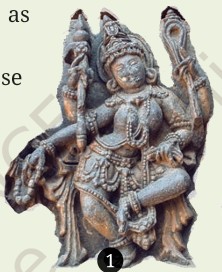
2. Lady Dancer, Sun Temple Konark, Odisha
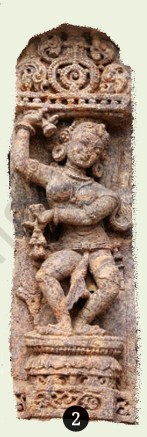
3. Dancing Shiva, Kedareshwara Temple, Halebidu, Karnataka
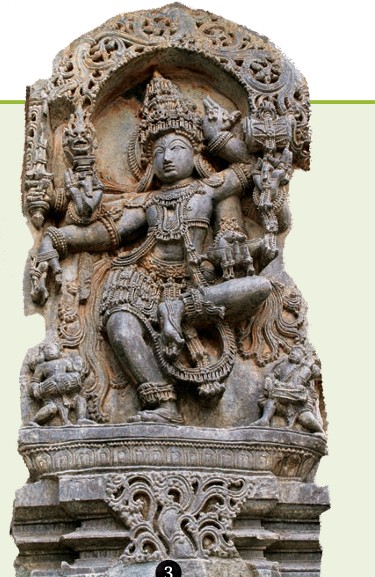
4. Hindu Temple Hoysaleshwara in Halebidu, Karnataka
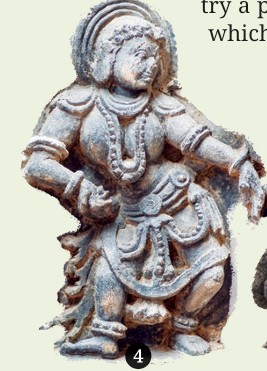
5. Dancers from Hampi, Karnataka
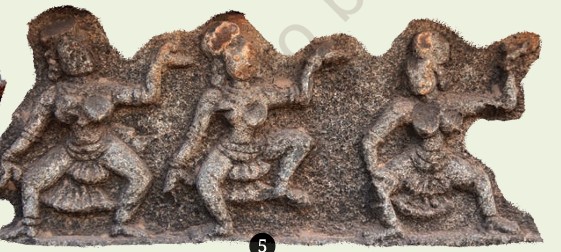
6. Jain Temple, Haridwar, Uttarakhand
Hand gestures
You have learnt Asamyuta hastas (single hand gestures) and Samyuta hastas (double hand gestures) in Kriti, Grade 6. Recall those hastas.
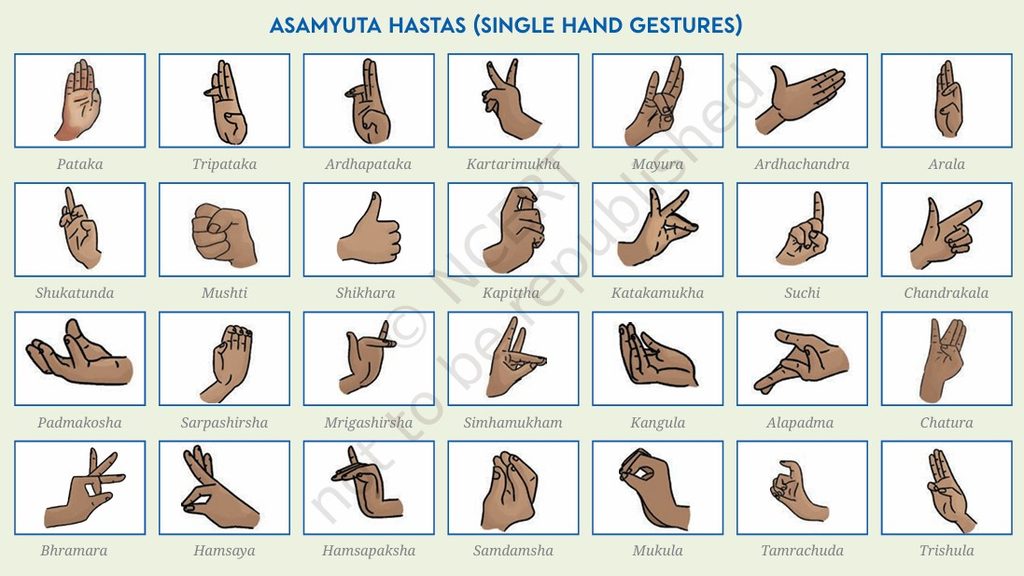
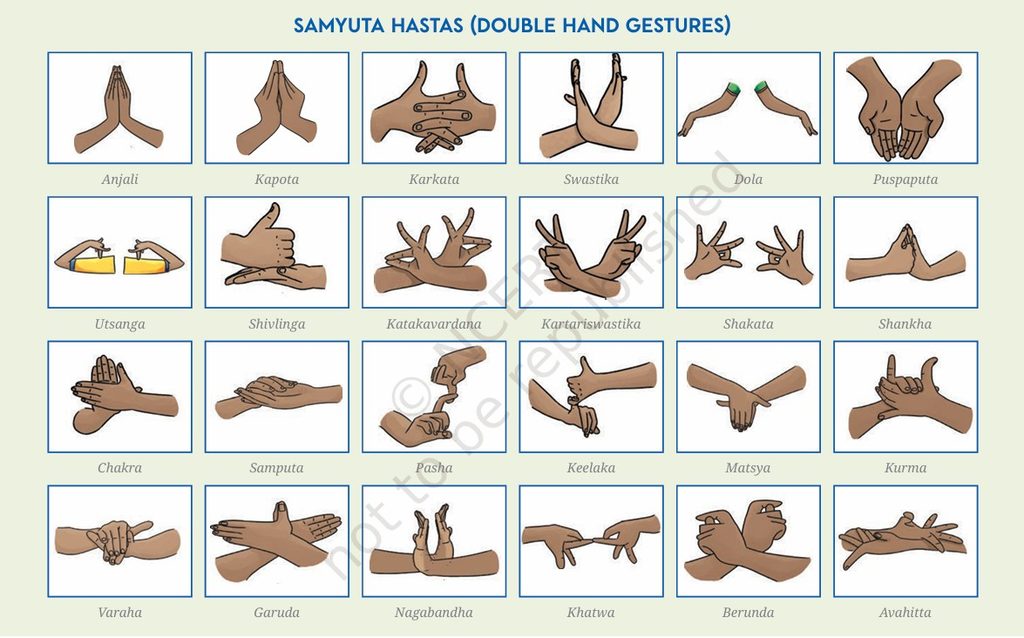
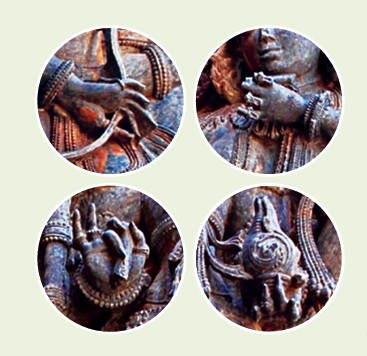
ACTIVITY 10.3: HASTAS IN SCULPTURES
Our Indian sculptures showcase their splendid artistry through intricate stances, expressive features and graceful hastas (hand gestures). Hastas in sculpture impart an artistic aesthetic to the body and convey emotions effectively without the use of words.
Can you see hastas in the pictures given below, try them out and see if you can match them with the hasta illustrations? It is important to understand that these hastas are dance, some hastas are in sculptures of heritage monuments.
Discuss with your friends, and try out hasta mudras as seen and create new ones.
Hastas are hand gestures and positions used in Indian classical dance to communicate ideas, emotions, objects and actions. The representation of hastas in Indian sculptures shows the close connection between dance and sculpture.
Hastas and Indian Sculpture
In classical Indian dance, the hands are an important means of communication. Dancers use specific hand positions called mudras or hastas to express meaning. Sculptors have also represented many such gestures in stone and metal.
A sculptor carefully positions the fingers, hands, arms and wrists to create a particular gesture. This makes the sculpture more expressive and helps viewers understand the action or character being represented.
Examples of Hasta Representation
Different hand positions can suggest:
- Lotus or flowers
- Birds and animals
- Objects
- Blessings
- Devotion
- Greeting
- Protection
- Different emotions and actions
The exact meaning of a hasta depends on the gesture, context and artistic tradition.
Hastas at Indian Temples
Hastas and expressive hand positions can be seen in sculptures at several Indian monuments, including:
- Chidambaram Temple, Tamil Nadu — strongly associated with Nataraja and dance traditions.
- Konark Sun Temple, Odisha — famous for sculptures of dancers and musicians.
- Ellora Caves, Maharashtra — contains expressive human and divine figures.
- Other Indian temples — numerous dancing and devotional figures display varied gestures and poses.
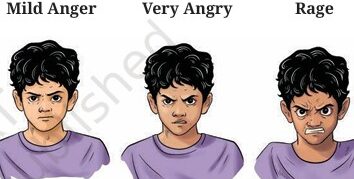
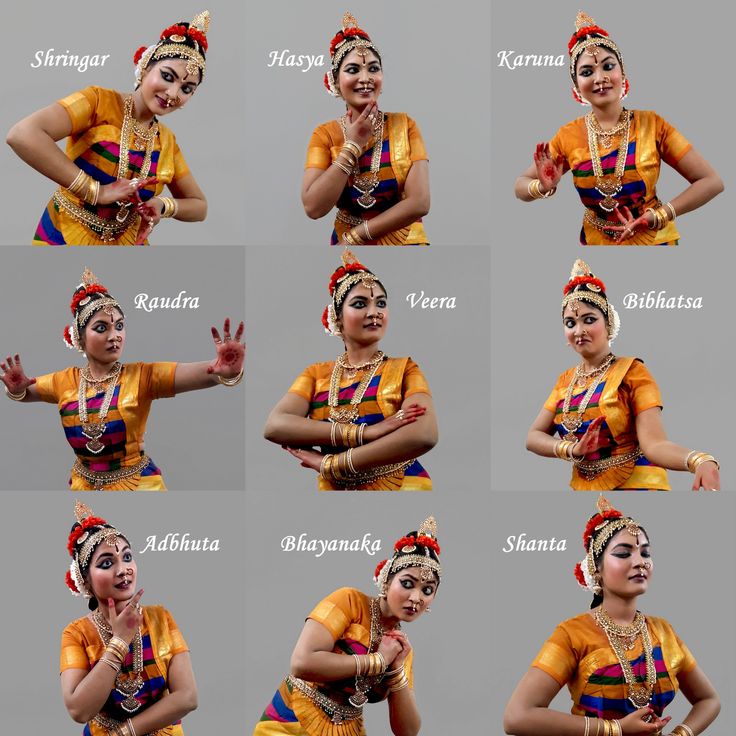
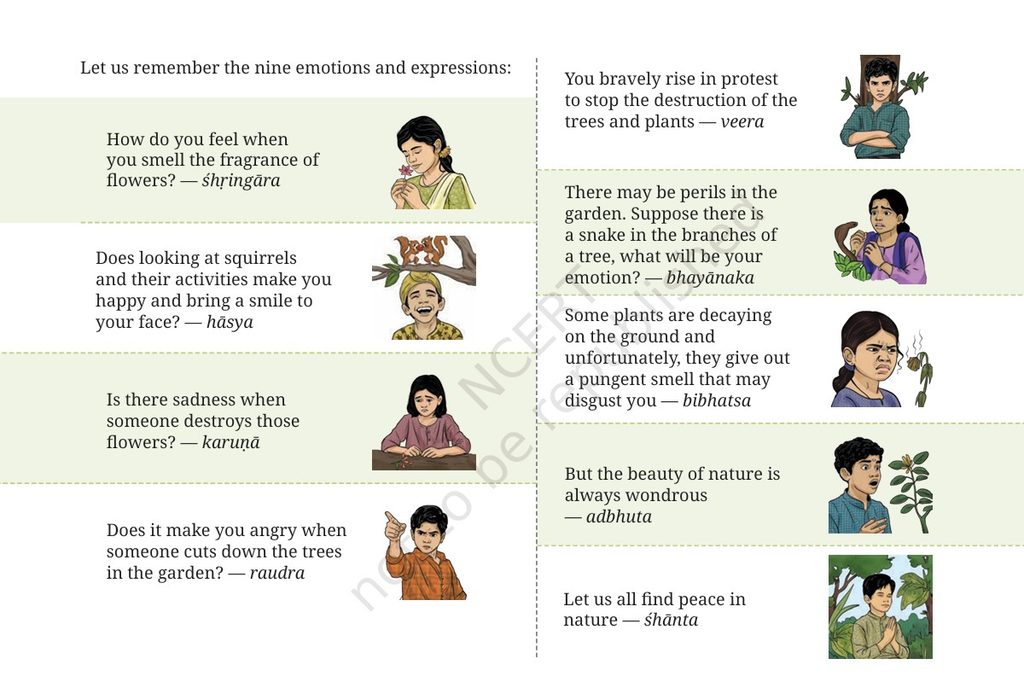
Navarasa: The feeling of the nine emotions
Emotions and expressions are an integral part of Indian dance. These basic emotions give rise to an emotive ambience that is enjoyed by everyone. That is rasa.
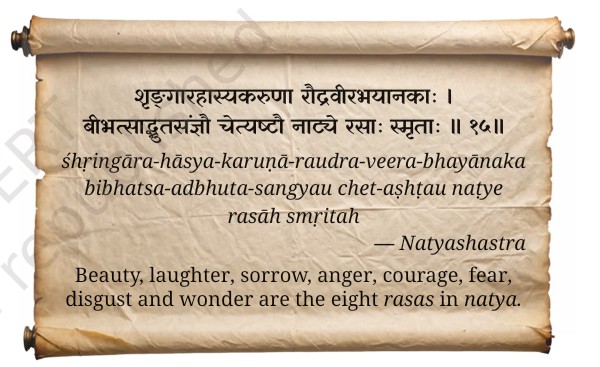
This is the shloka from the Natyashastra that talks about eight rasas. The ninth rasa, shanta was included later by Abhinava Gupta in 10th century CE.
Do you remember the names of the nine emotions we learnt in Kriti, Grade 6? Do you remember expressing them?
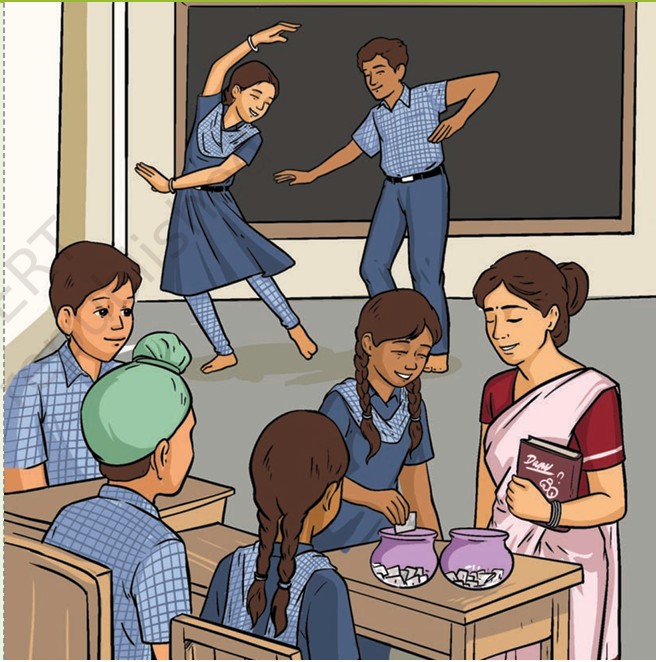
ACTIVITY 10.4: MATCHING EMOTIONS WITH OUR CHORES
Materials
Two bowls of chits Bowl
1: Nine emotional states (happiness, sadness, anger, surprise, fear, excitement, calm, confused, proud). Bowl
2: Daily activities (e.g., brushing teeth, dressing, going to school, eating lunch, doing homework, doing yoga).
Instructions
1. Each child picks a chit from bowl 1 and bowl 2.
2. The child then enacts the daily activity they picked, performing it along with the emotional state from the other chit.
Include hand gestures with this for effective enactment.
Example: If you pick ‘confused’ emotional state from bowl 1 and ‘do homework’ as a daily activity from bowl 2, enact as if you are willing to do homework but don’t want to do it right now (you can scratch your head, leave your pen and hold it again, close the book and open it).
Conclusion
Dance and sculpture demonstrate how movement can be transformed into visual art. A dancer creates changing shapes and movements in space, while a sculptor captures a particular moment of that movement in stone, metal or another material. Through posture, body angles, gestures, balance and expression, a sculpture can appear energetic and alive even though it remains physically still.
The dancing figures found in Indian temples and caves show the remarkable skill of traditional artists and reveal the close relationship between dance, sculpture, music, architecture and storytelling. Studying these forms helps us appreciate how Indian art connects different creative disciplines.
“A dancer creates movement in time, while a sculptor preserves movement in form.”
Ultimately, dance and sculpture remind us that the human body itself can become a powerful medium of artistic expression, capable of communicating beauty, emotion, rhythm and stories without relying only on words.