
INTRODUCTION
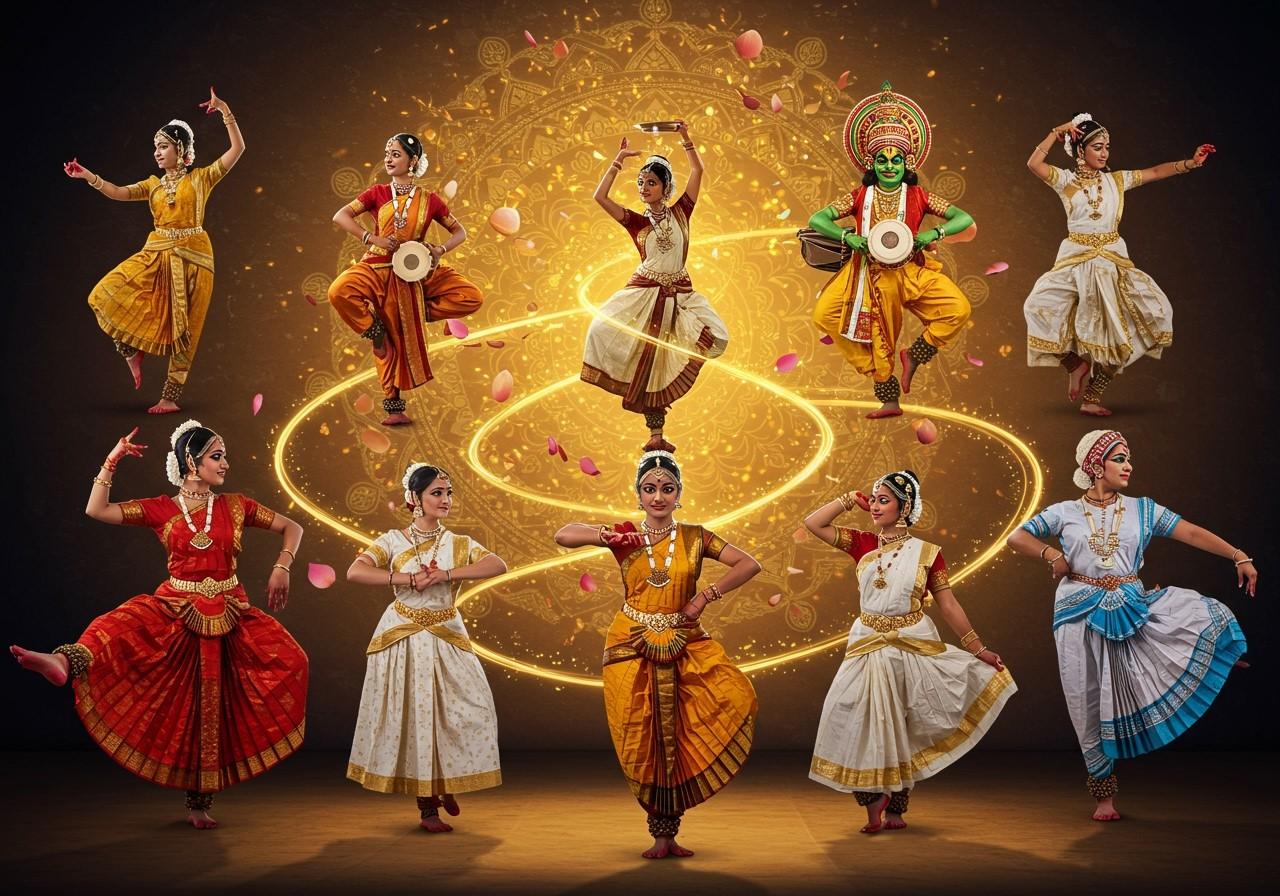
Natya is a beautiful Indian tradition of storytelling through performance. It brings together dance, acting, dialogue, music, rhythm, costumes, expressions, gestures, and stage elements to communicate a story to an audience. In this chapter, students explore how dance movements can be creatively incorporated into Natya to make storytelling more expressive and engaging. Through the story of Krishna and Kaliya, students learn how different movements, rhythms, the Navarasa, hastas, body postures, jumps, and spins can bring characters and emotions to life. They also explore the importance of music selection, costumes, props, choreography, salutation, and benediction.
Working in groups encourages students to share ideas, collaborate, experiment with movements, and develop their creativity. The chapter helps learners understand that Natya is not simply a form of entertainment; it is an art that connects movement, music, emotions, imagination, and storytelling. By planning, practising, and presenting their own performance, students experience the joy of creating a story through dance and theatre.
Natya is a form of storytelling through performance. It combines acting, dialogue, expressions, movement, music, and other elements to present a story before an audience.
You have read the description of this earlier in the book and read about two natya traditions. In this chapter, you will explore how dance elements can be incorporated into natya.
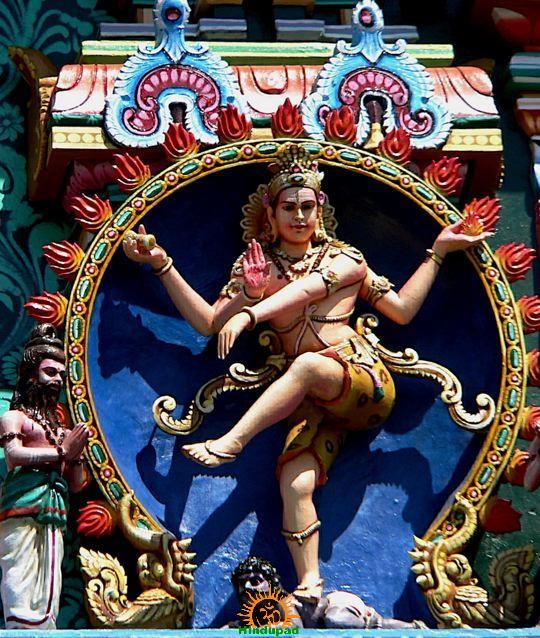
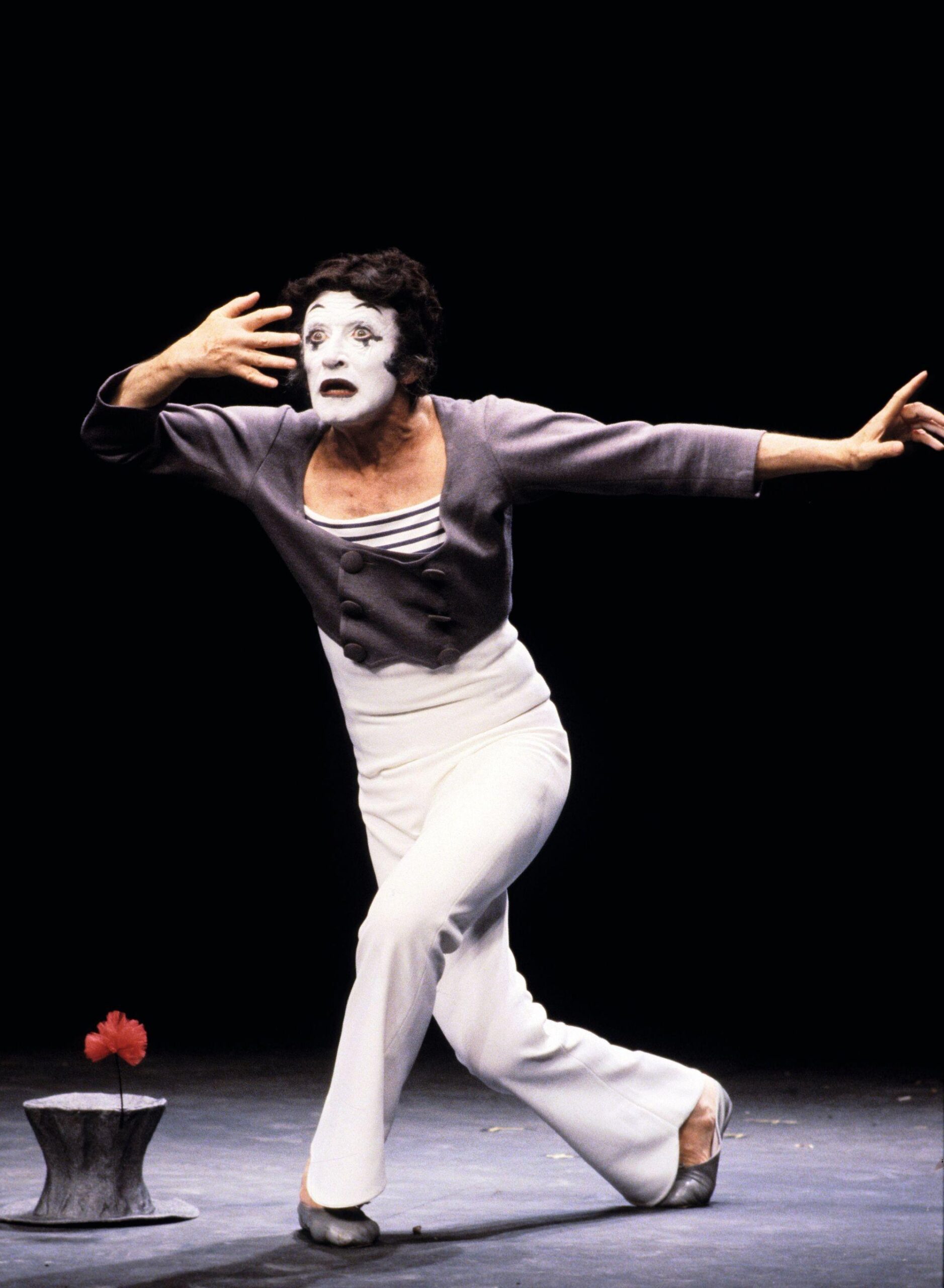
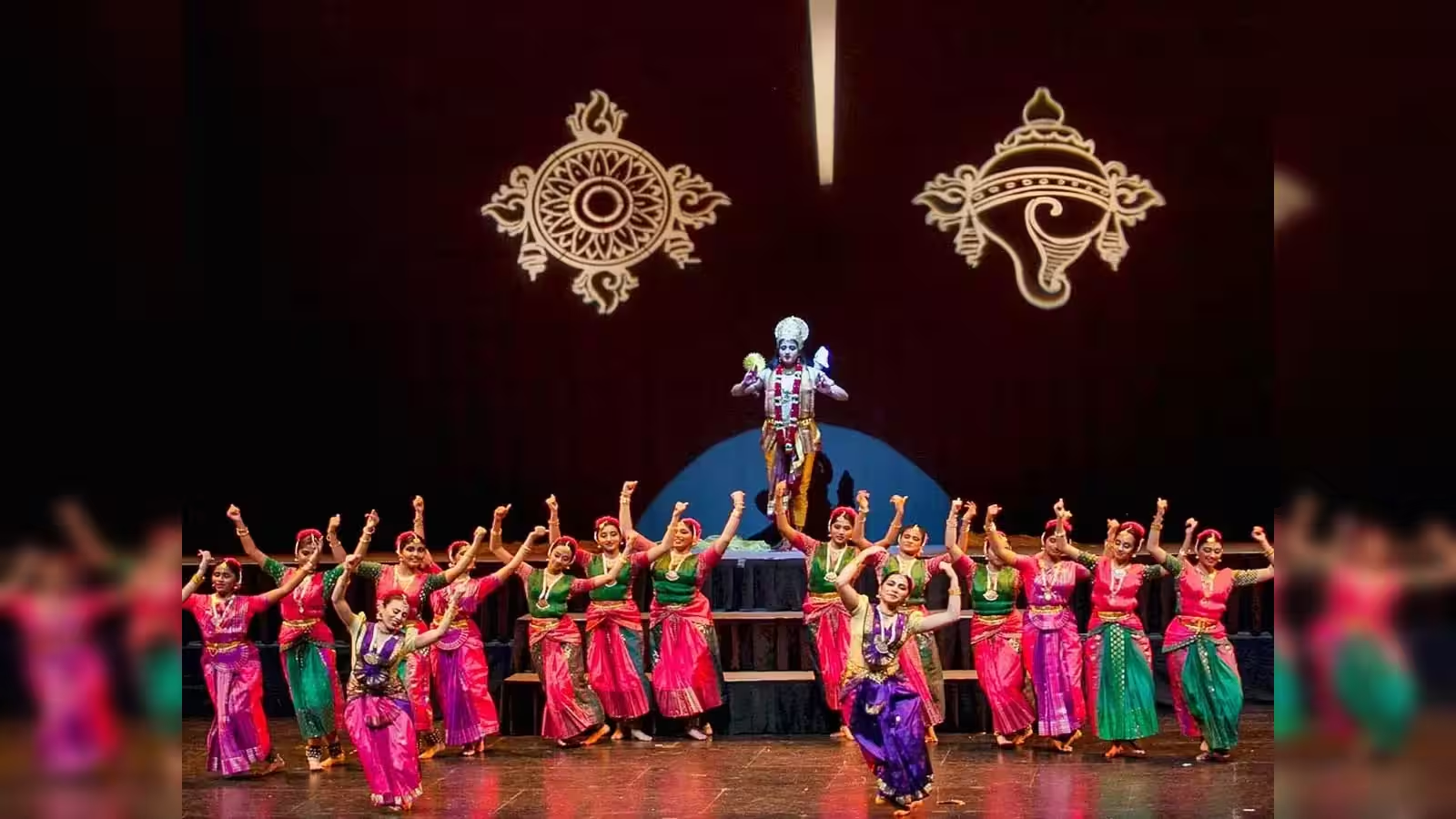
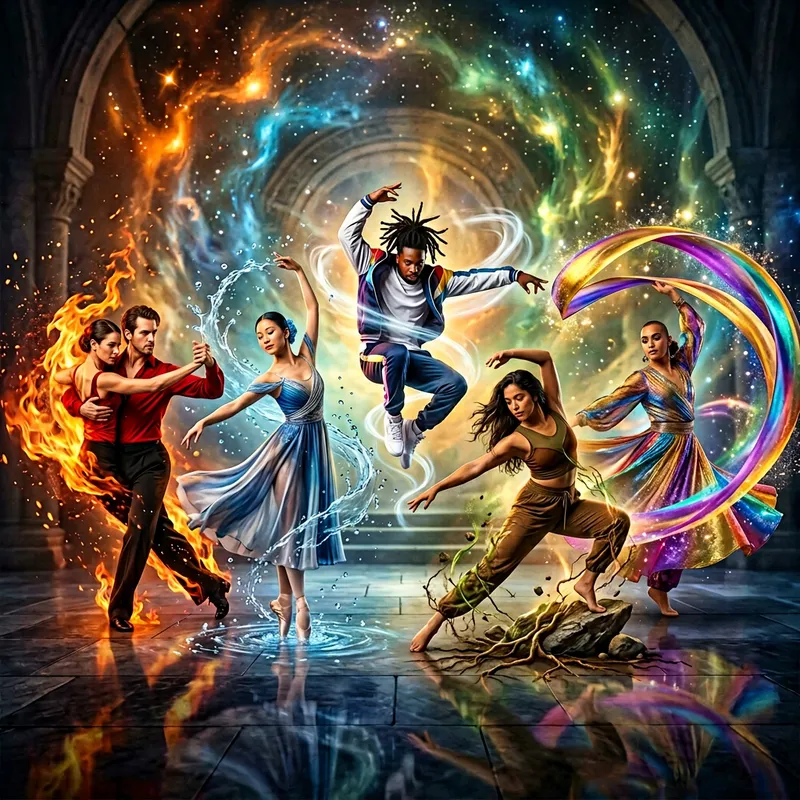
Through dance movements, gestures, facial expressions, rhythm, and body language, performers can show different characters, emotions, actions, and situations. Thus, dance adds beauty and meaning to Natya and helps the audience understand and experience the story more deeply.
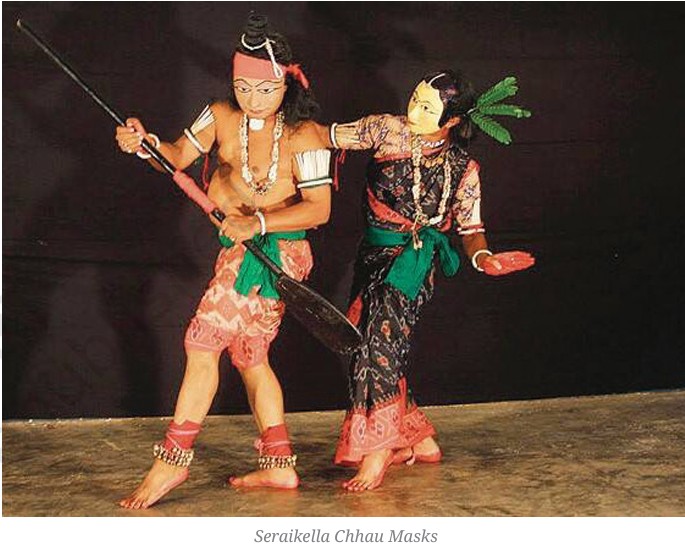
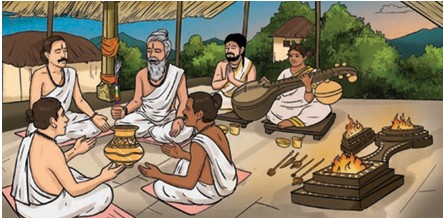
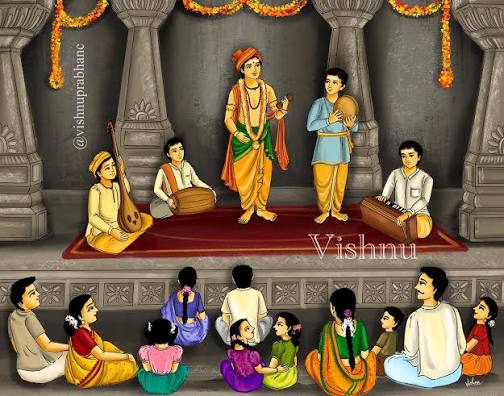
Natya is the art of storytelling through performance. It is a unique form of Indian performing art that brings together acting, dance, music, dialogue, gestures, and facial expressions to communicate stories and emotions. In Natya, performers use their bodies, voices, and movements to bring characters and events to life on stage.
Storytelling Through Natya and Dance
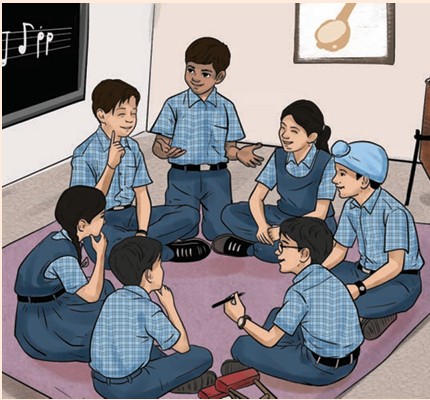
A story can be made into a performance with elements of dance and choreography, dialogues, musical elements with songs, musical instruments, and costumes and make up. Discuss about telling a story and how you can incorporate dance movements in natya with your friends.
A story is given below for you to consider or you can choose your own story for presentation and have fun putting it together with choreography.
So, let us dive into this chapter by reading a story and then dancing to the story. That will be interesting and enjoyable.
One lazy afternoon, Grandma gathered the children to tell them the story of Krishna and the snake Kaliya. She began her story in a soft animated voice bringing the story alive with her dramatic narration.
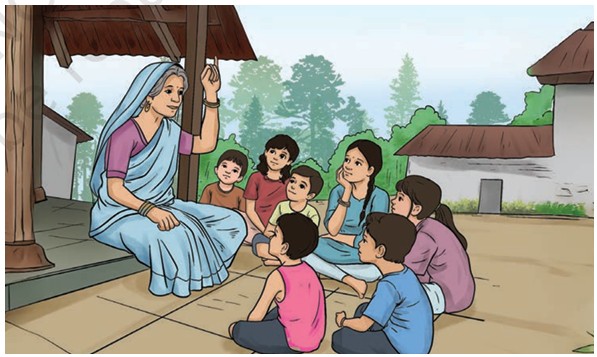
Krishna and Kaliya: Bringing the Story to Life Through Natya
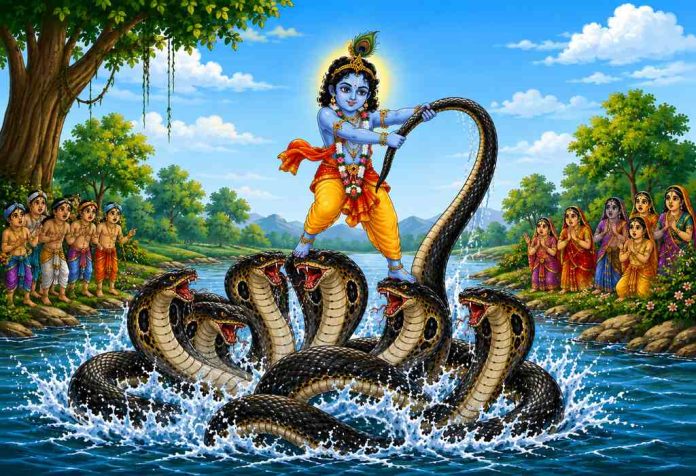
“Long ago, on the banks of the river Kalindi, there lived a monstrous serpent called Kaliya Naag. He was a terrible creature, hissing and coiling, frightening everyone who came near him. Even birds would not fly over the river, and children were too scared to play by its banks. But one day, little Krishna arrived.”
The story of Krishna and Kaliya, also known as Kaliya Mardana, is a popular episode from the Krishna tradition and provides an excellent example of how a story can be transformed into a complete Natya performance. Natya is a composite form of Indian performing art that brings together storytelling, acting, dance, music, dialogue, gestures, facial expressions, costumes, make-up and stagecraft. The story of Krishna and Kaliya is particularly suitable for Natya because it contains dramatic conflict, powerful emotions, rhythmic movement and a meaningful resolution. According to the story, the enormous and poisonous serpent Kaliya lived in the river Kalindi and made the surrounding area dangerous.
His presence frightened the people, children, animals and birds, and nobody dared to approach the river. One day, young Krishna arrived and decided to protect the people from this danger. He climbed a tree near the river and began playing his flute. The enchanting music attracted Kaliya, who emerged from the water. Krishna then jumped onto the serpent’s hoods and began to dance. Through his graceful yet powerful movements, Krishna subdued Kaliya and eventually persuaded him to leave the river. After Kaliya departed, the river and its surroundings became peaceful again, and the frightened children and villagers could return without fear.
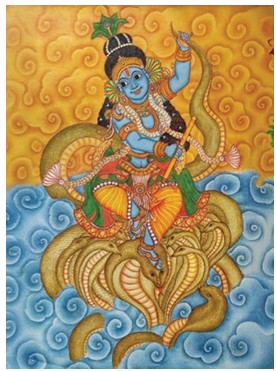
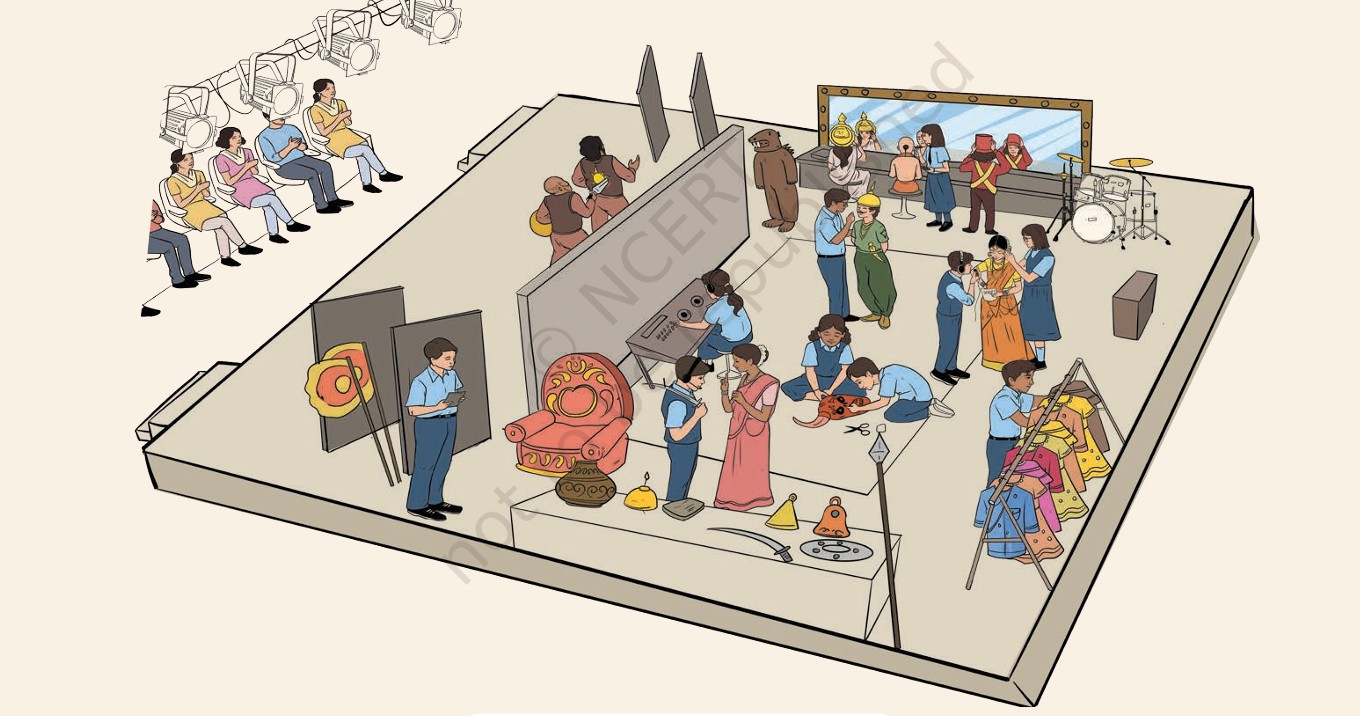
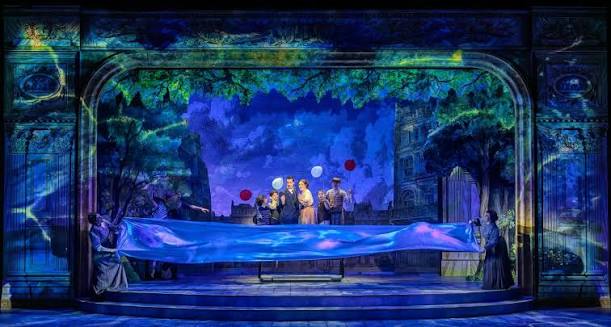
This story can be presented through different elements of Natya. The performers can use dance movements and choreography to show the beauty of the river, the frightening movements of Kaliya, Krishna’s courage and the final restoration of peace. The movements of Kaliya can be represented through curved, circular and powerful body movements, while Krishna’s movements can combine grace, rhythm, balance and energy. Music can play an important role in establishing the mood of different scenes. The flute can represent Krishna’s peaceful and attractive personality, while drums and other percussion instruments can create tension during Kaliya’s appearance and provide rhythm for Krishna’s dance. Dialogue and narration can help explain the story and connect different scenes. Costumes, ornaments, masks, make-up and stage properties can further help the audience recognise the characters and understand the setting.
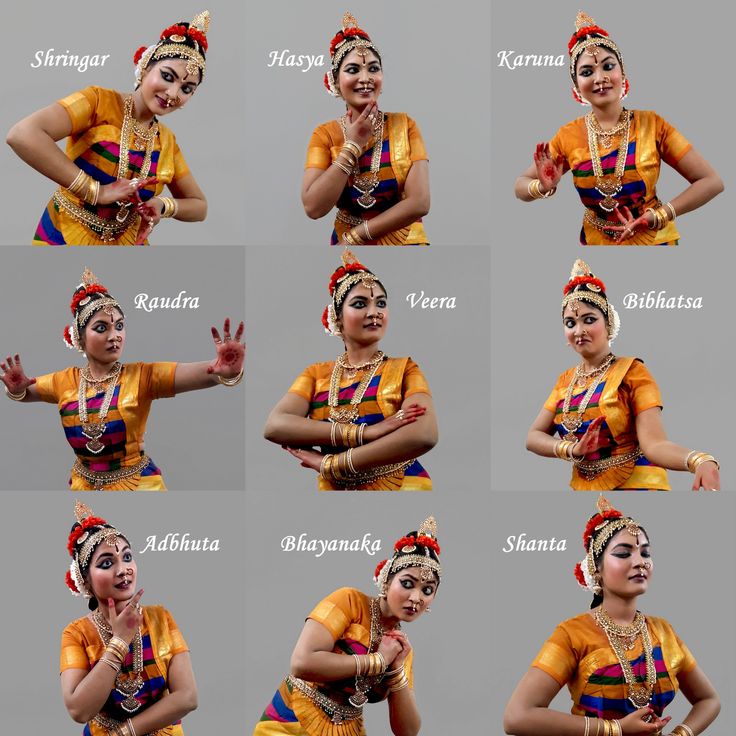
The episode also helps explain important concepts of Indian dramaturgy described in the Natya Shastra, traditionally attributed to Bharata Muni. The four forms of **Abhinaya—Angika, Vachika, Aharya and Sattvika—**can all be incorporated into the performance. Angika Abhinaya uses body movements, gestures and facial expressions; Vachika Abhinaya uses speech, dialogue and narration; Aharya Abhinaya includes costumes, ornaments, make-up and stage decoration; and Sattvika Abhinaya expresses inner emotions such as fear, anger, courage, wonder and tranquillity. The story can also evoke several Rasas, including Vira (heroism), Raudra (fury), Bhayanaka (fear), Adbhuta (wonder) and Shanta (tranquillity). Thus, the audience experiences not only the story but also its emotional and aesthetic dimensions.
The story carries important cultural and moral meanings. Krishna’s victory over Kaliya can symbolise the triumph of courage and righteousness over destructive forces. The restoration of the river represents the return of harmony and social order. At the same time, Krishna does not simply destroy Kaliya; he gives him an opportunity to change and leave peacefully. This introduces the values of compassion, transformation and peaceful resolution. Therefore, the Krishna-Kaliya episode demonstrates the richness of Indian Natya, where storytelling, dance, music, acting, emotions and visual elements work together to create a meaningful aesthetic experience. It shows that Natya is not merely entertainment but also a powerful medium for preserving cultural traditions, communicating values and bringing stories to life through performance.
All traditional performances begin with a salutation to seek blessings of the Almighty. Here you will see references of salutation and benediction with reference to natya.
She said, “In our traditions, every play begins and ends with gratitude. Before the performance, we seek blessings for its success — just as we start our day with a prayer or sing during the morning assembly at school. It helps us focus our mind and brings a sense of calm. The salutation is an essential part of any play’s preliminaries in the Indian natya tradition. Let us learn some prayers which can be recited as a salutation to the almighty and as benediction after the conclusion of the natya”.
Here is one example which you can use as a salutation in your performance or you can select your own.
Salutation
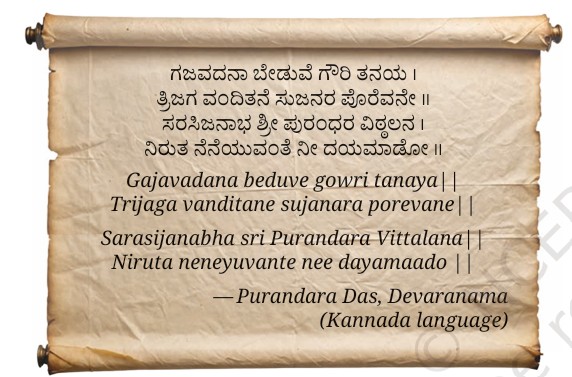
Meaning
Gajavadana — one who has elephant face (Ganesha)
Beduve — I pray Gowri Tanaya — son of Gowri
Trijaga — the three worlds
Vanditane — worshipped
Sujanara — by good people
Porevane — protector
Oh elephant faced god! I pray for you. You are the Son of Goddess, Gowri (Parvati). You are worshiped by all the three worlds. You are the protector of all good people such as sages.
Meaning of last stanza
Sarasija Nabha — one who has lotus in his navel
Sri Purandara Vittalana — Lord Vishnu (pen name of purandara daasa)
Niruta — always
Neneyuvante — make me remember
Nee — you
Dayamaado — shower blessings
Oh Lord Vishnu (Purandara Vittala) the one who has lotus in his navel, shower your blessings to remember you at each and every movement.
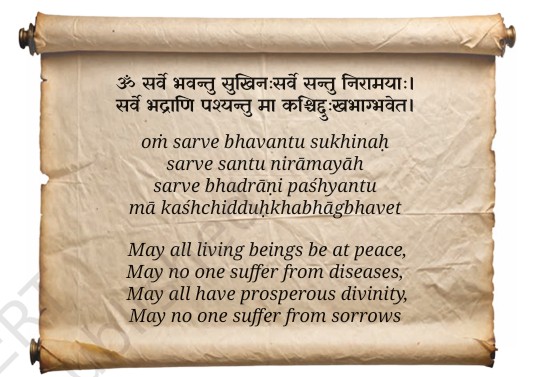
Benediction
Similarly, all performances ends with a benediction. She ended by saying, “And when the play ends, we bow to the audience to thank them for their time, and attention. After all, what is a performance without those who come to watch it? This exchange of respect is what makes natya so special — it is not just about the story but about the connection it creates between those who perform and those who watch.”
Here is an example of a benediction.
ACTIVITY 14.1: PLANNING THE PERFORMANCE
You will note down all dance elements that can be incorporated into this natya format.
Divide yourselves into groups. Each group will work out certain dances for the story. The different sections can be:
Movement Selection
Think and discuss the appropriate dance movements to express emotions, and enhance the natya. Following must be added to the performance —
- Steps: Select simple and gentle steps for peaceful scenes and strong, energetic steps for dramatic moments. The steps should be coordinated with the music and actions.
- Rhythm and Beats: Use suitable rhythms and different beat patterns according to the scene. 5, 6, and 7 beats can be used to create variety and highlight important actions.
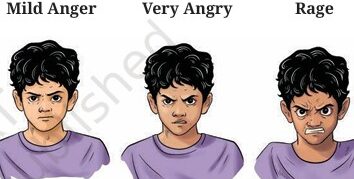
- Navarasa: Use the Navarasa to express different emotions. Bhayanaka can show the fear of the children and villagers, Raudra can represent Kaliya’s anger, Veera can express Krishna’s courage, and Shanta can represent the peaceful ending.
- Body Movements: Use appropriate movements of the upper and lower torso, shoulders, head, hips, arms, and feet. These movements should work together with facial expressions to make the emotions clear.
- Hand Gestures: Use hastas and animal hastas to represent characters, animals, objects, and actions. For example, gestures can show a serpent, birds, trees, or Krishna playing the flute.
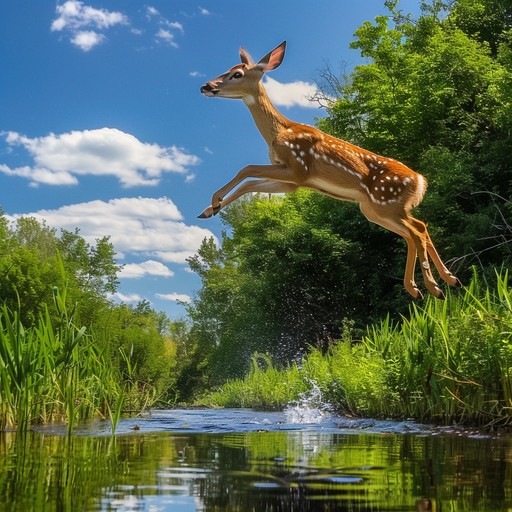
- Jumps and Spins: Include suitable jumps, turns, and spins to make energetic scenes more exciting, especially during Krishna’s dance on Kaliya.
An example of how sections can be divided in reference to the story is given below.
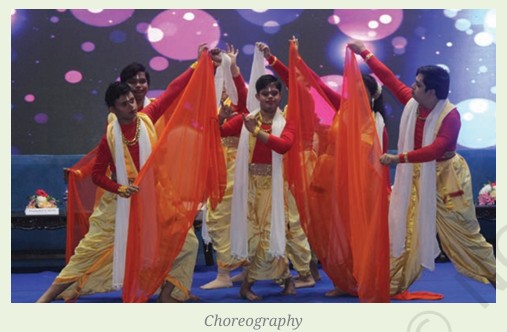
Sections
1. Salutation:
Begin the performance with a graceful salutation using dance movements. Choose a suitable devotional song and choreograph a simple prayer dance. Use gentle steps, coordinated hand gestures, and calm facial expressions to create a respectful and peaceful atmosphere.
2. Dance of Krishna and Friends:
Use light, playful steps to show Krishna and his friends enjoying themselves near the river. Rhythms of 5 or 6 beats can be used for a lively and cheerful mood. Add simple jumps, turns, claps, and flute-playing hastas to show their happiness.
3. Movements of Kaliya and Reactions of the Children:
Kaliya can be represented through twisting, circular, and wave-like movements of the torso and hips. Slow and powerful movements can show his dangerous nature. The children can show fear through Bhayanaka, using frightened facial expressions, quick backward steps, raised hands, and protective gestures.
4. Fight Between Krishna and Kaliya:
Use strong and energetic steps with faster rhythms, such as 6 or 7 beats, to build excitement. Include jumps, spins, turns, and powerful footwork. Krishna can use Veera expression, while Kaliya displays Raudra. Serpent and defensive hastas can make the fight visually expressive.
5. Celebration After the Defeat of Kaliya:
Compose a joyful group dance using a suitable song or bandish from the music class. Use lively steps, circular formations, claps, graceful turns, and celebratory gestures. The mood should express Hasya, Adbhuta, and Shanta.
6. Benediction:
End with a peaceful benediction using graceful hastas, prayer gestures, and calm movements. The performers can express gratitude, peace, and blessings before concluding the performance.
Now, you can discuss
Music Selection
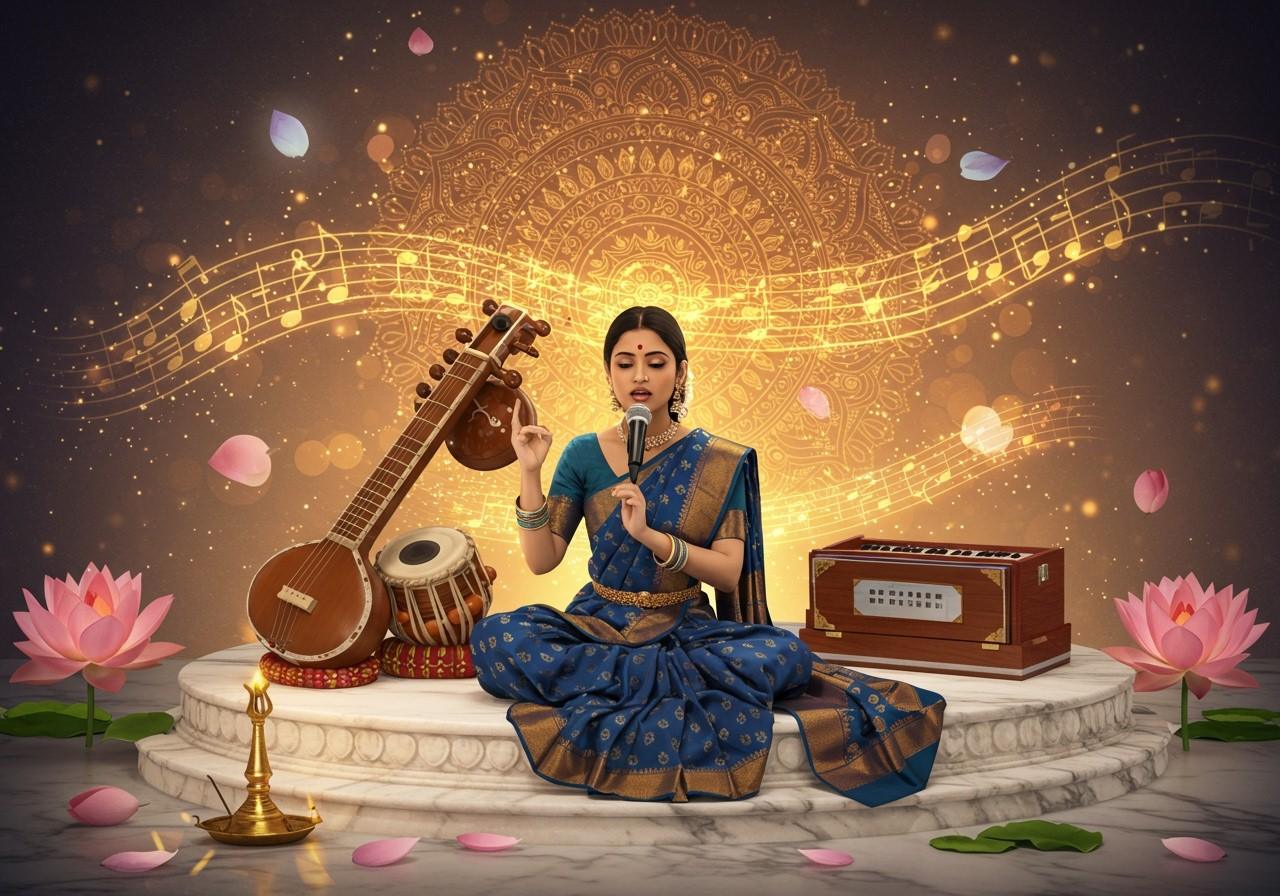
Correct music elements need to be selected for various sections. Discuss which section can have percussion or vocal, etc. Choose the music or song that is traditionally used in your region.
Costumes and Props
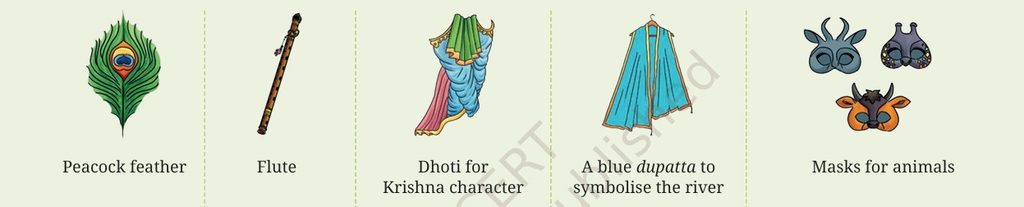
Decide on different props and costumes for the character. For example,
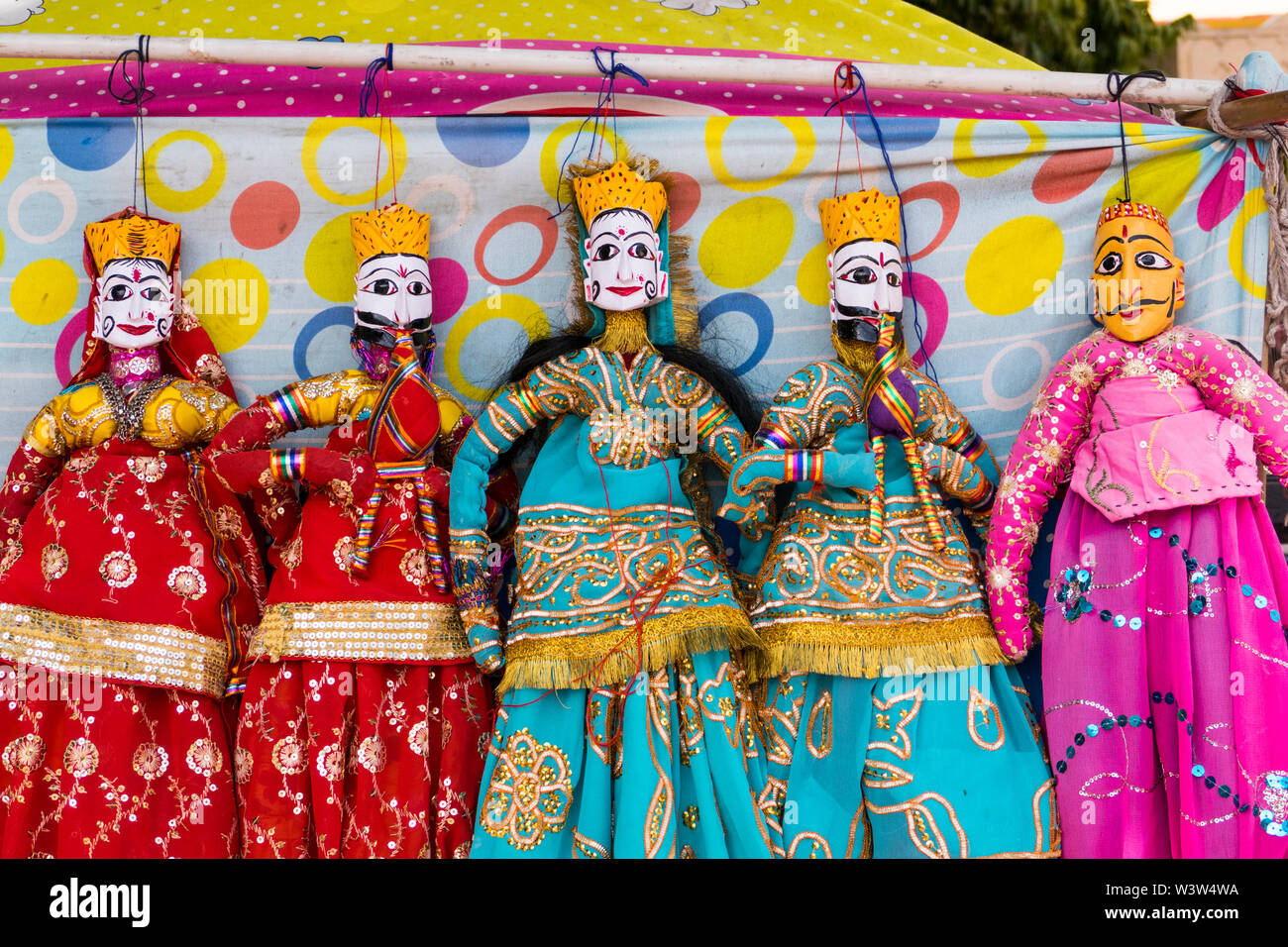
Costumes and props help make the characters, setting, and story clear to the audience. For the Krishna and Kaliya Natya, the following simple costumes and props can be used:
- Peacock Feather: To identify Krishna and represent his traditional appearance.
- Flute: A symbolic prop showing Krishna’s musical and playful nature.
- Dhoti for Krishna: A traditional costume that helps portray Krishna’s character.
- Blue Dupatta: Used to symbolise the river Kalindi and can be moved gently to show flowing water.
- Masks for Animals: Used to represent birds, animals, or other creatures near the river and make the natural setting more lively.
Choose lightweight and safe props that allow performers to dance, jump, spin, and move freely while presenting the story.
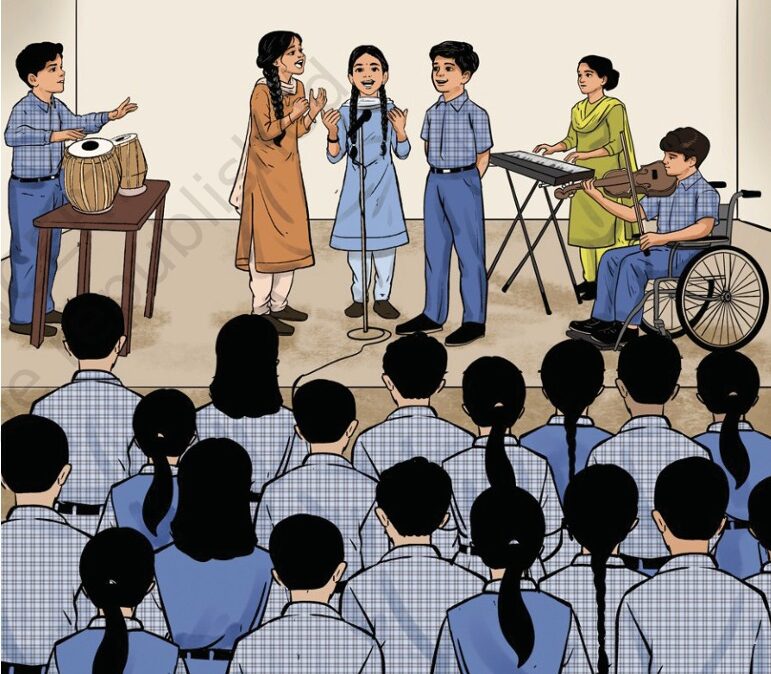
ACTIVITY 14.2: PRACTISE AND PRESENTATION
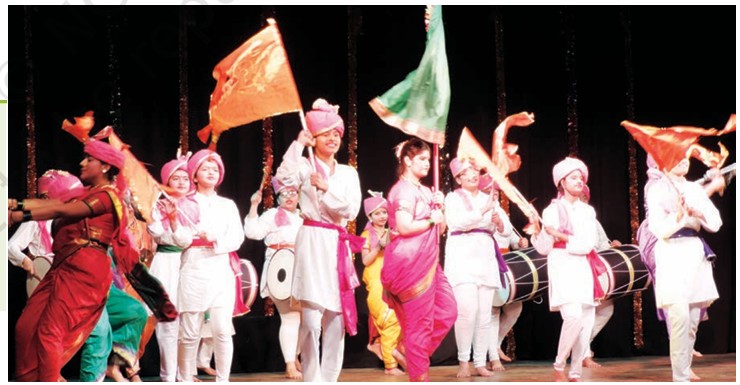
Now comes the fun part, use your creativity to put together the movements worked out by each group, and perform your story with dance and movement as a grand finale.
Conclusion
Natya brings together different art forms to create a complete and meaningful performance. Through the story of Krishna and Kaliya, students learn how dance movements, expressions, gestures, rhythm, music, costumes, and props can work together to tell a story. They learn to use emotions such as fear, anger, courage, wonder, joy, and peace to make their characters believable and expressive. Group activities also develop creativity, confidence, coordination, cooperation, and appreciation for Indian performance traditions. The use of regional songs, music, languages, and practices makes each performance unique and connected to its cultural roots. Most importantly, Natya teaches that storytelling can be experienced not only through words but also through movement, music, and expression. By creating and presenting.