
INTRODUCTION
Textiles and traditions explore how fabrics, weaving, embroidery, printing, dyeing, and decorative patterns are connected with the culture and heritage of different communities. Textiles are more than materials used for clothing or decoration; they often carry stories about history, identity, festivals, occupations, beliefs, and local traditions.
India has a rich variety of textile traditions, including handloom weaving, block printing, embroidery, tie-and-dye, and painted textiles. Different regions have developed their own techniques, colours, motifs, and designs using locally available materials and skills.
Studying textiles helps us appreciate the creativity and craftsmanship of artisans and understand how traditional knowledge is passed from one generation to another. It also shows how art can become a part of everyday life.
THE ART OF CLOTH AND THREAD
Just as you use a pencil and paper to create pictures, artists use cloth, thread, needles, colours, and other materials to create beautiful textile artworks. Textile art is an important form of visual expression that combines creativity with traditional skills.
Indian textiles are especially known for their rich variety of motifs, patterns, colours, and techniques. A motif is a decorative image or design that is often repeated to create a pattern. Motifs may be inspired by flowers, leaves, birds, animals, trees, geometric shapes, and everyday objects. Many traditional motifs also have symbolic meanings connected with nature, beliefs, festivals, or cultural traditions.
Textile motifs and techniques vary from region to region. Different communities have developed their own ways of weaving, printing, dyeing, embroidery, stitching, and decorating fabrics. These traditions have been passed down through generations and continue to be seen on clothing, household items, and decorative textiles.
In this chapter, you will explore a variety of Indian textile motifs and their meanings. You will also learn some basic skills and techniques for working with cloth and thread. Through creative activities, you can experiment with colours, patterns, stitches, and designs and create your own textile artwork.
As you explore textiles, you will discover how art, culture, creativity, and tradition come together through simple materials and skilled hands.
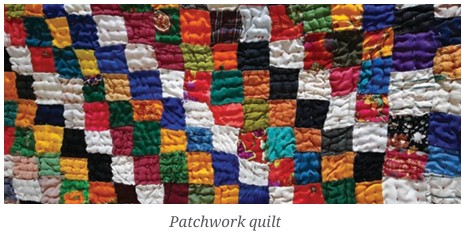
Patchwork quilt
A patchwork quilt is a textile artwork made by joining small pieces of different fabrics to create a larger design. The fabric pieces may have different colours, patterns, shapes, and textures. They are carefully stitched together and often layered with a soft filling and backing to make a warm and decorative quilt.
Patchwork quilts can be created using geometric shapes, flowers, animals, or other motifs. They allow artists to reuse leftover pieces of cloth while creating something useful and beautiful. In many traditions, quilts also carry stories, memories, and cultural designs passed down through generations.
Making a patchwork quilt helps us explore colour, pattern, texture, stitching, composition, and creativity. It shows how simple pieces of fabric can be transformed into a meaningful work of art.
Notice the elements of art in these motifs.
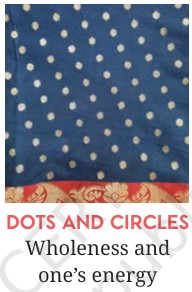
1. Dots and circles
Dots and circles are simple shapes that can be used to create attractive textile designs. By arranging them in different sizes, colours, and patterns, artists can create rhythm, balance, repetition, and visual interest.
Dots may be stitched, printed, painted, or embroidered onto fabric. Circles can be combined to form flowers, wheels, spirals, geometric patterns, and decorative motifs. Repeating these shapes can make a textile look lively and organised.
Working with dots and circles helps students understand how simple shapes can become creative patterns. It also encourages experimentation with colours, spacing, size, and arrangement. Through this activity, students can create their own textile designs using basic shapes and imagination.
2. Lines
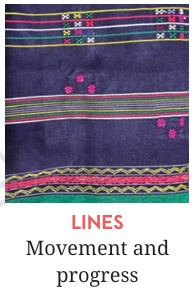
Lines are one of the simplest and most important elements used in textile art. Artists use straight, curved, zigzag, wavy, and spiral lines to create patterns, borders, shapes, and decorative designs on fabric.
Lines can be created through stitching, embroidery, weaving, printing, or drawing. Repeating lines can form attractive patterns and give a sense of rhythm and movement. Different types and thicknesses of lines can also create variety and texture.
By experimenting with lines, students can discover how a simple line can be transformed into a beautiful textile motif or pattern.
3. Mango (Paisley)
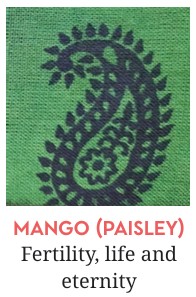
The mango, or paisley motif, is one of the most recognisable designs found in Indian textiles. It has a curved, teardrop-like shape inspired by the mango fruit. The motif is often decorated with flowers, leaves, dots, or curved lines.
The mango motif appears in many forms of weaving, embroidery, block printing, and textile decoration. It is widely used on sarees, shawls, scarves, quilts, and other fabrics.
The paisley design is valued for its beauty, flowing shape, and rich cultural history. Its curved form allows artists to create repeating patterns and attractive borders. In traditional textiles, the motif may also be associated with fertility, growth, abundance, and nature, although its meaning can vary across regions and traditions.
The mango motif shows how a familiar element of nature can be transformed into a beautiful and meaningful textile design.
4. Parrot
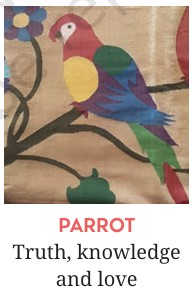
The parrot motif is a popular design found in many Indian textiles and traditional artworks. Parrots are often shown with curved bodies, colourful feathers, and graceful poses, sometimes sitting on branches or among flowers.
In textile art, the parrot may symbolise love, beauty, nature, and good fortune. It is commonly used in embroidery, weaving, printing, and decorative patterns. Artists may repeat the parrot motif to create attractive borders and rhythmic designs.
The parrot motif shows how birds and nature inspire Indian textile traditions.
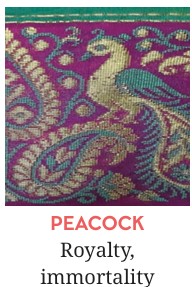
5. Peacock
The peacock motif is one of the most popular designs in Indian textiles and traditional art. Known for its beautiful feathers, graceful form, and striking appearance, the peacock is often represented in embroidery, weaving, printing, and decorative fabrics.
In Indian artistic traditions, the peacock is associated with beauty, grace, joy, and prosperity. Its colourful feathers and elegant shape make it a favourite motif for creating attractive textile patterns. Artists often combine peacocks with flowers, leaves, vines, and geometric designs.
The peacock motif shows how nature inspires artists and continues to be an important part of India’s rich textile heritage.
THREADING STORIES
Threading Stories explores how cloth, thread, colours, patterns, and motifs can be used to tell stories and express ideas. Traditional Indian textiles often carry memories of culture, nature, festivals, family, and community life.
Artists and craftspeople use techniques such as weaving, embroidery, stitching, printing, and appliqué to create meaningful designs. Repeated motifs such as flowers, birds, animals, and geometric shapes can add beauty while also representing different ideas and traditions.
Every textile can tell a story through its colours, patterns, materials, and craftsmanship. By learning textile techniques and creating their own designs, students can explore how simple threads can become a creative form of visual storytelling.
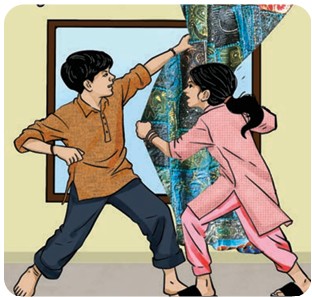
One day, Dhaaga and Soodi had an argument. Dhaaga wanted the curtain open, while Soodi wanted it closed. As they pushed and pulled the curtain, it finally screamed, “Stop fighting!”
The curtain reminded them that they needed each other. Dhaaga holds the fabric together, while Soodi helps Dhaaga pass through the cloth to make stitches. They realised that working together could create something beautiful and strong.
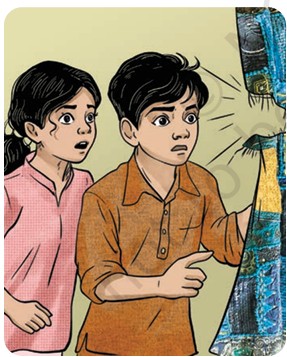
“Stop it! Both of you!” Hearing the curtain speak, Dhaaga and Soodi froze.
“Look what you have done! You have hurt me, and now I have a tear,” the curtain said sadly.
Dhaaga and Soodi moved closer and looked carefully at the damaged curtain. They felt sorry for what had happened. They realised that their argument had caused the tear and understood that they needed to work together to repair it.
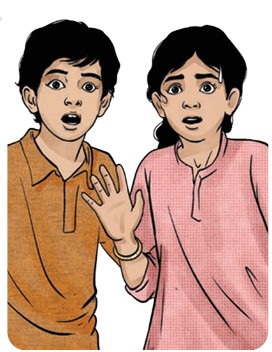
The curtain continued to speak and told Dhaaga and Soodi the story of how it was made.
“When your Aaji passed away, your parents kept some of the special clothes she had worn. I am a patchwork curtain made by joining pieces of those clothes. Look closely at the different pieces stitched together on me. Each one has a special memory connected to your Aaji.
Here is a piece from the beautiful sweater she knitted herself. Next to it is a piece from her yellow saree, which once had a big tea stain. Instead of throwing it away, your father used the stained part and created a beautiful embroidery design over it.
Every piece of fabric has become part of my story. Together, these pieces form something new while keeping memories of your Aaji alive.
The curtain smiled and said, “I am not just a curtain; I am a collection of memories, connected by threads.”
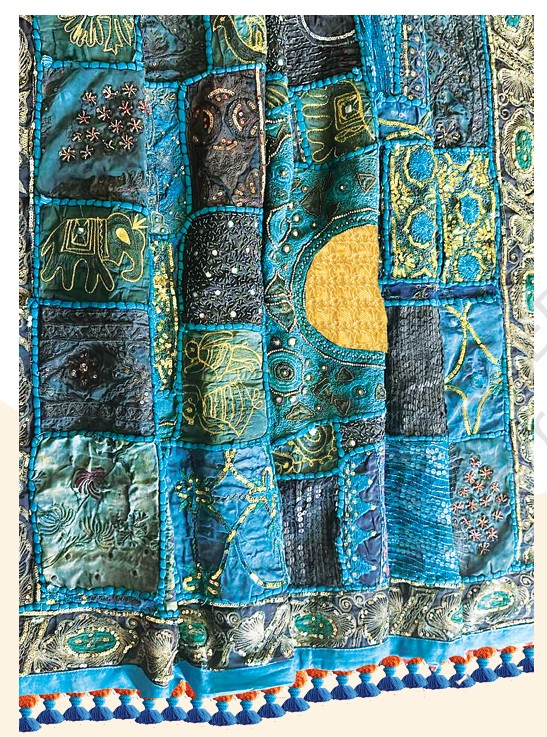
“Your father created this beautiful embroidery over the stained part of the saree. Do you see the square window at the centre of this patchwork? It was made using a technique called crochet. This piece was your Aaji’s favourite.
Have you noticed the bottom edge of the patchwork? These decorative threads are called tassels. You can see fine threads arranged together and knotted into beautiful patterns. Look closely at my tear. Some threads have come loose. You can also clearly see the warp and weft of the woven fabric.
“Remember, I am not just a curtain. I am a patchwork of stories. Every piece of fabric in me has its own story and memory. Some pieces remind us of your Aaji’s clothes, while others show the creativity and care of your family. All these pieces have been stitched together with many threads to create something new and meaningful.
“When threads start fighting among themselves, just as you both did, what do you think will happen? The fabric can become weak, damaged, and eventually tear apart. But when threads work together, they can make a strong and beautiful textile.
Dhaaga and Soodi looked at each other and smiled. They understood that their argument had caused the tear.
“Shall we repair the tear together?” Soodi asked Dhaaga.
Dhaaga agreed, and they quickly got to work. Together, they carefully repaired the damaged part of the curtain.
Their experience taught them an important lesson: when we work together, our differences can become strengths and help us create something beautiful.
ACTIVITY 18.1: FABRIC JOURNAL
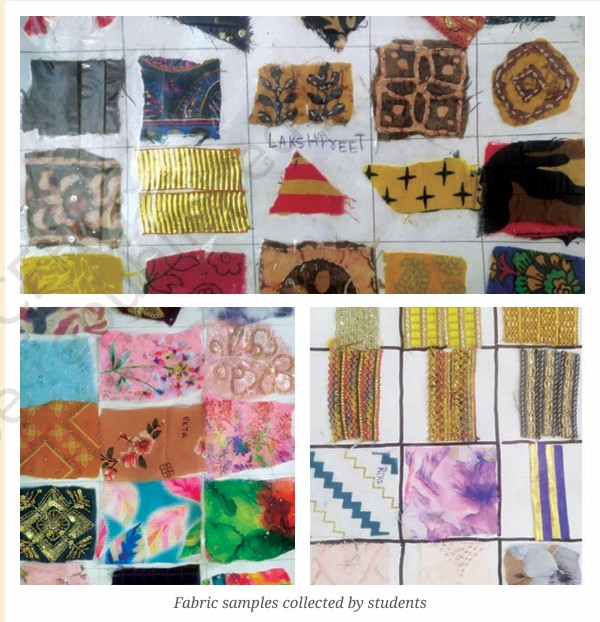
A Fabric Journal is a creative collection of fabric samples, threads, patterns, stitches, colours, and textile designs arranged and recorded in a notebook or scrapbook. It helps us observe, explore, and understand different textile materials and techniques.
In a fabric journal, students can collect small pieces of cotton, silk, wool, jute, linen, or other fabrics and attach them to pages. They can also add samples of embroidery, weaving, crochet, patchwork, printing, tie-and-dye, and appliqué. Alongside each sample, they can write its name, texture, colour, method of making, and where it is traditionally used.
A fabric journal can also include traditional Indian motifs such as flowers, leaves, peacocks, parrots, paisley, geometric shapes, and other decorative patterns. Students can draw their own motifs and experiment with different combinations of colours, threads, and textures.
Creating a fabric journal develops observation, creativity, design skills, and appreciation for textile traditions. It also helps students understand that fabrics are not merely materials for clothing; they can carry stories, memories, cultural traditions, and artistic ideas.
Step 1: Look at the variety of objects in your home that are made of fibre or fabric.
Step 2: Collect a few samples from discarded clothes, bags, mats and rags. Visit a local tailor and ask them if they can spare small pieces of fabric of different thicknesses and textures.
Step 3: As you collect textile samples, remember to note down a few stories about each fabric. Note where you found it, who it might have belonged to, what kind of fibre it is made of and a few lines about the patterns you see.
Step 4: Plan the pages of your journal. Work in pairs gathering both your textile samples and stories. Discuss and identify the different materials you have managed to collect (cotton/silk/wool/jute, etc.). You can choose to organise them by material, colour, texture or pattern. For example, plain coloured fabrics together, printed fabrics together, all cotton together, etc. Include your notes and stories to make your journal interesting.
ACTIVITY 18.2: EXPLORE EMBROIDERY TRADITIONS
Embroidery is the art of decorating fabric with colourful threads using a needle. It is one of the oldest and most beautiful textile traditions practised by communities across India. Different regions have developed their own embroidery styles, using distinctive stitches, motifs, colours, and patterns.
Embroidery designs are often inspired by flowers, leaves, birds, animals, geometric shapes, nature, and everyday life. Some motifs may also reflect local stories, beliefs, festivals, and cultural traditions. Embroidery can be used to decorate clothing, bags, wall hangings, quilts, household objects, and other textile artworks.
India has many embroidery traditions. Phulkari of Punjab is known for colourful floral patterns. Kantha of Bengal uses simple running stitches to create decorative designs and storytelling patterns. Chikankari of Lucknow is famous for delicate white-thread embroidery. Kashida from Kashmir often features beautiful floral and nature-inspired motifs. Kutch embroidery from Gujarat is recognised for vibrant colours, mirrors, and detailed patterns.
Exploring embroidery traditions helps us understand how simple threads and stitches can become beautiful works of art. It also encourages us to appreciate the skill, creativity, patience, and cultural knowledge passed from one generation to another.
Activity: Observe an embroidery design, identify its motifs and colours, and try creating a simple pattern using paper, thread, or fabric.
Embroidery is the art of different kinds of stitches, patterns and needlework techniques on a fabric. There are several embroidery traditions in India. Some traditions also incorporate mirrors, beads and sequins into their designs. Here are a few examples of embroidery traditions practised in different parts of India.
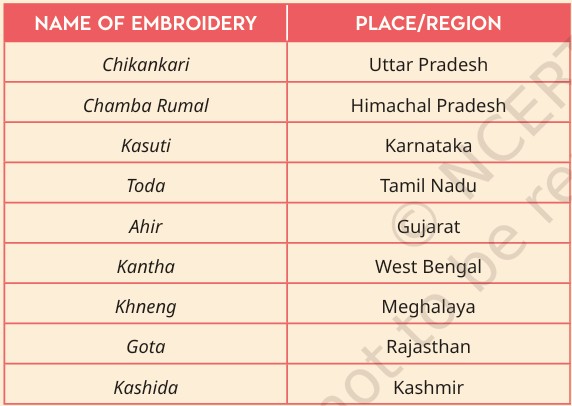
What kind of embroidery have you seen on clothes and fabrics around you? Find artists who embroider and talk to them about their art.
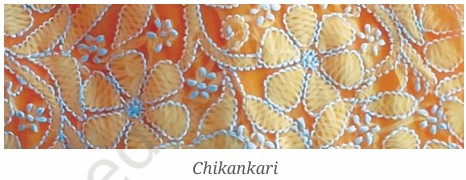
1. Chikankari
Chikankari is a traditional form of delicate hand embroidery associated with Lucknow, Uttar Pradesh. It is known for its fine stitches, graceful patterns, and elegant appearance. Traditionally, chikankari was often worked with white thread on light-coloured fabrics, although today it is also created using coloured threads and different types of fabric.
Chikankari designs are commonly inspired by flowers, leaves, vines, birds, and other elements of nature. Artisans use different stitches to create outlines, textures, and filled patterns. Some of the well-known stitches include Bakhiya, Jaali, Phanda, Murri, and Tepchi.
The process usually begins with a design being drawn or printed lightly on the fabric. Skilled artisans then carefully stitch over the design using a needle and thread. The completed embroidery gives the fabric a beautiful combination of delicate lines, textures, and patterns.
Chikankari is used to decorate sarees, kurtas, dupattas, shirts, scarves, and other garments. The craft reflects the patience, precision, creativity, and skill of the artisans who practise it.
Chikankari is an important part of India’s textile heritage. Exploring this tradition helps us understand how simple stitches can transform ordinary fabric into an elegant work of art while preserving cultural knowledge passed down through generations.
2. Ahir Embroidery
Ahir embroidery is a colourful traditional embroidery style associated with the Ahir communities of the Kutch region of Gujarat. It is known for its bright colours, flowing patterns, and detailed handwork. The designs often reflect the creativity, surroundings, and cultural traditions of the communities that practise it.
Ahir embroidery commonly features flowers, leaves, vines, birds, animals, and geometric patterns. Artisans use colourful threads to create decorative motifs and fill different areas of the fabric. Small mirrors, known as shisha, are also sometimes incorporated into the designs, adding sparkle and visual interest.
The embroidery is traditionally used to decorate blouses, skirts, shawls, bags, quilts, and other textiles. Each design may show the artisan’s imagination and connection with nature and community life.
Ahir embroidery demonstrates how threads, colours, stitches, and motifs can come together to create beautiful textile art. Learning about this tradition helps us appreciate the skill of artisans and the rich diversity of India’s embroidery heritage.
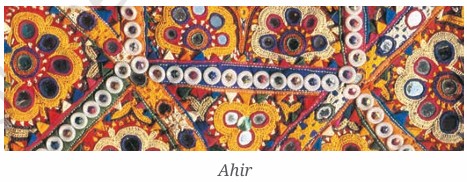
3. Toda Embroidery
Toda embroidery is a distinctive traditional textile art practised by the Toda community of the Nilgiri Hills in Tamil Nadu. It is especially known for its bold geometric designs, usually created with red and black threads on a white or off-white woollen or cotton fabric.
Toda embroidery is traditionally done by counting the threads of the fabric rather than drawing a design first. Artisans use a needle to pass the thread through the fabric in carefully planned patterns. The embroidery often creates geometric shapes, lines, diamonds, triangles, and zigzag patterns. Some designs are inspired by the community’s surroundings, beliefs, and traditional way of life.
A well-known textile associated with Toda embroidery is the poothkuli, a traditional shawl worn by Toda people. The embroidered patterns and colours give the shawl a distinctive appearance and cultural identity.
Toda embroidery reflects the patience, precision, creativity, and cultural knowledge of its makers. It is an important part of India’s textile heritage and shows how simple threads can create meaningful patterns that connect art, community, and tradition.
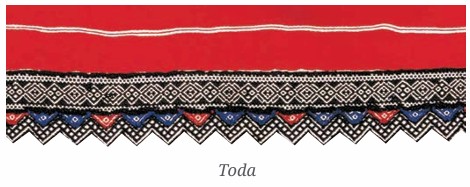
INVITE LOCAL ARTISTS
Organise a workshop to introduce some basic skills and techniques to students, exposing them to various vocations for future.
ACTIVITY 18.3: BASIC STITCHES IN EMBROIDERY
Embroidery is created by using a needle and thread to make decorative patterns on fabric. Different stitches produce different lines, textures, shapes, and patterns. Learning basic stitches helps us understand how simple movements of a needle can transform a plain piece of fabric into a beautiful artwork.
Running Stitch: One of the simplest stitches. The needle moves in and out of the fabric in a regular sequence. It is useful for outlines, borders, and simple patterns.
Back Stitch: This stitch creates a strong, continuous line and is useful for drawing outlines, lettering, and detailed designs.
Chain Stitch: Small loops are joined together to form a chain-like line. It can be used for borders, stems, outlines, and decorative patterns.
Stem Stitch: This stitch creates a smooth, slightly twisted line and is commonly used for stems, vines, and curved outlines.
Satin Stitch: Closely placed stitches cover an area with thread, creating a smooth and filled appearance. It is useful for leaves, petals, and other shapes.
French Knot: A small knot made with thread wrapped around the needle. It can be used to create dots, flower centres, eyes, and decorative details.
Cross Stitch: Two diagonal stitches cross each other to form an X. Repeated cross stitches can create geometric designs, borders, and colourful patterns.
By practising these basic stitches, students can experiment with colour, texture, patterns, and motifs. These simple techniques provide a foundation for exploring the rich embroidery traditions of India.
Embroidery can be done using simple materials and tools. If you have never tried embroidery before, start by learning the basic stitches.
Process
1. Take a thread that is approximately 50 cm in length.
2. Thread your needle and keep one of the ends short.
3. Make a knot at the end of the longer end.
4. Prepare your card sheet/cloth by marking lines and piercing holes with the needle (See the picture).
5. Start stitching and follow the pattern for each stitch.
6. At the end of your line or when your thread is about to finish, make a knot on the reverse side of your work and cut the thread.
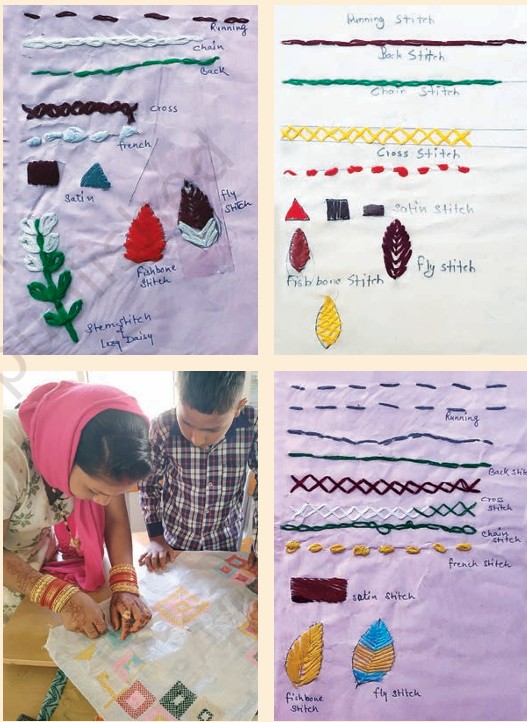
MATERIALS
Card paper, discarded invitation cards or thick drawing sheet (approximately 20 cm × 15 cm)
Medium-sized needle
Thread or wool
ACTIVITY 18.4: MAKE YOUR TEXTILE ARTWORK
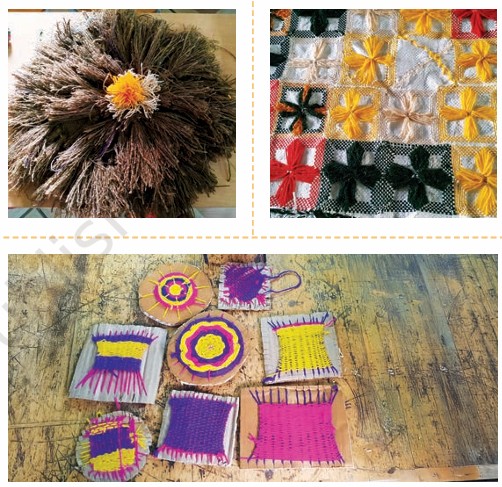
Textile artworks do not always have to be created on a flat surface. They can also be three-dimensional, with shapes and forms that can be viewed from different sides. You may have seen attractive toys, dolls, decorations, or other objects made from cloth, yarn, wool, thread, and natural or synthetic fibres.
Many artists and craftspeople have found inspiration in traditional textile arts and crafts. They experiment with different materials, techniques, textures, colours, and forms to create interesting and imaginative artworks.
Look carefully at the examples of textile artworks created by students like you. What kind of textile artwork would you like to make?
You can take inspiration from the textile traditions of your own region or community. You could explore weaving, knitting, crochet, macramé, fabric toys, fabric painting, printing, tie-and-dye, embroidery, patchwork, or appliqué.
Think about the materials available to you and how you can use them in a new way. You can combine different techniques, colours, patterns, and textures to create something unique.
Remember: Textile art is not limited by shape or size. With imagination and simple materials, threads and fabrics can be transformed into beautiful, useful, playful, or meaningful three-dimensional artworks.
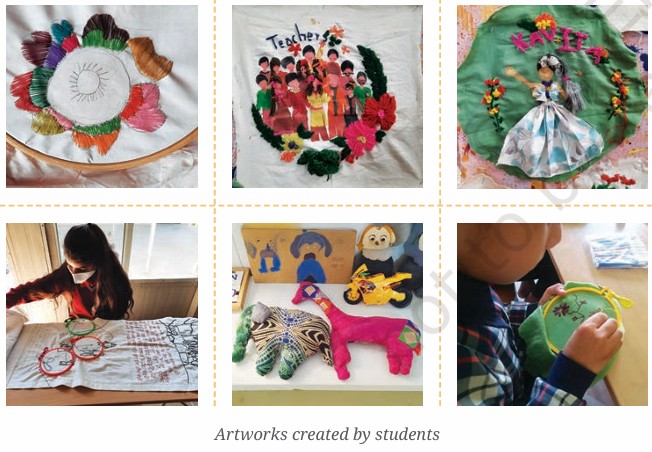
Textile art gives us an opportunity to transform simple materials such as cloth, thread, wool, and fabric pieces into creative and meaningful artworks. By using different colours, patterns, textures, and stitches, we can create designs inspired by nature, traditions, and our own imagination.
Materials Required:
A small piece of fabric, coloured threads, embroidery needle, embroidery hoop (if available), pencil or fabric marker, scissors, and small pieces of coloured cloth.
Steps:
- Choose a Theme: Decide what you want to create. You may choose flowers, leaves, birds, animals, geometric patterns, or a traditional Indian motif.
- Draw the Design: Lightly sketch your design on the fabric. Keep the shapes simple if you are a beginner.
- Select Colours: Choose thread colours that work well together. Think about how different colours can create contrast and visual interest.
- Practise Stitches: Try simple stitches such as running stitch, back stitch, chain stitch, stem stitch, satin stitch, and French knots.
- Begin Embroidering: Carefully follow your design with the needle and thread. Use different stitches to create outlines, filled areas, and decorative details.
- Add Texture: You can add small fabric pieces, buttons, wool, or other safe materials to make your artwork more interesting.
- Finish Your Artwork: Check the back of your work, secure the loose threads, and trim them carefully.
Display your finished textile artwork and explain the motifs, colours, stitches, and ideas you used. Remember, there is no single correct way to create textile art. Your design should reflect your creativity, imagination, and personal expression.
TEXTILE ART FOR EVERYONE
Some art museums today display textile artworks that can be touched and explored. These artworks allow visitors to experience art not only through sight but also through touch and texture.
Tactile textile artworks can be especially meaningful for visitors who are visually impaired, as they can explore the shapes, patterns, materials, and textures with their hands. Different fabrics, threads, stitches, knots, and raised designs can help communicate the appearance and idea of an artwork through touch.
This shows that art can be made accessible and enjoyable for everyone. Artists can think about different ways people experience art and create works that encourage seeing, touching, exploring, and feeling.
Textile art, with its variety of textures, fibres, stitches, and forms, provides wonderful opportunities for creating inclusive artworks that can be experienced in different ways.
POPULAR TRADITIONAL INDIAN TEXTILE ARTS
India has a rich variety of textile traditions. Different communities have developed unique techniques, colours, motifs, and methods of decorating fabric. Some popular traditional Indian textile arts include:
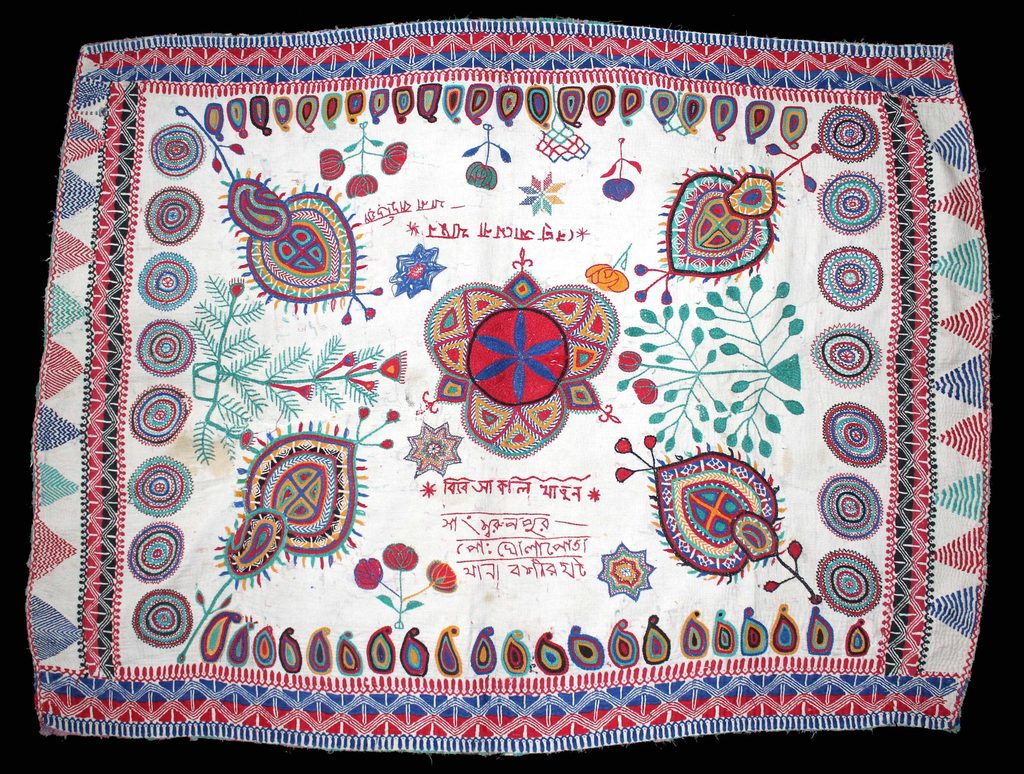
1. Kantha Embroidery: Traditionally associated with West Bengal and parts of eastern India, Kantha uses simple running stitches to join layers of old or used cloth. The stitched patterns may depict flowers, animals, figures, geometric designs, and scenes from everyday life. Kantha is used to make quilts, covers, garments, and decorative textiles.
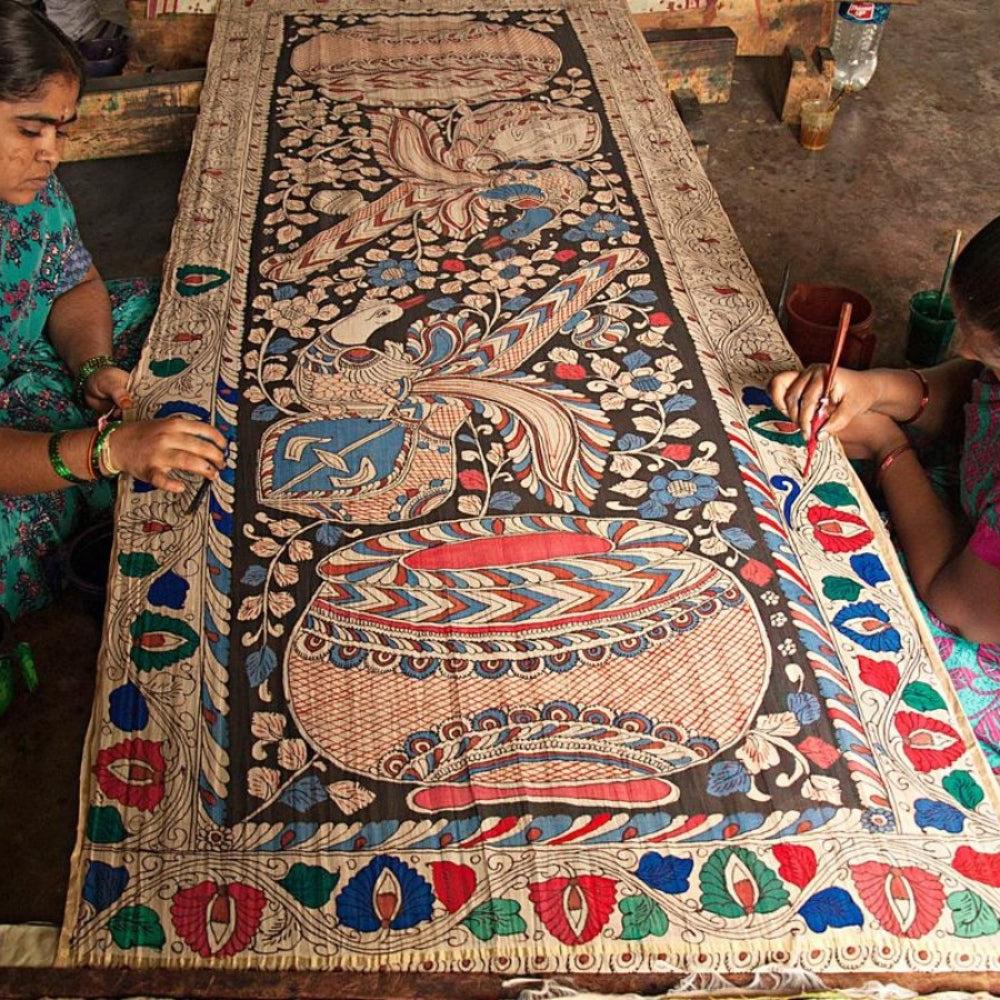
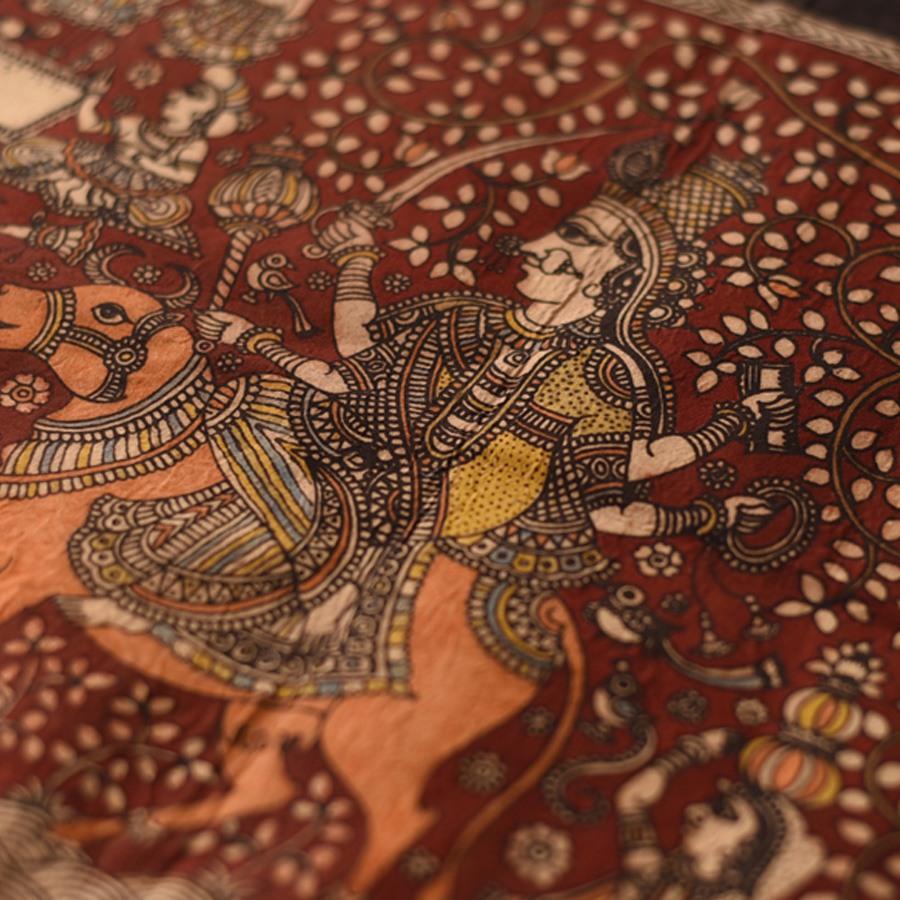
2. Kalamkari: A traditional textile art associated mainly with Andhra Pradesh and Telangana, Kalamkari involves hand-painting or block-printing designs on fabric. Artists traditionally use natural dyes and create detailed images of mythological stories, plants, flowers, animals, and decorative patterns.
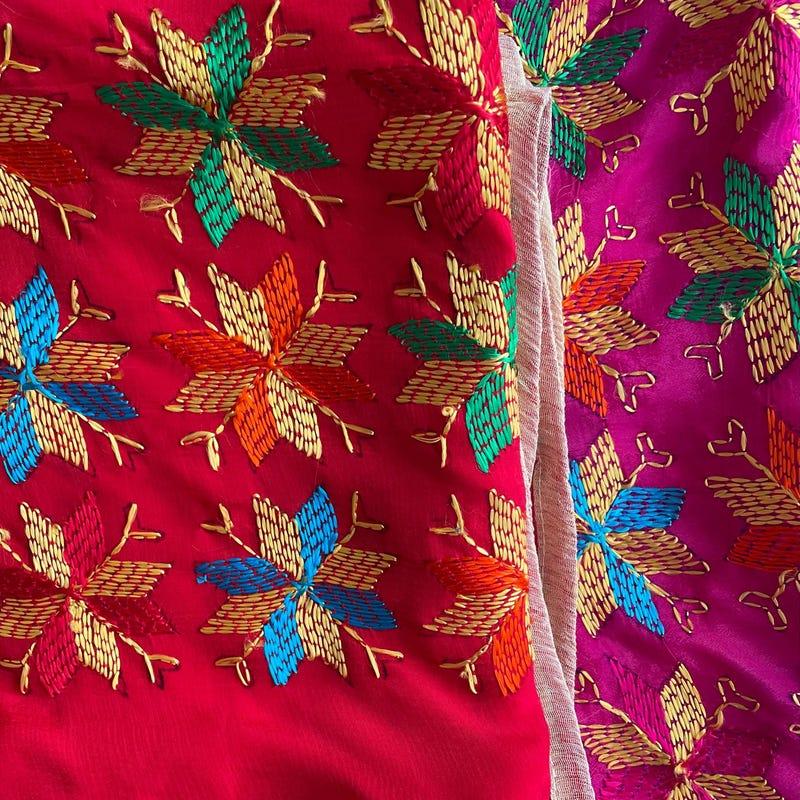
3. Phulkari: A colourful embroidery tradition from Punjab, Phulkari means “flower work.” It is known for bright floral and geometric designs created with colourful thread. Traditionally, the embroidery was worked on cotton fabric using silk floss, often decorating shawls, dupattas, and other garments.
4. Mata Ni Pachedi: A traditional textile art of Gujarat, especially associated with the Vaghari community. These textiles feature the Mother Goddess and other religious imagery and were traditionally used as sacred cloths or portable shrines. Designs may be hand-painted, block-printed, or created using both methods.
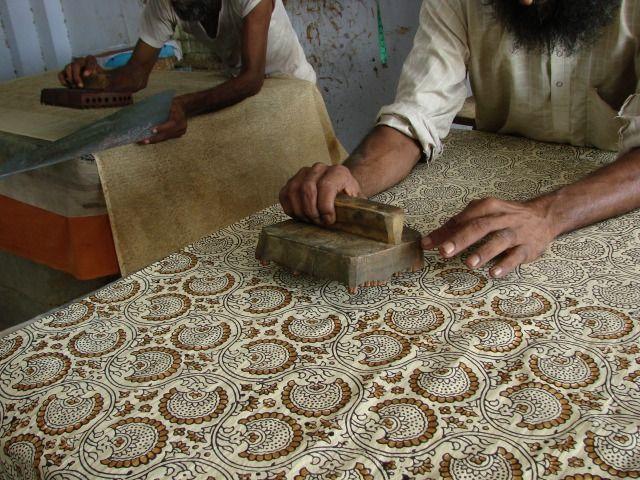
5. Bandhani and Ajrakh: Bandhani is a traditional tie-and-dye technique associated especially with Gujarat and Rajasthan, in which small portions of fabric are tied before dyeing to create distinctive dotted and patterned designs. Ajrakh is a resist-printing tradition associated with the Kutch region of Gujarat and Sindh, known for detailed geometric, floral, and natural motifs and repeated printing processes.
CONCLUSION
Textiles and traditions show us how art, culture, creativity, and everyday life are connected. Through weaving, embroidery, printing, dyeing, stitching, crochet, and other techniques, simple threads and fabrics can be transformed into beautiful and meaningful artworks.
India’s diverse textile traditions, such as Kantha, Kalamkari, Phulkari, Chikankari, Ahir embroidery, Toda embroidery, Bandhani, and Ajrakh, reflect the skills, stories, environments, and cultural practices of different communities. Their colours, motifs, patterns, and techniques have been passed down through generations while continuing to inspire new forms of creativity.
Exploring textiles helps us appreciate the patience and craftsmanship of artisans and understand the importance of preserving cultural heritage. At the same time, textile art encourages us to experiment with materials, textures, colours, and designs. Whether we create a simple embroidery pattern, a fabric toy, a patchwork artwork, or a three-dimensional textile form, every creation can express our imagination and tell a story.